
景顺长城

Search documents
景顺长城旗下多只基金跻身FOF持仓TOP10!
Cai Fu Zai Xian· 2025-05-26 07:42
Core Insights - The report highlights the increasing recognition of Invesco Great Wall's funds among public fund of funds (FOF) managers, with multiple funds ranking in the top 10 for both number of holdings and market value [1][3] - The performance of Invesco Great Wall's funds, particularly in the technology sector, has been outstanding, with significant excess returns compared to benchmarks [2] Group 1: Fund Performance - Invesco Great Wall's "Quality Evergreen" fund achieved a return of 59.45% over the past year, significantly outperforming its benchmark return of 14.53% [2] - The "Research Select" fund managed by Zhang Xuewei returned 38.26% in the same period, compared to its benchmark of 9.66% [2] - The "Invesco Great Wall CSI Hong Kong Stock Connect Technology ETF" was held by 11 FOFs, with a total market value of 274 million, marking the largest increase in holdings among FOFs [2] Group 2: Fund Holdings and Strategies - The "Invesco Great Wall Jingyi Shuangli" fund was held by 20 FOFs with a total market value of 216 million, while "Invesco Great Wall Jingying Shuangli" was held by 6 FOFs, increasing its holdings by 4 FOFs and market value by 29 million [2] - The "Invesco Great Wall Jingtai Yuli" pure bond fund had a total market value of 119 million, with a scale of 15.2 billion, consistently ranking in the top tier of its category over the past three years [2] Group 3: Strategic Positioning - Invesco Great Wall has diversified its fund offerings across various asset classes, including active equity, passive index, "fixed income plus," and pure bond funds, reflecting its strategy to become a "multi-asset management expert" [3]
首批26只新型浮动费率基金落地
Cai Jing Wang· 2025-05-23 13:46
Core Viewpoint - The first batch of performance-based innovative floating fee rate funds has been officially approved, marking a significant development in the public fund industry in China [1][5]. Group 1: Fund Approval and Structure - The first batch of funds was collectively submitted for approval on May 16, received acceptance on May 19, and was approved on May 23 [2]. - Multiple public fund companies, including E Fund, Fuguo, and Huaxia, will send their top-performing fund managers to manage these funds [1][2]. Group 2: Fee Structure and Management - The approved products feature a three-tier fee structure: 1.2% (base), 1.5% (upward adjustment), and 0.6% (downward adjustment) [3]. - The management fee is determined based on the holding period and the fund's performance relative to a benchmark, with specific conditions for each fee tier [3]. - This innovative fee model aims to align the interests of fund managers and investors, encouraging managers to enhance their investment capabilities and pursue stable, sustainable performance [3][4]. Group 3: Industry Impact and Future Outlook - The floating fee rate funds are expected to benefit long-term investors by optimizing fee structures and reinforcing the alignment of interests between fund managers and investors [3][4]. - The approval of these funds is part of a broader initiative by the China Securities Regulatory Commission to promote high-quality development in the public fund industry [5]. - The public fund industry in China has grown significantly, with a management scale exceeding 32 trillion yuan, indicating its integral role in the capital market and household finance [4].
首批26只新型浮动费率基金今日获批,公募费率改革稳步推进
Nan Fang Du Shi Bao· 2025-05-23 12:50
Core Viewpoint - The introduction of 26 new floating fee rate funds marks a significant step in the reform of public fund fee structures in China, aligning management fees with fund performance to enhance investor returns [1][2][4]. Group 1: New Fund Products - 26 new floating fee rate funds have been registered by the China Securities Regulatory Commission (CSRC) and are expected to be available for investor subscription soon [1]. - The new funds will feature three fee rate levels: 1.2% (base), 1.5% (upward adjustment), and 0.6% (downward adjustment) [1]. - The new floating fee rate model is part of the CSRC's initiative to promote high-quality development in public funds, emphasizing a shift from scale to investor returns [1][2]. Group 2: Industry Response - Following the release of the action plan, multiple fund companies, including E Fund, China Merchants, and others, have actively responded by applying for a series of actively managed equity funds [2]. - The first batch of floating fee rate funds received approval from the CSRC on May 23, 2023, and includes various fund types aimed at enhancing investor experience [2]. Group 3: Implications for Fund Management - The floating fee rate model ties management fees directly to fund performance, potentially improving the alignment of interests between fund managers and investors [3]. - Fund companies will face new challenges in managing these floating fee rate funds, requiring enhanced operational management and data processing capabilities to track performance and calculate fees accurately [2][3]. - The reform aims to address issues such as insufficient functionality and weak investor satisfaction in the public fund sector, promoting a more effective capital market [4].


雅化集团(002497) - 002497雅化集团投资者关系管理信息20250522
2025-05-23 09:46
Group 1: Company Overview - Sichuan Yahua Industrial Group is a leading producer of lithium salt products, particularly battery-grade lithium hydroxide, with industry-leading production technology and equipment [2] - The company has a comprehensive production line that enhances efficiency and product quality, exceeding national standards [2] - Yahua is also a leading player in the civil explosives industry, focusing on industry consolidation and expanding its mining service business [2] Group 2: Lithium Production Capacity - The company is constructing a new lithium production line, with a total lithium salt capacity expected to reach nearly 130,000 tons by the end of 2025 [3] - A 30,000-ton lithium carbonate production line was completed and put into operation in 2024, alongside a 30,000-ton lithium hydroxide line currently under construction [3] Group 3: Customer Structure - The customer base primarily consists of long-term agreements, with major clients including TESLA, LGES, and CATL, accounting for 90% of revenue from top clients as of 2024 [4] Group 4: Resource Security - The company has established a diversified lithium resource security system, including self-controlled and purchased mines, with a processing capacity of 2.3 million tons of raw ore annually from its Zimbabwean Kamativi lithium mine [5][6] Group 5: Risk Management - In 2024, the company utilized lithium carbonate futures for hedging against price fluctuations, aiming to mitigate risks associated with market volatility [7] Group 6: Overseas Business Development - Yahua has developed a mature platform for overseas investment and trade, with operations in New Zealand, Australia, and Africa, and plans to expand its mining service business in Zimbabwe and Australia [8] Group 7: Future of Civil Explosives Business - The company aims to leverage policy guidance and its integration capabilities to enhance the quality and competitiveness of its civil explosives business, targeting the formation of 3-5 internationally competitive enterprises by 2027 [9]

ETF基金日报丨黄金相关ETF涨幅居前,机构:黄金有望继续维持长期上行趋势
2 1 Shi Ji Jing Ji Bao Dao· 2025-05-22 02:54
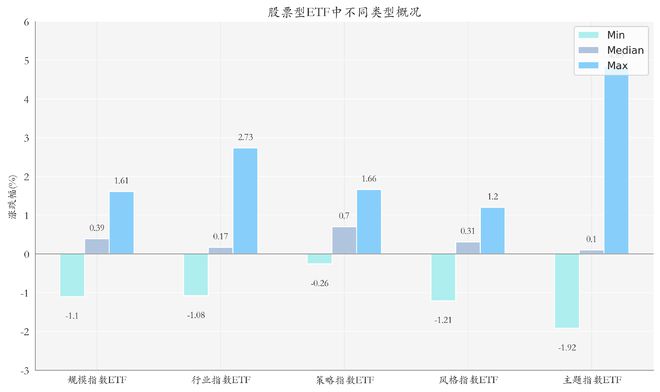
Market Overview - The Shanghai Composite Index rose by 0.21% to close at 3387.57 points, with a daily high of 3394.75 points [1] - The Shenzhen Component Index increased by 0.44% to close at 10294.22 points, reaching a high of 10325.92 points [1] - The ChiNext Index saw a rise of 0.83%, closing at 2065.39 points, with a peak of 2077.48 points [1] ETF Market Performance - The median return of stock ETFs was 0.29%, with the highest return from the ICBC Credit Suisse Shenzhen 100 ETF at 1.61% [2] - The highest performing industry ETF was the Penghua National Securities Nonferrous Metals Industry ETF, which returned 2.73% [2] - The highest return among thematic ETFs was from the Huaxia CSI Hong Kong-Shenzhen Gold Industry ETF at 4.85% [2] ETF Gain and Loss Rankings - The top three ETFs by gain were: - Huaxia CSI Hong Kong-Shenzhen Gold Industry ETF (4.85%) - Yongying CSI Hong Kong-Shenzhen Gold Industry ETF (4.63%) - Ping An CSI Hong Kong-Shenzhen Gold Industry ETF (4.51%) [4][5] - The top three ETFs by loss were: - Guotai MSCI China A-Shares ESG General ETF (-1.92%) - Guoshou Anbao National Securities ChiNext Mid-Cap Selected 88 ETF (-1.21%) - ICBC Credit Suisse National Securities Semiconductor Chip ETF (-1.19%) [4][5] ETF Fund Flow - The top three ETFs by fund inflow were: - Fortune CSI Military Leading ETF (inflow of 473 million yuan) - Penghua CSI National Defense ETF (inflow of 443 million yuan) - Guotai CSI Military ETF (inflow of 430 million yuan) [6][7] - The top three ETFs by fund outflow were: - Huaxia CSI A500 ETF (outflow of 764 million yuan) - Huatai-PB CSI 300 ETF (outflow of 655 million yuan) - Huaxia ChiNext 50 ETF (outflow of 377 million yuan) [6][7] ETF Margin Trading Overview - The top three ETFs by margin buying were: - Huaxia Shanghai Stock Exchange Sci-Tech Innovation Board 50 ETF (358 million yuan) - Huatai-PB CSI 300 ETF (215 million yuan) - E Fund CSI 300 Medical Health ETF (159 million yuan) [8][9] - The top three ETFs by margin selling were: - Southern CSI 500 ETF (29.72 million yuan) - Huatai-PB CSI 300 ETF (28.99 million yuan) - Huaxia Shanghai Stock Exchange 50 ETF (9.35 million yuan) [8][9] Institutional Insights - Founder Securities suggests that gold prices are expected to maintain a long-term upward trend after a phase of correction, driven by factors such as declining dollar credit and ongoing global central bank gold purchases [10] - China Galaxy indicates that A-share gold stocks are currently at a near 10-year low valuation, presenting potential investment opportunities as gold prices rise [11]
一图看懂:主动优选基金经理,在2025年1季报里都说了啥?
银行螺丝钉· 2025-05-21 13:56
Core Viewpoints - The article summarizes the insights from fund managers based on their Q1 2025 reports, focusing on their investment strategies and market outlooks [1]. Group 1: Fund Manager Perspectives - Fund managers typically cover two main areas in their reports: a review of past investments and future market outlooks, with the latter being more significant [3]. - Different fund managers exhibit varying levels of detail in their reports, influenced by their investment styles, such as value or growth [3]. - The deep value style emphasizes low valuations and high dividend yields, primarily investing in sectors like finance, real estate, and energy [4][5]. - Growth value style focuses on companies with strong profitability and cash flow, often holding stocks for the long term [10]. Group 2: Deep Value Style Insights - Deep value style has shown strong performance from 2021 to 2024, while it underperformed in 2019-2020 [6]. - Fund managers express confidence in their holdings despite market uncertainties, citing factors like geopolitical changes and technological advancements as influential [7]. - The current market environment is characterized by structural changes, with some sectors facing prolonged competition, while others show clear competitive advantages [7]. Group 3: Growth Value Style Insights - Growth value managers highlight the resilience of high-frequency economic data and improved financing conditions, suggesting a positive outlook for the second quarter [12]. - They emphasize the importance of focusing on domestic economic transformation and internal demand rather than external pressures [12][13]. - Fund managers are adjusting their portfolios to capitalize on sectors like AI and healthcare, anticipating a shift in consumer behavior and market dynamics [15][16]. Group 4: Balanced Style Insights - The balanced style seeks to combine growth potential with valuation, often looking for stocks that offer good value relative to their growth prospects [26]. - Fund managers maintain a diversified approach, focusing on sectors with favorable valuations and growth potential, such as healthcare and technology [29][30]. - They express optimism about domestic consumption policies and liquidity, which may support market performance despite external uncertainties [30]. Group 5: Growth Style Insights - The growth style prioritizes companies with high revenue and profit growth, often accepting higher valuations for strong growth potential [39][40]. - Fund managers are actively seeking opportunities in emerging industries, such as renewable energy and technology, which are expected to drive future growth [41].

知名基金经理鲍无可离职,接任者都是什么水平?
市值风云· 2025-05-21 10:36
Core Viewpoint - The recent departures of prominent fund managers, including Zhang Kun and Bao Wuke, signal a potential shift in the public fund industry, raising concerns about whether public funds are becoming a "training ground for private equity" [3][4]. Group 1: Departure of Fund Managers - Bao Wuke, a notable fund manager with over 15 years of experience and an annualized return of approximately 15.5%, has officially announced his departure from the public fund sector [5][11]. - The market interpreted Bao Wuke's recent actions, such as appointing new fund managers, as indicative of his impending exit, which was confirmed over the weekend [3][4]. - The trend of high-performing fund managers leaving the public sector has raised questions about the future of public funds and their ability to retain talent [4]. Group 2: Performance and Management Transition - Bao Wuke managed a total of 16.2 billion yuan across eight funds before his departure, with the majority of his funds being handed over to three experienced managers, including Liu Su, Zhang Zhongwei, and Zou Lihua [11][12]. - Liu Su, who has 13 years of experience, is known for a balanced investment style, while Zhang Zhongwei, with over nine years of experience, is recognized for a growth-oriented approach focused on technology stocks [28][20]. - The performance of the funds under Bao Wuke's management has been strong, with a total return exceeding 380% over the past decade, indicating a solid track record that the new managers will need to uphold [5][11]. Group 3: Investment Styles and Strategies - Bao Wuke's investment strategy emphasized low volatility and steady returns, focusing on high-barrier companies with reasonable valuations [7][8]. - In contrast, Zhang Zhongwei's investment philosophy is centered on capturing growth in technology sectors, with a significant portion of his portfolio allocated to TMT (Technology, Media, Telecommunications) stocks [24][27]. - Liu Su's approach is more balanced, with a diversified portfolio that includes sectors like food and beverage and pharmaceuticals, aiming for stable long-term growth [30][28].
红利风格投资价值跟踪(2025W20):中证红利成交较4月缩量,本周ETF净流出28.24亿元
Xinda Securities· 2025-05-17 13:50
Macro Perspective - Recent US Treasury yields are influenced by expectations of interest rate cuts by the Federal Reserve, with a 36.8% probability of a cut in July 2025[3] - Domestic M2 growth in April 2025 was 8.0%, up from 7.0% in the previous month, while the M1-M2 differential decreased to -6.5% from -5.4%[10] Valuation Metrics - The absolute PETTM for the CSI Dividend Index is at the 99.60th percentile over the past three years, indicating a high valuation level[17] - The relative PETTM is at the 77.30th percentile, suggesting a decrease from the previous month's 88.38th percentile[21] Price and Volume Analysis - 64.68% of the CSI Dividend Index component stocks are above the six-month moving average, an increase from 52.14% a month ago, indicating improved price momentum[23] - The absolute trading volume is at the 57.41st percentile over the past three years, down from 72.90% a month ago, suggesting reduced trading activity[30] Fund Flows - The CSI Dividend ETF experienced a net outflow of 28.24 billion yuan this week, with a total net outflow of 53.09 billion yuan over the past month[36] - The exposure of equity mutual funds to dividend strategies has decreased from 0.45 in Q4 2024 to 0.37 in Q1 2025, indicating a reduction in allocation to dividend stocks[36] Summary Insights - The macro model suggests that the dividend style may underperform compared to growth style in the near future due to high valuation levels and reduced trading volume[44] - Long-term outlook remains positive for growth style as liquidity conditions improve with potential monetary and fiscal policy measures[44]
股息率超8%!
Zhong Guo Ji Jin Bao· 2025-05-16 03:17
Core Viewpoint - The attractiveness of high-yield assets in the low-interest-rate environment is highlighted, with some Hong Kong Stock Connect high dividend indices showing yields exceeding 8% [1][5]. Group 1: Market Trends - The Hong Kong stock market has shown resilience, achieving four consecutive weeks of gains since early April, following a period of volatility [3]. - As of May 15, 2023, the total net inflow into Hong Kong dividend-themed ETFs has exceeded 11 billion yuan, with a total scale approaching 46.2 billion yuan, marking a growth of over 40% compared to the end of 2022 [3][4]. - The Morgan Fund's Hong Kong dividend index ETF has seen a net inflow of 3.767 billion yuan this year, becoming the first ETF in this category to exceed 10 billion yuan in scale, nearly doubling since the end of last year [3]. Group 2: Performance Metrics - The Hong Kong Stock Connect high dividend index has risen by 16.63% over the past year, significantly outperforming the China Securities Dividend Index, which fell by 2.37% [6]. - As of May 15, 2023, the latest dividend yield for the Hang Seng Hong Kong Stock Connect high dividend low volatility index is 8.31%, while the overall Hong Kong Stock Connect high dividend index yields 8.08% [6]. Group 3: Investment Strategy - The "technology + dividend" strategy is suggested as a superior asset allocation approach, balancing the volatility of tech assets with the stability of dividend-paying stocks [8]. - The low valuation and high dividend yield of Hong Kong dividend assets present a dual opportunity for undervaluation recovery and high dividend returns [8]. - The composition of the China Securities Hong Kong Stock Connect high dividend index is primarily large-cap stocks, with a significant proportion of state-owned enterprises, indicating that its performance will largely depend on the recovery of the domestic economy [8].
资金“边打边撤” 部分ETF遭遇净流出
Zhong Guo Zheng Quan Bao· 2025-05-15 20:41
Group 1: Gold ETF Activity - Recent increase in gold ETF trading volume amid declining gold prices, with significant sell-off indications [1][2] - On May 15, Huashan Gold ETF trading volume reached 9.132 billion yuan, a rise of over 2 billion yuan from the previous week [2] - Global gold ETF assets surged to 379 billion USD by the end of April, driven by rising gold prices and inflows [3] Group 2: A-share ETF Fund Flows - A-share ETFs experienced a net outflow of 15.357 billion yuan this week, with major indices like ChiNext and CSI 300 showing significant withdrawals [4] - Notable outflows included 2.333 billion yuan from E Fund ChiNext ETF and 1.029 billion yuan from Huatai-PB CSI 300 ETF [4] - Despite the overall outflow, certain ETFs related to semiconductor and military sectors saw net inflows exceeding 500 million yuan [4] Group 3: Investment Opportunities - Market analysts suggest focusing on structural opportunities, particularly in the internet technology sector and competitive overseas markets [1][6] - The financial sector is highlighted for its stability and low valuation, with banks showing potential for dividend stability and growth [5] - The insurance sector is expected to see high profit growth in 2024, presenting attractive investment opportunities [5]