GE Vernova

Search documents
NuScale Power Pre-Q3 Earnings Analysis: Hold or Fold the Stock?
ZACKS· 2025-11-04 15:21
Core Insights - NuScale Power is set to release its third-quarter 2025 results on November 6, with a consensus revenue estimate of $11.10 million, reflecting a significant increase of 2,260.6% from $0.47 million in the same quarter last year [1] - The consensus estimate for the bottom line indicates a loss per share of 11 cents, which shows improvement from a loss of 18 cents per share in the previous year [2] Financial Performance - The current consensus estimates for the upcoming quarters show a consistent loss per share of 11 cents for Q3 2025 and 12 cents for Q4 2025, with the full year loss estimated at 50 cents [3] - In the last reported results for Q2, NuScale Power reported a loss per share of 13 cents, which was wider than the consensus estimate of 12 cents [3] Market Position and Demand - NuScale Power is recognized as a global leader in small modular reactor (SMR) technology, with a focus on expanding its portfolio and being the only SMR technology approved by the U.S. Nuclear Regulatory Commission [6] - The anticipated results for Q3 2025 are expected to benefit from increased demand for clean energy and power, particularly driven by AI data centers and the global shift towards clean energy solutions [7] Strategic Partnerships - The company has made significant progress in developing its SMR technology with partners like Doosan Enerbility and ENTRA1 Energy, enhancing its market position and supply chain readiness [8] - The collaboration with ENTRA1 Energy allows NuScale to provide power modules for energy production plants, which helps mitigate risks and ensures scalable deployment of clean energy solutions [9][10] Stock Performance and Valuation - Year-to-date, NuScale Power shares have increased by 124.9%, although this is below the Zacks Electronics - Power Generation industry's growth of 137% [11] - The stock is currently trading at a forward 12-month price-to-sales (P/S) ratio of 89.34X, significantly higher than the industry average of 30.7X, indicating a stretched valuation [15][19] Competitive Landscape - NuScale Power faces increasing competition from companies like GE Vernova, BWX Technologies, and Oklo, which could impact its market share [21][22] - Despite advancements in SMR technology, the competitive energy market, including the rise of renewable energy sources, poses challenges for NuScale Power [24]



超级周期,资金持续流入赛道
3 6 Ke· 2025-11-04 11:24
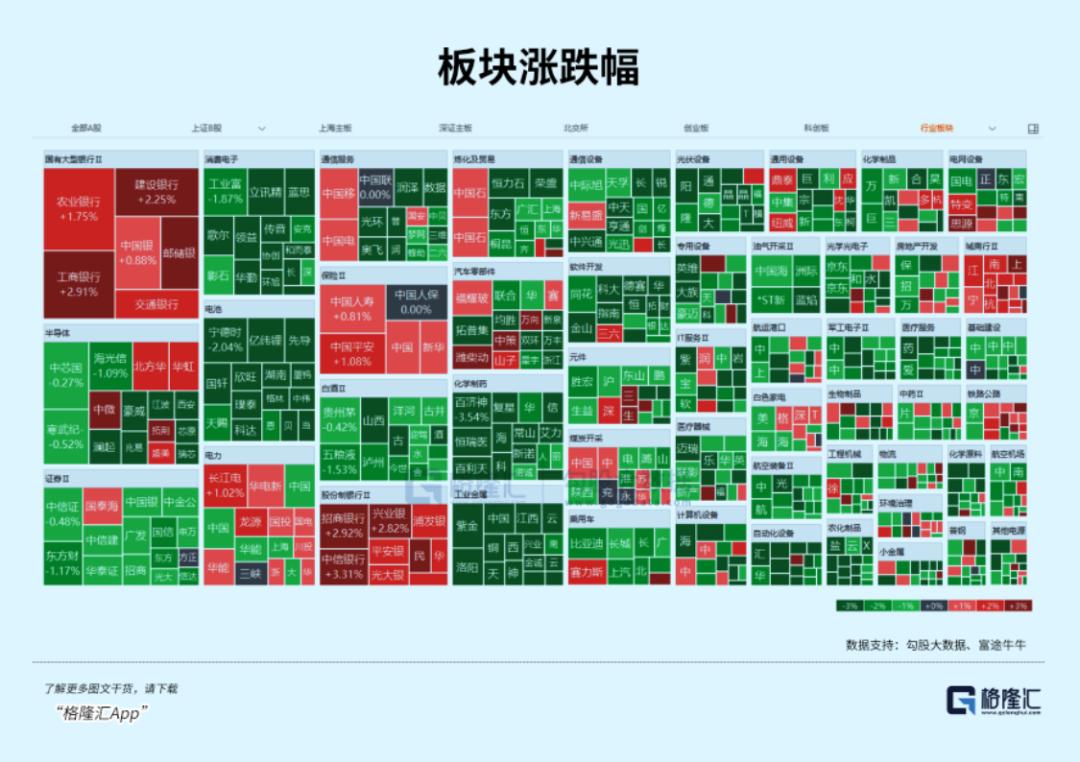
Core Insights - The main issue facing AI development is not the availability of chips but rather the lack of sufficient electricity to support GPU operations [10][12][28] Group 1: AI and Power Demand - The rapid growth of AI is leading to an increased demand for electricity, particularly in data centers, which is expected to push North America's power demand into a new growth cycle [13][17] - Microsoft CEO Satya Nadella highlighted that the AI industry is currently facing a power shortage rather than a chip surplus [10][12] - OpenAI has urged the U.S. government to significantly increase investments in power infrastructure, suggesting a target of adding 100 GW of power capacity annually [14] Group 2: Market Reactions and Trends - The A-share market has seen a surge in electric grid equipment stocks, driven by the growing demand for power due to AI and controlled nuclear fusion themes [2][7] - The only electric grid equipment ETF (159326) has attracted over 527 million in investments over the past 20 days, reaching a historical high in size [3][25] - The electric grid equipment ETF has seen a year-to-date increase of 29.7%, indicating strong market interest [25] Group 3: Future Projections - The global nuclear fusion market is projected to exceed $40 trillion by 2050, indicating significant future investment opportunities [9] - Data centers are expected to account for 8.1% of total U.S. electricity consumption by 2030, up from 4.2% in 2024 [17] - The U.S. power grid has seen limited growth in capacity, primarily from renewable sources, while traditional power sources are declining [20] Group 4: Technological Innovations - Companies like NVIDIA are pushing for innovations in data center power infrastructure, such as transitioning to 800V direct current systems to improve efficiency [21] - Solid-state transformers (SST) are being highlighted as a solution to meet the increasing power demands of AI data centers [21][22] - Domestic companies are also making strides in the global market, with significant growth in transformer exports from China [23]



新能源及工业周报(10/27-11/02):美国政府与西屋电气股东 Cameco、Brookfield 达成合作,计划在美建设800 亿美元核电项目-20251103
Haitong Securities International· 2025-11-03 15:35
Investment Rating - The report suggests a positive outlook for the nuclear power sector, particularly in the context of AI energy consumption, recommending attention to companies involved in nuclear energy and related infrastructure [6]. Core Insights - The U.S. government has reached a cooperation agreement with Westinghouse Electric and shareholders Cameco and Brookfield to develop a nuclear power project valued at $80 billion [4]. - The report highlights a significant increase in electricity infrastructure investment in the U.S., projected to reach $1.4 trillion from 2025 to 2030, which is double the investment of the previous decade [2]. - The demand for data centers is surging, with major companies like OpenAI and Oracle planning to develop large-scale data center facilities, indicating a robust growth trajectory in the sector [9][10]. Summary by Sections Global Infrastructure and Construction Equipment - North America's data center vacancy rate has reached a historic low of 1.6%, driven by high demand and limited power supply [9]. - The average price for data center cabinets has increased significantly, with a 19% rise for deployments over 10 MW [9]. - The U.S. energy market is experiencing a "super cycle" in investment, with rising retail electricity prices and a strong demand for infrastructure upgrades [2]. Global Electrical and Intelligent Equipment - The gas turbine price index in the U.S. increased by 3.43% year-on-year, indicating a stable demand for industrial equipment [3]. - The report notes a significant increase in transformer exports from China, with a 23% year-on-year growth in September 2025 [37]. - Companies like GE Vernova and Siemens Energy are expanding their production capacities to meet the growing demand for electrical equipment [42]. Global Energy Industry - The U.S. government is actively promoting the development of small modular reactors (SMRs) as a key energy solution for AI data centers, with significant investments and regulatory support expected [46][47]. - The report anticipates that by 2028, the total nuclear power capacity in the U.S. will reach 81 GW, with plans for further expansion [48]. - The collaboration between major tech companies and the nuclear sector is expected to enhance the viability and deployment of SMR technology [48]. Global New Materials - The report tracks the price movements of uranium and rare earth materials, noting a 10% increase in uranium prices in September 2025 [5]. - The demand for advanced materials is expected to rise in conjunction with the growth of the energy and technology sectors [5].


详解美国数据中心狂潮:45GW,2.5万亿美元投资,谁在建设,谁在掏钱?
华尔街见闻· 2025-11-03 11:01
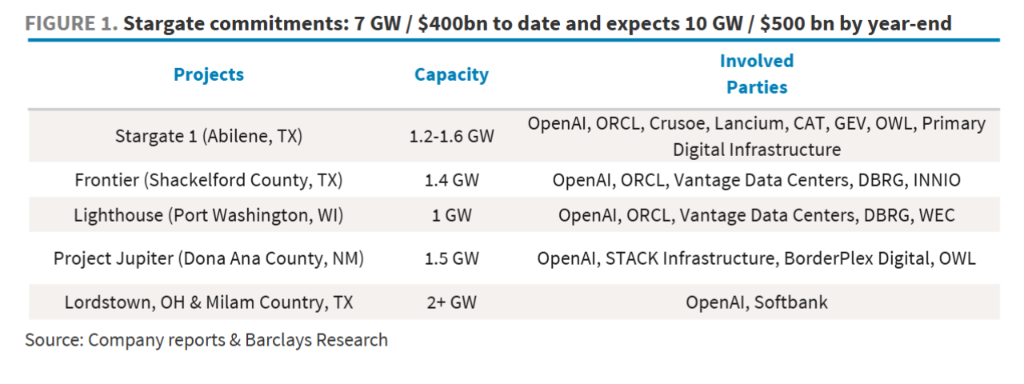
Core Insights - A significant infrastructure race driven by artificial intelligence is unfolding in the United States, with planned large data center projects exceeding 45 GW and attracting over $2.5 trillion in investments [1][3]. Group 1: Major Players and Projects - The expansion is primarily driven by major companies such as OpenAI, Amazon, Meta, Microsoft, and xAI, which are rapidly planning and constructing computing clusters to support increasingly complex AI models [1][3]. - Key projects include OpenAI's Stargate (1.2-1.6 GW), Frontier (1.4 GW), Lighthouse (1 GW), Project Jupiter (1.5 GW), and additional projects in Ohio and Texas, with Stargate alone representing a commitment of over $400 billion for 7 GW of capacity [4][5]. Group 2: Power Supply Challenges - The surge in power demand is creating unprecedented challenges for the U.S. electrical infrastructure, leading to a "power wall" scenario where existing grid capacity is insufficient [1][5]. - Companies are increasingly adopting a "Bring-Your-Own-Power" strategy, with many opting to build on-site power generation facilities to ensure reliable electricity supply and expedite project timelines [1][6]. Group 3: Investment and Financing Structures - The construction costs for data centers have escalated, with costs exceeding $1,700 million per MW, and OpenAI's Stargate project reflecting a staggering $5,700 million per MW when including IT equipment [4][8]. - Private equity firms and specialized infrastructure funds are playing a crucial role in financing these projects, exemplified by Blue Owl Capital's $15 billion joint venture with Crusoe for the Stargate 1 project [8]. Group 4: Energy as a Service (EaaS) Model - The rise of the "Energy as a Service" (EaaS) model is evident, with energy companies like Williams entering long-term power purchase agreements with data center operators, investing billions in dedicated power generation facilities [9]. Group 5: Supply Chain and Labor Challenges - The explosive demand is straining the power equipment supply chain, with heavy gas turbine prices rising by 50% in less than two years and extended delivery times [10][11]. - Equipment manufacturers are facing challenges related to component shortages and labor, prompting some companies to acquire second-hand or unused equipment to meet their needs [11].


详解美国数据中心狂潮:45GW,2.5万亿美元投资,谁在建设,谁在掏钱?
Hua Er Jie Jian Wen· 2025-11-02 10:45
Core Insights - A significant infrastructure race driven by artificial intelligence is unfolding in the United States, with planned large data center projects exceeding 45 GW and attracting over $2.5 trillion in investments [1][2] Group 1: Major Players and Projects - The primary drivers of this expansion include OpenAI's Stargate project, Amazon, Meta, Microsoft, and Elon Musk's xAI, all of which are rapidly planning and constructing computing clusters to support increasingly complex AI models [1][2] - Key projects include Stargate 1 (1.2-1.6 GW), Frontier (1.4 GW), Lighthouse (1 GW), Project Jupiter (1.5 GW), and a combined capacity of over 2 GW in Lordstown, OH, and Milam County, TX, with significant involvement from OpenAI and various partners [3][5] Group 2: Financial Aspects - The construction cost for data centers has surpassed $1.7 million per MW, with OpenAI's Stargate project alone representing a commitment of over $400 billion for a 7 GW capacity, translating to approximately $5.7 million per MW [3][5] - Financing structures are complex, with private equity firms and infrastructure funds playing crucial roles, such as Blue Owl Capital's $15 billion joint venture with Crusoe for the Stargate 1 project [7] Group 3: Power Supply Challenges - The existing power grid poses significant challenges, leading companies to adopt "Bring-Your-Own-Power" strategies, including on-site power generation to ensure reliability and expedite energization timelines [1][4] - For instance, the Stargate 1 project plans to deploy approximately 350 MW of on-site natural gas generation despite having grid access approved for 1.2 GW [4] Group 4: Supply Chain Issues - The explosive demand for power generation equipment has strained supply chains, with heavy gas turbine prices increasing by 50% in less than two years and extended delivery times [8] - Companies are resorting to acquiring second-hand or "off-the-shelf" new equipment to mitigate long order queues, exemplified by Fermi America's acquisition of a Siemens gas turbine from an unused LNG project [8]


The great AI buildout shows no sign of slowing
Yahoo Finance· 2025-10-31 10:05
Core Insights - The technology sector is experiencing a significant boom in artificial intelligence (AI) infrastructure, with no signs of slowing down despite discussions of a potential bubble [1][3] - Nvidia has become the first company to exceed a market value of $5 trillion, while OpenAI is preparing for an IPO that could value it at $1 trillion [2] - Major companies like Microsoft and Amazon are heavily investing in AI, with Microsoft and Alphabet expected to spend around $350 billion combined this year [5] Company Developments - Microsoft and OpenAI have formed a partnership that enhances OpenAI's fundraising capabilities [2] - Amazon announced a reduction of 14,000 corporate jobs, coinciding with its cloud unit reporting the strongest growth in nearly three years [2] - Caterpillar's data center division saw a 31% increase in sales, indicating strong demand in the AI infrastructure space [4] Industry Trends - Over 100 non-tech global companies have acknowledged their involvement with data centers, highlighting the widespread impact of AI across various sectors [4] - The AI supply chain is expanding beyond core technology to include power, industrials, and cooling technology, prompting investors to consider the entire ecosystem [5] - Goldman Sachs projects that global AI-related infrastructure spending could reach between $3 trillion and $4 trillion by 2030 [5] Economic Impact - AI investment is significantly influencing global trade, with approximately 60% of U.S. data center capital expenditures directed towards imported IT equipment, particularly semiconductors from Asia [6] - Companies representing over $21 trillion in market value have reported earnings or discussed AI, with many noting early signs of productivity gains [6] - The future contribution of AI in research and development is expected to grow, as indicated by Schindler's CEO, who raised the company's annual margin forecast [7]
发电业务估值超过了英伟达和GE Vernova!大摩:卡特彼勒被严重高估
Hua Er Jie Jian Wen· 2025-10-31 06:42
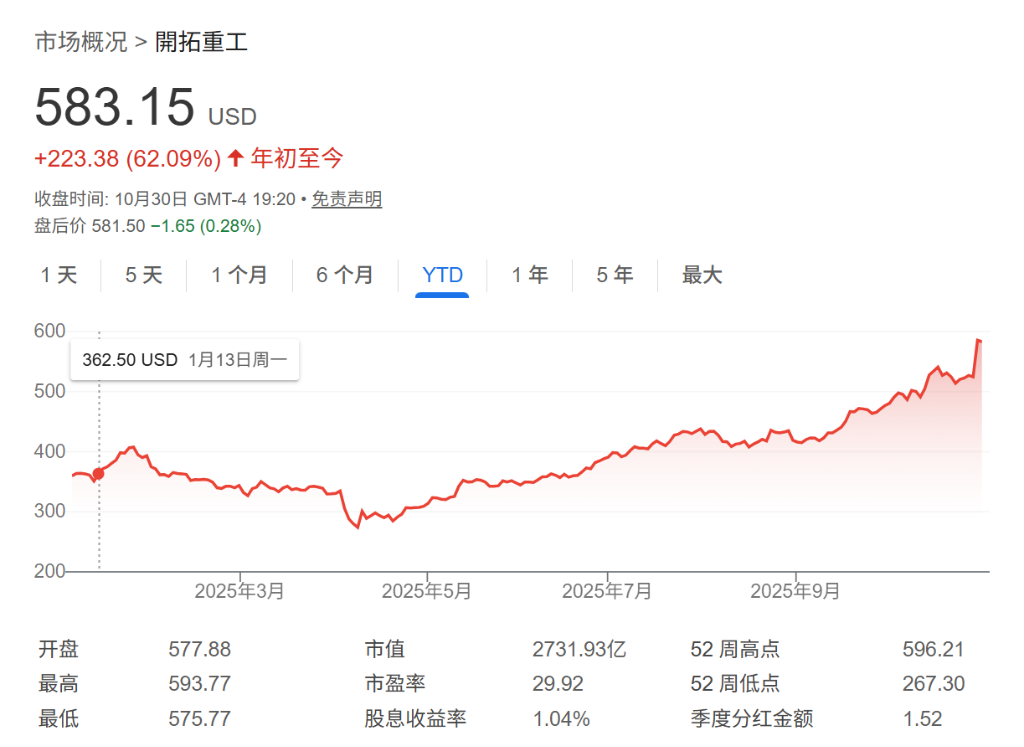
Core Viewpoint - Morgan Stanley warns that the market valuation multiples for Caterpillar's power generation business have significantly exceeded those of industry leaders like Nvidia and GE Vernova, indicating a potential overvaluation that could lead to a sharp correction if market conditions change [1][4]. Valuation Comparison - Caterpillar's power generation business is currently valued at an EV/EBITDA multiple between 58x and 103x, while GE Vernova and Nvidia are valued at approximately 28x and 25x, respectively [1][4]. - This suggests that the market perceives Caterpillar's power generation business as more valuable than the related businesses of top technology and energy companies [4]. Business Segment Analysis - The projected EBITDA for Caterpillar's segments in 2026 is as follows: - Construction Industries: $3,664 million at a 13.0x multiple, resulting in an EV of $47,628 million - Resource Industries: $2,118 million at a 13.0x multiple, resulting in an EV of $27,538 million - Power Generation: $1,508 million at a 103.0x multiple, resulting in an EV of $155,369 million - Other Energy & Transportation: $7,132 million at a 13.0x multiple, resulting in an EV of $92,713 million [5]. Market Expectations - To justify Caterpillar's current stock price of $585, the market must accept one of two extreme scenarios: 1. The valuation of Caterpillar's traditional cyclical businesses (like construction and resource extraction) is pushed to "absurd levels" far beyond historical norms. 2. Even with optimistic assumptions for the power generation business, the implied valuation for cyclical businesses remains high at 28x, despite declining operating margins [6][7]. - Morgan Stanley estimates that even with aggressive growth projections for the power generation business, it is unlikely to meet bullish expectations of $20 billion in sales by 2027 [7]. Price Target and EPS Forecast - Morgan Stanley maintains a 2026 EPS forecast for Caterpillar at $19.24, with a target price of $380 based on a 20x P/E ratio, indicating a potential downside of 35% from the current stock price [7].
英伟达凭啥值50000亿?
半导体行业观察· 2025-10-31 01:35
Core Insights - Nvidia's valuation has reached $5 trillion due to its significant share in the artificial intelligence spending boom [2] - The new benchmark for advanced data centers is measured in gigawatts of computing power, shifting the focus from physical size or server count [2] - The cost of 1 gigawatt (GW) of AI data center capacity is approximately $35 billion, representing a new economic foundation for the AI industry [3] Cost Structure of AI Data Centers - Approximately 39% of total spending in AI data centers is allocated to GPUs, with Nvidia's products dominating this segment [6] - Nvidia captures nearly 30% of the profits from AI data center expenditures due to its 70% gross margin [6] - Each gigawatt of power can support over 1 million GPU chips, generating $1.3 billion in revenue for Nvidia's manufacturing partner, TSMC [6] Networking Equipment - 13% of data center costs are attributed to networking equipment, benefiting companies like Arista Networks, Broadcom, and Marvell [7] - Component manufacturers such as Amphenol and Luxshare Precision will also gain from cables and connectors [7] Power and Cooling Infrastructure - Physical infrastructure, including power distribution, accounts for nearly 10% of the costs of a 1 GW AI data center [9] - Major players in this sector include Eaton, Schneider Electric, ABB, and Vertiv, with Vertiv also having opportunities in thermal management [9] Real Estate and Labor Costs - Land and buildings represent about 10% of upfront costs, while operational costs are relatively low, with annual electricity costs for a 1 GW data center around $1.3 billion [11] - Large data centers typically employ only 8 to 10 staff members, with salaries ranging from $30,000 to $80,000 [11] - The bottleneck is shifting to power supply, with companies like Siemens Energy and GE Vernova reporting increased orders for turbine and grid infrastructure [11]
数据中心发电_现场和备用市场规模有多大,卡特彼勒(CAT)和康明斯(CMI)有何不同-Data Center Power Gen_ How big is the onsite and standby TAM and what‘s different about CAT and CMI_
2025-10-31 00:59
U.S. Machinery Data Center Power Gen: How big is the onsite and standby TAM and what's different about CAT and CMI? Chad Dillard +1 917 344 8469 chad.dillard@bernsteinsg.com Miguel Marques, CFA +1 917 344 8432 miguel.marques@bernsteinsg.com Specialist Sales Steve Song +1 917 344 8401 steve.song@bernsteinsg.com This note sizes the onsite and standby data center power generation TAM and compares strategic positioning of Caterpillar & Cummins. We draw on our proprietary data center power gen model (available i ...

中金 • 联合研究 | 全球天然气的跌宕宽松之路
中金点睛· 2025-10-30 23:32
Core Viewpoint - The global natural gas market is expected to enter a period of easing, but challenges remain. Investment value is gradually shifting towards buyers with strong downstream demand expansion capabilities [2][5]. Summary by Sections Market Outlook - The heating season from Q4 2025 to Q1 2026 presents upward price risks for gas. Despite weak performance in 9M25, uncertainties remain due to global LNG capacity not yet reaching peak release, and temperature and geopolitical disturbances could disrupt the current weak balance of global LNG supply and demand. TTF/JKM prices may temporarily rise to around $15/MMBtu [4][26]. - In the medium term, expectations for a relaxed natural gas market are strengthening. Starting in 2026, as new LNG capacities come online, there will be significant downward pressure on spot LNG prices, potentially falling to $8-9/MMBtu in 2026-2027. The long-term premium of spot LNG over long-term contracts may narrow or even turn negative [4][35]. Investment Value Shift - During the tight balance period from 2021 to 2025, resource cost advantages were the core competitiveness of natural gas companies. Integrated companies with resource cost advantages, such as Kunlun Energy, outperformed in stock performance. Looking ahead, as the global natural gas supply and demand enters a new easing cycle starting in 2026, the investment value of companies in the natural gas industry will gradually tilt towards buyers with strong downstream demand expansion capabilities [5][35]. Demand and Supply Dynamics - In 9M25, international and domestic gas prices showed a downward trend, with LNG spot prices in Asia returning to near zero premium. The EU's LNG imports increased significantly due to reduced Russian pipeline gas imports, with a year-on-year increase of 19.2 billion cubic meters to approximately 96.2 billion cubic meters. However, weak demand from China and the gradual release of new capacities have led to a decline in JKM/TTF prices, which fell to around $11/MMBtu as of October 24 [7][10]. - China's gas demand showed slight improvement in July and August 2025, but overall demand remains weak. The apparent consumption of natural gas in China for 1H25 was 2,119.7 billion cubic meters, down 0.9% year-on-year. However, excluding inventory factors, real consumption showed slight growth [14][15]. Geopolitical and Supply Risks - The EU has intensified sanctions against the Russian energy sector, which may significantly disrupt long-term expectations for a relaxed global natural gas market. The EU's cumulative natural gas imports in 9M25 were 2,327 billion cubic meters, with Russian pipeline gas and LNG accounting for 5.6% and 6.2%, respectively. The recent sanctions may lead to further reductions in Russian gas supplies to Europe, tightening the short-term supply-demand balance and supporting prices [4][28][33]. - The construction progress of LNG projects in North America and Qatar may fall short of expectations, potentially prolonging the tight balance in global LNG supply and demand, leading to delayed price declines [56].