星展银行

Search documents
这个小国的主权财富基金押注绿色能源和比特币
财富FORTUNE· 2025-05-13 13:09
不丹主权财富基金Druk Holdings and Investments首席执行官乌吉瓦尔·迪普·达哈尔(Ujjwal Deep Dahal)。图片 来源:Courtesy of Druk Holdings and Investments 不丹,这个位于印度和中国之间的内陆小国,最为人所知的或许是"国民幸福总值",该国宣称这一替代 性衡量标准比国内生产总值更能全面反映经济发展状况。 然而,该国并不满足于仅以心灵之旅和喜马拉雅山脉闻名于世。如今,不丹期望吸引外国投资,培育新 兴产业,并融入全球经济。 对于这个与世隔绝的喜马拉雅山国而言,这是一项艰巨的任务。该国近来一直受人才外流问题困扰,许 多年轻不丹人纷纷出国寻求新机遇。 不丹主权财富基金Druk Holdings and Investments(以下简称DHI)首席执行官乌吉瓦尔·迪普·达哈尔表 示:"地理环境与人口结构是我们面临的双重挑战。"他补充称,不丹和DHI需要"学会在发展过程中与 世界接轨"。 然而,不丹及其主权财富基金(按全球标准来看规模很小)希望利用该国优势,包括廉价且分布广泛的 水电资源,为数据中心和比特币挖矿提供动力。该国发展规划的核心是 ...


惊现20年来最大外资买入潮!万亿资金“抛弃”美国狂涌日本
Jin Shi Shu Ju· 2025-05-13 12:33
Group 1 - The core viewpoint of the articles highlights a record influx of foreign investment into Japanese stocks and bonds in April, driven by the aftermath of U.S. President Trump's tariff policies, positioning Japan as a global safe haven for "de-dollarization" trades [1][2] - In April, foreign investors net purchased 8.2 trillion yen (approximately 57 billion USD) in Japanese securities, marking the largest monthly buying spree since 2005 and more than three times the average for April over the past 20 years [1] - The unprecedented buying frenzy included net purchases of 25.5 billion USD in Japanese stocks (the largest amount since April 2023) and net purchases of 31.5 billion USD in Japanese long-term bonds (the largest scale since July 2022) [1] Group 2 - The surge in Japanese asset purchases occurred against a backdrop of global investor concerns regarding U.S. policy shifts, trade wars, and Trump's criticism of Federal Reserve Chairman Powell, suggesting a potential influence of de-dollarization trends [2] - There are indications that foreign central banks may be entering the Japanese bond market as part of diversification strategies, seeking liquid markets, with Japan standing out in this regard [2] - A recent survey by Bank of America indicated that fund managers almost unanimously believe Trump's economic policies could lead the U.S. into stagflation, with shorting the dollar becoming a popular trade among them [2]
美联储符合预期按兵不动 美国国债交易情绪有所修复
Xin Hua Cai Jing· 2025-05-08 06:15
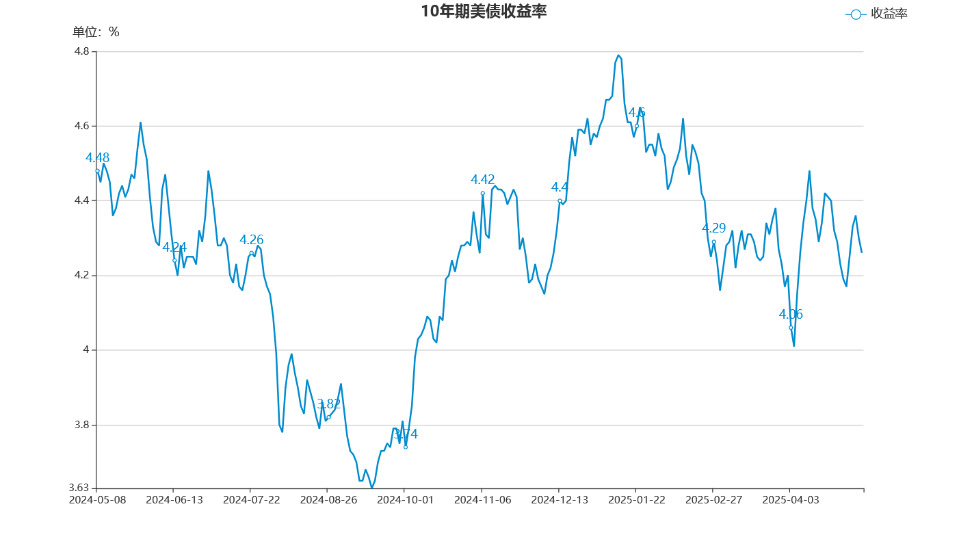
新华财经上海5月8日电(张天源)在5月的利率决策会议上,美联储连续第三次按兵不动,联邦基金利率目标区间维持在4.25%至 4.50%。受此影响,美国国债交易情绪有所恢复,10年期美债收益率跌2.32个基点报4.2694%。 周三(5月7日),美债收益率全线走低,2年期美债收益率跌0.83个基点报3.7744%,3年期美债收益率跌0.84个基点报3.7472%,5年期美 债收益率跌2.97个基点报3.8626%,10年期美债收益率跌2.32个基点报4.2694%,30年期美债收益率跌2.62个基点报4.7718%。 数据来源:新华财经 美国国债市场在利率决议公布前后的交易情绪较上个月有所修复。美国国债和欧元区国债收益率在当日早盘交易中变化不大,由于近期 美国数据稳健,市场此前就预计美联储将在最新的决定中维持利率不变,并且不太可能在未来几个月发出降息信号。在议息会议前夕, 芝商所的美联储观察工具显示,利率市场的交易员预计美联储暂停加息的概率超过99%。 此外,美联储主席鲍威尔在利率会议后的新闻发布会上表示,美联储不必急于调整利率,目前的政策是适度限制的,美国总统特朗普要 求降息的呼吁不会影响美联储的工作。FOMC ...
四年,印度央行的黄金储备占比翻了一番
Hua Er Jie Jian Wen· 2025-05-06 04:08
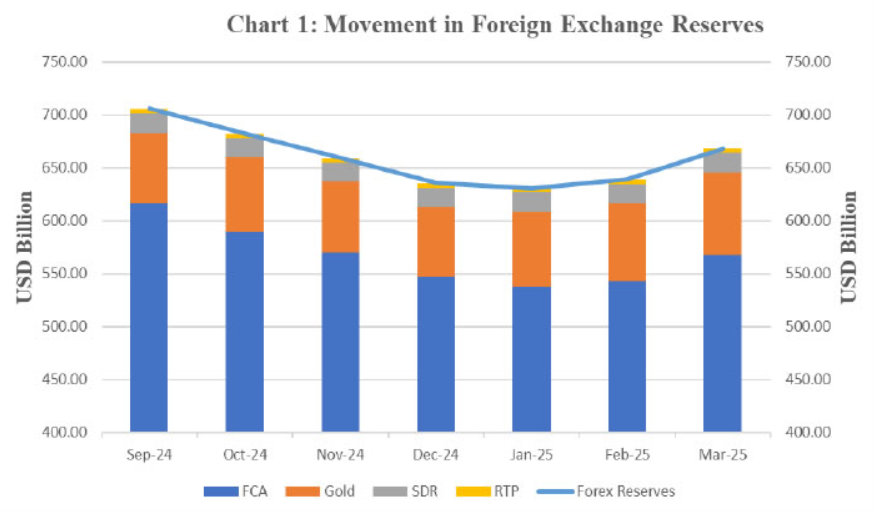
Core Insights - The Reserve Bank of India (RBI) has significantly increased its gold reserves, with the proportion of gold in its foreign exchange reserves nearly doubling in four years [2][4] - As of March 2025, gold accounted for 11.70% of India's total foreign exchange reserves, up from 9.32% in September 2024 and 5.87% in March 2021 [2] - The RBI holds a total of 879.59 tons of gold, with 511.99 tons stored domestically and the remainder held in secure locations abroad [4] Global Central Bank Trends - Central banks worldwide are actively increasing their gold purchases to diversify assets, enhance financial stability, and mitigate risks associated with inflation and currency fluctuations [5] - In the first quarter of 2025, global central banks net purchased 244 tons of gold, maintaining the average level seen over the past three years [5] - Factors such as geopolitical uncertainty, dollar volatility, and concerns over U.S. Treasury securities are driving central banks to increase their gold reserves [5]
离岸人民币兑美元汇率盘中升至7.1892
Sou Hu Cai Jing· 2025-05-05 10:50
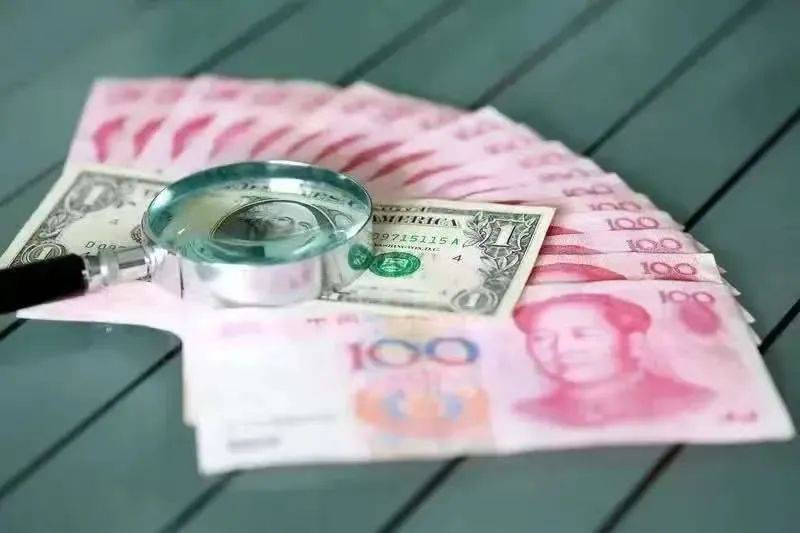
Core Viewpoint - The offshore RMB has strengthened against the USD, breaking the 7.20 mark for the first time since November 2024, driven by reduced risk sentiment and market optimism regarding US-China trade negotiations [2][5]. Exchange Rate Movement - Since reaching a low of 7.4, the offshore RMB has appreciated nearly 2.7% from April 8 to the present [2]. - On May 5, the offshore RMB/USD rate peaked at 7.1892 before slightly retreating to around 7.2041 by the end of the day [2]. - The recent surge began on April 30, with the offshore RMB rising from 7.27 to below 7.20, marking a 1% increase [2]. Market Sentiment and Influences - Market expectations of progress in US-China trade talks and reduced tensions have contributed to the RMB's strength [5]. - The Chinese Ministry of Commerce noted the US's willingness to negotiate on tariffs, which has been positively received by the market [5]. - A crowded long position in the USD and changing market dynamics regarding US economic conditions have triggered a new wave of USD selling [5]. Regional Currency Trends - The RMB's rise coincides with appreciation in other Asia-Pacific currencies, such as the Malaysian Ringgit, South Korean Won, and Thai Baht, all gaining over 1% against the USD [6]. - The Hong Kong Dollar has also strengthened, reaching its trading limit, influenced by the strong performance of the RMB and capital inflows from mainland China [6][7]. Capital Flows and Market Dynamics - Significant capital inflows from mainland China into Hong Kong have been observed, with net purchases through the Stock Connect channels reaching 570.9 billion CNY in 2025 [7]. - The upcoming dividend payments from Chinese companies listed in Hong Kong, totaling 36.1 billion USD, are expected to increase demand for the Hong Kong Dollar [7]. Future Outlook - The RMB exchange rate is expected to remain volatile in the second quarter but may stabilize over the year due to potential macroeconomic stimulus measures from the Chinese government [8]. - The People's Bank of China is anticipated to implement further monetary easing, including possible reserve requirement ratio cuts and interest rate reductions [8]. - The future trajectory of the RMB will depend on the progress of US-China negotiations and the potential recovery of Chinese exports [8][9].
4月30日电,利弗莫尔证券显示,北京讯众通信技术股份有限公司向港交所提交上市申请书,独家保荐人为星展银行。
news flash· 2025-04-30 14:56
智通财经4月30日电,利弗莫尔证券显示,北京讯众通信技术股份有限公司向港交所提交上市申请书, 独家保荐人为星展银行。 ...
陈之常率团赴新加坡访问
Nan Jing Ri Bao· 2025-04-28 02:04
Group 1 - The core viewpoint of the news is the strengthening of economic and trade cooperation between Nanjing and Singapore, highlighted by a delegation visit led by Mayor Chen Zhichang [1][2] - The Nanjing-Singapore Economic and Trade Cooperation Exchange Conference was attended by over 170 well-known Singaporean enterprises, financial institutions, universities, and business associations, showcasing Nanjing's investment environment [1] - Strategic emerging industries and modern service projects were signed during the visit, indicating a fruitful outcome in economic collaboration [1] Group 2 - There is a growing trend of Singaporean enterprises investing in Nanjing, with discussions focusing on cooperation in headquarters economy, energy development, cultural tourism, and community elderly care [1] - The visit included discussions with Singapore's National University and Nanyang Technological University to enhance innovation cooperation and talent exchange [2] - The delegation also engaged with various Singaporean governmental and business entities to learn from their advanced experiences in urban planning, redevelopment, and airport operations [2]
从跨境投资“首选地”到全球科创“新磁极” 前海答问高水平对外开放
2 1 Shi Ji Jing Ji Bao Dao· 2025-04-28 01:38
Core Insights - The article highlights the significant growth and development of the Qianhai Free Trade Zone in Shenzhen, showcasing its resilience against global trade uncertainties and its role as a hub for foreign investment and cross-border e-commerce [1][3][4] Trade and Investment - Qianhai's foreign trade import and export value surged from 71.2 billion yuan in 2015 to 537.98 billion yuan in 2024, achieving a 7.5-fold increase [1] - In the first quarter of this year, Qianhai attracted 502 new foreign enterprises, with 416 being from Hong Kong, marking a year-on-year growth of 89.1% [1][8] - The area accounted for 47.1% of Shenzhen's total foreign investment and 67.2% of Guangdong's Free Trade Zone [1] Cross-Border E-commerce - Qianhai is projected to handle a cross-border e-commerce import and export volume of 372 billion yuan in 2024, maintaining its position as the top region in China for three consecutive years [3][4] - The Qianhai Comprehensive Bonded Zone achieved an import and export value of 375.25 billion yuan in 2024, a 49.9% increase, ranking fourth nationally and first in Guangdong [4] Financial Innovation - Qianhai has established six cross-border financial innovation brands, including cross-border loans and dual-currency bond issuance, with cross-border receipts exceeding 1 trillion yuan by March this year [9] - The area has attracted over 460 financial institutions, with nearly 30% being foreign or Hong Kong-based [9] Legal Environment - A survey indicated that 75.29% of enterprises prioritize a fair legal environment when investing in Qianhai, with 92.15% willing to sign contracts under Hong Kong law [11] - Qianhai has implemented the first investor protection legislation in the country, addressing foreign investors' concerns regarding intellectual property and government procurement [12] Technological Innovation - Qianhai is fostering a high-level technology innovation ecosystem, encouraging integrated innovation across the entire industry chain, as highlighted in the recent government policy [14] - The area has seen the emergence of high-performance technology companies, such as Ruisi Chip, which has developed a RISC-V server chip with significant performance improvements [15] Talent Attraction - Qianhai has implemented policies to attract top global talent, including tax incentives for high-end and scarce talent, benefiting over 3,255 individuals [15]

专访星展中国行长、行政总裁郑思祯:新形势下,民营企业“出海”仍是未来发展的长期趋势
Zhong Guo Ji Jin Bao· 2025-04-26 15:33
【导读】专访星展中国行长、行政总裁郑思祯:新形势下,民营企业"出海"仍是未来发展的长期趋势 近年来,民营经济高质量发展备受市场瞩目。自2月17日民营企业座谈会召开以来,短短两个月内,从中央到地方密集出台一系列政策举措,加码促进民 营经济的发展。 民营经济在我国经济蓬勃发展的宏大版图中不仅占据着举足轻重的地位,也是中国经济的鲜活体现,是推动中国高质量发展的重要力量。 在全球经济格局风云变幻的当下,中美贸易战无疑成为影响经济走向的关键变量,也为我国民营经济的发展带来一定不确定性,但征程上的曲折只是短暂 的"涟漪"。 在此背景下,我们邀请到星展中国行长、行政总裁郑思祯,以其视角解读中国企业"出海"的新思路,共同探寻新形势下民营企业高质量发展之路。 中国制造业和服务业将向价值链上游迈进 《中国基金报》:贸易战这一扰动因素为我国今年经济发展特别是外贸领域业务带来了一定的"阴霾",在此背景下,如何看待中国经济发展的韧性问题? 郑思祯:在当前关税政策对全球经济造成冲击的背景下,我认为中国在应对贸易保护主义方面相较于以往处于更有利的位置。换言之,相比2018年的中美 贸易战初期,中国经过几年的调整,已经具备更强的能力来应对挑 ...

数字战略驱动下商业银行风险治理的实践和思考
Jin Rong Shi Bao· 2025-04-21 02:42
Core Viewpoint - The transformation of risk governance in commercial banks is shifting from an "experience-driven" model to a "data intelligence-driven" paradigm, necessitating a balance between innovation and risk control in the digital economy era [1][2][3] Group 1: Digital Strategy Driving Logic - The dual pressure from external and internal environments compels commercial banks to reconstruct their risk governance systems [3][4] - External pressures include the digital migration of customer behavior, reshaping market competition, and rigid regulatory policies [3][4] - Internal efficiency drives banks to adopt digital strategies, with AI automation significantly improving operational efficiency [4][5] Group 2: Challenges of Traditional Risk Governance Paradigm - Traditional risk governance faces systemic flaws, including delayed information processing, narrow risk coverage, and inefficient collaboration mechanisms [5][6] - Information processing is hindered by reliance on static data, leading to delayed risk identification [5][6] - Risk coverage is limited, focusing primarily on large enterprises while neglecting small and medium-sized enterprises [5][6] Group 3: Intelligent Leap in Risk Governance Paradigm - Digital technology is fundamentally restructuring the risk governance framework of commercial banks, transitioning from experience-based to data-driven models [7][8] - Risk identification is evolving from static experience to dynamic penetration, utilizing non-structured data and behavior modeling [8][9] - Risk assessment is shifting from linear approval processes to intelligent control across the entire chain, enhancing efficiency and reducing operational risks [9][10] Group 4: Emergence of New Risks - Traditional risks are becoming more complex, with credit risk evolving into ecosystem-wide contagion and market risk transforming into algorithmic resonance shocks [14][15] - New risks are emerging, characterized by data sovereignty and security risks, as well as vulnerabilities due to over-reliance on technology [16][17] Group 5: Regulatory Response - A dual framework of agile regulation and resilient governance is proposed to address the complex risk ecology of the digital economy [18][19] - Agile regulation focuses on rule restructuring driven by technology, enhancing regulatory efficiency and transparency [19][20] - Resilient governance emphasizes adaptive rules and collaborative mechanisms to strengthen the system's ability to withstand shocks [21][22]