
欧莱雅

Search documents
Investors Now See Some Corporate Bonds as Safer Bets Than Government Debt
Yahoo Finance· 2025-11-12 14:21
In the 10 years after the global financial crisis, net supply — new debt minus old bonds coming due — grew at similar rates for governments and corporates, according to Bloomberg indexes. Since 2020, sovereign debt issuance has raced ahead after governments introduced expensive policies to buoy their economies during widespread Covid lockdowns.The power to raise taxes and print money has meant that, for decades, the core of portfolio construction in the US or Europe has been Treasury bonds, followed by Germ ...
深度|2025“双11”观察:美妆赛道头部平台何以强者恒强?
FBeauty未来迹· 2025-11-12 12:44
Core Insights - The 2025 "Double Eleven" event marked a significant commercial transformation, with a total transaction volume of 1,695 billion yuan, reflecting a year-on-year growth of 14.2% [2] - Tmall maintained its dominance in the e-commerce sector, capturing 50.19% of total transaction volume across five major platforms and 59.8% among three comprehensive platforms [2] E-commerce Performance - Tmall Beauty accounted for 61% of the transaction volume among Tmall, JD, and Douyin, up from 50.9% in 2024, indicating an expanding market share [3] - The 88VIP membership program significantly contributed to Tmall Beauty's growth, with brands like Proya and Estée Lauder achieving over 100 million yuan in sales within minutes of the event [3][4] Membership Growth - The 88VIP program saw a compound annual growth rate (CAGR) of 13% from January 2024 to November 2025, indicating a strong increase in brand engagement [4] - By the second quarter of 2025, the total number of 88VIP members reached 53 million, with a peak increase of 7 million members in a single quarter [6] Consumer Segmentation - The high-value consumer segments, identified as "Beauty Explorers" and "Luxury Care Enthusiasts," spend significantly more on beauty products compared to the average market consumer [10] - 62% of the spending from "Beauty Explorers" comes from online channels, highlighting the importance of digital platforms in reaching this demographic [10] Brand Ecosystem - Tmall has evolved from a channel pioneer to a brand incubator and a partner for guaranteed growth, showcasing its robust ecosystem for beauty brands [12] - The platform hosts over 35,000 active beauty brands, with a survival rate of over 60%, indicating a healthy commercial environment [13][14] Consumer Behavior Trends - In 2025, consumer satisfaction during "Double Eleven" was primarily influenced by product attributes and experiences rather than promotions and pricing, with 43% of consumers prioritizing these factors [17] - This shift in consumer focus aligns with Tmall Beauty's strategy of fostering high-quality user relationships and a strong brand ecosystem [27] New Product Launches - Nearly 40,000 brands launched 245,000 new products on Tmall in the month leading up to "Double Eleven," a 46% increase from the previous year [19] - Tmall's new product promotion ecosystem, enhanced by AI tools, has streamlined the process from market insight to product launch, significantly improving the chances of new product success [23] Strategic Advantages - Tmall Beauty's competitive edge is derived from a combination of deep membership engagement, a broad platform ecosystem, and precise technological innovations [28] - The focus has shifted from price competition to value creation, with Tmall leveraging technology to enhance the shopping experience and meet consumer needs [28][29]


科蒂的“隐忧”藏不住了
Bei Jing Shang Bao· 2025-11-12 12:15
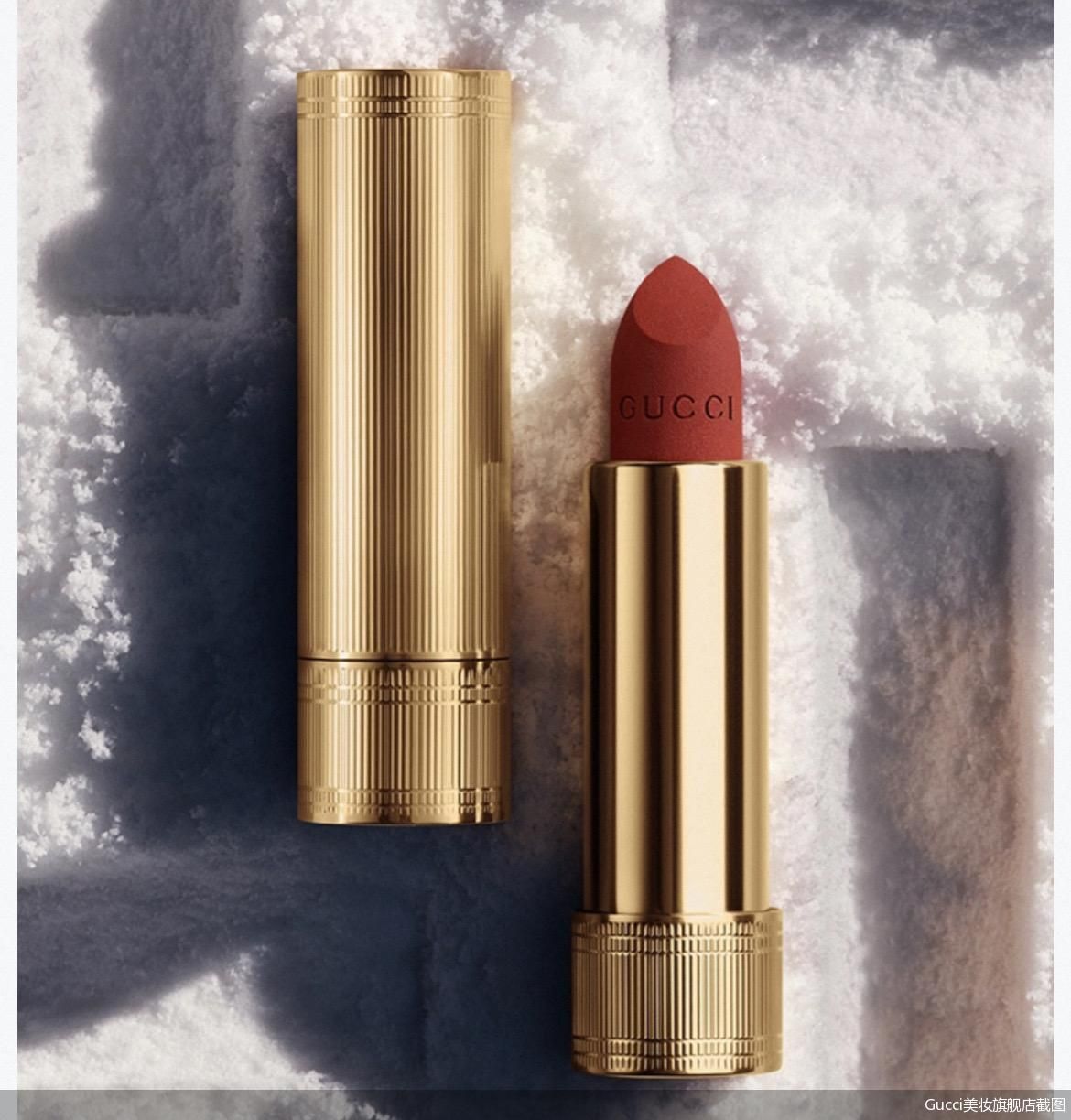
Core Viewpoint - Coty is facing significant challenges as it is set to lose its beauty licensing rights for Gucci, which is expected to have a substantial impact on its business and brand strategy [1][3][4]. Group 1: Legal Action and Licensing Issues - Coty has filed a lawsuit against Kering Group and Gucci over the beauty licensing agreement, claiming a breach of its right to renew the contract [1][3]. - The agreement between Kering and L'Oréal for Gucci's beauty licensing is set for a 50-year term, effectively barring Coty from any future collaboration with Gucci after 2028 [3][4]. - Coty's CEO, Sue Nabi, has stated the company will defend its rights until the contract's expiration [3]. Group 2: Financial Impact - The loss of Gucci is projected to result in a revenue loss of approximately $500 million for Coty within the year [4]. - Gucci's beauty division has been a crucial part of Coty's revenue, contributing over 60% to its high-end beauty segment [4]. - Coty reported a net revenue of $5.893 billion for the fiscal year 2025, a decline of 3.68%, and incurred a loss of $381 million, indicating ongoing financial struggles [7]. Group 3: Market Position and Strategy - The beauty market is experiencing polarization, and losing Gucci will significantly impact Coty's high-end strategy and brand competitiveness [5]. - Coty has a history of relying on licensed brands, which poses risks as contracts expire, with other brands like Miu Miu already moving to L'Oréal [7][8]. - To mitigate risks, Coty is focusing on developing its own brands, such as the newly launched Infiniment Coty Paris, aiming to establish a strong presence in the fragrance market [8].

财经观察丨爆发的香水市场
Xin Hua Wang· 2025-11-12 08:01
Core Insights - The Chinese perfume market is experiencing significant growth, with an average increase of over 20% in the past five years, projected to reach a market size of 250 billion in 2024 and potentially exceed 300 billion in 2025, with expectations to surpass 500 billion by 2029 [1] International Brands Dominance - International brands are key players in the high-end perfume market, with L'Oréal reporting an 11% growth in its perfume business for the first half of 2025, and Estée Lauder noting a 9% organic net sales growth in the Asia-Pacific region, driven by the Chinese market [2] - The competitive landscape of the Chinese perfume market resembles a pyramid structure, with high-end segments dominated by international brands such as Chanel, Dior, and Jo Malone [2] - Data from major sales platforms like Taobao and Tmall indicate that international brands continue to dominate the top ten perfume sales rankings [2] Localization Strategies - International brands are increasingly localizing their products by incorporating culturally significant ingredients and launching limited edition gift sets for traditional Chinese festivals [3] - The import value of perfume products in China surpassed that of body care products for the first time in Q1 2025, with a strong growth trend reflected in a 20.5% year-on-year increase in import value to 600 million USD in the first half of 2025 [3] Domestic Brands' Emergence - Domestic brands are actively competing in the mid-to-high-end market, with brands like Guansha and Wenxian achieving higher price points than some international counterparts [4] - Cultural storytelling is becoming a crucial strategy for domestic brands to enhance their market positioning, with a focus on integrating Eastern aesthetics into their products [5] - Domestic high-end perfume brands are attracting investment from major players like L'Oréal and Estée Lauder, indicating growing interest and potential in this segment [5] Market Potential and Trends - The Chinese perfume market has a low penetration rate of only 5%, compared to 40% in mature markets, indicating substantial growth potential [6][7] - The market is evolving towards a more diverse segmentation, with a notable increase in demand for niche and unique fragrances that reflect individual preferences [7] - The overall market structure is shifting, with high-end perfumes gaining a larger share, while low-end segments are experiencing slight declines [7]


最新,全球美妆十强排名又变了
3 6 Ke· 2025-11-12 02:29
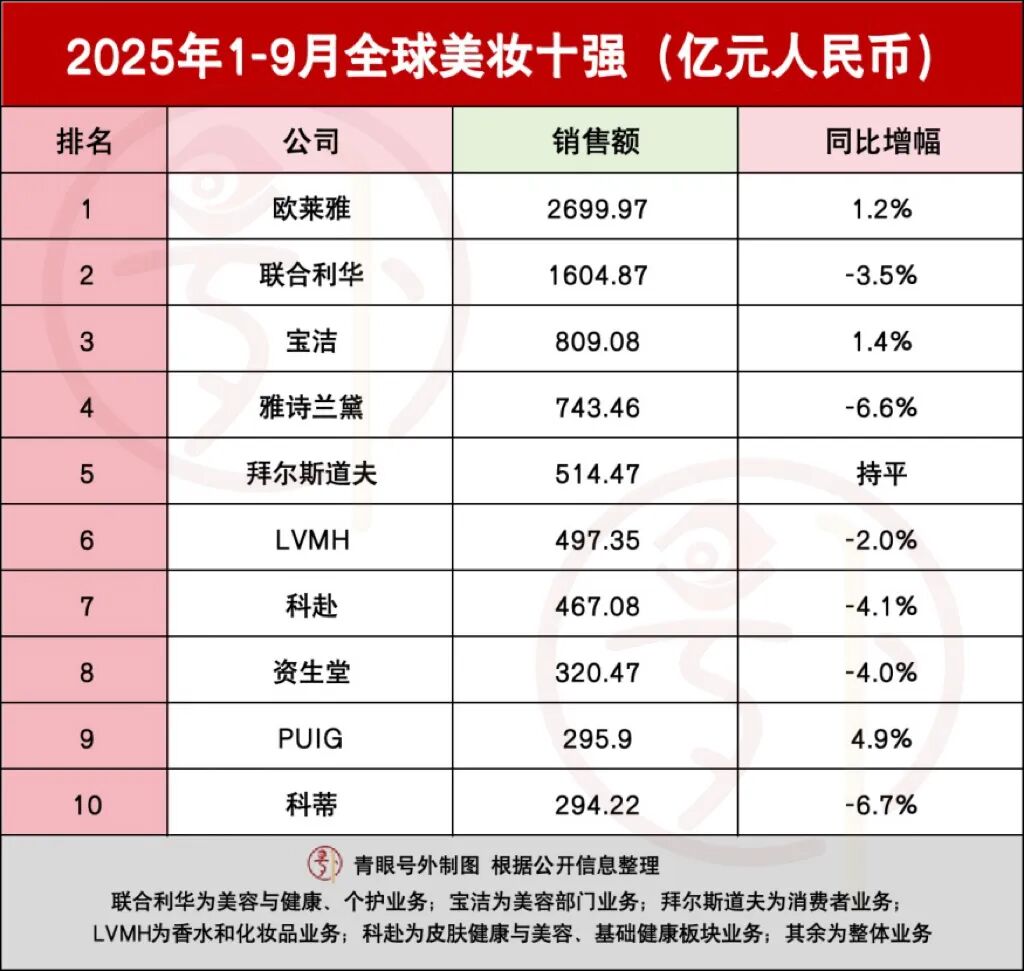
Core Insights - The global beauty market is undergoing transformation amidst resilience, with the top ten beauty companies showing mixed performance in sales and growth [1][10] - The overall sales of the top ten beauty companies reached 824.69 billion RMB in the first three quarters of 2023, a 5.3% increase from 783.42 billion RMB in the same period last year [1][2] Sales Performance - L'Oréal leads the ranking with a sales figure of 269.99 billion RMB, marking a 1.2% increase [2] - Unilever follows with 160.49 billion RMB, but experienced a decline of 3.5% [2] - Procter & Gamble and Estée Lauder reported sales of 80.91 billion RMB and 74.35 billion RMB, respectively, with growth rates of 1.4% and a decline of 6.6% [2][3] - Only L'Oréal, Procter & Gamble, and Puig showed sales growth among the top ten companies, while Coty experienced the largest decline at 6.7% [3] Strategic Adjustments - Companies like Unilever and Coty are undergoing significant strategic changes, including layoffs and asset divestitures, to adapt to market conditions [4] - Estée Lauder has initiated a "Reinventing Beauty" plan to restructure its operations and brand management [4] High-End Beauty Market - The high-end beauty market is showing signs of recovery, with Estée Lauder reporting a 4% increase in net sales in Q3 2023 [7][8] - L'Oréal's growth in the high-end skincare segment in China has been a significant driver of its performance [8][10] China Market Dynamics - The Chinese market is emerging as a new growth engine for international beauty companies, with Coty reporting a 15% increase in high-end beauty sales in China [10][11] - Procter & Gamble's sales in the Greater China region grew by 5%, indicating a positive trend [10][11] - Estée Lauder has begun to treat the Chinese mainland as a separate reporting region, highlighting its importance [11] Future Outlook - The global beauty market is in a phase of adjustment, with high-end beauty recovery and the Chinese market's resurgence being key factors for future growth [10][11] - Companies that can adapt to changing consumer demands and leverage digital transformation are likely to succeed in the evolving competitive landscape [11]


海外美妆龙头财报跟踪:高端是否率先复苏?
2025-11-12 02:18
Summary of Conference Call Records Industry Overview - The high-end beauty market in mainland China is showing signs of recovery, with several foreign beauty brands such as La Perla, L'Oréal, and Estée Lauder reporting performance growth, reversing previous declines. This recovery is primarily driven by high-end consumer demand rather than currency fluctuations [1][2][4]. Key Insights and Arguments - **Market Recovery**: LVMH achieved mid-single-digit growth in mainland China for the first time in the third quarter, exceeding market expectations. La Perla reported double-digit growth, a performance not seen in years [2][3]. - **Long-term Trends**: Despite short-term uncertainties, companies like Shiseido and L'Oréal expect the trend of high-end beauty market recovery to continue. Shiseido has adjusted its business metrics to reflect double-digit growth when combining travel retail and domestic sales [1][4]. - **Consumer Demand**: The demand for beauty and health remains strong, with companies like L'Oréal and Puig seeing significant performance in medical-grade skincare and fragrance categories [1][5][6]. - **E-commerce Growth**: Online channels are crucial for sales growth, with L'Oréal's e-commerce channel in China experiencing double-digit growth. Offline sales in high-end malls are also showing signs of recovery [8]. Additional Important Points - **Promotional Strategies**: During the recent Double Eleven shopping festival, foreign brands like Lancôme and Helena Rubinstein achieved significant online growth, primarily through discount strategies, which impacted profit margins [9]. - **Local Brand Advantage**: Chinese local brands have advantages in supply chain responsiveness and understanding rapidly changing consumer demands. This positions them well for long-term market share growth [13][15]. - **Market Sentiment**: The overall market sentiment in 2024 is low, but the beauty sector shows resilience. Companies like L'Oréal have begun to recover after experiencing negative growth in previous quarters [5][11]. - **Competitive Landscape**: The competition between foreign and local brands is characterized by foreign brands leveraging online discounts while local brands focus on supply chain agility and consumer responsiveness. This dynamic is expected to continue without significantly hindering local brands' growth [15]. Conclusion - The high-end beauty market in China is on a recovery path, driven by strong consumer demand and effective sales strategies across various channels. While the overall market sentiment remains cautious, the resilience of the beauty sector and the competitive advantages of local brands suggest a promising outlook for future growth.
可选消费W45周度趋势解析:海内外消费子版块均无共振,内部因素催化股价表现-20251111
Haitong Securities International· 2025-11-11 15:11
Investment Rating - The report assigns an "Outperform" rating to multiple companies including Nike, Midea Group, JD Group, Haier Smart Home, Gree Electric, Anta Sports, China Duty Free, and others [1]. Core Insights - The report highlights that domestic and overseas consumer subsectors are not showing synchronized movements, with internal factors driving stock performance [4][10]. - The performance of various sectors is analyzed, indicating that the U.S. hotel sector has outperformed others, while luxury goods and overseas cosmetics have seen significant declines [10][13]. Sector Performance Summary - **U.S. Hotels**: The sector saw a weekly increase of 7.9%, driven by strong performance from Marriott and Hilton, with Marriott's RevPAR growth meeting market expectations [5][13]. - **Pet Sector**: Increased by 1.1%, with leading brands showing significant growth in GMV despite overall sales being weak [5][13]. - **Gambling Sector**: Rose by 0.7%, with Macau's GGR exceeding expectations, indicating strong future performance [5][13]. - **Retail Sector**: Experienced a slight decline of 0.3%, with China Duty Free benefiting from new tax policies [7][13]. - **Snack Sector**: Fell by 1.9%, with competitive pressures affecting performance [7][13]. - **Gold and Jewelry Sector**: Decreased by 2.5% due to tax reforms impacting profitability [7][13]. - **Overseas Sportswear**: Dropped by 2.8%, facing tariff pressures and concerns over U.S. consumer spending [7][13]. - **Luxury Goods**: Declined by 3.0%, with concerns over upcoming earnings reports affecting stock prices [7][13]. - **Domestic Cosmetics**: Fell by 3.4%, with overall performance weaker than international brands [7][13]. - **Overseas Cosmetics**: Experienced a significant drop of 11.6%, primarily due to ELF Beauty's disappointing earnings [7][13]. Valuation Analysis - Most sectors are valued below their average over the past five years, with specific PE ratios indicating potential undervaluation [8][14]. - **Overseas Sportswear**: Expected PE of 28.6, 54% of the past five-year average [14]. - **Domestic Sportswear**: Expected PE of 14.1, 74% of the past five-year average [14]. - **Gold and Jewelry**: Expected PE of 22.1, 42% of the past five-year average [14]. - **Luxury Goods**: Expected PE of 25.6, 46% of the past five-year average [14]. - **Gambling**: Expected PE of 29.1, 47% of the past five-year average [14]. - **Overseas Cosmetics**: Expected PE of 35.5, 53% of the past five-year average [14]. - **Domestic Cosmetics**: Expected PE of 27.9, 52% of the past five-year average [14]. - **Pet Sector**: Expected PE of 40.3, 55% of the past five-year average [14]. - **Snack Sector**: Expected PE of 26.8, 65% of the past five-year average [14]. - **Retail Sector**: Expected PE of 28.6, 53% of the past five-year average [14]. - **U.S. Hotels**: Expected PE of 31.4, 19% of the past five-year average [14]. - **Credit Card Sector**: Expected PE of 28.9, 55% of the past five-year average [14].
天猫双11走到第17年,品牌增长仍是核心命题
财联社· 2025-11-11 11:14
Core Insights - The article highlights the significant growth and transformation in brand operations during the 17th edition of the Double 11 shopping festival, emphasizing the role of instant retail and flash sales in driving consumer engagement and sales growth [1][2][9]. Group 1: Performance Metrics - On the first day of Double 11, 80 brands achieved sales exceeding 100 million yuan, and 30,516 brands saw their sales double compared to the previous year [1]. - The Tmall platform maintained a leading position in the beauty category, capturing 46.2% of the total sales across major platforms during the first cycle of Double 11 [1]. - The instant retail sector saw a remarkable increase, with 19,958 restaurant brands and 863 non-restaurant brands experiencing over 100% growth in sales compared to the pre-Double 11 period [4]. Group 2: Brand Growth Strategies - Domestic designer brands experienced explosive growth, with some achieving over 10 million yuan in sales within the first 10 minutes of the event [2]. - The integration of instant retail across various scenarios is reshaping brand growth strategies, providing new avenues for efficiency and expansion [2][4]. - Tmall's "扶优" strategy aims to support brands that demonstrate originality and long-term value, with increased resources allocated to these brands [14][15]. Group 3: Consumer Engagement and Technology - The introduction of AI technology significantly improved the efficiency of product recommendations, leading to a double-digit increase in traffic distribution efficiency [12]. - The user engagement metrics showed a rise in monthly active users and increased frequency of app usage, enhancing the platform's commercial value [9]. - Flash sales not only drive immediate sales but also help brands gain deeper insights into consumer needs and preferences [6][13]. Group 4: Future Growth Pathways - Tmall is constructing a new growth pathway for brands by integrating multi-scenario consumption, leveraging AI for operational improvements, and utilizing membership systems to enhance customer retention [16]. - The strategies implemented during Double 11 are expected to pave the way for brands to evolve their growth trajectories in the future [16].


部分海外龙头中国业务持续回暖
HTSC· 2025-11-11 08:48
Investment Rating - The report maintains an "Overweight" rating for the consumer discretionary and commercial trade sectors [7]. Core Insights - Several leading overseas beauty and luxury brands are experiencing a recovery in their business in China, with notable growth in Q3 2025 [1][2]. - The overall consumption in mainland China is expected to continue its gradual recovery, supported by positive macroeconomic signals [1]. Summary by Sections Company Performance - LVMH's revenue in the Asia-Pacific region, excluding Japan, returned to positive growth after six consecutive quarters of decline, with Q3 2025 showing a recovery [1]. - L'Oréal's revenue in mainland China grew by approximately 3% year-on-year in Q3 2025, driven by a 4.7% increase in North Asia [2]. - Hermès reported strong growth in the Greater China region, while Estée Lauder achieved a 9% year-on-year increase in its China business [1][2]. - Unilever's business segments in China, excluding ice cream, also showed signs of recovery [1]. Channel Insights - Online channels have seen significant growth, with L'Oréal and Beiersdorf reporting year-on-year increases of 12% and 19.2% respectively in Q3 [3]. - Travel retail remains under pressure but has shown marginal improvements, with L'Oréal and Kering noting slight revenue recovery [3]. Category Insights - The medical aesthetics segment, particularly high-demand products like Sculptra, has seen a year-on-year revenue increase of 11.8% in Q3 2025 [4]. - Skin science skincare products, including brands like Cetaphil and Alastin, reported double-digit growth, contributing to a 9.3% year-on-year increase in the skincare segment [4]. - Fragrance categories also performed well, benefiting from new product launches by L'Oréal and LVMH [4]. Performance Guidance - Galderma has raised its full-year revenue growth guidance for FY25 to 17.0%-17.7%, up from a previous estimate of 10%-12% [5]. - Procter & Gamble expects a revenue growth rate of 1%-5% for FY26, maintaining its guidance for Q4 2025 [5]. - Unilever anticipates a potential sales growth rate of 3%-5% for FY25, with Q2 revenue growth expected to exceed that of H1 2025 [5].
第八届进博会闭幕!意向成交额增4.4%达834.9亿美元!
Zheng Quan Ri Bao Wang· 2025-11-11 02:36
11月10日,为期六天的第八届中国国际进口博览会(以下简称"进博会")在上海落幕。在当日召开的进博 会闭幕新闻发布会上,中国国际进口博览局党委书记、副局长吴政平表示,本届进博会成交活跃,按一 年计意向成交额达834.9亿美元,比上届增长4.4%,创历史新高。 新老朋友收获颇丰 常办常新的进博会,历经多年的发展与沉淀,如今已然成为中国吸引外资的一块亮眼"金字招牌"。其强 大的影响力和丰富的机遇,让众多外资企业愈发看好中国市场所蕴含的巨大投资潜力,纷纷加大在华布 局力度。 以多元化科技创新企业3M为例,在进博会的推动下,其在中国市场的发展步伐不断加快。去年进博会 期间,3M上海化工区生产基地正式启用了投资高达5000万美元的智能切割中心。今年8月,3M深耕中 国市场的承诺进一步落地生根,投资数亿元人民币的3M上海化工区生产基地胶带产线扩产项目顺利完 工。 进博会期间,3M还与陶氏公司签署了战略合作备忘录。双方聚焦于新材料与环保技术这一前沿领域, 计划联合开展一系列研发项目。3M中国总裁丁泓禹在现场演讲时说:"进博会是3M展示创新成果、深 化本土合作的重要平台。参展八年以来,我们始终与中国市场同频共振。我们深入了解 ...