
中国商飞

Search documents
又一国产自研飞机将“持证上岗”
Jin Rong Shi Bao· 2025-08-08 07:55
Core Insights - The aviation industry in China is experiencing significant advancements with the successful certification of the AG600 amphibious aircraft, marking a milestone in domestic aircraft development [2] - The C909 aircraft is expanding its operational footprint in Southeast Asia, with multiple airlines utilizing it for new routes, indicating a growing demand for commercial aviation in the region [3] - Financial policies are being implemented to support the international expansion of domestic aircraft, enhancing cross-border financing services and insurance for key export sectors [4] Group 1: AG600 Aircraft Development - The AG600 amphibious aircraft has received the type certificate from the Civil Aviation Administration of China, allowing it to enter the market [2] - The aircraft is notable for being the first large civil aircraft in China to use a fully domestically produced onboard system, filling a gap in the large amphibious aircraft sector [2] - The development timeline includes significant milestones such as its first land flight in December 2017 and its first water flight in October 2018 [2] Group 2: C909 Aircraft Expansion - The C909 aircraft has been wet-leased to VietJet Air, marking the start of commercial operations in Vietnam with a new route connecting Hanoi, Phu Quoc, and Ho Chi Minh City [2] - Southeast Asia is identified as a strategic development area for the C909, with airlines in Laos and Indonesia already operating the aircraft on multiple routes [3] - A total of 15 routes have been opened by three overseas airlines using the C909, transporting over 250,000 passengers [3] Group 3: Financial Policy Support - A new action plan has been issued to enhance cross-border financial services, supporting financing leasing companies in their international operations [4] - The plan emphasizes increased insurance support for key export sectors, including domestic commercial aircraft, to mitigate special risks [4] - Collaboration between insurance and reinsurance companies is encouraged to form a community that enhances risk coverage capabilities [4]
融资租赁助国产飞机打造“强劲引擎”
Jin Rong Shi Bao· 2025-08-08 07:52
Core Viewpoint - The recent annual reports from China's three major airlines—China Southern Airlines, Air China, and China Eastern Airlines—highlight the growing significance of domestically produced aircraft, particularly the C919, with China Eastern Airlines becoming the first operator of the C919 fleet [1] Group 1: C919 Fleet and Operations - China Eastern Airlines has expanded its C919 fleet to 10 aircraft, having executed over 6,500 flights [1] - Among the 10 C919 aircraft operated by China Eastern, 4 are owned outright while 6 are held through financing leases [1] - In total, 16 C919 aircraft have been delivered in China over the past two years, with China Southern Airlines and Air China each operating 3 aircraft, all acquired through different leasing arrangements [1] Group 2: Financing and Leasing Institutions - Of the delivered C919 aircraft, 9 have been provided by financing leasing institutions, with China Southern's 3 aircraft delivered by China Everbright Leasing, ICBC Financial Leasing, and China Southern Leasing, while China Eastern's 6 aircraft were delivered by China Eastern Leasing, Zhuhai Financial Leasing, and ICBC Financial Leasing [2] - Numerous financial leasing companies have engaged in C919 aircraft leasing, with significant orders placed as early as 2010, including a 50-aircraft purchase intention agreement by Guoyin Financial Leasing [2] - Other notable financial leasing companies involved include Agricultural Bank of China Financial Leasing, CCB Financial Leasing, and Ping An Leasing, among others, with various orders totaling up to 50 aircraft [2] Group 3: Market and Policy Support - Approximately 600 out of 1,500 C919 orders received by COMAC are from financial leasing companies, indicating strong market interest [3] - The Chinese government has emphasized the importance of nurturing emerging industries, including commercial aerospace, which aligns with the growth of aircraft leasing as a financial strategy [3] - Financial leasing companies provide crucial support to the domestic aviation industry, helping alleviate financial pressures on airlines and facilitating technological advancements [3]



高质量发展与场景落地提速,地方国企上半年“成绩单”亮眼
Hua Xia Shi Bao· 2025-08-08 06:57
Core Insights - Local state-owned enterprises (SOEs) are playing an increasingly critical role in the current economic landscape, with a strong signal towards accelerating high-quality development [2][3] - The "Deepening and Enhancing State-Owned Enterprise Reform Action" is a key step in promoting high-quality development of local SOEs, with significant achievements reported [3][4] Economic Performance - In the first half of the year, local regulatory enterprises achieved an added value of 3.7 trillion yuan and completed fixed asset investments of 2.7 trillion yuan, indicating a stabilization in operational efficiency [3] - In Chongqing, the number of key state-owned enterprises was reduced from 51 to 33, with a 70% reduction in the number of legal entities, leading to a 37.8% increase in total profits for the restructured enterprises [3] - Hainan Province reported a 35.3% year-on-year increase in total assets of key monitored enterprises, reaching 706.3 billion yuan, with the lowest asset-liability ratio in the country at 39.6% [4] Innovation and Technology - Technological innovation is identified as a key driver for quality improvement across various sectors, with local SOEs in Zhejiang Province achieving significant breakthroughs in critical technology areas [5][6] - R&D expenditure for provincial enterprises in Zhejiang reached 5.53 billion yuan in the first half of 2025, a 20.6% year-on-year increase, ranking fifth nationwide [5] Artificial Intelligence Development - The integration of artificial intelligence (AI) in state-owned enterprises is emphasized, with applications in various sectors such as transportation and urban governance [7][8] - Shenzhen is accelerating the development of 100 strategic high-value application scenarios to provide a testing ground for new technologies [8] Future Directions - There is a call for further strengthening foundational supply capabilities and planning for intelligent computing clusters to provide more efficient services [9] - The focus is on enhancing core technology research and building a flexible model capability matrix to maintain competitive advantages [9]


港媒:从机头到机尾,中国重塑航空供应链
Huan Qiu Wang Zi Xun· 2025-08-05 22:51
Group 1 - The core viewpoint of the articles highlights China's ongoing efforts to localize its aviation supply chain, particularly in the context of the successful development of the C919 aircraft, which has garnered significant attention for the country [1] - The Longjiang 1000A engine, crucial for the C919, is reportedly making good progress in its development, representing a significant step towards China's self-reliance in aerospace technology [1] - The approval of SINOPEC AEH I, China's first domestically produced aviation hydraulic oil, marks a milestone in the country's aviation sector, making China the third nation globally capable of producing aviation-grade phosphate ester hydraulic oil [2] Group 2 - The AES100 engine has received a production license and sales contracts, being the first domestically developed 1000 kW class advanced civil turboshaft engine that adheres to international airworthiness standards, indicating a major advancement in China's aviation capabilities [2] - A new lightning protection technology system has been introduced by Hefei Aerospace Electric Physics Technology Co., which aims to enhance the safety of commercial aircraft in complex weather conditions, potentially improving the reputation of Chinese-made aircraft and facilitating overseas airworthiness certification [3]
上海官宣!发力集成电路、生物医药、人工智能等产业
Zheng Quan Shi Bao· 2025-08-04 11:48
Group 1 - The Shanghai Municipal Government released measures to support enterprises in enhancing basic research and high-quality development [1][4] - The "Explorer Program" aims to attract more companies from key industries such as integrated circuits, biomedicine, and artificial intelligence to participate [1][3] - The program is a collaborative funding initiative between the Shanghai Municipal Science and Technology Commission and participating enterprises, with a minimum annual contribution of 3 million yuan [1][2] Group 2 - The number of participating companies in the "Explorer Program" has expanded from 2 in 2021 to 12 by the end of 2024, including 7 private enterprises [2] - The funding for the program consists of government financial support and contributions from participating enterprises, which must be disbursed within 90 days of government funding [2][3] - The program emphasizes the importance of addressing critical scientific issues and encourages enterprises to play a significant role in proposing research topics [2][3] Group 3 - The measures provide financial incentives for enterprises investing in basic research, including one-time subsidies of up to 10 million yuan for those investing over 100 million yuan annually [4] - Tax incentives are available for enterprises supporting non-profit research institutions and universities, allowing for 100% pre-tax deductions on qualifying expenditures [5] - The measures also encourage the establishment of public welfare foundations for basic research, with government support for projects funded by these foundations [5]

上海官宣!发力集成电路、生物医药、人工智能等产业
证券时报· 2025-08-04 11:46
Core Viewpoint - The article discusses the "Explorer Program" initiated by the Shanghai government to enhance basic research and support high-quality development in key industries such as integrated circuits, biomedicine, and artificial intelligence [1][4]. Group 1: Explorer Program Overview - The "Explorer Program" aims to attract more enterprises from key industries to participate and provides rapid support for urgent research topics proposed by these enterprises [1][4]. - The program is a collaborative funding initiative between the Shanghai Municipal Science and Technology Commission and participating enterprises, with a minimum annual contribution of 3 million yuan from each enterprise [1][3]. Group 2: Funding and Support Mechanisms - The funding for the "Explorer Program" consists of government financial support and contributions from participating enterprises, which must be paid within 90 days after government funding is allocated [3]. - The program offers significant financial incentives for enterprises investing in basic research, including one-time subsidies of up to 10 million yuan for those investing over 100 million yuan annually [6]. Group 3: Encouragement of Research and Innovation - The measures encourage enterprises to increase their investment in basic research and original innovation, providing tax incentives for contributions to non-profit research institutions and universities [6]. - The Shanghai government supports the establishment of public foundations for basic research, matching 50% of the funds contributed by these foundations to research projects [7]. Group 4: Collaboration with Educational Institutions - The measures promote collaboration between universities and enterprises to establish innovation centers, with joint funding from both parties at a 1:1 ratio to address key scientific and technological issues [7].

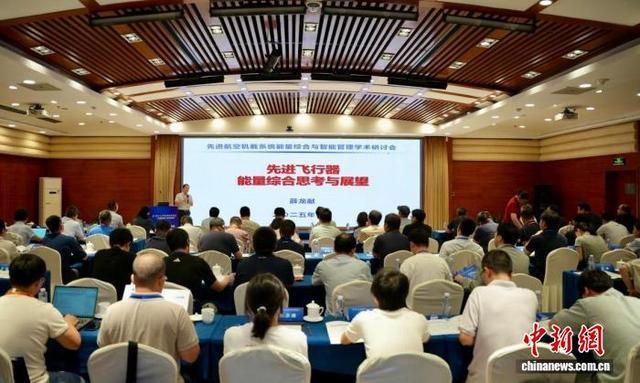
先进航空机载系统、大模型时代计算机网络新技术等专题论坛举办
Huan Qiu Wang Zi Xun· 2025-08-04 09:49
Core Viewpoint - The 27th China Association for Science and Technology Annual Conference successfully held forums on "Advanced Aircraft Onboard System Energy Integration and Intelligent Management" and "New Technologies in Computer Networks in the Era of Large Models" [1][3]. Group 1: Advanced Aircraft Onboard System Energy Integration and Intelligent Management - The forum focused on the energy integration and intelligent management of onboard systems for advanced flight platforms, which is one of the top ten engineering technology challenges selected by the China Association for Science and Technology for 2025 [3][5]. - Experts and scholars presented reports on the background needs, key technological breakthroughs, and future suggestions related to the energy management of advanced aircraft onboard systems [3][5]. - A roundtable discussion led to a consensus on collaborative design and system integration, addressing critical aspects such as energy architecture, thermal management systems, and comprehensive management of engines and power generation systems [3][5]. Group 2: New Technologies in Computer Networks - The forum on new technologies in computer networks discussed the application of large models in network architecture, transmission protocols, traffic management, and security strategies [5]. - Experts presented various reports on topics including network technologies for large-scale intelligent computing and the development opportunities and challenges of AI-driven green computing [5]. - The forum also provided a platform for young scientific talents to showcase their academic achievements through student report exchanges [5].
饮水思源 爱国荣校
Ren Min Ri Bao· 2025-08-03 22:04
Group 1 - Shanghai Jiao Tong University (SJTU) collaborates with Huawei to address "bottleneck" technology issues through joint training programs and high-level mentorship [1] - The partnership aims to enhance talent cultivation and contribute to national and industry development [1] - SJTU emphasizes the importance of moral education and innovative talent training models to nurture responsible individuals for national rejuvenation [1] Group 2 - The Qian Xuesen Library at SJTU commemorates the 70th anniversary of Qian's return to China, highlighting his contributions to science and technology [2] - SJTU integrates ideological and political education into its curriculum, focusing on cultivating students' national pride and sense of responsibility [2] - The university offers specialized courses and practical activities to promote the spirit of scientists among students [2] Group 3 - SJTU's Innovation Center serves as a hub for engineering practice, fostering students' innovative awareness and capabilities [4] - The center provides a comprehensive environment with advanced equipment and collaborative projects to enhance students' practical skills [4] - SJTU updates its curriculum annually to align with industry needs, promoting interdisciplinary approaches to problem-solving [5] Group 4 - SJTU implements a "Zhiyuan Honor Program" aimed at nurturing innovative leaders through focused research platforms [5] - The university's new talent cultivation plan emphasizes cross-disciplinary learning and practical experience to enhance students' capabilities [5] - A comprehensive talent development system is being established to ensure continuous growth from undergraduate to postgraduate levels [5] Group 5 - SJTU's leadership prioritizes the development of high-level talent to support China's modernization efforts [6] - The university focuses on optimizing its academic structure to meet national strategic needs [6] - Emphasis is placed on personalized education to maximize each student's potential [6] Group 6 - SJTU leverages its faculty's expertise to enhance student education, integrating research achievements into teaching [7] - The university recognizes the importance of teaching quality in faculty recruitment and evaluation processes [9] - Faculty members are encouraged to focus on both research and teaching to foster a high-quality learning environment [9]
产学研协同培养高素质人才
Jing Ji Ri Bao· 2025-08-03 22:00
Core Insights - The integration of industry, academia, and research is crucial for achieving high-level technological self-reliance and innovation in China [1] - A significant 41.0% of invention patents by Chinese enterprises are completed in collaboration with universities or research institutions, with strategic emerging industries exceeding 60% in collaboration [1] - Despite notable progress in industry-academia-research integration, challenges such as talent mobility, unclear responsibilities, and vague training objectives remain [1] Group 1 - The establishment of partnerships between universities and enterprises, such as the collaboration between Peking University and Huawei, has led to breakthroughs in foundational research and innovation [1] - The creation of specialized research institutes, like the Guangdong-Hong Kong-Macao Greater Bay Area Precision Medicine Research Institute, demonstrates the push towards applied research and technology transfer [1] - The formation of high-end talent training bases, such as the large aircraft research institute by Beihang University and COMAC, highlights the focus on cultivating skilled professionals in cutting-edge fields [1] Group 2 - Breaking down barriers related to geography, identity, and age is essential for facilitating the dual flow of talent and skills between academia and industry [2] - Encouraging faculty from universities to engage in industry roles and allowing industry experts to teach in academic settings can enhance collaboration and knowledge transfer [2] - A focus on a collaborative education model that integrates industry needs with academic training is necessary to cultivate innovative and versatile talent [2]
激浊扬清,周观军工第130期:八月金股航发动力
Changjiang Securities· 2025-08-03 14:37
Investment Rating - The report maintains a "Positive" investment rating for the defense and military industry [4]. Core Insights - The report highlights the significant growth potential in the military trade equipment sector, particularly focusing on aircraft engines as high-value consumables, which are expected to see increased demand due to long-term maintenance and replacement needs [10][15]. - The potential for domestic aircraft, such as the C919, to penetrate Southeast Asian markets is emphasized, with countries like Malaysia and Pakistan showing interest in adopting these aircraft [38][41]. - The report discusses the strategic positioning of companies like Huayin Technology in stealth materials and the anticipated growth in the ceramic-based composite materials sector [84][86]. Summary by Sections Military Trade Equipment - Aircraft engines hold a primary position in military trade, with their export share decreasing from 3.6% (2014-2018) to 2.0% (2019-2023) [14]. - The demand for maintenance and replacement of aircraft engines is driven by the long service life of military aircraft, which often exceeds the lifespan of the engines themselves [15][18]. C919 Aircraft - The C919 is expected to gain traction in Southeast Asia, with significant interest from Malaysian and Pakistani airlines [41][47]. - The global demand for commercial aircraft remains robust, with Airbus and Boeing having backlogs that exceed their annual delivery rates, indicating a favorable market for the C919 [47][55]. - The C919's production capacity is projected to increase significantly, with plans to reach 200 aircraft per year by 2029 [54][76]. Stealth Materials - Stealth technology is becoming a standard feature in advanced military aircraft, significantly enhancing their operational capabilities [86]. - The report identifies Huayin Technology as a key player in the stealth materials market, focusing on the development of ceramic-based composites [84][86]. Maintenance and Aftermarket - The military aircraft engine aftermarket is projected to exceed 428.7 billion yuan over the next 20 years, with an average annual market value of 21.44 billion yuan [25][28]. - Companies involved in the maintenance and aftermarket services for aircraft engines are expected to see substantial revenue growth as the market expands [28][31]. Supply Chain and Domestic Production - The report outlines the potential for increased domestic production and supply chain development for the C919, with a focus on enhancing the localization rate of components [77][80]. - The growth of domestic suppliers is anticipated to benefit from the increasing demand for locally produced aircraft and components [80][82].
