赤子城科技

Search documents
赤子城科技(09911.HK)全球总部正式落地香港,开启全球化战略新里程
Sou Hu Cai Jing· 2025-06-05 14:30
Core Insights - The establishment of the global headquarters in Hong Kong marks a significant milestone for the company, reflecting its decade-long journey in global expansion and its transition from initial market entry to deeper global engagement [1][3] Group 1: Company Overview - Founded in 2009, the company began its global expansion in 2013 and was listed on the Hong Kong Stock Exchange in 2019 [3] - As of 2024, the company has surpassed HKD 5 billion in revenue, with products like MICO and YOUNOW reaching over 150 countries [3] - The company has established over 20 operational centers in regions such as the Middle East and Southeast Asia, leveraging a dual advantage of localized operations and technology-driven strategies [3] Group 2: Strategic Location and AI Focus - The choice of Hong Kong for the global headquarters is strategic, as it serves as a vital global hub with a favorable business environment, mature capital markets, and access to top talent [3][4] - The company plans to enhance its AI research and development efforts in Hong Kong, focusing on innovations in "AI + social entertainment" such as intelligent content generation and precise recommendation algorithms [3][4] Group 3: Collaboration and Recruitment - The headquarters will act as a hub for industry-academia collaboration, with plans to establish an AI research center in partnership with local universities [4] - The company aims to centralize 90% of its business profits in Hong Kong and has initiated local recruitment, expecting a high proportion of local employees [4] Group 4: Government Support and Funding - The Hong Kong government has introduced significant funding initiatives, including a HKD 3 billion AI funding program and a HKD 10 billion innovation and technology fund, which align with the company's technological upgrade needs [5]


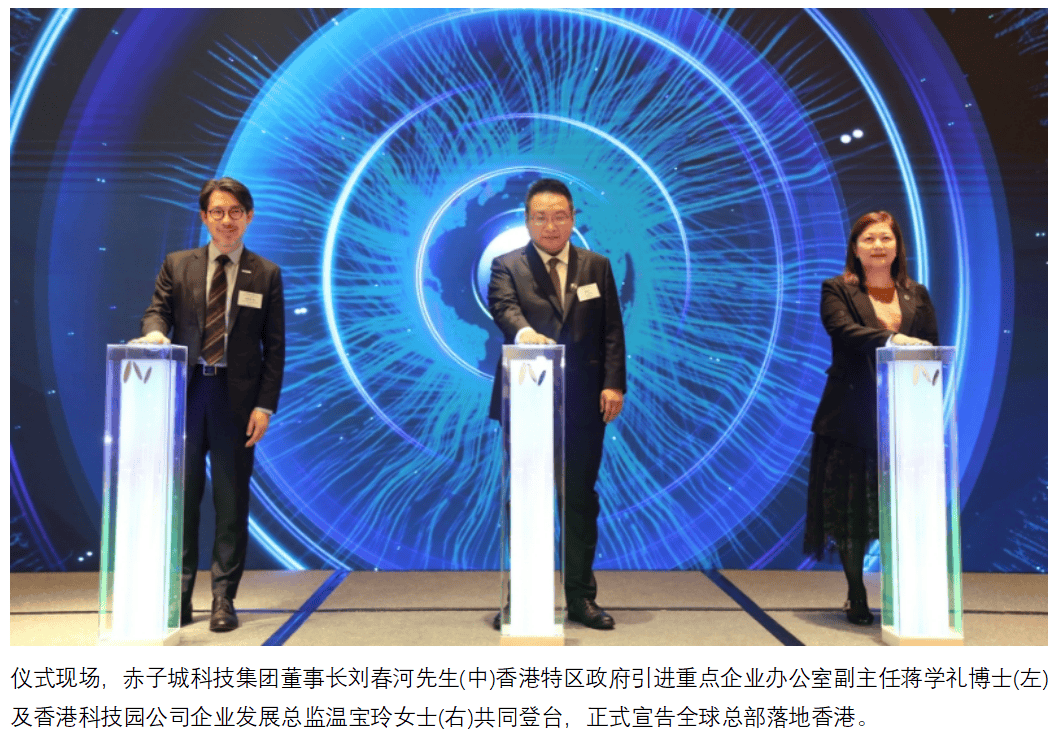
赤子城科技在中国香港设立全球总部,落户香港科学园
Qi Lu Wan Bao· 2025-06-05 11:16
Group 1 - The global headquarters of the company, ZhiZi City Technology, was officially launched in Hong Kong, marking a significant milestone in its globalization strategy [1][4] - The company has established over 20 operational centers in markets such as the Middle East and Southeast Asia, with its products reaching over 150 countries and regions [5] - The chairman of the company emphasized Hong Kong's international business environment, mature capital market, and top talent resources as key factors for the headquarters' establishment [4] Group 2 - The company plans to focus on two main directions in Hong Kong: exploring deep applications of artificial intelligence in social entertainment and gathering global talent to promote industry-academia-research collaboration [8] - The establishment of the global headquarters in Hong Kong follows the opening of a regional headquarters in Riyadh, Saudi Arabia, enhancing the company's connection with the Middle Eastern market [8] - The company aims to foster innovation and collaboration with the Hong Kong government, industry partners, and investment institutions to create a positive global impact [8]

互联网板块深度回调,多重压力下市场震荡
Guoyuan Securities2· 2025-06-03 10:44
Investment Rating - The report suggests a cautious outlook on the internet sector, indicating that the Hang Seng Technology Index is experiencing downward pressure due to external policy shocks, internal performance divergence, and liquidity rebalancing [4][36]. Core Insights - The decline in the Hang Seng Technology Index is attributed to a combination of external policy shocks, such as US tariff escalations and high US Treasury yields, alongside weak domestic PMI and underperforming internet company earnings [4][36]. - Despite the current downturn, the sector's valuation remains at historical lows, with the Hang Seng Technology Index PE percentile at 15%, suggesting limited downside potential [4][36]. - The report highlights the importance of trade negotiations and Federal Reserve decisions as key factors influencing market trends, with a recommendation to focus on specific companies like浪潮数字企业 (596.HK), 赤子城科技 (9911.HK), and 美兰空港 (357.HK) [4][36]. Market Performance Summary - The Hang Seng Index and Hang Seng Technology Index saw weekly declines of -1.32% and -1.46%, respectively, while US indices experienced gains, with the Dow, S&P 500, and Nasdaq rising by +1.60%, +1.88%, and +2.01% [5][6]. - The software and services sector's PE-TTM stands at 22.1x, while the PS-TTM is at 4.32x, indicating a relatively high valuation compared to historical standards [12][14]. - The internet technology, e-commerce, and social media sectors within the US market have shown significant declines, with the Nasdaq 100 Index's dynamic PE valuation at approximately 33.2 [14][36]. Industry Data - The Chinese software industry reported a revenue of over 4 trillion yuan in the first four months of 2025, reflecting a year-on-year growth of 10.8% [32]. - The gaming market in China reached a size of 273.51 billion yuan in April 2025, with a year-on-year growth of 21.93% [30]. - The film industry saw a total box office of 4.80 billion yuan in the week of May 26 to June 1, 2025, with a notable increase in audience turnout during the Dragon Boat Festival [28].
赤子城科技(9911.HK):中国社交出海先锋 多元产品矩阵逐鹿全球
Ge Long Hui· 2025-06-02 20:12
Group 1 - Core viewpoint: The company is strategically positioned to capitalize on the overseas internet population dividend and the high growth trend of audio and video social networking, continuously exploring niche market demands and expanding its product matrix to initiate a new growth cycle [1] - Key insight 1: The company's core business advantages include strong organizational capabilities, deep local product operations, a multi-country and multi-product strategy that allows for low marginal costs and rapid iteration, and a diverse product offering that meets various emotional value needs across different social scenarios [1] - Key insight 2: The acquisition of BlueCity Brothers is a rare asset, and the launch of the HeeSay brand overseas aims to tap into the growing LGBTQ market, with the company’s product Blued maintaining a leading position in the domestic LGBTQ social sector [1] Group 2 - Key insight 3: The global casual gaming market is expanding, with the company’s flagship game "Alice's Dream: Merge Island" projected to achieve a 60% year-on-year revenue growth in 2024 and potentially become profitable by the fourth quarter of 2024 [2] - Key insight 4: The company has several mobile games in the pipeline, which are expected to contribute additional revenue in the latter half of the year [2] - Financial forecast: The company’s revenue and profit are expected to steadily increase, with projected revenues of 6.6 billion, 8.3 billion, and 10.3 billion yuan for 2025-2027, and corresponding net profits of 980 million, 1.34 billion, and 1.78 billion yuan [2]
赤子城科技(09911):公司深度报告:中国社交出海先锋,多元产品矩阵逐鹿全球
Guohai Securities· 2025-06-01 09:04
Investment Rating - The report assigns a "Buy" rating for the company, marking its first coverage [1]. Core Insights - The company is positioned as a pioneer in overseas social networking, leveraging a diverse product matrix to capture global opportunities [8]. - The report highlights the company's stable core business in social networking, with strong growth potential from late-stage products [8]. - The acquisition of BlueCity Brothers is noted as a strategic move to tap into the growing LGBTQ market, with the launch of the HeeSay brand aimed at expanding into Southeast Asia and Western markets [9]. - The company is also expanding its presence in the casual gaming sector, with a notable increase in revenue from its flagship game [10]. Company Overview - The company has a decade-long history of development, combining self-developed and acquired products to build a diverse product matrix [14][15]. - The business model is divided into two main segments: social business and innovative business, with social business contributing the majority of revenue [17]. Financial Performance - Revenue is projected to grow significantly, with estimates of 6.628 billion in 2025, 8.297 billion in 2026, and 10.274 billion in 2027 [6]. - The company expects a rebound in net profit, forecasting 980 million in 2025, 1.335 billion in 2026, and 1.774 billion in 2027 [6]. - The adjusted EBITDA is also anticipated to rise, with projections of 1.319 billion in 2025 and 1.739 billion in 2026 [6]. Market Position - The global social application market is experiencing rapid growth, with the company focusing on localized operations and a multi-modal product strategy to meet diverse user needs [36][41]. - The report indicates that the company has a strong understanding of local markets, which enhances its operational effectiveness [56]. Product Strategy - The company has developed a multi-product strategy that allows for rapid iteration and testing, reducing marginal costs and diversifying market risk [57]. - Key products include MICO, YoHo, TopTop, and SUGO, each targeting different social interaction needs [8][9]. Growth Potential - The report emphasizes the potential for significant growth in the LGBTQ social networking space, particularly through the HeeSay brand [9]. - The casual gaming segment is also highlighted as a promising area, with expectations for continued revenue growth from new game releases [10].
2025年中餐连锁品牌出海白皮书
亿欧智库· 2025-05-31 00:15
Investment Rating - The report does not explicitly state an investment rating for the industry Core Insights - The internationalization of Chinese cuisine is driven by multiple factors including policy support, the growth of overseas Chinese communities, and the economic vitality of target markets [30][41] - The scale of Chinese restaurant brands going abroad has expanded significantly, with the international market size projected to reach approximately $4,452 billion by 2027, reflecting a robust growth trajectory [41][38] - Southeast Asia is identified as the primary destination for Chinese restaurant expansion due to cultural similarities and a large overseas Chinese population [45][41] Summary by Sections 1. Background, Drivers, and Market Overview of Chinese Restaurant Brands Going Abroad - The history of Chinese restaurants going abroad can be traced back to the mid-19th century, evolving through three waves from individual survival to modern brand globalization [26][24] - The current internationalization process has shifted from serving primarily Chinese communities to catering to a global consumer base, with significant growth in Southeast Asia and North America [30][24] - The Chinese restaurant industry is experiencing intense domestic competition, prompting many brands to seek growth opportunities abroad [29][30] 2. Benchmark Case Studies of Going Abroad - Hot pot brands like Haidilao have successfully penetrated international markets, establishing over 120 stores across 14 countries [20] - Fast-casual concepts such as Suancaiyu and Malatang have emerged as strong contenders in the international fast-food segment [20] - High-end dining brands like Din Tai Fung and Da Dong Peking Duck are focusing on the high-end markets in Europe and North America [20] 3. Strategies and Trend Forecasts - The report outlines challenges and countermeasures for brands, emphasizing the need for a balance between standardization, cultural output, and local operations [8][30] - Future trends indicate a continued focus on supply chain localization and menu innovation to adapt to local tastes [30][35] - The report highlights the importance of digital solutions and data platforms in optimizing supply chain management for international operations [35][62] 4. Supply Chain and Localization - The supply chain for Chinese restaurant brands has matured significantly, with a focus on centralized kitchens and standardized procurement processes [35][33] - The report emphasizes the necessity of local partnerships in Southeast Asia to navigate the fragmented supply chain landscape [53][50] - Digitalization and technology are driving efficiency in inventory management and logistics, crucial for successful international expansion [62][61] 5. Market Size and Distribution - The international market for Chinese cuisine is projected to grow from $2,330 billion in 2020 to $3,625 billion by 2024, with a compound annual growth rate (CAGR) of approximately 12.1% [38][41] - The distribution of new stores is heavily concentrated in Southeast Asia and North America, leveraging cultural affinities and existing Chinese communities [41][39] - The report notes that the Southeast Asian market is characterized by a young population and a growing middle class, driving demand for diverse dining options [45][46] 6. Regional Insights - In North America, Chinese cuisine holds a significant market share, with approximately 39% of Asian restaurants offering Chinese food [56][60] - The report highlights the favorable immigration policies and cultural openness in Japan and South Korea, facilitating the entry of Chinese restaurant brands [68][67] - The supply chain in North America is highly concentrated, with major players dominating the market, which presents both opportunities and challenges for new entrants [61][60]

华泰证券今日早参-20250526
HTSC· 2025-05-26 02:16
Group 1: Macro Insights - The report discusses the potential impact of Trump's proposed 50% tariffs on the EU, suggesting that the likelihood of these tariffs being implemented is low due to the current vulnerabilities in the US political and financial markets [2][3][16] - Recent adjustments in LPR and deposit rates indicate a monetary easing trend, with LPR down by 10 basis points and deposit rates reduced by 5 to 25 basis points, which may support economic activity [2][3] - The US House of Representatives passed the "Beautiful Act," which is expected to increase fiscal expansion, potentially leading to higher long-term US Treasury yields and impacting global markets [3][16] Group 2: Sector Analysis - The report highlights the recovery potential in the Hong Kong real estate market, driven by factors such as potential RMB appreciation, policy easing, and continued inflow of talent from the mainland [18] - The insurance sector is experiencing a wave of equity stakes, with a focus on high dividend yield stocks, indicating a shift in investment strategy towards income-generating assets [19] - The report emphasizes the growth potential in the uranium market due to the revival of nuclear energy initiatives in the US, which may lead to increased demand and higher prices for uranium [14] Group 3: Company-Specific Insights - Horizon Robotics is highlighted as a leading supplier of advanced driver-assistance chips, with expectations for growth driven by partnerships with major automotive manufacturers [22] - Atour Group reported a revenue increase of 29.8% year-on-year in Q1 2025, indicating strong operational momentum despite challenges in the business travel market [23] - Xiaomi's recent product launch event showcased new self-developed chips, which are expected to enhance the company's competitive position in the smartphone market [28]
雅乐科技20250521
2025-05-21 15:14
Summary of Yalla Technology Conference Call Company Overview - **Company**: Yalla Technology (雅乐科技) - **Industry**: Social and Gaming Services Key Points Financial Performance - Significant growth during the Spring Festival with a **17% quarter-over-quarter increase** and nearly **20% year-over-year growth** in revenue [2] - Net profit increased by **17% year-over-year** [2] - Despite a slight decline in paid users due to Ramadan, the overall user base remains strong [2][3] Stock Buyback Plan - The company plans to double its stock buyback to **$28 million** in 2025, having already spent over **$27 million** from March 31 to May 16 [4] - CEO announced an additional **$22 million** buyback, committing to cancel all repurchased shares to enhance shareholder returns [4][5] Product Development and Launches - Two match-3 games are expected to launch in Q3 2025, with a Roguelike game in Q4 [6] - A casual board game has been launched, currently undergoing monetization adjustments [6] Revenue Breakdown - Revenue sources: **70% from social services** and **30% from gaming services** [7] - Major revenue contributors are Yalla and Ludo, with Ludo accounting for **two-thirds** of revenue [7][8] - The Turkish market's Mahjong product, **101 OK**, has shown exceptional performance, generating over **$10 million** annually [7] User Metrics - Monthly Active Users (MAU): Ludo contributes **two-thirds** of the group's **45 million MAU** [7] - Revenue Per User (RPU) for Yalla is in the range of **$10-$20**, while Ludo has a lower RPU of around **$5** [7][8] - Yalla's paid user rate is relatively low at **10-20%**, while Ludo's is higher at **40-50%** [7] Market Position and Competition - Yalla is the largest voice social platform in the Middle East with a **40% profit margin** [4][9] - Ludo competes strongly in the gaming market, surpassing Indian competitors in revenue and MAU [9] - The user demographic for Yalla is primarily aged **18-35**, while Ludo attracts a broader age range of **12-40** [9] Cost Structure and Profitability - Gross margin is approximately **65%**, with a net profit margin around **40%** [11] - Sales and marketing expenses account for about **10%** of total revenue, with R&D expenses also around **10%** [11] Future Growth and Expansion Plans - The company aims to explore new game releases outside the Middle East, particularly in regions with strong gaming revenue potential [14] - Plans to penetrate European and Southeast Asian Muslim markets [14] Strategic Direction - The company has shifted focus from one-on-one video social features to integrating voice social elements into existing products [15] - Open to potential acquisitions, particularly in gaming or social sectors, but will only pursue high-quality opportunities [18] Financial Outlook - 2025 revenue is projected to be around **$340 million**, with low single-digit growth expected [17] - Profit margins are anticipated to remain stable at around **40%** [17] Cash Flow and Financial Health - The company maintains a strong cash flow position, supporting future development and buyback plans [19]

智通港股52周新高、新低统计|5月21日


智通财经网· 2025-05-21 08:43
| 健倍苗苗(02161) | 2.380 | 2.380 | 0.42% | | --- | --- | --- | --- | | 中视金桥(00623) | 2.710 | 2.750 | 0.36% | | 古茗(01364) | 26.600 | 27.550 | 0.36% | | TCL电子(01070) | 11.000 | 11.220 | 0.36% | | 建设银行(00939) | 6.970 | 7.000 | 0.29% | | 中国移动(00941) | 88.100 | 88.450 | 0.23% | | GX日本全球领导 | 70.160 | 70.160 | 0.20% | | (03150) | | | | | GX03月债(03440) | 55.360 | 55.360 | 0.18% | | 港灯-SS(02638) | 5.650 | 5.670 | 0.18% | | 安硕亚洲除日(03010) | 59.880 | 60.100 | 0.17% | | ESR(01821) | 12.840 | 12.840 | 0.16% | | GXAI基础设施 | 5 ...
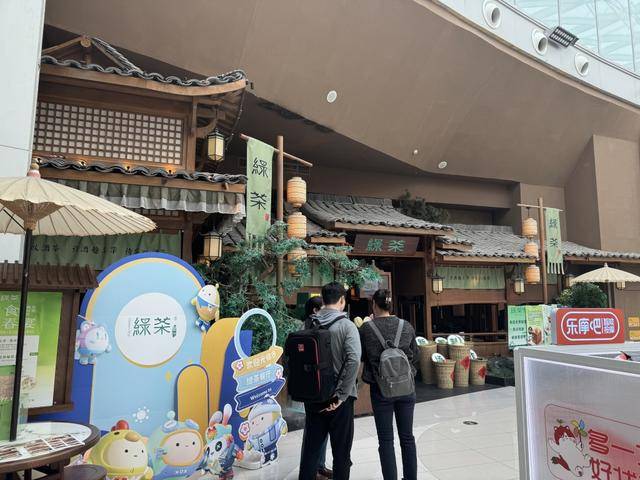
绿茶餐厅港股终局之战:四年五次IPO背后的“翻台率焦虑”与资本困局
Sou Hu Cai Jing· 2025-05-16 05:37
Core Viewpoint - The prolonged IPO attempts of Green Tea Restaurant reflect not only the survival anxiety of a single enterprise but also the collective transformation pain of the entire Chinese dining industry after the decline of traffic dividends [1][3][10]. Company Overview - Green Tea Restaurant has made four unsuccessful attempts to go public since March 2021, indicating a unique persistence in the Hong Kong dining sector [3]. - The restaurant was once a popular brand among young consumers, achieving a peak daily table turnover rate of 6-8 times per store, but has since seen a significant decline in customer traffic and profitability [1][3]. Financial Performance - The table turnover rate dropped from 3.48 times in March 2018 to 2.81 times in 2022, with a slight recovery to 3.30 times in 2023, before falling again to 3.00 times in 2024 [4][5]. - The average customer spending decreased from 62.9 RMB in 2022 to 56.2 RMB in 2024, indicating challenges in maintaining profitability amid rising costs [5][6]. Market Position and Competition - Compared to competitors like Haidilao and Jiumaojiu, Green Tea's brand positioning appears vague, lacking a distinct competitive edge [3]. - The restaurant's reliance on a single business model has made it difficult to sustain high growth expectations, prompting the need for diversification into areas like retail and delivery [6][10]. IPO and Shareholder Dynamics - Approximately 30% of the shares offered in the IPO were from existing shareholders, indicating a lack of confidence in the company's future prospects [7][9]. - The same-store sales declined by 10.3% in 2024, suggesting that growth is primarily driven by new store openings rather than improving existing store efficiency [9]. Industry Context - The dining industry has faced significant challenges, including the pandemic, consumer downgrade, and the rise of prepared food, leading to a reevaluation of investment strategies [3][10]. - The shift in investor focus from scale to metrics like single-store profitability and supply chain management reflects a broader trend in the capital market [9][10].