东风股份

Search documents
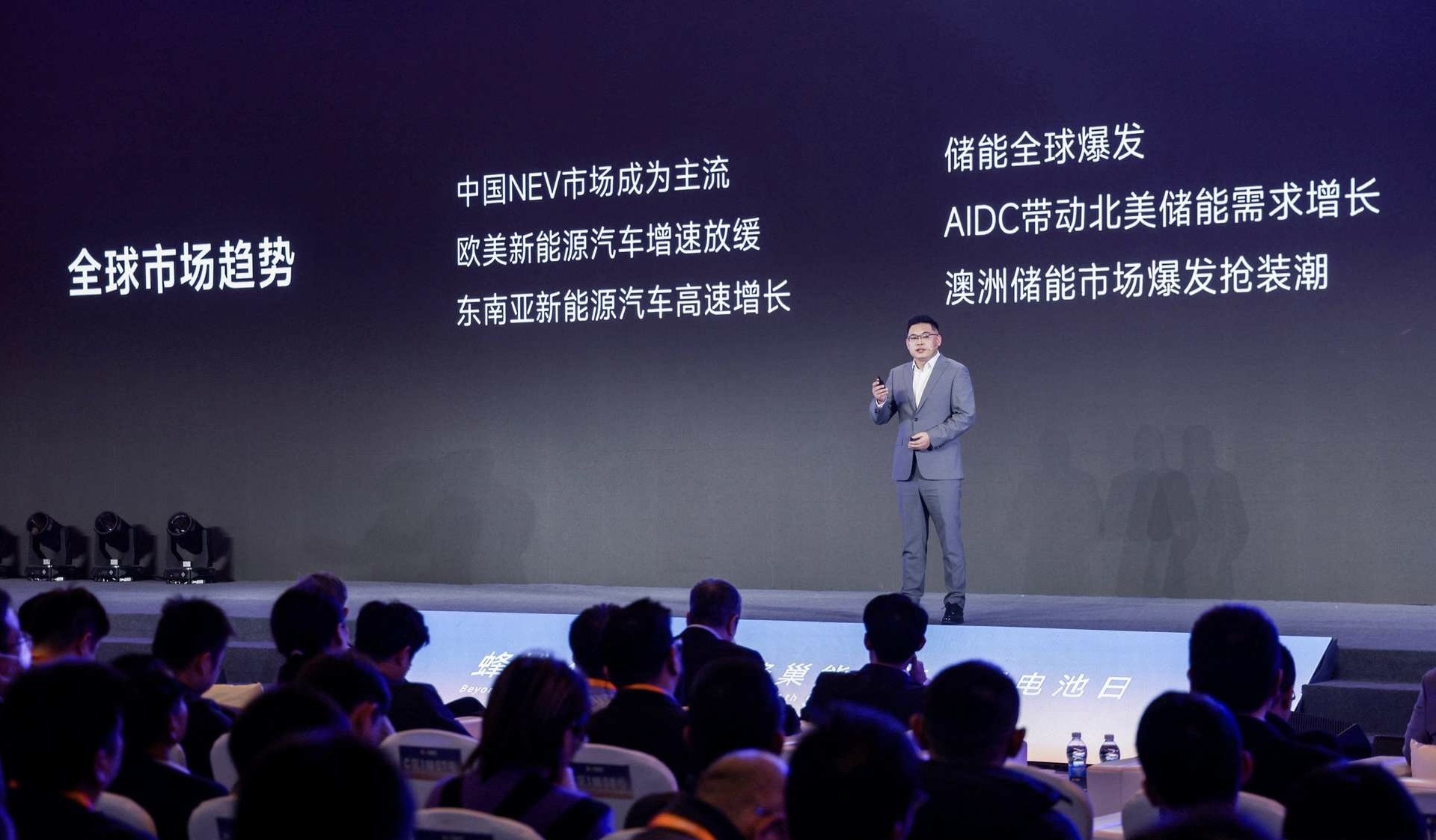
蜂巢能源杨红新:2026,动力电池没有“容易的钱”
Tai Mei Ti A P P· 2026-01-20 01:20
Core Viewpoint - The main uncertainty for achieving profitability in 2026 for battery manufacturers stems from rising upstream raw material costs, which cannot be fully passed on to downstream customers, leading to significant challenges in profit margins [3]. Group 1: Raw Material Price Trends - The price of lithium carbonate has sharply increased from less than 60,000 yuan per ton in mid-2025 to over 130,000 yuan by the end of 2025, continuing to rise into 2026, with a cumulative increase of over 33,000 yuan per ton (over 25%) from early January 2026 [4]. - Phosphate iron lithium prices have experienced a dramatic decline of over 80% from 173,000 yuan per ton at the end of 2022 to 34,000 yuan in August 2025, leading to widespread losses in the industry [4]. Group 2: Cost Transmission Challenges - Battery manufacturers face difficulties in passing on rising costs to customers due to a potential slowdown in demand, with car manufacturers becoming less tolerant of cost increases [5]. - Key raw materials like lithium carbonate, copper, and hexafluorophosphate can be smoothly transmitted to downstream customers due to established price linkage agreements, while costs for non-bulk materials like separators and graphite must be absorbed by battery manufacturers [6]. Group 3: Export Tax Policy Changes - The export tax rebate for battery products will be reduced from 9% to 6% starting April 2026, with a complete cancellation planned for January 2027, significantly impacting profit margins for battery manufacturers relying on cost advantages for exports [7][8]. - Companies must navigate two strategies: negotiating price increases with overseas customers and pursuing localized production to mitigate the impact of reduced export rebates [8]. Group 4: Solid-State Battery Development - Despite being seen as a critical year for solid-state battery commercialization, industry experts express skepticism about the feasibility of large-scale production within the next 5 to 8 years due to significant technical challenges [10][11]. - Current industry focus should prioritize improving existing battery performance and safety rather than chasing the uncertain future of solid-state technology [11]. Group 5: Emerging Market Opportunities - The demand for unmanned delivery logistics vehicles is expected to surge, driven by the need to reduce logistics costs and comply with urban regulations [12]. - Southeast Asia's electric two- and three-wheeler market presents a significant growth opportunity, requiring high-performance batteries tailored to local conditions [12]. - The global electric tool market is projected to grow steadily at around 20% annually, providing a stable supplementary business for battery manufacturers [12]. Group 6: Strategic Industry Outlook - The battery industry in 2026 faces complex challenges, requiring companies to balance cost absorption with finding new revenue streams in international markets [13]. - Future winners in the industry will likely be those who can strategically navigate cost pressures and identify profitable opportunities rather than simply focusing on scale [13].


深度 | 学习华为IPD运动,中国汽车业的一次大反思
汽车商业评论· 2026-01-19 23:07
Core Viewpoint - The year 2025 is marked as a significant learning year for Chinese automotive companies, which are increasingly adopting Huawei's methodologies, particularly the Integrated Product Development (IPD) process, to enhance their operations and product offerings [3][6]. Group 1: Learning from Huawei - Chinese automotive companies, whether state-owned or private, are engaging in a "learning from Huawei" movement, aiming to replicate its success in the automotive sector [3][6]. - The collaboration with Huawei has led to significant improvements in product development cycles and cost reductions for companies like GAC Group, which reported a reduction in product development time from 30 months to 18-24 months and a 10% decrease in development costs [11][6]. - The IPD process, which emphasizes market-driven product development, has become a sought-after model among automotive firms, with many companies adopting varying degrees of this approach [6][13]. Group 2: Implementation of IPD - The IPD framework encourages cross-departmental collaboration, allowing teams to share information transparently and make collective decisions throughout the product lifecycle [18][19]. - Companies implementing IPD have reported enhanced efficiency, with GAC Group noting a 70% improvement in data query efficiency and a significant reduction in fault tracing time [8][19]. - The structure of the PDT (Product Development Team) within the IPD framework allows for a more integrated approach to product development, ensuring that all relevant departments are involved from the outset [16][18]. Group 3: Challenges and Cultural Aspects - Despite the benefits, the transition to IPD is not without challenges, as companies often face cultural resistance and difficulties in aligning existing organizational structures with the new processes [38][46]. - The success of IPD implementation heavily relies on the leadership and cultural adaptability of the organization, as highlighted by the experiences of Huawei, which emphasizes a culture of accountability and collaboration [38][57]. - The ability to attract and retain talent is crucial for the successful adoption of IPD, as seen in Huawei's approach to hiring top talent and fostering a competitive environment [54][55].

30+固态电池企业新进展
DT新材料· 2026-01-19 22:33
Core Viewpoint - The article discusses the advancements and production timelines of solid-state batteries from various companies, highlighting the competitive landscape and technological progress leading up to 2026 and beyond [4]. Group 1: Company Developments - CATL launched the world's first sulfide solid-state battery pilot line in Hefei in May 2025, achieving an energy density of 450Wh/kg, with plans to expand production capacity to 50GWh by 2026 [6]. - Guoxuan High-Tech introduced its "Guan" quasi-solid-state square aluminum shell cell with an energy density greater than 300Wh/kg and initiated a pilot line with a 90% yield rate in May 2025 [8]. - EVE Energy's solid-state battery, "Longquan No. 2," achieved an energy density of 300Wh/kg and is aimed at high-end applications like humanoid robots and low-altitude aircraft [8]. - Aoxin Technology plans to launch its polymer solid-state battery with an energy density of 400Wh/kg by the end of 2025, targeting high-end new energy vehicles [8]. - Ganfeng Lithium announced the mass production of lithium sulfide, completing the last link in the solid-state battery ecosystem, with plans to launch solid-state batteries by the end of 2025 [9]. Group 2: Industry Trends - The solid-state battery industry is expected to enter a critical year in 2026, with many companies racing to achieve mass production [4]. - The article outlines the competitive landscape, with over 30 companies making significant strides in solid-state battery technology, indicating a robust growth trajectory in the sector [4]. - The anticipated commercialization of solid-state batteries is projected for around 2030, as supply chains mature and production processes are refined [6].




“光纤上车”爆发前夜,武汉抢占“光车融合”先机
第一财经· 2026-01-19 07:58
Core Viewpoint - The article discusses the emergence of L3-level autonomous driving and its impact on the automotive industry, particularly highlighting the integration of optical communication technology, which is expected to drive a new phase of cluster development in the sector [2][4]. Group 1: Industry Development - The automotive and optoelectronic information industries are key drivers of Wuhan's economic growth, with the city housing eight passenger car manufacturers and over 1,000 auto parts companies, achieving a total vehicle production capacity of 2.27 million units [4][5]. - By 2025, the scale of Wuhan's optoelectronic information industry is projected to reach approximately 850 billion yuan, with electronic information manufacturing contributing about 445 billion yuan and software business revenue around 405 billion yuan [5]. - The automotive industry in China is expected to surpass 10 trillion yuan in revenue by 2025, providing significant application scenarios for new technologies such as semiconductors and artificial intelligence [5][6]. Group 2: Technological Integration - The "optical-vehicle integration" initiative aims to address critical areas such as automotive-grade chips and smart sensors, establishing a collaborative research mechanism among various stakeholders [2][6]. - Companies like Wuhan Haiwei Technology and Wuhan Binary Semiconductor are leading advancements in automotive display technology and high-speed optical communication, respectively, with the latter's first domestically produced automotive-grade MCU chip set to launch this year [6][7]. - The transition from copper to optical fiber in vehicles is anticipated to enhance data transmission speed and reduce weight, with industry leaders predicting significant economic benefits from this shift [7]. Group 3: Challenges and Recommendations - The integration of communication, optoelectronics, and artificial intelligence into the automotive sector presents challenges such as technical compatibility, standardization, and supply chain barriers [7]. - To facilitate deeper integration, it is recommended to establish collaborative innovation platforms to address foundational issues in technology linkage, standard development, and certification [7].
11家车企今年销量目标总和猛增19%
新华网财经· 2026-01-19 07:38
Core Viewpoint - The automotive industry is setting ambitious sales targets for 2026, with a total of 11 major companies aiming for 23.8 million units, reflecting a year-on-year increase of approximately 19% compared to 20 million units in 2025 [1][2]. Group 1: Sales Targets of Major Companies - Major companies have set aggressive sales targets for 2026, with a total of 2,380,240 units aimed, which is an 18.96% increase from the 2,000,904 units sold in 2025 [3]. - Great Wall Motors has the most ambitious target, aiming for 1.8 million units, a nearly 36% increase from 1.32 million units in 2025 [5]. - Dongfeng plans to increase its target from 250,000 units in 2025 to 325,000 units in 2026, representing a growth of over 30% [5]. - Changan aims for 3.3 million units, a 13.3% increase, while Chery targets 3.2 million units, a 14.03% increase [5]. - BYD, SAIC, GAC, and Li Auto have not disclosed their targets, but collectively sold 1.167 million units in 2025, indicating potential for significant contributions to the overall market [1]. Group 2: Conservative Institutional Predictions - The China Association of Automobile Manufacturers (CAAM) forecasts total automotive sales in 2026 to be around 34.75 million units, reflecting only a 1% year-on-year growth [2][8]. - UBS predicts a slight decline in wholesale sales, while retail sales may see a mid-single-digit drop [2][8]. - Deutsche Bank and JPMorgan forecast a decline of 3% to 5% in total automotive sales for 2026 [8]. Group 3: New Energy Vehicle Growth - New energy vehicle sales targets are significantly higher than overall sales growth targets, with companies like Geely aiming for a 32% increase in new energy vehicle sales [8]. - The focus on new energy vehicles is seen as a key growth driver for the automotive market, with companies adjusting their strategies accordingly [8]. Group 4: Global Market Challenges - Global electric vehicle sales are expected to grow by 20% to 20.7 million units in 2025, but growth is projected to slow to 15.7% in 2026, with North America facing a significant decline of 23% [9]. - Factors such as changing policies and increased competition in Europe are contributing to a cooling global electric vehicle market [9]. Group 5: Industry Consolidation - The automotive market is expected to see a clearer division between leading, mid-tier, and numerous smaller companies, with a need for consolidation due to increased competition and market saturation [11]. - Only about 10% of Chinese electric vehicle brands are predicted to be profitable in the next five years, leading to the exit of brands with low sales volumes [11].

远程近3.5万辆夺冠!福田近3万 重汽/比亚迪涨两倍 2025新能源轻卡榜单出炉 | 头条
第一商用车网· 2026-01-19 07:02
Core Viewpoint - The new energy light truck market in China achieved significant growth in 2025, with total sales reaching 177,000 units, representing a year-on-year increase of 70% [1][30][37]. Sales Performance - In December 2025, the new energy light truck market sold 24,900 units, marking a 72% year-on-year increase and a 56% month-on-month increase [4][24]. - The overall light truck sales in December reached 59,800 units, with new energy light trucks accounting for 41.65% of the total, up from 29.56% in November [9][24]. Market Share and Leading Companies - The top companies in the new energy light truck market for 2025 included: - Yuan Cheng New Energy Commercial Vehicles: 34,700 units, 46% growth, 19.6% market share [2][31]. - Foton Motor: 29,600 units, 133% growth, 16.7% market share [2][31]. - JAC Motors and SAIC Yuejin: both at 13,600 units, with 149% and 151% growth respectively, each holding 7.7% market share [2][31]. - BYD and Weichai New Energy sold 7,941 and 7,400 units respectively, with BYD achieving a 193% increase [2][31]. Regional Insights - Guangdong province led the market with over 54,300 units sold, accounting for 30.7% of the national total [11][13]. - Other provinces such as Henan, Jiangsu, and Zhejiang also showed significant growth, with increases of 126%, 173%, and 154% respectively [13]. Fuel Type Distribution - Pure electric vehicles dominated the market, comprising 92.04% of new energy light truck sales in 2025, an increase from previous years [16][18]. - Hybrid models accounted for 6.13% of sales, while hydrogen fuel cell vehicles made up 1.83% [18]. Future Outlook - The new energy light truck market has shown a continuous growth trend, achieving a "24 consecutive increases" milestone [4][37]. - The industry anticipates whether this growth momentum will continue into 2026 [37].





“光纤上车”爆发前夜,武汉抢占“光车融合”先机
Di Yi Cai Jing· 2026-01-19 06:53
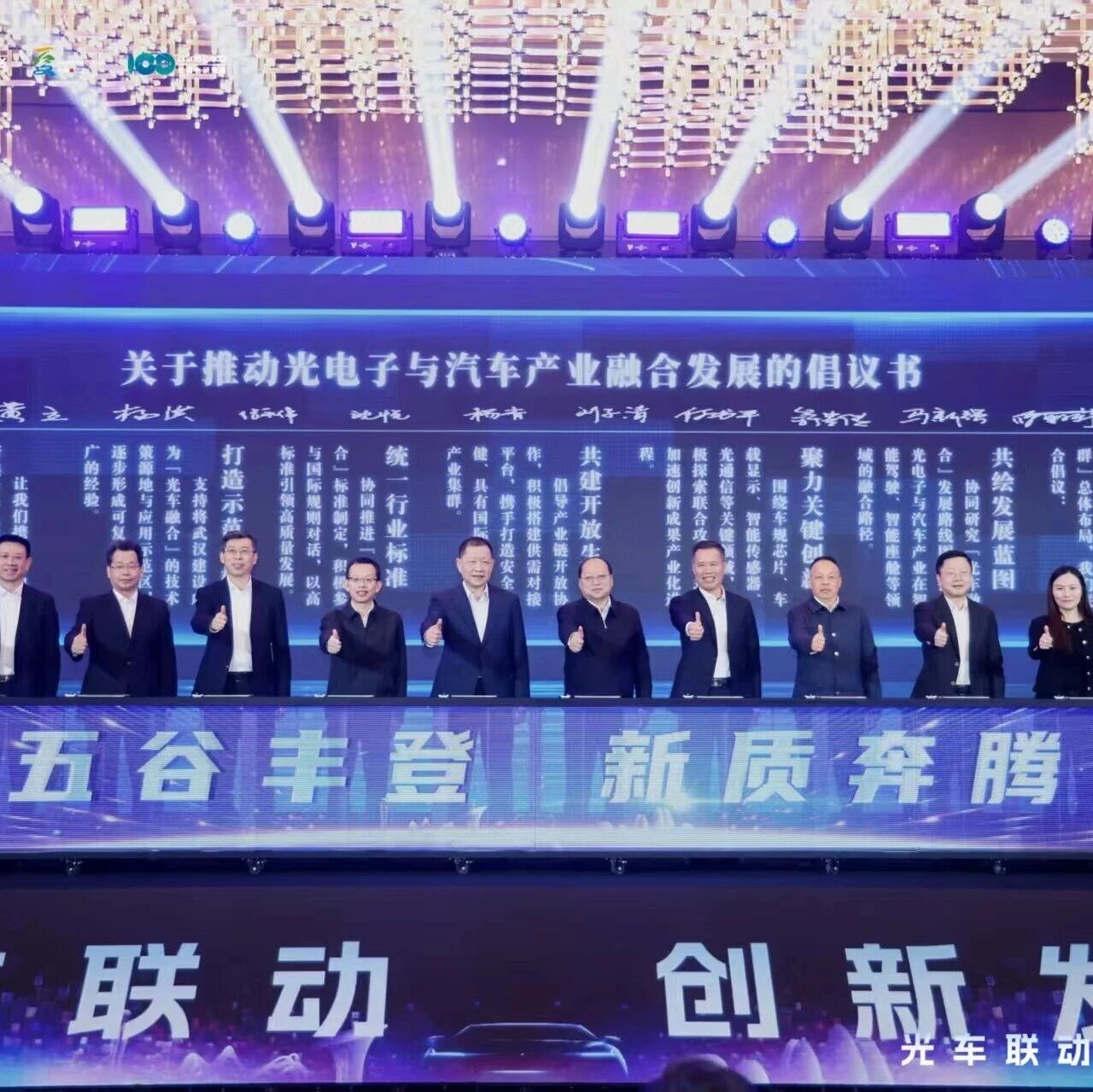
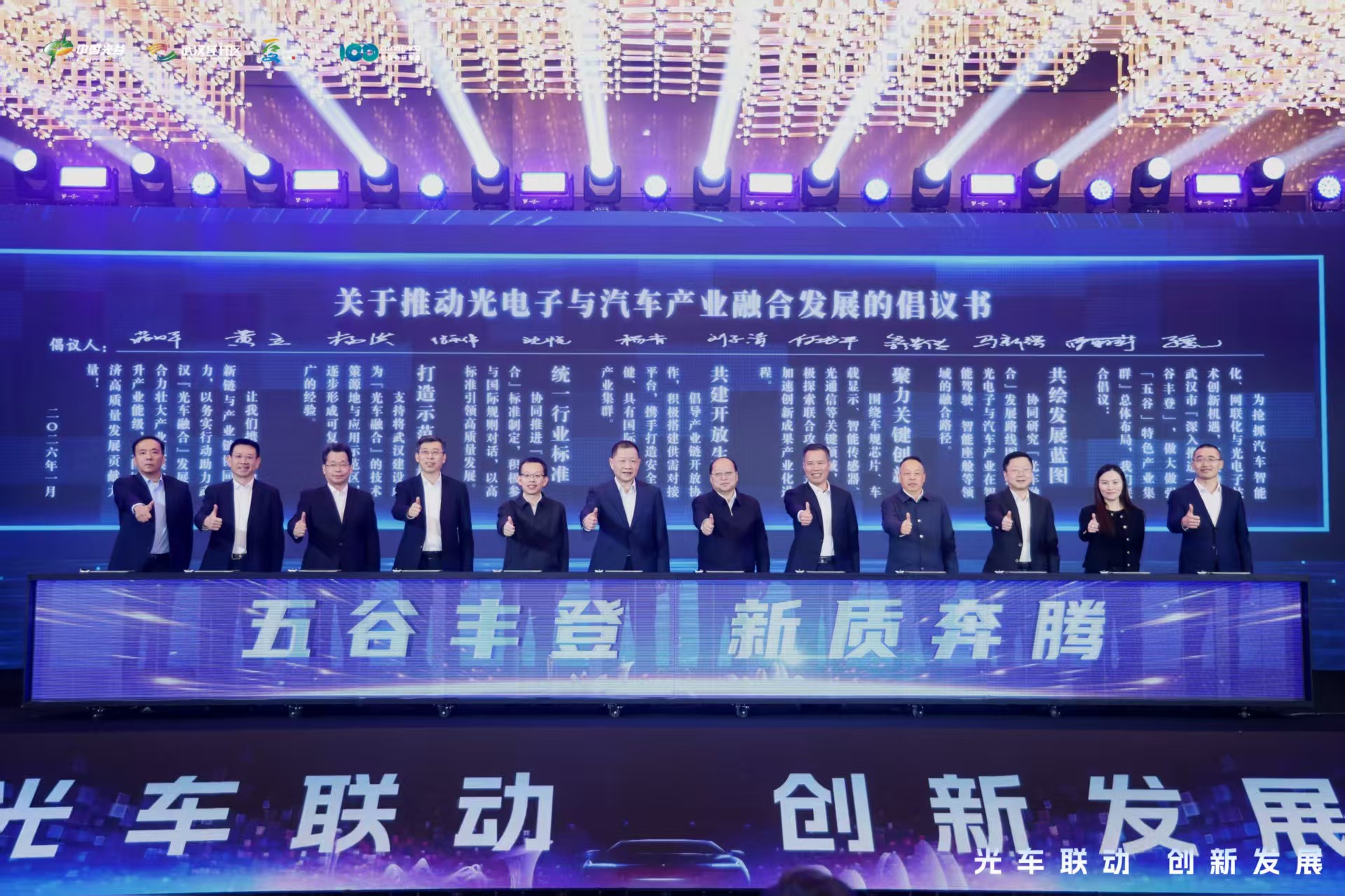
Core Insights - The automotive industry is entering a new phase characterized by the integration of optical communication technology, driven by the advent of Level 3 autonomous driving, which is expected to lead to a significant growth in vehicle-mounted optical communication systems [1][4] Group 1: Industry Collaboration and Initiatives - A "Light-Car Interaction" initiative was signed by major companies including Dongfeng Motor, China Information Communication Technologies, and others, aiming to establish a collaborative mechanism to tackle key challenges in automotive technology such as vehicle-grade chips and smart sensors [1] - Wuhan is positioning itself as a technological hub for "light-car integration," with a focus on developing and demonstrating applications in this field [1][4] Group 2: Economic Impact and Industry Growth - The optical information and automotive industries are identified as key drivers of Wuhan's economic development, with the city housing eight passenger car manufacturers and over 1,000 automotive parts companies, achieving a total vehicle production capacity of 2.27 million units [3] - By 2025, the optical information industry in Wuhan is projected to reach a scale of approximately 850 billion yuan, with electronic information manufacturing contributing about 445 billion yuan and software business revenue expected to be around 405 billion yuan [3] Group 3: Technological Advancements - The automotive sector is expected to generate over 10 trillion yuan in revenue by 2025, providing significant application scenarios for new technologies such as semiconductors and artificial intelligence [4] - Wuhan Haiwei Technology has successfully addressed reliability challenges in automotive-grade displays, leading to a projected compound annual growth rate of 50% during the 14th Five-Year Plan period [4] Group 4: Fiber Optic Communication in Automotive - Wuhan Binary Semiconductor, a joint venture between China Information Communication Technologies and Dongfeng Motor, is focusing on high-speed fiber optic communication technology for vehicles, with plans for large-scale implementation by 2030 [5] - Fiber optics are expected to replace traditional copper wiring in vehicles due to their advantages in bandwidth, weight, and electromagnetic interference resistance, with potential economic benefits reaching the hundred billion yuan level [5] Group 5: Challenges and Recommendations - The integration of communication, optics, and artificial intelligence into the automotive sector faces challenges such as technology alignment, standard adaptation, and supply chain barriers [6] - Recommendations include building collaborative innovation platforms to address foundational issues in technology integration and developing supply chain connectivity to facilitate the entry of innovative technology companies into the automotive industry [6]


“光纤上车”爆发前夜 武汉抢占“光车融合”先机
Di Yi Cai Jing· 2026-01-19 06:50
Group 1 - The core viewpoint is that the integration of optical communication technology in the automotive industry is expected to lead to a significant transformation, marking the beginning of a new phase characterized by "optical-vehicle fusion" technology [1][2] - A collaborative initiative called "Optical-Vehicle Linkage" was signed by several companies and local governments in Wuhan, focusing on key areas such as automotive-grade chips, smart sensors, and optical communication [1] - Wuhan is positioned as a key hub for both the optical information and automotive industries, with a production capacity of 2.27 million vehicles and a historic increase in the share of new energy vehicles to 55% [1][2] Group 2 - The optical information industry in Wuhan is projected to reach a scale of approximately 850 billion yuan by 2025, with electronic information manufacturing contributing about 445 billion yuan and software business revenue at 405 billion yuan [2] - The automotive industry in China is expected to exceed 10 trillion yuan in revenue by 2025, providing significant application scenarios for new technologies such as semiconductors and artificial intelligence [2] - Companies like Wuhan Haimei Technology and Wuhan Binary Semiconductor are making advancements in automotive-grade reliability and high-speed optical communication technology, respectively, with the latter's first domestically produced high-performance MCU chip set to be launched this year [3] Group 3 - Yang Zhiyong, chairman of Wuhan Binary Semiconductor, emphasized the advantages of optical fibers over traditional copper cables, including higher bandwidth, lighter weight, and better resistance to electromagnetic interference [3] - Changfei Company, a leader in the optical fiber market, predicts that the economic benefits from the transition to optical fibers in vehicles could reach a scale of hundreds of billions [4] - Zhang Yongwei, chairman of the Automotive Industry Association, highlighted the need for a sustainable industrial ecosystem to facilitate the deep integration of communication, optics, and artificial intelligence into the automotive sector [4]
11家车企今年销量目标总和猛增19%
第一财经· 2026-01-19 06:45
Core Viewpoint - The automotive industry is setting ambitious sales targets for 2026, with a total of 11 major companies aiming for 23.8 million units, reflecting a year-on-year increase of approximately 19% compared to 20 million units sold in 2025 [3][4]. Group 1: Sales Targets and Growth - Major automakers have disclosed their sales targets for 2026, with a combined goal of 23.8 million units, indicating a significant increase from the previous year's total of 20 million units [3][5]. - If all leading manufacturers achieve their targets, the total sales for 2026 could reach 35.47 million units, representing a growth of about 12% [3]. - Notable ambitious targets include Great Wall Motors aiming for 1.8 million units (up 36%), Dongfeng targeting 3.25 million units (up over 30%), and Chery setting a goal of 3.2 million units (up 14.03%) [10][11][12]. Group 2: Market Predictions and Challenges - The China Automotive Industry Association forecasts total vehicle sales in 2026 to be around 34.75 million units, with a modest growth of 1% [4][17]. - UBS predicts a low single-digit decline in wholesale vehicle sales and a mid-single-digit drop in retail sales for 2026 [18]. - The automotive market is facing challenges, including a reduction in tax incentives and a potential slowdown in electric vehicle sales growth globally [20]. Group 3: Industry Dynamics and Consolidation - The automotive industry is experiencing increased pressure for consolidation, with the top 15 automotive groups accounting for 92.3% of the market share, a slight decrease from the previous year [22]. - The market is expected to see a clearer division between leading, mid-tier, and smaller companies, with many struggling electric vehicle manufacturers facing significant challenges [23]. - Analysts suggest that only about 10% of Chinese electric vehicle brands are likely to be profitable in the next five years, indicating a potential exit of brands with low sales volumes [23].

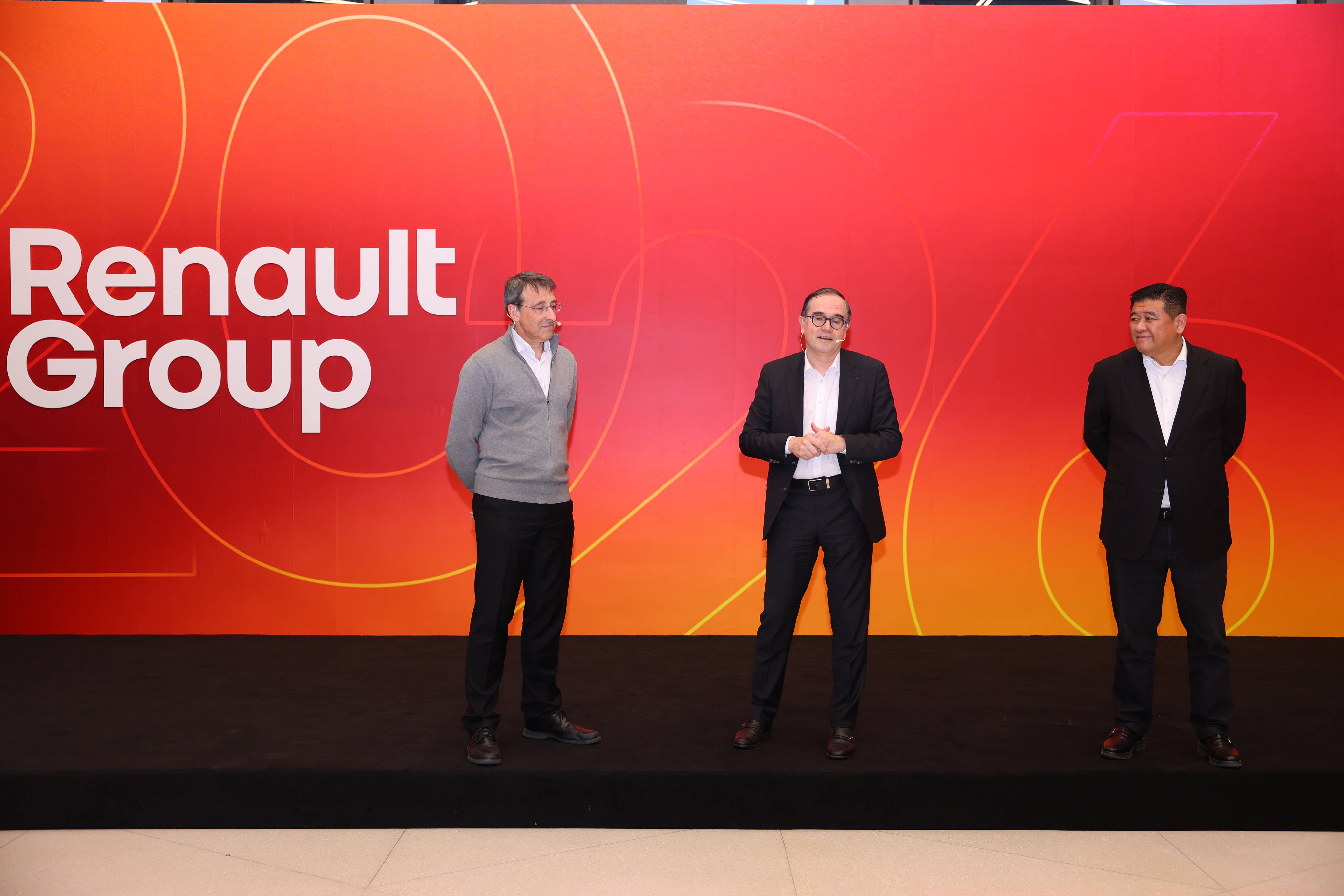
雷诺集团CEO:依托中国先进技术与生态协作加速集团国际化战略落地
Sou Hu Cai Jing· 2026-01-19 06:25
雷诺集团首席技术官、ACDC总经理菲利普·布鲁内(Philippe Brunet)表示:"ACDC定位'立足中国、服务全球市场(local-for-global)',与其他外资车企的 路径截然不同。ACDC对雷诺集团的技术发展而言,就像一枚精准的指南针,为技术迭代指引方向,实现中国生态价值与集团竞争力的双向转化。" 在雷诺集团即将开启的中期计划中,合作伙伴也是至关重要的一环。福兰表示:"我从不认为合作模式只有一种标准答案,在竞争激烈的中国市场,无论是 基于供应链的协作,还是与科技、软件企业组建合资公司,灵活性和多元合作才是破局关键。我们正摒弃传统的询价竞标模式(RFQ),不再将单纯的价格 竞争作为合作的唯一标准,转而与核心供应商建立伙伴关系,共同定义目标竞争力,以此实现高效协同与价值共赢。" 目前,雷诺在华已构建多层次的生态网络:在主机厂层面,与东风、吉利保持了良好的战略合作关系;在供应链层面,也与宁德时代、远景动力等建立了战 略合作。 上证报中国证券网讯(记者 俞立严)雷诺集团首席执行官福兰(François Provost)日前将中国定为新年首个国际市场访问目的地,开启其执掌集团以来的首 次中国行。通过与 ...