万泰生物

Search documents
走进万泰生物:解码疫苗创新的中国答案
Xin Jing Bao· 2025-10-13 04:06
Core Insights - The first domestically produced nine-valent HPV vaccine was approved for market release in June, highlighting the innovative capabilities of Wantai Biological Pharmacy [1] - Wantai Biological emphasizes innovation as its core competitive advantage, investing over 1 billion yuan annually in R&D, with over 30% of its workforce dedicated to research [2] - The company has developed hundreds of products, including six global firsts and seven domestic firsts, contributing significantly to public health and national strategic competitiveness [2] Innovation and Product Development - Wantai Biological has over 300 patents, with more than 100 receiving international certification, showcasing its commitment to innovation [2] - The company’s unique hepatitis E vaccine, Yikening, is the only one of its kind globally, demonstrating its capability to fill market gaps [3] - The newly approved nine-valent HPV vaccine, Xinkening 9, is priced at 499 yuan, approximately 40% lower than imported alternatives, enhancing accessibility for women aged 9 to 45 [3] Vaccine Pipeline and Market Strategy - Wantai Biological has a diverse vaccine pipeline, including 20-valent pneumonia conjugate vaccine and recombinant zoster vaccine, among others, indicating a robust development strategy [4] - The company is advancing its production automation and digital transformation to enhance efficiency and quality in its manufacturing processes [5][6] International Expansion and Market Presence - In 2024, Wantai Biological's overseas revenue reached 216 million yuan, a 42.59% increase, reflecting its successful internationalization efforts [6] - The company aims to obtain WHO PQ certification for its nine-valent HPV vaccine, leveraging its existing international achievements to expand its global market presence [7] - Wantai Biological is focused on transitioning from product export to global health empowerment, aiming for diversified revenue structures and enhanced brand value [7]

未来领跑者|走进万泰生物:解码疫苗创新的中国答案
Xin Jing Bao· 2025-10-13 04:05
Core Insights - The first domestically produced nine-valent HPV vaccine was approved for market release in June, marking a significant milestone for Wantai Biological Pharmacy [1] - The company emphasizes innovation as its core competitive advantage, investing over 1 billion yuan annually in R&D, with over 30% of its workforce dedicated to research [2] - Wantai has developed hundreds of products, including six global firsts and seven domestic firsts, contributing to public health and national strategic competitiveness [2] Company Overview - Founded in 1991, Wantai Biological is a high-tech enterprise focused on the research and production of biological diagnostic reagents and vaccines [2] - The company operates seven subsidiaries and offers a wide range of products across various fields, including automation, biochemistry, and vaccines [2] Product Innovations - The company’s Hepatitis E vaccine, Yikening®, is the only marketed Hepatitis E vaccine globally, demonstrating a 100% protection rate one year after a three-dose regimen [3] - The newly approved nine-valent HPV vaccine, Xinkening®9, is priced at 499 yuan per dose, approximately 40% lower than imported alternatives, providing broader access for women aged 9 to 45 [3] R&D Pipeline - Wantai is advancing multiple innovative research pipelines in the vaccine sector, including a 20-valent pneumonia conjugate vaccine and a recombinant zoster vaccine [4] Production and Automation - The company has enhanced its production line automation to efficiently convert research outcomes into high-quality products, despite challenges in the industry [5] - Wantai is progressing towards becoming a digital factory, evaluating digital transformation solutions to improve production efficiency [6] International Expansion - In 2024, Wantai's overseas revenue reached 216 million yuan, a 42.59% increase, with its core product, the bivalent HPV vaccine, gaining market access in 23 countries [6] - The company aims to achieve WHO PQ certification for its nine-valent HPV vaccine and expand its global network to support cervical cancer elimination strategies [7]
短期关注秋季呼吸系统传染病叠加流行情况
Xiangcai Securities· 2025-10-12 11:49
Investment Rating - The industry investment rating is maintained at "Overweight" [3][11]. Core Views - The vaccine industry is currently experiencing a transition from scale expansion to innovation-driven growth, facing short-term pain due to supply-demand imbalance and homogenized competition, but the long-term positive outlook remains unchanged [10][11]. - The industry is under pressure in Q2 2025, with performance still in a bottoming process due to high Me-too pipeline ratios leading to intense competition and price declines, alongside weak demand and market education [9][10]. - The focus is on innovation and international market expansion, with companies actively adjusting their pipeline layouts to enhance competitive advantages [10][11]. Summary by Sections Industry Performance - The vaccine sector has shown a relative performance decline of -7% over the past month and -29% over the past year compared to the CSI 300 index [5]. - The vaccine sector's absolute return is -5% for the past month and -12% for the past year [5]. Market Review - The vaccine sector rose by 0.72% last week, with a cumulative decline of -2.35% since the beginning of 2025 [6]. - Notable companies in the vaccine sector include Lianoning Chengda, Hualan Biological, and Wantai Biological, while companies like Olin Biological and CanSino have underperformed [7]. Valuation - The vaccine sector's PE (ttm) is 103.74X, with a year-on-year maximum of 111.89X and a minimum of 27.99X [8]. - The PB (lf) stands at 1.91X, with a maximum of 2.29X and a minimum of 1.69X over the past year [8]. Investment Recommendations - The vaccine industry is advised to focus on companies with high technical barriers and differentiated pipeline layouts to find alpha opportunities amid industry differentiation [11][28]. - Companies with strong R&D innovation and technical advantages, such as CanSino and Kanghua Biological, are recommended for investment [11][28].
经济热力站丨诺诚健华超20亿美元授权合作刷新中国自免领域小分子交易记录,中关村生命科学园迎创新药国际化里程碑
Cai Jing Wang· 2025-10-10 03:09
Core Insights - The collaboration between Innovent Biologics and Zenas for three self-immune pipeline products marks a significant milestone in the internationalization of the drug Orelabrutinib and sets a new record for small molecule transactions in China's self-immune field, with a total potential transaction value exceeding $2 billion [1] - The development of the first-class new drug HH-003 (Libevev) by Huahui Anjian, targeting chronic hepatitis D, is expected to receive approval for market launch around the first quarter of 2026, representing a major milestone in the company's growth [2][3] Company Developments - Huahui Anjian has been developing HH-003 since its inception, with significant funding rounds supporting its clinical trials, including a recent A++ round financing and breakthrough therapy designation from the FDA for treating chronic hepatitis D [3][4] - The drug HH-003 has shown promising results in clinical trials, demonstrating good safety and antiviral activity, with a notable decrease in HBV DNA and hepatitis B surface antigen levels observed in patients [3][4] Industry Context - The Zhongguancun Life Science Park, where both Innovent Biologics and Huahui Anjian are based, is a key area for biotechnology innovation in Beijing, having produced significant drugs like Orelabrutinib and Zebutinib [1][5] - The park is recognized for its comprehensive industry chain, facilitating the transition from laboratory research to clinical application, thus fostering a competitive pharmaceutical health industry [10] Product Pipeline and Market Potential - Innovent Biologics has developed Orelabrutinib, a BTK inhibitor that has been approved in China and Singapore, with plans for further clinical trials targeting multiple sclerosis [6][7] - The company is also advancing its pipeline with a new generation TRK inhibitor, demonstrating a strategic focus on expanding its product offerings in oncology and autoimmune diseases [7][8] Competitive Landscape - The competitive landscape for BTK inhibitors in China includes several products, with Orelabrutinib positioned to capture market share due to its rapid development and broad application potential [6] - WanTai Biologics, another company in the park, is expanding its vaccine pipeline, including the world's first marketed hepatitis E vaccine, showcasing the diverse innovation occurring within the Zhongguancun Life Science Park [9][10]


比麦肯锡更落地,比巴菲特更懂创造价值的公司和模式是谁?
Sou Hu Cai Jing· 2025-10-09 18:17
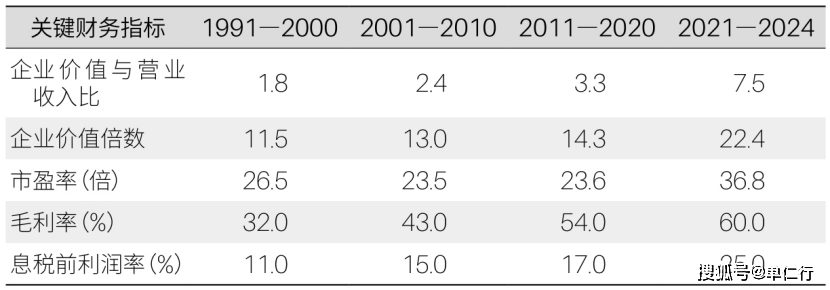
Core Insights - Danaher Corporation has demonstrated consistent growth over 30 years, with gross and net profit margins doubling, and a compound annual growth rate of shareholder returns reaching 22% [2] - The company has completed over 400 acquisitions, investing approximately $90 billion, with an internal net return rate of about 21% [6][12] - Danaher emphasizes a disciplined and rational approach to mergers and acquisitions, avoiding overpaying for high-quality targets and not purchasing low-quality assets simply due to low valuations [12] Financial Performance - Key financial metrics from 1991 to 2024 show significant growth in enterprise value to revenue ratio, increasing from 1.8 to 7.5, and enterprise value multiples rising from 11.5 to 22.4 [1] - The price-to-earnings ratio has also increased from 26.5 to 36.8, while gross margins improved from 32% to 60% [1] Management and Strategy - Danaher’s management approach, known as the Danaher Business System (DBS), focuses on deep operational involvement in acquired companies, which is more effective than traditional consulting services [8] - The company’s strategy includes a focus on technology-driven acquisitions, particularly in strategic areas like automation and robotics [18] Comparison with Other Companies - Danaher is compared favorably against diversified groups like General Electric and Honeywell, as well as Berkshire Hathaway, in terms of operational performance and shareholder returns [2][4] - The investment strategies of companies like Midea and Tencent are noted to be more aligned with Danaher’s approach, focusing on synergistic acquisitions rather than mere scale expansion [17] Leadership and Influence - Danaher has produced notable leaders in the industry, with executives from Danaher taking key positions in companies like Wuxi Biologics and Wantai Biological Pharmacy [5][6] - Larry Culp, who led Danaher for 13 years, played a crucial role in rescuing General Electric, showcasing the influence of Danaher’s leadership style [5]


生物制品板块10月9日跌0.12%,荣昌生物领跌,主力资金净流出1.22亿元
Zheng Xing Xing Ye Ri Bao· 2025-10-09 09:03
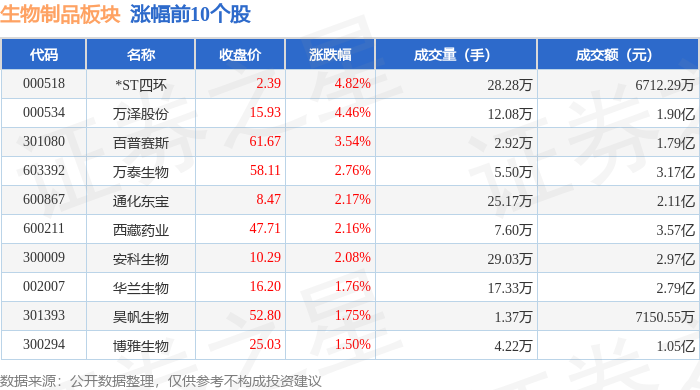
Market Overview - The biopharmaceutical sector experienced a slight decline of 0.12% on October 9, with Rongchang Biopharmaceutical leading the drop [1] - The Shanghai Composite Index closed at 3933.97, up 1.32%, while the Shenzhen Component Index closed at 13725.56, up 1.47% [1] Stock Performance - Notable gainers in the biopharmaceutical sector included: - ST Sihuan (code: 000518) with a closing price of 2.39, up 4.82% [1] - Wanzhe Co. (code: 000534) with a closing price of 15.93, up 4.46% [1] - Baipu Sais (code: 301080) with a closing price of 61.67, up 3.54% [1] - Rongchang Biopharmaceutical (code: 688331) saw a significant decline of 11.47%, closing at 103.47 [2] Trading Volume and Capital Flow - The biopharmaceutical sector saw a net outflow of 122 million yuan from institutional investors, while retail investors contributed a net inflow of 156 million yuan [2] - The trading volume for Rongchang Biopharmaceutical was 126,100 shares, with a transaction value of 1.329 billion yuan [2] Individual Stock Capital Flow - Main capital inflows were observed in: - Wantai Biopharmaceutical (code: 603392) with a net inflow of 50.12 million yuan [3] - Zhifei Biological (code: 300122) with a net inflow of 34.08 million yuan [3] - Notable outflows included: - Zhifei Biological with a retail net outflow of 4.29 million yuan [3] - Shenzhou Cell (code: 688520) with a retail net outflow of 3.30 million yuan [3]

万泰生物涨2.05%,成交额1.59亿元,主力资金净流入1964.03万元
Xin Lang Cai Jing· 2025-10-09 03:33
Core Viewpoint - Wante Bio's stock price has experienced a decline of 18.10% year-to-date, with recent fluctuations indicating a slight recovery in the short term [1] Company Overview - Wante Bio, established on April 24, 1991, and listed on April 29, 2020, is located in Changping District, Beijing. The company specializes in the research, production, and sales of in vitro diagnostic reagents, instruments, and vaccines [1] - The main revenue composition includes diagnostic reagents (67.06%), vaccines (20.36%), diagnostic instruments (4.98%), agency products (4.97%), other (1.88%), and active ingredients (0.76%) [1] Financial Performance - As of June 30, 2025, Wante Bio reported a revenue of 844 million yuan, a year-on-year decrease of 38.25%, and a net profit attributable to shareholders of -144 million yuan, a year-on-year decrease of 155.30% [2] - Cumulative cash dividends since the A-share listing amount to 1.541 billion yuan, with 1.311 billion yuan distributed over the past three years [3] Shareholder Information - As of June 30, 2025, the number of shareholders increased by 24.00% to 38,400, while the average circulating shares per person decreased by 19.36% to 32,958 shares [2] - Among the top ten circulating shareholders, Hong Kong Central Clearing Limited holds 22.7544 million shares, an increase of 5.1508 million shares from the previous period [3]
钟睒睒寻找下一个“富矿”
创业家· 2025-10-04 09:52
Core Viewpoint - The article discusses the significant investment by Zhong Shanshan in the recombinant collagen protein sector, highlighting the strategic importance of this market and its potential for growth in the health industry [5][9][10]. Investment Details - Zhong Shanshan invested 3.4 billion yuan in Jinbo Biological, which is recognized as the "first stock" in recombinant collagen protein [5]. - Jinbo Biological's fundraising plan aims to raise 2 billion yuan for the development of a humanized collagen FAST database and product development platform, marking the largest cash private placement in the Beijing Stock Exchange's history [8]. - Zhong Shanshan's total stake in Jinbo Biological could reach 10.58%, making him the second-largest shareholder [8]. Market Potential - Jinbo Biological is a leading company in the domestic recombinant humanized collagen protein market, holding all three existing Class III medical device registration certificates in China [9]. - The market for recombinant collagen protein in China is projected to grow from 58.57 billion yuan in 2025 to 219.38 billion yuan by 2030, with a compound annual growth rate of nearly 45% [9]. Business Context - Zhong Shanshan's wealth primarily comes from his control of two listed companies: Nongfu Spring and Wantai Biological, both of which are facing growth challenges [10]. - Jinbo Biological is seen as a new "gold mine" for Zhong Shanshan, as he seeks new growth opportunities in the health sector [11]. Company Background - Jinbo Biological was founded in 2008 and specializes in the research, production, and application of recombinant humanized collagen protein, with products spanning medical devices and functional skincare [15]. - The company recently received approval for the world's first injectable recombinant type III humanized collagen gel, marking a significant technological breakthrough in the field of biomaterials [15]. Consumer Demand - The demand for recombinant collagen protein is driven by increasing consumer interest in anti-aging products, particularly as the population ages [16]. - Jinbo Biological's high gross margin of 92% and 95.03% for its core medical device business indicates the profitability of this sector [16]. Strategic Positioning - Zhong Shanshan's investment strategy favors high-barrier, high-margin businesses, as evidenced by the performance of his other companies [17]. - The collaboration between Jinbo Biological and Yangshengtang, which has a strong R&D system, is expected to enhance product development and expand the application of collagen-based materials across various sectors [21].


HPV疫苗:我们为什么等了近20年才免费?
36氪· 2025-10-04 04:08
Group 1 - The article highlights the alarming statistics of cervical cancer, with 156,000 new cases and nearly 60,000 deaths in China in 2022, accounting for about 20% of global cases [3] - HPV vaccine is the only cancer that can be prevented through vaccination, and the article discusses the high demand and supply issues surrounding the HPV vaccine in China [4][8] - The introduction of domestic HPV vaccines has significantly reduced prices, with the first domestic bivalent HPV vaccine priced at 329 yuan, compared to over 6,000 yuan for imported vaccines [23][29] Group 2 - The article details the successful initiative in Ordos, Inner Mongolia, where local government provided free HPV vaccinations to girls aged 13-18, resulting in a vaccination rate exceeding 85% by the end of 2020 [14][18] - The entry of domestic manufacturers like Wantai Biologics has disrupted the market, leading to a significant decrease in vaccine prices and increasing accessibility [20][24] - The inclusion of the HPV vaccine in China's national immunization program marks a significant step towards improving public health and reducing health inequalities [30][34]
中美印2024亿万富翁数量差距断崖:美国813名,印度200名,中国呢
Sou Hu Cai Jing· 2025-10-02 19:18
Group 1: Global Billionaire Overview - In 2024, there are 2,781 billionaires globally, with a total wealth of $14.2 trillion, where the United States has 813 billionaires, accounting for nearly 30% of the list [1] - China has 406 billionaires with a combined wealth of $1.7 trillion, securing the second position, while India has 200 billionaires, ranking third [1][22] - Together, these three countries account for more than half of the world's billionaires, highlighting significant economic disparities [1] Group 2: United States Wealth Dynamics - The U.S. economy is characterized by a large economic scale and active capital markets, driven by technology and consumer spending [3][7] - In 2024, major tech figures like Jensen Huang of NVIDIA saw their wealth soar, with NVIDIA's stock price doubling, reflecting a strong demand for chips [3][7] - The wealth distribution is shifting from traditional sectors like oil and automobiles to technology, with four out of five top billionaires emerging from Silicon Valley [5] Group 3: Indian Billionaire Landscape - India has 200 billionaires, with a total wealth of $954 billion, driven by monopolistic practices and a demographic dividend [11][13] - Mukesh Ambani, the richest in India, capitalized on privatization and built Reliance Industries into a major player in oil and telecommunications [11][13] - Despite economic growth, wealth inequality is a concern, as the wealth of billionaires increased by 42% while ordinary incomes lagged [13][15] Group 4: Chinese Billionaire Insights - China ranks second globally with 406 billionaires and a total wealth of $1.7 trillion, with the richest being Zhong Shanshan, driven by the beverage and vaccine sectors [17][20] - The Chinese government is fostering a supportive environment for private enterprises, with policies aimed at promoting innovation and consumer spending [18][20] - The average wealth of Chinese billionaires is increasing, with a focus on real estate, technology, and consumer sectors, contrasting with the more traditional sectors seen in the U.S. and India [20][22] Group 5: Comparative Analysis and Future Outlook - The economic focus is shifting eastward, with the U.S. maintaining its lead but China showing rapid growth potential [22][26] - By 2025, projections indicate an increase in billionaires in China and the U.S., while India's growth appears to be slowing [24][26] - China's vast domestic market and potential for consumption growth present significant opportunities for wealth generation, while India's challenges include infrastructure and poverty [26][28]