
南钢股份

Search documents
民生证券:钢铁25前三季度板块上涨 产能优化将是未来主线
Zhi Tong Cai Jing· 2025-11-19 08:00
Core Viewpoint - The steel sector is experiencing strong performance in the first three quarters of 2025, driven by the "anti-involution" policy, supply optimization, and robust demand from manufacturing and direct exports, leading to a year-on-year profit recovery and significant stock price increases [1][2]. Group 1: Steel Sector Performance - In Q1-Q3 2025, the steel industry saw a 24% increase in the SW steel index, ranking 17th among all industries in the Shenwan classification [1]. - From October 2025 to the present, the SW steel index has risen by 14.19%, ranking 4th among Shenwan industries [1][2]. - In Q3 2025, the net profit of the general steel sector turned positive, while special steel profits grew by 102.59% year-on-year [2]. Group 2: Policy and Market Dynamics - The introduction of differentiated production restrictions aims to promote high-value-added, low-carbon, and intelligent transformations in the steel industry, enhancing industry concentration and optimizing structural layout [3]. - Manufacturing sectors such as machine tools, excavators, and commercial vehicles remain resilient, with direct exports showing significant year-on-year growth, supporting steel demand [4]. Group 3: Investment Recommendations - The optimization of steel production capacity is expected to be a key investment theme, focusing on supporting superior companies and implementing differentiated management [5]. - Key steel leaders such as Hualing Steel, Baosteel, and Nanjing Steel are recommended for their advantages in capacity standardization and green transformation [5]. - In the special steel sector, companies benefiting from downstream industries like automotive and nuclear power are highlighted for their growth potential [5]. Group 4: Raw Material Sector - Companies with clear incremental non-ferrous resources, such as Dazhong Mining and Hebei Steel Resources, are recommended due to their diversified resource strategies [6].
钢铁行业2025年三季报总结:潮落至极,浪头暗生
Minsheng Securities· 2025-11-19 06:12
Investment Rating - The report maintains a "Buy" rating for the steel industry, highlighting the potential for profit recovery and capacity optimization as key investment themes [4][5]. Core Insights - The steel sector has shown a significant recovery in profitability, with the SW Steel index rising by 24.00% in Q1-Q3 2025 and 14.19% from October 2025 to date, outperforming major indices [1][11]. - The report emphasizes the importance of differentiated production restrictions to promote industry consolidation and the transition towards high-value, low-carbon, and intelligent production methods [2][3]. - Manufacturing and direct export demand remain resilient, supporting steel consumption despite a weak construction sector [2]. Summary by Sections Steel Sector Performance - In Q1-Q3 2025, the steel sector's net profit saw a year-on-year increase of 747.63%, with a gross margin recovery to 7.59% and a net margin of 2.19% [17][21]. - The performance of the steel sector has been strong, with the SW Steel index ranking 4th among all sectors since October 2025 [1][11]. Supply-Side Policies - The introduction of differentiated production restrictions aims to eliminate inefficient capacity and enhance industry concentration [2][3]. - New policies are expected to drive the optimization of production capacity, with a focus on high-end, green, and intelligent manufacturing [3][51]. Demand-Side Dynamics - The manufacturing sector, particularly in machinery and commercial vehicles, continues to show strength, while direct exports have increased significantly, supporting steel demand [2][3]. - The construction sector remains weak, but early indicators suggest a stabilization in demand for construction steel [2]. Investment Recommendations - The report suggests focusing on leading steel companies that are well-positioned to benefit from policy support and capacity optimization, such as Hualing Steel, Baosteel, and Nanjing Steel [3][4]. - For special steel, companies benefiting from downstream demand in automotive and energy sectors are recommended, including Xianglou New Materials and Jiuli Special Materials [3]. - In the raw materials sector, companies with clear growth in non-ferrous resources, such as Dazhong Mining and Hebei Steel Resources, are highlighted [3].


2026年钢铁行业投资策略:反内卷叠加西芒杜投产,产业链利润格局重塑
Shenwan Hongyuan Securities· 2025-11-18 12:27
Group 1 - The steel industry is expected to see improved profitability due to three main factors: declining raw material prices, supply-side adjustments, and resilient demand from manufacturing [3][5][9] - The West Simandou iron ore project is set to commence production in November 2025, significantly increasing iron ore supply and contributing to a downward trend in iron ore prices [3][71] - Government policies aimed at reducing overcapacity and promoting energy efficiency are expected to accelerate the exit of outdated production capacity, leading to a more optimized supply structure in the steel industry [3][16][10] Group 2 - Demand for steel is projected to stabilize in the construction sector, while manufacturing demand remains resilient, particularly for flat steel and special steel products [3][19][25] - The overall steel demand in China is forecasted to decline slightly, with total demand expected to be 9.05 billion tons in 2025, a decrease of 0.11% from 2024 [19][20] - The construction sector's share of steel demand is decreasing, while the manufacturing sector's share is increasing, indicating a shift in consumption patterns [3][19] Group 3 - The report highlights that the profitability of steel companies is recovering, with a stronger performance expected in flat steel compared to long steel products [3][85][82] - The average profit margin for steel companies is projected to improve as cost pressures ease, with a focus on companies with stable demand and low valuations [3][87][90] - Investment recommendations include focusing on companies like Baosteel, Nanjing Steel, and Hualing Steel, which are expected to benefit from the shift towards manufacturing [3][95][94]
2025年1-9月中国钢筋产量为14338.7万吨 累计下降0.1%
Chan Ye Xin Xi Wang· 2025-11-18 03:41
Core Insights - The article discusses the performance and trends in China's rebar production, highlighting a decline in output for 2025 compared to previous years [1] Industry Overview - According to the National Bureau of Statistics, China's rebar production in September 2025 was 14.75 million tons, representing a year-on-year decrease of 2.9% [1] - Cumulatively, from January to September 2025, China's rebar production totaled 143.387 million tons, showing a slight decline of 0.1% compared to the same period in the previous year [1] Related Companies - The article mentions several listed companies in the steel industry, including: - Sansteel Minmetals (002110) - Fushun Special Steel (600399) - Shougang Group (000959) - Nanjing Steel (600282) - Three Gorges New Materials (600293) [1] Research Report - The insights are derived from a market research report by Zhiyan Consulting, titled "2025-2031 China CNC Rebar Processing Equipment Industry Market Panorama Research and Strategic Consulting Report" [1]


智能工厂“优等生”引领 南京加速迈向“智造”新高地
Nan Jing Ri Bao· 2025-11-18 02:30
Core Insights - Smart factories are the core engine driving the digital, networked, and intelligent transformation of the manufacturing industry, with Nanjing leading the way in implementing a three-year action plan for "smart transformation and digital transition" [1] Group 1: Intelligent Manufacturing Initiatives - Jinling Petrochemical has established a smart refinery system, achieving significant results in fine management, production optimization, and green low-carbon development, and has been recognized as a "National Excellent Intelligent Factory" [2] - The company has built a 5G customized private network covering the entire plant, connecting over 8,000 smart terminals, enhancing overall digital perception capabilities [2] - Jinling Petrochemical has developed over 40 intelligent applications based on its "Great Wall Model" platform, enabling real-time identification of safety hazards and optimizing production parameters, leading to a capacity increase of over 5% [3] Group 2: Steel Industry Innovations - Nanjing Steel has implemented an "AI Hundred Scenes Thousand Models" three-year plan, integrating AI technology deeply with steel processes, resulting in significant improvements in production intelligence [5] - The company has developed a dual-brain driven intelligent model cluster, enhancing production efficiency, cost control, and customer satisfaction [5] - Nanjing Steel has accumulated over 200 products and solutions, serving more than 100 enterprises, demonstrating a strong demonstration effect and driving impact [6] Group 3: Air Treatment and Clean Production - Nanjing Tianka Environment has automated its production processes, achieving over 80% non-standard customization in air treatment unit manufacturing, significantly enhancing production efficiency [7] - The company has established an end-to-end digital operation system, improving overall manufacturing system efficiency by over 30% and reducing delivery time from 25 days to 20 days [8] - Tianka's clean base has been upgraded to a zero-carbon factory demonstration park, showcasing its dual exploration in green manufacturing and energy-saving [9] Group 4: Siemens' Digital Factory - Siemens CNC (Nanjing) has built a native digital factory using digital twin technology, achieving double-digit annual improvements in production efficiency and significant reductions in delivery time and operational costs [10] - The company has pioneered a "Lego automation" production line model, allowing for rapid reconfiguration in response to market fluctuations [10] - Siemens aims to continue leading in the integration of AI technology and the advancement towards the industrial metaverse [10] Group 5: Nanjing's Role in Intelligent Manufacturing - Nanjing is positioning itself as a hub for intelligent manufacturing, achieving breakthroughs in technology and demonstrating its commitment to building a new landscape for intelligent manufacturing through international cooperation [11]
西芒杜顺利投产,铁矿宽松趋势逐步明朗
Changjiang Securities· 2025-11-17 13:46
Investment Rating - The industry investment rating is Neutral, maintained [10] Core Views - The successful commissioning of the Simandou project and the gradual emergence of a relaxed iron ore trend are significant developments. Despite limited actual supply-demand impact on iron ore by 2025, the project's capacity of 120 million tons and the push for "anti-involution" suggest that global iron ore demand may not see significant growth. The trend towards relaxation in iron ore supply is becoming clearer [2][6] - Current global iron ore cash costs are around $90 per ton, and as the surplus increases, iron ore prices may gradually return to cost support levels. In the short term, high iron output and strong macroeconomic growth expectations at year-end support iron ore prices. However, as Simandou's capacity ramps up next year, prices may begin a smoother downward trend after the seasonal peak in April [2][6] Summary by Sections Section 1: Market Performance - The seasonal effect has deepened, with apparent steel demand continuing to weaken. The apparent consumption of the five major steel products decreased by 3.13% year-on-year and 0.82% month-on-month. The average daily pig iron output increased to 2.3688 million tons, up by 2.66 thousand tons per day [4] - Steel inventory continues to decrease, maintaining a median level. Total steel inventory decreased by 1.88% week-on-week and increased by 20.48% year-on-year. Prices for rebar and hot-rolled steel have also seen slight declines [4] Section 2: Simandou Project - The Simandou iron ore project in Guinea officially commenced operations on November 11, with a total investment exceeding $20 billion. The project includes over 600 kilometers of newly built multi-purpose railway and supporting port facilities, with an annual export capacity of up to 120 million tons [5][6] Section 3: Future Outlook - Looking ahead to 2026, the main trading theme in the steel sector may be "iron ore concessions + the realization of steel production cuts under anti-involution." The profit distribution in the black industry chain shows that iron ore occupies a significant share, indicating ample room for concessions. Major steel companies like Nanjing Steel, Hualing Steel, and Baosteel may see further performance elasticity due to cost relaxation and resilient steel sales prices [7][27]

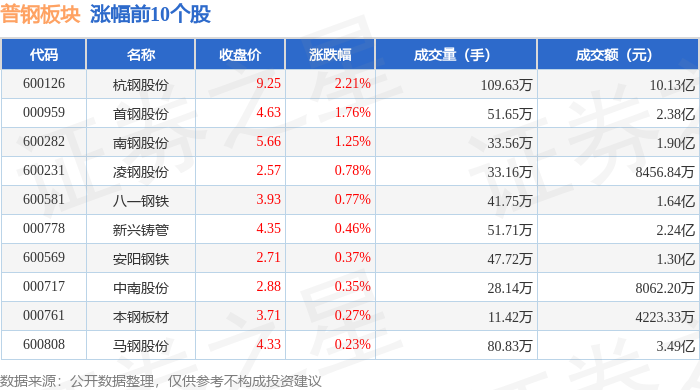
普钢板块11月17日涨0.01%,杭钢股份领涨,主力资金净流出4486.04万元
Zheng Xing Xing Ye Ri Bao· 2025-11-17 08:41
Market Overview - On November 17, the general steel sector rose by 0.01% compared to the previous trading day, with Hangzhou Iron & Steel leading the gains [1] - The Shanghai Composite Index closed at 3972.03, down 0.46%, while the Shenzhen Component Index closed at 13202.0, down 0.11% [1] Individual Stock Performance - Hangzhou Iron & Steel (600126) closed at 9.25, up 2.21% with a trading volume of 1,096,300 shares and a transaction value of 1.013 billion [1] - Shougang Group (000959) closed at 4.63, up 1.76% with a trading volume of 516,500 shares [1] - Other notable performers include Nanjing Steel (600282) up 1.25%, Linggang Steel (600231) up 0.78%, and Baosteel (600581) up 0.77% [1] Fund Flow Analysis - The general steel sector experienced a net outflow of 44.86 million from institutional funds and 90.84 million from speculative funds, while retail investors saw a net inflow of 136 million [2] - Hangzhou Iron & Steel had a net inflow of 15 million from institutional funds, but a net outflow of 69.36 million from speculative funds [3] - Other companies like Hualing Steel (000932) and Shandong Steel (600022) also showed mixed fund flows, with Hualing Steel experiencing a net inflow of 30.44 million from institutional funds [3]


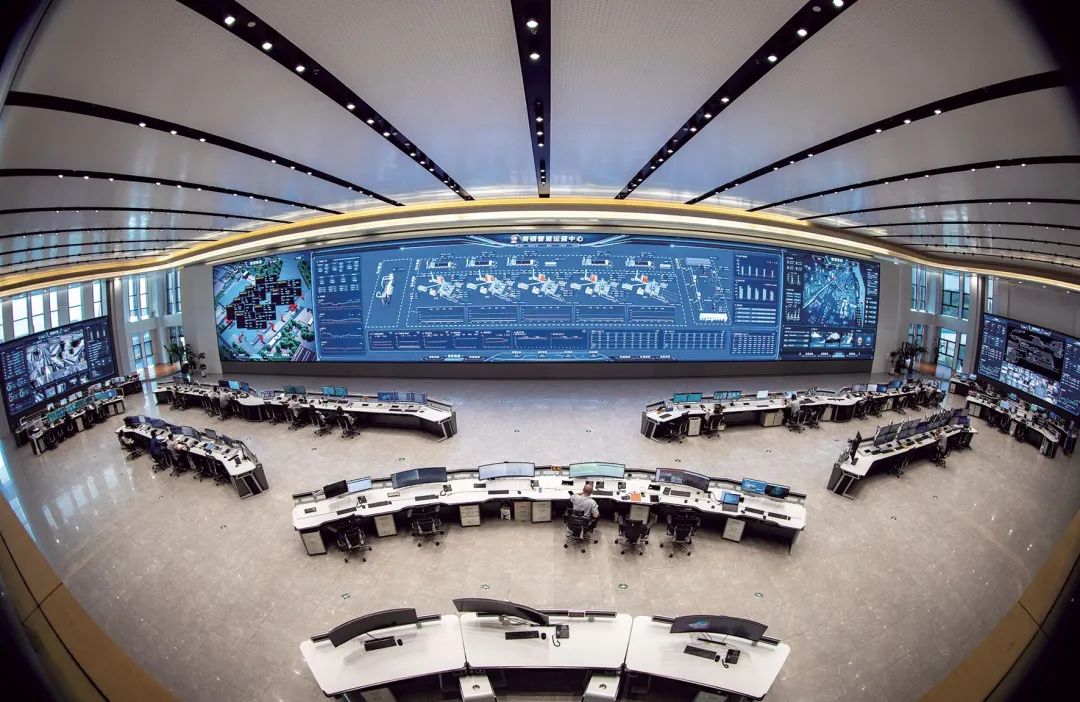
南京钢铁行业“智”变:钢企数字镜像,产线数据奔流
Nan Jing Ri Bao· 2025-11-17 03:52
Core Insights - The steel industry is undergoing a transformation towards intelligent manufacturing, with a focus on digitalization and data-driven operations [1][2] Group 1: Intelligent Manufacturing - The conference held in Nanjing highlighted the integration of smart manufacturing in the steel industry, showcasing advancements in technology and data utilization [1] - Nanjing Steel Group has implemented a digital control center that allows for real-time monitoring of production lines, significantly reducing reliance on traditional methods [4][5] - The use of AI technology has made previously opaque processes transparent, with numerous intelligent application models and automated reporting systems enhancing operational efficiency [4][5] Group 2: Quality Control Innovations - Advanced technologies such as machine vision and robotic systems have improved the quality inspection process, increasing efficiency by 50% [5] - The application of phased array ultrasonic testing acts like a "CT scan" for steel products, enabling the detection of internal defects that are not visible to the naked eye [5] Group 3: Equipment Maintenance and Operations - The "Equipment Doctor" system at Nanjing Steel has shifted maintenance from reactive to proactive, utilizing various detection technologies to anticipate issues before they arise [7] - Engineers equipped with AR smart glasses can conduct inspections and access real-time data and maintenance history, enhancing operational oversight [7] Group 4: Smart Scheduling and Efficiency - The intelligent scheduling system developed by Koyuan Smart has automated production planning and optimized operational rhythms, allowing for better resource allocation [9][11] - This shift enables steel companies to focus more on process optimization and strategic improvements rather than daily operational issues, enhancing overall productivity [12]

钢铁价格磨底蓄势,重申看多板块配置 | 投研报告
Zhong Guo Neng Yuan Wang· 2025-11-17 02:48
Core Viewpoint - The steel industry is experiencing fluctuations in production and demand, with a notable increase in capacity utilization rates, while prices and profits remain under pressure. The overall outlook suggests potential for recovery driven by government policies and market stabilization efforts. Supply Situation - As of November 14, the capacity utilization rate for blast furnaces in sample steel companies is 88.8%, an increase of 0.99 percentage points week-on-week [2][3] - The capacity utilization rate for electric furnaces is 53.2%, up by 2.31 percentage points week-on-week [2][3] - The production of five major steel products is 7.261 million tons, a decrease of 229,800 tons or 3.07% week-on-week [2][3] - Daily average pig iron production is 2.3688 million tons, an increase of 26,600 tons week-on-week and 28,200 tons year-on-year [2][5] Demand Situation - The consumption of five major steel products is 8.606 million tons, down by 63,300 tons or 0.73% week-on-week [2][3] - The transaction volume of construction steel by mainstream traders is 100,000 tons, an increase of 3,700 tons or 3.87% week-on-week [2][3] Inventory Situation - Social inventory of five major steel products is 10.614 million tons, a decrease of 136,100 tons or 1.27% week-on-week, but an increase of 306,100 tons year-on-year [3] - Factory inventory of five major steel products is 4.16 million tons, down by 126,100 tons or 2.94% week-on-week, with a year-on-year increase of 6.35% [3] Steel Prices & Profits - The comprehensive index for ordinary steel is 3,422.3 yuan/ton, an increase of 2.47 yuan/ton or 0.07% week-on-week, but down by 6.85% year-on-year [3] - The comprehensive index for special steel is 6,581.9 yuan/ton, a decrease of 10.59 yuan/ton or 0.16% week-on-week, and down by 3.37% year-on-year [3] - The profit for rebar from blast furnaces is -29 yuan/ton, an increase of 10.0 yuan/ton or 25.64% week-on-week [3] - The profit for construction steel from electric furnaces is -155 yuan/ton, an increase of 7.0 yuan/ton or 4.32% week-on-week [3] Raw Material Situation - The spot price index for Australian powder ore (62% Fe) at Rizhao Port is 786 yuan/ton, up by 10.0 yuan/ton or 1.29% week-on-week [4] - The price for main coking coal at Jingtang Port is 1,830 yuan/ton, an increase of 30.0 yuan/ton week-on-week [4] Market Outlook - The initiation of the 2025 Central Safety Production Assessment is expected to stabilize market confidence and positively impact steel prices [5] - The steel industry is anticipated to maintain a stable supply-demand balance, supported by government "stability growth" policies, with potential improvements in demand from real estate and infrastructure sectors [6] - The industry is expected to see structural investment opportunities, particularly in high-margin special steel companies and leading steel enterprises with strong cost control [6]
钢铁:从容不迫
GOLDEN SUN SECURITIES· 2025-11-16 06:41
Investment Rating - The report maintains a "Buy" rating for several steel companies, including Hualing Steel, Nanjing Steel, Baosteel, and New Steel [8][9][10]. Core Viewpoints - The steel sector has shown a strong performance this year, with a year-to-date increase of over 30%, ranking 7th among Shenwan's primary industries [2]. - The report highlights that the average daily pig iron production has increased to 236.9 thousand tons, while steel production has decreased [11]. - The total inventory of steel has decreased, with a week-on-week decline of 1.7%, indicating a tightening supply [23]. - Apparent steel consumption has shown a slight decline, with a week-on-week decrease of 0.7% [52]. - The report notes that iron ore prices have strengthened, influenced by reduced shipments from Australia and Brazil [49]. Summary by Sections Market Review - The CITIC Steel Index closed at 1,999.70 points, up 0.83%, outperforming the CSI 300 Index by 1.91 percentage points [1][94]. Supply Analysis - Daily pig iron production increased by 2.8 thousand tons, while steel production has decreased, particularly in rebar [11][17]. - The capacity utilization rate for 247 steel mills is reported at 88.8%, reflecting a slight increase [17]. Inventory Analysis - The total inventory of five major steel products decreased to 1,061.4 million tons, down 1.3% week-on-week [25]. - Steel mill inventories also saw a decline, with a 2.9% reduction [25]. Demand Analysis - Apparent consumption of five major steel products decreased by 0.7% week-on-week, with rebar demand dropping more significantly [40][52]. - The average weekly transaction volume for construction steel was 100 thousand tons, reflecting a 3.9% increase [41]. Price and Profitability - The report indicates a slight increase in steel prices, with the Myspic comprehensive steel price index rising to 121.2, up 0.1% week-on-week [75]. - Current costs for long-process rebar and hot-rolled coils are reported at 3,518 yuan/ton and 3,744 yuan/ton, respectively, with negative margins [75][76].
