茶百道

Search documents
茶百道(02555) - 截至二零二五年十月三十一日止月份之股份发行人的证券变动月报表
2025-11-05 08:42
股份發行人及根據《上市規則》第十九B章上市的香港預託證券發行人的證券變動月報表 截至月份: 2025年10月31日 狀態: 新提交 致:香港交易及結算所有限公司 公司名稱: 四川百茶百道實業股份有限公司(「本公司」) 呈交日期: 2025年11月5日 I. 法定/註冊股本變動 | 1. 股份分類 | 普通股 | 股份類別 | H | | 於香港聯交所上市 (註1) | | 是 | | | --- | --- | --- | --- | --- | --- | --- | --- | --- | | 證券代號 (如上市) | 02555 | 說明 | H股 | | | | | | | | | 法定/註冊股份數目 | | | 面值 | | 法定/註冊股本 | | | 上月底結存 | | | 1,477,634,250 | RMB | | 0.1 RMB | | 147,763,425 | | 增加 / 減少 (-) | | | 0 | | | RMB | | 0 | | 本月底結存 | | | 1,477,634,250 | RMB | | 0.1 RMB | | 147,763,425 | 本月底法定/註冊股本 ...
星巴克中国“让贤”仅保留40%股权,借力博裕投资坐望2万家门店
Sou Hu Cai Jing· 2025-11-04 06:13
Core Insights - Starbucks has announced a strategic partnership with Boyu Capital to establish a joint venture for its retail operations in China, with Boyu holding up to 60% equity and Starbucks retaining 40% [1] - The estimated enterprise value of the joint venture is approximately $4 billion, and Starbucks anticipates the total value of its retail business in China to exceed $13 billion [1] - The new joint venture will be headquartered in Shanghai and aims to expand the number of Starbucks stores in China from 8,000 to 20,000 in the future [1] Company Strategy - Starbucks CEO Brian Niccol emphasized that Boyu's local market expertise will accelerate Starbucks' expansion in China, particularly in smaller cities and emerging regions [2] - The company reported significant growth in its retail presence, with 8,011 stores in 1,091 county-level cities by the end of fiscal year 2025 [2] - In response to market competition, Starbucks implemented its largest price adjustment in 26 years, reducing prices on key products by an average of 5 yuan, which contributed to revenue growth [2] Market Challenges - Despite the positive results from its expansion strategy, Starbucks faces challenges in penetrating the lower-tier markets, where competitors like Luckin Coffee have a significant presence [3][5] - Data indicates that the majority of coffee shop locations are concentrated in new first-tier and second-tier cities, while brands targeting lower-tier markets have a higher percentage of their stores in those areas [3] - The entry of various tea brands into the coffee market poses additional challenges for Starbucks as it seeks to establish a foothold in non-first and second-tier cities [5] Investment Landscape - The sale of Starbucks' equity in China has attracted interest from over 20 private equity firms, with potential valuations reaching $10 billion [6] - Boyu Capital, founded in 2011, has a strong investment track record in the consumer market, managing a fund size of $10 billion and holding stakes in over 200 companies [7] - Boyu's recent acquisition of a significant stake in Beijing SKP, a leading luxury department store, highlights its strategic investment approach in the evolving Chinese consumer market [8] Industry Transformation - The coffee market in China is undergoing significant changes, with high-end brands like Starbucks needing to adapt to the competitive landscape dominated by local brands [10] - The shift in consumer preferences and market dynamics necessitates a transformation for mid-to-high-end foreign brands, which must navigate the challenges of maintaining their brand identity while appealing to a broader audience [10]


新华网财经观察丨新茶饮十年,为何再难见爆款?
Xin Hua Wang· 2025-11-03 13:08
Core Insights - The new tea beverage industry has experienced a decline in the emergence of "hit products" over the past few years, with brands struggling to replicate past successes like cheese tea and dirty tea [2][8] - The market has evolved, and new brands are exploring different avenues for growth, while the industry faces challenges such as flavor homogenization and changing consumer preferences [8][9] Industry Growth and Trends - The new tea beverage industry saw a compound annual growth rate of 24.9% from 2017 to 2022, with the market size expected to exceed 354.7 billion yuan by 2024 and over 500,000 stores established [7] - The initial success of brands like Heytea and Naixue's Tea was driven by high-quality, freshly made products that attracted a young consumer base [4][5] Challenges in Product Innovation - The difficulty in creating new hit products is attributed to severe flavor homogenization, with many brands using similar ingredients and supply chains [8] - The rapid replication of successful products by competitors has made it challenging to develop unique offerings that can achieve widespread popularity [8][9] Consumer Behavior and Preferences - Consumers have become more discerning, with 73.09% of them sticking to 1-2 brands and showing reluctance to try new products due to perceived low value [9] - Increased health consciousness has led to a decline in the frequency of purchases, as consumers are more cautious about high-calorie drinks [9] Strategic Responses from Brands - Brands are diversifying their offerings by expanding into food and creating a full-day product ecosystem, with many introducing baked goods and light meals to complement their tea products [10][12] - Some brands are focusing on upgrading core products and optimizing supply chains to enhance cost efficiency and product quality [12] Localization and Emotional Value - Newer brands are adopting localized strategies, emphasizing regional flavors and ingredients to create unique identities [15] - Emotional value is becoming a significant factor in consumer choices, with brands like Luckin Coffee and Bawang Tea Princess successfully connecting with consumers through quality and cultural narratives [17]


星巴克中国2025财年收入31.05亿美元,同比增长5%
Sou Hu Cai Jing· 2025-11-03 08:45
Core Insights - Starbucks China reported a revenue of $3.105 billion for the fiscal year 2025, marking a 5% year-on-year increase. The fourth quarter revenue reached $831.6 million, up 6%, indicating four consecutive quarters of revenue growth [2] - Same-store sales have shown positive growth for two consecutive quarters, with a 9% year-on-year increase in transaction volume, reflecting a significant rise in consumer visit frequency [2] - The company has successfully implemented product innovation and scene upgrades, evidenced by the launch of the Golden Osmanthus series, which combined traditional cultural elements with modern coffee drinks, achieving a record single-day sales figure [2] - As of the end of the fiscal year, Starbucks China had expanded its store count to 8,011, covering 1,091 county-level cities across the country [2] Industry Trends - The competitive landscape is changing with the rise of domestic coffee brands like Luckin Coffee and new tea beverage brands such as Mixue Ice Cream and Tea, which are entering the coffee market with lower prices, challenging Starbucks' pricing strategy [2] - Coffee in China is transitioning from a "niche luxury product" associated with social status to a "daily consumer good," with consumers increasingly prioritizing convenience and cost-effectiveness, directly impacting Starbucks' "third space" model [3]
1点点咸蛋黄新品引热议,“做菜的思路做奶茶”行得通吗?
3 6 Ke· 2025-11-01 03:26
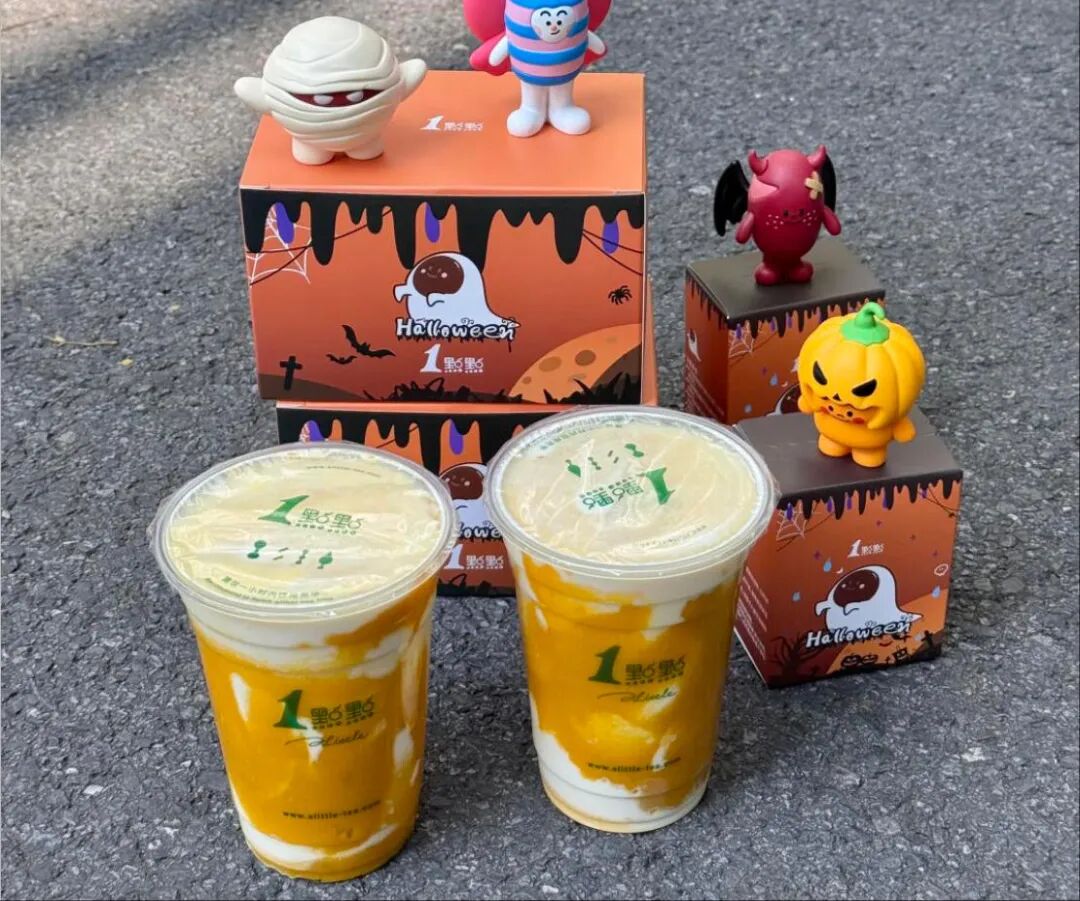
Core Insights - The beverage industry is witnessing a trend where unconventional ingredients, such as salted egg yolk and black truffle, are being incorporated into drinks like milk tea and coffee, indicating a shift towards innovative product offerings [1][3][20] - Major brands like Heytea, Tea Baidao, and Yee3 are collaborating with chefs to create unique "cuisine-inspired" drinks, enhancing flavor complexity and consumer interest [1][12][14] Product Trends - The introduction of salted egg yolk in drinks has gained popularity, with products like the Halloween-themed "Pumpkin Milk Tea" from 1点点 and Yee3's salted egg yolk taro drink receiving positive consumer feedback [1][3] - Other brands are also experimenting with savory ingredients, such as the chestnut beef jerky yogurt shake from 茉酸奶, which combines real beef with yogurt, creating a rich texture and flavor profile [3][5] Ingredient Innovation - The trend includes the use of regional specialty ingredients like black truffle and local mushrooms in beverages, which enhances the uniqueness of the offerings [5][7] - Brands are also incorporating common kitchen condiments, such as soy sauce, into their drinks, creating unexpected flavor combinations that attract consumer attention [9][11] Culinary Collaboration - Collaborations with Michelin-starred chefs are becoming more common, allowing brands to elevate their drink offerings by applying culinary techniques and flavor balancing typically found in high-end cuisine [11][12] - Successful examples include the "Mushroom Soy Milk Tea" from 喜茶, which combines various flavors to create a sophisticated beverage experience [12][14] Production Techniques - The preparation of these innovative drinks is increasingly resembling traditional cooking methods, with the use of equipment like frying pans and steamers in beverage preparation [15][17] - Brands are showcasing their production processes, emphasizing transparency and craftsmanship, which enhances consumer engagement and interest [19][20] Market Dynamics - The shift towards using culinary approaches in beverage creation reflects a broader market trend where brands are moving from chasing trends to focusing on product quality and uniqueness [20][21] - This trend not only diversifies the product offerings but also enhances the overall consumer experience, making it more adventurous and engaging [20][21]
「UMe Tea优米茶铺」完成1000万美元A轮融资,华人工程师在北美开奶茶店|早起看早期
36氪· 2025-11-01 01:16
Core Insights - UMe Tea has completed a $10 million Series A funding round led by Conductive Ventures, with plans to enhance team structure and expand store presence in the Bay Area [2] - The brand has grown from 9 to 27 stores in two years, with a target of 33 stores by the end of 2025, primarily focusing on direct ownership [4][5] - UMe Tea's customer base is predominantly non-Asian, with 60% of customers being from diverse backgrounds, indicating a successful localization strategy [5] Business Strategy - UMe Tea's product offerings cater to local tastes, with a focus on richer flavors preferred by American consumers, such as spicy mango smoothies [6] - The menu is designed to accommodate various dietary preferences, with clear categorization for lactose intolerance and caffeine-free options [6] - The brand has seen a 30% increase in same-store sales year-over-year, unaffected by competitive pressures from other Chinese tea brands entering the market [5] Marketing and Brand Positioning - UMe Tea employs emotional marketing strategies targeting younger consumers, leading to viral social media campaigns, such as card-collecting promotions that significantly boosted sales [9] - The company aims to establish a strong brand presence in California, with plans to open more stores in the San Francisco Bay Area, where the average distance between stores is about 3 miles [11] Future Plans - The company plans to focus on team development, digitalization, and supply chain improvements while continuing to expand its store network in the Bay Area [11] - UMe Tea aspires to become a local brand in California, emphasizing the importance of mastering regional operations before considering broader expansion [11]

平价咖啡将诞生新万店品牌,咖啡市场进入“质价比”时代?
Xin Lang Ke Ji· 2025-10-31 08:04
Core Insights - The Chinese fresh coffee market is undergoing a significant transformation, shifting from a "brand premium" focus to a "quality-price ratio" emphasis, particularly in first-tier cities [1][3] - Starbucks is facing unprecedented competition from affordable coffee brands like Luckin Coffee, Kudi, and others, which are gaining dominance in this emerging market [1][3] Market Dynamics - The Chinese coffee market is projected to exceed 500 billion yuan by 2030, driven by three key industry variables: the entry of tea brands lowering coffee prices, low market concentration, and evolving consumer perceptions [3][5] - Consumers are increasingly willing to pay for quality rather than brand, leading to a trend where price equality becomes essential [3][5] Competitive Landscape - Starbucks' average price per cup is around 30 yuan, while competitors like Luckin Coffee and Kudi offer prices ranging from 4.5 to 16 yuan, creating a significant price gap that challenges Starbucks' competitive advantage [3][4] - Brands like Luckin Coffee have successfully attracted younger consumers by offering "low-price, high-quality" products, reshaping consumer perceptions of coffee pricing [3][4] Brand Performance - Luckin Coffee's "Coconut Latte" has achieved sales exceeding 300 million yuan, with over 30 million cups sold, showcasing its strong market presence [4] - The brand has expanded rapidly, with over 9,000 stores, doubling its scale since the beginning of the year, and has opened its first overseas store in Malaysia [4][5] Consumer Behavior - There is a notable shift in consumer behavior, with many opting for affordable coffee options, indicating a change in the perception of coffee consumption from a luxury to a daily necessity [5][6] - The demand for reasonably priced, quality coffee is consistent across different market segments, suggesting that the "high-quality, low-price" model has long-term potential [5][6] Supply Chain and Operational Efficiency - Luckin Coffee's competitive edge lies in its supply chain management, which includes significant production capacity and cost control, allowing it to maintain quality at lower prices [6] - The brand's operational model serves as a blueprint for the coffee industry, emphasizing the importance of supply chain foundations, product-market fit, and targeted expansion [6]
蜜雪冰城也要卖啤酒了,新茶饮为什么纷纷“买醉”?
Xin Jing Bao· 2025-10-29 08:32
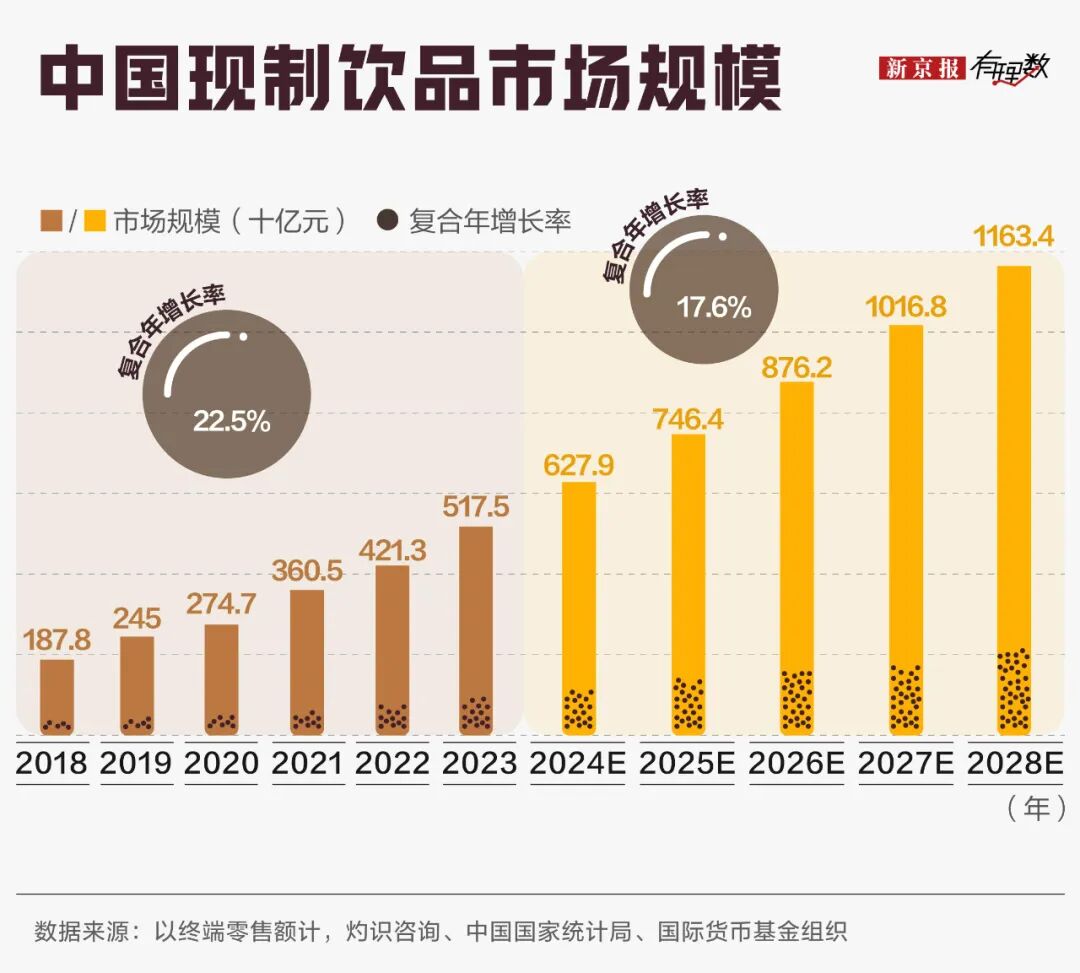
Core Insights - The core point of the news is that Mixue Ice City has expanded its business into the alcoholic beverage sector by acquiring a 53% stake in Fresh Beer Fulu, marking a strategic move to diversify its product offerings beyond tea and coffee [1][14]. Group 1: Company Expansion - Mixue Ice City has acquired Fresh Beer Fulu for a total price of 297 million yuan, officially entering the alcoholic beverage market [1]. - Fresh Beer Fulu, established in 2021, specializes in fresh beer products and has plans to expand to 1,200 stores across 28 provinces by August 2025 [1]. - The pricing strategy for Fresh Beer Fulu's products ranges from 5.9 yuan to 14.9 yuan, significantly lower than similar craft beer products, which are priced at one-third to one-half of the market rate [1]. Group 2: Market Trends - The tea beverage market in China is experiencing a slowdown, with a projected growth rate of only 17.6% from 2023 to 2028, compared to a compound annual growth rate of 22.5% from 2018 to 2023 [3]. - The trend of tea brands entering the alcoholic beverage market reflects a search for new growth points amid increasing competition and market saturation [3][14]. - The rise of the "micro-drunk economy" indicates a shift in consumer preferences, particularly among younger demographics, with over 60% of liquor consumption now attributed to consumers aged 18 to 35 [11]. Group 3: Competitive Landscape - Despite Mixue Ice City's leading position with over 40,000 stores, competition is intensifying from brands like Hushang Auntie, Cha Baidao, and Bawang Tea Princess, which are gaining traction with unique positioning [8]. - The transition from selling tea to alcoholic beverages raises questions about the effectiveness of low-price strategies in maintaining consumer loyalty and achieving sustained growth [14].
48小时卖30万杯!“冬天第一杯热奶茶”杀疯了
东京烘焙职业人· 2025-10-29 08:32
Core Insights - The article highlights the surge in demand for hot beverages as temperatures drop, with significant sales figures reported for various popular drinks [4][6][10]. Group 1: Market Trends - The topic "First Cup of Milk Tea in Winter" has garnered over 20 million views on Xiaohongshu, indicating a strong consumer interest in hot drinks [6]. - Major brands like Cha Bai Dao and Xi Tea have reported impressive sales, with Cha Bai Dao's "Super Thick Taro" selling nearly 200,000 cups on its first day and Xi Tea's "Snowy Yak Milk" selling out in multiple locations within 10 days [10][12]. - The trend of hot drink consumption is reflected in increased order volumes at physical stores, with some locations reporting that over half of the orders are for hot beverages [8][9]. Group 2: Product Innovations - Many brands are reintroducing popular products from previous years, such as Cha Bai Dao's "Super Thick Taro" and Xi Tea's "Snowy Yak Milk," which have proven to be successful in driving sales [14][17]. - New flavor combinations are emerging, with brands experimenting with unconventional ingredients like sweet soy sauce and salted egg yolk, pushing the boundaries of traditional sweet beverages [21][23]. - Seasonal ingredients like pumpkin, sweet potato, and rice are becoming popular in beverage menus, with pumpkin being particularly prominent [24][26]. Group 3: Consumer Preferences - The article notes a shift towards using familiar, homey ingredients in drinks, which resonate well with consumers and provide a sense of nostalgia [29]. - Hot fruit teas made with ingredients like pear and orange are gaining popularity, offering a refreshing option during the colder months [30][32]. - Brands are encouraged to innovate while maintaining a balance between classic flavors and new combinations to attract a broader customer base [19][35].


喝杯奶茶都要配货了?奶茶外卖的配货趋势该怎么看?
3 6 Ke· 2025-10-29 02:39
Core Viewpoint - The trend of requiring additional purchases to meet minimum order amounts for milk tea delivery, referred to as "配货" (matching goods), has sparked discussions about consumer experience and business strategies in the beverage industry [3][6][10]. Group 1: Market Dynamics - The phenomenon of needing to add items to meet delivery thresholds is a response by businesses to cover fixed costs associated with delivery services, including platform fees and packaging [4][6]. - The average commission rate for major delivery platforms ranges from 15% to 25%, with additional delivery fees and packaging costs, making it challenging for businesses to profit from low-value orders [6][9]. Group 2: Consumer Experience - The "配货" trend negatively impacts consumer experience, as customers are forced to purchase unnecessary items to meet minimum order requirements, leading to increased spending [10][12]. - This forced bundling may reduce consumer loyalty to milk tea delivery services if the experience continues to be unsatisfactory [10]. Group 3: Industry Challenges - The low average price of milk tea, which has decreased to around 10-30 yuan per cup, exacerbates the issue, as it limits the ability of businesses to cover delivery costs without requiring additional purchases [9][12]. - The structural differences between beverage and meal delivery markets highlight the challenges faced by the tea industry in moving away from the "配货" model [9][12]. Group 4: Solutions and Recommendations - To address the "配货" issue, companies should focus on reducing costs through improved supply chain management and operational efficiency [12]. - Delivery platforms are encouraged to lower commission rates, especially for small and medium-sized businesses, to alleviate financial pressures and allow for more flexible pricing strategies [12].