江淮汽车

Search documents
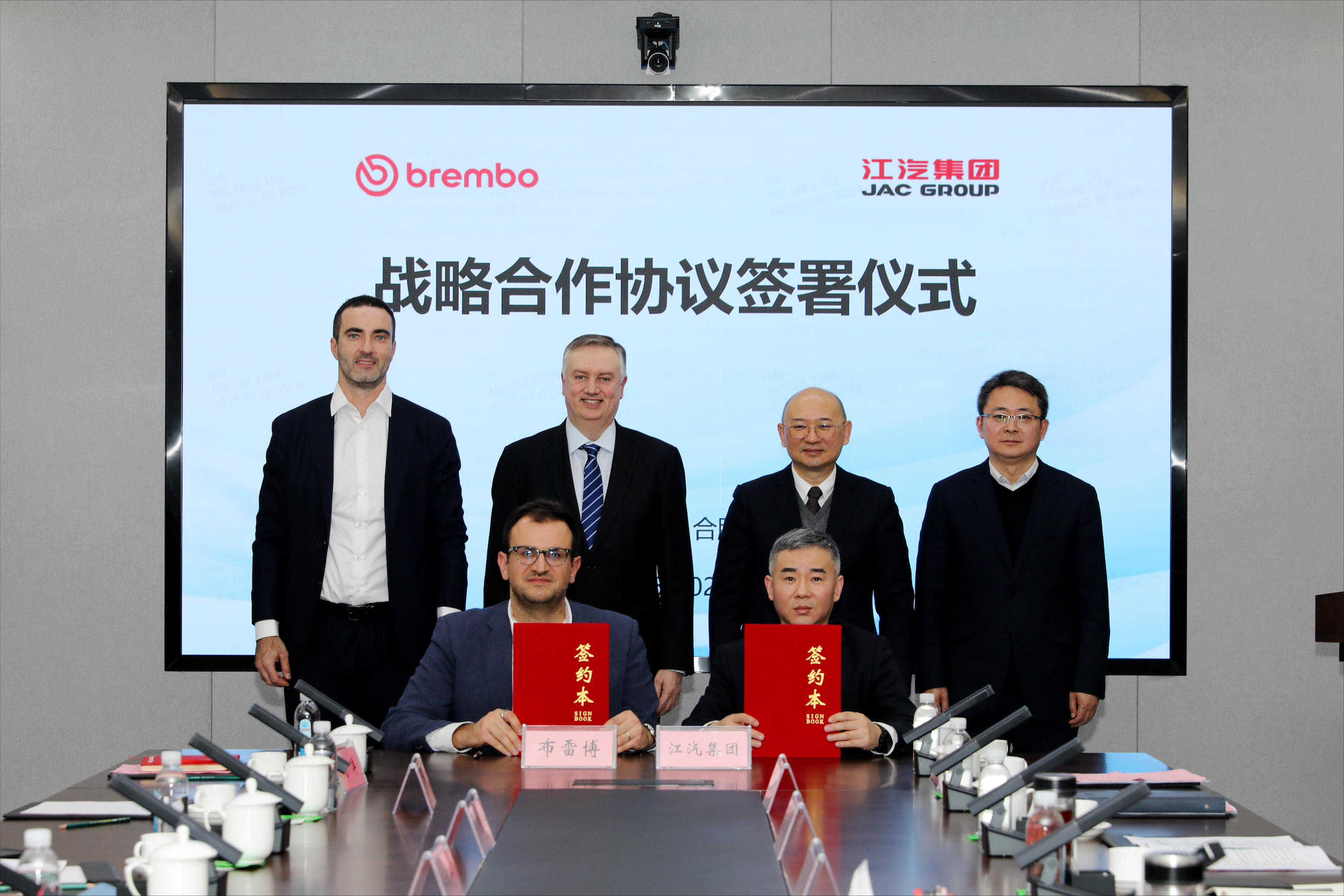
江汽集团与布雷博签署战略合作协议
Zhong Guo Qi Che Bao Wang· 2026-02-06 02:53
Core Insights - The signing of the agreement marks a milestone for both parties, establishing a solid foundation for broader cooperation in next-generation mobility technologies [2] - The collaboration aims to advance brake technology upgrades and implement advanced software solutions to meet the evolving demands of the Chinese automotive market [2] Group 1: Company Statements - Jianghuai Automobile Group's Chairman, Xiang Xingchu, emphasized that Brembo is a leader in brake technology and a trusted partner, highlighting the solid foundation built during the previous cooperation on the ZunJie S800 project [2] - Brembo's CEO, Daniele Schillaci, stated that China is a strategically significant market for Brembo, and this partnership is a crucial step towards becoming a true solution provider [2] Group 2: Strategic Goals - The partnership will combine world-class brake hardware with proprietary software and digital capabilities to offer integrated, high-value solutions to customers [2] - Both companies aim to leverage innovative technologies to jointly lead the development of the next generation of new energy vehicles [2] Group 3: Event Details - The signing ceremony took place on February 5 at the headquarters of Jianghuai Automobile Group, attended by senior leaders from both companies [2]


新能源小卡的“轻卡化”
Xin Lang Cai Jing· 2026-02-05 12:18
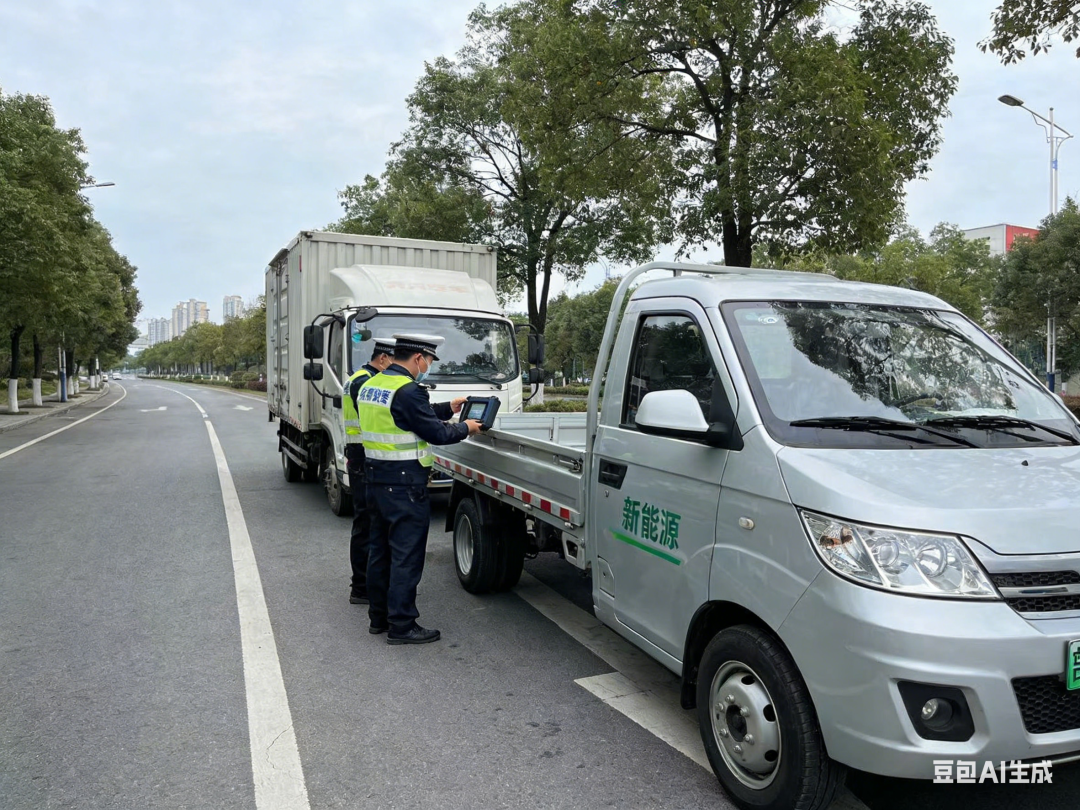
Core Insights - The core viewpoint of the article is that the small electric truck segment is rapidly evolving from a supplementary role to a key driver of growth in the logistics industry, characterized by a trend towards "light truck" features, including increased vehicle size and load capacity, which encroaches on the traditional light truck market [1][18]. Market Growth and Trends - The sales of small electric trucks are projected to experience explosive growth, with an estimated total of 81,952 units sold in 2025, representing a year-on-year increase of 65.8%, capturing 13% of the electric logistics vehicle market, an increase of 2.2 percentage points from 2024 [1][18]. - Monthly sales in June and December are expected to exceed 8,000 units, indicating strong market demand and solidifying the foundation for the "light truck" transformation of small trucks [1][18]. Dual Development Tracks - The surge in small electric truck sales is driven by car manufacturers' precise market insights, leading to the continuous introduction of new products that adapt to market needs, with platform-based products and "light truck" customized products being the two main growth drivers [2][18]. Platform-Based Products - Platform data from major freight platforms like Huolala indicates that small trucks with cargo box lengths of 3.7m and 3.8m are the most adaptable and highest in order volume for urban distribution logistics, prompting manufacturers to focus on these dimensions [3][19]. - Notable examples include the remote F3E with a 3,700mm cargo box and the Foton Xiangling M2 EV, which also features a 3,700mm cargo box, all designed to meet high-frequency urban distribution needs [3][19]. "Light Truck" Customized Products - Customized "light truck" products are characterized by larger sizes, higher load capacities, and extended ranges, effectively bridging the gap between small and light trucks [4][20]. - For instance, the BYD T4 has a cargo box length of 4,100mm, while the Jianghuai Kaida EX6 has a total weight of 4,495kg and a load capacity of 2,000kg, closely matching traditional light trucks [4][20]. Regulatory Influence - The acceleration of the "light truck" transformation for small electric trucks is significantly influenced by regulatory changes, which have tightened compliance for 4.2m light trucks, creating opportunities for small trucks to capture market share [7][22]. - The compliance advantages of small electric trucks, with total weights of 3.495 tons and 4.495 tons, allow them to fill the market void left by stricter regulations on light trucks [7][22]. Product Diversity and Innovation - The release of regulatory benefits has led to a diverse development of small trucks, with manufacturers introducing innovative product concepts that break traditional boundaries [8][23]. - Examples include the Yutong T2, a "small light truck" that combines the flexibility of small trucks with the load capacity of light trucks, and the BYD T4, which features a passenger car design while maintaining "light truck" advantages [8][23]. Shift in Logistics Solutions - The logistics industry is undergoing a fundamental shift from a model where one vehicle type serves all needs to a solution-oriented approach that emphasizes precise adaptation to specific transport scenarios [10][25]. - Logistics companies are increasingly prioritizing suppliers that can offer a comprehensive range of vehicles to meet diverse operational needs, enhancing efficiency and cost-effectiveness [11][26]. Manufacturer Strategies - Almost all major manufacturers have entered the small electric truck market, expanding their product matrices to provide comprehensive solutions for logistics companies [12][27]. - Companies like Foton and Jianghuai are developing multiple models to cover various cargo lengths and battery capacities, aiming to achieve full scene coverage and meet the diverse needs of logistics enterprises [12][27]. Future Outlook - The trend of "light truck" transformation in small electric trucks is expected to deepen, with parameters aligning more closely with 4.2m light trucks, and product forms integrating passenger and intelligent features [15][30]. - The market competition will increasingly focus on solution offerings, with companies that have comprehensive product matrices likely to dominate [15][30].
江淮汽车涨2.11%,成交额17.51亿元,主力资金净流入1400.64万元
Xin Lang Zheng Quan· 2026-02-05 06:20
Group 1 - Jianghuai Automobile's stock price increased by 2.11% on February 5, reaching 53.77 CNY per share, with a trading volume of 1.751 billion CNY and a turnover rate of 1.51%, resulting in a total market capitalization of 117.434 billion CNY [1] - The company experienced a net inflow of main funds amounting to 14.0064 million CNY, with large orders accounting for 31.76% of purchases and 33.87% of sales [1] - Year-to-date, Jianghuai Automobile's stock price has risen by 8.63%, with a 2.25% decline over the last five trading days, a 7.65% increase over the last 20 days, and a 16.49% increase over the last 60 days [1] Group 2 - As of September 30, Jianghuai Automobile had 176,400 shareholders, an increase of 24.81% from the previous period, while the average number of circulating shares per person decreased by 19.88% to 12,378 shares [2] - For the period from January to September 2025, Jianghuai Automobile reported operating revenue of 30.873 billion CNY, a year-on-year decrease of 4.14%, and a net profit attributable to shareholders of -1.434 billion CNY, a year-on-year decrease of 329.43% [2] Group 3 - Since its A-share listing, Jianghuai Automobile has distributed a total of 2.9 billion CNY in dividends, with 45.8642 million CNY distributed over the last three years [3] - As of September 30, 2025, Hong Kong Central Clearing Limited was the second-largest circulating shareholder, holding 55.485 million shares, a decrease of 45.1747 million shares from the previous period [3]
新势力 | 1月:车市表现平淡 新势力同比表现好于行业【国联民生汽车 崔琰团队】
汽车琰究· 2026-02-05 03:45
Core Viewpoint - The January 2026 performance of the new energy vehicle market was relatively flat, but new forces in the industry showed better year-on-year performance compared to the overall market [3]. Group 1: January Delivery Data - Leap Motor delivered 32,059 vehicles in January, a year-on-year increase of 27.4% but a month-on-month decrease of 31.9% [2]. - Li Auto delivered 27,668 vehicles, down 7.5% year-on-year and down 37.5% month-on-month [7]. - NIO delivered 27,182 vehicles, marking a significant year-on-year increase of 96.1% but a month-on-month decrease of 14.2% [6]. - Zeekr delivered 23,852 vehicles, with a year-on-year increase of 99.7% and a month-on-month decrease of 9.3% [8]. - Xpeng delivered 20,011 vehicles, down 34.1% year-on-year and down 38.0% month-on-month [5]. - Xiaomi delivered over 39,000 vehicles in January [8]. Group 2: Market Performance Analysis - The total retail market for narrow passenger cars in January was approximately 1.8 million units, a month-on-month decrease of 20.4% but a slight year-on-year increase [3]. - The new energy vehicle retail market is expected to reach 800,000 units, with a penetration rate of 44.4% [3]. - The five sample new force car companies (excluding Xiaomi and Aion) delivered a total of 130,772 vehicles, a year-on-year increase of 17.5% but a month-on-month decrease of 28.0% [3]. Group 3: Company-Specific Insights - Leap Motor's growth is attributed to strong product offerings like the C10 and B01, with plans to launch new models in 2026 [4]. - Xpeng's delivery decline is noted, but the company plans to launch multiple new models in 2026 [5]. - NIO's delivery increase is supported by strong sales of the ES8 and new software updates enhancing user experience [6]. - Li Auto's stable sales are backed by the L series, with ongoing expansion in the charging infrastructure [7]. - Zeekr's growth is driven by the success of the 7X model and plans for new model launches [8]. Group 4: Industry Trends - The smart driving technology is accelerating, with companies like Xpeng and Huawei leading the charge in promoting intelligent driving features [9]. - The industry is expected to see a shift towards more affordable smart driving solutions, enhancing competitiveness against joint venture brands [9]. - The rise of intelligent capabilities is becoming a critical factor in competition among automakers, with a focus on autonomous driving and user acceptance [10].




国信证券晨会纪要-20260205
Guoxin Securities· 2026-02-05 01:06
Macro and Strategy - The report discusses the "anti-involution" policy aimed at addressing overcapacity and disorderly competition, marking a significant shift in the construction of a unified national market [6][8] - The policy evolution is divided into three phases, with the current phase focusing on systematic implementation to eliminate local protectionism and market segmentation [6][7] - The report emphasizes the need for administrative coordination to break down local protection and industry barriers, while also advocating for a long-term focus on reasonable profit margins for enterprises [8][9] Industry and Company - The electronic industry report highlights the rapid emergence of AI applications, with a focus on the computing power chain becoming a central investment theme [16] - The automotive industry report notes that the penetration rate of NOA (Navigation on Autopilot) in urban areas has exceeded 20%, with significant investments in autonomous driving technologies [23][24] - The agricultural sector report indicates a rise in potassium fertilizer contract prices and increased demand for phosphate rock driven by energy storage needs [3] - The real estate sector in Hong Kong shows signs of recovery, with a 21% increase in private residential transaction volume in 2025, marking the second-highest level since 2013 [33][34] - The report on public REITs indicates a continued divergence in performance across different asset types, with a strong long-term allocation value expected as the market matures [10][11] Investment Strategies - The report suggests focusing on sectors benefiting from policy support and strong fundamentals, such as affordable housing and new infrastructure related to digital economy upgrades [10][11] - In the automotive sector, recommendations include investing in companies with strong new product cycles and those involved in intelligent driving technologies [26][29] - The report advises on maintaining a balanced asset allocation strategy, particularly in light of potential market volatility and economic recovery signals [12][13]
新势力系列点评二十六:1月车市表现平淡,新势力同比表现好于行业
Guolian Minsheng Securities· 2026-02-05 00:25
Investment Rating - The report maintains a positive investment rating for the new energy vehicle sector, indicating a favorable outlook for the industry [7]. Core Insights - The performance of the new energy vehicle market in January 2026 was relatively flat, with a total retail market size of approximately 1.8 million vehicles, a month-on-month decrease of 20.4%, but a slight year-on-year increase. The penetration rate for new energy vehicles reached 44.4% [4]. - Five key new energy vehicle companies (excluding Xiaomi and Aion) delivered a total of 130,772 vehicles in January, representing a year-on-year increase of 17.5% but a month-on-month decrease of 28.0%, outperforming the industry average [4]. - The report anticipates a stabilization and recovery in automotive demand post-Chinese New Year, driven by the rollout of local government subsidies and the introduction of new models [4]. Summary by Relevant Sections Delivery Performance - Leap Motor delivered 32,059 vehicles in January, a year-on-year increase of 27.4% but a month-on-month decrease of 31.9%. The strong performance is attributed to the competitive pricing of models C10 and B01 [5]. - Ideal Auto reported 27,668 vehicles delivered, a year-on-year decrease of 7.5% and a month-on-month decrease of 37.5%. The company is focusing on enhancing user experience through software updates and expanding its service network [9]. - NIO delivered 27,182 vehicles, marking a significant year-on-year increase of 96.1% but a month-on-month decrease of 14.2%. The ES8 model was the top performer [6]. - Zeekr delivered 23,852 vehicles, with a year-on-year increase of 99.7% and a month-on-month decrease of 9.3% [10]. - Xpeng delivered 20,011 vehicles, reflecting a year-on-year decrease of 34.1% and a month-on-month decrease of 38.0% [6]. Market Trends - The report highlights the ongoing trend of intelligent driving technology adoption, with companies like Xpeng and Huawei leading the charge. The expectation is that advancements in intelligent driving will lower hardware costs and expand market access [12]. - The report suggests that the intelligent driving capabilities will become a key competitive factor for automakers, with a focus on companies that are leading in this area [12]. Investment Recommendations - The report recommends focusing on companies with strong intelligent driving capabilities and those that are well-positioned in the new energy vehicle supply chain. Specific companies highlighted include Geely, Xpeng, and BYD [12].

2026安徽卫视春晚圆满完成录制
Xin Lang Cai Jing· 2026-02-04 17:28
(来源:市场星报) 星报讯 2026安徽卫视春节联欢晚会近日圆满完成录制。本届春晚以"我们的春天"为核心主题,立足百 姓真实生活场景,通过多舞台联动、沉浸式景观打造、跨界节目创新,并与温暖民生叙事深度融合,为 全国观众精心烹制了一桌兼具徽风皖韵、时代气息与人间烟火的"江淮文化年夜饭"。 节目深耕徽文化主线,以时尚化表达焕新传统。开场歌舞《春天的花会开》以灵动舞姿与民乐拉开序 幕;戏曲串烧《入戏》融合婺剧、京剧、豫剧与黄梅戏,展现"百戏入皖"的开放姿态,韩再芬演唱的 《乡音本是黄梅调》韵味悠长。晚会注重温情叙事,通过年轻化镜头记录普通人生活。情景歌舞《家常 话》由新闻主播与童声共同演绎,传递家常幸福;圆桌访谈邀请阅兵女兵、非遗手艺人等行业代表,展 现江淮大地向上风貌。 科技元素为舞台增添活力。小提琴金奖得主章奥哲与机器人合奏《苗岭的早晨》,实现人机协同演绎; 舞蹈《追日》以安徽"人造太阳"为灵感,融合科技与艺术。深空探测实验室、江淮汽车等科技成果也在 节目中自然呈现,彰显安徽科创实力。 2026安徽卫视春晚将于腊月二十八播出,以时尚徽韵、科技魅力和烟火温情,为全国观众呈现皖味新 春。 晚会嘉宾阵容星光熠熠,既有 ...
商用车板块2月4日涨0.55%,福田汽车领涨,主力资金净流出3561.66万元
Zheng Xing Xing Ye Ri Bao· 2026-02-04 08:56
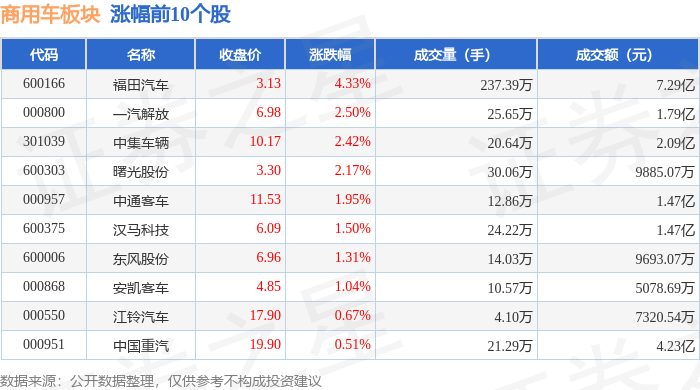
证券之星消息,2月4日商用车板块较上一交易日上涨0.55%,福田汽车领涨。当日上证指数报收于4102.2,上涨0.85%。深证成指报收于 14156.27,上涨0.21%。商用车板块个股涨跌见下表: | 代码 | 名称 | 收盘价 | 涨跌幅 | 成交量(手) | 成交额(元) | | | --- | --- | --- | --- | --- | --- | --- | | 600166 | 福昌汽车 | 3.13 | 4.33% | 237.39万 | | 7.29亿 | | 000800 | 一汽解放 | 6.98 | 2.50% | 25.65万 | | - 1.79亿 | | 301039 | 中隼车辆 | 10.17 | 2.42% | 20.64万 | | 2.09亿 | | 600303 | 曙光股份 | 3.30 | 2.17% | 30.06万 | | 9885.07万 | | 000957 | 中通客车 | 11.53 | 1.95% | 12.86万 | | 1.47亿 | | 600375 | 汉马科技 | 6.09 | 1.50% | 24.22万 | | 1.47亿 | | 60 ...

【新能源】2026年1月新能源乘用车厂商批发销量快讯
乘联分会· 2026-02-04 08:31
Core Viewpoint - The article predicts a 25% growth in sales for Chinese new energy passenger vehicle manufacturers by 2025, aligning with the growth expectations set for the "14th Five-Year Plan" period [2]. Group 1: Market Predictions - The end of the new energy vehicle purchase tax exemption policy in December 2025 is expected to lead to a recovery period in January 2026, with some consumers likely to make purchases in December to benefit from the policy [2]. - January 2023 saw a decline of 8% in new energy vehicle sales due to the withdrawal of subsidies, while January 2024 experienced a positive growth despite the anticipated policy changes [2]. - The late timing of the 2026 Spring Festival and contributions from exports have positively influenced January's sales performance [2]. Group 2: Sales Data - According to the latest data from the Passenger Car Association, manufacturers with sales exceeding 10,000 units in December accounted for 93% of the total new energy passenger vehicle wholesale sales for that month [3]. - Preliminary data for January indicates that these manufacturers achieved sales of 830,000 units, leading to an estimated total of 900,000 new energy passenger vehicles sold nationwide in January, reflecting a 1% year-on-year growth [4][3]. Group 3: Leading Manufacturers - Key manufacturers such as GAC Aion, XPeng Motors, and Great Wall Motors reported significant sales figures in January, with GAC Aion leading at 21,635 units sold [8]. - Other notable performances include XPeng Motors with 20,011 units, Great Wall Motors with 18,019 units, and FAW Hongqi with 8,265 units [8]. - The total estimated sales for manufacturers exceeding 10,000 units in January amounted to 832,461, representing 93% of the total market share for that month [8].




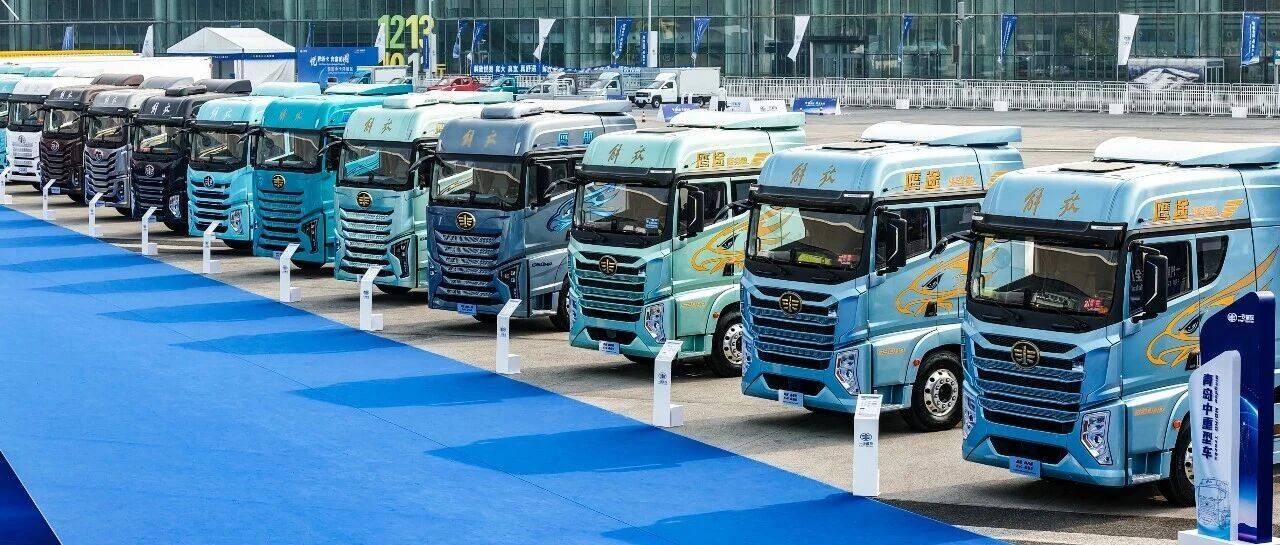
重汽/解放超2.3万争冠,东风/徐工/福田大涨!1月重卡销量超10万辆 | 光耀评车
第一商用车网· 2026-02-04 07:06
Core Viewpoint - The heavy truck market in China experienced a strong wholesale performance but weak retail sales in January 2026, with wholesale sales rising by approximately 40% year-on-year to about 101,000 units, while retail sales are expected to decline by 5-10% year-on-year [1][4][17]. Group 1: Market Performance - In January 2026, the heavy truck market sold approximately 101,000 units, marking a 40% increase from 72,200 units in January 2025 [1]. - The wholesale sales growth is attributed to manufacturers' strategies to ensure a strong start to the year, despite a weak terminal sales performance [4][6]. - The export of heavy trucks continued to grow steadily, with a year-on-year increase of over 20% in January 2026 [6]. Group 2: Manufacturer Performance - China National Heavy Duty Truck Group (CNHTC) sold about 24,000 heavy trucks in January 2026, achieving a year-on-year growth of approximately 13% and holding a market share of about 23.8% [8]. - FAW Jiefang sold around 23,000 heavy trucks, with a significant year-on-year increase of about 48%, resulting in a market share of approximately 22.8% [8]. - Dongfeng Motor Corporation sold about 16,000 heavy trucks, marking a year-on-year growth of approximately 92% and a market share of about 15.8% [10]. - Shaanxi Automobile Group sold around 15,000 heavy trucks, achieving a year-on-year growth of about 20% and a market share of approximately 14.9% [12]. - Beiqi Foton sold about 13,000 heavy trucks, with a year-on-year increase of approximately 66%, resulting in a market share of about 12.9% [14]. - XCMG, focusing on new energy heavy trucks, sold about 4,000 units, achieving a year-on-year growth of approximately 95% [16]. Group 3: Future Outlook - The heavy truck industry is expected to maintain rapid wholesale growth in the first quarter of 2026, but retail sales may decline by 10-15% year-on-year [17]. - The traditional peak sales season for heavy trucks is delayed due to the late Lunar New Year holiday, which may impact sales timing [17]. - New policies regarding the replacement of old National III and IV trucks are anticipated to be implemented in the latter part of the first quarter, which could provide substantial benefits and stimulate sales in the second quarter [17].