
翰森制药

Search documents
港股创新药回暖,520880放量反弹1%!标的指数本轮回撤16%,调整到位了吗?
Xin Lang Cai Jing· 2025-12-04 11:47
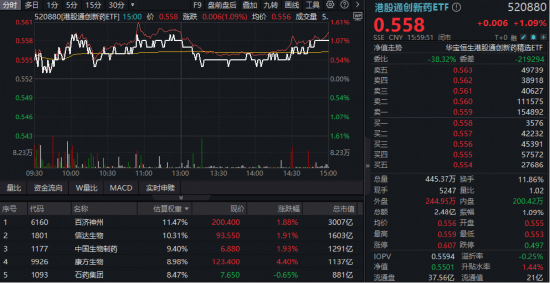
Core Viewpoint - The Hong Kong innovative drug sector has shown signs of recovery after a period of decline, with the Hong Kong Stock Connect Innovative Drug ETF (520880) rising by 1.09% on December 4, ending a four-day losing streak and indicating a significant rebound in market sentiment [1][8]. Market Performance - The Hong Kong innovative drug sector has been in a phase of adjustment since early September, with the Hong Kong Stock Connect Innovative Drug ETF (520880) index experiencing a decline of nearly 16% from its previous high, suggesting that prior high-risk levels have been adequately released [3][11]. - The ETF's trading volume reached 248 million yuan, reflecting increased market activity and interest in the sector [1][8]. Positive News Factors - Two major positive developments have been reported: the launch of the Chinese drug price registration system on December 2, which provides market price references for drug imports and exports, and the anticipated release of the new basic medical insurance drug list and the first commercial insurance innovative drug list by the end of the week, which could optimize the payment structure for innovative drug companies [3][11]. Investment Outlook - Short-term forecasts from CITIC Securities suggest that innovative drugs are expected to be a primary upward trend in the market heading into 2026, supported by a robust domestic demand base and comprehensive manufacturing capabilities within the pharmaceutical industry [5][13]. - The current market conditions may present a favorable opportunity for medium to long-term investments in core innovative drug assets, as the sector is entering a critical phase of "innovation realization and global layout" [5][11]. ETF Characteristics - The Hong Kong Stock Connect Innovative Drug ETF (520880) is noted for its significant concentration in leading stocks, with the top ten holdings accounting for 72.57% of the index, indicating a strong representation of core innovative drug companies [6][14]. - The ETF is characterized by its focus on pure innovative drug companies, excluding CXO firms, and aims to provide comprehensive coverage of the innovative drug development sector [5][13].

12月22日生效!宁德时代、恒瑞医药等纳入富时中国50指数
Xin Lang Cai Jing· 2025-12-04 08:17
Group 1 - FTSE Russell announced quarterly adjustments to its China stock indices, including the FTSE China 50 Index, FTSE China A50 Index, and FTSE China A150 Index, effective from December 22 [1][2] - The FTSE China 50 Index will include three new companies: China Hongqiao, CATL, and Heng Rui Medicine, while removing Citic Securities, Great Wall Motors, and Li Auto [1] - The reserve list for the FTSE China 50 Index includes China Aluminum, Hansoh Pharmaceutical, Huatai Securities, JD Health, and Xinhua Insurance [1] Group 2 - The FTSE China A50 Index will add Luoyang Molybdenum and Sungrow Power, while deleting Jiangsu Bank and SF Holding [2] - The reserve list for the FTSE China A50 Index includes Jiangsu Bank, SF Holding, Silergy, Shenghong Technology, and Wanhua Chemical [2] - FTSE Russell, part of the London Stock Exchange Group, provides indices and data solutions for global institutional investors, reflecting changes in market capitalization and liquidity in the Chinese stock market [2] Group 3 - UBS Securities analyst Meng Lei forecasts that the overall A-share profit growth will rise from 6% this year to 8% in 2026, driven by nominal GDP growth and narrowing PPI declines [4] - JPMorgan projects the CSI 300 Index to reach a target of 5200 points by the end of 2026, corresponding to a 15% year-on-year increase in earnings per share [4] - JPMorgan's strategists believe the probability of a significant rise in the Chinese stock market next year is higher than the risk of a major downturn, citing multiple positive incremental drivers [4]


信立泰创新药获批!港股通创新药ETF(159570)四连跌后反弹1.5%,近5日净流入超1.8亿!2026年展望:首版商保创新药目录落地在即!
Xin Lang Cai Jing· 2025-12-04 03:54
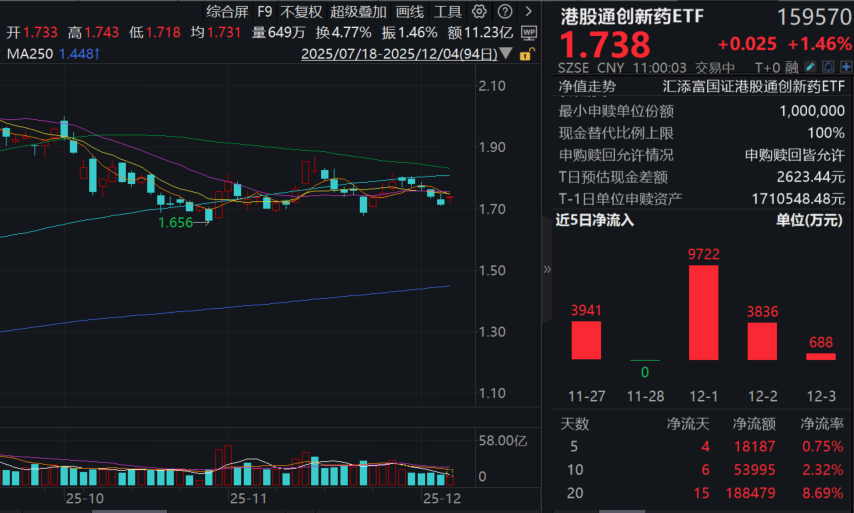
Group 1: Market Performance - The Hong Kong Innovation Drug ETF (159570) rebounded by 1.5% after four consecutive declines, with trading volume exceeding 1.2 billion [1] - The ETF has seen a net inflow of over 180 million in the past five days, with a total size exceeding 23.2 billion as of December 3 [1] - Major stocks within the ETF, such as Kangfang Biotech and Kintor Pharmaceutical, experienced gains of over 3% [3] Group 2: Regulatory Developments - On December 3, Xinlitai received approval from the drug regulatory authority to conduct clinical trials for its innovative small molecule drug SAL0140 for chronic kidney disease [3] Group 3: Policy Environment - A significant policy shift is expected in 2025, with the introduction of a commercial insurance innovation drug directory aimed at expanding coverage beyond basic medical insurance [5] - The overall policy direction encourages innovation and aims to alleviate payment pressures, which is expected to positively impact industry sentiment and fundamentals [5] Group 4: Financial Outlook - Leading innovative drug companies are projected to achieve breakeven within the next two years, enhancing market confidence in their profitability [8] - The financial performance of the covered biotech companies indicates a sustained recovery in the pharmaceutical sector [8] Group 5: Investment Trends - The overseas investment environment for innovative drugs remains strong, with record-high transaction numbers and amounts in 2025 [11] - By the end of Q3 2025, 103 outbound transactions were completed, totaling over 92 billion, surpassing the total for 2024 by 77% [11] Group 6: Capital Flow - Both domestic and foreign investments in the Hong Kong pharmaceutical sector have increased, with domestic holdings at 22.1% and foreign holdings at 38.1% as of November 10 [12] - The pharmaceutical sector is expected to attract more capital due to its valuation being below historical averages [12]


12月关注ESMOAsia和ASH数据读出催化,恒生医疗ETF(159557)有望受益
Sou Hu Cai Jing· 2025-12-04 03:44
Group 1 - The Hang Seng Healthcare Index (HSHCI) has risen by 1.17% as of December 4, 2025, with notable increases in stocks such as InnoCare Pharma (up 4.91%), CanSino Biologics (up 4.65%), and MicroPort Scientific (up 4.51%) [1] - The 11th batch of national centralized procurement results was released on November 7, including 453 products across 55 varieties, with an average price reduction of approximately 75% compared to the highest valid bid [1] - The upcoming ESMO Asia 2025 conference will take place from December 5-7, and the 67th American Society of Hematology (ASH) meeting will be held from December 6-9, which are expected to catalyze data releases in the healthcare sector [1] Group 2 - The top ten weighted stocks in the Hang Seng Healthcare Index (HSHCI) account for 60.48% of the index, including companies like BeiGene, Innovent Biologics, and WuXi Biologics [2] - The Hang Seng Healthcare ETF (159557) closely tracks the HSHCI, providing a market reference for the performance of healthcare securities listed in Hong Kong [2] - Investors without stock accounts can access the Hong Kong healthcare sector investment opportunities through the Hang Seng Healthcare ETF linked fund (018433) [2]
中泰国际每日晨讯-20251204
ZHONGTAI INTERNATIONAL SECURITIES· 2025-12-04 02:28
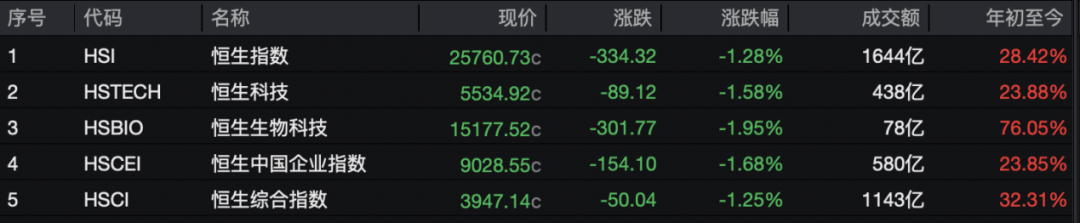
Market Overview - The Hang Seng Index fell to 25,761 points, down 1.3%, while the Hang Seng China Enterprises Index dropped 1.7% to 9,029 points[1] - Total turnover in Hong Kong stocks was HKD 164.4 billion, a decrease of 7.7% from HKD 178.2 billion on Tuesday, indicating a lack of investor confidence[1] - The materials and conglomerates indices rose by 1.2% and 0.1%, respectively, while healthcare, consumer discretionary, and real estate sectors declined by 1.8%, 1.5%, and 1.4%[1] Stock Performance - Techtronic Industries (669 HK) and China Hongqiao (1378 HK) led the gainers, rising by 3.2% and 2.3% respectively[1] - China Life (2628 HK) and China Resources Land (1109 HK) were the biggest losers, falling by 3.6% and 3.1% respectively[1] Industry Dynamics - In the copper market, Chinese smelters oppose negative processing fees from Chilean miners, potentially impacting global refined copper supply and prices[2] - The automotive sector faced pressure, with major players like BYD (1211 HK) and Geely (175 HK) declining by 1.5% to 2%[4] - The pharmaceutical sector showed weakness, with outpatient growth slowing from 9.8% to 0.8% year-on-year, indicating a challenging operating environment[5] Economic Indicators - China's November services PMI was reported at 52.1, slightly above expectations but down from October's 52.6[3] - The U.S. private sector saw a decrease of 32,000 jobs in November, contrasting with an expected increase of 10,000[3] - The ISM services PMI in the U.S. was 52.6, exceeding expectations of 52.1[3]
烧钱23年却无产品上市 和美药业赴港IPO求生
Bei Jing Shang Bao· 2025-12-03 16:01
Core Viewpoint - He Mei Pharmaceutical is urgently seeking an IPO after 23 years of product development, with its first drug Mufemilast recently approved, amidst a highly competitive market for psoriasis treatments [1][4]. Company Overview - Founded in 2002, He Mei Pharmaceutical has raised over 1.2 billion yuan and incurred losses exceeding 1.1 billion yuan, achieving a valuation of 3.9 billion yuan without any products on the market [1][3]. - The company has been in a continuous state of high cash burn, with significant R&D expenditures primarily focused on Mufemilast, which has taken over 16 years to develop [2][3]. Product Development - Mufemilast's development timeline began in 2009, with clinical trials starting in 2012, and it received approval for treating moderate to severe plaque psoriasis in September 2025 [2]. - The R&D costs for Mufemilast accounted for 60% of the total R&D expenses from 2023 to mid-2025, reflecting the heavy investment required for its development [2]. Market Competition - The psoriasis drug market in China is highly competitive, with 18 approved targeted therapies, including 5 small molecules and 13 biologics, leading to a fierce price war [4][5]. - Major competitors include established products from international pharmaceutical giants, which have already captured significant market shares [4][5]. Pricing Strategy - He Mei Pharmaceutical plans to set Mufemilast's initial annual treatment cost between 52,700 and 119,900 yuan, positioning it above some small molecule competitors but below the price of leading biologics [7]. - The relatively high pricing strategy may hinder Mufemilast's competitiveness, especially among price-sensitive patients requiring long-term treatment [7][8]. Commercialization Challenges - The commercialization of Mufemilast is expected to be slow due to the nature of psoriasis as a chronic disease, which requires extensive academic promotion and trust-building among healthcare professionals [8]. - Even if Mufemilast successfully launches, it may not generate significant revenue quickly enough to offset the company's ongoing losses [8].
富时罗素指数调整!涉及这些股票
Zhong Guo Zheng Quan Bao· 2025-12-03 14:32
Group 1 - FTSE Russell announced quarterly adjustments to its China stock index series, including FTSE China 50, FTSE China A50, FTSE China A150, FTSE China A200, and FTSE China A400, effective after market close on December 19 [1][2] - The FTSE China 50 Index will include three companies: China Hongqiao, CATL (300750), and Hengrui Medicine (600276), while excluding CITIC Securities (601066), Great Wall Motor (601633), and Li Auto [2] - The FTSE China A50 Index will add Luoyang Molybdenum (603993) and Sungrow Power Supply (300274), removing Jiangsu Bank (600919) and SF Express (002352) [2] Group 2 - Foreign investors remain optimistic about Chinese assets, with expectations of a resilient economic growth and a positive global macro environment leading into 2026 [3] - Matthew Quaife from Fidelity International highlights that easing monetary and fiscal policies, along with strong corporate earnings, make equities attractive, particularly in emerging markets like China, South Korea, and South Africa [3] - Breakthroughs in AI in China are expected to support the performance of technology stocks, driven by a robust domestic market, favorable policies, and an expanding tech consumer base [3]
286.49亿港元,加仓阿里巴巴
Zhong Guo Ji Jin Bao· 2025-12-03 14:20
Market Overview - The Hong Kong stock market experienced a decline on December 3, with the Hang Seng Index closing at 25,760.73 points, down 1.28% [2] - The total market turnover for the day was 1,644 million HKD, with southbound funds net buying 22.79 million HKD [2] Southbound Capital Activity - Southbound funds have net bought Alibaba for 15 consecutive days, accumulating a total of 286.49 million HKD [6] - On December 3, net purchases included Xiaomi Group at 8.7 million HKD, Alibaba at 4.27 million HKD, and Meituan at 2.97 million HKD, while Tencent Holdings saw a net sell-off of 7.32 million HKD [6] Semiconductor Sector - Semiconductor stocks showed resilience, with notable gains including Huahong Semiconductor up 1.58% and Hard Egg Innovation up 1.02% [3] AI and GPU Market Insights - HSBC's investment management head for China and core Asia, Shen Yu, indicated that China's AI capital expenditure story is just beginning, with significant growth expected in domestic GPU and AI computing power over the next 12 to 18 months [5] - The domestic GPU replacement rate is projected to rise rapidly to over 50% in the coming years, potentially reaching 79%, which will drive the development of AI applications in China [5] Stock Index Changes - FTSE Russell announced the inclusion of companies such as CATL and China Hongqiao into the FTSE China 50 Index, effective December 22 [11] - The changes will also see the removal of companies like CITIC Securities and Great Wall Motors from the index [11] Regulatory Actions - The Hong Kong Securities and Futures Commission has instructed the Hong Kong Stock Exchange to suspend trading of Daxian Education shares starting December 3, 2025, amid ongoing investigations [12][15]

烧钱23年零产品,和美药业赴港IPO求生
Bei Jing Shang Bao· 2025-12-03 11:56
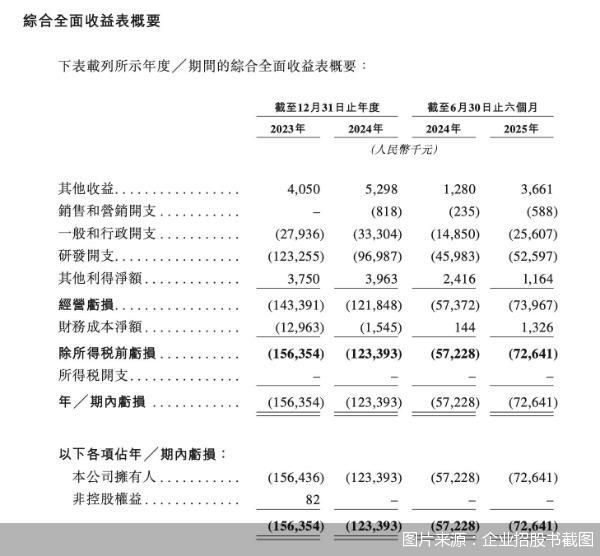
Core Viewpoint - He Mei Pharmaceutical is urgently seeking an IPO after 23 years of product development, with its first drug Mufemilast recently approved, amidst a highly competitive market for psoriasis treatments [1][6]. Company Overview - Founded in 2002, He Mei Pharmaceutical has raised over 1.2 billion RMB and incurred losses exceeding 1.1 billion RMB, achieving a valuation of 3.9 billion RMB despite having no products on the market [1][5]. - The company has been heavily reliant on external financing, completing six rounds of funding from 2021 to the end of 2024, with a post-investment valuation reaching 3.9 billion RMB after the E round [5]. Product Development - The development of Mufemilast has taken 16 years, starting from preclinical research in 2009 to receiving approval for treating moderate to severe plaque psoriasis in September 2025 [3]. - Research and development expenses for Mufemilast accounted for 60% of the total R&D costs, with losses reported at 156.4 million RMB for 2023 and projected losses of 123.4 million RMB for 2024 [3][4]. Market Competition - The psoriasis drug market in China is projected to grow from 18.2 billion RMB in 2024 to 48.3 billion RMB by 2028, with 18 approved targeted therapies already available, including 13 biologics [6][7]. - He Mei Pharmaceutical faces intense competition from established players like Novartis and Eli Lilly, which have already captured significant market shares with their products [6][7]. Pricing Strategy - He Mei Pharmaceutical plans to price Mufemilast between 52,700 RMB and 119,900 RMB annually, positioning it above some small molecule competitors but below the price of established biologics [8]. - The higher pricing strategy may hinder Mufemilast's competitiveness in a market where patients are sensitive to treatment costs, especially for chronic conditions requiring long-term medication [8][9]. Commercialization Challenges - The commercialization of Mufemilast is expected to be slow due to the need for long-term academic promotion and building trust among healthcare professionals [9]. - Even with successful market entry, Mufemilast is unlikely to generate significant revenue quickly, making it difficult for He Mei Pharmaceutical to reverse its overall loss situation [9].
富时中国50指数调整:纳入中国宏桥、宁德时代、恒瑞医药,剔除中信建投证券等
Zhi Tong Cai Jing· 2025-12-03 11:45
Group 1 - FTSE Russell announced the new candidate stocks for the FTSE China 50 Index, which include China Aluminum (601600)(02600), Hansoh Pharmaceutical (03692), Huatai Securities (601688)(06886), JD Health (06618), and New China Life Insurance (601336)(01336) [1] - On December 3, FTSE Russell announced adjustments to the FTSE China 50 Index, FTSE China A50 Index, FTSE China A150 Index, FTSE China A200 Index, and FTSE China A400 Index, effective after the market close on December 19, 2025 [2] - The adjustments will include the addition of China Hongqiao (01378), CATL (300750)(03750), and Heng Rui Medicine (600276)(01276) to the FTSE China 50 Index, while removing CITIC Securities H-share (06066), Great Wall Motor H-share (02333), and Li Auto-W (02015) [2]

