良品铺子

Search documents
2025年1-8月湖北省工业企业有20220个,同比增长3.26%
Chan Ye Xin Xi Wang· 2025-10-10 03:19
Group 1 - The core viewpoint of the article highlights the growth of industrial enterprises in Hubei Province, with a total of 20,220 enterprises reported from January to August 2025, marking an increase of 638 enterprises or a year-on-year growth of 3.26% [1][1][1] - The report indicates that Hubei's industrial enterprises account for 3.88% of the national total, reflecting the province's significant contribution to the industrial sector [1][1][1] Group 2 - The article references a report by Zhiyan Consulting titled "2025-2031 China Industrial Cloud Industry Market Deep Assessment and Investment Opportunity Forecast Report," which provides insights into the industrial cloud sector [1][1][1] - The data regarding the number of industrial enterprises in Hubei is sourced from the National Bureau of Statistics, indicating a reliable foundation for the reported statistics [1][1][1]


人气零售崛起,“精致省”如何重塑消费战场?
Sou Hu Cai Jing· 2025-10-09 10:48
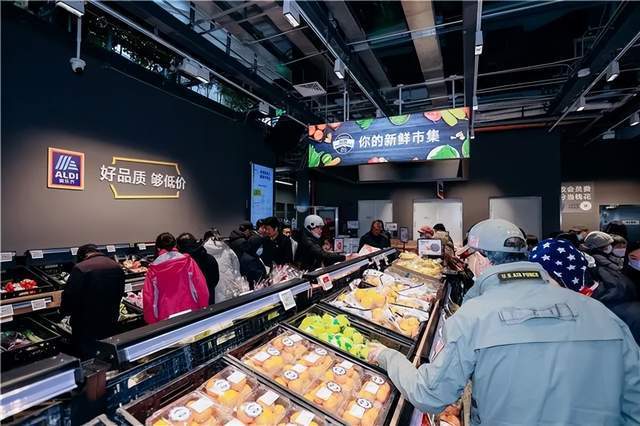
Core Insights - The article discusses the rise of discount retailing in China, highlighting the transformation of brands like "盒马NB" to "超盒算NB" and the success of hard discount retailers like ALDI, which has seen significant growth in sales and market presence [1][2][30]. Group 1: Company Developments - "盒马NB" has rebranded to "超盒算NB," signaling a strategic shift towards discount retailing and focusing on core operations in fresh produce and community supermarkets [1][11]. - The number of "超盒算NB" stores has increased to nearly 300, with double-digit revenue growth in the first half of the year, contributing significantly to the overall profitability of the company [1][9]. - ALDI has doubled its sales in China in 2024, expanding its footprint in the Yangtze River Delta region and focusing on low-priced, high-frequency products [2][30]. Group 2: Market Trends - The shift from "consumption upgrade" to "rational consumption" reflects changing consumer behavior, particularly among the middle class, who are now more price-sensitive [2][3]. - The rise of discount retailing is characterized by a blend of quality and low prices, leading to the emergence of a new retail model termed "popular retail" [3][30]. - The competitive landscape is evolving, with major players like JD and Meituan entering the discount retail space, indicating a growing trend towards discount formats in the retail industry [29][30]. Group 3: Competitive Strategies - ALDI's success is attributed to its hard discount model, which emphasizes cost control, private label products, and a streamlined SKU selection, differentiating it from traditional supermarkets [5][6]. - "超盒算NB" aims to replicate ALDI's model by leveraging Alibaba's supply chain and focusing on community needs, offering essential products at competitive prices [8][20]. - "零食很忙" adopts a different approach with a vast selection of snacks, emphasizing a fun shopping experience and leveraging scale for better pricing, which contrasts with the more curated offerings of ALDI and "超盒算NB" [21][22]. Group 4: Consumer Experience - The shopping experience in discount retail is being redefined, with a focus on creating an engaging atmosphere that challenges the perception of low-cost shopping as low-quality [23][24]. - Both ALDI and "超盒算NB" emphasize simplicity and transparency in their store designs, while "零食很忙" creates a vibrant, exploratory shopping environment [23][26]. - The integration of digital tools and data analytics in stores like "零食很忙" enhances inventory management and customer engagement, further driving sales [22][30].
休闲食品板块10月9日跌0.39%,西麦食品领跌,主力资金净流出6463.32万元
Zheng Xing Xing Ye Ri Bao· 2025-10-09 08:54
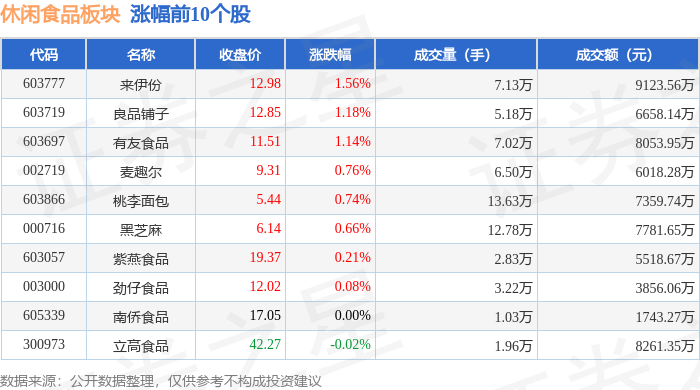
Market Overview - The leisure food sector experienced a decline of 0.39% on October 9, with Ximai Food leading the drop [1] - The Shanghai Composite Index closed at 3933.97, up 1.32%, while the Shenzhen Component Index closed at 13725.56, up 1.47% [1] Individual Stock Performance - Notable gainers in the leisure food sector included: - Laiyifen (603777) with a closing price of 12.98, up 1.56% [1] - Liangpinpuzi (603719) at 12.85, up 1.18% [1] - Youyou Food (603697) at 11.51, up 1.14% [1] - Ximai Food (002956) saw a significant decline of 2.43%, closing at 19.27 [2] - Other notable decliners included: - Haoxiangni (002582) down 1.83% at 9.13 [2] - Guangzhou Restaurant (603043) down 1.55% at 15.88 [2] Capital Flow Analysis - The leisure food sector experienced a net outflow of 64.63 million yuan from main funds, while retail investors saw a net inflow of 32.88 million yuan [2] - The main funds' net inflow and outflow for selected stocks included: - Wanchen Group (300972) with a net inflow of 23.72 million yuan [3] - Ximai Food (002956) with a net inflow of 5.14 million yuan [3] - Laiyifen (603777) with a net inflow of 3.99 million yuan [3]
福建90后,又要拿下一个百亿IPO
投中网· 2025-10-09 06:47
Core Viewpoint - The article discusses the transformation of Wancheng Group from a mushroom cultivation company to a leading snack retail empire, highlighting its upcoming IPO on the Hong Kong Stock Exchange and the role of the new generation of leadership in driving this change [3][4][10]. Company Overview - Wancheng Group, founded in 2011 in Fujian, initially focused on mushroom cultivation and became a stable supplier for major retailers like Walmart and Carrefour [5]. - The company went public on the ChiNext board in 2021, achieving a revenue of over 400 million yuan in 2020 and earning the title of "the first stock in edible fungi" [6]. Market Dynamics - The edible fungi market faced saturation and increased competition, leading to a 15%-20% year-on-year price drop, prompting Wancheng Group to pivot towards the snack retail sector [6][7]. - The snack retail market is experiencing rapid growth, with a projected market size of approximately 1.04 trillion yuan in 2024, reflecting a year-on-year growth of 28.6% [10]. Strategic Expansion - Wancheng Group launched its snack brand "Liu Xiaochan" in August 2022 and subsequently acquired several brands to form a dual-brand matrix with "Haoxianglai" and "Wife Daren" [8][10]. - By June 2025, the number of snack stores exceeded 15,365, with "Haoxianglai" accounting for 14,334 of these locations [8]. Competitive Landscape - The main competitor for Wancheng Group is the merged entity "Mingming Hen Mang," which has a projected GMV of 55.5 billion yuan in 2024 and over 14,394 stores nationwide [10]. - Wancheng Group's GMV for 2024 is estimated at 32.33 billion yuan, with a net profit of 611 million yuan [10]. Leadership Transition - The leadership of Wancheng Group is transitioning to the next generation, with Wang Zening, born in 1993, taking over as general manager after his father stepped down [13][14]. - Wang Zening has a strong educational background, holding degrees from the University of Michigan and Columbia University, and has been instrumental in expanding the company's snack retail business [14]. Branding and Marketing Strategy - Wancheng Group is shifting from a price-focused strategy to a brand-oriented approach, leveraging popular IP collaborations to enhance customer engagement and brand appeal [11][12]. - The company aims to create a unique shopping experience that combines affordability with entertainment, similar to the strategy employed by MINISO [12][11]. Financial Performance - The company reported a significant increase in revenue and net profit, with revenue growing by 106% and net profit increasing by 503 times in the first half of 2025 [15]. - The stock price of Wancheng Group was around 173 yuan prior to the National Day holiday, with a market capitalization of approximately 32.5 billion yuan [14].

国庆中秋假期消费亮点纷呈,食品饮料ETF天弘(159736)连续11日“吸金”累计超2.1亿元,盘中获净申购200万份
2 1 Shi Ji Jing Ji Bao Dao· 2025-10-09 02:30
Group 1 - The consumer sector experienced fluctuations, with the Tianhong Food and Beverage ETF (159736) declining over 1.5%, while stocks like Yangyuan Beverage rose over 9% [1] - The Tianhong Food and Beverage ETF has seen a net inflow of over 210 million yuan over 11 consecutive trading days, with a net subscription of 2 million units during the trading session [1] - The ETF closely tracks the CSI Food and Beverage Index, which selects stocks from the beverage, packaged food, and meat industries [1] Group 2 - During the National Day and Mid-Autumn Festival holiday, key retail and catering enterprises reported a 2.7% year-on-year increase in sales [2] - Foot traffic and sales in monitored pedestrian streets increased by 8.8% and 6.0% respectively during the holiday period [2] - Sales of green organic food surged by 27.9%, while smart home products and domestic fashion clothing saw increases of 14.3% and 14.1% respectively [2] Group 3 - As the impact of second-quarter liquor consumption policies diminishes, the demand for liquor and catering supply chains is entering a recovery phase [3] - Positive signals are expected from the supply side, including a consensus among liquor-producing regions to slow production [3] - The fourth quarter is anticipated to show improvement in key indicators such as the price of Feitian Moutai, driven by macro policy changes and low expectations in the capital market [3]
品牌运营:赵一鸣品牌多维度深度解析-数说故事
Sou Hu Cai Jing· 2025-10-08 14:25
Core Insights - The report analyzes the rapid growth and marketing strategies of Zhao Yiming, a leading brand in the bulk snack industry, highlighting its unique business model and expansion plans [4][5][9]. Brand Overview - Zhao Yiming was founded in 2019 in Yichun, Jiangxi, by Zhao Ding, and has grown from a small workshop to a national chain with over 20,000 stores by September 2025 [5][9]. - The brand focuses on a bulk sales model with over 2,000 SKUs, offering products at approximately one-third of market prices, targeting lower-tier cities [11][12]. Strategic Mergers and Expansion - In November 2023, Zhao Yiming merged with "Snacks Are Busy," forming the Mingming Busy Group, which became the first company in the industry to exceed 10,000 stores by June 2024 [9][10]. - The group aims to expand its store count to over 20,000 by September 2025, showcasing rapid growth [9][10]. Brand Positioning and Product Strategy - The brand's positioning emphasizes high cost-performance and targets consumers in lower-tier cities, with a monthly introduction of over 100 new products [11][12]. - Zhao Yiming has also launched "Zhao Yiming Savings Supermarket," expanding into household and daily necessities [11]. Financing and Capital Background - In February 2023, Zhao Yiming secured 150 million RMB in Series A funding, led by Black Ant Capital, which validated the market's confidence in the bulk snack sector [12]. Brand Tone and Values - The brand is characterized by a youthful and trendy image, with a slogan "No Tricks, Just Cheap" and a vision to "Achieve Snack Freedom for the Chinese People" [14][15]. - Zhao Yiming emphasizes a win-win logic of benefiting both franchisees and consumers, although there are concerns regarding franchisee profitability and employee treatment [17]. Marketing Activities and Social Media Performance - Zhao Yiming's marketing campaigns, such as the "6.1 Wish Come True Festival," achieved significant engagement, with Douyin interactions reaching over 11.24 million [20][26]. - The brand's social media sentiment saw fluctuations, with a peak NSR of 97% in May 2025, followed by a sharp decline due to negative events [29]. Content Strategy and User Engagement - The brand's content strategy focuses on visual and interactive elements, with lifestyle content accounting for 40.4% of engagement, and celebrity endorsements playing a crucial role in attracting attention [34][35]. - User-generated content (UGC) has proven effective, with significant interactions stemming from relatable themes and challenges [42]. Crisis Management and Reputation Challenges - Zhao Yiming faced significant reputation challenges, including the "Huai Ji Water Disaster" incident in June 2025, which severely impacted its social media sentiment [48][49]. - Ongoing issues related to product quality and service have been highlighted, with complaints about pricing integrity and employee conditions surfacing in September 2025 [54][55]. Summary and Recommendations - The brand has demonstrated strong market expansion and marketing capabilities but must address internal management, franchisee relations, and product quality to maintain consumer trust [53].

零食行业:赵一鸣品牌多维度深度解析-数说故事
Sou Hu Cai Jing· 2025-10-05 23:44
Core Insights - The report titled "In-depth Analysis of Zhao Yiming Brand" focuses on the development status, operational strategies, marketing performance, and potential risks of Zhao Yiming snacks from March to September 2025, highlighting its growth logic and challenges as a leading brand in the bulk snack sector [1][2]. Company Overview - Zhao Yiming Snacks was founded in 2019 by Zhao Ding in Yichun, Jiangxi, and merged with "Snacks Are Busy" in 2023, leading to the rebranding of the parent company to Mingming Busy Group in 2024. By September 2025, the number of stores exceeded 20,000, establishing it as a top player in the industry [1][11]. - The brand emphasizes a "bulk" model with over 2,000 SKUs, introducing more than 100 new products monthly, and offers prices as low as one-third of market rates, targeting lower-tier cities [1][14]. Financial and Capital Background - In 2023, Zhao Yiming Snacks completed a Series A financing round of 150 million yuan, led by Heiyi Capital and followed by Liangpinpuzi, which facilitated rapid expansion from 84 stores to over 2,500 [1][15]. Brand Positioning and Values - The brand's positioning is characterized by youthfulness, trendiness, and high cost-performance, with the slogan "No Tricks, Just Cheap" reflecting its commitment to low prices and sincerity. The vision is to "allow Chinese people to enjoy snack freedom" [1][17]. - The brand emphasizes a win-win logic of benefiting both franchisees and consumers, but there are contradictions in practice, such as complaints from franchisees about low margins and high operational intensity [1][19]. Marketing Strategies - Recent marketing efforts have been event-driven, with significant campaigns like the "6.1 Wish Come True Festival" in May, which generated 11.24 million interactions on Douyin, and the "Snack Music Festival" in July, which also saw high engagement [2][25]. - Negative public sentiment arose from incidents such as the "Huai Ji Water Disaster" in June and a "short weight" incident in September, highlighting issues in supply chain quality control and franchise management [2][21]. Recommendations - The report suggests that Zhao Yiming should strengthen quality control and service standards, optimize franchise and employee systems, and improve crisis management mechanisms. The focus should shift from "scale expansion" to "quality growth" to rebuild consumer trust [2][21].

上市公司月饼大比拼!哪款最吸引你?
Shang Hai Zheng Quan Bao· 2025-10-05 05:34
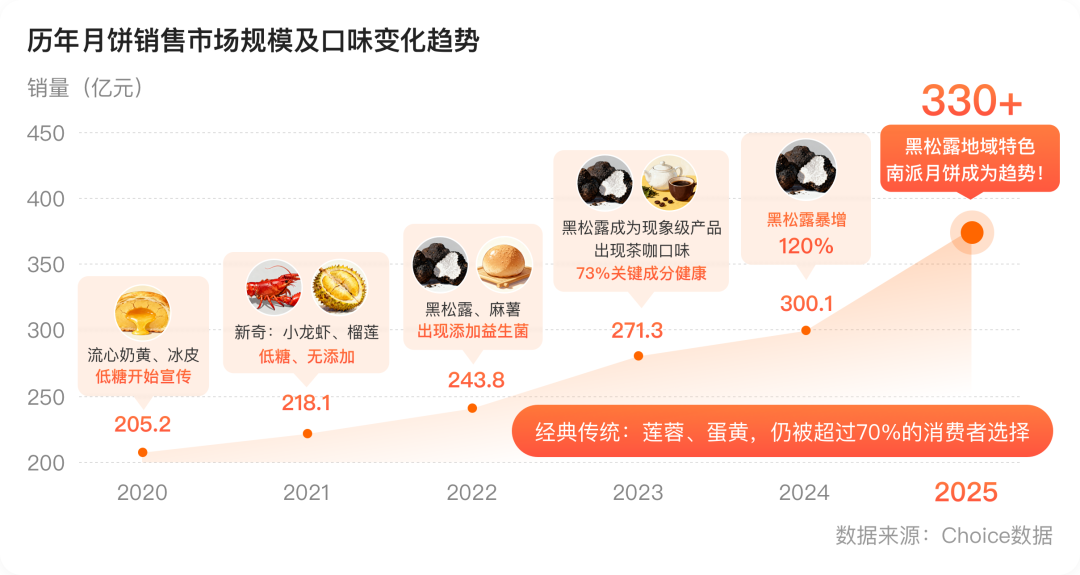
Core Insights - The mooncake market is experiencing significant innovation and growth as companies introduce diverse flavors and healthier options in response to changing consumer preferences [2][3][12] Market Trends - The focus of mooncake manufacturers has shifted from packaging to product innovation, with an emphasis on health-conscious ingredients such as low-sugar and low-oil options [2][3] - Health-oriented mooncakes featuring ingredients like yam, goji berries, and traditional Chinese herbs are becoming increasingly popular [3][4] - A report indicates that by 2030, low-sugar and sugar-free mooncakes will account for over 40% of the market, with functional products containing probiotics and dietary fiber reaching 25% [7] Company Innovations - Guangzhou Restaurant has launched a range of low-sugar mooncakes incorporating ingredients like yam and goji berries, while other companies like Tongrentang and Quanjude are also focusing on health-oriented products [4][6] - New tea-flavored mooncakes targeting younger consumers have been introduced by brands such as Nayuki and Bawang Tea, featuring unique flavors and creative designs [14][15] Consumer Behavior - A significant 73% of consumers are concerned about the healthiness of mooncake ingredients, indicating a shift towards quality and health in consumer preferences [7] - The demand for mooncakes has evolved from a festive necessity to a quality experience, reflecting changes in disposable income and consumer expectations [12] Pricing Dynamics - The average price of mooncake gift boxes has become more affordable, with mainstream prices ranging from 120 to 180 yuan, and a notable decrease in high-priced mooncakes [16] - The proportion of mid-range mooncakes (priced between 80 to 300 yuan) has increased, suggesting a shift towards more accessible pricing strategies [15][16]
薛记炒货的“高价困局”
虎嗅APP· 2025-10-01 09:16
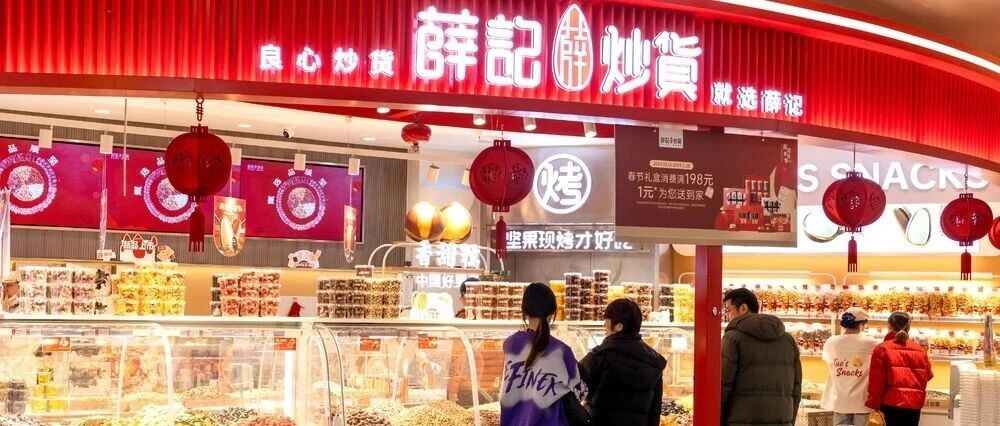
Core Viewpoint - The article discusses the challenges faced by Xueji Fried Goods, highlighting its high pricing strategy amidst a backdrop of consumer spending pressure and a shift towards more value-oriented purchasing behavior in the snack industry [6][10][29]. Group 1: Pricing Strategy and Consumer Behavior - Consumers are increasingly feeling the pressure of high prices, with anecdotes illustrating the shock of spending large amounts at Xueji Fried Goods for seemingly small purchases [6][8]. - The pricing strategy of Xueji Fried Goods appears to be carefully designed, with sales tactics that encourage higher spending, leading to consumer frustration and a sense of being "backstabbed" by unexpected costs [8][10]. - Despite the high prices, the snack market in China is projected to grow, with a market size nearing 1.4 trillion yuan in 2024, indicating a competitive landscape where consumers are becoming more discerning [10][11]. Group 2: Market Dynamics and Competition - The snack industry is undergoing significant changes, with a clear trend towards "consumption downgrade," where consumers are rejecting high-priced products [10][29]. - Xueji Fried Goods, once a darling of the capital market, is now facing a decline in performance, reflecting broader challenges in the consumer investment landscape [19][21]. - The competitive environment is intensifying, with traditional snack giants and imitators offering similar products at lower prices, putting pressure on Xueji Fried Goods' high-end positioning [33][34]. Group 3: Company Adjustments and Future Outlook - In response to declining sales, Xueji Fried Goods is implementing a "self-rescue" strategy, including the closure of several direct-operated stores and a shift towards a franchise model to reduce operational costs [24][25][27]. - The company is also adjusting its pricing strategy, moving from a high-quality focus to a more value-oriented approach, indicating a significant shift in its market positioning [27][39]. - The future of Xueji Fried Goods hinges on its ability to adapt to changing consumer preferences and find a sustainable business model amidst increasing competition and market pressures [40][41].
休闲食品板块9月30日涨0.66%,ST绝味领涨,主力资金净流出9141.32万元
Zheng Xing Xing Ye Ri Bao· 2025-09-30 08:42
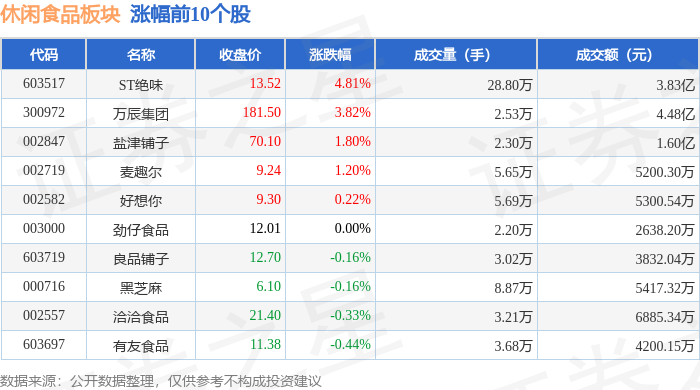
Core Insights - The leisure food sector experienced a rise of 0.66% on September 30, with ST Juewei leading the gains [1] - The Shanghai Composite Index closed at 3882.78, up 0.52%, while the Shenzhen Component Index closed at 13526.51, up 0.35% [1] Stock Performance Summary - ST Juewei (603517) closed at 13.52, with a gain of 4.81% and a trading volume of 288,000 shares, amounting to a transaction value of 383 million [1] - Wanchen Group (300972) closed at 181.50, up 3.82%, with a trading volume of 25,300 shares [1] - Yanjin Puzhou (002847) closed at 70.10, up 1.80%, with a trading volume of 23,000 shares [1] - Other notable performances include Maiqu'er (002719) at 9.24 (+1.20%) and Haoxiangni (002582) at 9.30 (+0.22%) [1] Capital Flow Analysis - The leisure food sector saw a net outflow of 91.41 million from institutional investors, while retail investors contributed a net inflow of 82.63 million [2] - The main capital inflow and outflow for specific stocks include: - Wanchen Group: 11.84 million inflow from main capital, with a net outflow of 15.09 million from speculative capital [3] - Jinzai Food (003000): 3.33 million inflow from main capital, with a net outflow of 3.21 million from speculative capital [3] - Good Products (603719): 2.33 million inflow from main capital, with a net inflow of 1.02 million from speculative capital [3]