
铠侠

Search documents
赛道Hyper | SK海力士押注QLC闪存重塑存储周期
Hua Er Jie Jian Wen· 2025-09-01 06:22
Core Viewpoint - SK Hynix's launch of the 321-layer 2Tb QLC NAND flash memory marks a significant technological breakthrough and a strategic move to tap into the AI data center market, potentially signaling the start of a new storage cycle [1][2][3]. Industry Cycle Dynamics - The storage chip industry is characterized by pronounced "bullwhip effects," where minor demand fluctuations lead to significant inventory and price volatility [4]. - The industry has historically experienced cycles of oversupply leading to price crashes, followed by recovery phases driven by demand resurgence [5]. Strategic Positioning - SK Hynix's introduction of the 321-layer QLC NAND is a bet on the structural demand brought by the AI wave, positioning itself to capture the growing AI data center market [6][7]. - The AI sector is currently the largest incremental demand source for the global semiconductor industry, with a focus on balancing capacity, performance, and cost [7]. Competitive Landscape - The global NAND market is dominated by four major players: Samsung, SK Hynix, Micron, and Kioxia, with SK Hynix aiming to leverage QLC technology to penetrate the AI data center segment [8][9]. - The competitive dynamics are shifting as companies adapt to the 300-layer demand phase, with SK Hynix focusing on QLC as a breakthrough strategy [9]. Investment Logic - Securing large-scale AI clients could grant significant pricing power in the next 2-3 years, as the growth certainty in the AI market surpasses that of traditional consumer electronics [10]. - The 321-layer QLC NAND serves not only as a product but also as a strategic asset for SK Hynix to enhance its bargaining power [11]. Profitability Considerations - The profitability of storage manufacturers is heavily influenced by their ability to manage cost curves relative to price declines, with higher storage density potentially reducing unit costs [12]. - SK Hynix's recent performance in the NAND sector has been lackluster, making the QLC launch a strategic choice to seek a recovery in profit margins [12]. Capital Expenditure Strategy - Capital expenditure is a critical variable in the semiconductor industry, where over-investment can lead to oversupply and under-investment can result in missed opportunities [13]. - SK Hynix's decision to launch high-layer QLC NAND amid a general contraction in capital spending reflects a counter-cyclical strategy aimed at gaining a technological edge [13][14]. Long-term Contracts and Market Stability - Data center clients prefer long-term supply agreements to ensure stable supply and cost control, which could lead to significant contracts for SK Hynix if the 321-layer QLC proves successful in AI applications [14][15]. - Such contracts would not only stabilize revenue but also enhance predictability in cash flow and profitability, potentially increasing market valuation multiples [16]. Valuation Implications - The successful integration of the 321-layer QLC into data centers could serve as a revenue growth driver and a factor in restructuring valuation frameworks [17]. Geopolitical Considerations - The semiconductor industry faces geopolitical uncertainties, with policies from the US, Japan, South Korea, and China influencing supply chain security [18][19]. - SK Hynix's advancement in high-density NAND production aligns with national strategic interests in AI infrastructure, reflecting the interplay between technology and geopolitical positioning [20]. Investment Trends - The launch of the 321-layer QLC NAND is seen as a potential catalyst for a new upward cycle in the storage industry, driven by counter-cyclical technological advancements [20][21]. - The demand from AI data centers provides a structural growth opportunity, while early entry into AI applications may enhance SK Hynix's pricing power in the global NAND market [21].
打破传统存储器性能和容量瓶颈 华为发布AI固态硬盘
Mei Ri Jing Ji Xin Wen· 2025-08-27 14:21
Core Viewpoint - Huawei has launched a new high-end SSD series optimized for AI workloads, addressing the increasing data demands and performance limitations of traditional SSDs in AI applications [1][2]. Group 1: Product Launch and Features - The new SSD series includes three types: OceanDisk EX (extreme performance), SP (high performance), and LC (large capacity), catering to different AI application scenarios [2]. - Huawei aims to break the performance and capacity bottlenecks of existing SSDs, emphasizing high performance and large capacity as key differentiators [2]. Group 2: Market Context and Competition - The global SSD market is currently dominated by overseas manufacturers, with the top five brands being Samsung, SK Hynix, Micron, Kioxia, and SanDisk as of Q1 2025 [2]. - Domestic manufacturers like Huawei are increasing their SSD investments to capitalize on new AI opportunities, as the performance bottleneck in systems is shifting from CPU to SSD [2]. Group 3: Technological Innovations - Huawei has developed a 32Die high-density stacking technology, enabling SSDs with capacities of 128TB and 245TB [3]. - The SpeedFlex technology allows for increased density and improved heat dissipation in SSDs, addressing challenges in compact environments [3]. - Future R&D directions include increasing single-drive capacity to 512TB and 1PB, enhancing performance, and offloading AI computing tasks to SSDs to improve data processing efficiency [3].
AI存储赛道,华为再出招
Di Yi Cai Jing Zi Xun· 2025-08-27 11:29
Group 1 - Huawei launched AI SSD products, including the Huawei OceanDisk EX/SP/LC series, with capacities reaching up to 122/245 TB, marking the largest single-disk capacity in the industry [1] - The AI SSD is optimized for AI workloads, combining multiple core technologies developed by Huawei, and is expected to be a key breakthrough for domestic SSDs [1] - The rapid proliferation of AI applications has led to exponential data growth, with the total global internet corpus increasing from 350 PB (text) to 154 ZB (multi-modal), highlighting the limitations of traditional storage media [1] Group 2 - The model training phase faces significant challenges, requiring 13.4 TB of memory and 168 cards for training a 671B model, which severely limits training efficiency and flexibility [1] - The model inference phase also struggles with slow performance, with an average time to first token (TTFT) of 1000 ms, which is twice that of American models, and a token per second (TPS) rate of only 25, significantly impacting user experience [2] - High-performance AI SSDs are becoming the industry choice, but overseas manufacturers dominate the SSD market, with Samsung, SK Hynix, Micron, Kioxia, and SanDisk leading the market share [2] Group 3 - Despite the current dominance of HDDs in server storage, the advantages of SSDs in AI scenarios, such as energy efficiency and low operating costs, are driving rapid penetration, with SSDs expected to account for 9%-10% of server storage solutions by 2024 [2] - The domestic market is predicted to gradually replace HDDs with large-capacity QLC SSDs, facilitating a transition from a "capacity-oriented" to a "performance and capacity dual-optimization" model [3] - As of June 2023, China's storage capacity reached 1680 EB, showing significant growth and advancements in external flash memory applications, particularly in finance, manufacturing, and internet sectors [3]
华为发力AI存储 布局高端SSD
2 1 Shi Ji Jing Ji Bao Dao· 2025-08-27 11:02
Core Viewpoint - Huawei has launched a new series of high-end SSDs, the Huawei OceanDisk EX/SP/LC, aimed at overcoming performance and capacity bottlenecks in AI storage, thereby enhancing AI training efficiency and inference experience [1][2]. Group 1: Product Features - The Huawei OceanDisk EX 560 (extreme performance disk) offers a random write performance of up to 1500K IOPS, with a write latency of less than 7µs and durability of 60 DWPD, suitable for AI training scenarios [2]. - The Huawei OceanDisk SP 560 (high-performance disk) emphasizes cost-effectiveness, achieving a random write performance of up to 600K IOPS, with a write latency of less than 7µs and durability of 1 DWPD, enhancing inference experience and reducing costs [3]. - The Huawei OceanDisk LC 560 (large capacity disk) has a maximum single-disk physical capacity of 245TB and a read bandwidth of up to 14.7GB/s, aimed at improving data collection and preprocessing efficiency by 6.6 times [3]. Group 2: Market Trends - The global SSD market is expected to see significant growth, with IDC predicting that by 2025, global SSD shipment capacity will reach 805EB, accounting for 25% of total global storage [1]. - The shift from HDD to SSD is accelerating, with SSDs expected to account for 9%-10% of server storage solutions this year, and projected to reach 20% by 2028 due to AI server demand [5][6]. - The trend towards larger capacity SSDs is evident, with the main capacities shifting from 30TB to 60TB-120TB in AI servers, indicating a growing reliance on SSDs for AI training [6]. Group 3: Industry Collaboration and Innovation - Huawei has initiated the "AI SSD Innovation Alliance" in collaboration with various organizations to promote industry ecosystem collaboration and technological innovation in AI storage [4]. - The domestic storage industry is witnessing rapid advancements, with a shift towards SSD technology and increasing production capabilities, indicating a significant opportunity for growth in the sector [5][7].
不想成为第二个英特尔?传台积电考虑退回《芯片法案》补贴
3 6 Ke· 2025-08-26 01:31
Group 1 - TSMC is considering returning subsidies from the CHIPS Act to avoid issues similar to those faced by Intel regarding equity disputes [1][2] - The initial agreement with the U.S. Department of Commerce included $6.6 billion in direct grants and $5.5 billion in loans, which is now under reevaluation due to the implications of Intel's equity issues [1][3] - The U.S. Treasury's recent "debt-to-equity" operation with Intel, where it purchased 433 million shares at $20.47 each, has caused significant disruption in the global semiconductor industry [2][3] Group 2 - TSMC's Arizona factory construction has exceeded $10 billion in investment but is 18 months behind schedule, with critical equipment delivery times extended to 24-36 months [2] - The local supply chain in the U.S. is only meeting 15% of TSMC's raw material needs, forcing the company to rely on its Taiwanese supply system [2] - Recent subsidy guidelines from the U.S. Department of Commerce require disclosure of technology roadmaps and government oversight, which could compromise TSMC's technological autonomy by 37% and reduce patent cross-licensing by 42% [3] Group 3 - The semiconductor supply chain is experiencing fragmentation, with companies like Samsung and SK Hynix exploring negotiations for tax incentives and partnerships [4] - The EU's CHIPS Act includes provisions for a "digital sovereignty fund," allowing member states to jointly acquire strategic non-EU company stakes, seen as a defensive measure against NVIDIA's acquisition of ARM [4] - The current geopolitical landscape is pushing the Chinese semiconductor industry towards accelerated domestic production across various segments [4] Group 4 - TSMC's decision to return subsidies may protect its technological independence but could also mean forfeiting market access benefits in the U.S. [4] - Despite pressures, TSMC is likely to continue its "American TSMC" initiatives in alignment with U.S. government policies [4] - Intel's situation is viewed as an isolated case, and the U.S. government is unlikely to pursue similar equity acquisitions with other semiconductor companies [4]

NAND,突然遇冷?
半导体行业观察· 2025-08-25 01:46
Core Viewpoint - The NAND flash memory industry, once a star of the storage sector, is experiencing a significant downturn in 2024, marked by price volatility and reduced profitability, leading major manufacturers to slow down expansion and investment, indicating a shift from aggressive growth to cautious investment [3][19]. Group 1: Industry Overview - NAND flash memory has played a crucial role in the growth of the semiconductor industry, driven by the rise of smartphones, PC upgrades, and cloud computing [2]. - The industry is now dominated by a few major players, including Samsung, SK Hynix, Micron, and Kioxia, who are adjusting their strategies in response to changing market dynamics [3]. Group 2: Samsung's Strategy - Samsung, a long-time leader in the NAND market, has faced challenges in the mass production of its V10 NAND flash, originally expected to start by the end of this year, now delayed to mid-next year due to supply chain evaluations and unclear market demand [5][6]. - The company is also experiencing a slowdown in its conversion investments for advanced NAND production lines, with plans for the 9th generation NAND being postponed due to low demand [7][9]. Group 3: SK Hynix's Position - SK Hynix has adopted a cautious approach to its NAND business, prioritizing profitability over expansion, and has delayed investments in its second factory in Dalian due to geopolitical factors and weak market performance [8][9]. - The company is focusing its resources on HBM and DRAM, indicating a strategic shift away from NAND [9]. Group 4: Micron's Actions - Micron has announced the cessation of future mobile NAND product development due to poor market performance, redirecting its focus towards enterprise SSDs and other NAND solutions that offer more stable demand and higher profit margins [11][12]. - The company is increasing its investment in HBM and DRAM to capitalize on the growing AI market [12]. Group 5: Kioxia's Challenges - Kioxia, as the third-largest NAND supplier, faces difficulties due to its reliance on partnerships with Western Digital and the lack of scale to compete effectively with Korean giants [13]. - The company struggles with financial performance amid price volatility in the NAND market, leading to a precarious position [13]. Group 6: China's Longsys Strategy - Longsys has chosen to increase investments during this downturn, leveraging domestic market demand to maintain growth and gain a strategic advantage [13]. - Despite its efforts, the global NAND market remains dominated by established players, making it challenging for Longsys to disrupt the existing structure [13]. Group 7: Equipment Manufacturers' Impact - The slowdown in NAND investment has adversely affected semiconductor equipment manufacturers, leading to a decline in orders and cash flow [15][16]. - Equipment companies are shifting focus towards DRAM and logic chip production to mitigate the impact of reduced NAND demand [17]. Group 8: Future Outlook for NAND - The NAND market is expected to remain subdued due to weak demand from smartphones and PCs, while AI-driven HBM and DDR5 demand is rising, pushing NAND to the periphery [19]. - However, there may be future growth opportunities for NAND in applications like AI training and large-capacity SSDs, provided that new technologies and market demands emerge [19][20].


Win10/Win11均中招,多个SSD直接“报废”了
猿大侠· 2025-08-21 04:12
Core Viewpoint - Microsoft released the KB5063878 update for Windows 11 24H2 in mid-August, aimed at fixing security issues and introducing new features. However, this update has been reported to cause severe issues with SSDs and HDDs, affecting not only Windows 11 users but also those on Windows 10 and 23H2 versions [1][2]. Summary by Sections Update Details - The KB5063878 update has an internal version number of 26100.4946 and was intended to address security vulnerabilities while adding new functionalities [1]. - Other related updates for Windows 10 include KB5063709, KB5063877, KB5063871, and KB5063889, while Windows 11 also received KB5063875 [3]. Issues Encountered - Users reported that after installing the KB5063878 update, SSDs became unrecognized by the system, leading to a "drive drop" situation, particularly when installing large games like Cyberpunk 2077 [3]. - Testing revealed that if over 50GB of data was written continuously and the SSD controller usage exceeded 60%, the drive would become unresponsive, and SMART information could not be read [4]. User Experiences - Even after a system reboot, the drives might temporarily reappear, but similar write operations would lead to repeated failures, posing a risk of file corruption [5]. - A user named @Necoru_cat conducted tests on various SSD brands and models, identifying specific SSDs that were most likely to encounter issues, including Corsair Force MP600 and KIOXIA EXCERIA PLUS G4 [6]. Fault Scenarios - Two failure scenarios were identified: - NG LV.1: Drive becomes inaccessible but can be restored after a reboot. - NG LV.2: Drive remains inaccessible even after reboot, leading to total drive failure [9]. Recommendations - Users are advised to uninstall the KB5063878 update if they plan to perform extensive data writing operations to avoid potential issues. The uninstallation process can be done through the Windows settings [9]. - It is recommended to follow the 3-2-1 backup rule for data safety, ensuring multiple copies and different storage mediums [10]. Update Background - Interestingly, the KB5063878 update was released to fix severe errors in previous versions, highlighting a recurring issue where Microsoft releases updates that inadvertently introduce new problems [10][11].


基础化工行业周报:首届世界人形机器人运动会于北京召开,关注机器人产业化进程-20250819
Donghai Securities· 2025-08-19 08:31
Investment Rating - The report provides a standard investment rating for the chemical industry, indicating a positive outlook for specific sectors within the industry [5]. Core Insights - The report highlights the impact of the explosion at Kanto Denka's facility in Japan, which is expected to create opportunities for domestic electronic gas suppliers as Kanto Denka holds a 90% market share in nitrogen trifluoride production in Japan [6][13]. - The first World Humanoid Robot Games held in Beijing is seen as a catalyst for the robotics industry's development, showcasing technological innovation and attracting talent [6][14]. - The report emphasizes the structural optimization of supply in the chemical sector, suggesting a focus on sectors with significant elasticity and competitive advantages, such as organic silicon and membrane materials [6][15]. Industry Performance - The report notes that during the week of August 11 to August 15, 2025, the CSI 300 index rose by 2.37%, while the Shenwan Basic Chemical Index increased by 2.46%, outperforming the market slightly [6][18]. - The top-performing sub-sectors included modified plastics (up 12.29%) and fluorochemicals (up 5.81%), while the worst performers were civil explosives (down 3.02%) and compound fertilizers (down 1.81%) [6][19]. Price Trends - Key products that saw price increases included hydrochloric acid (up 15.38%) and propylene (up 4.00%), while notable declines were observed in butanone (down 7.16%) and liquid ammonia (down 5.89%) [6][26]. - The report tracks price differentials, with significant increases in the propylene-propane differential (up 33.47%) and decreases in the bisphenol A-phenol differential (down 26.57%) [6][28]. Investment Recommendations - The report suggests focusing on sectors that may benefit from supply-side reforms, particularly organic silicon, membrane materials, and dye sectors, with recommended companies including Hoshine Silicon Industry and Zhejiang Longsheng [6][15]. - It also highlights the growing demand for health additives and sugar substitutes driven by new consumer trends, recommending companies that emphasize technological and product differentiation [6][16][17].


全球芯片TOP 20,最新榜单
半导体行业观察· 2025-08-15 01:19
Core Viewpoint - The global semiconductor market is projected to reach $180 billion in Q2 2025, marking a 7.8% increase from Q1 2025 and a 19.6% increase year-over-year from Q2 2024, continuing a trend of over 18% growth for six consecutive quarters [2]. Group 1: Market Performance - The semiconductor market is expected to see robust growth, with a forecasted annual growth rate between 14% and 16% for 2025, adjusted from a previous estimate of 11.2% to 15.4% [8]. - The strong performance in the first half of 2025 has led to an upward revision of the growth forecast from 7% to 13% [8]. Group 2: Company Revenue Insights - Nvidia is projected to maintain its position as the largest semiconductor company with expected revenues of $45 billion in Q2 2025, followed by Samsung and SK Hynix with revenues of $19.9 billion and $15.9 billion respectively [5][6]. - Memory chip manufacturers reported the highest revenue growth, with SK Hynix at 26%, Micron at 16%, and Samsung at 11% [5][6]. - Non-memory companies also showed growth, with Microchip Technology at 11%, STMicroelectronics at 10%, and Texas Instruments at 9.3% [5][6]. Group 3: Future Projections - Companies expect healthy revenue growth in Q3 2025, with Micron forecasting a 20% increase and Kioxia expecting a 30% increase, driven by demand in artificial intelligence applications [7]. - AMD anticipates a 13% revenue growth, while STMicroelectronics expects a 15% increase across all markets except automotive [7]. Group 4: Trade and Tariff Impacts - The uncertainty surrounding tariffs and global trade continues to pose challenges, with potential tariffs on semiconductor imports being a significant concern [10]. - The U.S. government has recently provided export licenses to Nvidia and AMD for certain AI chips to China, although the legality of this agreement is questioned [10]. Group 5: Smartphone Market Trends - The U.S. smartphone import volume saw a dramatic decline of 58% in dollar terms and 47% in quantity in Q2 2025, with imports from China dropping by 85% [11]. - Despite the decline in U.S. smartphone imports, China's smartphone manufacturing remains strong, with a 5% increase in production in Q2 2025 compared to Q1 2025 [12].


半导体行业月报:美国发布《AI行动计划》,海外云厂商持续加大资本支出-20250814
Zhongyuan Securities· 2025-08-14 11:25
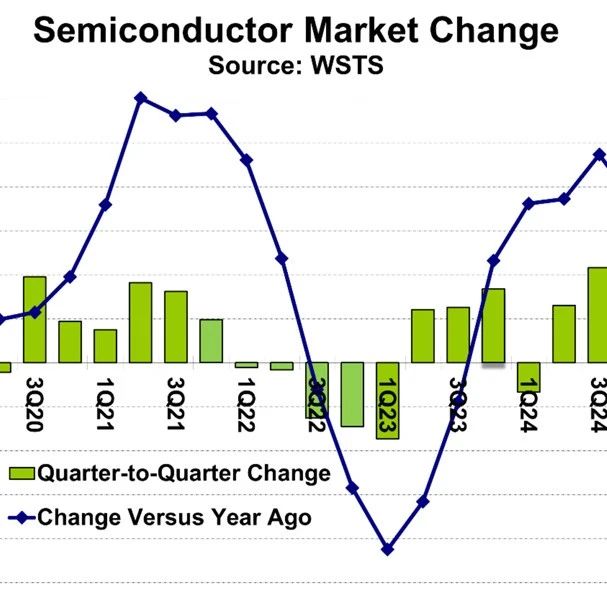
Investment Rating - The semiconductor industry is rated as "Outperform" [1] Core Insights - The semiconductor industry is currently in an upward cycle, driven significantly by AI as a key growth engine [4][5] - North America's four major cloud providers (Google, Microsoft, Meta, Amazon) have increased capital expenditures, with a total of $87.4 billion in Q2 2025, representing a year-on-year growth of 69% and a quarter-on-quarter growth of 23% [3][4] - Global semiconductor sales continued to grow year-on-year, with June 2025 sales increasing by 19.6%, marking the 20th consecutive month of growth [4][21] Summary by Sections 1. Market Performance - In July 2025, the domestic semiconductor industry rose by 3.06%, underperforming the CSI 300 index which increased by 3.54% [10] - The Philadelphia Semiconductor Index rose by 1.11% in July 2025, while the Nasdaq 100 increased by 2.38% [12][18] 2. Global Semiconductor Sales - Global semiconductor sales in June 2025 reached approximately $59.9 billion, with a year-on-year increase of 19.6% and a month-on-month increase of 1.5% [21][22] - The WSTS forecasts a global semiconductor market sales growth of 11.2% in 2025, reaching $700.9 billion [23] 3. Capital Expenditure Trends - Google raised its 2025 capital expenditure budget from $75 billion to $85 billion, while Meta's budget increased to $66-72 billion, reflecting a year-on-year growth of 68%-84% [3][4] - Microsoft is expected to exceed $30 billion in capital expenditures in Q3 2025 [5] 4. AI and Market Dynamics - The demand for AI computing hardware infrastructure remains strong, with significant investments in PCB, copper connections, and optical chips [5] - The penetration rate of AI smartphones is expected to rise rapidly to 34% by 2025, while AI PC penetration is projected to reach 35% [4][5] 5. Price Trends - In July 2025, the monthly spot prices for DRAM and NAND Flash continued to rise, with expectations for further increases in Q3 2025 [4][21]