中国银河

Search documents
1.30犀牛财经晚报:国际贵金属遭资金全面抛售
Xi Niu Cai Jing· 2026-01-30 11:40
Group 1: Precious Metals Market - International gold and silver prices experienced a sharp decline, with spot gold dropping by 7.95% to $4949.62 per ounce and spot silver falling by 16.93% to $95.86 per ounce, hitting a low of $95 [1] - The market volatility was attributed to speculation and a sudden sell-off, with gold prices plummeting by $380 in just 28 minutes, a nearly 7% drop, while silver prices fell by 11% in the same timeframe [3] - The World Gold Council reported that the demand for gold in 2025 is expected to solidify its position among central banks, investors, and consumers, with structural adjustments impacting the market until early 2026 [3] Group 2: Lithium Mining Sector - The lithium mining sector faced a significant drop, but companies like Ganfeng Lithium and Yahua Group reported that their operations are normal and products are in high demand [2] - Battery-grade lithium carbonate prices have surged from approximately 70,000 yuan per ton to around 170,000 yuan per ton since the second half of 2025, indicating a recovery that may benefit companies with their own mines and salt lakes [2] Group 3: Private Equity and IPOs - In January, private equity firms participated in new stock placements, with a total allocation amounting to 338 million yuan across five companies, highlighting the continued interest in private equity investments [4] - The China Securities Regulatory Commission approved the IPO registration of Beijing Weitongli Electric Co., indicating ongoing activity in the public market [7] Group 4: Renewable Energy and Hydrogen Production - By the end of 2025, China's renewable energy hydrogen production capacity is expected to exceed 250,000 tons per year, marking a significant increase compared to the previous year [6] Group 5: Chicken Market - The white feather chicken market has shown signs of recovery, with prices for large wings nearing 50 yuan per kilogram, reflecting a more than 20% increase from the low point in October 2025 [6] Group 6: Pharmaceutical Developments - Kangzheng Pharmaceutical received approval for the first targeted drug for treating vitiligo in China, indicating advancements in the pharmaceutical sector [5] Group 7: Financial Performance Forecasts - Companies such as CICC and Huazi Industrial are projecting significant profit increases for 2025, with CICC expecting a net profit increase of 50% to 85% and Huazi Industrial forecasting a growth of 128% to 167% [16][18]
证券从业人员总规模回落至32万人,分析师人数逆势增长,保代人数8年来首次出现年度下滑
Xin Lang Cai Jing· 2026-01-30 10:30
Core Insights - The securities industry is experiencing a significant transformation, with a reduction in workforce and a shift towards a more professional and service-oriented model [3][10]. Workforce Changes - By the end of 2025, the total number of employees in the securities industry is projected to decrease by 5,897, bringing the total to 320,000, marking three consecutive years of decline since 2023 [13]. - The number of employees in general securities business and securities brokers has significantly decreased, with both categories losing over 5,000 employees [10]. - Conversely, the number of analysts increased by 336, and investment advisors saw a net increase of 5,754, indicating a shift towards specialized roles [10][12]. Analyst Growth - The analyst workforce has seen a notable increase, surpassing 6,000 by 2025, doubling from around 3,000 before 2022 [12]. - Despite pressures in other business lines, competition for research talent among brokerages has intensified, with several prominent analysts switching firms [12]. - The top ten firms with the largest increases in analyst numbers include Guotai Junan Securities, CITIC Securities, and Founder Securities, with Guotai Junan adding 43 analysts [14]. Decline in Sponsoring Representatives - The number of sponsoring representatives has decreased for the first time in eight years, totaling 8,526 by the end of 2025, down by 180 from the previous year [15]. - This decline is attributed to a slowdown in equity financing and stricter regulatory requirements, leading to a "project drought" in the market [15].






中国银河证券:银行板块配置窗口开启 维持行业推荐评级
智通财经网· 2026-01-30 07:47
Core Viewpoint - The report from China Galaxy Securities indicates that since Q3 2025, the preference for the banking sector has remained relatively low, with recent passive fund outflows causing disturbances in the banking sector's funding environment. It is expected that the redemption outflow space will narrow, opening a low-valuation configuration window for banks [1]. Group 1: Market Trends - The market style has shifted, with active funds continuing to underweight the banking sector, maintaining a low preference level. As of Q4 2025, the total market value of active funds' holdings in banks was 30.545 billion yuan, accounting for 1.88%, a slight increase of 0.07 percentage points quarter-on-quarter, yet still at a near five-year low. The underweight ratio expanded to 8.88%, up 0.5 percentage points [1]. - Since Q3 2025, there has been a notable rotation in market sectors, with active funds favoring sectors such as non-ferrous metals, communications, and non-bank financials, which saw increases in holdings of 2.07 percentage points, 1.89 percentage points, and 1.03 percentage points respectively. In contrast, the banking sector experienced a decline of 7.68% [1]. Group 2: Fund Flows and Impact - The recent adjustment in the banking sector is primarily attributed to passive fund outflows, with net outflows from stock ETFs reaching 757.99 billion yuan in January 2026. The estimated net outflow from the banking sector due to these redemptions is approximately 83.14 billion yuan [2]. - The largest four CSI 300 ETFs have seen their market shares drop below the top ten holders' shares from the first half of 2025, with an average reduction of about 43%. Although selling pressure remains, the narrowing of redemption outflow space is expected to lessen its impact on the banking sector [2]. Group 3: Long-term Investment Outlook - The influence of long-term funds on the pricing of the banking sector is becoming more pronounced, with the impact of both active and passive public funds diminishing. Long-term funds, such as insurance capital, are expected to stabilize and potentially elevate the valuation of the banking sector, creating opportunities for rebound [3]. - The average dividend yield for A-share banks is currently 4.62%, maintaining its attractiveness for long-term investors. The expectation of steady credit growth and improved liability cost optimization is likely to support a narrowing of interest margin declines, enhancing the outlook for the banking sector [3]. - Historically, the proportion of northbound funds in the banking sector tends to increase in Q1 compared to Q4 of the previous year, with an average increase of 1.07 percentage points over the past five years, excluding 2023. Certain joint-stock banks are expected to benefit more from this increased foreign allocation [3].

业内称券商卖保险有短板:短期内也难以作为渠道佣金的“分食者”
Xin Lang Cai Jing· 2026-01-30 07:38
Core Viewpoint - Recent developments indicate that several securities firms, including CITIC Securities, China Merchants Securities, GF Securities, Galaxy Securities, and Ping An Securities, have launched "insurance zones" on their apps, focusing on wealth management and promoting dividend insurance products that offer both guaranteed returns and potential floating returns [1] Group 1: Market Dynamics - A total of 11 securities firms have obtained insurance intermediary licenses from the financial regulatory authority [1] - Compared to the mature insurance distribution channels of banks, securities firms face limitations due to client investment styles and channel development, making it difficult for them to become significant players in insurance commission revenue in the short term [1] Group 2: Client Perception - Industry insiders believe that securities firms have inherent disadvantages as their clients tend to be more aggressive and have a stronger demand for wealth appreciation [1] - The defensive attributes of insurance products, such as "risk protection and long-term savings," conflict with the positioning of securities firms in the minds of clients, leading to a psychological disconnect regarding the sale of insurance by securities firms [1]


中国银河证券:银行板块配置窗口开启 从资金流向看银行定价逻辑
Zhi Tong Cai Jing· 2026-01-30 04:36
Core Viewpoint - The banking sector is currently experiencing low levels of investment interest, with passive fund outflows causing disturbances in the funding landscape. However, a low valuation window for banks is opening up, driven by high dividends and low valuations appealing to long-term investors like insurance funds [1][2]. Group 1: Market Trends - Since Q3 2025, the preference for the banking sector among active funds has remained low, with a total market value of active fund holdings in banks at 30.545 billion yuan, accounting for 1.88% of total holdings, which is near a five-year low [1]. - The low allocation ratio for banks has expanded to 8.88%, indicating a shift in market style with significant rotation among sectors, particularly favoring non-bank financials, metals, and communications [1]. - The banking sector has underperformed, with a decline of 7.68% compared to other sectors, which have seen substantial gains, such as metals rising by 28.89% [1]. Group 2: Fund Flows and Impacts - Recent adjustments in the banking sector are primarily attributed to passive fund outflows, with net outflows from stock ETFs reaching 757.99 billion yuan, leading to an estimated net outflow of approximately 83.14 billion yuan from the banking sector [2]. - The largest four ETFs have seen a significant reduction in market share, with the average holding by the top ten holders decreasing by about 43% compared to the first half of 2025 [2]. - Although selling pressure remains, the space for further outflows is expected to contract, which may reduce the negative impact on the banking sector [2]. Group 3: Long-term Investment Outlook - The influence of long-term funds on the pricing of the banking sector is increasing, as the impact of both active and passive public funds diminishes [3]. - In a low-interest-rate environment, the stable dividends and high dividend yield of banks are attractive to long-term investors, with the average dividend yield for A-share banks currently at 4.62% [3]. - The outlook for credit growth is positive, supported by favorable fiscal and monetary policies, which may enhance the recovery of bank valuations [3]. Group 4: Investment Recommendations - The report recommends specific banks for investment, including Industrial and Commercial Bank of China (601398), Agricultural Bank of China (601288), Postal Savings Bank of China (601658), China Merchants Bank (600036), Jiangsu Bank (600919), and Ningbo Bank (002142) [4].
A股三大指数开盘集体下跌,沪指跌0.63%
Feng Huang Wang Cai Jing· 2026-01-30 01:40
Group 1: Market Overview - A-shares opened lower with all three major indices declining: Shanghai Composite Index down 0.63%, Shenzhen Component Index down 0.6%, and ChiNext Index down 0.09% [1] Group 2: Robotics Industry Insights - CITIC Securities indicates that humanoid robots are currently in the technology validation phase, but the commercialization timeline is expected to be shorter compared to that of electric vehicles [2] - The report emphasizes focusing on high-value, clear-structure, and high-certainty segments within the robotics industry, as these areas exhibit the greatest earnings elasticity [2] - Key segments identified include platform companies (integrating software and hardware), high-performance SOC chips, dexterous hands, actuators, and precision sensors, which are considered high-value and high-barrier areas in the humanoid robotics sector [2] Group 3: Carbon Market Developments - Huatai Securities forecasts a revaluation of carbon prices and green certificate markets driven by policy changes, transitioning from "soft constraints" to "hard constraints" by 2027 [3] - The report anticipates that carbon prices could rise to the range of 150-200 yuan per ton before 2030, supported by tightening quota distributions and increasing compliance costs [3] - A mechanism for exchanging green certificates for carbon quotas is expected to be established, enhancing the economic viability of green electricity [3] Group 4: Lithium Market Projections - Galaxy Securities predicts that lithium prices will experience a mid-year bifurcation in 2025, with the first half continuing to reflect an oversupply and prices dropping near cash costs [4] - The second half is expected to see a market turnaround driven by dual storage demand and regulatory impacts on mining licenses, leading to a bullish trend [4] - By the end of the year, lithium carbonate prices are projected to have more than doubled from their lows, with ongoing upward momentum despite regulatory challenges [4] - Lithium is identified as a critical mineral for energy transition, with a long-term positive outlook despite short-term supply surplus expectations [4]

央行多措并举护航 专家预期节前流动性保持充裕
Zhong Guo Zheng Quan Bao· 2026-01-29 23:10
Group 1 - The People's Bank of China (PBOC) conducted a 7-day reverse repurchase operation of 354 billion yuan, resulting in a net injection of 143.8 billion yuan after accounting for maturing reverse repos [1] - Experts indicate that the PBOC is actively maintaining liquidity through various monetary policy tools, ensuring that liquidity remains at a sufficient level [1] - The market anticipates the PBOC's upcoming announcement regarding January's treasury bond trading operations, with expectations of increased volume [4] Group 2 - In January, multiple factors such as credit demand and increased cash withdrawal ahead of the Spring Festival have influenced market liquidity [2] - The PBOC's significant rollover of medium-term lending facilities (MLF) in January indicates a proactive approach to safeguarding liquidity [2] - Analysts expect the PBOC to gradually resume 14-day reverse repurchase operations and conduct longer-term reverse repos around early February [2] Group 3 - Despite a low probability of a reserve requirement ratio (RRR) cut in the short term, the funding environment is expected to remain stable and ample [3] - The average statutory reserve requirement ratio for financial institutions is currently at 6.3%, suggesting room for potential RRR cuts [4] - The PBOC aims to enhance liquidity management through treasury bond trading, aligning monetary policy with fiscal measures to maintain liquidity [4]
游资“神话”撞上监管铁拳
Guo Ji Jin Rong Bao· 2026-01-29 15:55
Group 1 - The stock price of Tongyu Communication closed at 52.7 yuan on January 27, down 4.62% after a strong performance earlier in the week [1] - On January 26, the stock opened at 54.86 yuan, peaked at 57.35 yuan, and closed at 55.25 yuan, marking a 5.9% increase [1] - The trading activity was influenced by the presence of Chen Xiaoqun, a notable figure in the A-share market, who has a reputation for generating significant returns on popular stocks [2] Group 2 - There are rumors circulating about Chen Xiaoqun's legal troubles, which have raised concerns among investors regarding the sustainability of his trading strategies [2] - The China Securities Regulatory Commission (CSRC) recently issued a fine exceeding 1 billion yuan against an individual for manipulating stock prices, indicating a crackdown on market irregularities [3] - The regulatory environment is shifting towards more stringent oversight, with a focus on real-time monitoring of trading activities to prevent manipulation [4] Group 3 - The rise of institutional investors is changing the dynamics of the A-share market, making it riskier for retail investors to follow the trading patterns of speculative investors [5] - The suspension of trading for stocks like Fenglong reflects the increasing risks faced by retail investors who follow speculative trends [5] - Enhanced regulatory technology is making it more difficult for speculative trading practices to succeed, pushing the market towards a focus on fundamental value [6]

益生股份:关于控股股东部分股份质押的公告
Zheng Quan Ri Bao Zhi Sheng· 2026-01-29 14:21
(编辑 丛可心) 证券日报网讯 1月29日,益生股份发布公告称,控股股东曹积生将其所持公司15000000股股份质押给中 国银河证券股份有限公司,质押期限至2028年1月24日,用于补充子公司流动资金,本次质押占其持股 3.32%,占公司总股本1.36%。 ...

券商融资火热开局:1月发债规模同比激增逾两倍
Guo Ji Jin Rong Bao· 2026-01-29 13:25
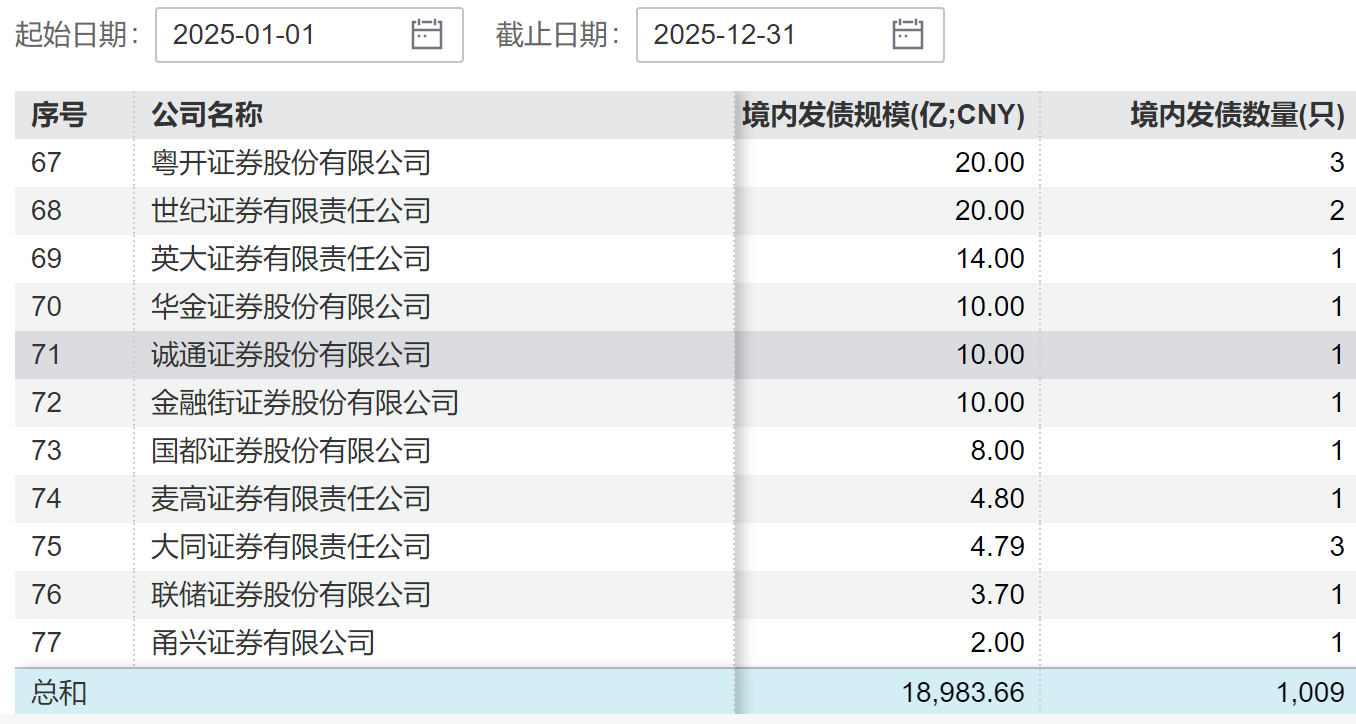
Core Viewpoint - The bond financing for securities firms has started strongly in 2026, with multiple firms receiving approval for bond issuance, indicating a significant acceleration in the industry's financing pace [1][4][9]. Group 1: Bond Issuance Activity - As of January 28, 2026, 40 securities firms have collectively issued bonds totaling 227.82 billion CNY, a more than 200% increase compared to 73.9 billion CNY during the same period in 2025 [8][9]. - Major firms like Shenwan Hongyuan and GF Securities have received substantial approvals, with Shenwan Hongyuan approved for up to 60 billion CNY and GF Securities for 70 billion CNY, marking the highest single bond issuance approvals for listed securities firms this year [4][5]. Group 2: Differences Between Large and Small Firms - There is a clear distinction in bond issuance needs between large and small securities firms. Large firms focus on long-term stable funding for capital-intensive operations, while smaller firms primarily seek short-term operational funding [5][9]. - Large firms benefit from higher credit ratings, allowing them to issue a wider variety of bonds, including perpetual bonds and complex financing tools, while smaller firms mainly issue corporate bonds and short-term financing notes [5][9]. Group 3: Market Environment and Trends - The low interest rate environment is providing securities firms with a favorable financing window, enabling them to optimize their capital structure and support diversified business development [9][10]. - The bond issuance trend reflects the industry's transformation towards capital-intensive operations, indicating a recovery in capital market activities and enhanced capital strength to serve the real economy [10][11]. Group 4: Diversification of Bond Types - The types of bonds being issued are becoming more diverse, moving beyond traditional corporate bonds and short-term financing notes to include perpetual subordinated bonds and technology innovation bonds [11][12]. - The issuance of technology innovation bonds is supported by recent policy initiatives aimed at enhancing the capital market's role in supporting technological advancements [12][13]. Group 5: Future Outlook - The bond issuance trend is expected to continue, with low interest rates anticipated to persist in 2026, and ongoing capital demands driven by business expansion and foreign investment inflows [13].