
科伦博泰

Search documents
多家创新药企竞相发力 ADC药物研发提速
Zhong Guo Zheng Quan Bao· 2025-12-25 21:09
Core Viewpoint - Heng Rui Medicine's SHR-A1904 has been included in the list of breakthrough therapeutic varieties by the National Medical Products Administration, marking a significant advancement in the ADC (antibody-drug conjugate) sector, which is expected to grow substantially in the oncology treatment market [1][2]. Group 1: Company Developments - SHR-A1904 is a targeted Claudin18.2 antibody-drug conjugate developed by Heng Rui Medicine, with a cumulative R&D investment of approximately 174 million yuan [2]. - The company has also received approval for clinical trials of SHR-A2102, another ADC targeting Nectin-4, with a cumulative R&D investment of about 248 million yuan [2]. - Heng Rui Medicine has established a proprietary technology platform for ADCs, with over 5,000 patients across 15 tumor types validated globally, and more than 10 differentiated ADC molecules successfully approved for clinical use [3]. Group 2: Industry Trends - The ADC drug market is experiencing explosive growth, with the global market size surpassing $10 billion in 2023 and projected to reach $66.2 billion by 2030, according to Frost & Sullivan [6]. - Other innovative pharmaceutical companies, such as Cangzhou Jianan, Bai Li Tianheng, and Ke Lun Bo Tai, are also making significant advancements in ADC development, indicating a competitive landscape in the sector [4]. - Chinese companies are becoming key players in global ADC innovation, with increasing recognition of the value of Chinese ADC assets in international collaborations [6].

凝心聚气 乘势而上——解析当前四川经济的“气质”
Xin Hua She· 2025-12-23 05:01
Economic Performance - In December, Sichuan's total import and export value reached 934.38 billion yuan, aiming for an annual target of 1 trillion yuan [1] - In the first three quarters, Sichuan's GDP grew by 5.5% year-on-year, ranking fifth in the country [1] - The province's industrial added value increased by 6.8% year-on-year in the first 11 months, with high-tech manufacturing growing by 11.6% [4] Innovation and Technology - Sichuan is advancing low-altitude economy with nearly 200 routes for passenger and cargo transport, achieving over 100,000 flight hours [3] - The province has seen significant innovations, including the first GaN quantum light source chip and the first space computing constellation [4] - Sichuan's high-tech manufacturing sectors, such as aerospace and electronics, reported growth rates of 21.6% and 20.2% respectively [4] Tourism and Consumer Trends - The Dagu Glacier received over 46,000 inbound tourists in the first 11 months, a nearly 140% increase year-on-year, with Thai tourists making up 77% [7] - Sichuan's retail sales of consumer goods reached 2.63957 trillion yuan, growing by 5.5% year-on-year [8] - The province is enhancing its tourism offerings by integrating sports events with travel experiences [8] Infrastructure Development - The Yidajimi Water Diversion Project, the largest and longest in Sichuan's history, has commenced to address water shortages in the Chengdu Plain [11] - Key projects in infrastructure and industry are being accelerated, with 320 major projects completing investments of 481 billion yuan by the end of November, exceeding the annual target [12] Strategic Initiatives - Sichuan is positioning itself as a strategic hub for national development, housing the only national laboratory in the West and numerous key research institutions [13] - The province is focusing on enhancing its industrial cooperation and optimizing productivity layout to achieve higher levels of industrial development [13][14]

百利天恒朱义:原始创新打造超级爆品,执掌全球话语权
2 1 Shi Ji Jing Ji Bao Dao· 2025-12-22 13:08
Core Insights - The oncology sector remains a hotbed for pharmaceutical innovation, with antibody-drug conjugates (ADCs) emerging as one of the most promising areas due to their dual advantages of precise targeting and potent cytotoxicity [1][2] - Chinese biotech companies have established themselves as key players in the global ADC innovation landscape, holding over 50% of the new drug pipeline in this category [1][2] - A significant strategic partnership between BaiLi TianHeng and Bristol-Myers Squibb (BMS) has set a record for the highest total transaction value for a single ADC asset, further intensifying industry innovation [1][2] Industry Trends - The ADC sector has become one of the fastest-growing segments in the global pharmaceutical industry, with projections estimating the market to reach $115.1 billion by 2032, and China's ADC market expected to reach 66.2 billion yuan by 2030 [2] - In the first eight months of 2025, ADC drugs accounted for 14 transactions, making it one of the hottest outbound technology sectors for Chinese companies [1][2] - Companies are expanding their focus beyond established targets like HER2 and TROP2 to explore "blue ocean" targets such as CDH6, CDH17, and DLL3, aiming for broader treatment windows and improved competitive landscapes [1][2] Strategic Collaborations - The partnership between BaiLi TianHeng and BMS is characterized by a unique model of "self-researched core assets + global rights collaboration" and "co-development + co-commercialization," which is relatively rare globally [4][5] - The collaboration is expected to face challenges related to team size and division of labor, prompting BaiLi TianHeng to expand its team and build a robust organizational structure [4][5] - The deal with BMS, valued at up to $8.4 billion, has revitalized the pharmaceutical market during a period referred to as a "capital winter" [2][3] Market Dynamics - Despite the growing trend of business development (BD) transactions, licensing out remains the mainstream model for domestic biotech companies, allowing them to focus on early-stage innovation while outsourcing later-stage development [6] - The increasing number of BD transactions reflects the rising competitiveness and value of Chinese pharmaceutical assets on a global scale, although concerns about undervaluation persist [7][8] - The need to create "super blockbuster" products is seen as essential for overcoming the challenges of being undervalued in the global market [7][8] Future Outlook - The competition in the ADC+IO (immune-oncology) space is intensifying, with both multinational and domestic companies racing to develop innovative therapies [8][9] - BaiLi TianHeng aims to leverage the cash flow from its partnership with BMS to enhance its R&D capabilities and build a comprehensive commercialization framework [9][10] - The company plans to address four core capability gaps essential for achieving global competitiveness: global R&D capabilities, clinical development capabilities, supply chain capabilities, and commercialization capabilities [10][11] Conclusion - The ADC sector's growth signifies a shift in China's pharmaceutical innovation from a follower to a leader, with a focus on original innovation and global capabilities as the pathway for domestic biotech companies to establish themselves as industry leaders [12]
新药周观点:武田TYK2抑制剂银屑病3期公布,益方BIC潜力验证值得期待-20251221
Guotou Securities· 2025-12-21 09:34
Investment Rating - The report maintains an investment rating of "Outperform" with a target of A [7] Core Insights - The report highlights the positive results from Takeda's new generation oral TYK2 inhibitor, zasocitinib (TAK-279), for treating moderate to severe plaque psoriasis, with over 50% of participants achieving skin clearance or nearly clear skin (PASI 90) at week 16, and about 30% achieving complete clearance (PASI 100) [3][4] - The report suggests that there are multiple catalysts expected in the sector, including academic conferences and data readouts, which could provide investment opportunities [2] - The report emphasizes the potential of other TYK2 inhibitors, particularly Eifang Biopharma's D-2570, which has shown promising phase 2 clinical data [4][22] Summary by Sections Weekly New Drug Market Review - From December 15 to December 21, 2025, the top five gainers in the new drug sector were: Yahu Medicine (+12.03%), Cloudtop New Medicine (+9.32%), Aidi Pharmaceutical (+9.06%), Shiyao Group (+7.05%), and Ailis (+3.94%). The top five losers were: Chuangsheng Group (-16.03%), Beihai Kangcheng (-12.33%), Kedi (-11.88%), WuXi AppTec (-11.15%), and Nuocheng Jianhua (-10.99%) [1][17] Weekly Focus on Recommended Stocks - The report recommends focusing on companies with high certainty for overseas expansion, such as Sanofi Biopharma, Lianbang Pharmaceutical, and Kelun Biotech. It also highlights companies with potential overseas data catalysts, including Betta Pharmaceuticals, Hutchison China MediTech, and Ying'en Biopharma [2][21] Weekly New Drug Industry Analysis - Takeda's phase 3 clinical trials for zasocitinib have shown consistent results with previous phase 2 trials, indicating strong data reliability. The report also notes the potential for TYK2 inhibitors in treating Crohn's disease and ulcerative colitis [3][4][22] Weekly New Drug Application Approval & Acceptance - No new drug or new indication applications were approved domestically this week, but 11 new drug or new indication applications were accepted [5][26] Weekly New Drug Clinical Application Approval & Acceptance - This week, 55 new drug clinical applications were approved, and 47 new drug clinical applications were accepted [11][28]

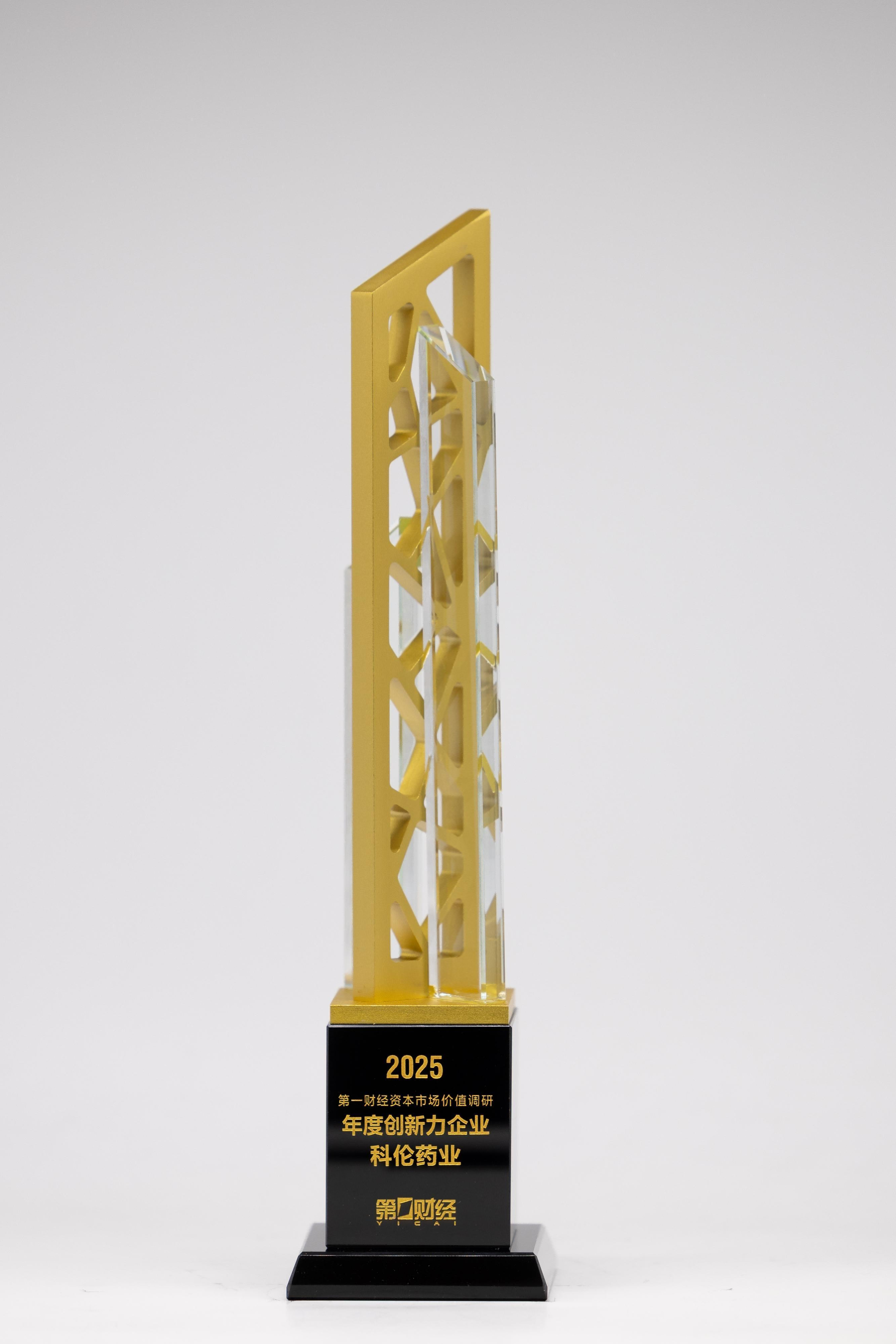
2025年度创新力企业:从ADC到合成生物学,科伦药业“仿创转型”成果斐然
第一财经· 2025-12-19 07:59
Group 1 - The core viewpoint of the article highlights the impressive transformation of Kelun Pharmaceutical, showcasing its full-chain innovation capabilities in the ADC drug sector and synthetic biology, establishing a model for innovation-driven development in Chinese pharmaceutical companies [1][4][5]. Group 2 - In the ADC drug field, Kelun has become a representative enterprise in China, with its product, Lukanasatuzumab (Jiatailai®), being the first domestically developed ADC drug to receive full approval and global intellectual property rights [4]. - The company has initiated 15 global Phase III studies for Lukanasatuzumab in collaboration with Merck, targeting prevalent cancers such as lung and breast cancer, demonstrating its global innovation potential [4]. - Kelun has multiple ADC drug pipelines, with SKB518, SKB500, and SKB571 in Phase II clinical trials, and the NDA for another ADC drug, Botuzumab (HER2 ADC Shuitailai®), approved in October, showing significant efficacy advantages over traditional drugs [4]. Group 3 - In synthetic biology, Kelun has established a commercial system around "synthetic biology" through a strong fermentation technology platform and increasing R&D investment, successfully applying cutting-edge technology to high-value product development [5]. - The company is leveraging AI technology to enhance synthetic biology research and optimize production processes, leading to cost reduction and efficiency improvements [5]. - Kelun has successfully brought several products, including Red Methyl Alcohol, 5-Hydroxytryptophan, and others, into production and sales, becoming one of the first domestic companies to deliver products in the synthetic biology sector [5].

2025年度创新力企业:从ADC到合成生物学,科伦药业“仿创转型”成果斐然
Di Yi Cai Jing· 2025-12-19 07:02
Core Insights - The company is showcasing its innovative transformation in the pharmaceutical industry, particularly in the ADC drug sector and synthetic biology, establishing itself as a model for innovation-driven development in Chinese pharmaceutical enterprises [1]. ADC Drug Sector - The company has emerged as a representative player in the ADC drug field, achieving significant breakthroughs in technology research and industrialization [4]. - The company's subsidiary, Kelun Biotech, developed the first domestically approved ADC drug with global intellectual property rights, Lukanasatuzumab (Jiatailai®), which received its first indication approval in November 2024 and has since gained additional approvals in March and October of this year [4]. - In collaboration with Merck, the company has initiated 15 global Phase III studies for Lukanasatuzumab, targeting prevalent cancers such as lung and breast cancer, highlighting its global innovation potential [4]. - The company has multiple ADC drug pipelines, with SKB518, SKB500, and a bispecific ADC drug SKB571 entering Phase II clinical trials, while another ADC drug, Botuzumab (HER2 ADC Shuitailai®), received NDA approval in October for HER2-positive breast cancer [4]. - Phase III studies comparing Botuzumab to the traditional standard drug T-DM1 have shown significant efficacy advantages [4]. Synthetic Biology Sector - The company is leveraging breakthroughs in synthetic biology as a crucial pillar for accelerating its innovative transformation [5]. - Utilizing a robust biological fermentation technology platform and increasing R&D investments, the company has established a commercial system around synthetic biology, successfully applying research outcomes to high-value product development [5]. - The company is embracing AI technology to enhance synthetic biology research, optimizing production processes and achieving cost reductions, thereby strengthening market competitiveness [5]. - The company has successfully brought several products, including Red Methyl Alcohol, 5-Hydroxytryptophan, Ergothioneine, Ectoine, Squalane, Inositol, Plant Sphingosine, and PHA, into production and sales, becoming one of the first domestic companies to deliver products in synthetic biology [5]. - The company's continuous innovation in biopharmaceuticals is accelerating its high-quality development across various emerging sectors, earning recognition as an innovative enterprise in the 2025 annual case study by First Financial Capital Market [5].
前高管创业纠纷落幕:科伦博泰与宜联生物和解 共分产品收益
2 1 Shi Ji Jing Ji Bao Dao· 2025-12-18 23:15
Core Viewpoint - Kolonbo Tai has reached a settlement agreement with Yilian Bio and its key personnel to resolve previous disputes, aiming to save litigation time and costs [1] Group 1: Settlement Agreement - The settlement involves Yilian Bio sharing revenue and net profits from six products (YL201, YL202, YL211, YL212, YL221, YL222) with Kolonbo Tai [1] - Kolonbo Tai stated that the settlement aligns with the overall interests of the company and its shareholders, and will not significantly impact the group's financial status or operations [1] Group 2: Background of the Dispute - The dispute originated from Kolonbo Tai's criminal complaint against Yilian Bio in 2024 and subsequent civil lawsuits in 2025 regarding alleged commercial secret infringements [1][2] - Key executives of Yilian Bio, including its founder and CEO, have previous ties to Kolonbo Tai, which may have contributed to the disputes [2][3] Group 3: Product Development and Collaborations - Yilian Bio's product YL201 is in Phase III clinical trials and received breakthrough therapy designation from the FDA for small cell lung cancer [6] - The company has established significant collaborations, including a global partnership with Roche for YL211, which includes a $50 million upfront payment and potential milestone payments nearing $1 billion [6][7] - Yilian Bio has also engaged in multiple strategic collaborations with BioNTech and Zai Lab, indicating strong business development activity [7] Group 4: Market Context and Future Prospects - The rapid resolution of the dispute may be linked to Yilian Bio's plans for an IPO, as resolving intellectual property issues is crucial for the approval process [2][8] - The current hot market for Hong Kong IPOs suggests that Yilian Bio could aim for a 2026 listing, emphasizing the importance of business development capabilities and clinical progress [8]

新药周观点:国内多个企业布局INHBEsiRNA,减脂不减肌值得期待-20251214
Guotou Securities· 2025-12-14 12:11
Investment Rating - The report does not explicitly provide an investment rating for the biopharmaceutical sector [5]. Core Insights - The biopharmaceutical sector is experiencing significant activity with multiple companies focusing on innovative drug development, particularly in the area of siRNA targeting INHBE, which shows promise for fat reduction without muscle loss [3][24]. - The report highlights the recent performance of new drug stocks, with notable gains from companies such as Saint Nor Pharmaceutical (+30.88%) and Dongyao Pharmaceutical (+16.37%), while companies like Kexin Pharmaceutical (-14.19%) and Rongchang Biotechnology (-10.09%) faced declines [1][15]. - There is an expectation of multiple catalysts in the sector, including academic conferences and data releases, which could drive further interest and investment [2]. Weekly New Drug Market Review - From December 8 to December 14, 2025, the new drug sector saw significant stock movements, with the top five gainers and losers listed [1][15]. - The report notes that there were no new drug approvals during this week, but 11 new drug applications were accepted [4][31]. Weekly New Drug Industry Analysis - Wave Life Sciences has reported promising initial data for its siRNA drug WVE-007, which targets INHBE and demonstrates potential for reducing visceral fat while preserving muscle mass [3][24]. - The report indicates that several companies, both globally and domestically, are actively developing siRNA drugs targeting INHBE, with five drugs already in clinical development [27][28]. Weekly New Drug Approval & Acceptance Status - No new drug or new indication approvals were reported this week, but 11 new drug applications were accepted [4][31]. - A total of 55 new drug clinical applications were approved, and 47 new drug clinical applications were accepted during the week [9][34]. Key Events in Domestic Market - Significant events include the approval of new drugs by companies such as Zhengda Tianqing and Nuo Cheng Jian Hua, which received approval for their respective new drugs [10][11]. Key Events in Overseas Market - Noteworthy overseas events include Eli Lilly's announcement of positive results from its TRIUMPH-4 Phase 3 trial and the FDA's approval of a gene therapy by Fondazione Telethon [11].
新版医保明年1月起执行:114种药品杀入目录,百万抗癌药破冰
Guan Cha Zhe Wang· 2025-12-13 04:01
Core Insights - The 2025 National Medical Insurance Drug List has been officially released, adding 114 new drugs, including 50 innovative Class 1 drugs, with a negotiation success rate of 88%, the highest in seven years [1][3] - The first version of the commercial insurance innovative drug list has been introduced, featuring 5 CAR-T cell therapies and 19 high-priced innovative drugs, marking a significant expansion in coverage [1][5] - The adjustment reflects a strategic upgrade in China's medical insurance from "basic coverage" to "basic + high-end coverage," addressing the demand for accessible and affordable innovative drugs [1][9] Drug Additions and Market Impact - The new drug list includes 114 drugs, with 44% being Class 1 innovative drugs, and a total of 3,253 drugs now covered under the insurance [3] - Notable winners include Heng Rui Pharma, which secured 20 new drug approvals, and Eli Lilly, whose drug Tirzepatide has entered the Chinese market, benefiting 140 million diabetes patients [3][4] - The inclusion of CAR-T therapies in the commercial insurance list allows for reimbursement of high-cost treatments, which were previously inaccessible to many patients [5][7] Innovations in Treatment - The new list includes significant advancements in treatments for Alzheimer's disease, with two new drugs targeting amyloid beta accumulation, providing options for over 10 million patients in China [7] - The addition of 13 rare disease drugs fills coverage gaps in four rare disease areas, expanding the total number of rare disease drugs covered to approximately 100 [8] - The adjustment also emphasizes pediatric medications, with a separate review channel for children's formulations, indicating a positive shift in addressing children's healthcare needs [9] Strategic Implications - The 2025 adjustment signifies a shift towards a dual-track medical payment system in China, combining basic medical insurance with commercial insurance to meet both fundamental and advanced healthcare needs [9] - The rapid inclusion of innovative drugs into the insurance system reflects a decade of progress in China's pharmaceutical landscape, transitioning from rare domestic innovations to a robust pipeline of new therapies [9]


西部证券晨会纪要-20251212
Western Securities· 2025-12-12 02:29
Group 1: Pharmaceutical Industry Insights - The 2026 pharmaceutical industry strategy report highlights a reversal in the market, driven by innovative drugs, with significant gains across various secondary sectors, particularly in Hong Kong where innovative drugs saw an increase of over 80% year-to-date [6][8] - Key catalysts for innovative drugs include policy support and successful business development (BD) transactions, with notable deals exceeding $1 billion validating the international competitiveness of Chinese innovative drugs [6][7] - A significant policy reform in October 2025 initiated a dual-track system for medical insurance, addressing the high-value innovative drugs' inclusion challenges, which is expected to guide commercial insurance to cover these gaps [6] Group 2: Company-Specific Updates - Yixin Group (2858.HK) has been included in the Hong Kong Stock Exchange Technology 100 Index, which is expected to enhance liquidity, and has renewed a strategic cooperation agreement for used car services, reflecting confidence in the growing demand for this segment [10][11] - The company reported a robust Q3 performance with a total of 235,000 auto financing transactions, a year-on-year increase of 22.6%, outperforming the market growth rate of approximately 11% [11] - Yixin Group's financial technology business has shown significant growth, with financing facilitated through its platform reaching approximately 114 billion yuan, a year-on-year increase of about 102% [11] Group 3: Electronic Sector Developments - Fuzhicheng Technology (002222.SZ) has exceeded revenue expectations, with a projected revenue growth to 11.15 billion yuan in 2025, and net profit expected to reach 3.02 billion yuan [15] - The company maintains a strong position in the ultra-precision optics sector, with its subsidiary achieving significant advancements and a revenue increase of 73.66% in H1 2025 [14] - Naxin Microelectronics (688052.SH) has successfully completed its H-share IPO, marking a critical step in its internationalization, with projected revenues of 33.01 billion yuan in 2025 [19]

