
TEMU

Search documents
SHEIN回国谋上市?行业竞争困局仍难解
Sou Hu Cai Jing· 2025-08-31 10:23
Core Viewpoint - SHEIN, a leading player in the cross-border fast fashion sector, has faced significant challenges in its IPO journey since 2020, including regulatory hurdles and competitive pressures, prompting a potential return to China to facilitate its listing process [1][15][17] Group 1: Company Structure and Regulatory Challenges - SHEIN's complex ownership structure, initially designed for overseas listing, has become a barrier due to tightened regulations, with a significant portion of its operations and assets being based in China [3][4] - The implementation of the "Management Measures for the Issuance of Securities and Listing by Domestic Enterprises Overseas" in March 2023 emphasizes the importance of substance over form, which may hinder SHEIN's ability to meet compliance requirements for overseas listings [3][4] - Regulatory scrutiny has intensified, with the SEC and EU raising concerns about SHEIN's corporate structure and potential tax evasion, complicating its plans for a Singapore listing [4][12] Group 2: Tax Compliance and Financial Performance - SHEIN's initial move to Singapore was motivated by favorable tax rates, but the shift has now become a liability in terms of compliance and potential delays in its IPO process [6][7] - The company has seen a significant slowdown in revenue growth, with a 23% increase in H1 2024 and net profits dropping over 70%, leading to a decrease in valuation from over $100 billion to approximately $50 billion [10][12] - Tax issues have been highlighted as a major concern, with 37% of Hong Kong-listed Chinese companies facing inquiries related to tax compliance, which could further delay SHEIN's IPO [7][13] Group 3: Competitive Landscape - SHEIN faces fierce competition from both traditional fast fashion brands like ZARA and H&M, which are enhancing their digital capabilities, and emerging brands focusing on sustainable fashion [8][14] - The rise of competitors such as TEMU, which is aggressively targeting the same supplier base, has strained SHEIN's supply chain and reduced its competitive edge [10][14] - Global trade protectionism and regulatory changes have increased operational costs, with the U.S. canceling tax exemptions on cross-border packages and the EU imposing new taxes, further complicating SHEIN's market position [9][13] Group 4: Future Outlook and Strategic Challenges - The potential return to China is seen as a way to address compliance issues, but it does not resolve the underlying competitive challenges SHEIN faces in the fast fashion industry [8][15] - The company must improve supplier relationships, product quality, and brand image to regain market share and investor confidence amid a rapidly changing retail landscape [10][15] - SHEIN's future trajectory will depend on its ability to navigate regulatory complexities and adapt to evolving consumer preferences, particularly in the context of increasing demand for sustainable products [12][17]
打开新格局!“微短剧+电商”出海赚钱
Sou Hu Cai Jing· 2025-08-27 09:52
依托岭南文化资源,作为跨境电商大省的广东正不断探索"文化+商业"出海之路。网络视听赋能跨境电 商及内容出海,正当其时! 今年5月,《关于推动广东网络视听产业高质量发展的若干政策措施》发布,提出将广州打造成为"全球 网络直播之都",将深圳打造成为"全球数智视听创新之都"。此外,"'微短剧+'赋能品牌出海"、"微短剧 里看品牌"创作计划等规划,引发行业关注。如何实现"微短剧-品牌-跨境转化"的产业闭环,成为一个新 课题。 文/图 羊城晚报记者 龚卫锋 已成立两年的全球跨境电商"三中心"(以下简称"三中心")对此有了诸多探索。近日,羊城晚报记者专 访了"三中心"负责人,解码利用短视频、微短剧等媒介实现广东文化加广东商品的出海之路。 条件:产业基础凸显跨境电商优势 2023年,"三中心"成立,以重塑跨境电商产业生态,赋能高质量发展为目标,联动专业智库、重点跨境 电商企业,探索创建全球跨境电商"三个中心"——生态创新中心、卖家服务中心、超级供应链中心,打 造全球首个跨境电商产业综合地标和城市产业会客厅。 广东跨境电商优势明显。"三中心"执行主任、CEO程啸天介绍,广东产业基础雄厚,"制造业发达,拥 有完整的产业链条,如 ...

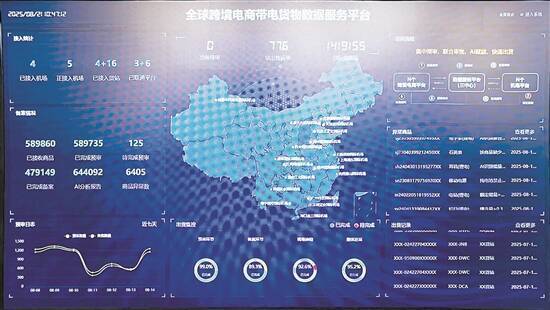
“免税终结”引爆需求:美国800美元红线取消,海外仓成最大流量收割机
Sou Hu Cai Jing· 2025-08-25 15:38
Core Viewpoint - The cancellation of the $800 small package exemption policy by the U.S. is a significant disruption for cross-border e-commerce platforms and sellers, leading to a potential reshaping of the industry landscape [1][5]. Group 1: Impact on Cross-Border E-Commerce Platforms - Major players like TEMU and SHEIN have relied on the "small exemption + direct mail" model, which provided a competitive edge in the U.S. market [3]. - Following the policy change on May 2, TEMU has ceased direct shipments from China to U.S. consumers and is shifting to a "local to local" model, utilizing local sellers for U.S. market operations [3][4]. - The cancellation of the exemption policy is a heavy blow to small package direct mail models, but it presents a favorable opportunity for overseas warehouse services [4]. Group 2: Advantages of the Warehouse Model - The warehouse model involves bulk shipping goods to overseas warehouses, allowing sellers to avoid high direct mail tariffs and complex customs processes, thus reducing costs [4]. - This model enhances customer experience by shortening delivery times, as goods are shipped from local warehouses upon order [4]. - The industry consensus prior to the policy change indicated that the removal of the small package exemption would lead to a surge in overseas warehouse demand, which is now being validated by TEMU's strategic shift [4]. Group 3: Future Industry Trends - TEMU's changes are likely to influence other major platforms like SHEIN and TK to adopt similar strategies, potentially increasing the demand for overseas warehouses [4]. - The growing need for overseas warehouses will elevate their market position and drive significant growth in the industry [4][5]. - The current market dynamics present a critical opportunity for overseas warehouse companies to enhance service quality and operational efficiency, contributing to the overall transformation of the cross-border e-commerce sector [5].
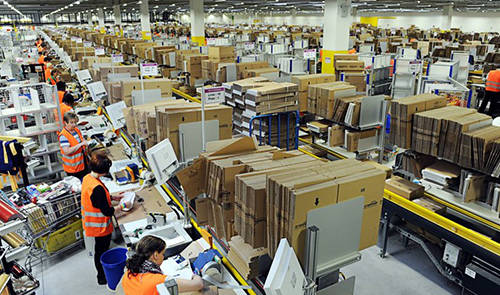
易点天下上半年电商增速翻倍,将切入短剧、AI应用新赛道
2 1 Shi Ji Jing Ji Bao Dao· 2025-08-20 00:07
Core Insights - The company, 易点天下, reported a significant revenue increase of 59.95% year-on-year, reaching 1.737 billion yuan in the first half of 2025, with a net profit of 144 million yuan, up 8.81% [2][3] - The growth is attributed to market expansion and technological iteration, particularly in the AI sector, which has garnered increased attention in recent years [3] - The e-commerce segment of the company experienced a remarkable growth rate of over 100% [4] Business Development Focus - The company is actively exploring AI applications and short video content as new growth avenues, aiming to build an "AI intelligent ecosystem focused on growth" [3][8] - The global mobile internet advertising market is projected to grow to $503.875 billion by 2024, with a compound annual growth rate of 11.10% until 2029 [3] - The company has established itself as a key player in providing global marketing solutions for major platforms like Alibaba and SHEIN, and has expanded its services to new sectors such as electric vehicles and short video content [4] Technological Advancements - The company's programmatic advertising platform, zMaticoo, covers over 10,000 mobile applications and reaches more than 2 billion devices, processing 170 billion ad requests daily [4] - R&D investment reached 60.4535 million yuan in the first half of 2025, a 26.23% increase, focusing on generative AI and intelligent agent technology [7] - The company is shifting its strategic focus from model application to task-driven approaches, with the introduction of the AI Drive 2.0 solution that integrates multiple intelligent agents for marketing automation [7][8] Strategic Partnerships - The company has become the first-level agent for AppLovin in Greater China and an official service provider for Snapchat, establishing deep collaborations with tech giants like Huawei and Alibaba [5] - The ongoing technological upgrades aim to enhance the precision of system predictions by integrating Transformer architecture with dynamic optimization algorithms [7]
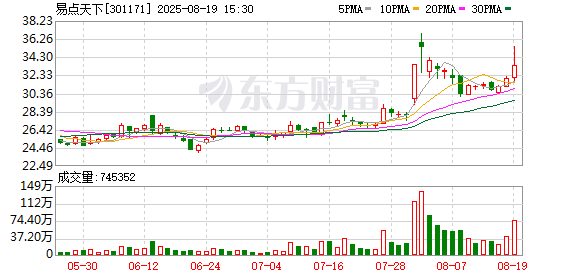
新质生产力织就锦绣未来
Jing Ji Ri Bao· 2025-08-19 22:16
Core Insights - The textile and apparel industry has become a leading sector in Tianmen, actively attracting coastal industry transfers and leveraging advantages in labor, logistics, financing, and land costs to promote industrial return and population influx [1][2] - Tianmen is embracing e-commerce, digitalization, and globalization, focusing on upgrading the textile and apparel industry towards high-end, intelligent, and branded development [1] Group 1: Industry Development - The number of operating entities in the textile and apparel sector has surpassed 13,000, with one in three businesses engaged in the clothing industry, creating a unique economic ecosystem in Tianmen [1] - The city is implementing smart manufacturing, smart logistics, and smart services, integrating artificial intelligence across design, production, management, and marketing to enhance productivity [1] Group 2: Brand and Structural Upgrades - A comprehensive quality control system is being established, promoting a dual-track approach of "regional public brands + enterprise self-brands" and a dual-drive model of "online global outreach + offline experiential marketing" [2] - The city is actively integrating into global supply chains and collaborating with platforms like Amazon and AliExpress to enhance international market presence, aiming to become a global e-commerce supply chain center for apparel [2]
按需定制模式如何帮助跨境卖家?
Mei Ri Shang Bao· 2025-08-08 01:34
Core Insights - The "Print on Demand" (POD) model is transforming the landscape for cross-border sellers by addressing inventory and profit challenges faced by traditional sellers [1][2] - The upcoming conference in Hangzhou aims to explore how the POD model can help sellers capitalize on personalized consumer trends and redefine business logic [1] Group 1: Challenges Faced by Traditional Sellers - Traditional cross-border sellers struggle with inventory management, facing the dilemma of overstocking and potential losses from unsold goods [1] - High competition leads to low profit margins, with some products yielding less than 10% profit, often lower than shipping costs [1] - The high cost of trial and error in product differentiation discourages sellers from pursuing unique offerings [1] Group 2: Advantages of the POD Model - The POD model eliminates inventory risk by producing items only after orders are received, allowing for zero inventory [2] - Customization in design enhances product uniqueness, enabling sellers to charge premium prices, sometimes doubling the price for personalized items [2] - The flexibility of one-piece orders allows sellers to test products at low costs, significantly reducing trial and error expenses [2] Group 3: Market Potential and Trends - The POD model covers a wide range of popular product categories, including T-shirts, hoodies, hats, mugs, and decorative art [2] - The rise of AI design tools facilitates rapid development of differentiated products, often leading to viral success on platforms [2] - The POD model is emerging as a new trend in cross-border e-commerce, particularly appealing to sellers with limited capital and concerns about inventory [2]
搭乘KKV驶向全球,中国新消费品牌开启大航海时代
Sou Hu Cai Jing· 2025-08-06 22:28
Core Insights - Southeast Asia is emerging as a high-certainty area for new consumption, with growth rates projected at 4.5% to 4.7% for ASEAN countries compared to a global average of 3.2% [2] - Chinese brands are capitalizing on this consumption upgrade trend, establishing a strong presence in Southeast Asia through various sectors, including tea, toys, and electronics [2][5] - The rise of Chinese brands in Southeast Asia reflects a broader trend of globalization and the adaptation of brands to local markets [2][6] Group 1 - Chinese tea brand Mixue Ice City has become particularly popular in Southeast Asia, with over a thousand stores in Vietnam and significant market penetration in Indonesia [6][8] - The toy brand Labubu has sparked a "Chinese toy craze" in Southeast Asia, significantly boosting sales and tourism in Thailand and Vietnam [8][10] - KKV, a new consumption brand, has opened over 50 stores in Southeast Asia, collaborating with numerous Chinese brands to enhance market presence [10][11] Group 2 - The initial strategy for Chinese brands entering Southeast Asia focused on rapid market penetration, exemplified by Mixue Ice City's aggressive store openings [13] - The second phase involves capturing consumer mindshare, as the Southeast Asian market is still in its early stages of market education [13] - Challenges for brands include regulatory hurdles and the need for localized operations, which can complicate market entry [16][17] Group 3 - KKV has facilitated market entry for various brands by handling import regulations and reducing costs associated with entering local markets [19][20] - The collaborative approach among Chinese brands has proven effective, allowing them to leverage shared resources and market knowledge [21][22] - The success of KKV's model in Southeast Asia may serve as a blueprint for future expansions into other regions, including the Middle East and Europe [38][42]
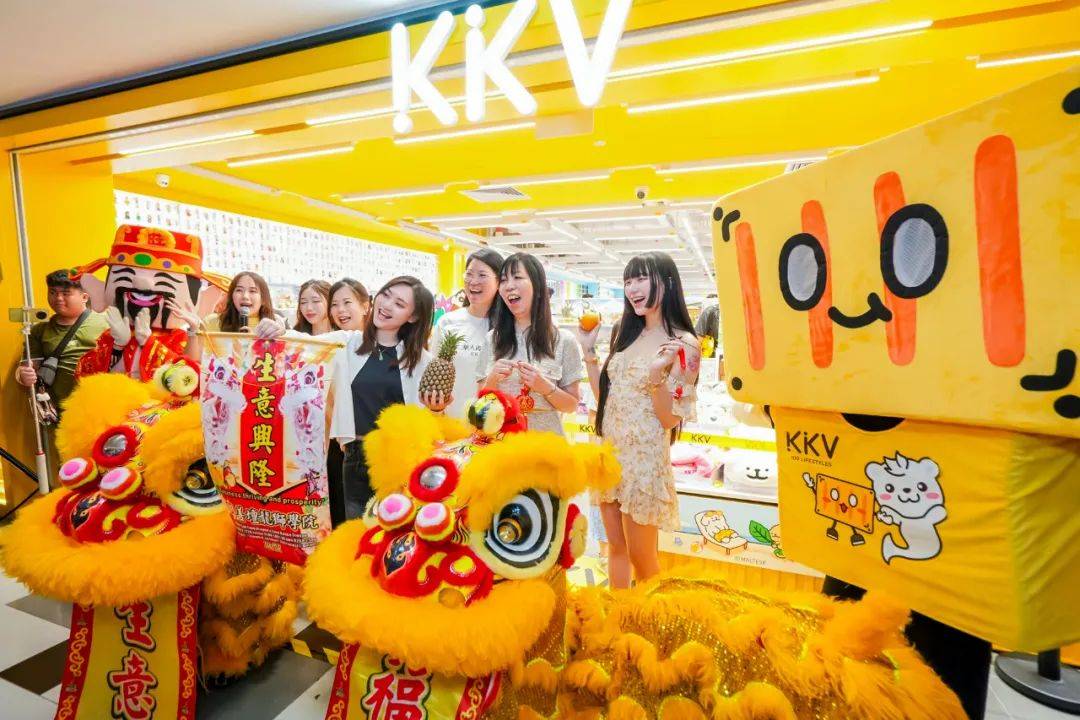
倒计时下的墨西哥:新逻辑与潜规则
芯世相· 2025-07-29 04:03
Core Viewpoint - The article discusses the impact of US-China trade tensions on Chinese companies operating in Mexico, highlighting the challenges and opportunities in the current geopolitical landscape. Group 1: Trade Relations and Economic Impact - The upcoming US-China trade talks in Sweden are seen as a significant indicator of the future of bilateral economic relations [5] - Mexico has become a crucial trade partner for China in Latin America, with bilateral trade growing steadily, particularly in the automotive sector [7][8] - The IMF has downgraded Mexico's economic growth forecast for this year from 1.4% to -0.3%, making it the only G20 country expected to experience negative growth [8] Group 2: Business Environment in Mexico - Many Chinese companies are reconsidering their investments in Mexico due to the uncertainty created by US tariffs, with some halting projects entirely [12][13] - The perception that relocating to Mexico may not shield companies from US tariffs has dampened investment enthusiasm [13] - Despite the challenges, there is still a significant interest in consulting about business opportunities in Mexico, indicating a complex and evolving market [14] Group 3: Future Opportunities and Strategies - Companies are urged to adapt to new trade rules and enhance their international capabilities, as the external environment is unlikely to change significantly [20] - The article emphasizes the importance of localizing operations and hiring local talent to navigate the unique challenges of the Mexican market [45][46] - The potential for investment in consumer goods supply chains in Mexico is highlighted as a promising opportunity for Chinese manufacturers [34] Group 4: E-commerce and Market Dynamics - Mexico's e-commerce market is characterized by low penetration and high growth potential, making it an attractive target for Chinese platforms [21][22] - Despite recent tariff changes, Chinese goods remain competitive in Mexico due to their cost advantages [30][32] - The article notes that the high margins in the Mexican market have allowed e-commerce platforms to absorb some of the tariff costs without significant drops in sales [31] Group 5: Renewable Energy Sector Challenges - The article outlines the decline of the renewable energy sector in Mexico due to policy shifts favoring state-owned enterprises, leading to stalled projects [35][36] - Future opportunities in the renewable sector may lie in energy storage and transmission rather than large-scale solar projects [37]

倒计时下的墨西哥:新逻辑与潜规则
暗涌Waves· 2025-07-25 06:16
Core Viewpoint - The article discusses the complexities and challenges faced by Chinese companies operating in Mexico amid changing trade dynamics and tariffs, particularly in the context of US-China relations and the evolving economic landscape in Mexico [1][3][5]. Group 1: Trade Dynamics and Economic Impact - The upcoming US-China trade talks in Sweden are seen as a significant indicator of the future of bilateral economic relations [1]. - Mexico, as a key partner for China in Latin America, has experienced a decline in economic growth forecasts, with the IMF revising Mexico's growth from 1.4% to -0.3% for the year [3]. - The "China+1" strategy, which involves using Mexico as a manufacturing hub for exports to the US, is under threat due to increased tariffs and trade tensions [3][10]. Group 2: Manufacturing and Investment Challenges - Many Chinese companies have halted or reduced their investment plans in Mexico due to uncertainty surrounding US tariffs, particularly after Trump's announcement of a 30% tariff on Mexican imports starting in 2025 [10][11]. - Despite the challenges, there is still a strong interest in establishing manufacturing operations in Mexico, as evidenced by the continued inquiries from companies looking to enter the market [11][12]. - The need for Chinese manufacturers to adapt to local conditions and regulations in Mexico is emphasized, as the government aims to attract foreign investment while increasing local production [11][12]. Group 3: E-commerce and Market Potential - Mexico's growing e-commerce market, with a population of 130 million and a GDP per capita of $13,000, presents significant opportunities for Chinese companies [14]. - The internet penetration rate in Mexico is 86.51%, with e-commerce penetration at only 18%, indicating a market ripe for growth [14]. - Chinese platforms like SHEIN and TikTok are actively investing in the Mexican market, capitalizing on the high consumer potential [14][15]. Group 4: Local Adaptation and Management Strategies - Successful Chinese companies in Mexico tend to have a high proportion of local talent, which aids in navigating the complexities of the market [26][27]. - The importance of local leadership and understanding of the cultural and operational landscape in Mexico is highlighted as crucial for success [22][25]. - Companies are encouraged to embrace local practices and respect cultural differences to foster better relationships with local employees and stakeholders [25][26]. Group 5: Regulatory Environment and Compliance - The article discusses the dual nature of compliance in Mexico, where businesses must navigate both legal regulations and informal relationships [30][31]. - The increasing scrutiny on imports and the potential for stricter regulations on Chinese goods are noted as ongoing concerns for companies operating in Mexico [17][18]. - The need for companies to maintain compliance while also being aware of the local political and economic landscape is emphasized as critical for long-term success [32][33].

亚马逊拓展当日达、次日达;萝卜快跑与Uber合作丨出海周报
2 1 Shi Ji Jing Ji Bao Dao· 2025-07-21 03:18
Trade and Economic Data - In the first half of the year, China's goods trade import and export reached 21.79 trillion yuan, a year-on-year increase of 2.9%, with exports at 13 trillion yuan (up 7.2%) and imports at 8.79 trillion yuan (down 2.7%) [1] - China's industrial robot exports grew by 61.5% in the first half of the year, with significant increases in lithium batteries and wind turbine exports, both exceeding 20% growth [3] - China will implement zero tariffs for 53 African countries that have established diplomatic relations, leading to double-digit growth in imports from these nations in the first half of the year [4] Corporate Developments - Amazon plans to expand same-day and next-day delivery services to over 4,000 small cities and rural areas in the U.S. by the end of 2025, with a 30% increase in the number of items delivered within these timeframes compared to the previous year [5] - Loongrun has formed a strategic partnership with Uber to deploy thousands of autonomous vehicles globally, enhancing the availability of self-driving services [6] - TEMU aims to have 50% of its orders fulfilled by local merchants in the UK by the end of 2025, currently attracting 22 million users [7][8] - Cainiao's Hong Kong supply chain center has opened to global brands and merchants, providing integrated logistics services [9] Financial Performance - Cross-Border Communication expects a net profit loss of 4 to 7.5 million yuan for the first half of 2025, attributed to reduced promotional investments in its self-operated export platform [10] - Pop Mart anticipates a revenue increase of no less than 200% and a profit growth of no less than 350% for the six months ending June 30, 2025, compared to the same period last year [11] Market Expansion - Cha Bai Dao has opened its first two stores in Singapore, offering 18 beverage options priced between 2.5 to 6.9 Singapore dollars [12] - Jianlibao has established a regional headquarters in Hong Kong, planning to expand into Southeast Asian markets, including Indonesia, Malaysia, and Vietnam, while also targeting Australia, Canada, and the U.S. [13]