
万辰集团

Search documents
便宜零食,到底便宜了谁?
远川研究所· 2025-11-19 13:14
Core Viewpoint - The article discusses the challenges faced by snack brands like Three Squirrels in the e-commerce era, highlighting a shift in consumer preferences towards "bulk snack stores" and the impact of rising competition and costs in the online market [4][9][12]. Group 1: Industry Overview - The snack industry has low entry barriers but is highly fragmented, with the top five companies holding only 5.9% market share [8]. - The rise of bulk snack stores has significantly changed the competitive landscape, with these stores capturing 37% of the market share in 2024, surpassing e-commerce and supermarkets [13][15]. - The average profit margin in the snack industry is around 5%, making it sensitive to rising costs and competition [11]. Group 2: Company Performance - Three Squirrels has seen a decline in profitability, with net profit dropping from 411 million to 129 million in 2022 [9]. - The company has shifted its focus back to e-commerce, particularly on platforms like Douyin, which now accounts for 26.98% of its revenue [11]. - Despite the challenges, Three Squirrels remains a significant player, but its growth has stagnated, with revenue increasing without corresponding profit growth [6][9]. Group 3: Market Dynamics - The emergence of bulk snack stores has led to a price war, with these stores offering products at prices 20%-75% lower than supermarkets and 7%-59% lower than e-commerce [18][20]. - The rapid expansion of bulk snack stores, such as "Mingming Very Busy," has resulted in over 40,000 locations across China, with a significant number of stores located in lower-tier cities [15][22]. - The competition between bulk snack store brands has intensified, leading to aggressive marketing strategies and store openings in close proximity to competitors [30]. Group 4: Consumer Behavior - Consumers are increasingly drawn to lower-priced options, leading to a decline in brand loyalty among traditional snack brands [8][26]. - The rise of private label and lesser-known brands in bulk snack stores has contributed to the profitability of these stores, with private label products accounting for 60-65% of their inventory [26][30]. - The shift in consumer preferences towards bulk purchasing and lower prices has created a challenging environment for established snack brands [23][30].



东方财富证券:食品饮料加速出清 板块投资价值有望提升
智通财经网· 2025-11-19 08:11
Core Viewpoint - The report from Dongfang Caifu Securities indicates that the supply-demand mismatch in 2024 will lead to deteriorating industry operations, but as companies gradually lower growth targets to adapt to demand in 2025, this will alleviate supply-demand conflicts and enhance investment value in the sector. The expectation is for positive growth in financial statements by the second or third quarter of next year [1]. Group 1: Industry Overview - In Q1-Q3 2025, under weak demand, industry revenue showed slight growth while profits were under pressure, with the food and beverage sector experiencing a revenue decline of -4.9% and a net profit drop of -14.6% in Q3 2025 [1]. - Traditional consumption is hindered by slow recovery in consumption scenarios, with the liquor sector, particularly baijiu, facing accelerated clearance and weak performance in beer demand [1]. - Sectors like snacks and beverages that have opportunities for new product launches and channel expansion continue to show positive momentum, with products like konjac experiencing rapid growth since 2024 [1]. Group 2: Category Analysis and Outlook - **Baijiu**: The industry is accelerating clearance with clearer turning points. In Q3 2025, overall revenue and net profit declined by -18.4% and -22.2% respectively, but demand is expected to improve, stabilizing prices and leading to better financial performance by Q2 2026 [2]. - **Low-Alcohol Beverages and Beer**: Beer revenue and net profit grew by +2.0% and +11.8% respectively in Q3 2025, with cost advantages continuing. Demand recovery is anticipated in 2026, influenced by changes in retail channels [3]. - **Dairy Products**: The raw milk sector is gradually bottoming out, with demand expected to stabilize and prices recover. The low-temperature fresh milk segment is projected to grow, replacing some ambient milk [4]. - **Snacks**: Categories like konjac and oats are expected to maintain high growth, with a shift towards emerging channels and significant growth in instant retail [4]. Group 3: Investment Recommendations - **Baijiu**: Focus on companies that are clearing inventory early and have strong brand momentum, such as Gujing Gongjiu and Luzhou Laojiao, as well as those with strong product matrices and channel capabilities like Moutai and Wuliangye [5]. - **Low-Alcohol Beverages**: Highlighting head companies like Kweichow Moutai and Qingdao Beer, which are expected to benefit from demand recovery [5]. - **Dairy and Snacks**: Emphasizing the potential for recovery in the raw milk sector and recommending companies like Yili and Mengniu, as well as snack companies that can leverage product and channel adjustments [6].

万辰集团开启A+H征程:“薄利”难换“多销” 高溢价收购背后的套现迷局
Xin Lang Zheng Quan· 2025-11-19 08:09
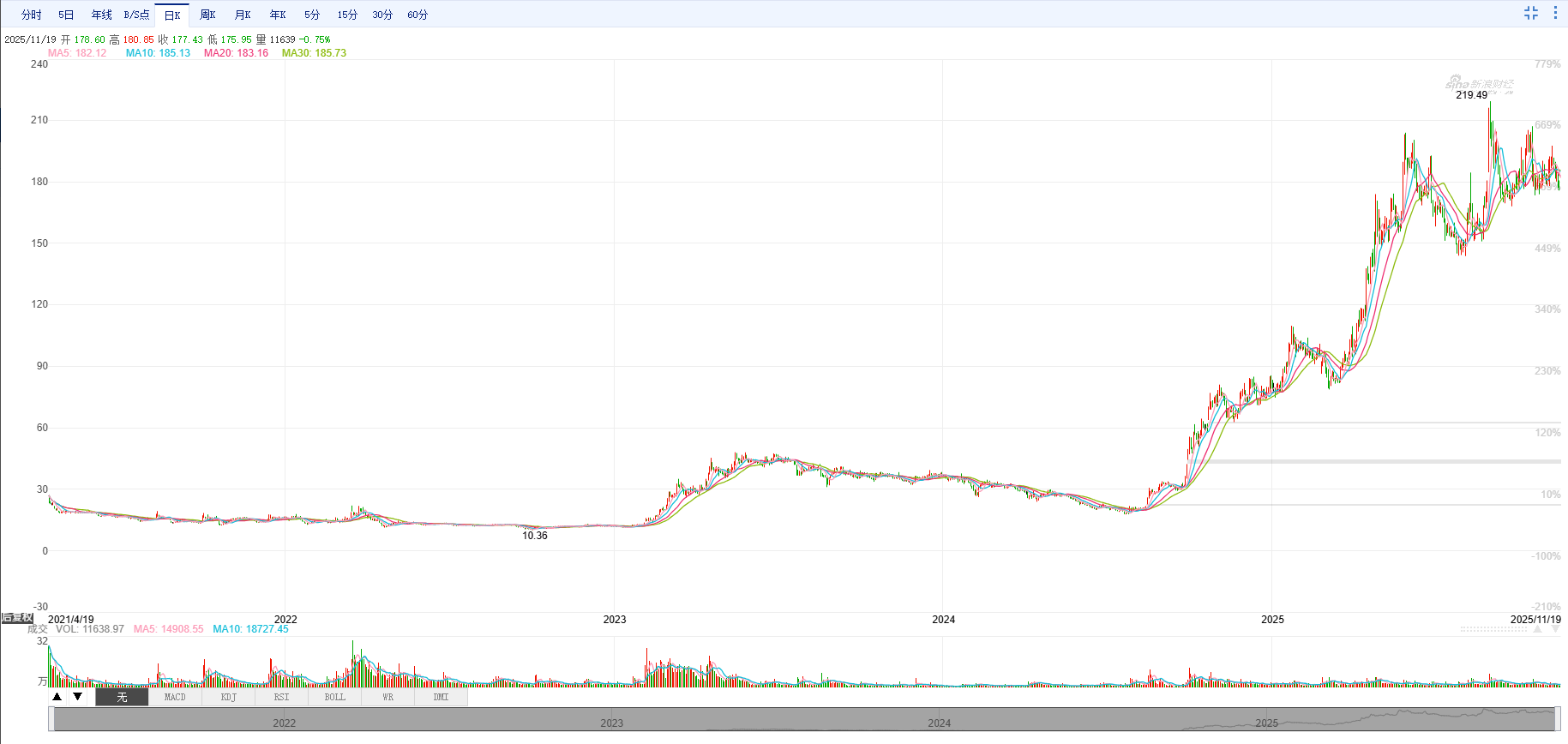
Core Viewpoint - The article discusses the recent developments surrounding Wancheng Group's application for an IPO on the Hong Kong Stock Exchange, highlighting its transition from a fresh mushroom business to a snack retailing company, and the challenges it faces in maintaining growth and profitability amidst market saturation and governance concerns [1][2][4]. Company Overview - Wancheng Group, formerly known as Wancheng Biological, specializes in the research, cultivation, and sale of edible mushrooms, with a significant shift to the snack retail sector since 2022 [1][2]. - The company has expanded its snack brand "Haoxianglai" through acquisitions, increasing its store count to over 3,800 and achieving a market share of 1 [2]. Financial Performance - In 2022, Wancheng Group's revenue surged from 549 million yuan to 32.328 billion yuan by 2024, with a net profit increase from 67.85 million yuan to 611 million yuan, reflecting compound annual growth rates of 289.0% and 108.0% respectively [2]. - The company reported a 77.4% year-on-year revenue growth for the first nine months of 2025, with net profit increasing by 361.5% compared to the same period in 2024 [4]. Market Dynamics - The snack retail market has seen significant investment, with over 3 billion yuan raised in equity financing from 2022 to 2024, indicating a growing interest in the "bulk snack" concept [1]. - However, the rapid expansion of snack retailing has led to market saturation, with Wancheng Group's average customer transaction value dropping by 33.3% from 53.33 yuan to 35.56 yuan between 2022 and 2024 [8]. Operational Challenges - Despite initial growth, Wancheng Group's revenue growth has slowed significantly, with quarterly growth rates declining from 534.0% in Q1 2024 to 44.2% in Q3 2025 [5]. - The company's gross margin has decreased from 20%-30% to 10%-15% since entering the snack business, with a net margin remaining in single digits [6]. Governance Issues - Wancheng Group is characterized as a family-run business, raising concerns about governance and management practices, especially following the resignation of its chairman amid legal investigations [13][15]. - The company's recent acquisition strategy has drawn scrutiny, particularly regarding the high valuations paid for subsidiaries and the potential conflicts of interest involved in these transactions [16][17].
加速出清行业寻底,预期先行板块启动
East Money Securities· 2025-11-19 06:56
Investment Highlights - The report indicates a clear turning point for the food and beverage industry following accelerated clearance, with expectations for leading sectors to initiate recovery [2][7] - The overall revenue for the food and beverage sector showed a slight increase of 0.2% year-on-year, while net profit decreased by 4.6% in the first three quarters of 2025 [18][20] - In Q3 2025, the sector experienced a significant decline, with revenues and net profits dropping by 4.9% and 14.6% respectively [18][20] Sector Review 1. Overall Review - The food and beverage sector faced continuous pressure and adjustments, with traditional consumption accelerating clearance while new consumption trends continued to grow [18][20] - The white liquor segment saw a revenue decline of 18.4% and a net profit decline of 22.2% in Q3 2025, indicating significant pressure on the sector [20][22] - In contrast, sectors like snacks and beverages maintained double-digit growth due to product and channel innovations [20][21] 2. White Liquor - The white liquor industry is undergoing accelerated clearance, with varying rhythms among companies. The demand has weakened, leading to noticeable declines in revenue and net profit for most companies [22][25] - High-end liquor maintained some growth, with Moutai achieving a revenue increase of 0.3% in Q3 2025, while other brands like Wuliangye saw declines exceeding 50% [23][25] - The report emphasizes the importance of supply-demand balance and pricing as key indicators for the industry's recovery [22][23] 3. Low-Alcohol Beverages and Drinks - The beer segment showed stable performance with a revenue increase of 2.0% and a net profit increase of 11.8% in the first three quarters of 2025 [21][22] - The report highlights the potential for recovery in demand for low-alcohol beverages and drinks, driven by health trends and product innovation [22][23] 4. Consumer Goods - The dairy sector is gradually stabilizing, with upstream supply clearing and downstream processing demand increasing, leading to a potential balance in the raw milk cycle [31][33] - The snack sector, particularly the konjac and oat categories, is expected to maintain high growth rates, supported by the expansion of new retail channels [31][36] - The report notes that the overall demand for dining remains weak, but specific segments like Western-style condiments and frozen baking show structural opportunities [31][33] Investment Recommendations - The report suggests focusing on companies that are early in their clearance processes and have strong brand momentum, such as Gujing Gongjiu and Luzhou Laojiao [11][12] - For low-alcohol beverages, attention is drawn to leading companies like Kweichow Moutai and Tsingtao Brewery, which are expected to benefit from demand recovery [11][12] - In the consumer goods sector, companies with strong performance and cost advantages, such as Yili and Modern Dairy, are recommended for investment [11][12]



福建女首富接班了
首席商业评论· 2025-11-19 03:34
Core Viewpoint - The article discusses the succession of Xu Yangyang as the new president of Dali Food Group, highlighting her journey from grassroots positions to leadership and the broader trend of second-generation entrepreneurs taking over family businesses in Fujian province [5][16]. Group 1: Succession of Xu Yangyang - Xu Yangyang, daughter of founder Xu Shihui, has officially taken over as president of Dali Food Group, marking a significant transition in leadership [5]. - Xu Yangyang joined the family business in 2008 after studying abroad, starting from basic positions and gradually moving up to key roles, including board member and strategic decision-maker [6][7]. - Under her leadership, Dali Food successfully went public in Hong Kong in 2015, significantly increasing her wealth and establishing her as a prominent figure in the industry [7][15]. Group 2: Business Development and Innovation - Xu Yangyang has been instrumental in launching the "Dou Ben Dou" brand of soy milk, which achieved sales of 2.266 billion yuan by 2022, positioning Dali Food as a leader in the health and nutrition sector [7]. - The company has shifted its focus from imitation to innovation, with Xu Yangyang emphasizing the need for the next generation to drive qualitative changes in the business [7][8]. - Dali Food is expanding its international presence, with strategic plans to establish production bases in Southeast Asia, including Indonesia, Thailand, Vietnam, and Saudi Arabia [8]. Group 3: Broader Trends in Fujian Business Succession - The article notes a trend of second-generation entrepreneurs in Fujian taking over their family businesses, with several notable examples, including the successors of major companies like Fuyao Glass and Sanan Group [16][19]. - This generational transition reflects a broader pattern in Fujian, where family ties and regional connections play a significant role in business operations and collaborations [20]. - The article highlights the unique characteristics of Fujian's business culture, where familial and regional bonds have fostered a network of successful enterprises across various sectors [20].

万辰集团:关于控股股东股份解除质押的公告
Zheng Quan Ri Bao· 2025-11-18 13:13
Group 1 - The core point of the article is that Wancheng Group announced the release of stock pledges by its controlling shareholder, Fujian Huanxiucao Agricultural Development Co., Ltd. [2] - The number of shares released from pledge is 7,000,000 shares, which represents 21.37% of the shares held by the controlling shareholder [2] - This release of shares accounts for 3.71% of the total share capital of the company [2]
万辰集团:控股股东福建农开发解除质押700万股,质押清零
Bei Jing Shang Bao· 2025-11-18 12:12
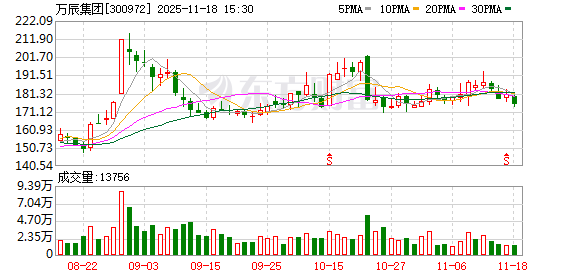
Group 1 - The core point of the article is that Wancheng Group announced the release of a pledge of 7 million shares by its controlling shareholder, Fujian Huanxiucao Agricultural Development Co., Ltd. [1] - The released shares represent 21.37% of the shares held by Fujian Huanxiucao and 3.71% of the total share capital of the company [1] - As of the announcement date, Fujian Huanxiucao has a total of 0 shares pledged [1]
万辰集团:控股股东福建含羞草农业开发有限公司解除质押700.00万股
Mei Ri Jing Ji Xin Wen· 2025-11-18 09:49
Core Points - Wancheng Group (300972) announced that Fujian Mimosa Agricultural Development Co., Ltd. will release its pledge of 7,000,000 shares on November 17, 2025, which represents 21.37% of its holdings and 3.71% of the total share capital of the company [1] - The pledge started on December 25, 2023, with China Minsheng Bank Co., Ltd. Zhangzhou Branch as the pledgee [1] - As of the announcement date, Fujian Mimosa Agricultural Development Co., Ltd. has pledged a total of 0 shares, holding 32,759,200 shares, which accounts for 17.34% of the total shares [1]
食品饮料行业跟踪报告:10月CPI同比转正,板块估值修复可期
Shanghai Aijian Securities· 2025-11-18 09:30
Investment Rating - The industry investment rating is "Outperform the Market" [1][34]. Core Insights - The food and beverage industry is currently experiencing a recovery phase, with October CPI showing a year-on-year increase of 0.2%, indicating a potential for valuation recovery [4][5]. - The overall performance of the food and beverage sector has outperformed the Shanghai Composite Index, with a weekly increase of 2.82% compared to a decrease of 0.18% for the index [5][6]. - The industry is characterized by a significant decline in overall performance for the liquor sector, but there are signs of demand recovery as policy pressures ease and consumption policies are implemented [4][5]. Summary by Sections Liquor Sector - The liquor companies reported a significant decline in third-quarter performance, entering a rapid clearing phase, but demand is expected to show weak recovery due to easing policy pressures [4]. - The top liquor companies are increasing dividend payouts, enhancing their attractiveness for investment [4]. - The e-commerce channel for liquor sales has shown strong growth during the Double Eleven shopping festival, with notable increases in sales for major brands [5]. Consumer Goods - The consumer goods segment is focusing on high-growth areas, with some categories still benefiting from new products and channels, leading to potential valuation premiums for scarce growth targets [4]. - Companies like Wancheng Group and Dongpeng Beverage are highlighted for their strong growth trends [4]. Market Performance - The food and beverage sector's sub-segments have shown varied performance, with pre-processed foods leading gains at +6.93%, while soft drinks lagged at -0.23% [5][10]. - The top-performing stocks in the food and beverage sector include Huanlejia (+43.19%) and Sanyuan Shares (+31.79%) [5][12]. Economic Indicators - October's macroeconomic data supports a trend of marginal improvement in consumer spending, with retail sales growing by 2.9% year-on-year and dining revenue increasing by 3.8% [5]. - The overall consumer goods market is showing positive signs, supported by a stable service sector PMI [5].
万辰集团:控股股东福建含羞草农业开发有限公司解除质押700.00万股股
2 1 Shi Ji Jing Ji Bao Dao· 2025-11-18 08:57
Core Viewpoint - Wancheng Group announced that Fujian Mimosa Agricultural Development Co., Ltd. will release its pledge of 7,000,000 shares on November 17, 2025, which represents 21.37% of its holdings and 3.71% of the company's total share capital [1] Summary by Relevant Sections - **Pledge Details** - The pledge started on December 25, 2023, with China Minsheng Bank Co., Ltd. as the pledgee [1] - **Current Shareholding Status** - As of the announcement date, Fujian Mimosa Agricultural Development Co., Ltd. has pledged a total of 0 shares, holding 32,759,200 shares, which accounts for 17.34% of the total shares [1]