
分众传媒

Search documents
整个社会都在喊没钱了,为什么这些公司反而年赚百亿?
创业家· 2025-12-07 10:06
Core Viewpoint - The article emphasizes that despite the prevailing narrative of economic hardship, certain industries are thriving and generating significant profits, particularly in the context of Japan's "lost 30 years" and China's evolving consumer behavior [3][4]. Group 1: Economic Trends - The concept of a "low-desire society" does not equate to a lack of opportunities, as consumer demand is shifting towards different sectors [4]. - The article identifies eight key industries that are capitalizing on changing consumer preferences, highlighting the potential for growth in these areas [5]. Group 2: Key Industries - **Second-Hand Economy**: The second-hand luxury market in Japan, exemplified by "Daikokuya," has seen a surge in revenue, mirroring trends in China with platforms like "Hongbulin" and "Panghu" experiencing significant growth [6][7]. - **Pet Economy**: With a decline in birth rates, spending on pets has increased, with brands like "Inaba" in Japan and "Guobao" in China seeing strong stock performance [12][13][14]. - **Adult Care**: The adult diaper market in Japan has surpassed $10 billion, indicating a growing demand driven by an aging population [17][18]. - **Health Food and Beverages**: The rise in health consciousness has led to increased sales of sugar-free beverages and functional drinks, with brands like "Oriental Leaf" and "Dongpeng" gaining traction in China [21]. - **Beauty Economy**: The demand for beauty products remains strong, with high-priced collagen supplements and home beauty devices achieving significant sales [23][25]. - **Outdoor Recreation**: Companies in the outdoor equipment sector, such as "Snow Peak" in Japan, are thriving, reflecting a growing interest in outdoor activities [29][31]. - **Lazy Economy**: The trend towards convenience has boosted the frozen food market and smart home appliances, as consumers seek to save time [39][40]. - **Mental Well-being**: Products that provide emotional comfort, such as low-alcohol beverages and lifestyle brands, are gaining popularity, indicating a shift in consumer spending priorities [34][35]. Group 3: Investment Opportunities - The article suggests that the current economic climate presents unique opportunities for those willing to invest in counter-cyclical sectors, highlighting the importance of recognizing and acting on these trends [44].


互联网传媒周报 20251201-20251205:三七互娱罚款落地,豆包AI手机是通用Agent重要尝试-20251207
Shenwan Hongyuan Securities· 2025-12-07 08:24
Investment Rating - The industry investment rating is "Overweight" indicating a positive outlook for the sector compared to the overall market performance [4][17]. Core Insights - The core opportunities in the entertainment industry stem from domestic young users and overseas expansion, with key targets expected to have a PE ratio of approximately 15x in 2026 [3][4]. - Companies such as Giant Network and 37 Interactive Entertainment are highlighted for their growth potential, particularly in the gaming sector, with significant international revenue contributions [3][5]. - The report emphasizes the importance of AI applications in enhancing user experience and operational efficiency across various platforms [5][6]. Summary by Relevant Sections Key Companies and Their Prospects - **Giant Network**: Long-term potential in the female-oriented gaming sector is underestimated, with expectations for increased daily active users (DAU) and revenue during the Spring Festival [3][4]. - **37 Interactive Entertainment**: Recently faced administrative penalties but maintains a low PE and high dividend yield, with 32% of revenue coming from overseas [3][4]. - **Century Huatong**: Focus on the global expansion of casual gaming in 2026, with strong core products [4]. - **Pop Mart**: Market expectations for single IP are overly pessimistic; expansion of IP and regions (Europe and America) is crucial for mid-term growth [4][5]. - **Red Star**: Leading in social entertainment in the Middle East, with a low PE and high growth potential [5]. AI and Technology Developments - **Doubao AI Phone**: Represents a significant exploration in cross-application AI agents, with capabilities for deep scheduling and operation across applications [5][6]. - **Cloud AI Infrastructure**: Companies like Baidu and Alibaba are strengthening their AI infrastructure, with new chip developments expected to launch in 2026 and 2027 [6][7]. Market Trends and Valuation - The report includes a valuation table for key companies, indicating projected revenues and net profits for 2024 to 2026, with notable growth rates in several firms [10][11]. - The overall market sentiment is positive, with a focus on recovery rhythms for companies like Focus Media and Visionox [8].


林清轩冲刺IPO 创始人上市前已套现数千万元
Mei Ri Jing Ji Xin Wen· 2025-12-07 00:05
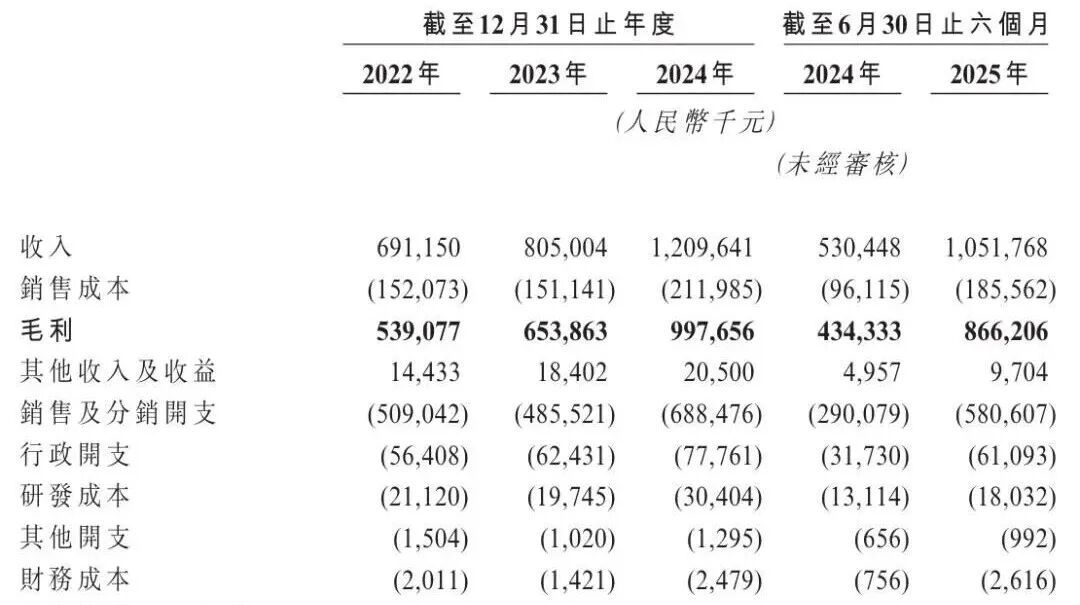
Core Viewpoint - Lin Qingxuan, a well-known domestic beauty brand, has resubmitted and updated its IPO application, reporting a significant revenue growth of 98% year-on-year for the first half of 2025, with total revenue reaching 1.05 billion RMB [1][2]. Financial Performance - For the fiscal year ending December 31, 2023, Lin Qingxuan reported revenues of 805.004 million RMB, up from 691.150 million RMB in 2022, indicating a growth of approximately 16.4% [2]. - The company's gross profit for the first half of 2025 is projected to be 866.206 million RMB, with a gross margin of 82.4%, slightly up from 81.9% in the same period of 2024 [4]. - Sales and distribution expenses have increased significantly, from 290.079 million RMB in the first half of 2024 to 580.607 million RMB in the first half of 2025, reflecting a growth of 100.2% [5]. Market Position and Strategy - Lin Qingxuan is positioned as a high-end domestic skincare brand, ranking first among all domestic high-end skincare brands in China by retail sales in 2024 [3]. - The brand's core product, a serum oil, contributed 45.5% of total revenue in the first half of 2025, showing a rising trend in its revenue contribution over the past few years [3]. - The company emphasizes its strong brand reputation and market recognition as key factors for its sustained growth [5]. R&D and Marketing - Despite a high gross margin, Lin Qingxuan faces criticism for its low R&D spending, which was only 30.404 million RMB in 2024, compared to 688.476 million RMB in sales and distribution expenses [4]. - The company has been increasing its marketing efforts, with sales and distribution expenses growing rapidly due to enhanced online and offline marketing activities [5]. Regulatory and Compliance Issues - Lin Qingxuan has faced regulatory scrutiny, including penalties for false advertising and numerous consumer complaints regarding product efficacy and customer service [5][7]. - The company is required to address issues related to unpaid social insurance and housing funds, as well as its response to past administrative penalties, as part of its IPO process [6]. Ownership and Investment - The founder, Sun Laichun, holds a 38.21% direct stake in the company, with total ownership including indirect holdings reaching approximately 79.27% [15]. - Recent investments from notable entities, including L'Oréal, indicate confidence in Lin Qingxuan's market potential and growth trajectory [17].
东北兄弟卖茶花油 跑出38亿美妆黑马
2 1 Shi Ji Jing Ji Bao Dao· 2025-12-06 13:58
东北兄弟做美妆,即将收获一个IPO。 12月上旬,林清轩更新招股书,冲刺港股高端护肤第一股。 这家成立于2003年的国货化妆品企业,总部位于上海,由孙来春、孙福春兄弟联合创立。当前聚焦抗皱 紧致类护肤品,其核心产品定价200-800元区间。 现年51岁的孙来春,担任董事会主席。 他曾七次创业、七次失败。2012年,他偶然发现山茶花护肤的的功效,便以"以油养肤"开辟差异化赛 道。 两年后,团队推出山茶花抗皱精华油,集中资源将其打造为大爆款。孙来春曾放言,近十年所有资金、 人才,全部押到山茶花上。他称之为"一毫米宽、一千公里深"。 如今,孙来春已打造了230个SKU,拓展至面霜、乳液、面膜及防晒霜等,精华油依然为最大收入来 源。 截至6月,这一大单品累计销量破4500万瓶。单是今年1-6月,这一品类创收约4.8亿元,占总营收的 45.5%,接近半壁江山。 孙氏兄弟主打高端市场,主力客户是25至40岁的"贵妇"群体。 《21CBR》记者查询,天猫旗舰店中,山茶花油迭代至5.0,15ml售价299元,大促享受买一送一,显示 已售5万+笔。 价格看齐国际大牌,林清轩的整体毛利率也非常可观,高达82.4%,比肩雅诗兰黛。 ...
东北兄弟卖美妆,6个月收入10亿,冲刺国货高端护肤第一股
2 1 Shi Ji Jing Ji Bao Dao· 2025-12-06 12:18
Core Viewpoint - Lin Qingxuan, a domestic beauty brand, has resubmitted its IPO application to the Hong Kong Stock Exchange, highlighting significant revenue growth and a rebranding to position itself as a high-end skincare brand in China [1][2]. Group 1: Company Performance - In the first half of 2025, Lin Qingxuan reported total revenue of 1.05 billion RMB, representing a remarkable year-on-year growth of 98% compared to the first half of 2024 [1]. - The company's gross margin reached 82.4% in the first half of 2025, up from 81.9% in the same period of 2024, indicating strong pricing power and operational efficiency [3]. - The revenue contribution from the essence oil product line accounted for 45.5% of total revenue in the first half of 2025, showing a consistent upward trend in its importance to overall sales [2]. Group 2: Market Positioning - Lin Qingxuan emphasizes its high-end positioning, ranking first among domestic high-end skincare brands in China by retail sales in 2024, and is the only domestic brand among the top 15 high-end skincare brands [2]. - The high-end skincare market in China is relatively concentrated, with the top 15 brands holding 66.1% of the market share, indicating a competitive landscape [2]. Group 3: Marketing and Sales Strategy - The company has significantly increased its sales and distribution expenses, which rose by 100.2% to 580.6 million RMB in the first half of 2025, driven by enhanced online and offline marketing activities [4]. - Lin Qingxuan's marketing strategy has been questioned for being "heavy on marketing and light on R&D," but industry experts suggest that marketing and brand strength are crucial competitive factors in the cosmetics industry [3]. Group 4: Investment and Shareholding - The founder, Sun Laichun, holds 38.21% of the shares directly and approximately 79.27% in total, indicating strong founder control [5]. - Notable external investors include Yagao Fashion, Country Garden Venture Capital, and others, with Yagao holding 4.49% of the shares [5]. - Recent share acquisitions before the IPO have led to an estimated pre-IPO valuation of approximately 3.846 billion RMB for Lin Qingxuan [6]. Group 5: Industry Trends - The trend of domestic beauty brands pursuing IPOs in Hong Kong has intensified, with Lin Qingxuan following other brands like Natural Hall and Proya, reflecting a strategic move to access capital markets for growth [7]. - The domestic cosmetics market is expected to see increased demand for plant-based essential oils, indicating a potential growth area in the coming years [8].
林清轩再度递表港交所,“国货高端护肤第一股”成色几何?
2 1 Shi Ji Jing Ji Bao Dao· 2025-12-06 09:16
Core Viewpoint - Lin Qingxuan, a domestic beauty brand, has resubmitted its IPO application to the Hong Kong Stock Exchange, highlighting significant revenue growth and a strategic rebranding to position itself as a high-end skincare brand in China [1][2]. Group 1: Financial Performance - In the first half of 2025, Lin Qingxuan reported total revenue of 1.05 billion yuan, representing a remarkable year-on-year growth of 98% compared to the first half of 2024 [1]. - The gross profit margin for Lin Qingxuan reached 82.4% in the first half of 2025, up from 81.9% in the same period of 2024, indicating strong pricing power and operational efficiency [2]. Group 2: Market Positioning - Lin Qingxuan emphasizes its high-end positioning, ranking first among domestic high-end skincare brands in China by retail sales in 2024, and is the only domestic brand among the top 15 high-end skincare brands [2]. - The brand's revenue is heavily reliant on its single product category, with essence oil contributing 45.5% of total revenue in the first half of 2025, up from 37% in 2024 [2]. Group 3: Marketing and Growth Strategy - The company has significantly increased its sales and distribution expenses, which rose by 100.2% to 580.6 million yuan in the first half of 2025, driven by enhanced online and offline marketing activities [4]. - Lin Qingxuan's growth is largely attributed to its brand reputation and market recognition, with a focus on marketing and brand strength rather than heavy R&D investment [3][4]. Group 4: Shareholder Structure and Investments - The founder, Sun Laichun, holds 38.21% of the shares directly and approximately 79.27% in total, while external investors include notable entities like Yagao Fashion and Country Garden Venture Capital [5][6]. - The estimated valuation of Lin Qingxuan before the IPO is around 3.846 billion yuan, with significant investments from entities including L'Oréal through a joint fund [7]. Group 5: Industry Trends - The trend of domestic beauty brands pursuing IPOs in Hong Kong is increasing, with Lin Qingxuan joining other brands like Natural Hall and Proya in seeking capital to enhance competitiveness and global presence [8]. - The domestic market for plant essential oils is expected to grow, with increasing consumer demand anticipated in the coming years [9].
中原证券晨会聚焦-20251205
Zhongyuan Securities· 2025-12-05 05:12
Core Insights - The report highlights the gradual recovery of the domestic market, with expectations for a 5% growth target for the year, supported by macroeconomic stabilization and upcoming policy meetings that may catalyze a new market rally [5][9][10] - The A-share market is experiencing a phase of consolidation, with various sectors such as aerospace robotics, coal, and non-ferrous metals leading the gains, while others like tourism and food and beverage are lagging [5][9][13] - The report emphasizes the importance of maintaining a balanced investment strategy, focusing on high-dividend defensive stocks and technology growth sectors [10][12] Domestic Market Performance - The Shanghai Composite Index closed at 3,875.79, with a slight decline of 0.06%, while the Shenzhen Component Index rose by 0.40% to 13,006.72 [3] - The average price-to-earnings ratios for the Shanghai Composite and ChiNext indices are 15.94 and 47.66, respectively, indicating a suitable environment for medium to long-term investments [5][9] International Market Performance - Major international indices such as the Dow Jones and S&P 500 experienced declines of 0.67% and 0.45%, respectively, while the Nikkei 225 saw a modest increase of 0.62% [4] Industry Analysis - The report indicates that the charging and swapping service industry, along with information transmission and software services, are experiencing rapid growth in electricity consumption [16] - The coal production and import rates are declining, with a notable decrease in raw coal production by 2.3% year-on-year in October 2025 [17][18] - The report also notes that the chemical industry is gradually entering a recovery phase, with improved profitability in sectors like agricultural chemicals and fluorochemicals, while others face challenges due to overcapacity [21][22] Investment Recommendations - The report maintains a "stronger than the market" rating for the electric power and public utilities sector, suggesting a focus on stable, high-dividend companies [19] - In the chemical industry, it recommends monitoring integrated leaders such as Wanhua Chemical and Baofeng Energy, as well as sectors like organic silicon and phosphoric chemicals for investment opportunities [23][24] - The AI sector is highlighted for its rapid application growth, with recommendations to focus on companies involved in AI infrastructure and domestic chip production [24][25]

【行业深度】洞察2025:中国传媒行业竞争格局及市场份额(附市场集中度、企业竞争力等)
Qian Zhan Wang· 2025-12-05 03:55
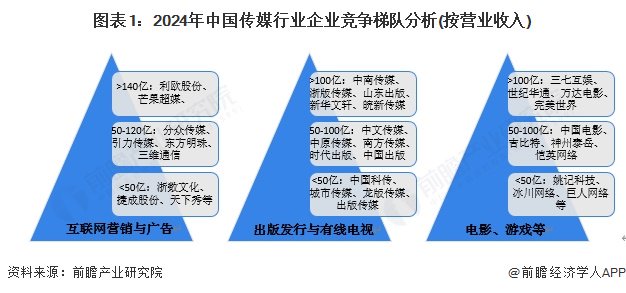
Group 1 - The core viewpoint of the article highlights the competitive landscape and market concentration of the Chinese media industry, indicating that the industry is characterized by a large number of listed companies and varying levels of competition among them [1][5]. Group 2 - In terms of revenue rankings, the top three media companies in China are BlueFocus, Leo Group, and 37 Interactive Entertainment, each projected to exceed 17 billion yuan in revenue by 2024 [2]. Group 3 - The overall revenue of China's media industry is expected to reach 507.1 billion yuan in 2024, with a CR3 of 20.62%, CR5 of 28.14%, and CR10 of 41.10%, indicating a relatively low market concentration and intense competition [5]. Group 4 - Among the listed media companies, 37 Interactive Entertainment has the highest gross profit margin for its products, reaching 78.63% in 2024 [6]. Group 5 - An analysis using the Five Forces model reveals that the media industry is primarily dominated by large enterprises, with intense competition from smaller firms. The bargaining power of suppliers is strong, while the bargaining power of consumers is weak due to the low substitutability of media products. The threat of new entrants is significant due to low entry barriers, and the risk of market substitution is low [8].





晨会纪要-20251204
Guoxin Securities· 2025-12-04 02:27
Macro and Strategy - The report discusses the ongoing expansion and diversification of public REITs in China, highlighting the inclusion of various asset types and industries, with a projected market size increase of 2.3 to 3.8 trillion yuan, indicating a potential 10-16 times expansion compared to the current scale [7][8][10] - The average dividend yield of public REITs from 2022 to 2025 is 5.73%, which is higher than the average yield of the CSI Dividend Index at 5.52%, showcasing their attractiveness as a stable income asset [8][9] - Public REITs are characterized by a dual return structure comprising dividend income and asset appreciation, with a significant portion of returns coming from dividends over longer investment horizons [9][10] Industry and Company - The Chinese duty-free industry is entering a new cycle, with Hainan's duty-free sales experiencing a compound annual growth rate (CAGR) of 39% from 2011 to 2019, but facing a decline of 37% from peak sales due to various market pressures [17][18] - Recent data indicates a recovery in Hainan's duty-free sales, with year-on-year growth of 3%, 13%, and 27% from September to November 2025, suggesting a positive trend in high-end consumption [18][19] - The report emphasizes the importance of policy support and market dynamics in shaping the future of the duty-free sector, with expectations for continued growth driven by improved consumer confidence and strategic policy enhancements [19][20][21] Automotive Industry - The report highlights the rapid advancements in smart driving technology, with companies like Tesla and Huawei leading the way in achieving Level 4 automation through innovative algorithms and architectures [24][25] - The penetration rate of smart driving technologies is expected to see significant growth, with projections indicating an increase from 11.3% to 26.3% for highway navigation assistance (NOA) by 2025 [25] - The global market for robotaxi services is projected to reach nearly 10 trillion yuan, with companies like Waymo and Apollo at the forefront of commercialization efforts [25][26] Non-Banking Sector - The report outlines the importance of the second pillar of the pension system in China, focusing on the development of enterprise and occupational pensions to address the challenges of an aging population [26][27] - The occupational pension system has achieved full coverage, while enterprise pensions are expanding from state-owned to private enterprises, indicating a shift towards a more diversified pension landscape [27][28] - The investment strategy for pension funds is evolving towards a "barbell" approach, balancing stable income-generating assets with growth-oriented investments in technology and manufacturing sectors [28]
国信证券晨会纪要-20251204
Guoxin Securities· 2025-12-04 01:18
Macro and Strategy - The report discusses the ongoing expansion and diversification of public REITs in China, highlighting the inclusion of various asset types and industries, with a projected market size of 2.3 to 3.8 trillion yuan, indicating a potential 10-16 times expansion from current levels [7][8][10] - The average dividend yield of public REITs from 2022 to 2025 is 5.73%, surpassing the average yield of the CSI Dividend Index at 5.52%, showcasing their attractiveness as a stable income asset [8][9] - Public REITs are characterized by a dual return structure comprising dividend income and asset appreciation, with a notable annualized return of 23.66% over the past year [9][10] Industry and Company - The Chinese duty-free industry is entering a new cycle, with Hainan's duty-free sales showing signs of recovery, driven by policy support and improving consumer confidence, with sales growth of 3%, 13%, and 27% from September to November 2025 [17][18] - The report emphasizes the importance of policy optimization in the duty-free sector, with recent expansions in both offshore and onshore duty-free policies, enhancing consumer access and convenience [18][19] - The report identifies key players in the duty-free market, such as China Duty Free Group, which holds a 78% market share, and highlights the strategic importance of airport channels for future growth [20][21] Automotive Industry - The report outlines the advancements in smart driving technology, with companies like Tesla and Huawei leading the way in achieving Level 4 automation through end-to-end algorithms [24][25] - The penetration rate of smart driving is expected to see significant growth, with projections indicating an increase from 11.3% to 26.3% for highway NOA and from 6.1% to 10.9% for urban NOA by 2025 [25] - The global market for Robotaxi is projected to reach nearly 10 trillion yuan, with companies like Waymo and Apollo at the forefront of commercialization efforts [25][26] Non-Banking Industry - The report highlights the importance of the second pillar of the pension system in China, focusing on enterprise and occupational pensions, which are expected to grow at an annualized rate of 8%, outpacing nominal GDP growth [26][27] - The investment behavior of pension funds is shifting towards a "barbell" strategy, balancing stable cash flow assets with high-growth sectors, indicating a significant increase in equity allocations [27][28]