
优衣库

Search documents
国际品牌怎么才能守住中国市场?
虎嗅APP· 2025-05-23 11:47
Core Viewpoint - The article discusses the competitive landscape between international and domestic brands in China, highlighting that international brands still hold significant market share despite the rise of domestic brands. The CBI500 list shows that international brands remain popular among Chinese consumers, indicating their strong market presence and consumer loyalty [1][3][18]. Group 1: International Brands' Market Position - The CBI500 list includes 156 international brands, with Apple ranking first, demonstrating the continued strength of international brands in the Chinese market [1][3]. - In sectors like beauty and sportswear, international brands dominate, with 8 out of the top 10 beauty brands being international and 70% of outdoor sports brands also being international [1][5]. - International brands maintain a competitive edge due to their technological advancements and established supply chains, which are difficult for domestic brands to replicate [5][9]. Group 2: Consumer Behavior and E-commerce Impact - The CBI500 list is based on real consumer behavior data from platforms like Taobao and Tmall, reflecting genuine consumer preferences and the ongoing enthusiasm for international brands [3][10]. - E-commerce has transformed the retail landscape in China, with international brands increasingly relying on platforms like Tmall to reach consumers, highlighting the importance of digital channels for market penetration [10][12]. - The rise of e-commerce has allowed domestic brands to compete more effectively, as they can quickly adapt to consumer needs and preferences without the constraints of traditional retail [11][22]. Group 3: Challenges and Adaptation of International Brands - International brands face challenges in adapting to the rapidly changing consumer landscape in China, necessitating a shift towards localization and understanding of local consumer demands [12][25]. - Brands like Adidas and Uniqlo have successfully implemented localization strategies, leveraging e-commerce data to enhance their product offerings and marketing approaches [15][16][14]. - Despite their technological advantages, international brands must improve their responsiveness to local consumer needs to maintain their market positions [25][26]. Group 4: Domestic Brands' Rise and Innovation - Domestic brands are increasingly moving from being mere followers to innovators, leveraging their understanding of local markets to create competitive products [20][21]. - Brands like Xiaomi and ICICLE have successfully introduced innovative concepts that challenge established international brands, indicating a shift in the competitive dynamics [20][21]. - The success of domestic brands in niche markets, such as small appliances, showcases their ability to quickly respond to emerging consumer trends and preferences [23][24]. Group 5: Future Outlook - The article suggests that the future of competition in the Chinese market will revolve around product innovation and understanding consumer emotions, with a focus on niche markets [22][26]. - International brands must enhance their local market insights and adapt their strategies to align with evolving consumer expectations to sustain their growth in China [26].




“投资中国就是投资未来!”,多位国际品牌高管财报季密集发声
Guan Cha Zhe Wang· 2025-05-23 09:20
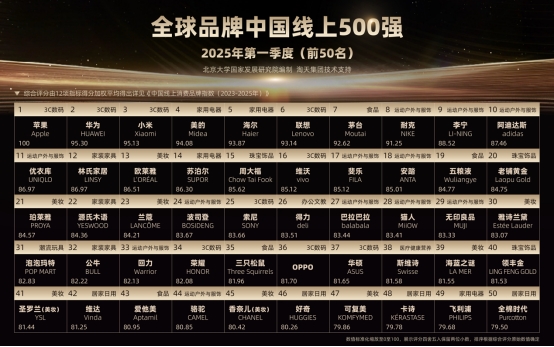
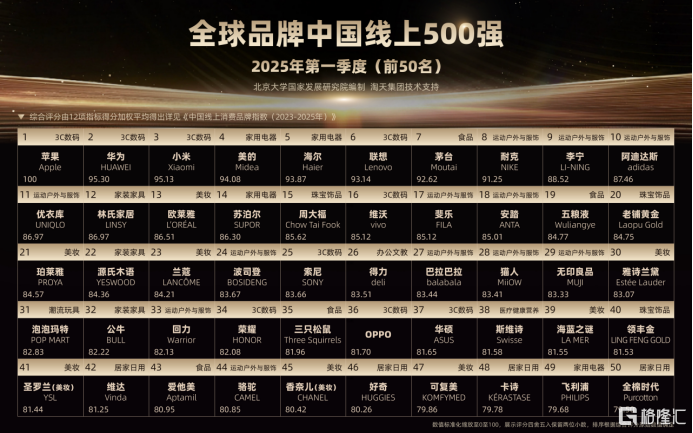
Core Insights - The trend of global trade is unstoppable, with the Chinese market becoming an indispensable strategic high ground for international brands [1] - The "Global Brand China Online 500 Strong List" (CBI500) was recently released, showcasing 156 international brands across various industries [1][3] - The report indicates that international brands are increasingly focusing on the Chinese market, with many expressing confidence in future investments [4][5] Group 1: CBI500 Rankings - The top-ranked brands include Apple, Huawei, and Xiaomi in the 3C digital sector, with Apple achieving a perfect score of 100.00 [2] - Other notable brands in the top rankings include Midea and Haier in home appliances, and Nike and Adidas in sportswear [2] - The report highlights that international brands account for 31.2% of the top 500 brands and 36% of the top 100 brands [3][12] Group 2: Market Trends and Brand Strategies - The Chinese market is seen as a critical area for international brands, with executives from companies like L'Oréal and Adidas emphasizing their commitment to long-term investments in China [5][6] - L'Oréal reported a 4.4% year-on-year sales growth in Q1 2025, with strong performance in high-end cosmetics and skincare [5] - Adidas has experienced quality growth for seven consecutive quarters in the Greater China region, reaffirming its strategic importance [5] Group 3: Consumer Behavior and Brand Performance - The CBI report indicates a significant recovery in consumer quality in China, with the online consumption brand index rising from 59.42 to 63.38 between Q1 2023 and Q1 2025 [10][12] - The report also notes that domestic brands are gaining ground, with a "70-30" split between domestic and international brands in the market [12] - The rise of e-commerce has led to increased opportunities for international brands, with many entering the Chinese market through platforms like Tmall [8][12]

全球品牌中国线上500强”高管发声:“中国是最重要的市场
Zhong Guo Jing Ji Wang· 2025-05-23 03:30
坚定投入中国市场,国际品牌的战略布局正显现出积极的成效。 欧莱雅2024/2025年度发展战略沟通会上,欧莱雅北亚总裁及中国首席执行官博万尚表达了对中国美妆 市场的坚定信心。他表示,欧莱雅将持续加大在中国市场的投资:"我们坚信,投资中国就是投资未 来。我们将秉持长期主义,继续深耕中国市场。" 长期秉持 "在中国,为中国"的本土化战略,2024年阿迪达斯大中华区业绩连续七个季度实现"有质量的 增长",全年营收重回双位数增长。阿迪达斯全球CEO比约恩·古尔登在2024年财报发布会上,强调了中 国对公司全球扩张的重要战略意义,他表示:"中国仍是一个具有巨大潜力的关键市场。"在CBI500榜 单中,阿迪达斯排名第10。 因洞洞鞋大火的Crocs也进入了CBI500。数据显示,Crocs中国市场的收入2024年同比增长64%,现在已 成为仅次于美国的全球第二大市场。2024年第四季度财报电话会议上,Crocs首席执行官Andrew Rees表 示,中国引领增长,2024年第四季度增速高于第三季度。其中,双11购物节表现超出预期。 基于中国成熟的电商市场,多个国际品牌在中国的线上成交引领了品牌整体增长。以Lululemo ...

曾全球门店超3000家、10条裤子能抵上海静安区1m²房价,如今沦落为几十元快消品 真维斯,明天的太阳从哪里升起?
Mei Ri Jing Ji Xin Wen· 2025-05-22 12:17
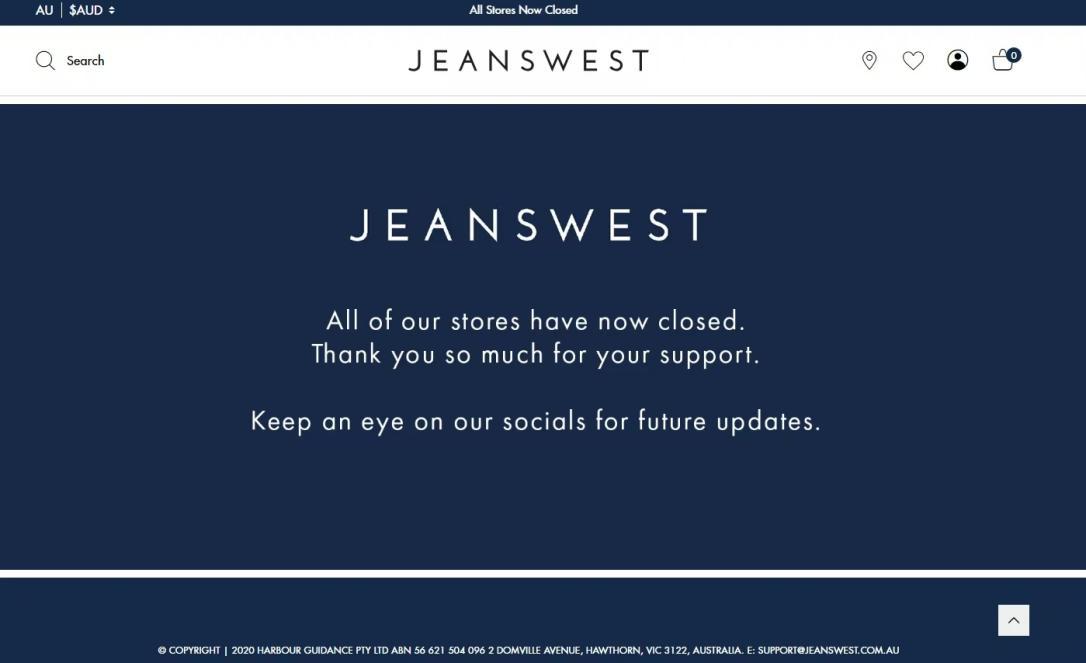
Core Insights - The article discusses the decline of the Jeanswest brand, which once had over 3,000 stores globally but has now declared bankruptcy in Australia, closing all its stores there. In contrast, lululemon, a contemporary brand, has only 767 stores as of the end of fiscal year 2024 [1][3][30]. Company Overview - Jeanswest was founded in Australia 53 years ago and was introduced to China by the Sunrise Group in 1993, leading to rapid expansion. At its peak, the brand had 3,156 stores worldwide, significantly contributing to the Sunrise Group's performance [3][17]. - The brand's pricing strategy has drastically changed over the years, with jeans once priced over 200 yuan now available for as low as 19 yuan, reflecting a significant decline in brand value and market position [4][26]. Market Position and Challenges - The brand has faced increasing competition from both domestic and international brands, leading to a decline in sales. From 2013 to 2016, Jeanswest's sales dropped from 46.8 billion HKD to 19.3 billion HKD, and by the end of 2017, the number of stores in mainland China had decreased to 1,219, only 42% of its peak [18][21]. - The closure of all stores in Australia raises questions about the brand's strength and future in the Chinese market, where it is now focusing its efforts [21][30]. Strategic Adjustments - The Sunrise Group has stated that the Australian and Chinese operations of Jeanswest are independent, with the Australian entity shifting focus towards e-commerce in response to market changes. In contrast, the Chinese market has seen a significant increase in e-commerce sales, growing over 13 times from 2020 to 2024, with total sales exceeding 6 billion yuan in 2024 [30][31]. - Despite the challenges, the brand has attempted to revitalize its image by engaging celebrities for endorsements, although the long-term effectiveness of this strategy remains uncertain [26][31]. Consumer Perception - The brand's decline has led to nostalgia among consumers who once viewed Jeanswest as a fashion icon. However, its current pricing and product offerings have diminished its appeal, with consumers finding better deals elsewhere during promotional events like "618" [22][29].
"全球品牌中国线上500强":156个国际品牌上榜,中国成为全球品牌发展必争之地
Ge Long Hui· 2025-05-22 03:40
Core Insights - China is both a beneficiary and contributor to economic globalization, with a strong global purchasing power reflected in the "Global Brand China Online 500" list [1] - The list, compiled by Peking University and supported by Taobao Tmall, analyzed consumer data from millions of brands, integrating various metrics to create a comprehensive scoring system [1][2] - International brands account for 29.8% of the top 1000 brands, 31.2% of the top 500, and 36% of the top 100, indicating a competitive online market for international brands in China [1][3] Brand Performance - In the top 10 brands, 3 are international, while in the top 50 and top 100, there are 18 and 36 international brands respectively [3] - The beauty and personal care sector shows a significant international presence, with 8 out of the top 10 brands being international, and the sports and outdoor sector has a 70% representation of international brands [3] Consumer Demand - Chinese consumers show a strong preference for international brands in beauty care, sports health, and fashion, with beauty care brands leading at 52, followed by 23 in sports and 21 in apparel [3] - International brands dominate in sectors requiring high technical expertise and R&D capabilities, highlighting their competitive edge [3] Localization Strategies - Adidas ranks 10th on the list, experiencing double-digit growth in China due to successful localization strategies, including empowering local teams and ensuring supply chain responsiveness [4] - Online platforms like Taobao Tmall facilitate a two-way interaction between domestic and international brands, allowing for mutual learning and adaptation to consumer preferences [4] Market Dynamics - The 156 international brands on the list have established flagship stores on Taobao Tmall, with nearly half opening their first stores online, making it a recognized "second official website" for brands entering China [5] - China's massive market size and evolving consumer structure present significant growth opportunities for global brands, enhancing the variety and quality of choices available to Chinese consumers [5]




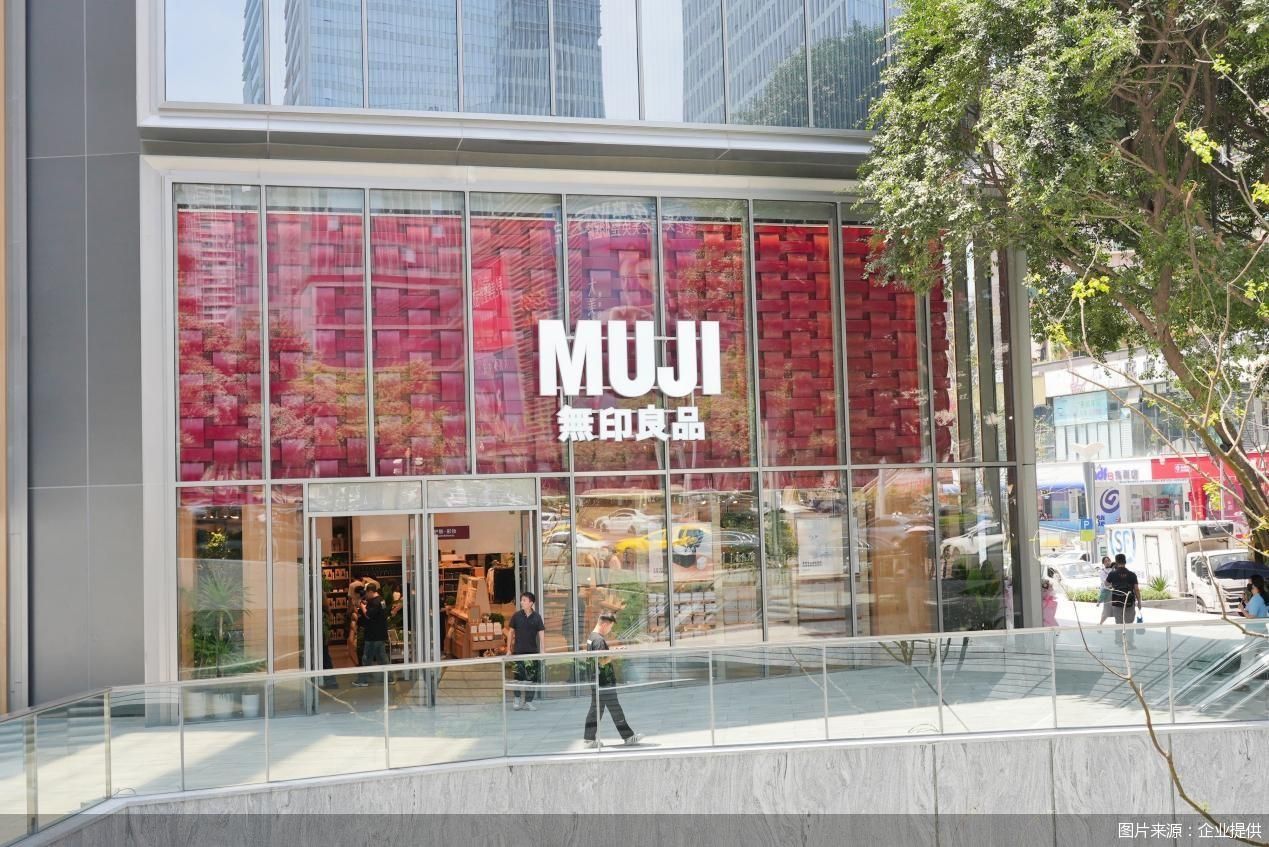
寻找消费力|专访MUJI无印良品CMO吴姝:消费力正拥抱长期主义
Bei Jing Shang Bao· 2025-05-21 11:58
Core Insights - MUJI is facing a critical examination of its "value" proposition as it navigates a market increasingly influenced by local budget brands and changing consumer behaviors [1][3] - The brand's philosophy of "no brand quality" is being challenged by a shift towards sustainable consumption and a focus on long-term satisfaction rather than mere product ownership [1][3] Consumer Behavior Changes - The Chinese consumer market is undergoing significant changes, with sustainability and mental well-being becoming key drivers of purchasing decisions [1][3] - Over 80% of consumers are willing to pay an average of 9.7% more for sustainably produced goods, indicating a shift from logo-driven purchases to valuing product lifecycle and brand values [3][4] Product Strategy - MUJI is promoting its hemp series in Spring/Summer 2024, which features a fully localized supply chain that reduces carbon footprint while meeting consumer demands for functional and eco-friendly products [3][4] - The brand offers over 8,000 SKUs, emphasizing a comprehensive lifestyle proposal rather than individual products, which fosters cross-category repurchase loyalty [4][5] Local Innovation and Market Adaptation - Since 2019, MUJI has established local product development teams to better cater to Chinese consumer preferences, launching products like the hemp clothing line [5][6] - The integration of diverse services such as cafes and home decor in stores enhances customer interaction and experience, positioning MUJI as more than just a retail outlet [5][6] Financial Performance - MUJI's parent company reported a 21.3% year-on-year increase in sales to 197.6 billion yen for Q1 of FY2025, with operating profit rising by 58.2% to 21.9 billion yen, driven by strong performance in mainland China and e-commerce [5][6] Channel Strategy - Despite rising e-commerce penetration, MUJI prioritizes offline sales for providing comprehensive product experiences that online shopping cannot replicate [6][7] - The brand is enhancing its online shopping experience and exploring instant retail partnerships to balance convenience with experiential shopping [7][8] Future Outlook - MUJI aims to connect with local cultures and communities while respecting nature, with a long-term goal of achieving 100% localization by August 2024, currently estimated at 50% [8]
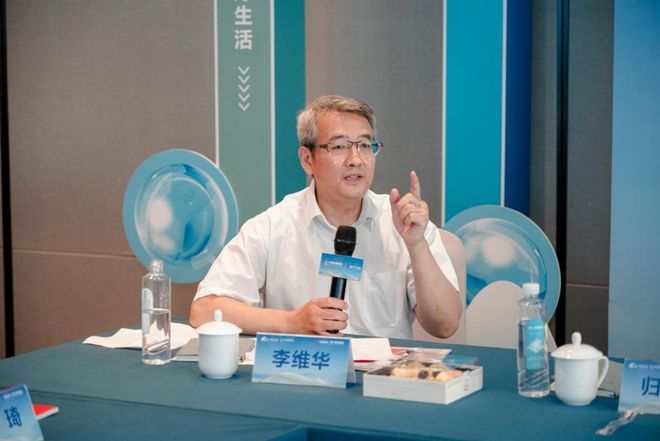
李维华:特许经营理念助力美天竞保推进普惠医疗
Zhong Guo Jing Ying Bao· 2025-05-21 08:16
Group 1 - The event "New Business Civilization - Exploring Smart Technology Empowering Inclusive Healthcare" was held in Chengdu, attracting industry experts and company representatives to discuss the application and development of smart technology in the healthcare sector [1] - Li Weihua, a leading figure in franchise and chain management, provided deep insights into the development of the industry and offered constructive suggestions for Meitian Jingbao [1][3] Group 2 - Li Weihua emphasized that a scientific and reasonable business model must meet five primary indicators: politics, law, business, ethics, and emotion, along with 60 secondary indicators [3] - He discussed the evolution of business models, categorizing them into old models (such as distribution and direct sales) and new models (including e-commerce and community-based commerce) [3][5] - Li Weihua highlighted the importance of integrating modern technology tools like the internet, blockchain, and AI into business models, while cautioning that digitalization should not be viewed as the sole solution [5] Group 3 - For the healthcare sector, Li Weihua suggested designing a B2B and B2C profit model to meet diverse market demands, while advocating for a comprehensive franchise system covering various operational functions [5][6] - He noted that the trend of low pricing is crucial in today's market, as evidenced by successful companies like McDonald's and Starbucks, and recommended that Meitian Jingbao leverage this trend to provide affordable healthcare services [6] - Li Weihua recognized the potential of Meitian Jingbao to achieve inclusive healthcare through a nationwide franchise system, aiming to benefit a broad audience rather than just a niche market [6]
从首店经济到全球品牌,成都的“磁吸力”为何这么强?
Mei Ri Jing Ji Xin Wen· 2025-05-20 15:51
Core Insights - Chengdu is emerging as a leading consumer market in China, attracting both consumers and international brands, with 148 new flagship stores established by Q1 2025 [1][17] - The city is recognized for its unique blend of high-end and mass-market brands, showcasing a harmonious coexistence of different consumer segments [3][11] Group 1: Market Dynamics - Chengdu's commercial appeal is highlighted by the opening of flagship stores from luxury brands like Dior and Louis Vuitton, indicating a deepening investment in the local market [8][9] - The city has seen significant interest from sports brands, with KOLON KRAFT and On opening their first flagship stores in Chengdu, reflecting the city's vibrant young consumer base [5][6][8] Group 2: Consumer Trends - The opening of Uniqlo's first city flagship store in Southwest China at Chengdu's MixC Mall, covering nearly 2,000 square meters, demonstrates the brand's commitment to the region and its alignment with local consumer preferences [12][15] - Chengdu has attracted over 1.56 million young talents in the past three years, contributing to its status as a popular destination for both tourism and retail [15][17] Group 3: Economic Initiatives - The "Chengdu Action Plan for Promoting the First Store Economy (2025-2027)" aims to establish 6,500 new stores and host over 1,000 premier events by the end of 2027, positioning Chengdu as a hub for new consumption brands [17][20] - Recent high-profile product launches, such as Huawei's new commercial laptops featuring HarmonyOS, underscore Chengdu's role as a center for technological innovation and consumer engagement [21][23]
2025凯度BrandZ最具价值全球品牌100强发布 中国品牌价值快速增长
Zhong Guo Jing Ying Bao· 2025-05-20 05:23
Core Insights - The total value of the top 100 global brands reached $10.7 trillion in 2025, marking a 29% year-on-year increase, the highest in history [1] - Chinese brands have doubled in value over the past 20 years, now accounting for 6% of the total value of the top 100 brands, with a 26% increase from the previous year, ranking second globally in growth rate [1] - European brands have significantly declined, now representing only 7% of the total value, down from 26% in 2006 [1] Industry Trends - The retail sector continued its growth trend from 2022, with an overall brand value increase of 48%, driven by e-commerce and private labels [3] - In contrast, brand value growth in categories like apparel, food and beverage, and personal care has stagnated or declined, although brands like Uniqlo, Coca-Cola, and Dove have outperformed the industry average [3] - The alcoholic beverage sector is facing challenges from younger consumers opting for lower-cost options, while the rise of health-conscious trends is boosting the growth of low or non-alcoholic drinks [3] - The luxury goods sector, one of the few industries to maintain growth since 2020, saw a 2% decline in 2025, partly due to a shift in consumer preference from status-symbol products to lifestyle experience consumption [3]
奢侈品市场放缓 “平替”“二手”崛起 年轻人消费风向变了 为价值埋单 不为LOGO付费
Guang Zhou Ri Bao· 2025-05-19 19:26
Core Insights - The luxury goods market is experiencing a slowdown, with a significant rise in demand for "affordable alternatives" as consumers prioritize value for money over brand prestige [1][2][3] - A new consumer sentiment is emerging, where 57.2% of consumers prefer cost-effective substitutes when product quality and functionality are similar [1][2] - The concept of "value-driven" consumption is becoming mainstream, particularly among younger generations [1][3] Group 1: Market Trends - The average price of luxury goods has increased by approximately 15% over the past three years, leading to a reassessment of their perceived value [2] - Nearly half of luxury consumers believe that brand prices are inflated, indicating a shift in trust and patience towards luxury brands [2][3] - Fast fashion and new high-street brands are increasingly encroaching on the "light luxury" market, which is losing its price advantage [3] Group 2: Consumer Behavior - Young consumers are actively choosing more affordable, high-quality imitations to maximize value [2][3] - The definition of luxury is evolving; it is no longer associated solely with high-priced items but is now linked to products that provide emotional satisfaction and a sense of well-being [3][4] - The acceptance of second-hand luxury goods is rising, with younger generations viewing them as both cost-effective and environmentally friendly [4][5] Group 3: Sustainability and Cultural Relevance - The trend of sustainability is becoming a fashionable lifestyle choice, with brands focusing on cultural significance rather than just price [4][5] - The growth of second-hand platforms, such as Vestiaire Collective, which reported a 25% revenue increase last year, highlights the market's enthusiasm for green consumption [4] - Innovative products that incorporate sustainable practices are becoming social symbols among young consumers, reflecting a shift in consumer values [5][6] Group 4: Future Outlook - The "premium pricing logic" of traditional luxury brands is being redefined, as the focus shifts to creating enjoyable and meaningful consumer experiences [6] - The competition in the fashion industry is intensifying, with brands needing to make essential products interesting and appealing to maintain relevance [6]