招商积余

Search documents
招商积余20250924
2025-09-26 02:29
Summary of the Conference Call for 招商积余 Company Overview - **Company**: 招商积余 - **Date**: September 24, 2025 Key Points Industry and Company Performance - **Revenue Growth**: In the first half of 2025, 招商积余 reported revenue of 9.107 billion yuan, a year-on-year increase of 16.17% [3] - **Net Profit**: The net profit attributable to shareholders was 474 million yuan, reflecting an 8.9% year-on-year growth [3] - **Accounts Receivable Management**: The accounts receivable balance decreased by 10.13% to 3.753 billion yuan, indicating effective management [2][3] Cost Management and Profitability - **Gross Margin Improvement**: The gross margin for the basic property management segment increased to 11.56%, up by 0.61 percentage points year-on-year [2][3] - **Cost Reduction Strategies**: The company implemented centralized procurement and established a cost committee to oversee purchasing, which helped in lowering costs [2][6] - **Debt Management**: Interest-bearing debt decreased from 833 million yuan to 691 million yuan, with financing costs maintained between 1.95% and 2.40% [4][3] Market Expansion and Contract Growth - **Residential Market Contracts**: New annual contract value in the residential market grew by 23% to 208 million yuan, driven by enhanced market competitiveness and targeted initiatives [2][7] - **Non-Residential Projects**: The company is focusing on expanding non-residential projects, although growth in residential contracts is limited [12] Project Management and Operational Efficiency - **Loss Project Management**: 招商积余 employs detailed management for loss-making projects, including setting improvement timelines and considering termination for unmanageable projects [8] - **Customer Relationship Management**: The company enhances customer satisfaction through tailored management strategies, improving collection rates [5][9] Future Outlook and Challenges - **Market Competition**: The company faces intense competition, particularly in non-residential sectors, which may pressure profit margins [10] - **Social Security Policy Impact**: Changes in social security policies have minimal immediate impact on the company, but potential cost transfer risks from suppliers are being monitored [4][13][16] - **Dividend Policy**: The company is cautious about increasing dividends due to existing debt levels, with a focus on further reducing liabilities before making dividend decisions [17][18] Additional Considerations - **Share Buyback Status**: The share buyback plan is still in progress and is expected to be completed within the designated timeframe [19] This summary encapsulates the key insights from the conference call, highlighting 招商积余's performance, strategies, and outlook in the current market environment.

研究房地产的推机器人,研究建材的推AI……“科技牛”太热闹,传统行业分析师纷纷跨界
Mei Ri Jing Ji Xin Wen· 2025-09-25 13:57
Group 1 - Traditional industry analysts are increasingly incorporating AI and robotics into their research focus, reflecting a shift in market dynamics and professional necessity [1][2][10] - The "technology bull market" has significantly outperformed traditional industries since September 24, with new technology sectors attracting more market attention and investment [10][14] - Analysts from traditional sectors, such as real estate and building materials, are now actively promoting technology-related stocks, indicating a broader trend of cross-industry research [4][8][15] Group 2 - The performance of various sectors since September 24 shows a stark contrast, with technology-heavy sectors like electronics and computers leading in both trading volume and price appreciation [11][12][14] - Despite the trend towards technology, traditional industries still hold value, particularly in high-dividend sectors like coal and utilities, which are seen as attractive investment options in a low-interest-rate environment [16][17] - The decline in the number of analysts covering traditional sectors suggests a shift in focus towards technology and high-growth industries, with some smaller firms eliminating positions in cyclical industries [17][18]



2025物业机器人奇点已至?
机器人大讲堂· 2025-09-25 10:07
Core Viewpoint - The property robot sector is poised for significant growth, with expectations of technological maturity and cost optimization leading to a breakthrough in market penetration by 2025, fundamentally transforming property management efficiency, cost, and user experience [1][3][20]. Group 1: Key Developments in Property Robots - Property robots have rapidly integrated into communities, becoming essential tools for property management, with capabilities such as cleaning and patrols [1]. - Leading property management companies have collaborated with robot manufacturers to establish operational data, algorithm adaptations, and multi-functional product upgrades, laying the groundwork for large-scale implementation [3][12]. - The current low penetration rate of property robots indicates a pre-explosion phase, with expectations for high-frequency, low-speed applications to achieve over 10% market penetration within the next year [4]. Group 2: Economic Drivers for Adoption - The property management industry faces significant labor cost pressures, with personnel costs constituting approximately 70% of total expenses, necessitating the adoption of robots to reduce costs and improve service quality [6][9]. - Robots can replace 1-2 cleaning staff, eliminating additional costs such as social security and accommodation, leading to substantial long-term savings [6]. - The introduction of robots has resulted in improved service efficiency, transitioning from reactive to proactive service models, enhancing overall operational effectiveness [7][9]. Group 3: Technological and Cost Breakthroughs - Advances in technology and cost reductions are critical for the widespread adoption of property robots, with key components like laser radar seeing price drops from tens of thousands to thousands of yuan [11]. - The integration of AI algorithms and lower-cost camera modules has significantly improved the robots' ability to accurately identify obstacles and enhance operational efficiency [11]. - The scaling of production by leading companies is expected to further reduce costs, with estimates suggesting a 20%-30% decrease in hardware costs as production volumes increase [12]. Group 4: Innovative Business Models - New business models, such as leasing instead of outright purchases, have emerged, allowing property management companies to reduce financial burdens and operational risks associated with technology obsolescence [15]. - The collaborative model between robots and human staff enhances service quality, with robots handling routine tasks while humans focus on specialized cleaning [16]. - Flexible pricing models linked to service usage rather than personnel numbers are being introduced, allowing property management companies to better align costs with service delivery [18]. Group 5: Future Market Potential - The property management sector in China generated revenues of 1.69 trillion yuan in 2023, with labor costs exceeding 56%, indicating a substantial market opportunity for property robots [19]. - The future of property robots is expected to encompass multifunctional capabilities, integrating cleaning, inspection, security, and customer service into a single platform [19]. - Leading property management firms are transitioning from buyers to co-developers of robotic solutions, fostering deeper collaboration with technology providers to enhance product offerings [19].

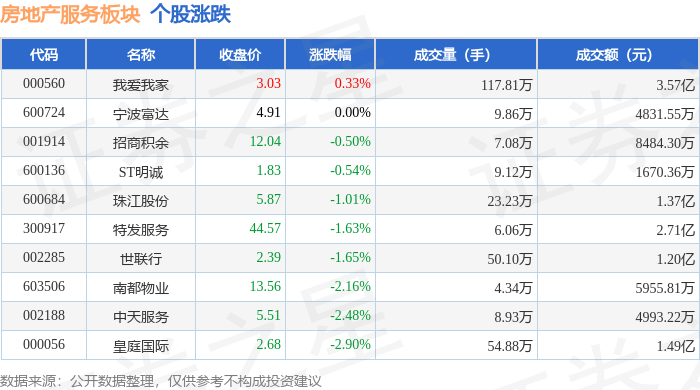
房地产服务板块9月25日跌0.84%,皇庭国际领跌,主力资金净流出6686万元
Zheng Xing Xing Ye Ri Bao· 2025-09-25 08:37
从资金流向上来看,当日房地产服务板块主力资金净流出6686.0万元,游资资金净流入2761.84万元,散 户资金净流入3924.15万元。房地产服务板块个股资金流向见下表: 证券之星消息,9月25日房地产服务板块较上一交易日下跌0.84%,皇庭国际领跌。当日上证指数报收于 3853.3,下跌0.01%。深证成指报收于13445.9,上涨0.67%。房地产服务板块个股涨跌见下表: | 代码 | 名称 | 收盘价 | 涨跌幅 | 成交量(手) | 成交额(元) | | | --- | --- | --- | --- | --- | --- | --- | | 000560 | 我筹找家 | 3.03 | 0.33% | 117.81万 | | 3.57亿 | | 600724 | 宁波富达 | 4.91 | 0.00% | 9.86万 | | 4831.55万 | | 001914 | 指商积余 | 12.04 | -0.50% | 7.08万 | | 8484.30万 | | 600136 | ST明诚 | 1.83 | -0.54% | 9.12万 | | 1670.36万 | | 600684 | 珠江股份 ...

开源晨会-20250924
KAIYUAN SECURITIES· 2025-09-24 14:41
Group 1: Pharmaceutical Industry - The active pharmaceutical ingredient (API) industry has experienced a downturn over the past four years, with prices of various products, including sartans, heparins, and animal health products, reaching historical lows, leading to some leading companies operating at a loss [7][8][10] - In the first half of 2025, the API sector saw a decline in both revenue and net profit due to significant price drops in anti-infective products and increased R&D investments by some companies [7][10] - Domestic API companies are actively transitioning to innovative drug development, with several products in various clinical trial stages, indicating a shift towards higher-value offerings [7][10] Group 2: Real Estate Industry - The stabilization of housing prices is influenced by multiple factors, including monetary policy, supply-demand relationships, and economic expectations, rather than solely by population changes [3][12][15] - Analysis of housing price data from 70 cities shows that both new and second-hand housing prices have been in a downward trend since 2022, with a recent narrowing of year-on-year declines due to supportive policies [12][13] - Recommendations for investment focus on strong credit real estate companies with good fundamentals and leading product capabilities, as well as those benefiting from dual-driven residential and commercial real estate strategies [15] Group 3: IT Services Industry - The company is a leading player in the domestic IT services sector and a key partner of Huawei, with over 40% of its revenue derived from this partnership [4][17][20] - The company's cloud intelligence business is experiencing significant growth, and it is expected to benefit from the development of the HarmonyOS ecosystem and AI technologies [4][17][20] - Profit forecasts for 2025-2027 have been adjusted, with expected net profits of 564 million, 628 million, and 708 million yuan respectively, reflecting a strategic focus on AI and cloud services [4][17][20] Group 4: Alibaba Group - Alibaba is actively advancing its AI infrastructure and plans to increase investments, which is expected to accelerate growth in its cloud business [5][21][22] - The demand for AI infrastructure is exceeding expectations, with plans to invest 380 billion yuan in building AI infrastructure, significantly increasing the energy consumption scale of its global data centers by 10 times by 2032 [5][21][22] - The company aims to enhance its market position through comprehensive AI-driven strategies, including improvements in its e-commerce platform and cloud services [21][22][23]
行业深度报告:房价止跌回稳系列三:鉴往知来,人口不是影响房价唯一因素
KAIYUAN SECURITIES· 2025-09-24 09:50
Investment Rating - The investment rating for the real estate industry is "Positive" (maintained) [1] Core Insights - The report indicates that new housing transaction areas have shown a month-on-month increase, while real estate development investment has decreased year-on-year from January to August 2025 [3] - The report highlights that the decline in housing prices has been consistent since 2022, with a significant drop in both new and second-hand housing prices across 70 cities, although the rate of decline has started to narrow due to supportive policies [5][16] - It emphasizes that the relationship between population growth and housing prices is not straightforward, as effective housing demand driven by economic development and income growth is crucial for influencing prices [5][25] Summary by Sections Industry Overview - The real estate market has entered a downward trend since 2022, with new and second-hand housing prices experiencing a decline for over 40 months [5][16] - As of August 2025, the new housing price index across 70 cities has decreased by 3.0% year-on-year, while the second-hand housing price index has dropped by 5.5% [16][20] Population Impact - The report concludes that population factors are long-term variables with limited mid-term impact on housing prices, as the marginal changes in housing prices are influenced more by monetary policy, supply-demand relationships, and economic expectations [25][39] - A regression analysis across several developed countries shows that housing price indices do not have a significant correlation with population growth rates [40][42] International Experience - The report draws parallels with international experiences, noting that stable fiscal and monetary policies are essential for stabilizing housing prices after declines [6][46] - It cites examples from the U.S., Japan, and South Korea, where coordinated fiscal and monetary policies have successfully supported housing market recovery after significant downturns [46][49] Investment Recommendations - The report recommends focusing on real estate companies with strong credit ratings and solid fundamentals in urban areas, such as China Overseas Development and Poly Developments [7] - It also suggests that companies excelling in both residential and commercial real estate, as well as those providing high-quality property management services, are well-positioned for growth [7]



开源证券-房地产行业深度报告:房价止跌回稳系列三,鉴往知来,人口不是影响房价唯一因素-250924
Xin Lang Cai Jing· 2025-09-24 09:49
Group 1 - The core viewpoint is that the impact of mid-term population changes on housing prices in developed countries/regions is limited, as there is no significant positive correlation between housing price indices and population growth rates or numbers [1] - From 2022, housing prices in 70 cities have entered a downward trend, with a widening decline expected in Q3 2024, although the year-on-year decline has narrowed since Q4 due to supportive policies [1] - The current adjustment cycle in the housing market has seen both new and second-hand housing price indices decline for over 40 months [1] Group 2 - Historical data shows that housing prices in developed countries/regions have experienced fluctuations since the 1980s, with price corrections often exceeding those in China, but eventually stabilizing [2] - Key factors for stabilizing and recovering housing prices include coordinated fiscal and monetary policies, such as large-scale quantitative easing, interest rate cuts, and fiscal subsidies [2] - A stable policy outlook, low interest rate environment, and improved supply-demand structure are crucial for halting the decline and stabilizing the real estate market [2] Group 3 - The stabilization of housing prices is influenced by multiple factors, including monetary policy, supply-demand relationships, and economic expectations, rather than solely by population dynamics [3] - Recommended investment targets include strong credit property companies with good urban fundamentals and leading product capabilities, as well as firms that can drive both residential and commercial real estate [3] - The increasing penetration rate of second-hand housing indicates a promising outlook for the real estate after-service sector [3]


【房地产】政策利好持续叠加,上海新房成交放量——光大地产板块及重点公司跟踪报告(何缅南)
光大证券研究· 2025-09-22 23:07
Group 1 - The real estate development sector has a current PB ratio of 0.85, with a historical percentile of 31.46% since 2018, while the Hang Seng real estate sector has a PB ratio of 0.45, with a historical percentile of 30.12% [4] - From January 1 to September 19, 2025, key A-share real estate companies saw significant price increases, with Binhai Group up 34.68%, Xincheng Holdings up 31.77%, and Huafa Group up 0.99%. In the H-share market, China Jinmao increased by 63.25%, Jianfa International Group by 49.68%, and China Overseas Hong Kong Group by 48.88% [4] - The property service sector has a current PE ratio of 47.78, with a historical percentile of 75.95% since 2018, while the Hang Seng property service sector has a PE ratio of 41.51, with a historical percentile of 82.28% [5] Group 2 - Since August 2025, favorable policies have been continuously introduced, including measures in Beijing, Shanghai, and Shenzhen to optimize real estate purchases, such as removing limits on the number of properties that can be purchased by eligible families [6] - The transaction intensity in Beijing for new residential properties increased by 11.3% and for second-hand homes by 13.3% after policy changes. In Shanghai, the transaction intensity for new homes surged by 62.5% following policy adjustments [7] - In Shenzhen, the transaction intensity for new homes increased by 28.4% and for second-hand homes by 11.4% after the implementation of new policies [7]
2025W38房地产周报:上海优化房产税,限制政策持续放松-20250922
NORTHEAST SECURITIES· 2025-09-22 10:45
【东北地产建筑|中期策略】生存到重生,分化与机遇 房地产 [Table_Date] 发布时间:2025-09-22 [Table_Invest] 优于大势 ——房地产 2025 中期策略 [Table_Title] 证券研究报告/行业动态报告 房地产行业有何可预见趋势 上海优化房产税,限制政策持续放松 政策复盘&展望:止跌回稳信心坚决,楼市政策窗口期将 ---2025W38 房地产周报 报告摘要: 近 上海优化房产税,限制政策持续放松 楼市量价止跌回稳进度如何 商业地产:稳地产促消费,消费+地产助力房企穿越周期 2025 展望:二手房市场量升价稳,新房市场各指标磨底 修复 2025 年 9 月 19 日,上海财政局发布《关于优化调整本市个人住房房产税试 点有关政策的通知》,这一通知是对 8 月 25 日上海楼市新政中关于完善房产 税部分的细化落地。①2011 年上海房产税出台背景:抑制"四万亿"经济提 振计划下的楼市过热;②919 房产税新政实际为 825 新政中关于房产税部分 的细化落地,本质是限购政策放松下的户籍差异拉平;③相较 2011 年非本 市户籍家庭购买二套及以上住房,可享受房产税税收减免(与沪籍 ...
政策利好持续叠加,上海新房成交放量:光大地产板块及重点公司跟踪报告
EBSCN· 2025-09-22 10:28
Investment Rating - The investment rating for the real estate development sector is "Buy" for key companies such as Poly Developments, China Merchants Shekou, and Binhai Group, while "Hold" is given to companies like Vanke A and China Overseas Development [6][35][60]. Core Insights - The real estate development sector's price-to-book ratio (PB) is 0.85, with a historical percentile of 31.46% as of September 19, 2025, indicating a relatively low valuation compared to historical levels [1][11]. - The property service sector has a price-to-earnings ratio (PE) of 47.78, with a historical percentile of 75.95%, suggesting a higher valuation compared to historical averages [2][38]. - Recent policy changes in major cities like Beijing, Shanghai, and Shenzhen have led to increased transaction volumes in the new housing market, particularly in Shanghai, where transaction intensity increased by 62.5% post-policy implementation [3][70]. Summary by Sections Real Estate Development Sector - As of September 19, 2025, the real estate development sector has seen a 5.2% increase in stock prices from September 1 to September 19, outperforming the CSI 300 index by 5.05 percentage points [1][29]. - Key companies in the A-share market with the highest stock price increases include Binhai Group (+34.68%), New Town Holdings (+31.77%), and Huafa Group (+0.99%) [1][31]. - In the H-share market, China Jinmao (+63.25%), Jianfa International Group (+49.68%), and China Overseas Hongyang Group (+48.88%) led the gains [1][31]. Property Service Sector - The property service sector experienced a 4.1% increase from September 1 to September 19, 2025, outperforming the CSI 300 index by 3.97 percentage points [2][49]. - The top-performing A-share companies in the property service sector include Nandu Property (+67.33%), New Dazheng (+46.07%), and China Merchants Jinling (+14.70%) [2][55]. - In the H-share market, the leading companies were China Resources Vientiane Life (+52.36%), Jianfa Property (+42.22%), and Greentown Service (+35.34%) [2][55]. Policy Impact and Market Dynamics - Since August 2025, favorable policies have been introduced, including measures in Beijing, Shanghai, and Shenzhen, which have significantly boosted new housing transactions [3][68]. - The average daily transaction volume for new homes in Shanghai surged by 62.5% following the policy changes, indicating a strong market response [4][70]. - The report highlights that the real estate market is gradually stabilizing, with core cities expected to benefit from urban renewal initiatives [5][79].