药明生物

Search documents
国家药监局优化临床急需境外已上市药品审评审批 创新药高景气度延续(附概念股)
Zhi Tong Cai Jing· 2026-01-08 00:20
Core Viewpoint - The National Medical Products Administration (NMPA) is optimizing the review and approval process for urgently needed foreign drugs already on the market to meet the pressing clinical needs of patients in China [1][2]. Group 1: Regulatory Changes - The NMPA will enhance the review mechanism and accelerate the review speed while improving the inspection system to reflect the characteristics of various drug types [2]. - The NMPA encourages applicants to conduct global synchronous research and simultaneous application for market approval in China for urgently needed foreign drugs [1]. Group 2: Market Performance - In 2025, China approved a record 76 innovative drugs, significantly surpassing the 48 approved in 2024 [2]. - The total amount of authorized transactions for innovative drugs in 2025 exceeded $130 billion, with over 150 transactions, marking another historical high [2]. Group 3: Drug Composition - The 76 innovative drugs approved in 2025 include 47 chemical drugs, 23 biological products, and 6 traditional Chinese medicines [2]. - Among the 47 chemical drugs, 38 are domestic innovations, and 9 are imported, with domestic innovations accounting for 80.85% [2]. - For the 23 biological products, 21 are domestic innovations, and 2 are imported, with domestic innovations making up 91.30% [2]. Group 4: Industry Outlook - The release of the first version of the "Commercial Health Insurance Innovative Drug Directory" in December 2025 establishes a multi-layered payment system, creating new market pathways for high-value innovative drugs [2]. - Industry insiders are optimistic about 2026, anticipating a surge in innovative drug business development (BD) due to supportive industrial policies for true and high-level innovations [2]. - The dual push from commercial insurance implementation and procurement optimization is expected to sustain high prosperity in the innovative drug industry, with high-value innovative drugs likely to experience a second growth curve [2]. Group 5: Key Companies - Notable companies in the Hong Kong innovative drug sector include: Heng Rui Medicine, Kelun-Botai Biological, and others [3]. - Leading companies in the CXO sector include: Kailai Ying, Kanglong Chemical, and others [4].
金十数据全球财经早餐 | 2026年1月8日
Jin Shi Shu Ju· 2026-01-07 23:04
男生普通话版 下载mp3 女声普通话版 下载mp3 粤语版 下载mp3 西南方言版 下载mp3 东北话版 下载mp3 上海话版 下载mp3 今日优选 泽连斯基称有望在2026年上半年结束俄乌冲突 消息人士:委内瑞拉将无限期向美供油 美国务卿:下周将就格陵兰岛议题与丹麦举行会谈 智利Mantoverde铜矿罢工将继续 央行今日将开展11000亿元买断式逆回购 央行连续第14个月增持黄金 事关白银期货!上期所最新调整 市场盘点 周三,美元指数震荡走高,最终收涨0.16%,报98.747;美债收益率涨跌互现,基准的10年期美债收益率最终收报4.154%,对美联储政策利率敏感的2年期美 债收益率收报3.48%。 现货黄金在亚盘触及4500美元关口后遭遇获利了结,但在弱于预期的"小非农"提振美联储降息预期后收复部分失地,最终收跌0.86%,报4456.43美元/盎司; 现货白银冲高回落,盘中最高触及82.748美元/盎司,随后连失多道整数关口,最终收跌3.76%,报78.19美元/盎司。 国际原油连续第二个交易日走低,因特朗普关于美国已和委内瑞拉达成石油交易的声明加剧了供应过剩担忧。WTI原油盘中跳水,最终收跌0.98 ...


万亿外资巨头,加仓!
Zhong Guo Ji Jin Bao· 2026-01-07 13:52
Group 1 - BlackRock increased its holdings in Haier Smart Home, WuXi Biologics, Midea Group, and Bank of China on January 2, 2026 [1][3] - The shareholding percentage of WuXi Biologics increased from 5.32% to 6.14%, Midea Group from 5.15% to 6.75%, Bank of China from 5.98% to 6.11%, and Haier Smart Home from 7.72% to 8.34% [3] - Previously, on December 29, 2025, BlackRock had reduced its holdings in Midea Group from 7.03% to 5.16% and in Bank of China from 6.07% [3] Group 2 - Goldman Sachs released a report predicting that China's GDP growth in 2026 will exceed market expectations, recommending an overweight position in Chinese stocks [4][5] - The report anticipates a continuation of the bull market in Chinese stocks, with annual growth rates of 15% to 20% in 2026 and 2027, supported by earnings growth and valuation re-rating [5] - UBS Wealth Management expressed optimism for the Chinese market, highlighting advanced manufacturing and technological self-reliance as new growth engines, with a projected 37% earnings growth for the Hang Seng Tech Index in 2026 [5]



万亿外资巨头,加仓!
中国基金报· 2026-01-07 13:49
Group 1 - BlackRock increased its holdings in Haier Smart Home, WuXi Biologics, Midea Group, and Bank of China on January 2, 2026, as disclosed by the Hong Kong Stock Exchange [2][5] - The shareholding percentages for WuXi Biologics rose from 5.32% to 6.14%, Midea Group from 5.15% to 6.75%, Bank of China from 5.98% to 6.11%, and Haier Smart Home from 7.72% to 8.34% [5] - Previously, on December 29, 2025, BlackRock had reduced its holdings in several H-shares, including Midea Group, where the shareholding dropped from 7.03% to 5.16% [3][6] Group 2 - Goldman Sachs released a report on January 5, 2026, predicting that China's real GDP growth rate will exceed market expectations, recommending an overweight position in Chinese stocks [8] - The report anticipates that the Chinese stock market will continue its bull run, with annual growth rates of 15% to 20% in 2026 and 2027, supported by earnings growth and valuation re-rating [8] - UBS Wealth Management expressed optimism for the Chinese market, highlighting advanced manufacturing and technological self-reliance as new growth engines, with a projected 37% earnings growth for the Hang Seng Tech Index in 2026 [9]

【财闻联播】11000亿元!央行,明日操作!市场监管总局:CCC认证模式将调整
券商中国· 2026-01-07 12:19
★ 宏观动态 ★ 央行:明日开展11000亿元买断式逆回购操作 央行公告,为保持银行体系流动性充裕,2026年1月8日,中国人民银行将以固定数量、利率招标、多重价位中 标方式开展11000亿元买断式逆回购操作,期限为3个月(90天)。 国家外汇局:截至2025年12月末我国外汇储备规模为33579亿美元 国家外汇管理局统计数据显示,截至2025年12月末,我国外汇储备规模为33579亿美元,较11月末上升115亿美 元,升幅为0.34%。 2025年12月,受主要经济体货币政策、宏观经济数据等因素影响,美元指数下跌,全球金 融资产价格涨跌互现。汇率折算和资产价格变化等因素综合作用,当月外汇储备规模上升。我国不断巩固拓展 经济稳中向好势头,经济长期向好的支撑条件和基本趋势没有改变,有利于外汇储备规模保持基本稳定。 工信部:到2028年推动不少于5万家企业实施新型工业网络改造升级 工信部印发《工业互联网和人工智能融合赋能行动方案》。目标到2028年,工业互联网与人工智能融合赋能水 平显著提升。满足人工智能工业应用高通量、低时延、高可靠、低抖动通信需求的新型工业网络规模持续扩 大,在原材料、装备制造、消费品、电子信 ...

科网股、汽车股拖累指数下跌
中国基金报· 2026-01-07 10:26
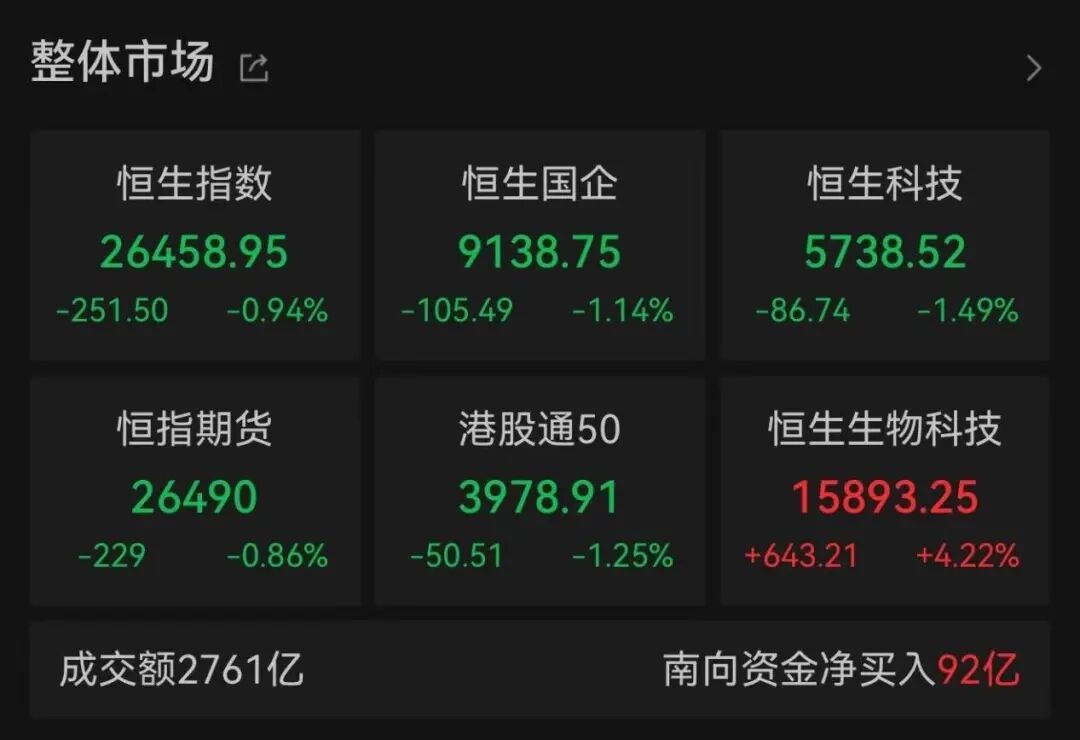
Market Overview - The Hong Kong stock market experienced a decline, ending a three-day winning streak since 2026, with all three major indices closing lower [2][4] - The Hang Seng Index fell by 0.94%, the Hang Seng China Enterprises Index decreased by 1.14%, and the Hang Seng Technology Index dropped by 1.49% [4][6] - Southbound funds recorded a net inflow of 9.2 billion HKD [4] Sector Performance - Technology and automotive stocks underperformed, contributing to the decline of the Hang Seng Technology Index [5][7] - Financial stocks showed weakness, with Chinese brokerage stocks turning negative [5][11] - Conversely, the innovative pharmaceutical sector, along with certain materials and coal stocks, saw gains despite the overall market downturn [5][14] Technology Sector - Major technology stocks such as Tencent Music, Alibaba, and Netease saw significant declines, with Tencent Music dropping over 5% and Alibaba falling more than 3% [8][10] - The recent regulatory changes in the live-streaming e-commerce sector are aimed at enhancing industry supervision and protecting consumer rights, which may impact market dynamics [8] Automotive Sector - Multiple research institutions predict a potential 7% decline in China's automotive market sales for 2026, marking the first annual negative growth since 2020 [9] Financial Sector - The financial sector faced a downturn, particularly among brokerage stocks, with notable declines including over 6% for China Merchants International and over 5% for Guotai Junan [12][13] Pharmaceutical Sector - The innovative pharmaceutical sector showed resilience, with stocks like Rongchang Bio rising by 12.93% and other companies like Kangfang Bio and WuXi Biologics also performing well [14][15] - A report from Zhongtai Securities indicates positive changes in the CRO and CDMO industries, driven by improving investment environments and supportive policies [16] Materials and Coal Sector - The materials sector, particularly aluminum and coal stocks, performed well, with Nanshan Aluminum rising over 10% [18][19] - Research from GF Securities suggests that the coal industry is experiencing structural demand optimization, with a projected 5% growth in coal demand from the chemical sector [19][20]
科网股、汽车股拖累指数下跌
Zhong Guo Ji Jin Bao· 2026-01-07 10:24
Market Overview - The Hong Kong stock market experienced a decline, ending a three-day rally since 2026, with all three major indices closing lower [1][2] - The Hang Seng Index fell by 0.94%, the Hang Seng China Enterprises Index dropped by 1.14%, and the Hang Seng Technology Index decreased by 1.49% [2] Sector Performance - Technology and automotive stocks underperformed, contributing to the overall market decline, while sectors such as innovative pharmaceuticals, non-ferrous metals, and coal stocks saw gains [2][4] - Notable declines in technology stocks included Tencent Music down over 5%, Alibaba down over 3%, and NIO, Xpeng, and Li Auto all closing lower [4][5] - The financial sector also faced weakness, particularly among brokerage stocks, with significant drops including CMB International down over 6% and Guotai Junan down over 5% [6][7] Regulatory Impact - The National Market Supervision Administration and the Cyberspace Administration of China issued new regulations for live-streaming e-commerce, aimed at enhancing industry oversight and protecting consumer rights [4] - Predictions indicate a potential 7% decline in China's automotive market sales in 2026, marking the first annual negative growth since 2020 [4] Innovative Pharmaceuticals - The innovative pharmaceutical sector showed resilience, with stocks like Rongchang Bio surging by 12.93% and other companies like Kangfang Bio and WuXi Biologics also posting significant gains [8][9] - Research indicates a positive shift in the CRO and CDMO industries, with expectations for improved investment conditions and demand recovery in the coming years [8] Coal and Non-Ferrous Metals - Certain coal and non-ferrous metal stocks performed well, with Nanshan Aluminum rising over 10% and other coal stocks like Lianhe Energy and Shougang Resources also seeing gains [10][11] - Research from GF Securities suggests that the coal industry's demand structure is optimizing, with a projected 5% growth in coal demand from the chemical sector [10]
港股复盘|港股回落 多家公司迎利好 生物医药股逆势大涨
Mei Ri Jing Ji Xin Wen· 2026-01-07 09:56
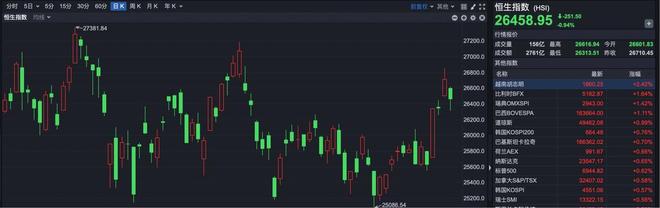
Market Overview - The Hong Kong stock market experienced its first decline of the year on January 7, with the Hang Seng Index closing at 26,458.95 points, down 251.50 points, a decrease of 0.94% [1][2]. - The Hang Seng Tech Index also fell, closing at 5,738.52 points, down 86.74 points, a decline of 1.49% [2]. Sector Performance - The pharmaceutical and biotechnology sector saw significant gains, with Rongchang Biologics (HK09995) rising over 12%, and other companies like Kailaiying (HK06821) and Tigermed (HK03347) increasing by over 8% [5]. - Rongchang Biologics announced positive clinical trial data for its PD-1/VEGF bispecific antibody RC148, which showed promising efficacy and safety for treating non-small cell lung cancer [5]. - Kangfang Biologics received approval for an important update on its PD-1/VEGF bispecific antibody, indicating significant clinical benefits in treating advanced non-small cell lung cancer [7]. Investment Trends - Southbound funds continued to significantly increase their holdings in Hong Kong stocks, with a net purchase exceeding 9.1 billion HKD by the end of the trading day [8]. - Research from CICC suggests that the Hong Kong stock market is entering a recovery phase, driven by a weaker US dollar and improved domestic liquidity, with a positive outlook for the first half of 2026 [12]. - Guotai Junan Securities anticipates a second round of valuation recovery and performance resurgence in the Hong Kong market in 2026, recommending focus on technology, healthcare, and consumer sectors [12]. Analyst Ratings - Credit Lyonnais maintained a "Outperform" rating for WuXi AppTec, raising the target price to 143.4 HKD, citing expected growth from outsourcing demand and reduced policy uncertainty [10].

每日看盘|热钱涌动提振交易情绪,降温信号渐显
Xin Lang Cai Jing· 2026-01-07 09:54
Group 1 - The A-share market showed a mixed trend with the Shanghai Composite Index achieving a record of 14 consecutive positive days, driven by strong performances in coal and semiconductor stocks [1][4] - The commercial aerospace sector and semiconductor-related stocks, including storage and photolithography materials, experienced significant gains, reflecting a robust trading sentiment influenced by global liquidity conditions [2][3] - The prices of major commodities, particularly coking coal and coal futures, surged, contributing to the strong performance of related stocks in the A-share market [3] Group 2 - There are signs of market cooling, as evidenced by the cautious sentiment among rational investors, with the trading volume in the Shanghai and Shenzhen markets exceeding 2.8 trillion yuan for two consecutive days [4][5] - The brain-computer interface concept stocks showed signs of fatigue, indicating a potential slowdown in the market's momentum for chasing gains [4][5] - A significant sell order from CITIC Securities during the closing auction raised concerns about the market's overheating, as similar past occurrences have led to declines in the index [4][5]
1月7日港股收盘:恒指跌0.94% 生物医药逆市上扬
Jin Rong Jie· 2026-01-07 09:54
Market Overview - On January 7, Hong Kong's major stock indices showed a downward trend, with the Hang Seng Index closing at 26,458.95 points, down 0.94% [1] - The Hang Seng Tech Index also ended its previous week's gains, falling 1.49% to 5,738.52 points [1] - The market turnover exceeded HKD 276 billion, ending the upward momentum of the three major indices from the previous trading day [1] Sector Performance - The biopharmaceutical sector showed significant activity towards the end of the trading session, with notable gains in several stocks [1] - Rongchang Biopharmaceutical (09995.HK) rose over 12%, while 3SBio (01530.HK) and WuXi Biologics (02269.HK) closed with gains of over 7% and 5%, respectively [1] - Other sectors such as paper, non-ferrous metals, and coal also saw some individual stocks increase in value [1] Brokerages - In contrast, brokerage stocks faced pressure, with Guotai Junan International (01788.HK) declining over 5% [1] - Both China Merchants Securities (06099.HK) and Everbright Securities (06178.HK) also experienced declines of over 2% [1]