
赛力斯

Search documents
中国汽车行业:2026 年 GCC 会议总结-当市场普遍追求卓越增长-China Auto Sector_ 2026 GCC Wrap_ When everyone targets superior growth
2026-01-26 02:50
Summary of Key Points from the 2026 Greater China Conference on the Auto Sector Industry Overview - The auto sector is experiencing a cooling in domestic demand while companies are setting ambitious growth targets, leading to a cautious outlook for the near term [1][2] - Key growth drivers identified include overseas expansion and intelligence transformation [1][3] Core Insights and Arguments Growth Projections - A bottom-up analysis indicates a projected 19% growth for the auto sector in 2026, contrasting with nearly zero growth in the market based on top-down forecasts [2] - Companies like LeapMotor are targeting significant growth, aiming to increase sales from 600,000 to 1 million units, primarily through new model launches [2] Overseas Expansion - Recent developments, such as tariff agreements between China and the EU, are expected to facilitate overseas growth for Chinese automakers [3] - Companies like Sinotruk and CFMoto are focusing on expanding their export markets, particularly in Europe and North America [3][36][65] Intelligence Transformation - Companies like Pony AI and WeRide are expanding their robotaxi fleets, with Pony targeting 3,000 units by 2026 [22][26] - The adoption of advanced technologies, such as LiDAR and AI, is expected to drive growth in the intelligence segment of the auto industry [3] Company-Specific Highlights Guangzhou Automobile (GAC) - GAC aims for robust volume growth through new model launches and exports, targeting 200,000-300,000 units overseas in 2026 [7][8] - The company plans to reduce costs by an additional 15% in 2026, building on a 10% reduction achieved in 2025 [9] Great Wall Motor - Management has set a sales target of approximately 1.8 million units for 2026, with a focus on new models and exports [10] - The company anticipates a challenging market environment, with a 10% month-over-month decline in orders noted early in 2026 [11] Nio - Nio expects to achieve non-GAAP breakeven in FY26, supported by a strong cash position of RMB 37 billion [13] - The company plans to launch three new models in 2026 to drive growth [14] Xpeng - Xpeng is focusing on cost optimization and technology leadership, with plans to launch new models in 2026 [16][17] - The company expects international sales to grow significantly, targeting over 20% of total revenue from overseas markets [18] Leapmotor - Leapmotor anticipates weak demand in the mass market but plans to launch new models to enhance competitiveness [19][20] - The company aims for overseas sales of 100,000-150,000 units in 2026, with a significant contribution expected from Europe [21] Pony AI - Pony AI is expanding its robotaxi fleet and expects to achieve breakeven in unit economics in Guangzhou [22][24] WeRide - WeRide plans to expand its robotaxi fleet to 2,000-3,000 units, with a focus on markets in the Middle East and Europe [26][27] Sinotruk - Sinotruk forecasts over 10% volume growth in 2026, primarily driven by truck exports [36] - The company is exploring new export markets, including Brazil and Europe, with plans for an assembly plant in Brazil [37] Loncin Motor - Loncin aims to increase its market share in Europe and is targeting growth in motorcycle exports [39][40] Yadea Group - Yadea expects a decline in the electric two-wheeler market but maintains a growth target of 10% for its sales volume in 2026 [43] Other Important Insights - The overall sentiment in the auto sector is cautious due to rising commodity prices, purchase taxes, and a retreating stimulus environment [4] - Companies focusing on intelligence and export themes are preferred for investment, including BYD, GWM, and Hesai [4] This summary encapsulates the key points discussed during the conference, highlighting the challenges and opportunities within the auto sector as companies navigate a changing market landscape.





潮涌“两江”起风帆——重庆两江新区高质量发展新观察
Xin Hua Wang· 2026-01-26 02:20
Core Viewpoint - The establishment of the Chongqing Liangjiang New Area marks a new chapter in development, focusing on integrated development advantages, technological innovation, and high-quality growth for the region [1] Group 1: Innovation and Industry Development - Liangjiang New Area hosts over 2,500 high-tech enterprises and 14,800 technology-based companies, showcasing a highly intelligent and collaborative industrial system [2] - The area has seen the establishment of various innovation platforms, such as Liangjiang Collaborative Innovation Zone and Xiangmiao Data Valley, facilitating the transition of innovative results from laboratories to production lines [2] - The region's innovation ecosystem has led to significant advancements, with companies achieving over 300 invention patents and investing more than 10% of their revenue in R&D annually [4] Group 2: Infrastructure and Logistics - The Guoyuan Port has evolved into a major logistics hub with an annual throughput exceeding 26 million tons, connecting to over 300 ports globally [6] - The integration of various open platforms, such as the China-Europe Railway Express and the Western Land-Sea New Corridor, enhances the region's role as a gateway for international trade [8] - The implementation of innovative regulatory models in the free trade zone has reduced logistics costs significantly, saving approximately 3,000 yuan per container [9] Group 3: Urban Development and Quality of Life - The population of Liangjiang New Area is approximately 3.52 million, with ongoing urban planning aimed at improving public services and living standards [10] - Initiatives such as the expansion of public services and the establishment of a "15-minute high-quality living circle" are enhancing the urban environment and livability [13] - The area is focusing on ecological protection and sustainable development, with efforts to create a harmonious balance between urbanization and nature [13]



潮涌“两江”起风帆 重庆两江新区高质量发展新观察
Xin Hua Wang· 2026-01-26 02:13
Core Insights - The establishment of the Liangjiang New Area in Chongqing marks a new chapter in development, focusing on integrated development advantages and promoting high-quality growth in the region [2] Group 1: Innovation and Industry Development - Liangjiang New Area is home to over 2,500 high-tech enterprises and 14,800 technology-based companies, showcasing a robust innovation ecosystem [3] - The area has seen the establishment of collaborative innovation platforms, such as the Liangjiang Collaborative Innovation Zone and the Zhaomushan Digital Economy Industrial Park, facilitating the transition of innovative results from labs to production lines [3] - Major companies like Changan Automobile and leading tech firms are enhancing their presence, contributing to the region's technological advancements and innovation capabilities [4] Group 2: Infrastructure and Logistics - The Guoyuan Port has evolved significantly, with an annual throughput exceeding 26 million tons, connecting to over 300 ports globally, thus enhancing the region's logistics capabilities [6] - The integration of various open platforms, such as the China (Chongqing) Pilot Free Trade Zone, is creating a more efficient investment and trade environment [7] - Innovations in logistics, such as the new regulatory model for shipping electric vehicles, have reduced port delays and logistics costs significantly [7] Group 3: Urban Development and Quality of Life - The population of Liangjiang New Area is approximately 3.52 million, with ongoing urban planning efforts aimed at improving public services and living conditions [8] - Initiatives like the expansion of public services and the establishment of a "15-minute high-quality living circle" are enhancing the urban living experience [9] - The area is focusing on ecological protection and sustainable urban development, creating a harmonious environment for both residents and businesses [9]
汽车行业:26年数据点评系列之一:乘用车25年复盘和26年展望:从“量稳价缓”到“价升量稳”
GF SECURITIES· 2026-01-26 01:49
Investment Rating - The industry investment rating is "Buy" [2] Core Insights - The report indicates a transition from "stable volume and slow price" to "price increase and stable volume" for the automotive industry in 2026 [6][16] - The domestic demand for passenger vehicles is expected to show positive growth in 2026, supported by policies such as scrapping and replacement subsidies [27][28] - The report highlights that the average selling price (ASP) of passenger vehicles is projected to increase, with a notable rise in ASP observed in December 2025 [16][20] Summary by Sections 1. Passenger Vehicle Sales and Market Dynamics - In December 2025, domestic passenger vehicle sales reached 2.278 million units, a year-on-year decrease of 16.4% but a month-on-month increase of 13.6% [16] - The total sales for 2025 were 23.052 million units, reflecting a slight year-on-year increase of 0.6% [16] - The report notes that December's performance was significantly below seasonal norms, attributed to the suspension of scrapping subsidies in some regions [16] 2. ASP Trends and Market Expectations - The ASP for passenger vehicles in 2025 showed a year-on-year decline of 2.1%, with December 2025 ASP increasing by 13.7% compared to the previous year [16][20] - The report anticipates that the continuation of scrapping policies will enhance the sales of mid-to-high-end vehicles, contributing to price increases [27] 3. Inventory and Supply Chain Considerations - As of December 2025, the inventory of passenger vehicles stood at 4.708 million units, with a dynamic inventory-to-sales ratio of 2.48 [40] - The report suggests that short-term inventory risks are manageable, as leading domestic manufacturers may adjust production based on current demand [40] 4. Investment Recommendations - The report recommends focusing on various companies within the passenger vehicle supply chain, including Geely, BYD, and Xpeng Motors for growth potential [6][27] - It also highlights companies like Great Wall Motors and SAIC Group as having potential turning points in their performance [6][27]



券商开年调研440家A股公司电力设备、化工板块热度上升
Zheng Quan Shi Bao· 2026-01-25 17:13
Group 1 - The capital market is active, with brokers conducting research on A-share companies to identify new opportunities, focusing on sectors like electronics and machinery [1][2] - A total of 440 A-share companies have been researched by brokers this year, with the electronics and machinery sectors leading in numbers, each having over 60 companies [2][3] - The power equipment sector has gained significant attention, with the State Grid Corporation announcing a fixed asset investment of 4 trillion yuan for the 14th Five-Year Plan, a 40% increase from the previous plan [2][3] Group 2 - Over 1,000 A-share companies have disclosed their 2025 performance forecasts or reports, prompting brokers to adjust ratings and target prices for several stocks [4][5] - Notable companies such as Baiwei Storage and Jianghuai Automobile have received rating upgrades due to strong performance forecasts, with Baiwei expected to achieve a net profit of 850 million to 1 billion yuan, a year-on-year increase of 427% to 520% [5] - Brokers are focusing on structural opportunities in the stock market, particularly in technology growth and resource sectors, as the market is expected to transition to performance-driven growth [6][7] Group 3 - Brokers are particularly interested in the technology growth sector, emphasizing areas such as AI, semiconductor, and optical electronics, with companies like Kaisheng Technology and Baiwei Storage receiving significant attention [3][7] - The chemical sector has also seen increased research activity, with companies like Runfeng and Water Technology being researched by over 20 brokers [2][3] - The market outlook for 2026 suggests a potential revaluation of Chinese assets, with a focus on technology innovation and resource repricing as key investment themes [8]



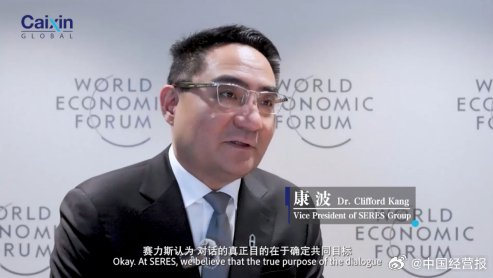
赛力斯康波达沃斯发声,全球汽车产业需对话共建
Zhong Guo Jing Ying Bao· 2026-01-25 13:56
Core Viewpoint - The global automotive industry has reached a stage where "dialogue and co-construction" are essential for sustainable development and collaboration [1][2]. Group 1: Globalization and Industry Trends - The automotive industry is undergoing a deep restructuring of global supply chains, influenced by geopolitical factors, technological barriers, and market fragmentation [1]. - The transition from unilateralism and zero-sum games to mutual respect and dialogue is crucial for long-term development and cross-border cooperation [1]. - The Chinese new energy vehicle (NEV) industry has experienced rapid development over the past five years, shifting its competitive logic from electrification to intelligence, system capabilities, and user experience [2]. Group 2: Company Strategy and Achievements - The company has focused on embedding itself deeply into the global industrial system, enhancing collaboration with world-class suppliers, technology partners, and users [2]. - The brand "Wenjie" has achieved significant market validation, with cumulative deliveries exceeding 1 million units, and the Wenjie M9 leading the luxury car market in its price segment for 21 consecutive months [3]. - The company aims to continue its focus on globalization, brand premiumization, and AI integration, while expanding its high-end brand presence overseas and fostering innovation through collaboration with global partners [3].
本周热度变化最大行业为公用事业、传媒:市场情绪监控周报(20260119-20260123)-20260125
Huachuang Securities· 2026-01-25 11:49
- The report introduces a "Total Heat Index" indicator, which is defined as the sum of a stock's browsing, watchlist additions, and click counts, normalized as a percentage of the total market on the same day, and then multiplied by 10,000. The value range of the indicator is [0, 10,000][7] - A rotation strategy is constructed based on the weekly rate of change of the heat index (MA2). At the end of each trading week, the strategy involves buying the broad-based index with the highest MA2 rate of change. If the "Others" group has the highest rate of change, the strategy remains in cash. The strategy has achieved an annualized return of 8.74% since 2017, with a maximum drawdown of 23.5%, and a return of 3.6% in 2026[13][16] - The report also constructs two simple portfolios based on concept heat indices. The first portfolio (TOP) selects the top 10 stocks with the highest total heat index from the top 5 concepts with the highest heat index changes each week, while the second portfolio (BOTTOM) selects the bottom 10 stocks with the lowest total heat index from the same concepts. The BOTTOM portfolio has historically achieved an annualized return of 15.71% with a maximum drawdown of 28.89%[30][32]
(经济观察)中国内陆首个国家级新区未来五年有何新举措?
Xin Lang Cai Jing· 2026-01-25 11:02
Core Viewpoint - The establishment of the Liangjiang New Area as an administrative district marks a significant development opportunity for the region, integrating administrative and development functions to support national strategies and economic growth [2][3][10]. Group 1: Development and Strategic Goals - Liangjiang New Area was officially established on June 18, 2010, as China's third national-level development zone and the first in the inland region [3]. - The State Council approved the establishment of the Liangjiang New Area administrative district in October 2025, enabling a unified system that enhances its role as a strategic support point for western development and an inland open hub [3][10]. - The first committee meeting outlined key goals for the 14th Five-Year Plan, focusing on enhancing the development capacity of the Chengdu-Chongqing economic circle and supporting the quality development of the Yangtze River Economic Belt [6][10]. Group 2: Economic and Industrial Development - Liangjiang New Area covers an area of 1,360 square kilometers and has a population of 3.52 million, with significant industrial clusters including a 400 billion yuan smart connected new energy vehicle industry and a 300 billion yuan next-generation electronic information manufacturing sector [9]. - The region has established itself as a hub for advanced manufacturing and modern services, with over 670 billion yuan in industrial output and a 75% share of the city's new energy vehicle production [9]. - Key enterprises, including China Changan Automobile Group, have established headquarters in the area, contributing to a vibrant business environment with over 540,000 operating entities [9]. Group 3: Infrastructure and Connectivity - Liangjiang New Area features a unique comprehensive bonded zone with both water and air port functions, enhancing its logistics capabilities [9]. - The region is part of the western land-sea new channel and has developed various open platforms, including a free trade pilot zone, which collectively improve its connectivity and trade efficiency [9]. - Major transport hubs, such as Jiangbei Airport and Chongqing North Station, facilitate over 120 million passenger trips annually, with significant contributions to the city's import-export volume and foreign investment [9].

汽车行业周报:补贴政策变化致25Q4翘尾现象消失,对26年需求透支有所减少-20260125
GF SECURITIES· 2026-01-25 09:48
Investment Rating - The report provides a "Buy" rating for several companies in the automotive sector, indicating an expected performance that will exceed the market by more than 10% over the next 12 months [5][22]. Core Insights - The change in subsidy policies has led to the disappearance of the tail effect in Q4 2025, resulting in a reduction of demand overdraw for 2026. In December 2025, the number of insured vehicles was 2.278 million, down 16.4% year-on-year but up 13.6% month-on-month. The total number of insured vehicles for the year reached 23.047 million, a slight increase of 0.6% year-on-year, with the penetration rate of new energy vehicles rising to 54.0%, an increase of 7.1 percentage points year-on-year [4][7][16]. Summary by Sections 1. Changes in Subsidy Policies - The report highlights that the changes in subsidy policies have caused consumers to adopt a wait-and-see approach, leading to a decrease in demand overdraw for 2026. The expectation is that as replacement subsidy application channels open, pent-up demand will materialize, and the domestic terminal market will trend towards "price increase and stable volume" [4][7]. 2. PHEV Market Share Tracking - The focus is on the performance of PHEV market shares, particularly for BYD and Geely, as the "mid-level assisted driving equity" leads to share differentiation. The report emphasizes the importance of monitoring configuration adjustments and terminal discount changes to understand further market share differentiation [9][16]. 3. Recent Report Insights - The report notes that the passenger vehicle inventory saw a slight reduction in December 2025, with an estimated 1.5 million vehicles in demand waiting to be fulfilled. The overall industry theme for 2025 was "emerging from deflation," with a judgment of "stable volume and slow price increase" being validated. The outlook for 2026 remains "price increase and stable volume," differing from market consensus due to regulatory changes and risk-return assessments [16][17]. 4. Investment Recommendations - The report suggests a "shelf-style" investment approach, recommending various companies across the passenger vehicle chain. Right-side targets include Geely, BYD, and others, while left-side targets include Great Wall Motors and Changan Automobile. In the commercial vehicle chain, recommended companies include China National Heavy Duty Truck Group and Weichai Power [17].

