地平线

Search documents
2025-2031年全球手机控制智能车位锁行业市场发展深度调研及投资战略可行性预测报告
Sou Hu Cai Jing· 2025-10-13 01:52
Industry Overview - The mobile-controlled smart parking lock integrates IoT, wireless communication, and electromechanical control technologies, allowing real-time monitoring and management of parking spaces through mobile applications [3][7] - The global market for mobile-controlled smart parking locks is projected to reach $51.4 million by 2031, with a compound annual growth rate (CAGR) of 8.6% in the coming years, indicating steady market growth [3][5] Market Structure and Product Applications - The competitive landscape is fragmented, with the top five manufacturers (Parklio, Diffusion-Urbaine Ottopark, ThatsMySpot, Optima, Pilomat) holding a combined market share of 31.2%, leaving room for development among small and medium-sized enterprises [5] - Product types include mobile application-controlled locks that offer features like visitor authorization and low battery alerts, while multi-control systems can manage 4-8 parking spaces, suitable for large-scale scenarios [6] Key Growth Drivers - Urbanization and parking supply-demand imbalance are significant drivers, with global urbanization rates exceeding 55% and a parking space ratio of 1:0.8 in China, highlighting the necessity for smart parking solutions [7] - Policy support for smart city initiatives, such as China's requirement for a minimum of 70% smart device coverage in new public parking facilities, further bolsters market growth [9] - Technological advancements and cost reductions, including the introduction of specialized vehicle networking chips and lightweight deployment methods, have significantly lowered installation costs and improved operational efficiency [10] - The extension of scenarios for electric vehicles, with integrated solutions for smart locks, AI cameras, and charging management, is expected to enhance the utilization rate of charging spaces by 42% [11] Challenges Facing Market Development - Insufficient technology maturity is a challenge, with mid-range devices experiencing issues like signal delays and misjudgments, particularly in extreme weather conditions [12] - Poor system compatibility among different brands and platforms creates data silos, limiting operational efficiency and user experience [13] - High initial costs and maintenance expenses pose barriers for small to medium-sized parking facilities, while older users face challenges in adapting to mobile app operations [14] Future Development Trends - The industry is expected to evolve towards greater intelligence and integration, with advancements in AI image recognition and 5G technology enhancing operational stability [15] - The Asia-Pacific region, particularly China, is anticipated to be a primary growth driver due to high vehicle ownership and smart city initiatives, while Europe and North America will benefit from high penetration rates and acceptance [15]

韩、日、美、欧战略布局 “三国一区”竞逐AI赋能制造业新赛道
Zhong Guo Qi Che Bao Wang· 2025-10-11 01:58
Group 1 - The global manufacturing industry is undergoing a profound transformation driven by artificial intelligence (AI), with the automotive sector at the forefront of this shift [2][6] - South Korea plans to mass-produce humanoid robots by 2029 and AI-driven autonomous vehicles by 2030, aiming to become a global leader in manufacturing AI transformation [2][4] - Japan's government is focusing on practical applications of AI in manufacturing, with a basic plan to enhance AI development and usage across society [3][4] Group 2 - The United States is investing $33 million in four key areas of smart manufacturing, including supply chain technology and electric vehicle production, linking AI with clean energy transitions [3][4] - The European Union is launching the "AI Continental Action Plan" to balance policy and infrastructure, including a "super factory" with 100,000 AI chips to support manufacturing and transportation sectors [4][5] - Major economies are pushing for AI integration in manufacturing due to the urgent need for industry transformation and the competitive pressure from global technological advancements [4][5] Group 3 - AI is set to reshape the automotive industry by enhancing design, production, sales, and after-sales services, creating new value and changing human-vehicle interactions [6][7] - South Korea's plan for AI-driven autonomous vehicles aims to accelerate the commercialization of autonomous driving technology [7] - The integration of AI in the automotive sector will lead to a transition from traditional manufacturing to a smart mobility ecosystem, transforming vehicles into multifunctional smart terminals [7][8] Group 4 - Chinese automotive companies face unique opportunities and competitive pressures in the context of AI integration, requiring a shift in mindset to view data as a core asset [8][9] - The potential for cross-industry applications of AI technology in areas like robotics and drones presents new growth opportunities for suppliers [8][9] - Despite the potential for technology reuse, challenges remain in applying automotive AI technology to other sectors, particularly regarding safety and regulatory requirements [9]

某新势力智驾一号位的离职始末......
自动驾驶之心· 2025-10-10 23:32
Core Insights - The recent OTA incident in a new force's autonomous driving system has catalyzed the departure of its top autonomous driving executive, highlighting significant issues in user satisfaction and brand reputation [5][6] - The internal dynamics of the company have shifted, with a new leader in the autonomous driving sector being appointed, indicating a need for urgent change to regain competitive advantage [6][7] Summary by Sections Incident Overview - The latest OTA update was met with strong user dissatisfaction due to numerous bugs, negatively impacting the company's reputation [5] - A previous OTA incident last year led to the dismissal of the technical development head and a reorganization of the testing department, raising questions about accountability for the recent failure [5] Internal Dynamics - The autonomous driving executive was already in a precarious position, overshadowed by a newly appointed head of world modeling, who has taken control of key algorithm developments [6] - The absence of the autonomous driving executive from a recent high-level meeting signified a decisive leadership change, reflecting the company's urgent need for transformation in the competitive landscape [6] Competitive Landscape - The company faces intensified competition not only from Huawei but also from leading autonomous driving firms like Momenta, Yuanrong, and Horizon, which have demonstrated strong performance in advanced algorithms [7] - Historically, the company and Huawei were leaders in algorithm development, but now they are at risk of being outperformed by these emerging competitors, which could have disastrous consequences for their market position [7]

从 Cruise 到小鹏,刘先明为何能接任智驾一号位?
雷峰网· 2025-10-10 12:02
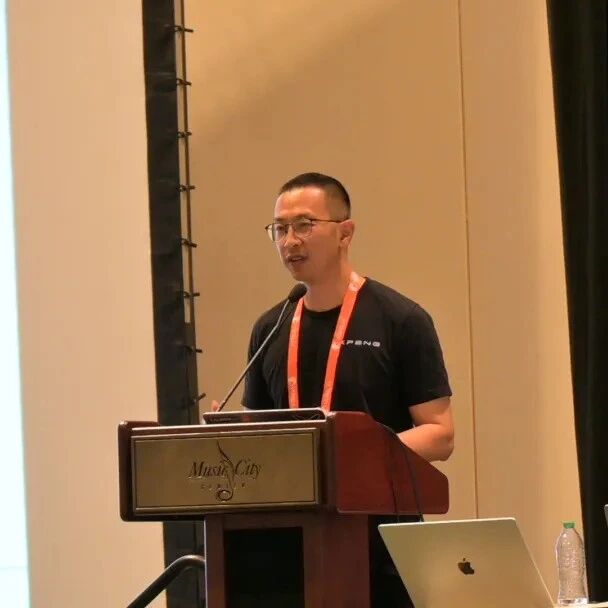
Core Viewpoint - The appointment of Liu Xianming as the new head of Xiaopeng's autonomous driving center signals a strategic shift towards AI-driven models in the company's smart driving technology [2][3][12]. Group 1: Leadership Change - On October 9, Xiaopeng Motors announced the departure of Li Liyun from the position of head of the autonomous driving center, with Liu Xianming taking over [2]. - Liu Xianming's appointment is seen as a necessary move for Xiaopeng to build new technological barriers in the face of increasing competition from rivals like Li Auto and Huawei [3][12]. Group 2: Strategic Shift - Xiaopeng's autonomous driving strategy is transitioning from an engineering logic focus to an AI logic approach, emphasizing the development of a "base model" for smart driving [4][12]. - The company aims to leverage AI and data to regain its competitive edge in autonomous driving capabilities [12][13]. Group 3: Liu Xianming's Background - Liu Xianming joined Xiaopeng in March 2024 and has a strong background in model research, having previously worked at Facebook and Cruise [6][8]. - His experience in AI infrastructure and end-to-end development positions him well to lead Xiaopeng's efforts in building a unified AI model development department [11]. Group 4: Industry Context - The shift in Xiaopeng's leadership reflects a broader industry trend moving from traditional engineering-driven approaches to data-driven and model-centric paradigms in autonomous driving [13].

大众中国回应“软件公司降级” 强调在华自研与核心作用
Xin Jing Bao· 2025-10-09 16:03
新京报贝壳财经讯(记者白昊天)有消息称大众集团将放弃软件自研战略,其软件子公司CARIAD已降 级为合作伙伴协调者角色。10月9日,大众中国向新京报贝壳财经记者表示,CARIAD将继续发挥核心 研发的作用,在大众汽车集团内部推动跨品牌软件解决方案的规模化应用,在中国将以全新的自主研发 模式,助力大众汽车集团构建本土的系统性技术能力。 大众集团首个面向中国市场的区域控制电子电气架构(CEA),主要由 CARIAD 中国团队携手大众汽 车(中国)科技有限公司(VCTC)与小鹏汽车,共同开发第一代版本。此外,集团专为中国市场打 造、搭载人工智能技术的高级辅助驾驶系统(ADAS)解决方案,正由 CARIAD 与地平线在中国成立 的合资公司酷睿程(CARIZON)自主开发,并计划于2025年底实现量产。该解决方案将为中国消费者 提供高度安全可靠的拟人化驾驶辅助功能,同时为未来自动驾驶技术的发展奠定基础 大众中国并未正面回应CARIAD目前是否已被降级,以及大众集团是否继续坚持软件自研战略等问题。 (文章来源:新京报) 在中国,CARIAD将持续发挥核心作用,以全新的自主研发模式,助力大众汽车集团构建本土的系统性 技术能 ...
A股最大智驾重组揭幕
2 1 Shi Ji Jing Ji Bao Dao· 2025-10-09 03:41
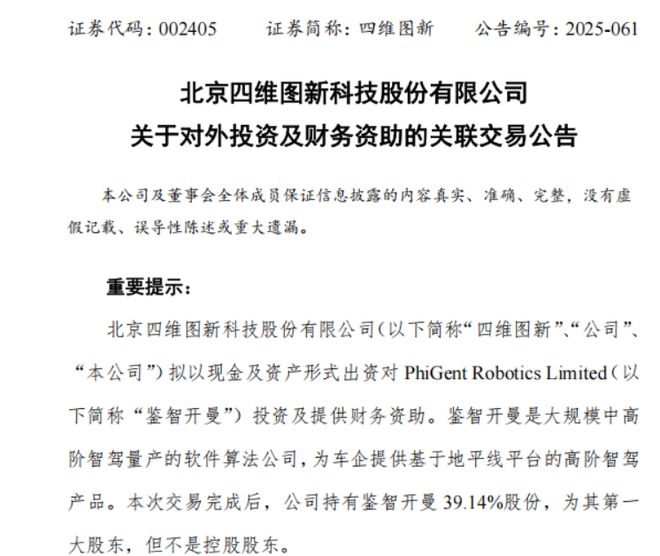
Core Viewpoint - The largest restructuring event in the A-share intelligent driving industry has occurred, with 4D Mapping (002405.SZ) acquiring a 39.14% stake in PhiGent Robotics Limited, becoming its largest shareholder through a combination of cash and asset injection [1][10]. Company Summary - PhiGent Robotics is a leading software algorithm company for mid-to-high-level intelligent driving, providing solutions based on top domestic and international computing platforms [3][8]. - The company has established itself as a key partner in the domestic intelligent driving ecosystem, particularly with Horizon Robotics, and has a significant market share in high-performance driving systems [3][9]. - PhiGent Robotics has delivered over one million L2 ADAS products to major domestic automakers as of 2024, indicating strong market penetration [8][9]. Financial Transaction Details - The transaction involves an investment of 18 billion CNY, consisting of 15.5 billion CNY for the full acquisition of 4D Mapping's subsidiary and 2.5 billion CNY in cash for new shares [10]. - After the transaction, 4D Mapping will hold 39.14% of PhiGent Robotics, allowing it to nominate up to two directors on the board, but it will not have controlling interest [10][11]. - This investment strategy allows 4D Mapping to "off-balance sheet" its subsidiary, reducing the immediate financial impact on its financial statements [10][11]. Industry Context - This acquisition is expected to be the largest merger in the A-share intelligent driving sector, marking a significant consolidation in the industry following a period of financial distress among several key players [13]. - The intelligent driving industry is undergoing a restructuring phase, with many companies facing challenges related to high R&D costs and market competition [13]. - 4D Mapping aims to leverage this acquisition to strengthen its position in the intelligent driving market and capitalize on the ongoing industry consolidation [13].

A股最大智驾重组揭幕
21世纪经济报道· 2025-10-09 03:31
Core Viewpoint - The largest restructuring event in the A-share intelligent driving industry has occurred with Siwei Map's acquisition of a significant stake in Jianzhihang Robotics, marking a strategic move to strengthen its position in the market [1][11]. Company Overview - Jianzhihang Robotics is a leading software algorithm company for mid-to-high level intelligent driving, providing solutions based on top domestic and international computing platforms [4][7]. - The company has established itself as a key player in the high-performance intelligent driving system market, with a market share exceeding that of other notable competitors [4][8]. Investment Details - Siwei Map plans to invest a total of 1.8 billion CNY in Jianzhihang Robotics through a combination of cash and asset injection, acquiring 39.14% of the shares and becoming the largest shareholder [1][9]. - The investment includes a cash injection of 250 million CNY and the transfer of 100% equity of Siwei Map's wholly-owned subsidiary, valued at 1.55 billion CNY [8][9]. Market Context - This acquisition is positioned as the largest merger in the A-share intelligent driving sector, occurring amidst a wave of industry consolidation following price reductions and market exits by several companies [11][12]. - The intelligent driving industry has seen significant turmoil, with notable companies facing bankruptcy and restructuring due to high research and development costs [11][12]. Strategic Implications - The transaction reflects Siwei Map's strategy to consolidate and strengthen its market position while mitigating financial risks associated with its intelligent driving business [8][9]. - The partnership with Jianzhihang Robotics is expected to enhance Siwei Map's capabilities in the intelligent driving sector, particularly in leveraging domestic chip solutions [7][8].

A股最大智驾重组揭幕,四维图新跻身“地平线链”公司大股东
2 1 Shi Ji Jing Ji Bao Dao· 2025-10-09 02:19
Core Viewpoint - The investment by Siwei Map (002405) in Jianzhih Robotics marks the beginning of capital restructuring and industry consolidation in the intelligent driving sector [2][7]. Group 1: Investment Details - Siwei Map plans to become the largest shareholder of Jianzhih Robotics by acquiring 39.14% of its shares through a combination of cash and asset injection, totaling 1.8 billion yuan [2][5]. - The investment includes a cash contribution of 250 million yuan and the transfer of 100% equity of Siwei Map's subsidiary, valued at 1.55 billion yuan [5][6]. - Post-transaction, Siwei Map will hold 39.14% of Jianzhih Robotics, allowing it to nominate up to two directors on the board [6]. Group 2: Company Background - Jianzhih Robotics, established in October 2021, specializes in full-stack autonomous driving solutions, covering L2 ADAS and high-level driving systems [3]. - The company is recognized as a leading supplier of high-performance driving solutions based on domestic chips, particularly from Horizon Robotics [3][4]. - Jianzhih Robotics has delivered over one million L2 ADAS products to major domestic automakers as of 2024 [3]. Group 3: Industry Context - This transaction is noted as the largest merger in the intelligent driving sector within the A-share market, reflecting significant industry consolidation following a period of financial distress among several companies [7]. - The intelligent driving industry has seen notable bankruptcies and restructuring, with major players like TuSimple and He Duo Technology facing financial challenges [7][8]. - Siwei Map aims to leverage this investment to strengthen its position in the industry and capitalize on the ongoing consolidation trend [8].
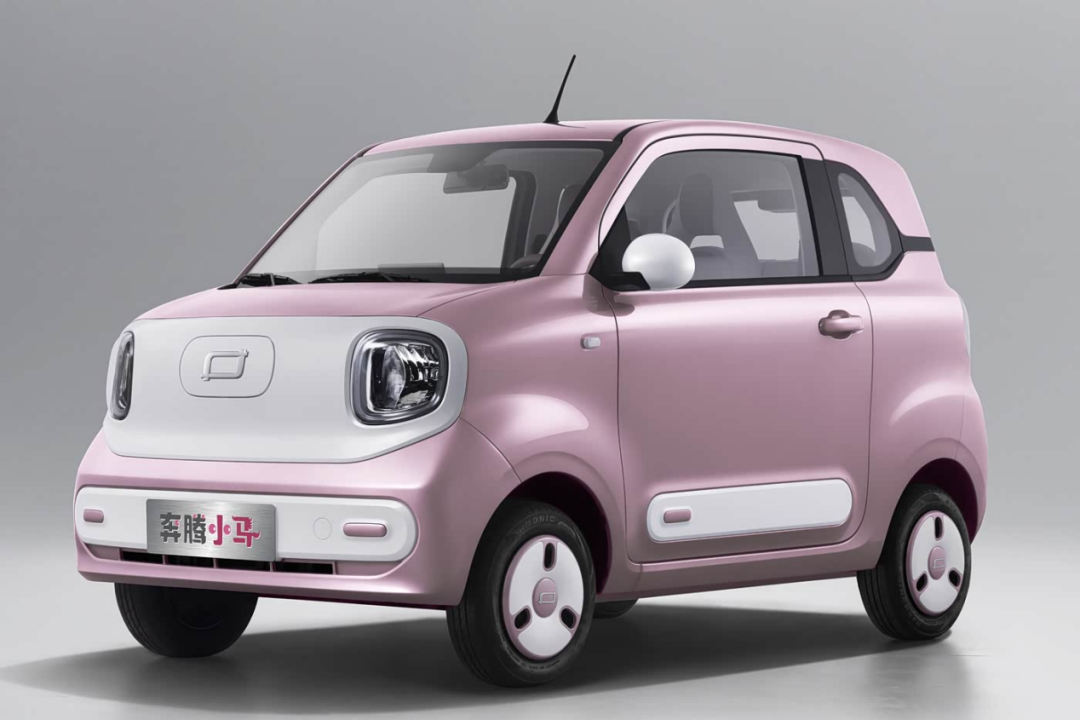
一年卖十几万辆,国产新能源车杀出黑马
2 1 Shi Ji Jing Ji Bao Dao· 2025-10-06 13:35
Core Insights - The sales of the FAW Bestune brand reached 137,217 units from January to September this year, representing a year-on-year increase of 39.3%, with new energy vehicle sales soaring by 164.5% to 117,203 units [1][2] - The company has implemented a three-pronged strategy for transformation, focusing on reform, technology, and positioning to enhance its competitiveness in the increasingly fierce Chinese automotive market [2][3] Group 1: Sales Performance - In September, Bestune achieved a record monthly sales of 18,880 units, with new energy vehicle sales hitting 16,217 units, marking the highest monthly sales in nearly a decade [1] - The total sales for 2023 are projected to exceed 120,000 units, reflecting a 59.4% year-on-year growth, with expectations to surpass 150,000 units in 2024, achieving the best performance in ten years [2][3] Group 2: Strategic Initiatives - The company has undergone significant reforms, including a capital increase of 5 billion yuan, which has improved operational efficiency and resource allocation, while also moving towards a "de-administrative" decision-making process [2][6] - Bestune has invested over 10 billion yuan in the past three years to develop a comprehensive technology framework covering platforms, powertrains, cabins, and intelligent driving, collaborating with leading partners like Huawei and CATL [2][3] Group 3: Product Development - The launch of the Bestune Xiaoma, an A00-class pure electric vehicle, has been successful, with monthly sales consistently exceeding those of the new Bestune Yuyi series [6][9] - The Yuyi series, including the Yuyi 03 and Yuyi 07, has faced challenges in sales performance, with the Yuyi 03 showing some initial success but still struggling to reach significant market penetration [6][9] Group 4: Financial Overview - Over the past five years, Bestune has incurred losses totaling approximately 18 billion yuan, with net profits for 2022, 2023, and 2024 projected at -2.097 billion, -2.958 billion, and -4.347 billion yuan respectively [9][10] - A recent capital increase of 8.55 billion yuan from various investors, including major companies like China Telecom, aims to support the company's ongoing transformation and product development efforts [9][10]
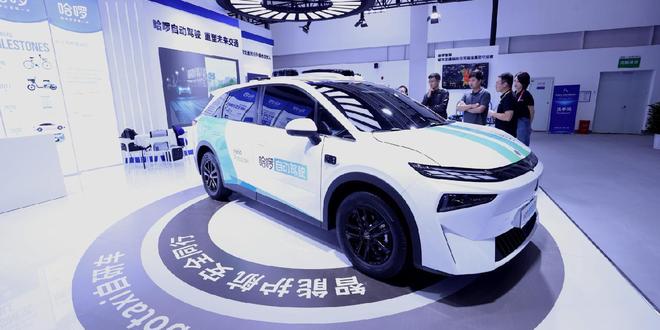
出行进化论:从哈啰两轮到无人驾驶的战略跃迁
Jing Ji Guan Cha Bao· 2025-10-03 07:03
Core Insights - The article highlights the strategic transition of the company from a ride-sharing platform to a leader in intelligent driving technology, exemplified by the launch of the "HR1" Robotaxi and the "Hello" cruise ship project [2][6][15] Group 1: Product Launch and Innovation - The "Hello" cruise ship, which features interactive elements and showcases local messages, symbolizes the company's commitment to integrating technology with user experience [2][6] - The "HR1" Robotaxi, equipped with advanced sensors and computing power, marks a significant step towards the commercialization of autonomous driving technology [2][6][10] - The Robotaxi employs an end-to-end L4 technology system that enhances response speed and decision-making consistency, utilizing a multi-sensor input approach [6][7] Group 2: Strategic Partnerships and Collaborations - The company has formed strategic partnerships with key industry players, including Aliyun and Didi, to enhance the development and deployment of Robotaxi technology [10][11] - A collaboration with Qwen team from Aliyun has led to the development of a large-scale model that supports the autonomous driving system [7][10] Group 3: Market Position and Future Plans - The company aims to achieve mass production of its Robotaxi models by 2026, targeting over 10 cities and a fleet of 10,000 vehicles [10][11] - The company has initiated commercial pilot operations in Zhuzhou and Liyang, marking its first steps towards large-scale deployment [11][14] - The Chinese autonomous driving market is projected to reach 118.5 billion yuan in 2023, with significant growth expected by 2025, providing a favorable environment for the company's expansion [14][15] Group 4: Regulatory Environment and Industry Trends - Recent government policies are creating a conducive environment for the development of intelligent connected vehicles, facilitating the company's rapid advancements in the Robotaxi sector [5][14] - The autonomous driving industry in China is expected to see a market size of $183 billion by the late 2030s, indicating a substantial growth opportunity for the company [15]