
中国重工

Search documents
申万宏源交运一周天地汇:制裁效果初现伊朗俄油发货减少需重视,快递反内卷或进入新阶段
Shenwan Hongyuan Securities· 2025-08-10 12:42
Investment Rating - The report maintains a positive outlook on the logistics and transportation industry, particularly highlighting the express delivery sector and shipping companies [1][3]. Core Insights - The express delivery sector is entering a new phase of price increases, with significant price adjustments observed, particularly in Guangdong, which may spread to other regions. Three scenarios are proposed for this new phase: 1) elimination of price disparities leading to profit recovery and substantial dividends; 2) continuation of competitive dynamics in many regions; 3) potential for higher-level mergers and acquisitions [3]. - The shipbuilding sector is experiencing robust profitability, with Yangtze River Shipbuilding reporting a gross margin of 35% and a net margin of 32.5% for the first half of 2025, prompting recommendations for companies like China Shipbuilding and China Heavy Industry [3]. - Recent geopolitical pressures have led to a decline in oil exports from Iran and Russia to India, which may increase compliance demand and VLCC (Very Large Crude Carrier) demand as a substitute for smaller tankers. Iran's oil exports have dropped to around 1.2 million barrels per day recently [3]. - VLCC freight rates have surged by 52% week-on-week, reaching $34,679 per day, indicating a potential end to the seasonal downturn in the market [3]. - The report highlights the resilience of railway freight volumes and highway truck traffic, with national railway freight at 77.69 million tons and highway truck traffic at 52.59 million vehicles for the week of July 28 to August 3 [3]. Summary by Sections Express Delivery - The express delivery sector has seen a price increase of 4.34%, outperforming other sub-sectors [4][5]. - Companies recommended include Shentong Express and YTO Express, with a focus on Jitu Express, Zhongtong Express, and Yunda Express [3]. Shipping - The report notes a significant increase in VLCC rates, with a 9.34% rise in the crude oil tanker index [4]. - Recommendations include China Shipbuilding and China Heavy Industry due to strong performance in the shipbuilding sector [3]. Air Transportation - The report suggests that the "anti-involution" policy in civil aviation may optimize industry competition, benefiting airline profitability in the long term [3]. - Recommended airlines include China Eastern Airlines, China Southern Airlines, and Spring Airlines [3]. Railway and Highway - The report indicates steady growth in railway and highway freight volumes, with a focus on high-dividend investment opportunities in the highway sector [3]. - The establishment of a new railway company under the China National Railway Group is noted as a positive development [3]. High Dividend Stocks - The report lists high dividend stocks in the transportation sector, including Bohai Ferry with a dividend yield of 8.46% and Zhonggu Logistics at 7.53% [3][21].
军工周报:中国船舶将合并中国重工,持续关注军工板块投资机会-20250810
NORTHEAST SECURITIES· 2025-08-10 12:11
Investment Rating - The report indicates a strong investment opportunity in the defense and military industry, with the sector showing significant growth potential and a leading position in market performance among various industries [2][4]. Core Insights - The defense and military sector has demonstrated resilience and growth, with the industry index rising by 5.93% last week, outperforming major indices [2][14]. - The report highlights the upcoming merger between China Shipbuilding and China Shipbuilding Industry Corporation, which is expected to create new investment opportunities in marine equipment [3][4]. - The report emphasizes the importance of low-altitude economy development, driven by regulatory changes in the U.S. and local initiatives in China, which are expected to enhance the commercial drone market [4][40]. - The military industry is projected to experience a recovery in demand, with a clear long-term growth trajectory supported by national defense modernization goals set for 2035 and 2050 [4][44]. Summary by Sections Market Review - The defense and military index has outperformed other sectors, with a PE (TTM) ratio of 89.99, and various sub-sectors showing diverse valuations, such as aerospace equipment at 159.04 and ground armaments at 220.81 [2][23]. - A total of 142 companies in the sector saw 129 report stock price increases, with notable performers including Changcheng Military Industry, which surged by 49.60% [28][29]. Key Recommendations - The report recommends focusing on downstream manufacturers such as Hongdu Aviation and AVIC Shenyang Aircraft, as well as companies involved in military technology and underwater equipment [5]. - It also suggests monitoring companies in the missile supply chain and those producing titanium materials for military applications [5]. Industry Dynamics - The report discusses the increasing relevance of AI in military applications, highlighting its role in enhancing operational efficiency and decision-making processes [41][42]. - The commercial aerospace sector is expected to see significant activity, with plans to launch 13,000 low-orbit satellites between 2026 and 2030, indicating a robust growth phase for the industry [3][44].


重磅利好,下周A股,关注变盘节点!
Sou Hu Cai Jing· 2025-08-10 07:00
本周,三大指数继续强势。其中上证指数、深证成指、创业板指分别累计上涨2.11%、1.25%和0.49%, 并且上证指数连续4天站稳3600点上方,最终收在3635点,距离去年10月8日的高点3674点仅有一步之 遥。全A股平均股价累计上涨2.76%,赚钱效应较好。 在板块层面,国防军工、有色金属、机械设备等板块涨幅靠前,其中国防军工累计大涨5.93%,而医药 生物、计算机、商贸零售等方向领跌。 在个股方面,上周最受机构关注的个股是从事宠物食品研发、产销的中宠股份。 有A股被外资买到"限购"。沪深交易所最新数据显示,8月7日,思源电气、双环传动、华明装备和宏发 股份4只股票的境外投资者持有比例超过24%。其中,思源电气的境外投资者持有比例为26.77%,目前 深港通已暂停接受思源电气买盘。在宏发股份的前十大流通股股东名单中,除了QFII,还出现了社保、 养老保险等长线资金的身影。 在消息面上,人工智能、机器人赛道迎来重磅利好。 8月9日, 河南省人民政府印发《河南省支持人工智能产业生态发展若干政策措施》,其中提出,设立 总规模30亿元的人工智能产业基金,壮大耐心资本,探索投补联动、投贷联动等支持机制,满足人工智 ...
机械设备行业跟踪周报:推荐高景气的工程机械和油服设备,关注人形机器人具身模型进展投资机会-20250810
Soochow Securities· 2025-08-10 06:30
Investment Rating - The report maintains an "Overweight" rating for the mechanical equipment industry, particularly highlighting the high growth potential in engineering machinery and oil service equipment [1]. Core Insights - The report emphasizes the rapid advancements in humanoid robotics, showcasing significant progress in embodied intelligence and the commercialization of robots, particularly through the establishment of the world's first humanoid robot 4S store in Beijing [2][3]. - The engineering machinery sector is experiencing strong demand, with July excavator sales reaching 7,306 units, a 17% year-on-year increase, indicating robust market resilience [4]. - The oil service equipment industry is poised for a performance realization period, driven by high demand in the Middle East, with significant investments projected in the energy sector [5][9]. Summary by Sections Humanoid Robotics - The 2025 World Robot Conference showcased advancements in humanoid robots, with companies like Yushu Technology and Magic Atom demonstrating capabilities in combat, soccer, and dance [2]. - The establishment of a humanoid robot 4S store is expected to accelerate the commercialization of robots, providing a direct consumer channel [2]. - The report suggests monitoring the humanoid robotics supply chain, highlighting companies such as Green Harmonic and Henggong Precision [3]. Engineering Machinery - July excavator sales exceeded expectations, with domestic sales showing a 17% increase year-on-year, indicating strong demand resilience [4]. - Export volumes also rose significantly, with a 32% year-on-year increase, driven by demand from markets like Africa and Indonesia [4]. - The report identifies key players in the engineering machinery sector, including SANY Heavy Industry and XCMG [4]. Oil Service Equipment - The oil service equipment sector is benefiting from high demand in the Middle East, with projected investments in energy projects reaching $50.28 billion from 2020 to 2024 [5]. - Leading companies like Jereh and Neway are expected to see substantial revenue growth, with Jereh's revenue growth projected at 49% in Q2 2025 [5][9]. - The report highlights the significant growth potential for Chinese oil service companies in the Middle East, where market share is currently low but expected to increase [9].


市场情绪监控周报(20250804-20250808):本周热度变化最大行业为国防军工、传媒-20250810
Huachuang Securities· 2025-08-10 05:31
- The report introduces a "Total Heat Index" as a proxy for market sentiment, which aggregates the browsing, watchlist, and click counts of individual stocks, normalized as a percentage of the total market activity and scaled by 10,000, with a range of [0,10000][7] - A "Broad-based Index Rotation Strategy" is constructed based on the weekly moving average (MA2) of the heat index change rate. The strategy involves buying the broad-based index with the highest MA2 heat change rate at the end of each week, or staying in cash if the "Other" group has the highest rate. The strategy achieved an annualized return of 8.74% since 2017, with a maximum drawdown of 23.5%, and a 2025 YTD return of 20.95%[12][15] - A "Concept Heat Strategy" is developed by selecting the top 5 concepts with the highest weekly heat change rates. Two portfolios are constructed: the "TOP" portfolio, which holds the top 10 stocks with the highest heat within these concepts, and the "BOTTOM" portfolio, which holds the bottom 10 stocks with the lowest heat. The BOTTOM portfolio historically achieved an annualized return of 15.71%, with a maximum drawdown of 28.89%, and a 2025 YTD return of 29%[29][31] - The heat change rate for the CSI 2000 index increased by 5.98% this week, making it the highest among broad-based indices, while the CSI 300 index saw the largest decrease, dropping by 14.81%[15] - Among Shenwan Level-1 industries, the "Defense and Military" sector experienced the highest positive heat change rate (43.6%), while the "Coal" sector had the largest negative change (-36.2%). The top 5 positively changing industries were Defense and Military, Media, Electronics, Pharmaceuticals, and Textiles[26] - The top 5 concepts with the highest heat change rates this week were "China Shipbuilding," "Brain-Computer Interface," "Hyperbaric Oxygen Chamber," "PEEK Materials," and "Smart Light Poles"[27][29]
一夜之间,两家公司将告别A股,证监会释放重要信号
2 1 Shi Ji Jing Ji Bao Dao· 2025-08-09 12:23
Core Viewpoint - The recent announcements of delisting by *ST Gao Hong and *ST Tian Mao highlight the increasing trend of delistings in China's stock market, driven by stricter regulations and a focus on major violations [1][4][11]. Delisting Trends - As of August 8, 2023, 23 companies have been delisted since the beginning of 2025, with 10 of these due to major violations [1][11]. - The variety of delisting types is increasing, with five companies choosing voluntary delisting this year, including *ST Tian Mao and China Heavy Industry [1][14]. Regulatory Changes - The latest round of delisting reforms began in 2020, leading to a significant increase in the number of delistings and a shift in the structure of delistings [2][8]. - The new "National Nine Articles" and accompanying measures introduced in 2024 further refined the delisting system, focusing on serious financial fraud and supporting companies facing significant uncertainties to voluntarily delist [2][8]. Company-Specific Details - *ST Tian Mao opted for voluntary delisting due to business restructuring and uncertainties, offering shareholders a buyback price of 1.60 yuan per share, which is higher than its last trading price [4][16]. - *ST Gao Hong is facing forced delisting due to severe financial fraud, incurring a fine of 1.6 billion yuan, with its chairman receiving the heaviest penalty [4][5][12]. Delisting Characteristics - The characteristics of delistings in 2025 show a clear trend towards diversification, with 10 companies delisted for major violations, 9 for trading issues, and 9 for financial reasons [9][11]. - The regulatory focus on eliminating problematic companies is evident, with a significant increase in the number of companies facing forced delisting due to major violations [11][12].


一夜之间,两家公司将告别A股,证监会释放重要信号
21世纪经济报道· 2025-08-09 12:14
Core Viewpoint - The recent announcements of delisting by *ST Gao Hong and *ST Tian Mao highlight the increasing trend of delisting in China's stock market, driven by stricter regulations and a focus on major violations [1][2][10]. Group 1: Delisting Trends - As of August 8, 2025, 23 companies have been delisted, with 10 of them due to major violations, indicating a significant increase in delisting numbers this year [1][11]. - The types of delisting are diversifying, with five companies choosing voluntary delisting this year, including *ST Tian Mao, which cited business restructuring and uncertainty as reasons [1][12]. Group 2: Regulatory Changes - The latest round of delisting reforms began in 2020, leading to a notable increase in delisting numbers and a shift in the structure of delisting types [2][8]. - The 2024 "National Nine Articles" and accompanying measures further refined the delisting system, emphasizing the need to address serious financial fraud and support companies facing significant operational uncertainties to voluntarily delist [2][9]. Group 3: Specific Company Cases - *ST Tian Mao opted for voluntary delisting, offering shareholders a buyback price of 1.60 yuan per share, which is higher than its last trading price [4][14]. - *ST Gao Hong faced forced delisting due to severe financial fraud, resulting in a fine of 1.6 billion yuan and the initiation of delisting procedures by the Shenzhen Stock Exchange [5][10]. Group 4: Investor Protection - Companies that voluntarily delist are required to provide cash compensation to shareholders, which is seen as a more favorable outcome for investors compared to forced delisting [12][14]. - The increase in voluntary delistings reflects a regulatory support for companies to exit the market in a manner that protects investor interests [12][14].

退市新局:一夜两家!违法必退
2 1 Shi Ji Jing Ji Bao Dao· 2025-08-09 11:25
Group 1 - The core viewpoint of the articles highlights the increasing trend of companies facing delisting in the A-share market due to major violations, particularly financial fraud, with a significant rise in the number of companies entering delisting procedures in 2025 compared to previous years [2][4] - *ST Gao Hong has been forced to delist due to financial fraud, facing a hefty penalty of 160 million yuan, while *ST Tian Mao has opted for voluntary delisting, offering shareholders a cash option at 1.6 yuan per share [2] - In 2025, 10 companies have entered delisting procedures due to major violations, which is significantly higher than the 3 companies that faced delisting in the first five years following the 2014 regulations [2][4] Group 2 - Since the beginning of 2025, five companies have voluntarily delisted, including *ST Tian Mao, with others like Yulong Co. and AVIC Industry facing operational deterioration, while China Shipbuilding Industry and Haitong Securities delisted due to mergers [3] - The voluntary delisting process has included cash options for shareholders, such as 3.54 yuan per share for AVIC Industry and 13.2 yuan per share for Yulong Co., providing an exit strategy for small investors [3] - The structure of delisting is undergoing a significant transformation, shifting from being primarily finance-driven to a more diversified approach, with various categories of delisting including major violations, trading issues, financial problems, regulatory issues, and voluntary delisting [4]
*ST高鸿、*ST天茂,传出两大退市信号
2 1 Shi Ji Jing Ji Bao Dao· 2025-08-09 08:36
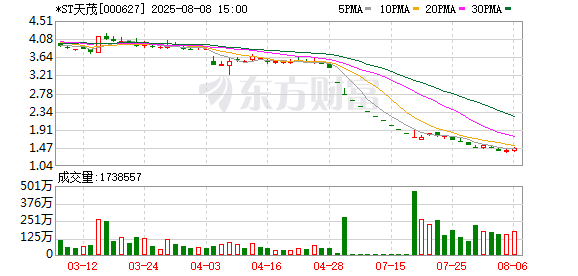
Core Viewpoint - The recent announcements of delisting by *ST Gaohong and *ST Tianmao highlight the increasing trend of delistings in the Chinese stock market, driven by stricter regulations and a focus on eliminating companies involved in significant violations [2][12]. Group 1: Delisting Trends - As of August 8, 2025, 23 companies have been delisted since the beginning of the year, with 10 of these being forced delistings due to significant violations [2][12]. - The types of delistings are diversifying, with an increase in companies choosing to delist voluntarily, including *ST Tianmao, Yulong Co., Zhonghang Chanyin, China Shipbuilding Industry, and Haitong Securities [2][15]. - The latest round of reforms to the delisting system began in 2020, leading to a significant increase in the number of delistings and a shift in the structure of delistings [2][9]. Group 2: Regulatory Environment - The regulatory focus has intensified on serious financial fraud and significant violations, with *ST Gaohong being the tenth company to enter forced delisting procedures due to such violations in 2025 [12][13]. - The new regulations aim to protect investors by supporting companies facing significant uncertainties to voluntarily delist, thereby enhancing the overall market ecosystem [3][11]. Group 3: Company-Specific Details - *ST Tianmao has opted for voluntary delisting, citing business restructuring and significant uncertainties, offering shareholders a buyback price of 1.60 yuan per share, which is higher than its last trading price [5][16]. - *ST Gaohong is facing forced delisting due to severe financial fraud, resulting in a fine of 1.6 billion yuan, with the chairman receiving the heaviest penalty of 750,000 yuan and a ten-year market ban [5][6]. - The delisting of *ST Gaohong is indicative of the severe consequences of financial misconduct, as it has been penalized for fraudulent activities and lack of commercial substance in its operations [5][6].
免费学前教育今秋落地,脑机接口迎政策利好丨一周热点回顾
Di Yi Cai Jing· 2025-08-09 02:58
Group 1: Free Preschool Education Policy - The State Council has announced a gradual implementation of free preschool education, starting from the autumn semester of 2025, exempting public kindergartens from charging care fees for children in their final year [2][3] - The policy is expected to benefit approximately 12 million children this autumn semester, with financial support from the central and local governments to compensate kindergartens for lost income [2][3] - This initiative aims to reduce childcare costs and promote educational equity, contributing to long-term population development strategies [3] Group 2: Brain-Computer Interface Industry Development - Seven departments, including the Ministry of Industry and Information Technology, have issued guidelines to achieve breakthroughs in key brain-computer interface technologies by 2027, establishing a comprehensive technology and industry system [4][5] - The guidelines aim to expand the application of brain-computer interface products across various sectors, including industrial manufacturing and healthcare, and to foster the growth of 2 to 3 industry clusters [4][5] - The brain-computer interface sector is expected to see significant innovation and the emergence of globally influential companies by 2030, with a focus on enhancing innovation capabilities [4][5][6] Group 3: Financial Support for New Industrialization - The People's Bank of China and other departments have released guidelines to support new industrialization, proposing 18 measures to enhance the financial system's adaptability to manufacturing [7][8] - The guidelines emphasize the importance of financial support for high-end, intelligent, and green manufacturing, aiming for a mature financial system by 2027 [7][8] - The focus is on optimizing financial policies to support key technologies and products, ensuring that manufacturing enterprises' credit needs are met [8] Group 4: China's Foreign Trade Performance - China's total goods trade value reached 25.7 trillion yuan in the first seven months of the year, with a year-on-year growth of 3.5%, and exports increased by 7.3% [9][10] - In July, exports grew by 8%, marking the highest growth rate of the year, while imports rose by 4.8%, indicating a recovery in domestic demand [9][10] - The performance is attributed to Chinese manufacturers leveraging the US-China tariff pause and actively exploring new markets in Southeast Asia, Africa, and Latin America [10] Group 5: Beijing Real Estate Policy Adjustment - Beijing has announced a policy change allowing families to purchase an unlimited number of homes outside the Fifth Ring Road, provided they meet certain residency and tax criteria [13][14] - The policy aims to stimulate the real estate market and is accompanied by increased support for housing provident funds, including higher loan limits for second homes [13][14] - Despite the easing of purchase limits, the policy does not eliminate the qualification requirements for non-local families, indicating a cautious approach to market adjustments [14] Group 6: Commercial Health Insurance Development in Shanghai - Shanghai has introduced the "New 18 Measures" to promote the high-quality development of commercial health insurance, particularly in supporting the biopharmaceutical industry [15][16] - The measures focus on enhancing collaboration between basic medical insurance and commercial insurance, addressing payment mechanisms and regulatory innovations [15][16] - The initiative aims to improve the accessibility and affordability of innovative drugs and medical devices, potentially boosting the commercial health insurance market [16] Group 7: Mergers and Acquisitions in State-Owned Enterprises - China Shipbuilding and China Heavy Industry have received approval for a merger, marking a significant consolidation in the state-owned enterprise sector [17][18] - This merger is part of a broader trend of accelerated integration among state-owned enterprises, with a focus on enhancing industrial efficiency and competitiveness [17][18] - The recent regulatory changes have led to increased activity in the M&A market, with a notable rise in large-scale transactions [18]