瑞幸咖啡

Search documents
浪涌潮退
Zhao Yin Guo Ji· 2025-12-18 11:06
Macro Economic Outlook - In 2026, the U.S. midterm elections, Japan and Europe’s defense spending demands, and China's growth stabilization will lead to continued policy easing in the first half of the year. However, the actual space for macro policy is limited due to high inflation, rising government debt, and previous policy overreach [7] - The AI boom is expected to enhance efficiency and market valuations but may also exacerbate job losses and economic K-shaped divergence. Global liquidity easing and a weaker dollar may lead to rising inflation in the second half of the year, potentially causing volatility in high-valuation assets [7] Chinese Internet Software Sector - 2026 is seen as a critical year for capturing user mindshare in the AI era, focusing on lowering usage barriers and enhancing decision-making efficiency. Companies with stable cash flows supporting AI investments and strong operational capabilities are expected to have higher long-term investment value [8] - Recommended stocks include Tencent, Alibaba, and Kuaishou for AI-driven growth, and NetEase and Trip.com for stable earnings growth [8] Overseas Internet Software Sector - The competition in the large model industry is expected to intensify, with AI application monetization continuing to grow. Companies like Microsoft, Google, Amazon, and Palantir are recommended for their potential in AI revenue generation [9] Chinese Semiconductor Sector - The sector is expected to focus on AI-driven structural growth, self-sufficiency trends, high-yield defensive allocations, and industry consolidation. The global semiconductor market is projected to grow by 26% to $975 billion in 2026, with AI-related segments leading the growth [10] Chinese Technology Sector - The global tech industry will experience demand differentiation and accelerated AI innovation. The expansion of computing power and the introduction of AI products are expected to drive growth, with a focus on AI infrastructure and end-user AI products [11] Chinese Essential Consumer Sector - The core constraint on consumer spending in 2026 is expected to be asset shrinkage and slow income recovery. Investment themes include the deepening of consumer stratification and a focus on essential survival needs [12] Chinese Discretionary Consumer Sector - The overall retail sales growth is projected to slow to about 3.5% in 2026. Investment strategies should focus on survival-type consumption, compensatory consumption, and defensive stocks [13] Chinese Automotive Sector - Despite pressures from subsidy reductions, the automotive industry is expected to show resilience, with retail sales of passenger vehicles projected to remain stable. Key trends include intensified competition and the growth of plug-in hybrid vehicles [14] Chinese Pharmaceutical Sector - The innovative drug sector has seen significant growth driven by overseas licensing deals. Future catalysts are expected to shift from upfront payments to milestone payments as clinical progress is made [15] Chinese Equipment Manufacturing Sector - The mining machinery sector is anticipated to be a major growth area, driven by high capital expenditures from global mining companies. Companies like Zoomlion and Sany Heavy Industry are expected to benefit [16] Natural Uranium Sector - The global supply of natural uranium is expected to remain tight, supporting a rising price trend. Demand may exceed expectations due to the recovery of U.S. nuclear power plants [17] Chinese Insurance Sector - The life insurance sector is undergoing a transformation towards dividend insurance, with expectations of improved profitability and valuation recovery. Companies like Ping An and China Life are recommended for their strong growth potential [18] Chinese Real Estate and Property Management Sector - The real estate market is expected to face continued sales declines, with a focus on stock market-related opportunities and resilient property management companies. Recommendations include China Resources and Beike [19]






12.18犀牛财经晚报:品牌首饰铂金报价突破800元
Xi Niu Cai Jing· 2025-12-18 10:30
Group 1: Platinum Jewelry Prices - The price of platinum jewelry has surpassed 800 yuan per gram, with the price reaching 815 yuan for foot platinum 999 on December 18 [1] - In the Shenzhen Shui Bei market, the price of platinum jewelry has increased to around 470 yuan per gram, up from approximately 300 yuan in June [1] - On the domestic futures market, platinum futures saw a significant increase, with a closing price rise of 5.32% on December 18 [1] Group 2: Chinese Technology ETFs - The KraneShares China Internet ETF (KWEB) has attracted $2.3 billion in inflows this year, potentially marking its best annual performance since 2021 [1] - The Invesco China Technology ETF (CQQQ) has also seen $2.1 billion in inflows, aiming for its best annual performance in history [1] Group 3: HBM3e and DDR5 Pricing Trends - The price of conventional DRAM has surged due to supply shortages, while HBM3e prices are also rising due to increased orders from GPUs and ASICs [1] - It is expected that the average selling price (ASP) gap between HBM3e and DDR5 will narrow significantly over the next year [1] Group 4: UK Home Security Market Growth - The number of households in the UK using professional home security monitoring services is projected to grow by 31% by 2025, reaching 542,600 households [2] - This growth indicates a significant market shift as consumers increasingly adopt smart technology for home security [2] Group 5: Chinese Photovoltaic Exports - China's photovoltaic product exports saw a total of $24.42 billion from January to October 2025, with a year-on-year decline of 13.2%, a significant improvement from the 34.5% decline in the same period of 2024 [2] - The stabilization of export prices reflects the effectiveness of industry self-regulation [2] Group 6: Hainan Free Trade Port - The Hainan Free Trade Port officially began operations on December 18, with international flight bookings to Haikou for the Spring Festival expected to double year-on-year [2] - Flight bookings for the New Year period also saw significant increases, with a 19% rise for Haikou and a 51% rise for Sanya [2] Group 7: Chow Tai Fook Price Increase - Chow Tai Fook announced a price increase for some products effective December 19, with most products seeing price hikes between 4% and 16% [3] - For example, a gold bracelet weighing approximately 32.35 grams increased in price from 56,800 yuan to 65,800 yuan, reflecting a 15.8% increase [3] Group 8: AI Framework for Disease Treatment - A research team from Jilin University has developed an AI framework called SpatialEx, which integrates spatial multi-omics data to aid in the diagnosis and treatment of diseases like breast cancer and Parkinson's [3] Group 9: MiniMax IPO Plans - MiniMax, a domestic AI model company, has passed the Hong Kong Stock Exchange hearing and plans to list in January 2026, potentially becoming the fastest AI company to IPO globally [6] - The company has served over 210 million users across more than 200 countries and regions [6] Group 10: Corporate Leadership Changes - The CEO of Master Kong, Chen Yingrang, will retire, with Wei Hongcheng appointed as the new CEO effective January 1, 2026 [5] - Wang Weidong has resigned as general manager of Songyang Resources, with Cai Jiantao taking over the position [6]
从星巴克到汉堡王:外资餐饮为何纷纷把中国市场交给私募基金?
Sou Hu Cai Jing· 2025-12-18 10:18
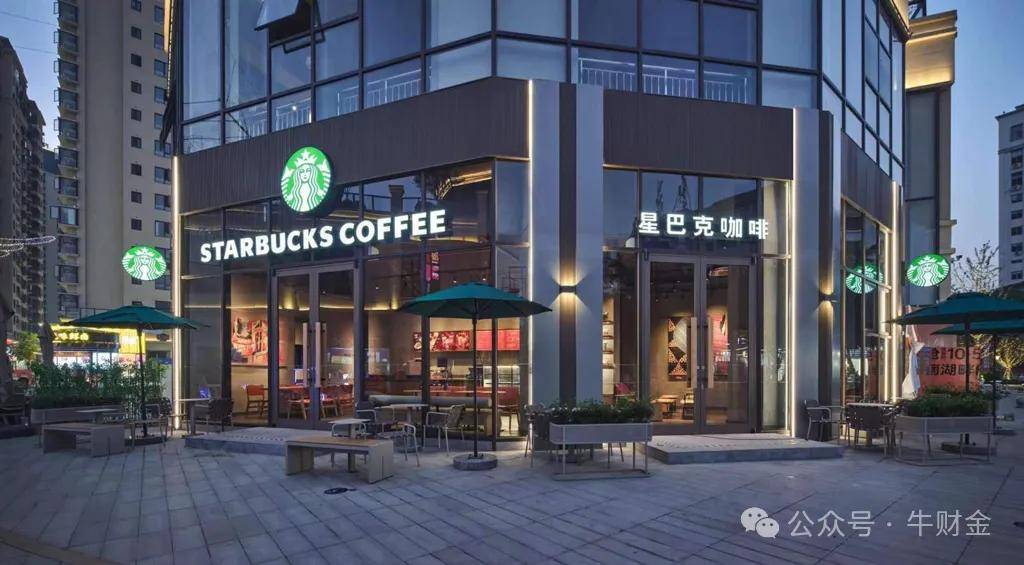
Core Viewpoint - Foreign dining brands in China are undergoing a significant transformation, shifting control to local private equity firms to better understand and cater to Chinese consumers [1][2][10]. Group 1: Starbucks' Strategic Shift - Starbucks plans to sell 60% of its Chinese business to Boyu Capital for an estimated valuation of $4 billion, retaining 40% ownership and core brand licensing rights [2]. - This move reflects a change in role from direct management to a licensing model, indicating a response to the challenges in the Chinese coffee market [2][14]. - Starbucks anticipates that the overall value of its Chinese operations could exceed $13 billion over the next decade, including royalties [2]. Group 2: Reasons for Local Private Equity Takeover - The acquiring firms, such as Boyu, CPE, and IDG, are familiar with the local market and can act quickly, making operational changes in a matter of months rather than undergoing lengthy global approval processes [5]. - Local private equity firms excel in relationship-based management, which is crucial in the Chinese dining sector, where rapid menu changes and pricing adjustments are necessary [6][8]. - The current market conditions, characterized by a slowdown in IPOs and mergers, make stable, mature foreign subsidiaries attractive targets for investment [9]. Group 3: Broader Industry Trends - The challenges faced by brands like Burger King and Uniqlo reflect a systemic trend among foreign dining companies in China, acknowledging their inability to effectively manage operations in the local context [10]. - The shift towards licensing fees is becoming a core asset for foreign brands, allowing them to generate long-term cash flow rather than relying solely on equity sales [11][17]. - This transition is not a retreat from the Chinese market but rather a pragmatic adaptation to the realities of local competition and operational challenges [13][14]. Group 4: Market Dynamics - The Chinese market remains vast but is characterized by intense competition, with local players evolving rapidly [18]. - Foreign brands are retaining their brand identity and supply chain standards while local private equity firms take charge of expansion and management [17].


商场餐饮“排队王”,扎堆去新疆捞金
投中网· 2025-12-18 06:45
Core Insights - The article discusses the rapid growth of the restaurant market in Xinjiang, highlighting the influx of well-known brands and the unique market conditions that make it an attractive opportunity for investors [4][10]. Group 1: Market Dynamics - Xinjiang is characterized as a "non-competitive market," with fewer chain brands compared to other major cities, leading to a lack of price wars and higher profit margins for existing brands [10]. - The entry of major brands like Tims, Haidilao, and Luckin Coffee into Xinjiang has accelerated since 2023, marking a significant increase in brand presence [9]. - The local market is described as having a high consumer spending capacity, comparable to first-tier cities, with consumers showing less sensitivity to prices [12]. Group 2: Consumer Behavior and Trends - The tourism sector in Xinjiang is booming, with a projected 33% increase in online travel transactions for the winter season, indicating a growing consumer base with substantial spending power [13]. - The local food supply is advantageous for restaurant brands, as Xinjiang is a major agricultural region, providing cost-effective ingredients [13]. - The cultural diversity in Xinjiang necessitates careful consideration of customer demographics and dining habits, particularly regarding halal food for the local Muslim population [19]. Group 3: Strategic Recommendations - Companies are advised to replicate successful national brand models in Xinjiang while adapting to local market conditions to establish a strong presence [16]. - It is recommended to partner with established brands as regional agents to leverage existing market knowledge and resources [17]. - Key operational considerations include understanding local dining habits, managing logistics effectively due to the vast distances within Xinjiang, and ensuring consistent quality across locations [20][21].

A股新概念来了!犒赏经济概念多股涨停,投资机会几何?
Zhong Guo Zheng Quan Bao· 2025-12-18 06:03
今天上午,大消费上涨,影视院线、IP经济、啤酒等板块涨幅居前。 最近《疯狂动物城2》和《阿凡达3》两部影片引发市场关注。据灯塔专业版实时数据,截至12月17日17时15分,影片《疯狂动物城2》票房突破36亿元。12 月19日,《阿凡达3》将正式上映,猫眼专业版数据显示,截至12月17日18:10,《阿凡达3》点映及预售总票房已破6500万元。 《疯狂动物城2》的银幕热潮,正席卷潮玩市场。目前已有多家品牌与《疯狂动物城2》达成联名合作,合作领域涵盖潮玩、餐饮、服饰、珠宝、日用品等多 个赛道。其中,合作企业包括泡泡玛特、名创优品、52TOYS、瑞幸、李宁、老凤祥等知名品牌。 A股新概念又来了——犒赏经济。 12月17日,《学习时报》发表文章《何为"犒赏经济"》,所谓"犒赏经济",是指消费者在面对工作生活压力或特定的心理需求时,通过购买价格在承受范围 内的非必需品或体验服务,以获取即时性愉悦感、自我确认感和心理疗愈的一种经济活动。 今天上午,犒赏经济概念上涨,广博股份、奥佳华、瑞贝卡、德艺文创等多股涨停。 大消费上涨 东兴证券表示,2025年新消费投资情绪经历了从高涨到谨慎的过程。2026年,对于新消费领域的投资将 ...

瑞幸及其大股东要竞购蓝瓶咖啡?瑞幸回应
Xin Lang Cai Jing· 2025-12-18 05:00
Core Viewpoint - Luckin Coffee and its major shareholder Centurium Capital are reportedly considering a bid for Blue Bottle Coffee, but Luckin has declined to comment on the matter [1] Group 1: Company Performance - As of the end of Q3 2023, Luckin Coffee has a total of 29,214 stores globally, with a net increase of 3,008 stores in the quarter [1] - For Q3 2025, Luckin's total net revenue is approximately 15.287 billion yuan, representing a year-on-year growth of 50.2% [1] - The GAAP operating profit for the same period is about 1.777 billion yuan [1] - The average monthly transacting customer count is around 112 million, showing a year-on-year increase of 40.6% [1] Group 2: Profitability Metrics - Despite strong revenue growth, Luckin's net profit for Q3 2025 is approximately 1.278 billion yuan, which is nearly flat compared to the same period last year, reflecting a year-on-year decline of about 2.7% [1] - The GAAP operating profit margin stands at 11.6%, down from 15.5% in the same quarter last year [1]
瑞幸及其大股东要竞购蓝瓶咖啡?瑞幸回应:不予置评
Xin Jing Bao· 2025-12-18 04:43
Core Viewpoint - Luckin Coffee and its major shareholder, Centurium Capital, are reportedly considering a bid for Blue Bottle Coffee, although Luckin has declined to comment on the matter [1] Financial Performance - As of the end of Q3 2023, Luckin Coffee has a total of 29,214 stores globally, with a net addition of 3,008 stores in the quarter [1] - For Q3 2025, Luckin's total net revenue is approximately 15.287 billion yuan, representing a year-on-year growth of 50.2% [1] - The GAAP operating profit for the same period is about 1.777 billion yuan, with a monthly average of 111 million transaction customers, reflecting a year-on-year increase of 40.6% [1] - Despite strong revenue growth, the net profit for Q3 2025 is approximately 1.278 billion yuan, showing a year-on-year decline of about 2.7% [1] - The GAAP operating profit margin stands at 11.6%, down from 15.5% in the same period last year [1]
11月,咖啡开店2979家
3 6 Ke· 2025-12-18 03:25
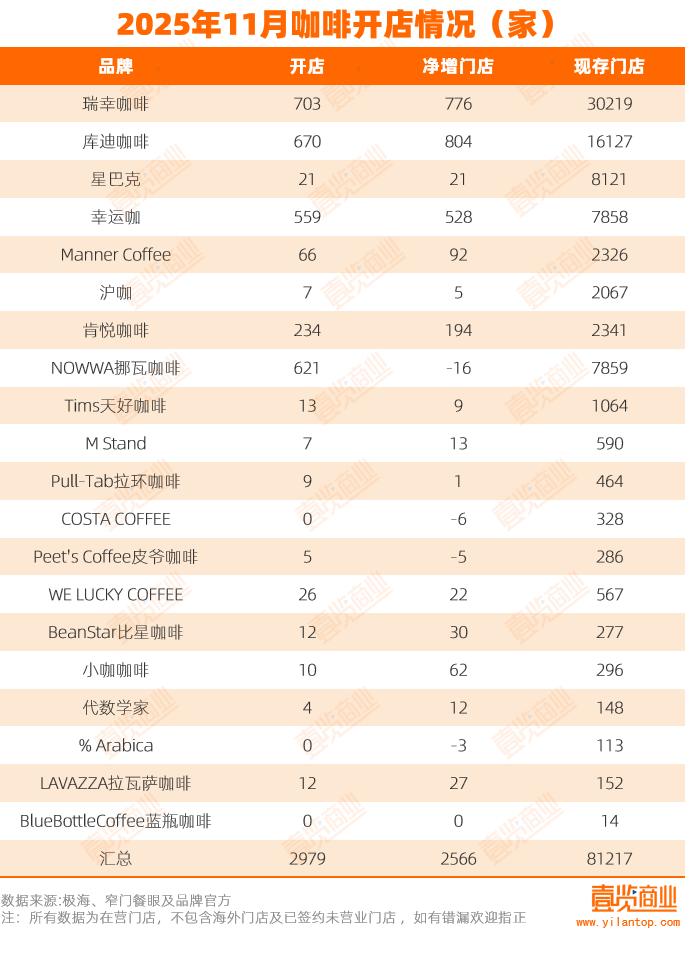
11月,壹览商业长期跟踪的20家连锁咖啡品牌共新开2979家门店,同比增长75.64%;总门店突破8.1万家,共计81217家,环比净增2566家,整体规模持续扩 大。 从新开门店看,幸运咖(新开门店不包含海外门店及已签约未营业门店)、瑞幸咖啡(新开门店不包含海外门店及已签约未营业门店)、库迪咖啡(新开门 店不包含海外门店及已签约未营业门店)、挪瓦咖啡(新开门店不包含海外门店及已签约未营业门店)四家品牌共开店2553家,合计贡献了85.69%的新增 门店。 | 2025年11月咖啡开店情况(家) | | --- | | 品牌 | 开店 | 净增门店 | 现存门店 | | --- | --- | --- | --- | | 瑞幸咖啡 | 703 | 776 | 30219 | | 库迪咖啡 | 670 | 804 | 16127 | | 星巴克 | 21 | 21 | 8121 | | 幸运咖 | રેત્વે | 528 | 7858 | | Manner Coffee | 66 | 92 | 2326 | | 沪咖 | 7 | 5 | 2067 | | 肯悦咖啡 | 234 | 194 | 2341 | | ...
COSTA收购案尚未落地,瑞幸又盯上蓝瓶咖啡,算法“镰刀”终于挥向“匠心咖啡”?
3 6 Ke· 2025-12-18 02:23
Core Viewpoint - Nestlé is planning to sell Blue Bottle Coffee, which it acquired in 2017, to Luckin Coffee, as it struggles with the operational challenges of the brand while seeking to maintain its high-margin consumer goods business [2][4][5]. Group 1: Nestlé's Strategy - Nestlé's decision to sell Blue Bottle is driven by the realization that the brand's expansion has diluted its identity, creating a conflict with the company's growth expectations [3][4]. - The sale involves a strategic separation of the brand from its physical retail operations, allowing Nestlé to retain the brand's intellectual property while offloading the costly and complex retail locations [4][5]. - This divestment is seen as a perfect asset separation for Nestlé, allowing it to focus on its strengths in high-margin consumer products [5]. Group 2: Blue Bottle's Market Performance - Blue Bottle's initial success in China has waned, with a significant decline in consumer interest and foot traffic in its stores, which were once seen as trendy [6][7]. - The brand's pricing strategy has come under scrutiny, as consumers question the value of its offerings compared to local competitors like Manner and Grid Coffee, which provide similar quality at lower prices [7][9]. - As of August 2025, Blue Bottle has only 14 stores in mainland China, a stark contrast to the rapid expansion of competitors, highlighting its struggle to adapt to the local market [9]. Group 3: Luckin Coffee's Ambitions - Luckin Coffee's recent financial performance shows significant growth, with a net revenue of 15.287 billion yuan in Q3 2025, reflecting a 50.2% year-on-year increase [10]. - The acquisition of Blue Bottle is viewed as a strategic move for Luckin to elevate its brand perception from a budget option to a premium player in the coffee market [12][13]. - Luckin aims to leverage Blue Bottle's established brand recognition in international markets to enhance its global presence and valuation [12][13]. Group 4: Challenges for Luckin Coffee - Despite its rapid growth, Luckin faces challenges related to its brand image, which is often associated with low-cost offerings, limiting its potential in the premium segment [11][12]. - The company's aggressive expansion strategy, including opening new stores near existing ones, has led to dissatisfaction among franchisees, impacting profitability and operational stability [16][17]. - The cultural clash between Luckin's data-driven approach and Blue Bottle's artisanal ethos raises questions about the future integration of the two brands [16][17].
8点1氪:罗永浩回应“骂俞敏洪是忘恩负义”;馆藏估价8800万名作现身拍卖市场,南京博物院回应;多只“宝宝类”基金收益率跌破1%
36氪· 2025-12-18 00:09
Group 1 - Luo Yonghao expressed that criticizing bosses and workplaces is mainstream among young people, and he finds it strange that he is labeled as ungrateful for doing the same [3] - He reflected on his experience at New Oriental, stating that success in the workplace should also be attributed to personal effort, not solely to the support of leaders [3] - Luo disagreed with the notion that criticizing Yu Minhong, the founder of New Oriental, is ungrateful, emphasizing that support from leaders is meaningful when they believe in one's potential [3] Group 2 - Nanjing Museum responded to reports of a Ming Dynasty painting by Qiu Ying appearing in the auction market, stating it was previously identified as a forgery and is currently involved in a legal dispute [4] - The museum will cooperate with ongoing legal proceedings to verify the painting's provenance and manage its collection [4] Group 3 - Tencent appointed Yao Shunyu as the Chief AI Scientist, leading the AI Infra and large language model departments, indicating a strategic focus on AI development [5] - Yao, a former OpenAI researcher, brings significant expertise to Tencent's AI initiatives [5] Group 4 - The domestic GPU company Muxi Co., Ltd. debuted on the STAR Market with a staggering opening increase of 568%, achieving a market capitalization of 280 billion yuan [6] - Muxi specializes in high-performance GPU chips and computing platforms, indicating strong investor interest in the tech sector [6] Group 5 - The "baby" funds' yields have dropped below 1%, with the largest fund, Tianhong Yu'ebao, maintaining a yield of 1.014% as of December 16 [4] - Despite the decline in yields, the total share of money market funds has increased, reflecting ongoing investor interest [4] Group 6 - Xiaomi's new model MiMo-V2-Flash was launched by Luo Fuli, showcasing advancements in AI technology and positioning the company competitively in the AI landscape [22][23] - The model is noted for its cost-effectiveness and high speed, ranking among the top open-source models globally [23]