光大证券

Search documents
继续狂拉3个点!科创芯片设计ETF(588780)今日独美,存储行业“量价齐升”超级周期持续演绎
Xin Lang Cai Jing· 2026-01-08 02:41
Group 1 - The core viewpoint of the news highlights the strong performance of the AI chip sector, driven by favorable policies and market demand, leading to significant stock price increases in related companies [1][2] - The "Davis Double Hit" effect is observed in the AI chip sector, with the implementation of the "AI + Manufacturing" action plan by eight departments, aiming for secure supply of key AI technologies by 2027 [1] - Samsung Electronics reported a substantial increase in profits and sales due to the surge in demand for AI servers, with Q4 2025 operating profit reaching 20 trillion KRW (approximately 96.4 billion RMB), a year-on-year increase of 208.2% [2] Group 2 - The performance of component stocks is notable, with companies like Zhongke Lanyun and Haiguang Information showing significant growth, indicating the strength of domestic chip enterprises [2] - The investment in AI infrastructure by major North American cloud service providers is expected to reach a historical high of 600 billion USD (approximately 4.2 trillion RMB) by 2026, further driving demand for storage chips [2] - The Sci-Tech Innovation Chip Design ETF (588780) closely tracks the performance of the Sci-Tech Innovation Board Chip Design Index, which includes 50 leading companies in the chip design sector, reflecting a high concentration in the semiconductor industry [3]
光大证券:维持毛戈平(01318)“买入”评级 与路威凯腾达成战略合作 进一步迈向全球化
智通财经网· 2026-01-08 02:03
Group 1 - The core viewpoint of the article is that 毛戈平 maintains a "buy" rating due to its strategic partnership with global consumer investment giant 路威凯腾, which will assist in expanding overseas high-end channels and establishing a beauty industry investment fund [1] - 毛戈平 signed a strategic cooperation framework agreement with 路威凯腾 on January 7, focusing on global market expansion, acquisitions, strategic investments, capital structure optimization, talent introduction, and governance [1] - 路威凯腾 will leverage its global investment layout and strategic partner network to help 毛戈平 expand its overseas high-end retail channels and jointly establish an equity investment fund focused on the global high-end beauty sector [2] Group 2 - 路威凯腾 has extensive investment experience in the global consumer goods sector, managing approximately $39 billion in equity capital and having invested in over 300 well-known consumer brands globally [2] - 毛戈平 has shown strong sales performance in 2025, with a 32% year-on-year increase in sales across major platforms, with notable growth on 抖音 (50%) and 京东 (70%) [3] - The company is reinforcing its high-end beauty positioning, with a new skincare series set to launch in December 2025 [3]

港股开盘 | 恒指低开0.59% 银行股走强 招商银行涨近1%
智通财经网· 2026-01-08 01:40
Group 1 - The Hang Seng Index opened down 0.59%, while the Hang Seng Tech Index fell by 0.44%. Bank stocks strengthened, with China Merchants Bank rising nearly 1%, while the non-ferrous metals sector weakened, with China Aluminum dropping over 2%. Tech stocks were sluggish, with Alibaba and Baidu both declining by more than 1% [1] - CITIC Securities believes that due to the internal "14th Five-Year Plan" catalyst and external major economies' "fiscal + monetary" dual easing, the Hong Kong stock market is expected to welcome a second round of valuation repair and further earnings recovery by 2026. It suggests focusing on technology, healthcare, resource products, essential consumer goods, paper, and aviation sectors [1] - Everbright Securities indicates that with domestic policy efforts and a weaker US dollar, the Hong Kong stock market may continue to experience a volatile upward trend. The overall profitability of the Hong Kong market is relatively strong, and assets in the internet, new consumption, and innovative pharmaceuticals are relatively scarce. Despite several months of consecutive gains, the overall valuation remains low, making long-term allocation cost-effective [1] - Dongwu Securities believes that the Hong Kong stock market is entering a volatile upward phase, emphasizing the need to maintain dividends as a base and seize the technology growth market in the first half of the year. Potential incremental funds from southbound investments will continue to increase allocation to value dividends. Considering valuations and the AH comparison perspective, southbound funds will generally increase allocation to Hong Kong tech growth stocks, although the tech market will still be influenced by overseas interest rate cuts and US tech market trends, requiring dynamic observation [1] Group 2 - Industrial Securities suggests actively going long, as the Hong Kong stock market is expected to start a spring offensive led by the Hang Seng Tech Index. In the medium term, the bull market in Hong Kong stocks will continue into 2026, with earnings and liquidity likely to drive the market. Changes in risk appetite may present a pattern of "rise first, then fall, and rise again" [2] - In the first quarter of 2026, the risk appetite for Hong Kong stocks is expected to "rise first" [2]


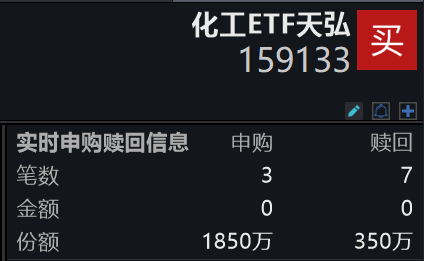
碳酸锂期货价格跳涨!化工ETF天弘(159133)昨日净申购1500万份,连续6日“吸金”超1亿元
Sou Hu Cai Jing· 2026-01-08 01:35
Core Viewpoint - The chemical ETF Tianhong (159133) has shown significant trading activity and net inflow, indicating investor interest in the sector, particularly in emerging fields like new energy materials and high-performance plastics [1][2]. Group 1: ETF Performance - As of January 7, 2026, the chemical ETF Tianhong (159133) had a turnover rate of 5.12% with a transaction volume of 36.0252 million yuan [1]. - The ETF experienced a net subscription of 15 million shares throughout the day, contributing to a total scale of 718 million yuan and a total share count of 622 million, both reaching new highs since its inception [2]. - Over the past six days, the ETF has seen a cumulative net inflow of 104 million yuan [2]. Group 2: Market Trends - The underlying index, the CSI Sub-Industry Chemical Theme Index (000813), declined by 0.54%, while individual stocks within the ETF showed mixed performance, with Tongcheng New Materials (603650) leading with a 10% increase [1]. - Lithium carbonate prices have surged, with the main futures contract reaching 142,300 yuan per ton, marking a 4.54% increase and continuing a trend of price recovery driven by tight supply and demand in the energy storage sector [2][3]. Group 3: Industry Outlook - The growth potential in emerging sectors such as new energy materials and bio-based chemicals is highlighted, with leading companies expected to enhance their global competitiveness through increased R&D and improved supply chain management [2]. - Market analysts suggest that the long-term demand for lithium carbonate remains robust, supported by growth in energy storage and electric vehicle applications, despite potential price volatility due to supply chain uncertainties [3][4]. - The Chinese government is expected to introduce measures to stabilize growth in the petrochemical industry, which may benefit leading companies as the industry adjusts to improved supply-demand dynamics [4].

央行连续14个月增持黄金,黄金基金ETF(518800)连续5日净流入超14亿元,规模超300亿元
Sou Hu Cai Jing· 2026-01-08 01:35
Group 1 - The People's Bank of China has increased its gold reserves for 14 consecutive months, with a total of 7.415 million ounces as of the end of 2025, an increase of 30,000 ounces from the end of November last year [1] - Gold ETFs have seen a net inflow of over 1.4 billion yuan for five consecutive days, bringing the total scale to over 30 billion yuan [1] - Long-term outlook suggests a weakening of the US dollar's credibility, supporting the central bank's continued gold purchases and a bullish sentiment on gold prices [1] Group 2 - The current geopolitical tensions, a weak dollar, and loose liquidity conditions have initiated a trend of rising precious metal prices, despite recent volatility due to deleveraging [1] - The supply-demand balance and differentiated inventory structures are expected to provide price support for gold in the long term [1] - Investors are encouraged to consider direct investments in physical gold and tax-exempt gold ETFs (518800), as well as gold stock ETFs (517400) that cover the entire gold industry chain [1]
基金销售新规落地:理财“加权益”与公募“强适配”时代开启
Zhong Guo Zheng Quan Bao· 2026-01-08 00:16
Group 1 - The core viewpoint of the news is that the newly released regulations on the management of sales fees for publicly offered securities investment funds have relaxed the redemption fee constraints for bond funds, which is expected to enhance the role of bond ETFs in liquidity management and trading for financial institutions [1][2] - The adjustment in redemption fees allows fund managers to set different standards for institutional investors who hold bond fund shares for more than thirty days, which is a significant change from the previous draft [2] - The fine-tuning of subscription fees, particularly the significant reduction in fees for index equity funds, is anticipated to increase the allocation of financial resources to equity funds [3] Group 2 - Financial institutions are expected to increase their allocation to equity funds, particularly broad-based index funds and low-volatility "fixed income plus" products, as a response to the new fee structures [1][3] - The collaboration between public funds and financial institutions is deepening, with public funds optimizing their product lines to better meet the changing allocation needs of financial resources [4][5] - The introduction of refined fixed-income product lines, such as credit bond products categorized by duration, aims to provide financial institutions with effective asset allocation tools [4][5]
理财“加权益”与公募 “强适配”时代开启
Zhong Guo Zheng Quan Bao - Zhong Zheng Wang· 2026-01-07 23:09
Group 1 - The core point of the news is the release of the formal version of the "Regulations on the Management of Sales Expenses for Publicly Raised Securities Investment Funds," which relaxes the redemption fee constraints for bond funds and refines the subscription fee rates [1][6] - Industry insiders believe that bond ETFs are expected to become important tools for liquidity management and tactical trading for wealth management institutions [1][6] - There is an anticipated increase in the allocation of wealth management funds towards equity funds, particularly broad-based index funds and low-volatility "fixed income plus" products [1][6] Group 2 - Despite the relaxation of redemption fee constraints, short-term bond funds are still expected to face redemption pressure due to strong trading attribute demands from bank wealth management [2][7] - The formal version allows fund managers to set different redemption fee standards for institutional investors holding bond fund shares for more than thirty days [2][7] - The previous redemption fee rules were a major concern for wealth management funds, as they required a holding period of over six months to avoid fees, which limited operational flexibility during market volatility [2][7] Group 3 - The refined adjustments in subscription fee rates, especially the significant reduction for index equity funds, are expected to lower the cost of allocating wealth management funds to equity funds [3][8] - The upper limits for subscription fees have been adjusted for different fund types, with passive index equity fund fees reduced from 0.8% to 0.3% [3][8] - Wealth management companies are likely to increasingly allocate assets to broad-based index funds and mixed funds as a common choice in the industry [3][8] Group 4 - The cooperation between public funds and wealth management institutions is deepening, with a focus on optimizing product lines to meet changing allocation demands [4][10] - Public funds are transitioning from providing standardized products to offering tailored, tool-based asset allocation solutions for wealth management institutions [1][4] - For example, Da Cheng Fund has launched a refined fixed income product line tailored for wealth management companies, addressing liquidity issues in credit bonds [10]
基金销售新规落地: 理财“加权益”与公募 “强适配”时代开启
Zhong Guo Zheng Quan Bao· 2026-01-07 22:21
Core Viewpoint - The newly released regulations on the management of sales fees for publicly offered securities investment funds have relaxed the redemption fee constraints for bond funds, which is expected to enhance the role of bond ETFs in liquidity management and trading for financial institutions [1][2] Group 1: Changes in Redemption Fees - The formal regulations allow fund managers to set different redemption fee standards for institutional investors holding bond fund shares for more than 30 days, which is a significant change from the previous draft [2] - The exemption clause for certain fund types, including ETFs and money market funds, remains in place, allowing fund managers to set redemption fees based on the investment characteristics of the products [2] Group 2: Shift in Fund Allocation - The adjustments in subscription fees, particularly the significant reduction for index equity funds, are expected to increase the allocation of financial institution funds to equity funds [3] - The upper limits for subscription fees have been refined, with passive index funds seeing a reduction from 0.8% to 0.3%, while some mixed funds have seen an increase [3] Group 3: Product Adaptation and Collaboration - The collaboration between public funds and financial institutions is deepening, with a focus on optimizing product lines to meet the changing allocation needs of financial institutions [4] - Companies are developing tailored fixed-income product lines, such as credit bond products categorized by duration, to provide effective asset allocation tools for financial institutions [5]
理财“加权益”与公募“强适配”时代开启
Zhong Guo Zheng Quan Bao· 2026-01-07 20:50
Core Viewpoint - The newly released regulations on the management of sales fees for publicly offered securities investment funds have relaxed the redemption fee constraints for bond funds, which is expected to enhance the role of bond ETFs in liquidity management and trading for financial institutions [1][2] Group 1: Changes in Redemption Fees - The formal regulations allow fund managers to set different redemption fee standards for institutional investors holding bond fund shares for more than 30 days, marking a significant change from the previous draft [1] - Despite the relaxation of redemption fees, short-term bond funds are still expected to face redemption pressure due to the high liquidity demands from bank wealth management products [1][2] Group 2: Adjustments in Subscription Fees - The formal regulations have refined the subscription fee rates, particularly lowering the rates for index equity funds, which is anticipated to increase the allocation of financial resources to equity funds [2][3] - The upper limits for subscription fees have been adjusted: active equity funds remain at 0.8%, mixed funds at 0.5%, bond funds at 0.3%, and passive index funds have been significantly reduced from 0.8% to 0.3% [2][3] Group 3: Shift in Investment Preferences - Financial institutions are likely to favor low-volatility "fixed income plus" funds and equity ETFs, as they seek to enhance their equity asset allocation through wide-based index funds and mixed funds [3] - The collaboration between public funds and financial institutions is deepening, with public funds increasingly tailoring products to meet the specific needs of wealth management companies [3]
金价又涨了!再突破4500美元,黄金价格来回波动,要学会及时避险
Sou Hu Cai Jing· 2026-01-07 16:03
Core Viewpoint - The recent surge in gold prices has created a volatile market environment, prompting both investment opportunities and caution among investors. The fluctuations are influenced by multiple factors, including the dollar, interest rates, risk sentiment, and capital flows [4][8][35]. Group 1: Price Movements - Gold prices have experienced rapid increases, with significant jumps from $4,365 on January 2 to $4,447 shortly thereafter, reflecting a highly volatile market [4][6]. - The price movements resemble a roller coaster, with sharp rises followed by declines, creating uncertainty for investors [6][14]. Group 2: Influencing Factors - The first key factor affecting gold prices is the dollar and interest rates, which serve as a "cost baseline" for holding gold. Higher interest rates increase the opportunity cost of holding non-yielding gold [10][12]. - The second factor is risk sentiment, which acts as a "short-term accelerator" for gold prices. In times of geopolitical tension or economic uncertainty, gold is sought after as a safe-haven asset [14][16]. - The third factor is capital flows, which dictate short-term price movements. Increased investment in gold ETFs indicates strong demand, while profit-taking can lead to price corrections [16][21]. Group 3: Central Bank Actions - Central banks globally are increasing their gold reserves, with China adding 30,000 ounces in November, bringing total reserves to 74.12 million ounces. This trend provides long-term support for gold prices [18][21]. - In October, central banks collectively added 53 tons of gold, a 36% increase from the previous month, indicating a strong commitment to gold as a strategic asset [21]. Group 4: Market Dynamics - The changing role of gold in investment portfolios reflects a shift from short-term trading to long-term asset allocation, as institutions seek to hedge against economic uncertainties [22][26]. - The market is characterized by two opposing trading groups: one focused on macroeconomic indicators like interest rates and the dollar, and the other driven by risk aversion and the desire for gold's protective qualities [26][28]. Group 5: Investment Strategy - Investors are advised to focus less on short-term price charts and more on the underlying economic factors influencing gold prices, such as dollar trends, interest rate changes, and risk sentiment [33][35]. - A rational approach to gold investment involves recognizing its role as a stabilizing asset within a diversified portfolio, rather than a vehicle for quick profits [31][37].