三棵树

Search documents
观点全追踪(2月第5期):晨会精选-20260212
GF SECURITIES· 2026-02-11 23:31
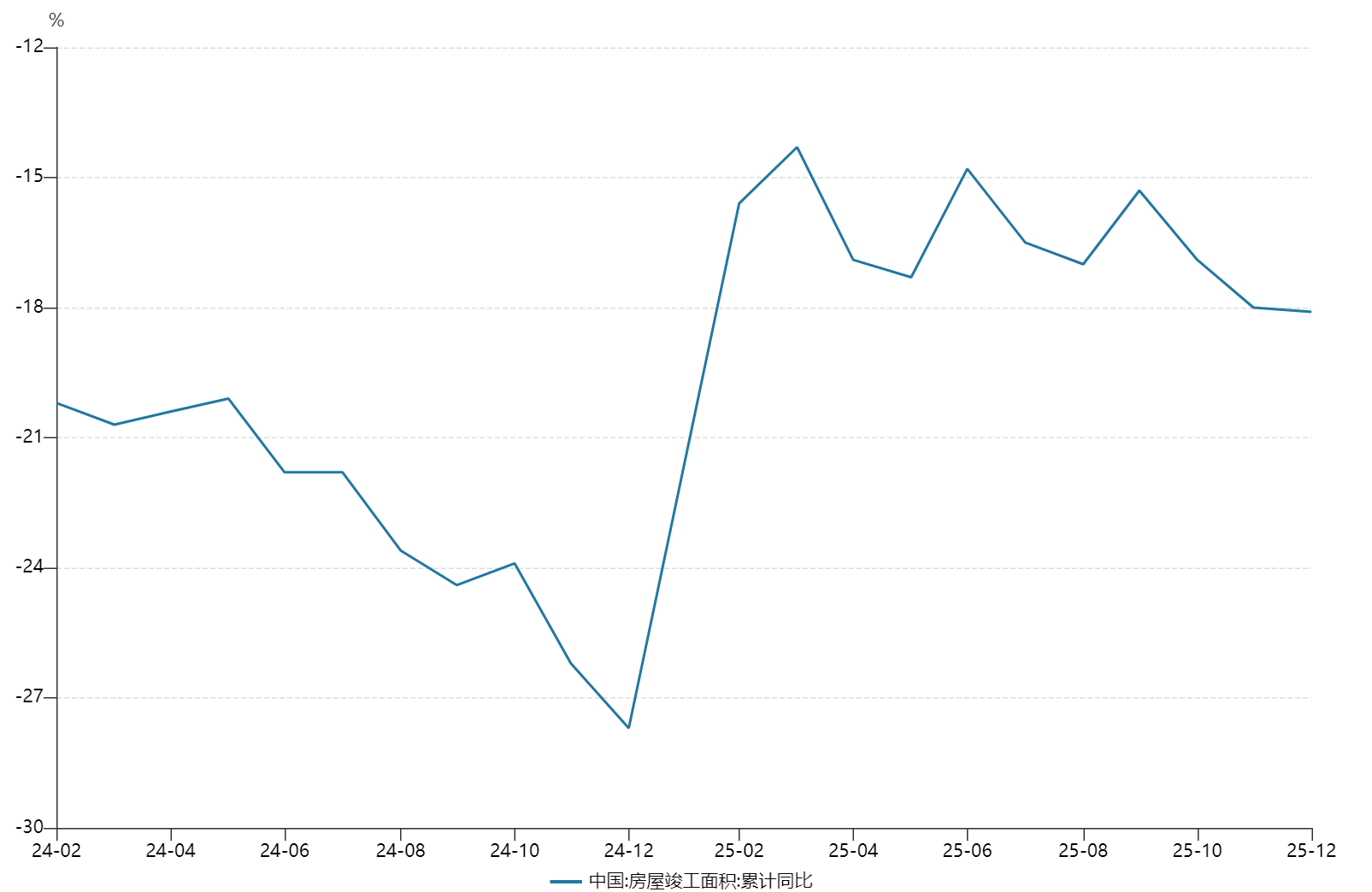
Group 1: Industry Insights - The two-dimensional game market is expected to see a revival, as evidenced by the successful launch of "Arknights: Endfield," which generated over 1.2 billion CNY in revenue within two weeks globally. In the domestic market, PC revenue accounted for nearly 60%, while in overseas markets, PC and PS platforms combined for 70%, indicating significant demand in the global two-dimensional market [3] - The building materials sector is projected to continue its downward trend from 2021 to 2024, with a potential bottoming out in 2024-2025, followed by a recovery in 2026. The construction materials industry has experienced a lesser decline in volume compared to real estate, with a cumulative drop of 70% in new construction, 51% in sales, and 40% in completed areas from 2021 to 2025. Cement and glass production saw declines of 28% and 4%, respectively [3] - Price declines in the building materials sector have accompanied volume drops, but a stabilization in prices is expected in 2024 as supply improves. Companies like Sanke Tree are anticipated to see performance turning points in 2025, with more leading companies expected to follow suit in 2026 as volume and price expectations improve [3] Group 2: Statistical Data - From 2021 to 2025, the cumulative decline in production for various building materials includes plastic pipes (4%), gypsum boards (15%), architectural coatings (19%), sanitary ceramics (19%), tiles (28%), and waterproof materials (38%) [3] - The report highlights that the building materials sector has already passed its most challenging phase and is awaiting the final wave of volume impact, suggesting a potential for recovery in the near future [3]
周期专场-节后投资主线解读
2026-02-11 15:40
Summary of Key Points from Conference Call Records Industry Overview Commercial Aerospace - Shanghai Port Bay's perovskite technology in collaboration with Dongfang Risen is expected to benefit from the SpaceX supply chain. The increase in satellite launches will boost the demand for solar wings, positively impacting related companies [1][3]. Refractory Materials - Companies like Zhongsen Technology, Luyang Energy, and Zhonggang Nairuo are performing well through business extensions and are considered important targets for investment as the sector begins to rally [1][3]. AI+ Sector - Companies such as China National Materials, Honghe Technology, Feilihua, and China Jushi are benefiting from LDK demand, leading to significant profit increases. Attention is drawn to upstream raw materials like high-end electronic fabrics [1][3]. Construction and Building Materials - New business models in the construction and building materials industry focus on increasing market share and revenue scale, with a clear supply clearing and gradual industry improvement. Sanjias Tree's beautiful countryside business and community stores are rapidly developing, while Yuhong enhances competitiveness through service model innovation [1][4]. Real Estate Market Insights Recent Data and Trends - Recent data indicates a positive trend in the real estate market, particularly in first and second-tier cities where second-hand housing transaction volume has increased year-on-year, and price indices have turned positive. The listing volume has decreased, with demand driven by school district housing improving transaction structure. The new housing market is expected to rebound post-holiday due to supply constraints [1][5]. Investment Strategy - The current rally in real estate stocks is characterized by a mix of speculative and long-term capital, suggesting a more sustainable upward trend. The second quarter may present an opportunity to increase real estate positions, with recommended stocks including China Merchants Shekou, New City Holdings, Jindi Group, and Wo Ai Wo Jia [1][6][8]. Transportation and Logistics Sector Investment Themes - The transportation and logistics sector has four main investment themes: 1. Domestic express logistics is entering a critical consolidation phase, with a focus on leading companies like ZTO Express and YTO Express [2][9]. 2. Cross-border e-commerce and the Belt and Road Initiative, with key companies including SF Holding and JD Logistics [2][9]. 3. Platform transportation through internet platforms like Didi and Cao Cao Mobility, which are expected to enhance profits with the realization of autonomous driving and new energy vehicle replacements [2][10]. 4. Large cycle sectors, including aviation and shipping, are anticipated to see profit growth due to tight supply and recovering demand. Companies like China Merchants Energy and COSCO Shipping are recommended, with significant profit elasticity expected from VLCC operations [2][10]. Additional Considerations - The real estate market's upward speed is not expected to be as rapid as in previous cycles, with a potential long-term upward trend following policy implementation. The core cities' housing prices may stabilize by the end of the year, with real estate stocks likely leading the fundamental bottom by 2 to 3 quarters [1][8]. - Long-term capital movements should be closely monitored to adjust investment strategies accordingly [1][7].
财政"万亿级"弹药就位!基建复苏打响估值修复战,建材ETF(159745)锁仓顺周期龙头
Sou Hu Cai Jing· 2026-02-11 09:28
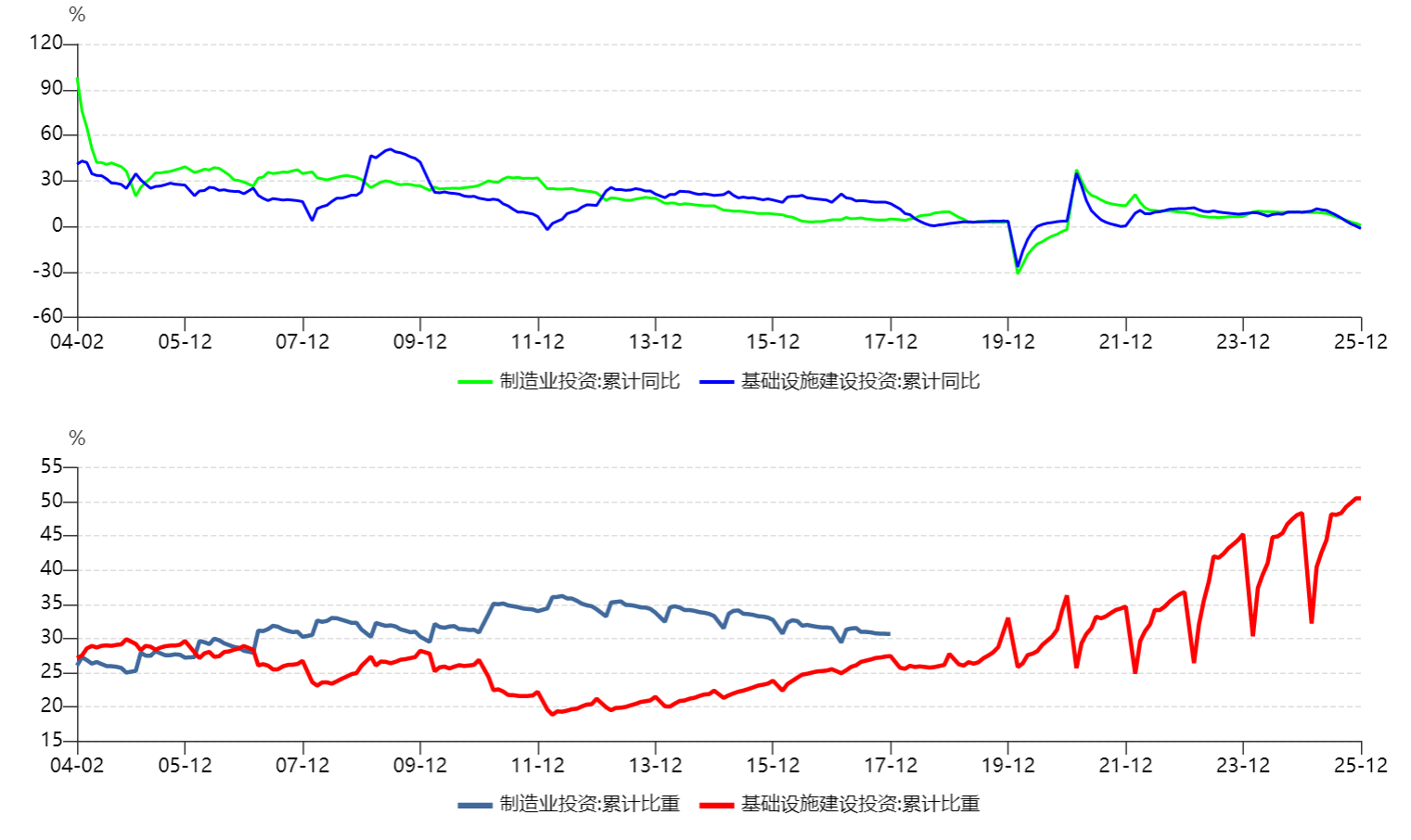
Core Viewpoint - Current infrastructure investment is becoming a crucial support for the economy, with fiscal policies continuously strengthening, leading to a configuration window driven by infrastructure recovery in the building materials sector [1] Group 1: Infrastructure Investment Dynamics - The "14th Five-Year Plan" is entering its final year, accelerating the implementation of major engineering projects, which is providing solid support for the improvement of the industry fundamentals through the demand pull of infrastructure [1] - Since the second half of 2024, active fiscal policies have significantly increased, with the pace of special bond issuance accelerating and the launch of ultra-long special government bonds injecting ample funds into infrastructure investment [1] - Infrastructure investment has a clear policy orientation and planning, unlike the endogenous fluctuations of real estate investment, with 2025 being a key year for the transition between the "14th" and "15th" Five-Year Plans [1][4] Group 2: Investment Trends and Performance - Despite a year-on-year decline in cumulative infrastructure construction investment to -1.48% in December, the cumulative proportion of infrastructure investment remained high at 50.49% in December 2025, reflecting its significant position in fixed asset investment [1][4] - Key areas for current infrastructure investment include urban agglomerations, metropolitan areas, and the connectivity of infrastructure along the "Belt and Road" [4] - Major infrastructure projects are expected to drive demand for cement, pipes, waterproof materials, and other building materials, with a focus on water conservancy and disaster prevention projects [4][5] Group 3: Building Materials Sector Outlook - The building materials industry is currently in a low operating state after inventory destocking, and the concentrated release of infrastructure demand is expected to trigger price elasticity [5] - The profitability transmission from infrastructure recovery is anticipated to drive the development of the building materials sector, with a notable improvement in gross profit margins due to supply-side discipline and cost pressure relief [6] - The building materials sector is characterized by "valuation repair + profit improvement," with the risk of a cliff-like decline in demand eliminated by infrastructure support, leading to a systematic uplift in valuation [8] Group 4: Investment Vehicles and Strategies - The building materials ETF (159745) tracks the CSI All-Share Building Materials Index, covering leading enterprises across the entire industry chain, providing an efficient tool for investors to layout in the building materials sector [8][9] - The top ten holdings in the ETF reflect a high concentration in leading companies across various segments of the building materials industry, accounting for over 60% of the total holdings [9] - The building materials sector is highlighted as a core cyclical investment, with low valuations and high dividends, making it attractive for investors during market shifts towards cyclical stocks [12]




地产政策暖风+建材周期拐点,建材ETF(159745)近1周规模增长2.42亿元居可比基金第一
Xin Lang Cai Jing· 2026-02-11 08:37
截至2026年2月11日收盘,中证全指建筑材料指数(931009)上涨0.85%,成分股旗滨集团上涨4.03%,伟 星新材上涨3.11%,上峰水泥上涨3.09%,海螺水泥上涨2.46%,北新建材上涨1.91%。建材ETF(159745) 上涨0.54%,最新价报0.74元。拉长时间看,截至2026年2月10日,建材ETF近1周累计上涨2.35%。(以 上所列股票仅为指数成份股,无特定推荐之意) 数据显示,杠杆资金持续布局中。建材ETF前一交易日融资净买额达117.47万元,最新融资余额达 3739.96万元。(数据来源:Wind) 华福证券研报表示,中央经济工作会议指出,要着力稳定房地产市场,因城施策控增量、去库存、优供 给,鼓励收购存量商品房重点用于保障性住房等;深化住房公积金制度改革,有序推动"好房子"建设。 在反内卷加速供给侧改革预期下,建材产能周期有望迎来拐点。 中国银河在研报中表示,中长期来看,存量房翻新、旧改以及城市更新将成为消费建材需求托底主力。 近年消费建材龙头企业加速调整销售策略,零售业务规模不断扩大,随着城市发展向存量提质增效转 型,龙头企业市占率有望不断提升。 截至2月10日,建材ETF ...
跨越短周期扰动,拥抱长周期拐点!借道建材ETF(159745) 捕获"量增价稳"甜蜜期
Sou Hu Cai Jing· 2026-02-11 07:02
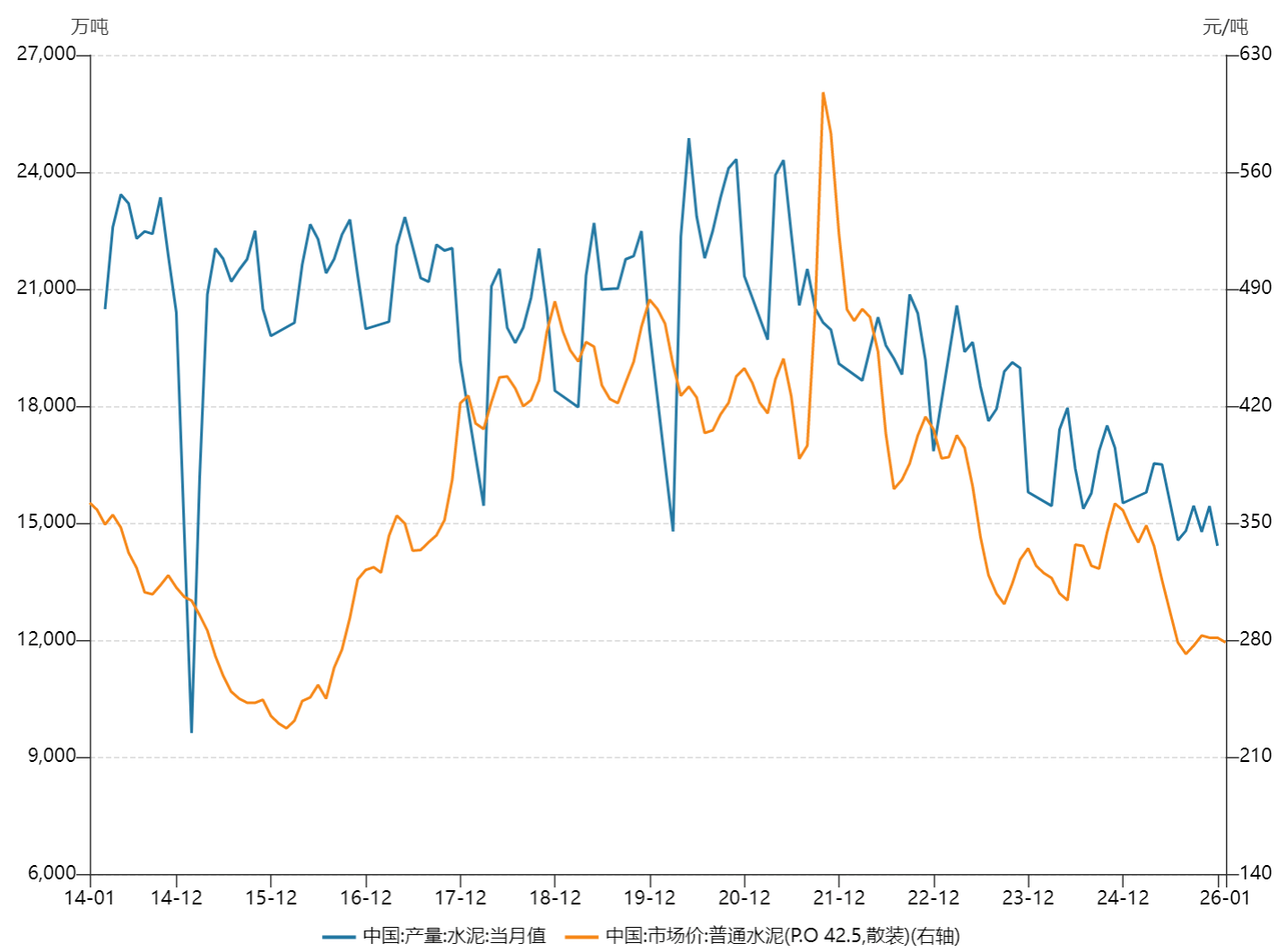
建材行业作为典型的早周期行业,其景气度回升往往领先于宏观经济复苏的确认。在当前经济企稳初期,基建投资的持续发力与地产竣工的边际改善形成需 求双轮驱动,而原材料成本(能源、化工原料)处于相对可控区间,行业或迎来"量增价稳"的甜蜜期。 短周期——天气寒冷或导致水泥产量收缩 从短周期看,水泥熟料煅烧过程需维持窑炉高温(约1450℃),极端低温会增加能耗成本并影响设备安全;同时,原材料开采受冻土影响,物流运输因冰雪 天气受阻,导致上游供给物理性受限。 另一方面,当前水泥行业执行严格的"错峰生产"政策,北方地区冬季停产时长普遍达4-5个月。以华北为例,2024-2025年采暖季水泥熟料企业限产力度达 60%以上,这虽然是环保政策驱动,但与天气严寒形成共振,进一步压缩实际产量。 以华东为例,冬季错峰停窑时间延长至80-100天,熟料库存始终处于低位。当供给端收缩幅度超过需求下滑时,价格获得支撑。2024年四季度,尽管进入传 统淡季,华东地区水泥价格较年内低点反弹超20%,验证了供给约束的有效性。 与之形成鲜明对比的是,冬季为传统施工旺季(尤其是华南),若遭遇极端寒潮(如2024年初的冻雨天气),短期产量骤降可能导致价格脉 ...
申万宏源:建材行业周期分化 关注消费建材个股修复
Zhi Tong Cai Jing· 2026-02-11 06:52
Group 1: Cement Industry - The cement industry is expected to see a phase of supply improvement starting in the second half of 2024, with profitability gradually recovering by 2026 [1][2] - The average cement price in 2025 is projected to be 372.8 yuan/ton, a decrease of 12.6 yuan/ton year-on-year, with a cumulative production decline of 7.2% [2] - A total of 16 million tons/year of capacity has been removed through capacity replacement, which may lead to asset impairment for several companies [2] Group 2: Glass Industry - The flat glass industry is experiencing a significant decline, with the average price in 2025 expected to be 1323.3 yuan/ton, down 383.4 yuan/ton year-on-year [3] - Daily melting capacity has dropped below 150,000 tons, a decrease of 27,000 tons/day from previous highs, indicating an acceleration in the cold repair cycle [3] - The profitability of photovoltaic glass is under pressure, with a projected average price of 21 yuan/square meter in 2025, down 3 yuan/square meter from 2024 [3] Group 3: Fiberglass and Electronic Fabrics - The average price of fiberglass yarn in 2025 is expected to be 3866 yuan/ton, an increase of 174 yuan/ton year-on-year, indicating stable market conditions [4] - The average price of ordinary electronic fabric is projected to be 9012 yuan/ton in 2025, up 539 yuan/ton year-on-year, reflecting improving market conditions [4] - Demand for special electronic fabrics is accelerating, contributing positively to the performance of companies in this segment [4] Group 4: Consumer Building Materials - Companies like Three Trees and Hanhai Group are maintaining strong revenue and profit performance through effective channel development and brand advantages [5] - Companies in the gypsum board and retail pipeline sectors are expected to maintain strong operational quality, with potential for significant performance improvement in 2026 [5] - Several consumer building material companies are anticipated to release credit risks in 2025, allowing for a more favorable performance outlook in 2026 [5]

建材周专题2026W6:电子布上涨加速,关注水泥板块政策催化
Changjiang Securities· 2026-02-11 00:27
Investment Rating - The industry investment rating is "Positive" and maintained [7] Core Views - The report highlights the accelerating price increase of electronic fabrics and emphasizes the policy-driven opportunities in the cement sector [2][3] - The cement sector is showing clear signs of bottoming out after four consecutive years of demand decline and price competition, with significant losses reported among mid-tier and lower-tier companies [4] - The report identifies three main lines for 2026: the stock chain, the African chain, and the AI chain, suggesting a shift in demand dynamics and growth opportunities [6] Summary by Sections Cement Sector - Cement shipments have decreased month-on-month, with an average shipment rate of approximately 24% in key regions, down about 8 percentage points [5][18] - The average price of cement is reported at 346.61 yuan/ton, reflecting a month-on-month decrease of 3.23 yuan/ton and a year-on-year decrease of 53.06 yuan/ton [19] - The report anticipates a potential increase in industry capacity utilization by 10-15 percentage points starting in 2026 due to production constraints and policy enforcement [4] Glass Sector - The domestic float glass market is experiencing a slowdown in demand, with overall inventory pressure remaining significant, and production capacity is reported at 208 lines with a daily melting capacity of 148,935 tons [27] - The average price of glass is 63.18 yuan/weight box, with a slight month-on-month increase of 0.06 yuan/weight box, but a year-on-year decrease of 12.01 yuan/weight box [30] Electronic Fabrics - The report notes a dual prosperity in electronic fabrics, with AI electronic fabrics benefiting from high demand and price increases due to supply shortages [3] - Ordinary electronic fabrics are also expected to see continued price increases due to weaving machine bottlenecks, with significant price hikes noted in February [3] Future Outlook - The report suggests focusing on the stock chain, which is expected to drive demand back to historical highs, particularly in the renovation market, which currently accounts for about 50% of demand [6] - The African chain is highlighted as an undervalued growth opportunity, with companies like Keda Manufacturing and Huaxin Cement positioned for growth in the African market [6]
建材行业周报:关注春节后的涨价预期与地产催化
GUOTAI HAITONG SECURITIES· 2026-02-10 13:30
Investment Rating - The report assigns an "Accumulate" rating for the building materials industry [5] Core Insights - The report emphasizes the expectation of price increases post-Spring Festival and the potential catalyst from the real estate sector. It highlights that the consumption building materials sector may begin to show fundamentals independent of real estate from 2025-2026, with a focus on the resilience of the real estate market after the Spring Festival [2][7] - The report recommends leading companies in the consumption building materials sector that have independent growth logic and sufficient dividend valuation support, particularly in the waterproof materials sub-sector [5][7] Summary by Sections Building Materials Industry Investment Strategy - The consumption building materials sector is anticipated to benefit from potential macroeconomic improvements, with a focus on the resilience of the real estate market post-Spring Festival. The report highlights the importance of observing second-hand housing transactions for signs of market recovery [7] - Recommended companies include Oriental Yuhong, Beixin Building Materials, Weixing New Materials, and others that are expected to perform well due to their growth strategies and market positions [7] Market Review - From February 2 to February 6, 2026, the building materials sector increased by 0.70%, with specific segments like glass manufacturing rising by 5.32% [10] - The report notes significant individual stock movements, with companies like Hanjian Heshan and Jinjing Technology showing notable weekly gains [17] Cement Industry - The national cement market price decreased by 1% week-on-week, with significant price drops in regions like Henan and Hubei. The average shipment rate for cement companies fell by approximately 8 percentage points [24][25] - The report anticipates a stabilization in cement prices as the market enters a holiday period, with a focus on the execution of production restrictions in 2026 [7][24] Glass Industry - The average price of domestic float glass increased to 1154.49 RMB/ton, reflecting a week-on-week rise of 9.69 RMB/ton. However, demand is expected to weaken as downstream processing plants shut down for the holiday [42] - The report recommends leading companies in the glass sector, including Fuyao Glass and Xinyi Glass, due to their strong market positions and dividend yields [42][43] Fiberglass Industry - The report indicates that the fiberglass market is experiencing price increases, particularly in the electronic yarn segment, driven by tight supply and steady demand [55] - Recommended companies in this sector include China Jushi and Zhongcai Technology, which are expected to benefit from structural demand upgrades [55]





建材行业2025年年报业绩前瞻:周期建材分化,消费建材个股修复
Shenwan Hongyuan Securities· 2026-02-10 10:31
Investment Rating - The report rates the construction materials industry as "Overweight," indicating an expectation for the industry to outperform the overall market [2][12]. Core Insights - Domestic cement prices are expected to show a trend of high prices followed by a decline, with an average price of 372.8 RMB/ton in 2025, a decrease of 12.6 RMB/ton year-on-year. Cement production is projected to decline by 7.2% in 2025, with a gradual recovery in profitability anticipated in 2026 due to supply-side improvements [4]. - The glass sector continues to face pressure, with the average price of flat glass expected to drop to 1323.3 RMB/ton in 2025, a significant decrease of 383.4 RMB/ton year-on-year. The industry is entering a period of accelerated cold repairs, which may enhance profitability in the future [4]. - The fiberglass yarn market remains relatively stable, with an expected average price of 3866 RMB/ton in 2025, reflecting a year-on-year increase of 174 RMB/ton. The demand for specialty electronic fabrics is anticipated to grow rapidly, contributing positively to the sector's performance [4]. - Consumer building materials are expected to show strong performance, with companies like Sanke Tree and Han Gao Group maintaining excellent revenue and profit due to strong channel development and brand advantages [4]. Summary by Sections Cement Industry - The average cement price in 2025 is projected at 372.8 RMB/ton, down 12.6 RMB/ton from the previous year. The first quarter's average price is expected to be 400.8 RMB/ton, declining to 358.0 RMB/ton by the fourth quarter. Cement production is expected to decrease by 7.2% in 2025, with a recovery in profitability anticipated in 2026 due to supply-side improvements [4]. Glass Industry - The average price of flat glass is expected to be 1323.3 RMB/ton in 2025, a decrease of 383.4 RMB/ton year-on-year. The industry is entering a cold repair cycle, with daily melting capacity dropping below 150,000 tons. This may lead to improved profitability in the future [4]. Fiberglass Sector - The average price of fiberglass yarn is projected to be 3866 RMB/ton in 2025, an increase of 174 RMB/ton year-on-year. The demand for specialty electronic fabrics is expected to accelerate, contributing positively to the sector's performance [4]. Consumer Building Materials - Companies such as Sanke Tree and Han Gao Group are expected to perform strongly due to their robust channel development and brand advantages. Other companies in the sector are also expected to maintain good operational quality, with potential for significant performance recovery in 2026 [4]. Investment Recommendations - The report suggests focusing on companies with improving quarterly reports and those benefiting from supply-side adjustments. Recommended companies include Conch Cement, Huaxin Cement, and Tianshan Shares in the cement sector, as well as China Jushi and Zhongcai Technology in the fiberglass sector. In consumer building materials, companies like Dongfang Yuhong and Kezhong Shares are highlighted for their strong performance [4].


周期底部已现,政策东风劲吹!借道建材ETF(159745)把握顺周期修复红利
Sou Hu Cai Jing· 2026-02-10 07:09
当前宏观经济运行呈现企稳复苏态势,顺周期板块正迎来估值修复的重要窗口。作为典型的早周期行业,建材板块与基建投资、房地产竣工周期及制造业资 本开支高度相关,在经济预期改善与政策组合拳的双重驱动下,其顺周期属性愈发凸显,板块配置价值值得期待。 从宏观政策基调看,2025年以来稳增长政策持续加码,财政前置发力特征明显。专项债发行提速带动基建实物工作量落地,1-2月数据显示水泥出货率已呈 现季节性回暖,显著优于去年同期水平。 更重要的是,房地产政策已从"防风险"向"促企稳"转变,各地限购限贷政策持续优化,保交楼专项资金加速投放推动竣工端回暖。由于建材需求中约60%与 地产后周期相关,竣工端修复将直接拉动玻璃、消费建材等品类需求回升。 与此同时,"三大工程"(保障性住房建设、城中村改造、"平急两用"公共基础设施建设)进入实质推进阶段,为建筑管材、防水材料等细分赛道提供增量需 求空间,有效对冲传统地产新开工的下行压力。 尤其是保交楼项目,截至2025年初,全国保交楼专项借款及白名单项目授信规模突破4万亿元,累计交付逾期项目超过300万套,交付率较政策初期提升逾40 个百分点。这一庞大存量工程的持续消化,正为建材板块构筑起 ...