海光

Search documents
背靠百度,昆仑芯IPO前“输血”
是说芯语· 2025-07-10 12:06
Core Viewpoint - Kunlun Core has recently completed a new round of financing, but there is a noticeable divergence in information disclosure, with investors and financial advisors announcing the news while Kunlun Core remains silent, raising questions about the underlying issues [1][2]. Financing Situation - Kunlun Core's latest financing round has seen participation from various investors, including Shanghe Momentum Capital and Shanzheng Investment, with the latter confirming their involvement just a day before the announcement by Shanghe [1]. - The company has undergone six rounds of financing since its establishment, with Baidu remaining the largest shareholder, though its stake has been diluted from 76.17% to 67.49% [4][6]. IPO Context - The financing is taking place against the backdrop of a surge in domestic GPU and AI chip companies preparing for IPOs, with nearly ten companies expected to file for listings soon, collectively referred to as the "Chinese Nvidia" [6][9]. - The current market conditions have made it difficult for GPU projects to attract investment, with many investors expressing reluctance to invest in the GPU sector due to significant losses reported by existing companies [7][9]. Product Development and Market Position - Kunlun Core, which originated from Baidu's smart chip division, has launched its first and second-generation chips, with plans for a third-generation chip (P800) set for release in 2025 [11]. - The company has achieved a notable milestone by creating a fully self-developed 30,000-card cluster capable of training large models, which is a significant achievement in the domestic market [11][13]. Competitive Landscape - In terms of performance, Kunlun Core's P800 ranks among the top in the domestic market, but it still lags behind some competitors like Birun's BR100, which boasts superior specifications [18][19]. - According to IDC, Kunlun Core ranks second in the domestic AI accelerator card market, although the accuracy of this data has been questioned by industry insiders [19][20]. Production Capacity and Future Outlook - The production capacity required to meet the projected demand for Kunlun Core's products is substantial, with estimates suggesting that 1,400 wafers would be needed to achieve the anticipated output [20]. - The upcoming regulatory changes may impact the production capacity of domestic AI chip companies, making it crucial for them to secure sufficient manufacturing resources to maintain their market positions [21].


摩尔线程20250706
2025-07-07 00:51
Summary of the Conference Call for Moores Threads Company Overview - Moores Threads focuses on GPU-related products, established in 2020, targeting AI, digital twin, and scientific computing applications [3][4] Product Lines - The product lines cover three main areas: AI intelligent computing, graphics acceleration, and smart SoC [2] - Key products include: - AI computing products: training/inference cards, super node servers, and cross-edge computing clusters [4] - Graphics rendering products: S3,000 series graphics cards for industrial design and digital twin applications [4] - Smart SoC products: A140 computing box and E300 module for AI PC edge applications [5] Financial Performance - Projected revenue for 2024 is 438 million RMB, a year-on-year increase of approximately 2.5 times [2][10] - AI intelligent computing business contributes 77.63% of total revenue, with expectations to achieve profitability by 2027 [2][11] - Average gross margin for 2024 is 70.71%, with AI intelligent computing business gross margin exceeding 70% and desktop graphics cards at 18.99% [14] Sales and Market Presence - In 2024, the company sold three clusters and 2,058 graphics cards, with average prices of 6.113 million RMB for clusters and 60,000 RMB for computing cards [12] - 99.5% of revenue comes from the domestic market, with a direct sales model accounting for 41% and a distribution model for 59% [13] Supply Chain and Inventory - Following entry into the US Entity List in October 2023, the supply chain shifted from wafer production to raw material procurement, with inventory increasing from 275 million RMB to 647 million RMB [15] - Prepayments rose from 76 million RMB to 567 million RMB, indicating preparation for future growth [15] Research and Development - Cumulative R&D expenses exceeded 3.6 billion RMB from 2020 to 2024, significantly higher than revenue in 2024 [16] - The workforce has seen limited growth, with 1,126 employees by the end of 2024, but R&D personnel constitute over 78% of the total [18] Management Team - The management team primarily consists of former Nvidia executives, including CEO Zhang Jianzhong, who previously held senior positions at Nvidia [8] Competitive Landscape - The company’s Musa architecture competes with Nvidia's CUDA and AMD's CDNA, providing a unified GPU acceleration framework [6] - The latest chip series, Pinghu, achieves FP32 computing power of 32 TFlops, about half of Nvidia's H100, and has overcome challenges in high-efficiency interconnects [7] Industry Insights - The domestic chip industry is expected to recover in Q4 2024, despite current pressures from US restrictions on Southeast Asian AI chip imports [21] - Recommended companies for investment include Haiguang, Cambrian, and Longxin Zhongke, which are positioned to benefit from domestic computing center projects [22] Risks - Key risks include uncertainties from US-China relations, underperformance of fundamentals, and intensified market competition [26]
沉痛悼念!著名光谱学家黄本立院士逝世
仪器信息网· 2025-07-01 08:21
Core Viewpoint - The article commemorates the life and contributions of Huang Benli, a prominent figure in atomic spectroscopy in China, who passed away at the age of 100. It highlights his significant achievements in the field and his role in advancing analytical chemistry and education in China [2][4][12]. Group 1: Personal Background and Career - Huang Benli was born on September 21, 1925, in Hong Kong and later became a professor at Xiamen University after a long career at the Chinese Academy of Sciences [4][5]. - He was a pioneer in atomic spectroscopy, becoming the first doctoral advisor in China focused on this field and was elected as an academician of the Chinese Academy of Sciences in 1993 [11][12][16]. - Throughout his career, he held various prestigious positions, including president of the Chinese Chemical Society and editor-in-chief of "Spectroscopy and Spectral Analysis" [4][12]. Group 2: Contributions to Atomic Spectroscopy - Huang Benli established several firsts in atomic spectroscopy in China, including the creation of the first atomic absorption spectroscopy device and the development of a new type of double arc light source for measuring trace elements [16][21]. - He contributed to the development of various analytical methods and technologies, such as the flow injection electrochemical hydride generation method and advancements in atomic fluorescence spectroscopy [16][17][21]. Group 3: Challenges and Future Directions in Atomic Spectroscopy - Huang Benli discussed the challenges faced by atomic spectroscopy, particularly in adapting to the rapid advancements in life sciences and the need for integration with other analytical techniques [20][21]. - He emphasized the importance of "hyphenated techniques," which combine atomic spectroscopy with methods like chromatography and electrophoresis to overcome limitations in analyzing larger molecules [21][27]. - The article also highlights the potential for growth in specialized instruments for environmental and food safety applications, particularly in detecting harmful elements [25][26]. Group 4: Development of Domestic Instruments - The article notes that while China has made significant strides in developing atomic absorption spectrometers, there remains a gap in technology compared to international standards, particularly in the production of high-quality gratings and advanced light sources [29][30]. - Huang Benli pointed out the need for improved software development for analytical instruments to meet the demands of advanced research users [30][31]. - The article discusses the success of domestic atomic fluorescence spectrometers, which have gained a significant market share due to their cost-effectiveness and suitability for various applications [31][32].

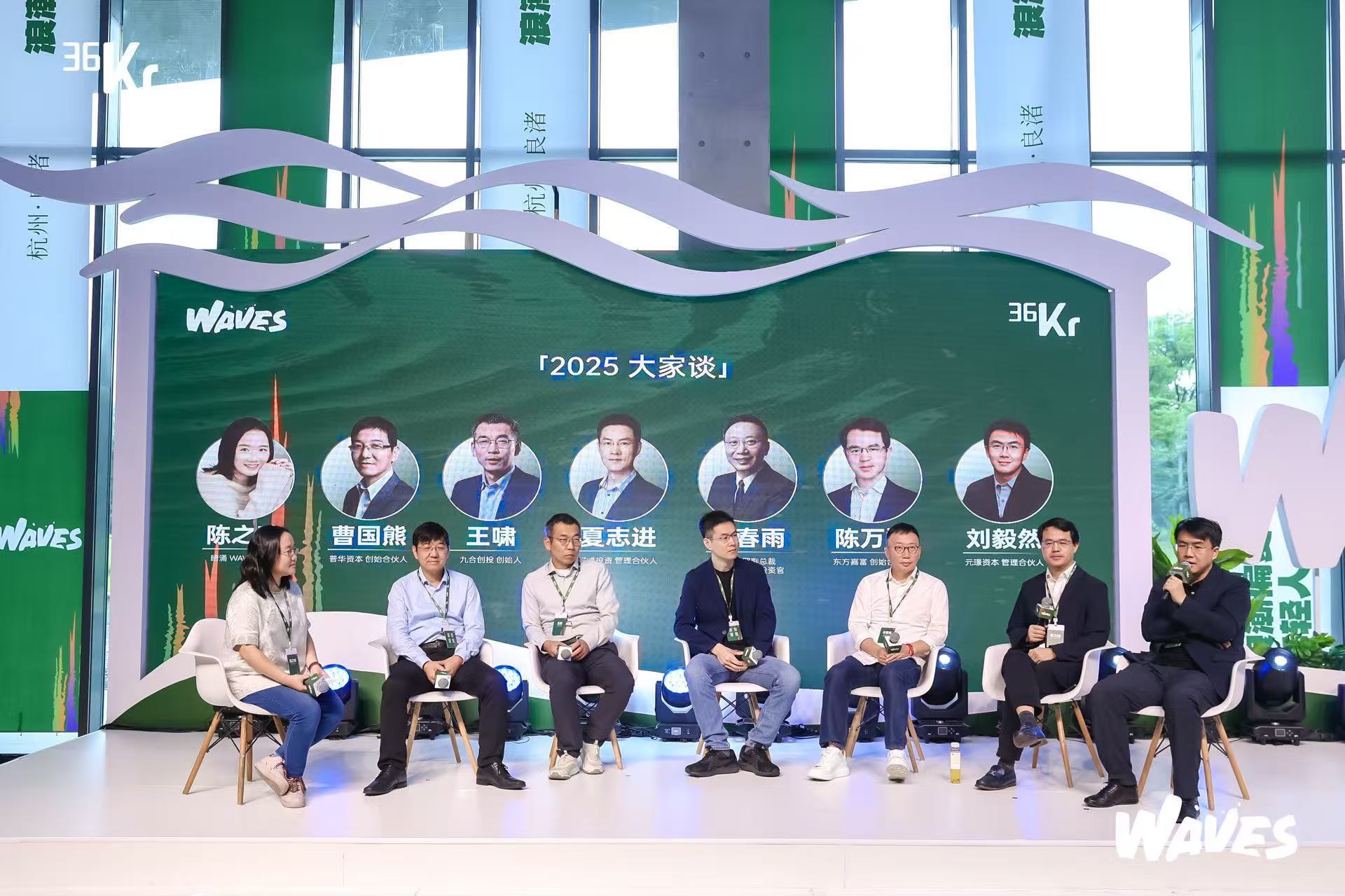
6位顶尖投资人的2025创投观察丨WAVES新浪潮2025
3 6 Ke· 2025-06-20 07:42
Core Insights - The Chinese venture capital market is at a turning point, characterized by a structural transformation and a focus on capturing opportunities amid uncertainty [1] - The "New Era" theme of the 36Kr WAVES conference highlights discussions on AI innovation, globalization, and value reassessment [1] - Key industry leaders gathered to share insights on the current state and future of venture capital in China, emphasizing the importance of adaptability and strategic investment [1][3] Group 1: Investment Trends - The most popular investment sectors this year include AI and robotics, with significant progress in the biopharmaceutical sector, particularly in overseas licensing deals [6][10] - There is a noticeable shift in investor sentiment, with many expressing concerns about missing out on AI investment opportunities [8][10] - The market is witnessing a revival, with increased activity in IPOs and mergers, indicating a more favorable environment for exits [24][26] Group 2: Investment Strategies - Early-stage investments require a long-term perspective, with a focus on sectors with high growth potential, such as hard technology and advanced manufacturing [18][20] - Investors emphasize the importance of patience and strategic planning, particularly in navigating market cycles and ensuring sustainable growth [13][21] - Successful investment requires a balance between technical expertise and market understanding, with a focus on core technology and its application in large markets [20][22] Group 3: Exit Strategies - Various exit strategies are being explored, including IPOs, mergers, and acquisitions, with a focus on timing and market conditions [24][25] - The importance of proactive engagement in the exit process is highlighted, with investors encouraged to facilitate mergers and acquisitions to maximize returns [25][28] - The distinction between USD and RMB funds in terms of exit strategies is noted, with RMB funds facing unique challenges in project recovery and exit timing [29]
太猖獗了
表舅是养基大户· 2025-06-10 13:33
Group 1 - The article discusses a recent incident of account hacking related to stock market scams, highlighting the organized and large-scale nature of this illegal activity [2][3][5] - It emphasizes the importance of using proper business registration methods to avoid such issues, recommending that individuals register public accounts under corporate entities rather than individual business licenses [5][6] - The article warns about the proliferation of stock market scams, particularly during bullish market conditions, and advises caution, especially for older individuals who may be more susceptible to such schemes [6][7] Group 2 - The article notes a significant drop in the stock market, attributing it to global macro variables, particularly the impact of US-China negotiations, which affected multiple markets simultaneously [9] - It mentions the recent inclusion of certain stocks in the Hong Kong Stock Connect, which led to substantial price increases initially, but these stocks later experienced declines, indicating volatility in the market [12][13] - The article highlights the importance of understanding the implications of index adjustments, such as those in the S&P 500, which can lead to significant trading activity and price movements in related stocks [15][16] Group 3 - The article suggests that the current investment strategy remains focused on risk assets while not being bearish on bonds, indicating a positive outlook for certain investment opportunities [17]

聊聊新消费与科技的投资机会
Ge Long Hui· 2025-06-08 18:53
Group 1: New Consumption Trends - The rise of new consumption reflects a shift from traditional asset accumulation to emotional and personalized experiences, driven by generational changes in consumer preferences [2][4] - The "self-pleasing consumption" initiative in Shanghai emphasizes the importance of emotional value over basic functionality, indicating a significant change in consumer behavior [2] - Companies like Guangbo Co. and Mixue Ice City are leveraging flexible supply chains and rapid product iterations to capture growth in the new consumption sector [2] Group 2: Key Investment Themes in Technology - The commercialization of IP and the trend of "潮玩" (trendy toys) highlight the potential of emotional connections and cultural recognition in driving consumer engagement, with companies like Pop Mart and Aofei Entertainment leading the way [4] - The integration of traditional culture with modern design is revitalizing industries such as gold jewelry, with brands like Lao Pu Gold and Lao Feng Xiang achieving significant premium pricing through cultural and design attributes [4] - The pet economy is expanding due to changing family structures and increasing single populations, with companies like Zhongchong Co. and Petty Co. capitalizing on this trend [4] Group 3: Technological Advancements and Market Opportunities - The importance of domestic technology capabilities is underscored by the rise of Huawei's Ascend ecosystem, which is crucial for building a self-sufficient digital infrastructure [7] - The Chinese consumer electronics industry is positioned for growth, driven by a large affluent and middle-class population with strong purchasing power for innovative products [7] - The demand for computing power is surging due to advancements in AI and big data, creating opportunities in data centers and cloud services, with companies like Taicheng Light and Shenghong Co. playing significant roles [7]





和讯投顾李嘉乐:轮不动的电风扇何去何从?
Sou Hu Cai Jing· 2025-06-07 04:20
什么意思?就是要边分歧,然后再转修复再调整,然后再继续上攻的这种节奏。所以说走势上偏反包跟 走趋势。而且我之前跟大家提过,你们可以去看看数字货币的题材指数,5日线稳稳上行,有一点之前 机器人的打法,外加上因为现在量化主导,所以走势上波动确实非常大,这个持股体验不是特别好,但 是资金愿意进攻,像北郊的路桥本身还是对题材的认可,因为乐乐之前跟大家说过,如果资金不看好题 材情绪的,是不会去北交所做情绪溢出的。那何先生仍然是观察现在走势尚好的恒宝,还有中军四方, 而且市场明明是处在缩量的环境下,资金有往低位AI方向去做切换,也并未对数字货币币造成非常大 的影响。所以如果后续像会议啊仍有关于这个金融方向的这个内容,外加上指数向上反弹,这一块也是 离不开数字货币的。那具体锚定核心个股表现这块不能出现非常大幅的补跌就好。 虽然从走势上来说,中亿达目前已经走到了第五波,而且第四波的修复力度明显减弱了,但是中易达目 前仍在良性分歧,因为行情走不出来,资金还是会去化工或者医药做避险的。那接下来该怎么看情绪肯 定还是锚定中亿达。指数修复这块就要看数字货币。其实还是很想跟大家仔细去拆解一下数字货币这个 题材,其实第一点是因为它正好卡 ...
半导体行业深度跟踪电话会议
2025-05-18 15:48
半导体行业深度跟踪电话会议 20250515 摘要 • 消费电子行业呈现弱复苏态势,但端侧创新活跃,AI 和智能汽车领域尤为 突出。预计 2024 年手机出货量同比增长,2025 年延续增长,双星政策 扩围带动需求。PC 市场 2024 年 Q4 同比持平,预计 2025 年增长,大模 型部署或拉动 PC 硬件需求。 • 服务器领域数据显示今年 1 月同比增长超 140%,环比增长约 10%,但受 春节影响波动大,建议综合一二月数据评估。全球云计算厂商对 2025 年 资本开支预期乐观,表明算力需求端市场预期依然强劲。 • 存储器市场供过于求,Q1 原厂报价松动,现货和合约价格下跌,DDR4 等老旧型号库存积压。但高端存储产品价格稳定。HBM 景气度延续,边缘 计算推动端侧存储扩容,存算一体方案加速创新。上半年或优于下半年, 但尚未脱离低谷。 • 2024 年全球半导体销售额同比增长,预计 2025 年维持增长。AMD 的 AI 芯片出货量较高,预测 2025 年全球 PC 市场中个位数增长。国内华为、 海光率先适配 DeepSeek,寒武纪、龙芯中科等公司也支持适配小参数芯 片,拉动国内算力芯片需求。 Q& ...

伟仕佳杰(00856.HK):AI驱动带动需求释放 1Q25业绩超预期
Ge Long Hui· 2025-05-16 17:37
Group 1 - The company reported Q1 2025 performance exceeding expectations, with revenue growth of 16-17% year-on-year, gross profit growth of 20-21%, and net profit attributable to shareholders increasing by 28-29% [1] - The increase in market share for domestic brands is expected to continue, driven by AI demand and the optimization of distribution business structure, with leading companies like Huawei and Haiguang maintaining high growth rates [1] - The demand for AI computing power is driving the release of network and storage products, supported by the "national subsidy" policy since Q4 2024, which has led to early procurement in Q1 [1] Group 2 - The company has established a broad product ecosystem through deepening partnerships with global brands such as Huawei, Alibaba, Tencent, and others, enhancing its coverage in the core IT product distribution market [2] - The diverse product portfolio helps improve customer stickiness and supports stable revenue sources across different economic cycles, contributing to the company's risk resilience [2] - The company is a leading technology service platform in the Asia-Pacific region, benefiting from the AI wave and digital transformation, with adjusted net profit forecasts for 2025, 2026, and 2027 showing growth of 12.0%, 11.6%, and 8.7% respectively [2]
湖南95后女博士,力挑谷歌,要造思考时"不发烧"的AI
创业邦· 2025-03-19 09:28
Core Viewpoint - Lu Xi Technology aims to challenge the dominance of the Transformer architecture in AI by developing a brain-like computing ecosystem, introducing the NLM model that significantly reduces energy consumption while enhancing inference efficiency [2][3][4]. Group 1: Company Overview - Lu Xi Technology was founded in 2023 by two women born in the 1990s, marking it as the first domestic company focused on brain-like computing [2]. - The NLM model, launched in 2024, is the first domestically developed large model using a non-Transformer architecture based on brain-like technology [2][12]. - The company has received approval from the National Internet Information Office for its generative AI services and deep synthesis algorithm services [2][12]. Group 2: Technology and Innovation - The NLM model boasts a reduction in energy consumption by over 80% while improving inference efficiency several times compared to traditional models [12][13]. - Lu Xi Technology's brain-like architecture mimics the human brain's neural structure, allowing for efficient computation and storage by activating only relevant neurons [4][12]. - The company is developing a range of products based on the NEURARK brain-like architecture, including foundational models and industry-specific models, to meet diverse market needs [12][15]. Group 3: Market Position and Strategy - Lu Xi Technology aims to break the dependency on NVIDIA chips by developing its own FPGA and ASIC chips tailored for large models [10][12]. - The company collaborates with various state-owned enterprises and industry leaders to deploy its models across multiple sectors, including healthcare and disaster management [15]. - The company is targeting a significant increase in model parameter scale, aiming to reach 600 billion parameters by 2025, which would bring it closer to the complexity of the human brain [16].