腾讯云

Search documents
装机量超2000万、全球主流GPU与AI框架“开箱即用”,OpenCloudOS成AI时代优先选项
3 6 Ke· 2025-12-12 08:36
Core Insights - The industry is facing significant inefficiencies in GPU utilization, with effective usage rates remaining below 30%, leading to structural waste despite increased hardware investments [1] - The fragmentation of infrastructure, characterized by diverse hardware forms, model frameworks, and compilation environments, complicates the development process and reduces overall efficiency [1] - The OpenCloudOS ecosystem aims to address these challenges by promoting standardization and efficient scheduling in heterogeneous computing environments [1] Group 1: OpenCloudOS Ecosystem Development - The OpenCloudOS community has grown to include nearly 30 ecosystem companies, focusing on innovation and collaboration since its establishment in 2021 [2] - OpenCloudOS has achieved over 20 million installations, serving more than 62,000 enterprise users and completing over 97,500 hardware and software adaptations [2] - The community has gathered over 1,200 ecosystem partners and 400 deep cooperation partners, expanding its reach into cloud-native, edge computing, high-performance computing, and AI training and inference [2][3] Group 2: Technical Advancements - OpenCloudOS has developed a compatibility certification system covering multiple architectures, allowing users to deploy dependencies easily without complex compilation [3] - The system has undergone significant upgrades to meet AI-native demands, focusing on lightweight, rapid distribution, automated maintenance, and ecosystem adaptation [3][4] - New capabilities include image miniaturization to reduce costs, an accelerated image distribution system, and automated hardware service to simplify maintenance in cloud-native environments [4][5] Group 3: OpenCloudOS Infra Smart Base - The OpenCloudOS Infra smart base was launched to create a unified AI computing foundation, addressing the complexities of AI workloads and fragmented ecosystems [7] - This initiative aims to reduce costs and improve efficiency across the industry by providing a standardized interface and integrated runtime environment for various vendors [8] - The smart base allows for rapid deployment of AI frameworks, significantly reducing setup time from hours or days to minutes [9] Group 4: Performance Enhancements - The smart base has achieved a 94% reduction in container image size, lowering storage and transmission costs while enhancing distribution speed [10] - OpenCloudOS has extended its AI-ready capabilities to the cloud, enabling seamless collaboration between local and cloud environments for AI development and inference [10] - The overall goal is to enhance collaboration efficiency and system resilience across the entire industry, moving beyond isolated performance improvements [11]
合集回顾:手机智能体的来龙去脉 4个问题带你看
2 1 Shi Ji Jing Ji Bao Dao· 2025-12-12 00:49
Core Insights - The article discusses the evolution of mobile AI assistants, highlighting their transition from basic chatbots to advanced personal assistants capable of performing tasks on behalf of users, thus reshaping the AI ecosystem [1][3][4] Group 1: Core Capabilities - Mobile AI assistants are changing the reliance on traditional apps, with major brands like Xiaomi, Honor, Vivo, OPPO, Huawei, and Samsung integrating their own AI assistants into devices [3][4] - Initial capabilities of these AI assistants were overhyped, with real-world success rates for tasks like food delivery being below 3% for most [3][4] - Two main technical routes for mobile AI assistants are identified: intent frameworks that require app cooperation and GUI agents that simulate user actions, with the latter being more prevalent [4][5] Group 2: Privacy and Security - The use of screen-reading capabilities by mobile AI assistants raises significant privacy concerns, as they can access sensitive information like chat logs and banking details [6][7] - The transfer of control to AI assistants poses risks, including potential misinformation and execution errors, which could lead to legal issues [6][7] - Systemic data security risks arise from high-privilege applications operating without external oversight, leading to potential misuse [7][8] Group 3: Commercial Dynamics - The competition between internet apps and mobile AI assistants is intensifying, with concerns that AI could replace human interactions, impacting app engagement metrics and advertising revenues [10][11] - The introduction of AI assistants like Doubao has sparked discussions about the future of app ecosystems and the potential for apps to become mere tools for AI [10][11] - The ongoing struggle for control over user data and the implications of AI's role in transactions highlight the need for clear regulations and responsibilities [12][13] Group 4: Future Considerations - The article emphasizes the necessity for transparent authorization mechanisms and clear accountability in AI operations to establish trust and legitimacy [13][14] - Proposals for giving AI assistants a distinct identity and establishing a regulatory framework are discussed as potential solutions to current challenges [14][15]
金融智能体元年真相 96%项目仍处探索期,谁在真正落地?
Jing Ji Guan Cha Wang· 2025-12-11 10:40
Core Insights - The report by iResearch indicates that 2025 will be a pivotal year for the development of financial intelligent agents, although the industry is still in its exploratory phase, with 96% of applications in proof of concept and pilot stages, and only 4% in agile practice [1][2] - The market for financial intelligent agent platforms and application solutions is projected to reach 950 million yuan in 2025, with an expected surge to 19.3 billion yuan by 2030, reflecting a compound annual growth rate of 82.6% from 2025 to 2030 [1][3] Market Distribution - The banking sector leads with 43% of project numbers, benefiting from diverse business scenarios and high-frequency interactions, while asset management institutions account for 27%, and the insurance industry represents 15% [2] - Internet finance companies and other institutions each hold 7% of the market share, with the former focusing on smart marketing and risk control, and the latter exploring niche applications in areas like financing leasing [2] Project Viability and Risks - Despite the increase in project numbers, there is a significant gap between pilot projects and effective implementation, with an estimated 20%-25% of projects likely to underperform or fail due to inadequate product capabilities, cost mismanagement, and environmental constraints [4] - The report identifies two project types: embedded intelligent agent functions (52.9%) and independent intelligent agent applications (47.1%), with successful vendors demonstrating a deep understanding of financial business logic and providing secure technology frameworks [7] Competitive Landscape - The market features a diverse competitive landscape with various types of vendors, including cloud providers and specialized technology firms, evaluated based on their competitive strength and market performance [4] - Leading firms such as Alibaba Cloud, Baidu Smart Cloud, and Tencent Cloud are positioned as comprehensive leaders, while others like iFlytek and Zhongguancun KJ focus on specific technical areas as core competitors [4][5] Future Outlook - The success of financial intelligent agents will depend on the ability to transition from being merely usable to becoming indispensable, requiring vendors to evolve from technology suppliers to business co-creation partners [8] - The next few years will witness a "survival of the fittest" scenario, where only those firms that truly understand finance and can consistently deliver value will remain in the market [8]
银行数字化抢蛋糕比赛,胜负已分?
Tai Mei Ti A P P· 2025-12-09 12:21
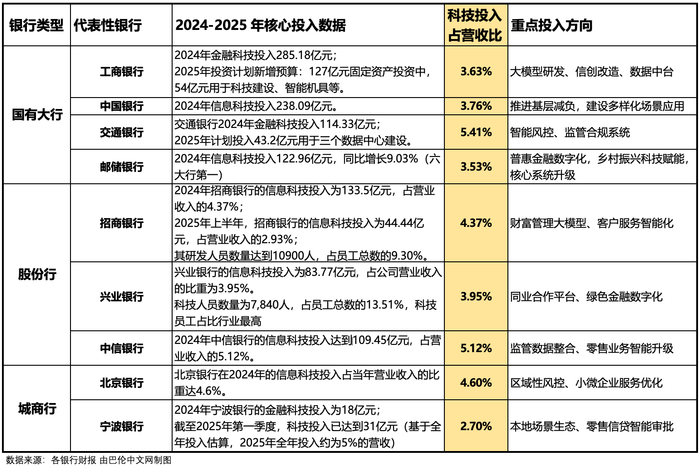
Core Insights - The digital transformation of China's banking industry is entering a "deep water zone" by 2025, characterized by market expansion, technological upgrades, and intensified competition [1] - The IT investment in the banking sector is projected to reach 169.315 billion yuan in 2024, with a growth rate of 3.6%, and is expected to exceed 266.2 billion yuan by 2028 [1] - The digital bidding landscape shows that successful digitalization in banking relies not only on investment scale but also on precise alignment with the bank's positioning and strategic partnerships [1] Investment Trends - In 2024, the six major state-owned commercial banks are expected to invest a total of 125.459 billion yuan in fintech, accounting for 52% of the total banking sector investment [2] - By 2025, the banking sector's fintech investment is anticipated to reach 333.85 billion yuan, representing a 38% increase from 2024 [2] Bank Types and Investment Focus - State-owned banks are leading in digital investment, with major banks like ICBC planning to invest 285.18 billion yuan in fintech in 2024, while smaller banks are focusing on localized services and specific pain points [3][5] - The investment focus for state-owned banks includes large model development, data platforms, and intelligent risk control systems [3] - Regional banks are prioritizing local economic services and optimizing processes for small and medium enterprises, with some banks investing over 6% of their revenue in technology [5] Digital Bidding Characteristics - The digital bidding projects are categorized into four main tracks: risk management, compliance control, data services, and technology platforms, each with varying technical requirements and budget allocations [7][8] - Risk management projects are rated the highest in complexity, requiring a deep understanding of financial logic and AI technology [7] - Compliance control projects are driven by regulatory requirements and have a high degree of standardization, making them easier to replicate [7] Competitive Landscape - A dual-competitive landscape is emerging between bank technology subsidiaries, which excel in understanding financial regulations, and internet technology companies, which leverage general technology capabilities [10][11] - The collaboration between bank technology subsidiaries and internet technology companies is becoming a mainstream approach, combining business understanding with technological innovation [17] Future Outlook - The investment landscape is expected to become more differentiated, with large banks focusing on systematic construction while smaller banks target essential local needs [18] - The emphasis will shift towards practical technologies that address compliance issues and enhance operational efficiency, with a growing trend of collaboration between different types of technology providers [18]




一则消息,全线爆发!
Ge Long Hui A P P· 2025-12-09 10:54
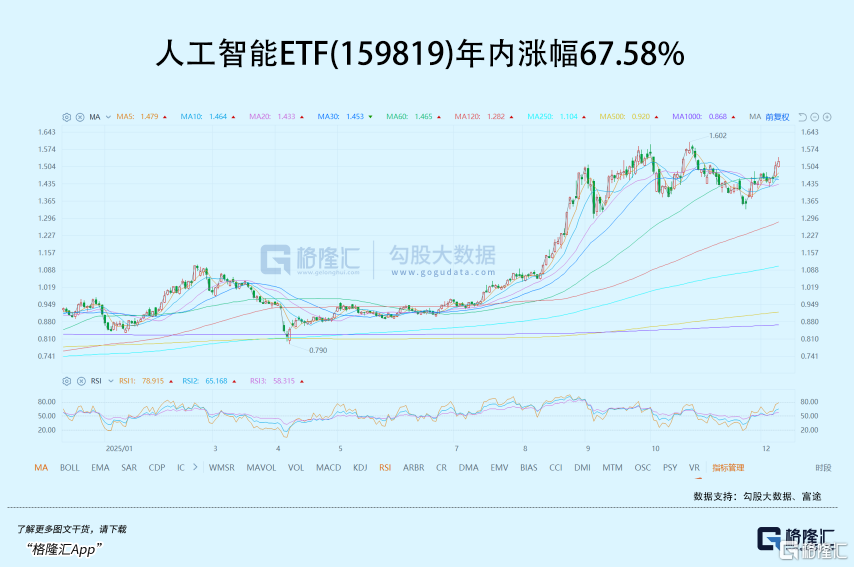
Core Insights - The reintroduction of NVIDIA's H200 to China is seen as a strategic move that could significantly benefit the AI industry in the country, addressing critical supply chain bottlenecks and enhancing computational capabilities [4][28] - The demand for AI computing power in China is expected to surge, with the number of generative AI models nearly doubling from 197 to 439 by mid-2025, indicating a substantial need for high-end computing resources [5][28] Beneficial Sectors - The core sectors that will benefit from the H200's approval include: 1. CPO (Coherent Photonic Optics) sector, which is projected to see a market size exceeding $2.2 billion by 2025, with Chinese companies holding over 30% market share [11][12] 2. AI cloud computing industry, where major players like Alibaba Cloud and Tencent Cloud are expected to increase their AI server clusters significantly, with NVIDIA's solutions regaining a market share of over 60% [14][15] Performance Metrics - CPO companies have shown impressive quarterly performance, with revenue growth rates of 56.83% for Zhongji Xuchuang and 152.53% for Xinyi Sheng, indicating a robust demand for AI computing infrastructure [16] - In the cloud computing sector, Alibaba Cloud reported a 34% year-on-year revenue increase, highlighting the growing importance of AI as a core growth driver [17] Investment Trends - Institutional investments in the AI computing and cloud sectors have surged, with active equity funds holding approximately 40% of their portfolios in computer, communication, and electronic sectors, marking a five-year peak [19][20] - The AI computing sector has become a focal point for institutional investors, with significant increases in holdings for leading CPO companies and AI server manufacturers [21][22] ETF Growth - The AI-focused ETF (159819) has seen substantial inflows, exceeding 6.8 billion yuan in 2025, making it the largest in its category, while the cloud computing ETF (516510) has also attracted over 300 million yuan [23][26][27] Conclusion - The approval of NVIDIA's H200 for the Chinese market is not merely a technical concession but a strategic interaction that could reshape the global AI industry landscape, providing immediate relief and long-term innovation incentives for China [28][29]


瑞德智能:公司采取“战略投资”与“自主研发”相结合的策略持续推进布局
Zheng Quan Ri Bao Wang· 2025-12-04 11:42
Core Viewpoint - The company is advancing its strategy by combining "strategic investment" and "independent research and development" to enhance its market position in the robotics industry [1] Strategic Investments - The company is focusing on strategic investments in key components of the industry chain, such as the zero-difference cloud-controlled robotic joint modules and the complete application of power plant inspection robots through Shenzhen Yutuo Intelligent [1] Product Development - The company has launched the AI Smart Bed 2.0 in collaboration with Tencent Cloud and is providing an integrated self-developed algorithm core controller for the "Mobile Love Home Desktop Robot" [1] Future Plans - The company will continue to dynamically optimize its cooperation strategies in line with technological trends and business needs, aiming to upgrade its intelligent product ecosystem, with significant developments to be disclosed in a timely manner as per regulations [1]
云厂情报大览:双十一,阿里云AI 算力销售激励加码;京东云今年猛招上百人销售;腾讯云年底又要豪气送车?
雷峰网· 2025-12-03 10:29
双十一,阿里云AI算力销售激励再度加码 前不久,阿里云在渠道双十一动员大会上,针对AI算力销售推出特别激励:双十一活动期间,所有渠道伙 伴销售AI云服务器及大模型,相应业绩均可按多倍核算。比如,某渠道伙伴在活动期间销售了10万元的AI 算力,在特别激励政策下,这10万的业绩可能按20万,甚至更多业绩核算。 这种"多倍核算"机制,直接将渠道伙伴的销售收益与阿里云的AI战略重点深度绑定,为的是激发渠道销售 AI算力和服务的积极性。 京东云今年猛招销售,还成立了渠道部门 京东云今年突然开始发力,原来只有大几十人的销售队伍,而如今这支队伍已经扩充到了接近 400 人。 不仅如此,京东云还组建了大几十人的渠道团队,来开拓市场。 云市场排位赛似乎早已尘埃落定,眼下京东与又开始猛招上百人的销售团队,这是要搞什么大动作?有业 内人士猜测,可能是因为京东要在算力基建上加大布局,并且建更大的节点,所以要提前储备消化大节点 的能力。虽然京东云放开了销售岗位大量招人,但淘汰人也很快,目前招聘的上百人中,已经有一批面临 卷铺盖走人的处境。 腾讯云闪电出手,截获AI 硬件黑马百万级云大单 7月,一家AI硬件公司在深圳成立。凭借小米系的创 ...


2025年中国AI基础设施行业产业链、投资规模、竞争格局、企业支出及发展趋势研判:为应对未来大模型的潜在算力需求,企业基础设施投资额将保持增长[图]
Chan Ye Xin Xi Wang· 2025-12-02 01:21
Core Insights - AI infrastructure is a crucial foundation for the development of artificial intelligence technology, with 58% of enterprises in China currently utilizing AI, significantly higher than the global average, positioning China as a leader in the field [1][8] - The demand for AI infrastructure computing power in China is surging due to complex scenarios, massive data, and ultra-large models, with investments expected to reach 169.6 billion yuan in 2024, an increase of 105.4 billion yuan from 2023, and projected to grow to 275 billion yuan by 2025 [1][8] AI Infrastructure Industry Definition and Classification - AI computing infrastructure is essential for the rapid development of AI, requiring telecom operators to deploy appropriate technical architectures to provide high-performance AI computing capabilities [2] - The infrastructure consists of hardware (including AI chips like GPU, FPGA, and ASIC) and software components (including foundational software platforms and AI-enabled service platforms) [2] AI Infrastructure Industry Development Status - The AI industry is a key area of global development, accelerating technological and economic progress, with increasing application scenarios, explosive data growth, and exponential increases in algorithm model parameters, necessitating higher performance from supporting infrastructure [4] AI Infrastructure Investment Trends - Global AI infrastructure investment is rapidly increasing, projected to reach 598.5 billion yuan in 2024, up 169.9 billion yuan from 2023, and expected to grow to 1.374 trillion yuan by 2025 [5][6] AI Infrastructure Industry Value Chain - The industry value chain includes upstream components (computing hardware, network hardware, storage hardware), midstream system integration and solution service providers, and downstream AI application companies across various sectors such as finance, healthcare, and smart cities [8][9] AI Infrastructure Industry Competitive Landscape - The competitive landscape is dominated by telecom operators, third-party IDC service providers, and major cloud service giants, including China Telecom, China Mobile, China Unicom, and cloud services from Alibaba, Tencent, Baidu, and Huawei [10] - In Q1 2025, Alibaba Cloud led the market with a 33% share, followed by Huawei Cloud at 18% and Tencent Cloud at 10%, indicating a strong focus on AI deployment among these companies [10][11] Future Development of AI Infrastructure - To meet the potential computing power demands from the rapid development of large models, operators should actively build new AI computing infrastructure, focusing on comprehensive layouts across computing, platforms, models, and applications [12]




字节彻底爆发了?
虎嗅APP· 2025-12-02 00:01
Core Viewpoint - ByteDance has officially entered the operating system market with the launch of the Doubao mobile assistant, which redefines the AI mobile era by enabling proactive task management across multiple applications [5][8]. Group 1: Product Launch and Market Reaction - The Doubao mobile assistant can perform various tasks such as ticket booking, file downloads, and service comparisons, showcasing a significant advancement in AI capabilities from passive responses to active task management [5]. - Following the announcement, ZTE's stock surged to its limit in A-shares, and Hong Kong stocks rose over 13%, indicating strong market anticipation for AI agent applications [7]. Group 2: Industry Trends and Competitive Landscape - The AI industry has seen rapid iteration over the past six months, with a shift towards multi-modal capabilities becoming a core trend, contrasting with the previous year's focus on single-modal models [8]. - The demand for AI agents has surged, as evidenced by the explosive growth in "Function Call" requests, highlighting a critical market need for these capabilities [8]. - The recent Gartner report ranked Volcano Engine as the top Chinese AI application development platform, surpassing Alibaba Cloud and Tencent Cloud in execution ability, and placing it fourth globally in multi-modal capabilities [9][12]. Group 3: Competitive Strategies and Market Position - The competition among major cloud service providers has intensified, with Volcano Engine leveraging its model capabilities to gain market share in the MaaS (Model as a Service) era, while traditional players like Alibaba Cloud and Tencent Cloud are adapting their strategies [15][25]. - Volcano Engine's aggressive pricing strategy has significantly increased its platform usage, with daily token processing reaching 30 trillion, a 25,300% increase since its launch [27]. - Despite the rapid growth, concerns remain about the sustainability of Volcano Engine's business model, as it relies heavily on API calls and may struggle to scale profitably compared to established players [30][32]. Group 4: Future Outlook and Industry Dynamics - The AI cloud market is expected to consolidate, with only a few leading players remaining by 2026, emphasizing the need for continuous innovation and cost-effective solutions [35]. - The shift from IaaS to MaaS signifies a fundamental change in cloud service dynamics, with a focus on intelligence rather than just resource provision [36]. - The competitive landscape is characterized by a race for technological advancement and market share, with companies needing to balance model capabilities and engineering efficiency to remain relevant [38][40].

1200+ 全球头部企业齐聚上海!激光光学 × 半导体全链路协同的顶级峰会仅剩最后三席
半导体行业观察· 2025-11-29 02:49
Core Insights - The article highlights the significance of the Munich Shanghai Optical Expo as a pivotal event for the global optoelectronics and semiconductor industry, featuring over 1,200 leading companies and attracting hundreds of thousands of professional attendees, emphasizing the theme of "technological iteration + ecological integration" [2] Group 1: Policy Alignment - The forum aligns closely with the "14th Five-Year Plan," focusing on the critical role of laser technology in supporting 6G/5G-A, targeting key areas such as compound semiconductors, EDA tools, and optical communication chips, and aims to create a collaborative ecosystem through "policy - technology - capital" synergy [2][4] Group 2: Technical Focus - The forum emphasizes a comprehensive technology logic covering the entire supply chain from "materials - tools - chips - devices - components - applications," showcasing hard-core achievements from leading companies in critical areas like compound semiconductor mass production processes and AI-enabled optical chip design [3] Group 3: Demand-Supply Coupling - The forum effectively links the supply side, represented by leading technology firms like Silan Micro and Xizhi Technology, with the demand side, including major telecom operators and cloud service providers, creating a high-efficiency closed loop of "technology output - demand feedback - cooperation landing" [4] Group 4: Key Participants - Major telecom operators such as China Mobile, China Unicom, and China Telecom are participating to address 6G network architecture and 5G-A deployment needs, while leading cloud service providers like Alibaba Cloud and Tencent Cloud are seeking solutions for high-speed data transmission and green data center construction [6] Group 5: Final Opportunities - The article emphasizes the urgency of securing the last three sponsorship seats for the forum, highlighting the scarcity of resources and the potential for significant market engagement, with a focus on connecting with decision-makers from major telecom and cloud service companies [7][9]