工商银行

Search documents
工商银行近期业务合作与股价表现分析
Jing Ji Guan Cha Wang· 2026-02-12 11:18
Group 1 - The core viewpoint of the article highlights that Industrial and Commercial Bank of China (ICBC) has made significant progress in business cooperation and internationalization, while its A-share stock price is under pressure [1][2]. Group 2 - Recent events include ICBC successfully assisting Malayan Banking Berhad in issuing its first Panda bond of 3 billion RMB with a 2-year term, which enhances financial cooperation between China and Malaysia and promotes the internationalization of the RMB [2]. - ICBC signed a comprehensive strategic cooperation agreement with CITIC Group to strengthen collaboration in comprehensive finance and technological innovation [2]. - A working seminar was held by ICBC focusing on financial services to promote consumption and expand domestic demand, involving discussions with government departments, industry associations, and business representatives [2]. - ICBC implemented dynamic limit management for its "Ruyi Gold Accumulation" business and suspended non-trading day precious metal repurchase during the Spring Festival to enhance risk control [2]. Group 3 - The recent stock performance of ICBC shows that its A-share price closed at 7.18 RMB on February 12, 2026, down 1.51% for the day, with a 5-day cumulative decline of 1.64% and a year-to-date decline of 9.46% [3]. - On February 12, 2026, there was a net outflow of approximately 300 million RMB from major funds, while retail investors showed slight inflows, indicating significant short-term selling pressure [3]. - The technical analysis indicates that the stock price is in a consolidation phase, with current support around 7.18-7.20 RMB and resistance at 7.30-7.32 RMB; the MACD indicator shows slight improvement, but trading volume remains low, indicating insufficient rebound momentum [3]. Group 4 - A market analysis report from February 9, 2026, indicates that the news sentiment regarding ICBC is neutral to slightly positive, but lacks major catalysts; the technical outlook suggests a short-term rebound is needed, with an expected price range of 7.22-7.35 RMB [4].

2025年NPL市场回顾与展望:市场持续扩容,未来回收表现有待持续关注
Lian He Zi Xin· 2026-02-12 11:16
Market Overview - The NPL product market continued to expand in 2025, with a total issuance scale of 820.57 billion yuan, representing a year-on-year growth of 61.32%[4] - The cumulative issuance scale of NPL products from 2016 to 2025 reached 3285.88 billion yuan, indicating a sustained growth trend over six consecutive years[4] Asset Securitization - In 2025, commercial banks disposed of a total of 519.11 billion yuan of non-performing loans (NPLs) through asset securitization, with principal accounting for 90.53% of this amount, marking a 62.80% increase from 2024[5] - As of September 2025, the balance of non-performing loans in commercial banks was 3522.48 billion yuan, with 349.45 billion yuan disposed of through securitization, accounting for 10.28% of the median balance of non-performing loans[7] Issuance Characteristics - Large state-owned commercial banks remained the main issuers in the NPL market, with the top three institutions (Industrial and Commercial Bank of China, China Construction Bank, and Bank of China) accounting for 39.92% of the total issuance in 2025[9] - The types of NPL products issued have diversified, including personal housing mortgage NPLs and small micro-enterprise NPLs, reflecting a trend towards greater variety in product offerings[9] Recovery Rates and Valuation - The expected recovery rate for credit card NPL products ranged from 4.09% to 16.15%, with a weighted average recovery rate of 9.68%[22] - Personal housing mortgage NPL products had a higher expected recovery rate of 31.44% to 50.02%, with a weighted average recovery rate of 42.30%, although this represents a decline from 50.08% in 2024[31] Small Micro-Enterprise Loans - In 2025, 44 small micro-enterprise NPL products were issued, with a total issuance scale of 224.01 billion yuan, accounting for 27.03% of the total issuance[36] - The expected recovery rate for small micro-enterprise NPLs varied significantly, ranging from 11.58% to 57.20%, depending on the type of collateral involved[37]


25Q4 基金持仓分析:主动偏股基金重仓银行比例处于低位
Hua Yuan Zheng Quan· 2026-02-12 11:15
Investment Rating - The industry investment rating is "Positive" (first time) [4] Core Viewpoints - The proportion of bank stocks held by actively managed equity funds remains low, with a slight increase in the fourth quarter of 2025. The market capitalization of bank stocks in actively managed funds rose from 1.8% in Q3 2025 to 1.9% in Q4 2025, indicating a gradual recovery [4][12] - The bank index's quarterly return rebounded significantly from -10.5% in Q3 2025 to 4.6% in Q4 2025, reflecting a 15.07 percentage point increase [23] - The report suggests focusing on high-quality banks with stable asset quality and strong risk management capabilities, particularly in favorable economic regions [44][48] Summary by Sections 1. Changes in Fund Holdings in Q4 2025 - The market capitalization of bank stocks held by public funds increased from 3.6% in Q3 2025 to 4.4% in Q4 2025, with a total value of approximately 1,473 billion [6][8] - The increase in bank stock holdings was primarily driven by passive equity funds, which saw their bank stock market capitalization rise from 841.1 billion in Q3 2025 to 1,104.2 billion in Q4 2025, increasing their proportion from 5.4% to 7.0% [19][22] - Active equity funds showed a slight increase in bank stock holdings, with the market capitalization rising from 300.4 billion in Q3 2025 to 305.5 billion in Q4 2025 [21][22] 2. Performance of Bank Stocks - The bank sector's performance was highlighted by a significant recovery in the bank index, which turned positive in Q4 2025 after a negative performance in the previous quarter [23] - The report indicates that the overall performance of listed banks has been relatively weak, but certain banks are showing strong growth potential due to differentiated business strategies [44][48] 3. Recommendations for Investment - The report recommends focusing on banks with robust asset quality and risk management, particularly those in economically strong regions such as Ningbo Bank, Jiangsu Bank, and Nanjing Bank [44][48]





金价高位波动能否持仓过节?业内提醒降杠杠防节后跳空
Di Yi Cai Jing· 2026-02-12 11:11
Core Viewpoint - The domestic gold market is experiencing high volatility ahead of the Chinese New Year, prompting banks to tighten gold-related business operations to mitigate risks associated with international market fluctuations during the holiday period [1][4]. Group 1: Market Conditions - As of February 12, the London gold price is reported at $5063 per ounce, while the Shanghai Gold Exchange AU9999 is at 1123 yuan per gram, with retail prices in major cities reaching up to 1556 yuan per gram [1]. - The gold market has seen significant fluctuations, with the London gold price peaking above $5600 per ounce at the end of January and then dropping below $4500 within a few days, indicating a volatility of over 20% [4]. Group 2: Bank Responses - Major banks, including China Construction Bank and Industrial Bank, have announced adjustments to their gold trading operations, such as increasing margin requirements and suspending physical buyback services [2][3]. - China Construction Bank has implemented dynamic trading limits for gold products and raised the minimum purchase amount for gold accumulation products from 950 yuan to 1200 yuan [3]. Group 3: Risk Management - Analysts warn that holding positions over the holiday could expose investors to "time difference risks," as the Shanghai Gold Exchange will be closed while international markets remain open [4]. - Banks are raising risk assessment requirements for gold investment, with some institutions only allowing clients with higher risk tolerance to engage in gold wallet transactions [3]. Group 4: Investment Strategies - Investors are advised to control their positions and avoid excessive leverage, especially during the holiday period, to mitigate potential losses from market volatility [7]. - For those considering gold as a long-term investment, a strategy of gradual buying and holding is recommended, with a suggested allocation of 5% to 10% of their asset portfolio [7].
2月10日金价:今日金价1130克,没意外的话,明后两天或迎更大级别行情
Sou Hu Cai Jing· 2026-02-12 11:07
Core Viewpoint - The domestic gold market has shown relative stability after experiencing significant fluctuations in international gold prices, with prices remaining above the critical psychological level of $5000 per ounce [1][5]. Domestic Gold Prices - The Shanghai Gold Exchange's gold T D price is reported at 1128.94 yuan per gram, a slight increase of 0.61% from the previous trading day [3]. - The basic gold price for AU9999 is 1117.37 yuan per gram, showing a minor decrease of 0.04% [3]. - Investment gold bars are priced between 1136 yuan and 1148 yuan per gram, with specific bank offerings such as China Construction Bank's Longding gold bar at 1144.25 yuan per gram and Bank of China at 1148.36 yuan per gram [3]. - Brand gold jewelry prices remain high, with brands like Chow Tai Fook and Chow Sang Sang priced at 1560 yuan per gram, which includes brand premiums and craftsmanship costs, approximately 400 yuan higher than the basic gold price [3]. International Gold Market - The spot gold price is at $5032.87 per ounce, slightly down by 0.50%, but still above the $5000 mark [5]. - International gold prices experienced extreme volatility, with a significant drop on January 30, followed by a sharp increase on February 3, marking the largest single-day increase since 2009 [5]. - The Shanghai Gold Exchange's gold T D price fell to a low of 1081 yuan per gram on February 5, a decrease of 4.29% from the previous day [5]. Factors Supporting Gold Prices - Global central bank gold purchases are a major driving force, with a reported net purchase of 230 tons in Q4 2025, a 6% increase quarter-on-quarter [6]. - China's gold reserves reached 2304.5 tons by the end of October 2025, reflecting a continuous increase over 12 months [6]. - The Federal Reserve's interest rate cuts have reduced the opportunity cost of holding gold, enhancing its appeal as a non-yielding asset [6]. - Geopolitical risks continue to inject uncertainty into the market, reinforcing gold's status as a traditional safe-haven asset [6]. - The supply-demand dynamics show a tightening market, with global gold production around 3600 tons per year from 2016 to 2024, while demand has surged to over 4500 tons annually from 2022 to 2024, creating a persistent supply gap [6]. Consumer Behavior in the Gold Market - The domestic physical gold market is characterized by simultaneous "consumption heat" and "recovery heat," driven by festive consumption and preservation needs as the Spring Festival approaches [8]. - There is a notable increase in foot traffic in brand gold stores, with some popular styles experiencing supply shortages [8]. - The gold recovery market is also bustling, with consumers opting to cash in at high prices, leading to increased business for recovery shops [8]. - Young consumers are changing their perception of gold, viewing it as both a store of value and a fashionable accessory [8]. - Sales personnel report a surge in customers concerned about potential price increases after the holiday, prompting pre-holiday purchases [8]. Market Dynamics - On February 10, the gold T D opened at 1119.5 yuan per gram, with a peak of 1130.8 yuan and a low of 1114.5 yuan, indicating a strengthening bullish sentiment [10]. - The silver market has shown even more volatility, with a reported drop of 9.71% as of February 5, highlighting the broader market fluctuations [10].

11家上市银行2025年业绩报告:变革中的机遇与2026年展望
Sou Hu Cai Jing· 2026-02-12 10:30
Core Viewpoint - The banking industry is undergoing an unprecedented transformation cycle in 2025, driven by macroeconomic stability, interest rate declines, regulatory upgrades, digital iteration, and a consensus on "anti-involution," pushing listed banks to accelerate their shift from "scale expansion" to "value prioritization" [2][10]. Performance Overview - As of February 10, 2026, 11 out of 42 listed banks in A-shares have reported their 2025 performance, all achieving year-on-year growth in net profit attributable to shareholders, reflecting "stable volume, quality improvement, and structural enhancement" [2][13]. - Among these banks, 10 achieved both revenue and net profit growth, with only CITIC Bank experiencing a slight revenue decline of 0.55%, breaking the market's pessimistic expectations regarding industry profitability [14]. Institutional Performance - City commercial banks showed remarkable performance, with Qingdao Bank's net profit increasing by 21.66%, leading the group; Qilu Bank and Hangzhou Bank also exceeded 10% growth, at 14.58% and 12.05% respectively [3][14]. - In the joint-stock bank category, Shanghai Pudong Development Bank achieved a net profit growth rate of 10.52%, the only institution in this category to reach double-digit growth; other banks like China Merchants Bank, CITIC Bank, and Industrial Bank had relatively modest growth rates of 1.21%, 2.98%, and 0.34% respectively [3][14]. Asset Quality and Risk Management - The 11 banks have increased their risk management efforts, with core asset quality indicators showing improvement; 6 banks reported a decrease in non-performing loan (NPL) ratios compared to the previous year [3][15]. - Qingdao Bank saw the most significant decline in NPL ratio, down 17 basis points to 0.97%; Qilu Bank and Shanghai Pudong Development Bank also saw declines of 14 and 10 basis points, respectively [4][15]. - Despite 8 banks experiencing a decline in provision coverage ratios, the overall level remains high, indicating solid risk resistance capabilities; Qingdao Bank and Qilu Bank saw increases in their coverage ratios [4][15]. Industry Transformation - The banking industry is accelerating its transformation, moving beyond scale expansion to seek balance among efficiency, safety, and value, driven by various policies and practices [6][17]. - Regulatory bodies have encouraged financial institutions to support key sectors of the real economy, with structural monetary policy tools effectively implemented [6][17]. - The introduction of consumer loan interest subsidies aims to stimulate domestic demand, with banks lowering consumer loan rates significantly [7][18]. Future Trends - The banking industry is expected to maintain a stable asset quality in 2026, with NPL ratios remaining steady and risk resistance capabilities strong [10][21]. - The differentiation among institutions will become more pronounced, with large state-owned banks and quality joint-stock banks maintaining low NPL ratios, while some smaller banks may face pressure [11][21]. - Investment logic will focus on "high dividend, defensive" and "high quality, growth" dual lines, with high-dividend banks likely to attract continued investment [12][22].
银河证券科创债实践谱写新篇:从先锋标杆到服务科技强国战略
Zhong Guo Jing Ji Wang· 2026-02-12 08:23
2025年科创债市场迎来了跨越式发展,债券市场"科技板"设立,通过扩容发行主体至股权投资机构、鼓 励资金投向硬科技前沿领域等一系列举措,科创债成为今年债市增量资金的重要来源。 根据数据统计,截至2025年12月31日,债市"科技板"新政口径下的科创债已发行1683只,涉及发行人 792家,总规模1.87万亿元。其中,证券公司积极响应科创债新政,在2025年占据了相关债券承销的半 壁江山。 中国银河(601881)证券依托其在科技型企业投融资领域的前瞻布局与综合金融优势,在2025年精准把 握债券市场"科技板"启航的契机,切实发挥了金融"活水"灌溉科技创新"沃土"的枢纽作用。 "全国首批、北京首单",驱动金融力量精准滴灌 当前,以人工智能、生物技术、新能源、高端制造为代表的科技创新企业,已经成为驱动中国经济高质 量发展的核心引擎。如何为这些科技创新企业精准"输血",打通金融活水流向科技创新高地的"最后一 公里",是整个资本市场面临的时代课题。 而在金融活水精准滴灌科技创新领域的布局中,民营股权投资机构一直扮演着举足轻重的地位,是支持 我国科技产业发展,"投早、投小、投硬科技"的重要推动力量。但受制于自身资质与体 ...

节前黄金该留还是卖?多家银行回应春节黄金休市
Xin Lang Cai Jing· 2026-02-12 07:27
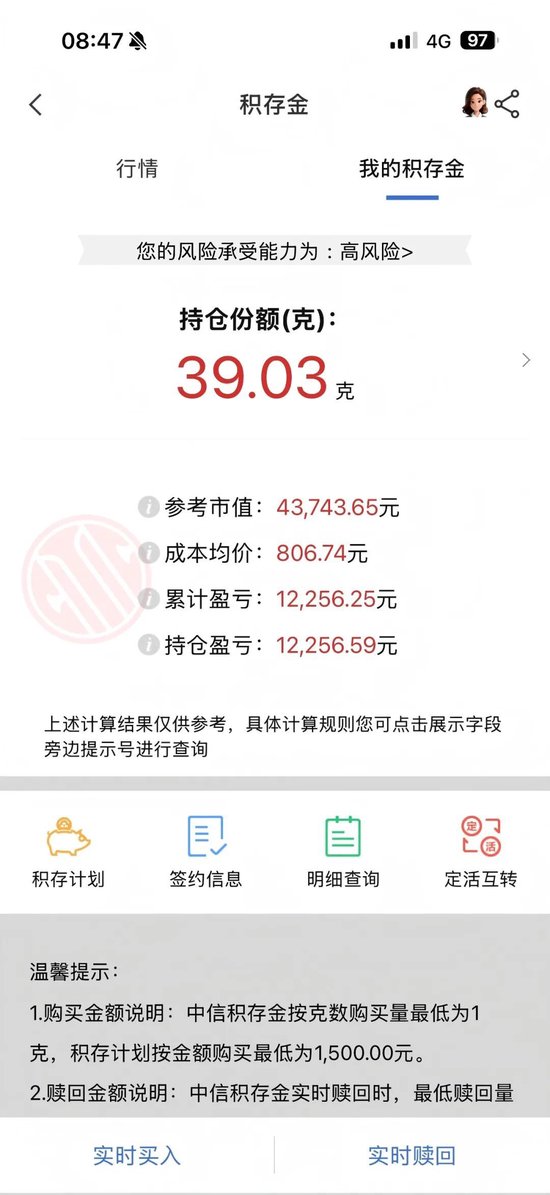
Core Viewpoint - The discussion around whether to hold or sell gold during the upcoming holiday season has become a focal point for investors, with banks providing insights on gold purchasing options during the holiday period [1] Group 1: Investor Behavior - An investor from Beijing, Ms. Ma, has been accumulating gold since February 2025, making 17 purchases to date, indicating a long-term investment strategy [1] - Ms. Ma reported her gold holding cost at 806.74 yuan per gram, with a floating profit of approximately 12,256 yuan, reflecting a positive investment outcome despite market fluctuations [1] Group 2: Bank Responses - Major banks, including Industrial and Commercial Bank of China, China Construction Bank, and Agricultural Bank of China, have stated that the gold market will be closed during the holiday, preventing the purchase or redemption of accumulated gold [1] - Customers interested in purchasing physical gold bars are advised to contact their bank branches in advance to check inventory availability [1]

精彩回顾 | 2026彭博全球大类资产配置论坛(视频回放)
彭博Bloomberg· 2026-02-12 06:05
Core Insights - The 2026 Global Asset Allocation Forum highlighted the dual nature of global markets, with AI driving tech stocks and gold/silver gaining attention, while the Federal Reserve's interest rate decisions remain a key variable for market liquidity [5][6]. Economic Outlook - The Chinese economy is expected to grow similarly to last year, with a focus on boosting consumption and a structural shift in the stock market driven by technology stocks and industrial profits, particularly in non-ferrous metals and IT sectors [8]. - The new economy is projected to contribute more to GDP growth than the declining real estate sector by 2027, indicating a significant phase in China's industrial transformation [8]. Offshore Credit Market - The global offshore credit market is showing significant divergence, with the U.S. growth outlook improving while Japan and Europe face lower expectations. The Federal Reserve is expected to maintain a loose monetary policy, contrasting with Japan's rate hikes [10]. Bond Market Insights - The bond market is experiencing structural changes due to macroeconomic volatility, inflation fluctuations, and geopolitical tensions. Key uncertainties include the impact of AI on the economy, U.S. unemployment rates, and inventory cycles [13]. - Investment strategies should focus on multi-asset and multi-strategy approaches to balance risk and achieve stable returns, leveraging AI for enhanced research and execution [13]. Currency and Gold Trends - The relationship between the U.S. dollar and gold is highlighted, with a long-term trend of dollar depreciation and gold appreciation expected to continue unless there are fundamental changes in U.S. fiscal policies [16][17]. - Short-term dollar stability is anticipated due to high real yields, market positioning, and seasonal trends [17]. Gold Market Dynamics - The gold market is experiencing heightened volatility due to increased participation and rapid information dissemination. However, the long-term bullish fundamentals for gold remain intact [21]. - Different gold investment products have unique characteristics, and the changing nature of gold's safe-haven status necessitates clear investment objectives [22]. - The precious metals sector is influenced by financial and safe-haven attributes, while industrial metals and rare earths are driven by supply-demand dynamics [22].

春节前,你的黄金该留还是卖?
Xin Lang Cai Jing· 2026-02-12 06:03
Core Viewpoint - The Shanghai Gold Exchange will be closed from February 14 to February 23, while the international precious metals market will continue to operate, leading to discussions among investors about whether to hold gold during the holiday period [1][17]. Group 1: Investor Perspectives - Investor Ms. Ma from Beijing has been purchasing gold since February 2025, currently holding 39.03 grams, with an average cost of 806.74 yuan per gram and a floating profit of approximately 12,256 yuan [1][17]. - Ms. Yan, another investor, plans to hold her physical gold bars long-term and is considering selling her accumulated gold if prices reach 1,200 or 1,300 yuan per gram [5][20]. - Investor Mr. Li, who bought 50,000 yuan worth of gold ETF shares, experienced a profit of about 3.45% as of February 11, but is uncertain about selling before the holiday due to potential market volatility [5][20]. Group 2: Market Operations and Regulations - During the holiday, banks like Industrial and Commercial Bank of China and China Construction Bank will implement limits on gold accumulation and redemption, with some services suspended [7][24]. - The announcement from banks regarding the suspension of gold repurchase services during non-trading days aims to manage risks associated with price fluctuations and operational pressures [11][27]. - The gold market has seen significant price volatility, with spot gold reaching a high of 5,100.21 USD per ounce, prompting experts to advise cautious investment strategies [12][27]. Group 3: Investment Strategies - Experts recommend that ordinary investors treat gold as a hedge in their asset allocation, keeping their gold holdings between 3% to 5% of total assets and favoring regulated channels like bank investment gold and gold ETFs [12][28]. - For conservative investors, a holding of 5% to 10% in physical gold or gold ETFs is suggested, while aggressive investors may increase their exposure but should lock in some profits before the holiday [28]. - Investors holding gold during the holiday should be aware of potential price fluctuations and consider using options to hedge against risks [16][32].