
康方生物

Search documents
三强争霸:PD-(L)1VEGF双抗的“速度与激情”
Ge Long Hui· 2025-11-28 04:09
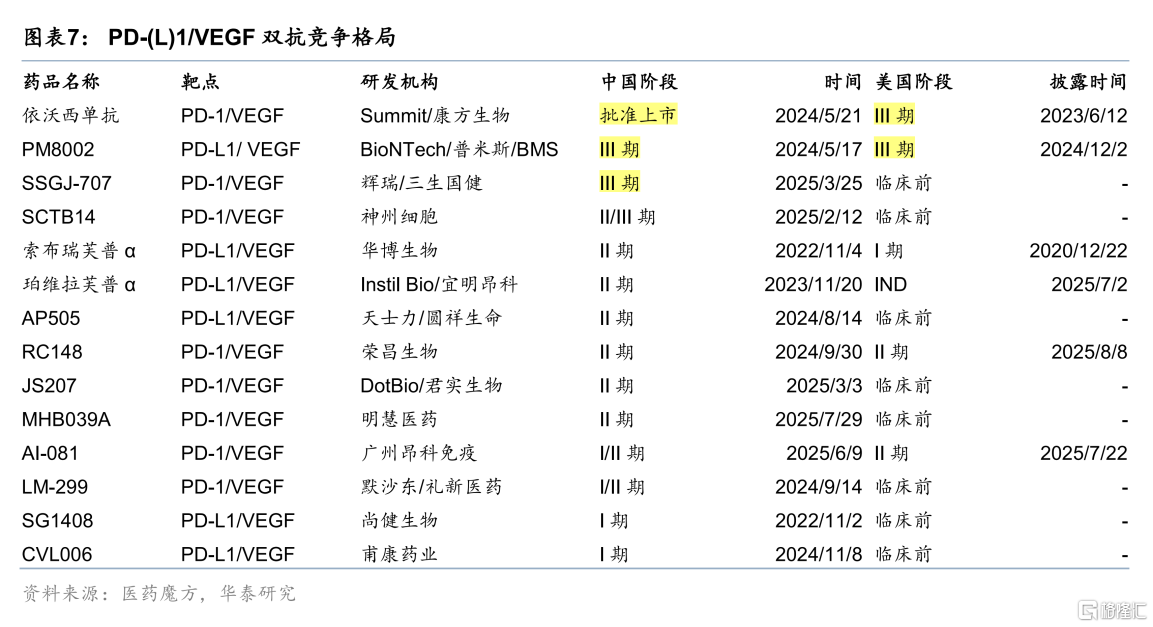
Core Insights - The focus in the PD-(L)1/VEGF bispecific antibody market has shifted from business development amounts to development efficiency and indication differentiation [1] - The competition is intensifying as multiple PD-(L)1/VEGF bispecific antibodies are entering Phase III clinical trials, emphasizing the importance of research speed and strategic indication planning [1] Domestic Indication Layout - The PD-(L)1/VEGF bispecific antibody market in China is characterized by rapid development and strategic positioning, with 康方生物/Summit’s Ivonescimab leading the way [2] - Ivonescimab has received approval for two indications in China, with projected sales of approximately 9 billion CNY in 2024 and 7.2 billion CNY in the first half of 2025, and a forecasted total sales exceeding 15 billion CNY in 2025 [2][3] Clinical Development and Market Potential - The first indication for Ivonescimab was approved in May 2024 for treating advanced non-squamous non-small cell lung cancer (nsq-NSCLC) after progression on EGFR-TKI therapy [3] - The second indication was approved in April 2025 for first-line treatment of PD-L1 positive (TPS≥1%) EGFR mutation negative and ALK negative advanced NSCLC [3] - The third indication for Ivonescimab is under review for first-line treatment of advanced squamous NSCLC [3] - The potential of the advanced lung cancer market is significant, with non-small cell lung cancer accounting for approximately 85% of all lung cancer cases [3] Competitive Landscape - The competitive landscape includes other key players such as BioNTech/BMS with PM8002 and Pfizer with SSGJ-707, both of which are also in late-stage clinical trials [5][6] - PM8002 is focusing on triple-negative breast cancer (TNBC) and small cell lung cancer (SCLC), while SSGJ-707 has initiated a head-to-head comparison with Keytruda for treating PD-L1 positive NSCLC [6][8] Global Market Dynamics - The global PD-(L)1/VEGF bispecific antibody market is dominated by three main players: 康方生物/Summit, BioNTech/BMS, and Pfizer, all of which are conducting Phase III clinical trials [8] - The strategies of these companies vary, with 康方生物 focusing on building a strong clinical barrier in the lung cancer market, BioNTech/BMS creating differentiation in TNBC and SCLC, and Pfizer leveraging its ADC advantages in colorectal cancer [18]



2026创新药前瞻:十年冰火淬炼,MNC专利悬崖背景下,如何理解“史诗级逆袭”?
Xin Lang Cai Jing· 2025-11-28 03:18
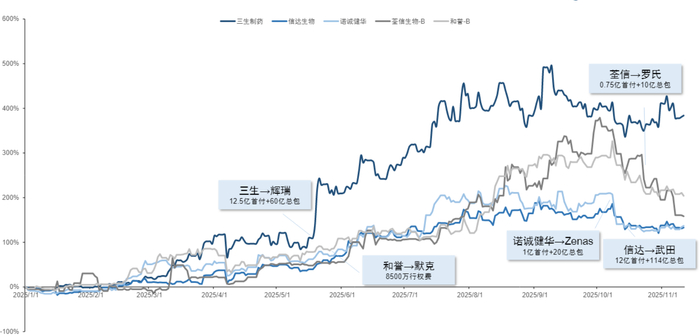
Core Viewpoint - The Chinese innovative pharmaceutical sector is experiencing unprecedented growth, with significant revenue increases and profitability improvements, marking a transformative decade since the reform of drug review and approval systems in 2015 [1][6]. Group 1: Financial Performance - In the first three quarters of 2025, the innovative drug sector's listed companies achieved a revenue of 48.83 billion yuan, a 22% increase year-on-year, while the net profit attributable to shareholders was -460 million yuan, improving by 71% [1]. - In Q3 2025 alone, the sector generated a revenue of 19.2 billion yuan, reflecting a 51% increase, and a net profit of 1.1 billion yuan, marking a 147% improvement [1]. Group 2: Key Company Highlights - BeiGene reported a Q3 2025 revenue of 10.077 billion yuan, a 41.1% year-on-year increase, and a net profit of 689 million yuan, turning profitable [2]. - For the first three quarters of 2025, BeiGene's revenue reached 27.595 billion yuan, up 44.2% year-on-year, with a net profit of 1.139 billion yuan, also indicating a turnaround [2]. Group 3: Business Development (BD) Trends - The innovative drug sector's profitability turnaround is largely attributed to rapid commercialization of innovative products, revenue from licensing fees, and milestone payments [8]. - Business Development (BD) has become a crucial revenue source for innovative drug companies, with a significant increase in licensing agreements, which accounted for 91% of total BD transactions in 2024, up from 45% in 2021 [10]. Group 4: Market Dynamics - The surge in BD activities is driven by the impending patent cliffs faced by multinational corporations (MNCs), which are seeking to replenish their pipelines as many blockbuster drugs are nearing patent expiration [19]. - In the first three quarters of 2025, MNCs accounted for 20% of global transactions and 39% of total transaction value, indicating a strong interest in Chinese innovative drugs [16]. Group 5: Innovation and Development Speed - China has surpassed the US in the number of original innovative drugs entering clinical trials, with 4,382 new drugs compared to the US's 4,009 from 2015 to 2024 [23]. - The speed of drug development in China is 2-3 times faster than international counterparts, with costs being only 1/3 to 1/2 of global best practices [31]. Group 6: Policy Support - The Chinese government has implemented supportive policies for innovative drugs, including a dual-track insurance system to facilitate access to high-value drugs and optimized procurement processes to ensure quality and clinical needs [39][40]. - The ongoing reforms and strategic planning by the government are expected to bolster the innovative drug sector, providing a stable environment for growth and development [41].
今日看点|恒生生物科技指数期货上市
Sou Hu Cai Jing· 2025-11-28 03:10
Group 1 - The Hang Seng Biotechnology Index futures will be listed for trading on November 28, reflecting the overall performance of the biotechnology sector in the Hong Kong stock market, covering notable companies such as Innovent Biologics, BeiGene, WuXi Biologics, and others, and is expected to benefit from the overseas expansion of innovative drugs and AI healthcare market trends [2][3] Group 2 - On November 28, a total of 11 companies will have their restricted shares unlocked, with a total of 109 million shares, amounting to a market value of 2.599 billion yuan at the latest closing price, with Shandong Water Gas and EVE Energy leading in terms of share unlock volume [4] - 16 companies have disclosed stock repurchase progress on November 28, with one company proposing a repurchase exceeding 40 million yuan, and another company, Guizhou Sanli, disclosing a repurchase plan of up to 1.432 million yuan [5]

一键布局创新药与CXO核心赛道 恒生生物科技ETF富国蓄势待发!
Zhong Guo Jing Ji Wang· 2025-11-28 02:16
Core Viewpoint - The Hong Kong pharmaceutical sector has attracted significant market attention this year, with southbound funds net buying over 160 billion yuan in the healthcare industry, ranking third among 12 Hang Seng primary sectors [1] Group 1: Policy and Industry Dynamics - The surge in southbound funds is driven by a threefold resonance of policy, industry, and capital, creating new opportunities for the biopharmaceutical sector [2] - Recent policies, including measures to support high-quality development of innovative drugs and the introduction of a fast-track listing process for unprofitable biotech firms, have injected strong momentum into industry innovation [2] - As of Q3, there are over 100 biopharmaceutical companies listed on the Hong Kong Stock Exchange, with a total market capitalization accounting for approximately 15% of the Hong Kong stock market [2] - China's innovative drug R&D capabilities are steadily improving, with the number of innovative drug pipelines expected to reach 4,804 by 2024, second only to the United States globally [2] - The compound annual growth rate (CAGR) of license-out transaction amounts for Chinese innovative drugs from 2019 to 2024 is as high as 125%, indicating a rapid internationalization of the sector [2] Group 2: Financial Environment - The liquidity of the Hong Kong pharmaceutical sector is expected to improve continuously due to the onset of the Federal Reserve's interest rate cut cycle and a more accommodative domestic monetary policy [3] - From January to August this year, the financing amount for domestic innovative drugs increased by over 40% year-on-year, reflecting a rapid recovery in the sector's financing vitality [3] Group 3: Investment Opportunities - The newly launched Hang Seng Biotech ETF (Fund Code: 159132) aims to provide investors with an efficient tool to invest in leading biotech companies listed in Hong Kong [4] - The Hang Seng Biotech Index, which the ETF tracks, includes 30 leading biotech, pharmaceutical, and medical device companies, with nearly 90% of its weight focused on high-growth sectors like innovative drugs and CXO [4] - The index has shown a cumulative increase of 58.9% since its inception, significantly outperforming the Hang Seng Healthcare Index (19.8%) and the Hang Seng Index (12.5%) [5] - The launch of Hang Seng Biotech Index futures on November 28 is expected to enhance market liquidity and trading activity by attracting institutional investors [5] Group 4: Management Expertise - The proposed fund manager for the Hang Seng Biotech ETF is a seasoned professional with over 12 years of experience in securities and more than 8 years in investment management, specializing in quantitative investment [6][7]
政策暖风+产业创新突破双重驱动 恒生生物科技ETF富国12月1日蓄势待发!
Quan Jing Wang· 2025-11-28 01:40
Core Viewpoint - The Hong Kong pharmaceutical sector has attracted significant market attention this year, with southbound funds net buying over 160 billion yuan in healthcare, ranking third among 12 Hang Seng primary industries [1] Group 1: Policy and Industry Dynamics - The surge in southbound funds in the Hong Kong pharmaceutical sector is driven by a combination of policy support, industry advancements, and capital influx, creating new opportunities for the biopharmaceutical industry [2] - Recent policies, including measures to support high-quality development of innovative drugs and the introduction of a fast-track listing process for unprofitable biotech companies, have provided strong momentum for industry innovation [2] - As of Q3, there are over 100 biopharmaceutical companies listed on the Hong Kong Stock Exchange, with a total market capitalization accounting for approximately 15% of the Hong Kong stock market [2] - China's innovative drug research and development capabilities are steadily improving, with the number of innovative drug pipelines expected to reach 4,804 by 2024, second only to the United States [2] - The license-out transaction value for Chinese innovative drugs has seen a compound annual growth rate of 125% from 2019 to 2024, with nearly 50 billion USD in overseas transactions expected in the first half of 2025 [2] Group 2: Financial Environment - The liquidity in the Hong Kong pharmaceutical sector is expected to improve, supported by the Federal Reserve's interest rate cuts and a more accommodative domestic monetary policy [3] - From January to August this year, the financing amount for domestic innovative drugs increased by over 40% year-on-year, indicating a rapid recovery in financing vitality within the sector [3] Group 3: Investment Opportunities - The upcoming launch of the Fuguo Hang Seng Biotechnology ETF (Fund Code: 159132) on December 1 aims to provide investors with an efficient tool to invest in leading biotech companies listed in Hong Kong [1][4] - The Hang Seng Biotechnology Index, which the ETF tracks, includes 30 leading biotech, pharmaceutical, and medical device companies, focusing on high-growth sectors such as innovative drugs and CXO services, with nearly 90% combined weight [4] - The index has shown a cumulative increase of 58.9% since its inception, significantly outperforming the Hang Seng Healthcare Index and the Hang Seng Index [5] - The introduction of futures for the Hang Seng Biotechnology Index on November 28 is expected to enhance market liquidity and attract more institutional investors [5]
港交所重磅期指上新,港股医药板块首个期指来了!恒生医药ETF(159892)流动性优势进一步放大
Ge Long Hui· 2025-11-28 01:24
Group 1 - The Hong Kong Stock Exchange launched the "Hang Seng Biotechnology Index Futures" on November 28, marking an important expansion of the Hong Kong stock derivatives system and providing a dedicated risk management tool for the biotechnology sector [1] - The biotechnology industry is characterized by high volatility and high growth, with the annualized volatility of the Hang Seng Biotechnology Index reaching 39.4% as of October 31, 2025 [1] - The introduction of index futures aims to provide institutions with a "risk management foundation," allowing them to hedge volatility while capturing growth through ETFs [1] Group 2 - The Hang Seng Medical ETF focuses on two high-growth sectors: "innovative drugs + CXO," and underwent its largest-ever adjustment in September, reducing its constituent stocks from 50 to 30, thereby enhancing the purity of core assets [2] - The latest weighted stocks in the ETF include globally competitive innovative drug and R&D service companies such as BeiGene, WuXi Biologics, Innovent Biologics, and CanSino Biologics, with the top ten constituent stocks accounting for 70% of the total weight [2] - Historically, the Hang Seng Biotechnology Index saw a peak increase of 112% this year, and as of November 27, it recorded a year-to-date increase of 83.36%, significantly outperforming the broader market [2]
11月28日正式交易!恒生医药板块唯一期指来了
Zhong Guo Jing Ji Wang· 2025-11-28 00:18
Core Viewpoint - The launch of the Hang Seng Biotechnology Index futures on November 28, 2025, marks a significant enhancement in the investment landscape of the biotechnology sector in Hong Kong, indicating the industry's growing importance in thematic investments [1][2]. Group 1: Index Futures Launch - The Hang Seng Biotechnology Index futures will officially trade starting November 28, 2025, with the underlying asset being the Hang Seng Medicine ETF (159892) [1]. - This product is the first new index futures in Hong Kong's stock market in five years, reflecting the increasing prominence of the pharmaceutical industry [1]. - The introduction of this futures product enriches the range of derivative products in the Hang Seng Index series and strengthens the risk management and capital allocation capabilities of the biotechnology sector [1][3]. Group 2: Investment Value in Biotechnology - The Hang Seng Biotechnology Index focuses on 30 leading biotechnology companies listed in Hong Kong, capturing the core development trends of the industry [2]. - As of November 25, 2025, the index has seen an annual increase of over 80%, significantly outperforming the Hang Seng Composite Index [2]. - The biotechnology sector is supported by long-term trends such as an aging population and increasing medical demands, which continue to open up growth opportunities [2]. Group 3: Derivative Tools and Market Dynamics - The introduction of the Hang Seng Biotechnology Index futures serves as a crucial risk management tool for the high-growth and high-volatility characteristics of the biotechnology sector [3]. - Similar index derivatives have shown strong market vitality, with the Hang Seng Technology Index futures experiencing a 31% increase in average daily trading volume in the first three quarters of 2025 compared to the previous year [3]. - The collaboration between index futures and ETFs is expected to optimize the capital ecosystem of the biotechnology industry, attracting institutional investors and enhancing liquidity and pricing efficiency [4]. Group 4: Future Prospects - The launch of the Hang Seng Biotechnology Index futures is anticipated to promote the deep integration of innovative resources and capital markets in the biotechnology field, supporting long-term healthy development of the industry [4].
南向资金今日净买入13.28亿港元,阿里巴巴-W净买入9.19亿港元
Zheng Quan Shi Bao Wang· 2025-11-27 15:13
Market Overview - The Hang Seng Index rose by 0.07% on November 27, with total southbound trading amounting to HKD 86.624 billion, including HKD 43.976 billion in buying and HKD 42.648 billion in selling, resulting in a net buying amount of HKD 1.328 billion [2][3]. Southbound Trading Details - Southbound trading through the Shenzhen Stock Connect totaled HKD 31.299 billion, with buying at HKD 15.996 billion and selling at HKD 15.303 billion, leading to a net buying of HKD 0.693 billion [2]. - The Shanghai Stock Connect saw a total trading amount of HKD 55.325 billion, with buying at HKD 27.980 billion and selling at HKD 27.345 billion, resulting in a net buying of HKD 0.635 billion [2]. Active Stocks - Alibaba-W had the highest trading volume among southbound stocks, with a total trading amount of HKD 109.85 billion and a net buying of HKD 9.19 billion, despite a closing price drop of 2.71% [2][3]. - Other notable stocks included Xiaomi Group-W with a trading amount of HKD 51.88 billion and a net selling of HKD 6.89 billion, and SMIC with a trading amount of HKD 41.43 billion [2][3]. Continuous Net Buying and Selling - Alibaba-W has been continuously net bought for 11 days, with a total net buying amount of HKD 25.449 billion during this period [3]. - Two stocks, SMIC and Tencent Holdings, experienced continuous net selling, with net selling amounts of HKD 1.893 billion and HKD 1.528 billion, respectively [3].

港股通(深)净买入6.93亿港元
Zheng Quan Shi Bao Wang· 2025-11-27 15:09
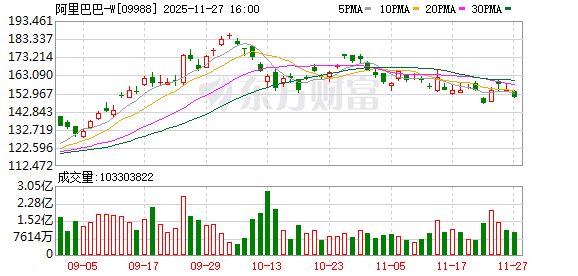
Core Points - The Hang Seng Index rose by 0.07% to close at 25,945.93 points on November 27, with a net inflow of HKD 1.328 billion through the southbound trading channel [1] - The total trading volume for the southbound trading was HKD 86.624 billion, with a net buy of HKD 1.328 billion [1] - In the Shanghai-Hong Kong Stock Connect, the trading volume was HKD 55.325 billion with a net buy of HKD 0.635 billion, while in the Shenzhen-Hong Kong Stock Connect, the trading volume was HKD 31.299 billion with a net buy of HKD 0.693 billion [1] Trading Activity - Alibaba-W was the most actively traded stock in the Shanghai-Hong Kong Stock Connect with a trading volume of HKD 73.15 billion and a net buy of HKD 6.02 billion, despite a closing price drop of 2.71% [1][2] - Xiaomi Group-W followed with a trading volume of HKD 35.41 billion and a net sell of HKD 5.37 billion, closing up by 2.49% [1][2] - In the Shenzhen-Hong Kong Stock Connect, Alibaba-W also led with a trading volume of HKD 36.70 billion and a net buy of HKD 3.17 billion, while Xiaomi Group-W had a net sell of HKD 1.52 billion [2] Summary of Active Stocks - The top ten actively traded stocks included Alibaba-W, Xiaomi Group-W, and Tencent Holdings, with respective trading volumes of HKD 73.15 billion, HKD 35.41 billion, and HKD 28.17 billion [1][2] - The net buy and sell amounts for these stocks indicated a strong interest in Alibaba-W, while Xiaomi Group-W faced significant selling pressure [1][2]




北水成交净买入13.28亿 芯片股遭内资抛售 阿里再获9亿港元加仓
Zhi Tong Cai Jing· 2025-11-27 13:05
Group 1: Market Overview - On November 27, the Hong Kong stock market saw a net inflow of 1.328 billion HKD from northbound trading, with 635 million HKD from the Shanghai Stock Connect and 693 million HKD from the Shenzhen Stock Connect [2] - The most net bought stocks included Alibaba-W (09988), Pop Mart (09992), and Meituan-W (03690), while the most net sold stocks were Zijin Mining (601899) (02899), Tencent (00700), and SMIC (00981) [2] Group 2: Stock Performance - Alibaba-W had a net inflow of 6.02 billion HKD, with a buy amount of 39.59 billion HKD and a sell amount of 33.57 billion HKD [3] - Pop Mart received a net inflow of 4.34 billion HKD, supported by positive sales data in the U.S. and expectations for strong performance during the holiday season [6] - Meituan-W had a net inflow of 3.25 billion HKD, with insights from Alibaba's CFO indicating a potential reduction in investment in flash purchase business due to improved efficiency [6] Group 3: Sector Insights - Longi Green Energy (601869) and Long Fiber (06869) saw a net inflow of 42.81 million HKD, driven by advancements in AI-driven growth and the development of next-generation optical fiber technology [7] - Semiconductor stocks, including Huahong Semiconductor (01347) and SMIC (00981), faced net sell-offs, with net outflows of 138.5 million HKD and 2.32 billion HKD respectively [7] - The IPO of domestic GPU leader Moore Threads has attracted attention, marking a significant event in the semiconductor sector [7]


