
雀巢

Search documents
2025年中国宠物食品行业消费比重、细分市场结构及重点企业营收
Sou Hu Cai Jing· 2025-09-25 03:31
Core Insights - The pet industry in China is experiencing rapid growth due to increased urbanization, aging population, and rising demand for emotional support, with the pet food sector being the largest beneficiary [2][4] - In 2022, the urban pet consumption market in China reached 270.6 billion yuan, with the pet food market accounting for approximately 137.1 billion yuan, representing 50.7% of the total [2][4] Market Overview - The number of pets in China reached nearly 190 million in 2022, indicating a significant increase in pet ownership and a growing market for pet food [4] - The pet food market is expected to see steady growth driven by rising disposable income and changing consumer attitudes towards pet care [4] Consumption Structure - In 2022, the consumption structure of pet food in China showed that staple food accounted for the largest share at 69.6%, followed by snacks at 26.2% and nutritional products at 4.1% [5] - The market size for staple pet food was approximately 95.5 billion yuan, an increase of 6.3 billion yuan from 2021, while the snack market grew by 1.4 billion yuan to reach 35.9 billion yuan [5] Industry Maturity - The Chinese pet industry is on the brink of maturity, with potential for increased per pet spending, which was only 38 USD in 2022 compared to 256 USD in Japan [8] - As pet ownership penetration increases and consumer spending upgrades, there is significant room for growth in both pet ownership and per pet expenditure [8] Competitive Landscape - Initially, foreign brands dominated the pet food market in China, but domestic brands are gaining traction, with local companies now holding 55% of the top ten market share in 2022 [10] - Notably, Guobao Pet surpassed Nestlé to become the second-largest player in the industry with a market share of 4.8% [10] Company Performance - Guobao Pet and Zhongchong Co. achieved revenues of 3.398 billion yuan and 3.248 billion yuan respectively in 2022, with their snack revenue accounting for 57.5% and 63.6% of total revenue [12]

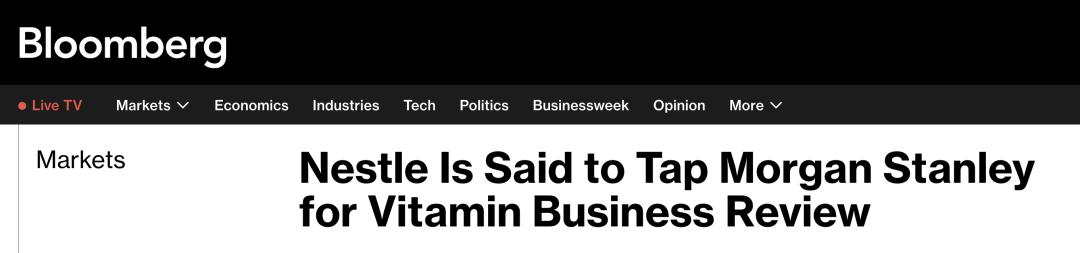
突发,雀巢计划出售维生素业务,摩根士丹利启动战略审查
3 6 Ke· 2025-09-25 01:54
Core Viewpoint - Nestlé is conducting a strategic review of its vitamin business, potentially leading to the sale of related brands, as it reassesses underperforming segments within its portfolio [1][3]. Group 1: Strategic Review and Potential Sale - Morgan Stanley has been tasked with exploring options for Nestlé's vitamin department, with asset valuations estimated between €3 billion (approximately $3.5 billion) and €4 billion [3]. - The vitamin business, while not a core area for Nestlé, plays a role in its health and nutrition strategy, including well-known brands like Nature's Bounty and Puritan's Pride, which generate annual revenues of about CHF 1 billion (approximately $1.3 billion) [3][5]. Group 2: Market Challenges and Strategic Focus - The vitamin market, particularly in the low-end segment, has become increasingly competitive, leading to price pressures and commoditization risks for many brands [5]. - Nestlé aims to focus on high-end brands with greater market barriers and profit potential, as indicated in its recent financial discussions, emphasizing brands like Garden of Life and Solgar [5][6]. Group 3: Leadership Changes and Investor Sentiment - Recent leadership changes, including the resignation of former CEO Laurent Freixe and the chairman Paul Bulcke, have contributed to uncertainty within the company [5][6]. - Since the appointment of new CEO Philippe Navratil, investor confidence has declined, with Nestlé's stock price dropping approximately 45% since its peak in 2022, amid rising debt levels and concerns over future growth [6][7]. Group 4: Future Outlook and Strategic Direction - The strategic review of the vitamin business is seen as a response to increasing market pressures, with the company looking to streamline operations and focus on more profitable product lines [6][7]. - Analysts suggest that selling low-end vitamin brands could provide short-term cash flow, but the long-term impact on growth remains uncertain [7].

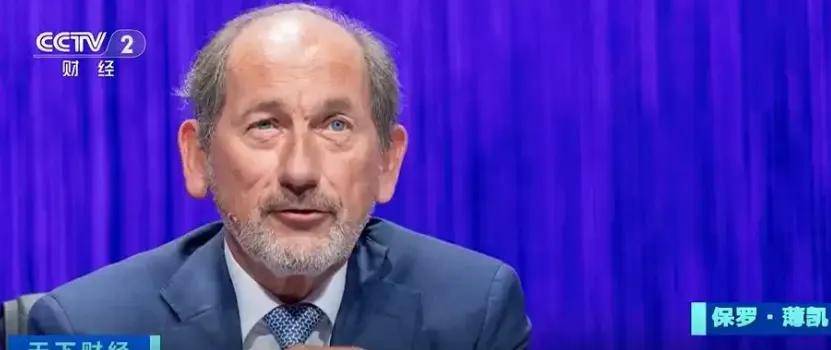
雀巢董事长站好最后一班岗:带着新高管访华丨消费参考
2 1 Shi Ji Jing Ji Bao Dao· 2025-09-25 00:54
Group 1 - Nestlé's emphasis on the Chinese market is evident, with significant leadership changes and a high-level visit to China by the board members [2][4][3] - The new chairman, Pablo Isla, will officially take over on October 1, following Paul Bulcke's early resignation [2][4] - Despite internal changes, the Chinese market remains a priority for Nestlé, being its second-largest market globally, with a sales figure of approximately 50 billion Swiss francs (about 408.69 billion RMB) in the Greater China region [4] Group 2 - Nestlé's sales in the Greater China region declined by 6.4% in the first half of the year, with sales amounting to 24.7 billion Swiss francs (approximately 223 billion RMB) compared to 26.39 billion Swiss francs (approximately 238 billion RMB) in the same period last year [5] - Overall, Nestlé's revenue decreased by 1.8% to 442.28 billion Swiss francs (approximately 398.5 billion RMB) in the first half of the year, with net profit down by 10.3% to 50.65 billion Swiss francs (approximately 456 billion RMB) [6] - The recovery of growth in the Chinese market is crucial for Nestlé's overall performance, prompting significant adjustments within its Chinese operations [7][8]
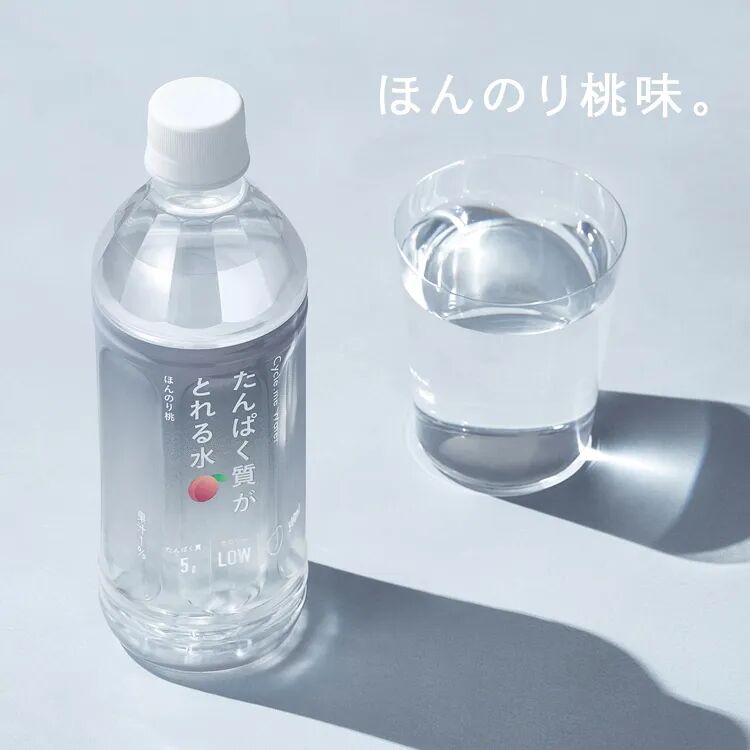
日本7-Eleven卖的这瓶“水”,居然能补5g蛋白质
3 6 Ke· 2025-09-24 01:31
Core Insights - The article discusses the launch of a transparent protein water product by Japan's 7-Eleven private brand Cycle.me, which aims to change consumer perceptions of protein beverages traditionally associated with dairy products [3][9]. Product Overview - Cycle.me's protein water is a unique offering that contains 5g of protein per bottle, utilizing low molecular collagen protein as its primary ingredient [12][16]. - The product is priced at 193 yen (approximately 9.3 RMB) and is marketed as a low-calorie, refreshing drink with a subtle peach flavor [10][12]. Market Trends - Consumer interest in protein as a desirable nutrient has been rising, with a market forecast indicating a 2.8% increase in demand for protein food and beverages in Japan, reaching 276.3 billion yen (approximately 11.4 billion RMB) by 2024 [12][22]. - The trend towards lighter, more accessible protein products is evident, with Cycle.me positioning its protein water as a daily supplement rather than a meal replacement [16][38]. Development Challenges - The development of the transparent protein water faced challenges in maintaining clarity and taste, requiring extensive optimization of raw materials and production processes [14][19]. - Collaboration with DyDo, a major Japanese beverage manufacturer, was crucial in achieving the desired product characteristics [14][19]. Competitive Landscape - The article highlights the growing popularity of clear protein products in both Japan and the West, with various brands exploring different formulations and marketing strategies [20][22]. - In the U.S. market, clear whey protein has gained traction, with a projected market size of $2.72 billion in 2023 and an expected annual growth rate of 6.7% from 2024 to 2030 [22][24]. Consumer Reception - Initial consumer reactions to Cycle.me's protein water have been mixed, with some expressing curiosity and others preferring traditional protein sources like boiled eggs [6][7]. - The product's unique texture and flavor profile have sparked discussions on social media, indicating a blend of intrigue and skepticism among potential buyers [6][7].

雀巢董事长提前结束任期背后:短期效益忧虑下,雀巢“偏颇”主线?
Sou Hu Cai Jing· 2025-09-23 02:15
Group 1 - The core point of the article is the early resignation of Nestlé's chairman Paul Bulcke, which reflects investor dissatisfaction with the company's leadership and management direction [2][5][7] - Paul Bulcke's departure was accelerated by seven months due to investor impatience, particularly regarding his leniency towards former CEO Mark Schneider and hesitance during the Laurent Freixe scandal [2][5] - Nestlé has experienced frequent management changes in recent years, indicating a conflict between the need for innovative business development and a conservative financial approach [2][5] Group 2 - Large investors have expressed dissatisfaction with Nestlé's current leadership, contributing to Paul Bulcke's early exit [5] - Historically, Nestlé has maintained a conservative financial style, which has been challenged by recent capital actions and management decisions [5][6] - Under Mark Schneider's leadership, Nestlé's stock price rose significantly, but this was accompanied by increased debt levels, with net debt/EBITDA rising from 1.8x in 2020 to 3.0x in 2024, a 66.7% increase [6] Group 3 - Paul Bulcke's early resignation was somewhat anticipated, as his internal standing had been gradually weakened, evidenced by a drop in shareholder support from 96% in 2017 to 84.8% in 2023 [10][11] - Pablo Isla, the incoming chairman, has a strong background in retail and previously led Inditex, where he oversaw significant expansion [12] - The challenge for Pablo Isla will be to balance Nestlé's traditional conservative financial approach with the urgent need for transformation and growth in profitability [13]
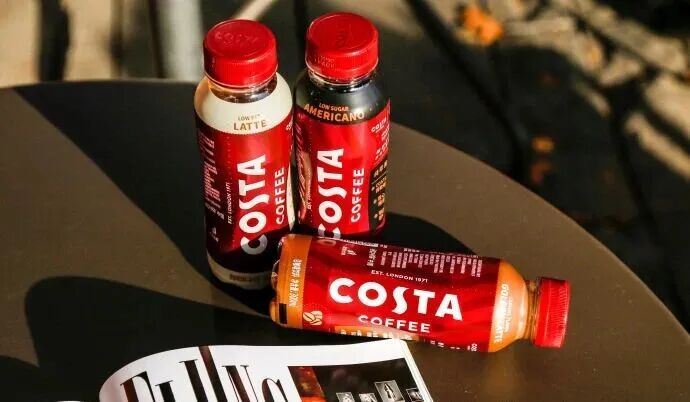
可口可乐公司要留着“自己干”,可能将继续控制COSTA咖啡即饮业务,毕竟5年内做到中国市场前三
3 6 Ke· 2025-09-23 01:00
Group 1 - Coca-Cola is reportedly looking to sell the Costa Coffee store business while retaining control over its ready-to-drink (RTD) products [1][3][4] - Apollo Global Management, a potential buyer, has decided not to participate in the bidding process, indicating a lack of strong interest from other bidders as well [3][4] - The initial valuation for Costa Coffee during the sale process was approximately £2 billion (around 194 billion RMB) [3][4] Group 2 - Costa Coffee, acquired by Coca-Cola in 2018 for £3.9 billion, has expanded its business to over 4,000 locations globally, with a significant presence in the UK and Ireland [4][6] - In China, Costa's retail business is primarily managed separately from its RTD coffee, which is expected to remain under Coca-Cola's control [6][9] - The ready-to-drink coffee market in China is dominated by foreign brands, with Nestlé leading, followed by Starbucks and Costa [7][8] Group 3 - Costa Coffee's pricing strategy positions its products slightly above local competitors but below Starbucks, making it competitive in the market [7][8] - The RTD coffee products launched in China are developed with local preferences in mind, utilizing a collaborative team from both Coca-Cola and Costa [9][11] - The potential sale of Costa's store business raises questions about how Coca-Cola will continue to innovate and draw inspiration for its RTD products without the direct influence of the store operations [11][13] Group 4 - Coca-Cola's CEO has emphasized the importance of creating overall value for the ecosystem and consumers in any acquisition or divestiture strategy [13][14] - The coffee segment is recognized as a significant growth area within the beverage industry, and Coca-Cola aims to find deeper engagement in this market [14]

“羊奶粉”存货周转361天,宜品集团利润大降
阿尔法工场研究院· 2025-09-22 00:07
Core Viewpoint - Yipin Group, a major player in the goat milk powder market, is facing challenges due to declining performance, high inventory turnover, and intense competition from industry giants [2][3][5]. Financial Performance - In the first half of 2025, Yipin Group reported revenue of 806 million yuan, a decrease of 10.36% compared to 900 million yuan in the same period of 2024; net profit fell by 42.57% to 56.688 million yuan [7]. - This marks the first time in recent years that both revenue and net profit have declined simultaneously, indicating a significant reduction in growth momentum [7]. - The decline in performance is attributed to packaging upgrades for infant goat milk powder, which delayed shipments from distributors [7]. Market Position and Competition - Yipin Group holds the second-largest market share in China's goat milk powder market at approximately 14%, but faces increasing pressure from leading companies like Ausnutria, which holds 24.8% market share [7][8]. - The competitive landscape is further complicated by cross-industry giants entering the market, such as Feihe, which has introduced mixed formula products that directly impact Yipin's core market [8]. Inventory Management - Yipin Group's inventory turnover period has extended to nearly one year, with inventory levels reaching 802 million yuan in the first half of 2025, indicating operational inefficiencies [10][11]. - The company reported inventory turnover days of 361 days, significantly higher than the industry average, leading to increased financial pressure and potential risks of inventory devaluation [11][12]. Research and Development - Yipin Group's R&D investment is notably low compared to industry leaders, with R&D expenses of only 4 million yuan in the first half of 2025, resulting in a R&D expense ratio of 0.5% [13]. - This lack of investment in R&D may hinder the company's ability to enhance its competitive edge in both goat milk powder and special medical food segments [13]. Governance and Shareholder Concerns - The company's ownership structure raises concerns, with the founder and related entities holding approximately 75.11% of shares, leading to potential governance issues [15][16]. - Yipin Group's plan to distribute significant dividends prior to its IPO has sparked debate regarding the protection of minority shareholders' interests [15][16]. Future Opportunities - Despite current challenges, Yipin Group has the potential to leverage its IPO to address issues such as R&D deficiencies and channel imbalances, which could lead to long-term growth [17]. - The company plans to use IPO proceeds for R&D center development, online channel expansion, and supply chain optimization, which could enhance its market position if executed effectively [17].

雀巢洗牌 CEO遭解雇后 曾支持他的董事会主席卸任
2 1 Shi Ji Jing Ji Bao Dao· 2025-09-19 23:18
Core Viewpoint - Nestlé is undergoing a significant leadership transition, with Paul Bulcke stepping down and Pablo Isla taking over as chairman, while Philipp Navratil has been appointed as the new CEO following the dismissal of Laurent Freixe due to a violation of the company's code of conduct [1][2][5]. Leadership Changes - Paul Bulcke announced his early resignation to facilitate a smooth transition for Pablo Isla and Philipp Navratil to advance Nestlé's strategy [1]. - Dick Boer will become the new lead independent director and vice chairman of the board, while Marie-Gabrielle Ineichen-Fleisch will serve as vice chairman [1]. Strategic Focus - Under Laurent Freixe, Nestlé initiated a major reform focusing on three key areas: operational efficiency aiming for an additional cost savings of at least 2.5 billion Swiss francs by the end of 2027, increasing advertising and marketing investments to 9% of sales by 2025, and enhancing capabilities to become a fully interconnected enterprise [2][3]. Market Adjustments - The restructuring includes a significant change in the geographical market organization, with the Greater China Region being merged back into the Asia, Oceania, and Africa region starting in 2025 [3]. - The new leadership team in China is expected to continue the strategic focus on the market, with a commitment to invest resources for growth [4][5]. Performance Metrics - Nestlé's sales in the Greater China Region fell to 2.47 billion Swiss francs in the first half of the year, a decline of 6.4% compared to the previous year [8]. - Overall, Nestlé's revenue decreased by 1.8% to 44.228 billion Swiss francs, with net profit down 10.3% to 5.065 billion Swiss francs [9]. Future Outlook - The new management's commitment to maintaining the existing strategic direction and performance improvement plans is crucial as the company navigates through this transition [7][10].
钟薛高:“雪糕刺客”跌落启示录
Zhong Guo Jing Ying Bao· 2025-09-19 21:11
Core Viewpoint - The rapid rise and fall of Zhong Xue Gao, once known as the "Hermès of ice cream," highlights the challenges faced by new consumer brands and the ongoing transformation in the industry, emphasizing the need for genuine product value and effective crisis management [3][21][22] Group 1: Company Overview - Zhong Xue Gao was established in 2018 and quickly gained popularity with its unique tile-shaped ice cream and high-end positioning, achieving over 1 billion yuan in revenue in its first year and 1 billion yuan in sales by 2021 [3][4] - The company faced significant challenges starting in 2022, including issues with product quality and employee retention, leading to a decline in consumer trust and market presence [4][5][7] - As of September 18, 2023, Zhong Xue Gao had 26 consumption restriction orders and 72 legal cases against it, with only 2 employees remaining and all 21 branches closed [3][4] Group 2: Market Positioning and Pricing Strategy - The core issue leading to Zhong Xue Gao's decline was a significant disconnect between its pricing strategy and perceived product value, with marketing and logistics costs consuming a large portion of revenue [4][5][6] - The company’s marketing expenses reached 320 million yuan in 2021, resulting in a net profit margin of less than 5%, indicating that the high price point was not sustainable [5][6] - The brand's attempt to position itself as a high-end product without a solid foundation in quality and consumer trust ultimately led to its downfall [6][21] Group 3: Financial and Capital Issues - Zhong Xue Gao's reliance on capital for rapid expansion resulted in a significant debt crisis, with a valuation drop from 4 billion yuan to substantial liabilities [10][12] - The aggressive growth strategy, driven by investor expectations, led to unsustainable operational practices, including a high rate of store openings that did not yield profitable sales [10][11] - By March 2023, the company faced a cash flow crisis, with cash reserves plummeting to 47 million yuan and accounts payable reaching 120 million yuan [11][12] Group 4: Supply Chain and Distribution Challenges - The company invested heavily in its distribution network, including over 50,000 self-owned freezers, but this led to increased channel costs and cash flow pressure [14][15] - The rapid expansion into lower-tier markets without proper market fit resulted in a mismatch between product pricing and consumer expectations, further damaging the brand's image [15][16] - The reliance on third-party logistics and high operational costs contributed to inventory issues, with turnover days exceeding 90 days and significant stockpiling by distributors [15][17] Group 5: Consumer Trust and Brand Management - The decline in consumer trust was exacerbated by negative publicity surrounding product quality, leading to a significant drop in online sales and a backlash from distributors [7][18] - The company's failure to effectively manage its public relations during crises resulted in a loss of brand reputation, with consumers perceiving the brand as arrogant [18][22] - The case of Zhong Xue Gao serves as a cautionary tale for new consumer brands, emphasizing the importance of maintaining product integrity and consumer trust in a competitive market [21][22]
X @The Economist
The Economist· 2025-09-19 19:20
Today on “The Intelligence”: Can India become an AI superpower, meltdown at Nestlé and remembering Robert Redford https://t.co/Q5KDoaZ9iu ...