ABB

Search documents
清华学霸,干出200亿IPO,这家机构大赚20亿
创业邦· 2025-07-09 03:05
Core Viewpoint - The article highlights the successful IPO of logistics robot company Geek+ on the Hong Kong Stock Exchange, emphasizing its market leadership and significant revenue growth, particularly from overseas markets [2][20]. Company Overview - Geek+ was founded in 2015 by Tsinghua University alumni Zheng Yong, Li Hongbo, Liu Kai, and Chen Xi, and has become a leading provider of Autonomous Mobile Robot (AMR) solutions for warehouse fulfillment, with projected revenues of 2.4 billion RMB in 2024 [3][20]. - The company has delivered approximately 56,000 AMRs to over 40 countries and regions, with 70% of its revenue coming from international markets [4][21]. Business Model and Technology - Geek+ specializes in warehouse automation through AMRs, which enhance operational efficiency and reduce costs compared to traditional labor methods [3][21]. - The company has developed a comprehensive robotic solution covering the entire logistics process, including handling, picking, sorting, and replenishment [13][21]. - Geek+ operates the Robot Matrix platform, the world's first universal technology platform for warehouse robots, enabling innovation and development in AMR solutions [21]. Financial Performance - Geek+ has experienced rapid revenue growth, with a compound annual growth rate of 30%, increasing from 1.45 billion RMB in 2022 to 2.41 billion RMB in 2024 [23]. - The company has shown improvement in its financials, with adjusted net losses decreasing from 820 million RMB in 2022 to 90 million RMB in 2024 [23]. Investment and Shareholder Insights - Geek+ has completed 11 rounds of financing, attracting investments from notable firms such as Hillhouse Capital, Warburg Pincus, and IDG Capital, with early investors seeing significant returns [15][18]. - Post-IPO, Hillhouse Capital holds 2.92% of the total shares, valued at approximately 584 million RMB, while Warburg Pincus is the largest external shareholder with a 10.58% stake [18][19]. Market Context - The article notes that multiple companies, including Geek+, went public on the same day, reflecting a robust IPO market in Hong Kong, which has seen a significant increase in fundraising compared to the previous year [24].


“工业具身智能第一股”,供应链依赖进口
阿尔法工场研究院· 2025-07-08 12:22
Core Viewpoint - Stand Robot has submitted its prospectus to the Hong Kong Stock Exchange, aiming to become the first "industrial embodied intelligence stock" through the "Chapter 18C" listing process [1] Group 1: Industry Status and Company Overview - The global industrial intelligent mobile robot market is expanding at a compound annual growth rate (CAGR) of 27.5%, expected to reach $3.003 billion by 2029 [2] - Stand Robot, as a leading Chinese industrial mobile robot company, anticipates revenue growth from 96 million yuan in 2022 to 251 million yuan in 2024, with a CAGR of 61.3%, significantly surpassing the industry growth rate of 26.8% [2] - The company's gross margin improved from 12.9% to 38.8%, indicating enhanced product competitiveness [2] - However, Stand Robot has incurred a cumulative net loss of 273 million yuan over three years, primarily due to high R&D investments (18-21% of revenue) and market expansion costs [2] - By 2024, Stand Robot is projected to rank fifth globally in industrial mobile robots and fourth in embodied intelligent robots, holding the second position in the 3C electronics and automotive sectors [2] Group 2: Technical Advantages and Market Performance - Stand Robot's core competitiveness lies in providing customized robotic solutions for diverse industrial scenarios, being the first in China to achieve "world model" and "swarm intelligence" in industrial robot systems [3] - The modular design concept ("1+N+X") significantly reduces total ownership costs for customers, with high-end models priced at 250,000 yuan per unit, well above the industry average of 80,000 to 100,000 yuan for low-end products [3] - The company serves over 400 clients, including Xiaomi Automotive and Foxconn, with a customer retention rate exceeding 60% [4] - In the semiconductor sector, its wafer handling solution boasts vibration control precision of less than 0.1G and a failure rate of less than 0.1 occurrences per thousand hours, optimizing five times better than the industry average [4] Group 3: Peer Comparison - Stand Robot is compared with other companies in the industry, highlighting its position as the fifth largest mobile robot manufacturer globally and second in the 3C/automotive sector [6] - Key challenges include ongoing losses and supply chain stability risks, as evidenced by delivery delays in 2022 due to shortages of imported components [6] Group 4: Development Prospects - Stand Robot plans to allocate 40% of its IPO proceeds to R&D and 30% to global expansion [7] - The company's overseas revenue has grown at a CAGR of 150% over three years, with the Japanese market accounting for 15% of its revenue [7] - The industrial embodied intelligence sector is expected to grow at a CAGR of 61.1%, reaching 15.2 billion yuan by 2029, providing significant growth opportunities for the company [7]

【招银研究|行业深度】高端装备之船舶电动化——综合电力系统(IPS):船舶动力的绿色革命
招商银行研究· 2025-07-08 10:35
Core Viewpoints - The development of Integrated Power Systems (IPS) is driven by the dual forces of military-civilian integration and the green shipping revolution, emphasizing environmental protection, economic efficiency, and technological performance improvements [1][28]. Group 1: Development Trends - The IPS technology has expanded into civilian applications since the 2000s, with a focus on direct current (DC) networking and electric propulsion becoming dominant [1][4]. - The IPS consists of two main components: the energy system and the electric propulsion system, with the energy system evolving to support multiple energy sources, including traditional fossil fuels, nuclear energy, and renewables [5][7]. Group 2: System Architecture - The architecture of electric propulsion ships has fundamentally restructured the power and energy systems, focusing on four key areas: switching power sources, upgrading energy transmission, transforming propulsion methods, and integrating shore power systems [2][48]. - The transition from traditional mechanical propulsion to electric propulsion is accelerating, with electric propulsion systems offering significant advantages in efficiency and environmental impact [19][34]. Group 3: Competitive Landscape - China, as the world's largest shipping nation and second-largest shipbuilding country, is in a catch-up phase in the IPS field, with European giants currently holding nearly 50% of the global market share [2][3]. - Chinese companies are making substantial progress in core technologies, with notable advancements in key product development and engineering applications [2][3]. Group 4: Business Opportunities - The acceleration of Chinese enterprises in the IPS sector presents significant business opportunities, driven by the need for green transformation in the shipping industry [3][34]. - The market for shipborne generators and electric motors is experiencing steady growth, with the shipborne generator market in China projected to reach 48 billion yuan in 2023, growing by 7.5% year-on-year [51][70].

刷新速度、负载上限,协作机器人破局“工业级”
2 1 Shi Ji Jing Ji Bao Dao· 2025-07-07 09:24
协作机器人的快速"上新",背后不仅有大型企业复杂产线的升级需求,也有中小企业的自动化起步。 "过去几年,机器人行业尤其是协作机器人显著增长。"ABB机器人业务部全球总裁马思康指出,这一方 面由于中小企业自动化升级,哪怕没有大型工厂,也需要小型、紧凑型机器人做一些自动化工作。另一 方面,市场上出现了越来越多的协作机器人、协作生产车间需求,即使是大型工厂,也需要人机协作。 而随着制造业对自动化、人机协作需求的增加,协作机器人正加速向"高速+大负载"方向迈进。协作机 器人与工业机器人的传统界限,也正在逐渐模糊。更高速度 作为与人类在同一工作空间内协同作业的机器人,传统协作机器人的速度通常在2.5m/s之下。 而近日发布的协作机器人,相继刷新速度上限:UR15的最大TCP速度为5m/s,PoWa的TCP速度高达 5.8m/s。 相较汽车制造中典型六轴机器人的1.5-2m/s,高速协作机器人在保持协作安全性的同时实现了工业级速 度,是快速拾取和放置、码垛及机床上下料的理想选择。 5月中旬,优傲机器人发布了其迄今为止速度最快的协作机器人UR15,最大TCP(Tool Center Point,工 具中心点)速度为5m/s ...

2025年全球知名十大通讯电源品牌推荐
Zhong Guo Neng Yuan Wang· 2025-07-07 06:05
International Brands - Artesyn Technologies is a global leader in power solutions, providing high-end power converters and embedded boards for telecommunications and data networks, with products like the LCC series offering up to 600W output and high reliability [1] - ABB, a leader in power and automation technologies, offers Compact Power Solutions with output power ranging from 600W to 1500W, designed for 5G base stations and industrial automation, achieving efficiency of ≥93% [2] - Delta Electronics is a multinational company known for its power management solutions, with products like the DPS series providing 2kW to 3kW output for 5G macro base stations, achieving efficiency of ≥96% [3] - Bel Power Solutions specializes in high-density power solutions, with products like the TET series offering 3kW to 6kW output for 5G base stations, achieving peak efficiency of 95% [4][5] - Murata Manufacturing is recognized for its high-density, low-noise power solutions, with products like the MYR series providing 1W output for communication devices [6] Domestic Brands - Huawei Technologies is a leading ICT solutions provider, offering embedded power systems with output power of 3kW and efficiency of ≥96%, widely used in 5G base stations [7] - CESTAR focuses on power technology solutions, providing high reliability and cost-effectiveness in communication power products, with models like CAE series offering 250W to 352.8W output [8][9] - JETONDI specializes in digital power solutions, covering applications in 5G communication and data centers, recognized as a high-tech enterprise [10] - Nucor Zhongyuantong is a high-tech enterprise focusing on power electronics and communication power systems, with products like FCP series offering 500W to 1kW output [11] - Megmeet Electric is a national high-tech enterprise, providing high power density power solutions for 5G base stations and data centers, with DRS series achieving efficiency of ≥96% [12]
宋雪涛:关税豁免日到期后会发生什么?
雪涛宏观笔记· 2025-07-05 07:59
Core Viewpoint - The article discusses the ongoing trade negotiations between the United States and various countries, focusing on the U.S. demands in the tariff negotiations and the potential outcomes as the July 9 deadline approaches [2][21]. Group 1: U.S. Demands in Tariff Negotiations - The U.S. aims to use "reciprocal tariffs" as leverage to increase government revenue, reduce fiscal spending, attract foreign investment, enhance supply chain security, and create a more favorable global operating environment for American companies [3]. - One of the primary demands is to expand U.S. exports, particularly in the energy and agricultural sectors, which account for an average of 28% of total U.S. exports over the past five years [4][5]. - The U.S. government seeks to reduce overseas spending, particularly foreign aid, using tariffs as a tool to compel recipient countries to lessen their dependency on U.S. support [6]. - Another key demand is to promote the return of manufacturing to the U.S. to enhance supply chain resilience, especially in critical industries like semiconductors and medical supplies [9][10]. Group 2: Specific Negotiation Developments - The U.S. has made significant progress in negotiations with countries like India, Pakistan, and Switzerland, with expectations of reaching trade agreements or frameworks [15][21]. - The article highlights specific investments from various countries, such as Diageo's $415 million investment in Alabama and Japan's $44 billion investment in a natural gas project in Alaska, indicating active engagement in trade discussions [11]. - The U.S. has also been addressing discriminatory taxes imposed by other countries, particularly the digital services tax (DST), which targets major U.S. tech companies [12][13]. Group 3: Potential Outcomes and Future Negotiations - As the July 9 deadline approaches, the U.S. has shown a fluctuating stance on tariff increases, indicating that the outcome will depend on the substantive compromises made by both parties [14][21]. - Countries like the EU and Japan face significant uncertainties in negotiations due to disagreements over issues like the digital services tax and automotive tariffs [18]. - The article suggests that countries with large trade deficits with the U.S. may agree to purchase more American goods and ease market access in order to reach trade agreements [16][20].

电网设备巨头发声:AI电力需求剧烈波动,重创全球供电稳定,呼吁政府干预
Hua Er Jie Jian Wen· 2025-07-04 07:50
当你启动AI算法进行学习并输入数据时,它们会在几秒钟内达到峰值,电力消耗可飙升至 正常水平的10倍。 这种极端的电力需求波动结合可再生能源供应的不稳定性,造成了"波动叠加波动"的复杂局面,给电网 稳定运行带来挑战。Schierenbeck建议政府应对数据中心实施类似工业用户的管理规则。"如果你要启动 冶炼厂,必须提前通知电力公司,"他表示,数据中心也应遵循相同规定。 他是业内首批针对AI算法导致的电力需求峰谷差异发出警告的人之一,而非仅关注总耗电量问题。 国际能源署预测数据中心电力消耗将在2030年前翻倍至945太瓦时,超过日本等国家的整体用电量。爱 尔兰和荷兰已因担心对电网影响而限制新数据中心建设。 AI训练算法启动的瞬间,电力需求峰值可达平时10倍——这种前所未有的用电模式正让全球电网承 压! 近日,全球最大变压器制造商日立能源首席执行官Andreas Schierenbeck警告称,大型科技公司训练人工 智能时产生的电力需求剧烈波动威胁全球供电稳定,政府必须出台监管措施加以控制。 Schierenbeck在媒体采访时表示,AI数据中心与传统办公数据中心存在根本差异,没有任何其他行业会 像人工智能行业一样 ...
机器人企业为何青睐广东?
机器人圈· 2025-07-03 12:20
Core Viewpoint - Guangdong has emerged as China's largest hub for the intelligent robotics industry, leading in both industry scale and the number of enterprises, fostering a vibrant ecosystem for innovation and entrepreneurship in robotics [1][2][11]. Group 1: Industry Overview - Guangdong Province hosts over 160,000 robotics-related companies, ranking first in the nation, including global giants like KUKA and ABB, as well as emerging companies like Zhongqing Robotics [2]. - The Midea KUKA Intelligent Manufacturing Technology Park in Shunde exemplifies a complete value chain in robotics, achieving an 85% supply chain integration rate within a single park [2][5]. Group 2: Innovation and Development - KUKA China emphasizes local supply chain integration and continuous investment in basic research to enhance the usability and maintainability of robots, aiming to lead the industry [5]. - Huashu Robotics has positioned itself as a leading domestic industrial robotics company through independent innovation, addressing critical challenges in robotics technology [5][10]. Group 3: Ecosystem and Collaboration - The "Robot Valley" in Shenzhen is a significant innovation hub, housing numerous robotics companies and research institutions, facilitating collaboration and rapid development [10][11]. - The XbotPark Robotics Base in Dongguan has incubated over 140 companies, boasting an 80% survival rate for startups, significantly higher than the global average [13][14]. Group 4: Market Potential - The robotics industry is projected to evolve into a massive sector worth tens of trillions, necessitating collaboration across the entire ecosystem to achieve this scale [12]. - The Guangdong region's dense manufacturing base, particularly in 3C electronics and automotive sectors, provides abundant application scenarios for industrial robots, enhancing market responsiveness [5][9].
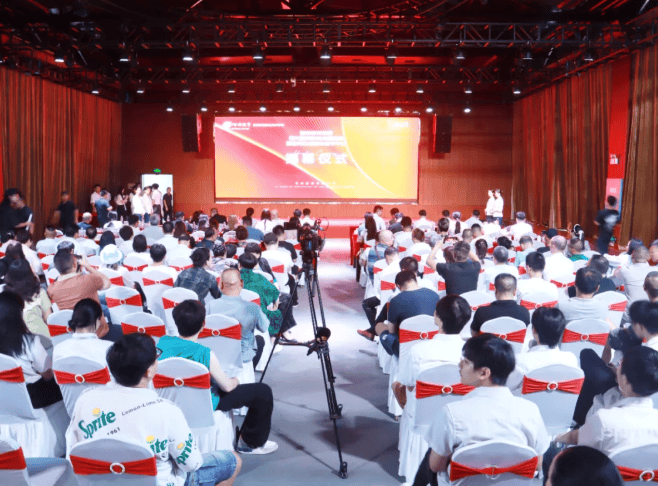
进军职业教育新高地 智邦教育集团和光智邦影视传媒基地暨智邦迈威国际留学中心揭幕仪式圆满举行
Sou Hu Cai Jing· 2025-07-01 17:19
Core Points - The inauguration of the Zhibang Education Group and Guangzhibang Film and Media Base, along with Zhibang Maiwei International Study Center, marks a significant milestone in vocational education and collaboration with Hunan Guang Media Co., Ltd [2][5][10] - Zhibang Education Group has established partnerships with over 100 higher education institutions across multiple provinces, focusing on cultivating high-end technical talent in line with China's manufacturing strategies [3][10] - The new media base aims to integrate quality resources for talent training and practical creation, providing students with opportunities to engage in real film projects [5][7] Company Overview - Founded in 2004, Zhibang Education Group has achieved a high employment rate of 99.16% for its graduates, with an average starting salary of 8,738 yuan per month, positioning itself as a leader among IT vocational schools in Hunan [3][10] - The collaboration with Hunan Guang Media is expected to enhance the educational offerings by providing advanced teaching facilities and practical training in film production [7][10] Industry Context - The establishment of the film and media base aligns with the growing demand for skilled professionals in the media industry, as highlighted by the success of Hunan Guang Media's influential productions [7][10] - The initiative reflects a broader trend towards diversified education, aiming to equip students with a wider range of career development opportunities [10][11]
长三角机器人之城竞逐赛,沪苏杭宁肥谁是王者?
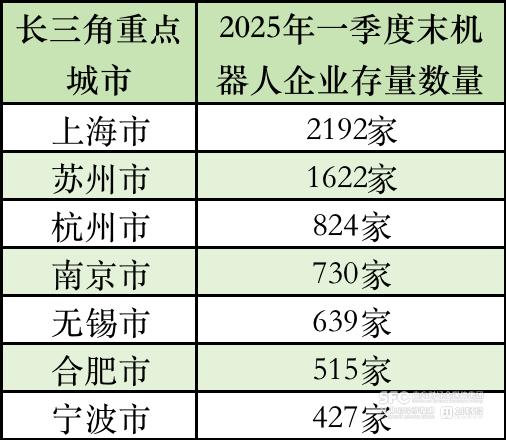
2 1 Shi Ji Jing Ji Bao Dao· 2025-06-30 11:25
Core Insights - The robot industry is becoming a key sector for future development, with significant market potential in the trillion-yuan range, particularly in the Yangtze River Delta region [1][22] - Shanghai and Suzhou are leading in the number of registered robot-related enterprises, while Hangzhou is emerging as a star city in terms of patent applications and financing [3][10] - The Yangtze River Delta cities are focusing on both hardware (robot manufacturing) and software (intelligent control systems), creating a comprehensive industrial chain [19][21] Group 1: Industry Overview - The Yangtze River Delta is a crucial area for robot industry development, with plans for large-scale production and a target of generating hundreds of billions in output value over the next three years [1] - Shanghai has 2,192 registered robot-related enterprises, while Suzhou has 1,622, significantly outpacing other cities in the region [4][3] - The industrial robot market in China has shifted from foreign dominance to local manufacturers, with domestic brands capturing 52.3% of the market share by 2024 [4] Group 2: City Comparisons - Hangzhou has shown remarkable progress in patent applications, ranking second after Shanghai, with 34,863 applications in 2023 [10][11] - Nanjing and Hefei are lagging in enterprise numbers and patent applications compared to Hangzhou, but Hefei is expected to catch up by Q1 2025 [2][18] - The recruitment numbers in 2024 show significant growth in cities like Hefei and Ningbo, indicating a rising demand for talent in the robot industry [17][18] Group 3: Investment and Financing - In 2023, Shanghai led in financing activities with 32 deals, while Hangzhou's financing activities increased significantly in 2024, indicating a growing investment landscape [13][14] - Zhejiang Province's initiatives to support humanoid robot development have contributed to Hangzhou's rise in financing and investment [15][16] - The overall investment environment in Hangzhou is bolstered by a robust local robot industry ecosystem, attracting more resources and capital [9][16] Group 4: Technological Development - Shanghai's robot industry benefits from a strong industrial base and supportive policies, with significant advancements in humanoid robots and intelligent manufacturing [5][7] - Suzhou is focusing on innovation through partnerships between enterprises and research institutions, exemplified by the establishment of the Harbin Institute of Technology's research institute [8] - The Yangtze River Delta is developing a complete industrial chain that includes both the physical components of robots and the intelligent systems that control them [21]