
龙湖集团

Search documents
李宇春带火西安小店,抖音生活服务“长安不夜城”解锁票根经济新玩法
Sou Hu Wang· 2025-11-28 14:03
Core Insights - The collaboration between Douyin Life Services and Li Yuchun's concert in Xi'an has successfully driven local business growth and brand exposure through innovative marketing strategies [1][3][4] Group 1: Marketing Activities - Douyin Life Services launched a series of marketing activities linked to Li Yuchun's concert, enhancing local merchants' brand visibility and sales [1][4] - The "Li Yuchun Xi'an Limited Peripheral Check-in Activity" attracted over 10,000 participants in three days, significantly increasing the mall's Douyin exposure by 264% and search frequency by 145% [3] Group 2: Sales Performance - The concert-related activities led to a remarkable increase in sales for local eateries, with Douyin group purchase sales rising by 20% for Ma Tian Xiao Chao and 157% for Shan Shi San [1][2] - The event transformed ordinary local shops into popular check-in spots, with videos of the experiences garnering over 2.46 million views [2][3] Group 3: Consumer Behavior - The concept of "ticket economy" is emerging, where concert tickets serve as gateways to diverse consumer experiences, linking entertainment with local consumption [4] - The number of off-site Douyin group purchase users in Xi'an has nearly doubled month-over-month, indicating a shift in consumer behavior towards integrated experiences [4]


“零报名”并非无人买房,天澜传序府去化近9成 | 最新网签数据
Sou Hu Cai Jing· 2025-11-28 09:43
Core Insights - The real estate market is experiencing a significant decline in buyer interest, with some projects reporting "zero registrations" for new launches, indicating a lack of demand [1][9] - Despite the low registration numbers, certain properties are still selling well, as seen with the Tianlan Chuanxufu project, which had a high sales rate shortly after its launch [1] Market Trends - As of November 27, several previously popular real estate projects are facing "zero registrations," suggesting a shift in buyer sentiment [1] - The Tianlan Chuanxufu project launched 56 units with an average price of 58,058 yuan per square meter, and despite initial low interest, 50 out of 56 units were signed within ten days, achieving a sales rate of 89.29% [1] - The overall market is experiencing slower sales, particularly in the mid-to-high-end segment, where new launches are struggling to sell out [9] Sales Data - The Tianlan Chuanxufu project had a total of 56 units available, with 50 units signed, indicating strong demand despite initial registration issues [1] - Other projects, such as the Jinshang Wanxiangfu and Huayuan projects, also show varying degrees of sales success, with some units fully sold while others remain unsold [2][3] Market Analysis - Industry experts suggest that the current downward pressure on the real estate market is leading to longer transaction cycles and decreased buyer expectations [9] - There is a call for more favorable policies to stabilize the market and encourage buyer confidence [9]

最愿意逛商场的一代,正在退出舞台
3 6 Ke· 2025-11-28 02:47
Core Insights - The article highlights a significant structural change in consumer demographics, indicating that the generation most fond of shopping malls is gradually fading from the mainstream consumer group [1][8][31] - Predictions suggest a decline in birth rates, with estimates of around 4 million births in the first half of 2025 and potentially dropping below 9 million for the entire year [1] Group 1: Demographic Changes - The aging population and declining birth rates are becoming widely recognized societal issues, yet they still feel distant to individuals [2] - The shift in consumer demographics is particularly evident in the retail sector, where the traditional shopping mall experience is losing relevance among younger generations [3][11] Group 2: Evolution of Shopping Centers - Shopping centers have historically targeted the 25-45 age demographic, primarily supported by the 80s generation, which has driven the evolution of retail formats over the past 15 years [4][7] - The shopping center landscape has transformed through various phases, including the rise of fast fashion, themed dining, and the introduction of high-end beauty and leisure brands [5][10] Group 3: Future Consumer Trends - By 2025, the primary consumer group of 25-45 years old is expected to shrink by over 60 million, with a significant reduction in younger fashion consumers [10][17] - The 95/00 generation is characterized by a preference for self-expression, social interaction, and emotional value, leading to a decreased interest in traditional shopping malls [11][12] Group 4: Shift in Retail Formats - The future of retail will likely see a transition from large shopping centers to community-focused spaces that cater to essential needs rather than high-end fashion [19][20] - Traditional department stores are also expected to undergo significant changes, moving away from their historical ties to older consumer demographics [21][23] Group 5: Emergence of New Business Models - The article suggests a "renaissance" in physical retail, focusing on smaller, community-oriented formats that incorporate diverse, niche offerings [15][18] - As consumer preferences evolve, there will be a push towards non-standard commercial formats that meet the needs of younger consumers, emphasizing social spaces and unique experiences [25][26]

千丁数科:革命性之外 看到AI的长期性
Huan Qiu Wang· 2025-11-28 02:13
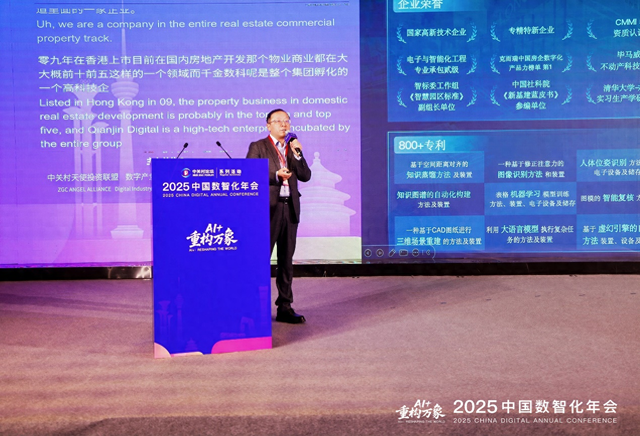
Core Insights - The 2025 China Digital Intelligence Conference opened in Beijing, focusing on the theme "AI + Restructuring Everything" and highlighting the transformative impact of AI on daily life, akin to the mobile internet revolution 15 years ago [1][2] Group 1: AI Transformation - The new wave of AI-driven transformation differs from traditional digitalization, emphasizing individual productivity enhancement rather than top-down management approaches [1][2] - AI transformation is based on frontline scenarios, which is essential for digital upgrades in enterprises [1][2] - An example from Longfor Group illustrates that AI can optimize property management, saving millions in costs through data analysis [1][2] Group 2: Company Profile and Achievements - Qian Ding Data Science, a high-tech company incubated by Longfor Group, has over a thousand R&D team members and serves more than 3,600 enterprises by integrating AI, BIM, IoT, and digital twin technologies [3] - Qian Ding Data Science won the "AI Intelligent Agent Innovation Product" award at the conference, with its AI platform achieving over 95% accuracy in vertical field algorithm models [3] Group 3: Future Outlook and Challenges - The application rate of new intelligent terminals and agents is expected to exceed 70% by 2027, with China fully entering an intelligent society by 2035 [3] - Companies and individuals are eager to acquire AI capabilities to enhance productivity, but the realization of AI's value may take 5 to 10 years [3][4] - High-quality data is crucial for training algorithms and achieving meaningful AI transformation, indicating that results are not immediate [3][4] Group 4: Human-AI Collaboration - AI is not a panacea and has specific strengths; it is not in opposition to humans but rather aims for a synergy between human and machine capabilities [4] - Longfor Group has initiated multiple AI training sessions for its employees, including middle and senior management, to enhance AI proficiency within the organization starting in 2024 [4]

溢价39.5%!本土房企拿地郫都区,深耕二圈层丨成都土拍
Sou Hu Cai Jing· 2025-11-27 13:46
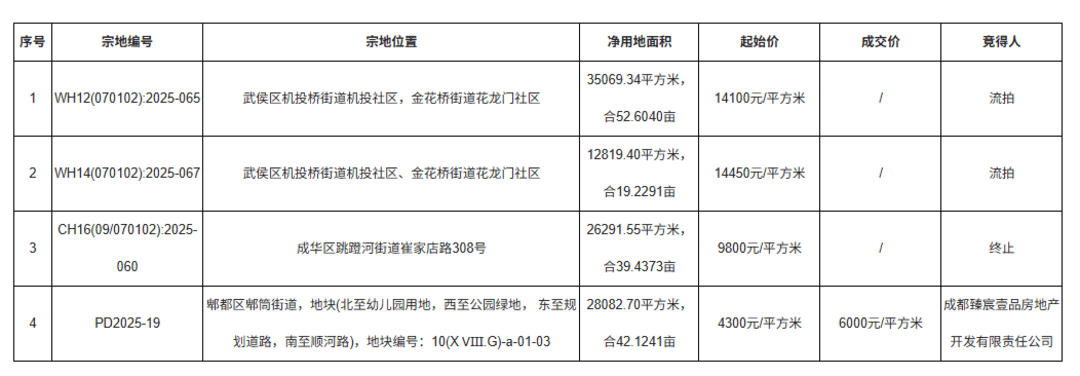
Core Viewpoint - Chengdu held a public auction for three land parcels on November 25, with a total area of approximately 71.8 acres, resulting in one successful bid and two failures [1] Group 1: Auction Results - The two residential land parcels in Wuhou New City (parcels 1 and 2) were unsold due to failure to attract bids [1] - The commercial and residential land parcel in Chenghua Shibanqiao was also withdrawn from sale [1] - The residential land parcel in Pidu District (parcel 4) started with a floor price of 4,300 yuan/m² and was successfully acquired by Chengdu Zhenchen Yipin Real Estate Development Co., Ltd. at a final price of 6,000 yuan/m², reflecting a premium rate of approximately 39.5% [1][2] Group 2: Company Insights - Chengdu Zhenchen Yipin, the winning bidder, is an affiliate of local real estate company Jiahe Xing, which has been active in the Chengdu second-tier land market in recent years [5] - In May 2023, Jiahe Xing acquired a residential land parcel in Pidu District at a starting price of 4,550 yuan/m², with a final price of 7,250 yuan/m², resulting in a premium rate of about 59.3% [6] - Jiahe Xing has secured a total of six land parcels in Chengdu's Wenjiang, Xindu, Shuangliu, and Longquanyi districts this year, making it the most active private real estate company in terms of land acquisition [6] Group 3: Market Position - In the first half of 2025, Jiahe Xing achieved a sales amount of 3.162 billion yuan, ranking 17th among the top 50 real estate companies in Chengdu, and second among private firms in terms of sales revenue [7][9]
港股收评:恒生指数收涨0.07%,恒生科技指数跌0.36%
Xin Lang Cai Jing· 2025-11-27 11:52
11月27日,港股收盘,恒生指数涨0.07%,恒生科技指数跌0.36%。内房股多数下跌,万科企业跌超 7%,世茂集团跌超6%,龙湖集团跌超3%;科技股走势趋于分化,小米涨超2%,阿里巴巴跌超2%。 ...
清空贝壳股票,万科债务压力下的挣扎与选择
Tai Mei Ti A P P· 2025-11-27 11:22
Core Viewpoint - Vanke has completely sold its shares in Beike, ending an 8-year capital cooperation, driven by liquidity pressures and a need to address debt maturity issues [1][4]. Group 1: Background of Cooperation - Vanke's investment in Beike began in 2017, when it invested 3 billion yuan for approximately 7.2% equity in the company, then known as Lianjia [2]. - The partnership was seen as a strong collaboration between offline channels and developers, especially as Beike transitioned to a new business model during its rapid expansion [3]. Group 2: Financial Pressures and Strategic Shift - Vanke faced significant financial challenges in 2024, reporting a net loss of 49.48 billion yuan and a 26.6% decline in contracted sales area, leading to a critical cash flow situation [4]. - The decision to sell Beike shares was influenced by the need to alleviate debt pressure, as Vanke's debt was maturing and financing channels were restricted [4][9]. - Despite a decline in Beike's stock price, Vanke's initial investment has yielded a favorable return based on current valuations [4]. Group 3: Changes in Business Focus - Beike's revenue structure has shifted, with new home business revenue decreasing and non-real estate transaction business growing to 45% of total revenue, reducing strategic alignment with Vanke [5]. - Vanke's holding in Beike transitioned from a strategic investment to a financial one, diminishing its rationale for retaining the shares [5]. Group 4: Industry Trends and Responses - The broader real estate industry is witnessing a trend of companies divesting non-core assets to improve cash flow and reduce financial burdens, as exemplified by Vanke's "slimming down" strategy [6][8]. - Other companies, like Sunac China, have also liquidated their Beike shares to support debt restructuring efforts [6]. Group 5: Future Outlook - Vanke's debt crisis remains severe, with estimated domestic bond repayments of approximately 15.546 billion yuan and USD bond interest of about 30 million [9]. - The company's ability to resolve its debt issues will depend on policy support, market recovery, and its own financial recovery capabilities [9].


展望2026:地产磨底与规则重写
Di Yi Cai Jing· 2025-11-27 11:20
Core Viewpoints - 2026 is expected to be a "bottoming year" for the real estate market, with new residential sales likely to see further adjustments, although the decline may be less severe than in 2025. Prices are expected to show an "L-shaped" tail effect, with core areas in first-tier cities possibly seeing a month-on-month increase in the first half of 2026, while weaker third and fourth-tier cities are unlikely to stop declining throughout the year [3][4][5] Macro: Credit Bottoming and Fiscal Support - The drag of real estate on GDP is projected to decrease from 1.5-2 percentage points in 2025 to 0.5-1 percentage points, indicating a consensus expectation of "diminishing macro headwinds" [4] - The fiscal policy for 2026 includes an early allocation of 1.5 trillion yuan in special bonds, with 300 billion yuan specifically for acquiring existing residential properties for affordable housing, providing a safeguard for 250-300 million square meters of inventory [6][7] Financial: From "Leverage Dividend" to "Asset Dividend" - The financing landscape shows a peak in credit bond maturities in Q3 2025, with a gap of 25 billion yuan for private real estate companies needing to refinance. By 2026, the maturity volume is expected to decrease by 18%, and 21 distressed companies are projected to complete debt restructuring, alleviating the "default pulse" in the industry [8] - The REITs market is anticipated to expand by 150-200 billion yuan in 2026, with projects yielding cash flows above 5% expected to achieve valuations of 15-20 times, compared to traditional development businesses at 3-5 times PE [8] Residential Real Estate: Structural Race for Inventory Depletion - The estimated new residential sales area for 2026 is projected to be 85-86 million square meters, corresponding to a sales amount of 8.6 trillion yuan, reflecting a year-on-year decrease of 4-6%, but the narrowing decline suggests a potential end to the "volume-price double kill" phase [9] - In first-tier and strong second-tier cities, inventory depletion is expected to take 14-18 months, with a potential slight price increase of within 5% for desirable properties in main urban areas [10] - In weaker second-tier and third-fourth tier cities, inventory is expected to exceed 30 months, with prices continuing to decline by 3-8% [11] Commercial Real Estate: "Threefold Evolution" - The industry is undergoing a transformation from scale worship to refined operations and risk hedging, with 2026 serving as a critical testing period for this framework [12] - The ability to revitalize assets is exemplified by Wanda's management of the Beijing Blue Harbor, which improved rental income by 5% and reduced vacancy rates to 5% through operational adjustments [12] - The introduction of public REITs tax incentives and technological advancements will determine which companies can upgrade commercial real estate into urban service infrastructure [12] Corporate Strategies: From "Three Highs" to "Three Light" - The light asset model, including construction agency, asset management, and property management, is expected to maintain a growth rate of 15-20% in 2026, with net profit margins of 8-12%, significantly higher than the 3-4% profit margin of development businesses [13] - Major state-owned enterprises aim for a net debt ratio below 50% by 2026, while private distressed companies are expected to reduce their net debt ratios to 80-100% [13] - The "sales-driven investment" approach will become a hard constraint, with a land sales ratio of 0.2-0.5, compelling real estate companies to convert land reserves into sellable resources [13] Policy Outlook: From "Market Rescue" to "Reform" - The real estate policy for 2026 will feature a dual track of "short-term stability and long-term reform," with measures including marginal relaxation of purchase restrictions in core areas and a 30 basis point reduction in mortgage rates [14][15] - Structural reforms such as the national trading of land indicators and the introduction of housing pension schemes are expected to be implemented in 2026, providing a foundational framework for new real estate models during the 14th Five-Year Plan [15]

【财闻联播】中国AI开源模型下载量首超美国!迈瑞医疗董事长拟增持2亿元
券商中国· 2025-11-27 11:18
Macro Dynamics - China's AI open-source model downloads accounted for 17% of the global total, surpassing the US's 15.8% for the first time [2] Energy Sector - The National Development and Reform Commission (NDRC) is promoting the orderly development of various new energy storage and hydrogen technologies, focusing on market reforms and infrastructure construction to support these emerging industries [3] Financial Institutions - JPMorgan's outlook for Chinese stocks in 2026 includes four major themes: the execution of "anti-involution" policies, growth in domestic and international AI infrastructure, favorable macroeconomic conditions for overseas sales, and a K-shaped consumption recovery [7] Market Data - The A-share market saw mixed performance with the Shanghai Composite Index up by 0.29% and the ChiNext Index down by 0.44%, while the total trading volume exceeded 1.7 trillion yuan [8][9] - The financing balance of the two markets increased by 59.91 billion yuan, with the Shanghai Stock Exchange reporting a balance of 12,428.24 billion yuan and the Shenzhen Stock Exchange at 12,019.62 billion yuan [10] Company Dynamics - Mindray Medical's chairman plans to increase his stake in the company by 200 million yuan [13] - China State Construction Engineering Corporation secured three major projects totaling 10.67 billion yuan, which represents 0.5% of its audited revenue for 2024 [14] - Fulaite New Materials has completed multiple iterations of its "electronic skin" product and achieved mass supply, transitioning from a material supplier to a smart sensing solution provider [16]




恒指0.07%微涨VS恒生科技0.36%微跌:港股分化迷局,转机藏在哪?
Sou Hu Cai Jing· 2025-11-27 10:17
Core Viewpoint - The Hong Kong stock market is experiencing a divergence between traditional heavyweight stocks supporting the index and technology growth stocks facing pressure, reflecting a complex market environment influenced by the Federal Reserve's policies and the slowing economic recovery in mainland China [1][2]. Group 1: Market Performance - The Hang Seng Index rose slightly by 0.07% to close at 17,825.43 points, primarily driven by the financial and energy sectors, with financial stocks contributing nearly 60% of the index's gains [1]. - HSBC Holdings saw a 1.2% increase due to better-than-expected quarterly results, while PetroChina and CNOOC also posted gains of 0.8% and 1.5%, respectively [1]. - In contrast, the Hang Seng Tech Index fell by 0.36% to 3,852.19 points, indicating a collective downturn in technology stocks, with Tencent, SMIC, and Alibaba all experiencing declines [2]. Group 2: Investor Sentiment - The divergence in stock performance reflects a layered market risk appetite, with investors prioritizing defensive positions in low-valuation, high-dividend sectors like financials and energy [2]. - There has been a net inflow of 23 billion HKD into the financial sector through the Stock Connect program in November, while the technology sector saw a net outflow of 12 billion HKD [2]. Group 3: Key Variables Influencing Future Trends - The future trajectory of the Hong Kong stock market hinges on three critical variables: the direction of the Federal Reserve's monetary policy, the strength of the economic recovery in mainland China, and the performance of the technology sector [3][4]. - Market expectations suggest that if the Fed signals a rate cut in December, the Hang Seng Tech Index could rebound by 10%-15% [3]. - The performance of the mainland economy, particularly manufacturing PMI data, will directly impact core sectors like real estate and consumption [3]. Group 4: Investment Outlook - Despite the current market volatility, there is a consensus among institutions that the Hang Seng Index is undervalued, with a price-to-earnings ratio of 8.5, indicating a high margin of safety [5]. - Three main investment themes have emerged: defensive sectors like banking and energy, cyclical sectors benefiting from economic recovery, and leading companies in emerging technology fields such as AI and cloud computing [5].