
李宁

Search documents
京东时尚秒送合作门店数量增长超150%,大牌节日礼盒爆款低至5折
Sou Hu Cai Jing· 2025-12-24 06:59
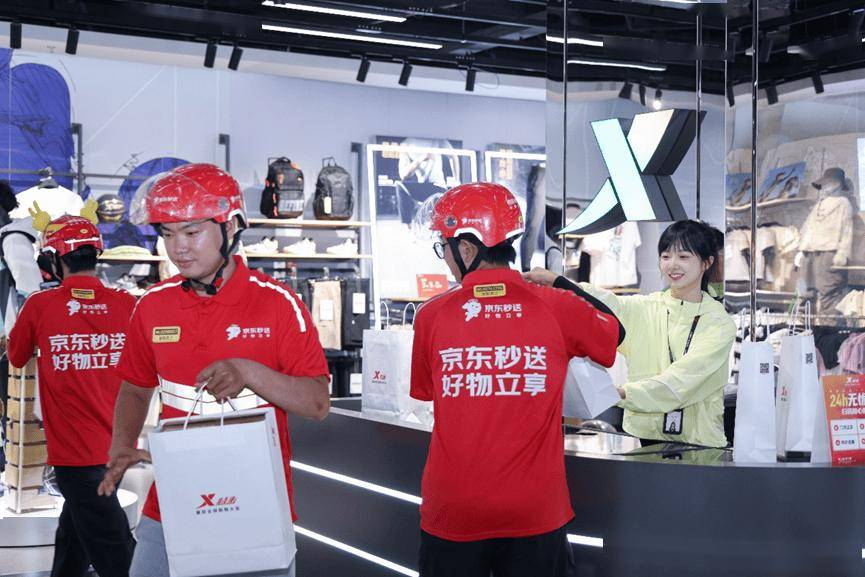
截至2025年底,京东时尚秒送累计入驻商家超千家,包括滔搏、安踏、李宁、鸿星尔克、波司登、特步等国内零售巨头、 服饰运动大牌;营业门店数量同比增长超150%,覆盖了包括服装、鞋靴、内衣、美妆、运动户外等多个核心品类,持续为 消费者提供更丰富、更便捷的即时时尚消费体验。 在数字经济与消费转型的双重驱动下,即时零售正用"分钟级履约"重新定义商业效率的天花板。根据商务部研究院发布的 《即时零售行业发展报告(2025)》,2026年我国即时零售规模将突破1万亿元,预计到2030年,将达到2万亿元。构建良 好生态,推动高质量发展将是即时零售行业的重要议题。京东时尚秒送在2025年全面加速服饰、运动、美妆等核心品类供 给布局,迎来爆发式增长,已成为品牌布局即时零售、消费者获取潮流商品的重要方式。 2025年,品牌商家也通过京东时尚秒送实现了销售新增量。年初至今,耐克、阿迪达斯、骆驼、安踏等运动户外品牌成交 额同比增长均超2倍,内衣品牌松山棉店成交额同比增长5倍;随着冬季保暖需求增加,自11月波司登入驻京东秒送以来, 其销售也呈现高增长态势。 除此以外,京东时尚秒送在重要节日期间增长也尤为显著。近年来,受送礼观念日常化、礼 ...


滔搏寻路:销售额高单位数下降
2 1 Shi Ji Jing Ji Bao Dao· 2025-12-24 02:46
Group 1 - The core viewpoint is that the sports retail operator, Tmall, continues to experience a decline in sales, with a high single-digit decrease in total sales for the third quarter of fiscal year 2026, which is slightly weaker than the overall performance in the first half of the year [1] - Online sales growth remains better than offline channels, but the growth rate for online sales has slightly slowed compared to the first half of the year due to base effects, while offline performance has improved slightly compared to the first half [1] - Nike's impact is significant on Tmall's sales decline, with Nike's sales in China dropping 16% year-on-year to $1.423 billion, affected by decreased foot traffic and lower sell-through rates in stores [1] Group 2 - The sports market is under pressure, with Peak's direct sales segment reporting a cumulative loss of over 130 million yuan from January to July, leading to the divestment of three subsidiaries [2] - Anta Sports reported low single-digit positive growth in retail sales for its brand products, while FILA also recorded low single-digit positive growth, indicating a significant drop compared to previous years [2] - Li Ning experienced a direct sales decline, with a mid-single-digit decrease in retail revenue for the third quarter [2] Group 3 - A positive development for Tmall is that Nike is placing greater emphasis on this distribution channel and plans to strengthen cooperation with distributors like Tmall [3] Group 4 - Tmall is downsizing its scale, with a 1.3% reduction in gross sales area of direct stores compared to the previous quarter and a 13.4% decrease year-on-year, while also optimizing its offline store network [4] - The company plans to close fewer stores this year compared to last year, with a more significant reduction in the second half of the fiscal year compared to the first half [4] Group 5 - Tmall is also expanding its offerings, such as the launch of its running brand collective store, Ektos, at the Shanghai Marathon Sports Expo, featuring nearly 20 brands, and the introduction of the Norwegian outdoor brand Norrona through a pop-up store in Shanghai [5] Group 6 - Overall, Tmall's transformation needs to accelerate in the current market environment [6] Group 7 - On December 23, Tmall's stock closed at HKD 2.98 per share, reflecting a decline of 4.49% [7]

滔搏寻路:销售额高单位数下降丨消费参考
2 1 Shi Ji Jing Ji Bao Dao· 2025-12-24 02:36
Group 1: Company Performance - Tmall's sales continue to decline, with a high single-digit decrease in pre-tax total sales for Q3 FY2026, slightly weaker than the overall performance in the first half of the year [1] - Nike's sales in China fell by 16% year-on-year to $1.423 billion, impacted by reduced store traffic and lower sell-through rates [1] - Li Ning reported a mid-single-digit decline in retail sales for Q3, excluding its youth brand [2] Group 2: Market Trends - The sports retail market is under pressure, with Peak's direct sales segment suffering losses exceeding 130 million yuan from January to July [2] - Anta Sports reported low single-digit positive growth in retail sales for its brand products, indicating a significant drop compared to previous years [2] - The overall market environment suggests that Tmall's transformation needs to accelerate [6] Group 3: Strategic Adjustments - Tmall is reducing its scale, with a 1.3% decrease in gross sales area of direct stores compared to the previous quarter and a 13.4% decrease year-on-year [4] - The company plans to optimize its offline store network by cautiously closing underperforming stores and focusing on extending online channels [4] - Tmall is also expanding its offerings, such as launching a running brand store and introducing a pop-up store for the Norwegian outdoor brand Norrona [5][6] Group 4: Collaboration and Future Outlook - Nike is increasing its focus on collaborating with distributors like Tmall, indicating a potential shift in strategy to enhance sales through partnerships [3]

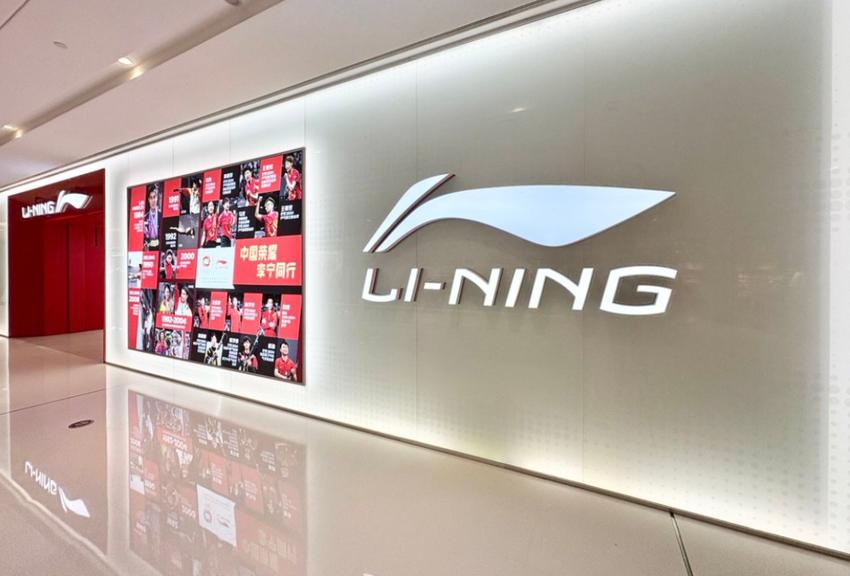
李宁,这次真的要把咖啡当生意了
3 6 Ke· 2025-12-23 07:33
Core Viewpoint - The opening of the new WellTown Super Outlet store in Beijing marks a significant shift for Li Ning's coffee brand, Ning Coffee, transitioning from a supplementary service to a standalone business model in a competitive market environment [2][4][12]. Group 1: Business Model Evolution - Ning Coffee has evolved from being an auxiliary service within Li Ning stores to an independent entity with its own storefront and seating area, indicating a strategic shift towards a more commercial approach [2][4][8]. - Initially, Ning Coffee was introduced in 2022 as part of a retail experience, focusing on enhancing customer comfort rather than generating sales, often using promotional strategies like "free drinks with purchase" [3][12]. - The new store's location in a public shopping space allows Ning Coffee to attract a broader customer base, not limited to Li Ning consumers, and requires it to compete with established coffee brands [7][12]. Group 2: Product Strategy and Market Positioning - The menu of Ning Coffee incorporates Li Ning's sports branding, with creatively named drinks that reflect the company's identity, such as "Red Rabbit Latte" and "Wade's Way Sparkling Drink" [8][11]. - The introduction of health-oriented products, such as drinks with kombucha or protein powder, aligns with current consumer trends towards wellness [11]. - Ning Coffee is also experimenting with localized products in different regions, showcasing adaptability to local tastes and preferences [11][12]. Group 3: Future Outlook - The company aims to scale Ning Coffee into a more independent operation by 2025, reflecting a commitment to exploring the coffee market as a potential growth avenue [12]. - This strategic move is seen as part of a broader trend where brands leverage high-frequency consumer products like coffee to strengthen customer connections and enhance the retail experience [12].

欧盟乳品反补贴落地,国产替代有望加速!消费ETF(159928)回调再获近5亿份净申购,昨日吸金近2亿元!
Sou Hu Cai Jing· 2025-12-23 07:06
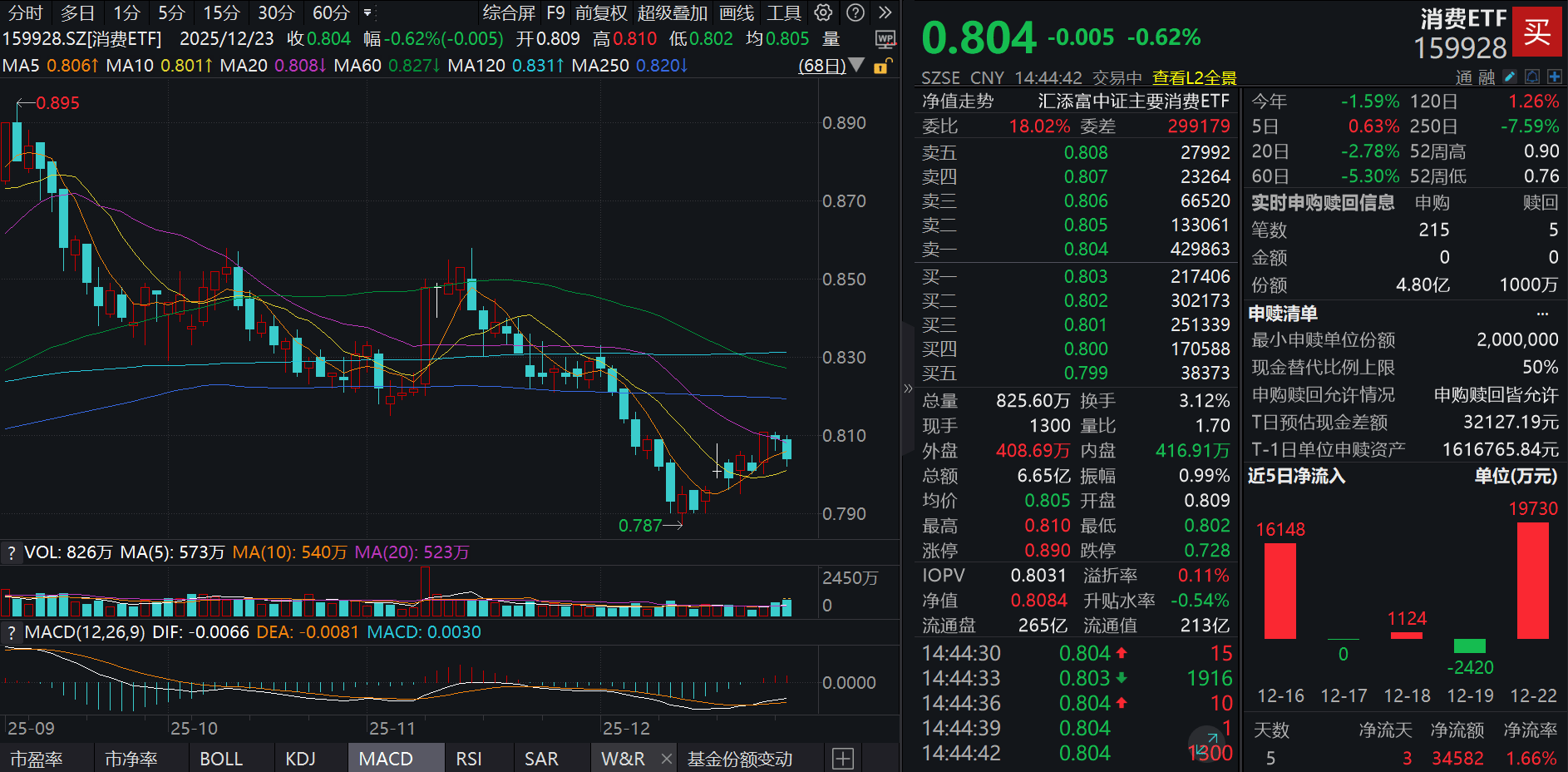
Group 1: Market Performance - A-shares experienced fluctuations and a decline, with the Consumer ETF (159928) dropping by 0.74% and a trading volume exceeding 650 million yuan [1] - The Consumer ETF (159928) has seen a net subscription of over 470 million units during the day, accumulating over 600 million yuan in the last 20 days [1] - As of December 22, the latest scale of the Consumer ETF (159928) exceeded 21.3 billion yuan, leading its peers [1] Group 2: EU Dairy Products Subsidy - The EU has announced a preliminary ruling on dairy products, determining that subsidies exist with a countervailing duty rate ranging from 21.9% to 42.7% [3][7] - Starting December 23, temporary countervailing measures will be implemented on imported dairy products from the EU [3] - The additional countervailing duty is expected to increase import prices, potentially accelerating domestic substitution in the dairy sector [8] Group 3: Domestic Dairy Industry Impact - The countervailing duties are projected to shift the deep processing of dairy products to domestic enterprises, as domestic milk prices are currently lower than international prices [8] - The deep processing sector is anticipated to enhance demand for raw milk, improving the supply-demand balance in the upstream raw milk industry [8] - Domestic dairy companies are actively focusing on deep processing, which is expected to drive demand growth and stabilize the industry [8] Group 4: Consumer Sector Insights - The Consumer ETF (159928) is characterized by its resilience across economic cycles, with the top ten constituent stocks accounting for over 68.55% of its weight [13] - The ETF includes major players such as Yili (10.37%), Kweichow Moutai (9.94%), and Wuliangye (9.50%) [14] - The current valuation of the Consumer ETF (159928) is attractive, with a TTM P/E ratio of 19.4, placing it in the lower 3.13% of the past decade [5] Group 5: Future Consumption Trends - The service consumption sector is expected to grow significantly as China's GDP per capita exceeds $10,000, indicating a shift in consumer spending patterns [11] - Emerging consumer groups, particularly the Z generation and affluent elderly, are likely to drive demand for service-oriented consumption [12] - Investment opportunities in the service sector are anticipated, particularly in areas such as event economy and AI applications [12]





填补行业空白 京东服饰携手中联品检发布国内首个羽绒服装保暖性能团体标准
Zhong Jin Zai Xian· 2025-12-23 03:24
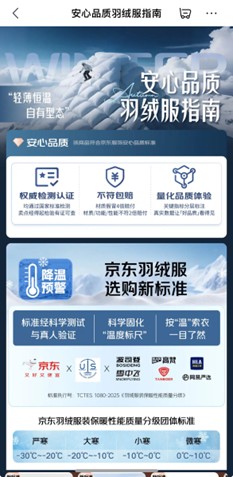
Core Viewpoint - JD Fashion, in collaboration with Zhonglian Inspection Group and several well-known down jacket brands, has launched the first group standard in China for grading the thermal performance of down jackets, providing consumers with a quantifiable basis for selecting down products [1][3]. Group 1: Standard Overview - The newly released standard (T/CTES 1080—2025) addresses the gap in existing national and industry standards regarding the direct thermal performance grading of down clothing [3]. - The standard introduces a systematic grading system based on three core parameters: down content, fluffiness, and down turbidity, categorizing products into five quality levels from AAAAA to AAA [3]. - AAAAA level requires down content ≥90%, goose down fluffiness ≥17.5cm, and turbidity ≥1000mm, all exceeding current national standards [3]. Group 2: Consumer Guidance - The standard classifies thermal performance into four levels based on extreme applicable temperatures: severe cold (-30.0℃ to -20.1℃), extreme cold (-20.0℃ to -10.1℃), mild cold (-10.0℃ to -0.1℃), and slightly cold (0℃ to 10.0℃) [3]. - It provides average power and cooling rate benchmarks for both men's and women's products, facilitating a straightforward selection process for consumers [3][4]. Group 3: Industry Impact - The standard is expected to promote the standardization of the down jacket industry, enhance the competitiveness of Chinese down products in the international market, and provide transparent, comparable product information for consumers [7]. - JD Fashion has previously launched the JD FASHION label, ensuring that products meet high standards in material quality and craftsmanship, further solidifying its commitment to quality [7]. Group 4: Future Developments - JD Fashion plans to continue collaborating with authoritative testing institutions and quality brand merchants to build a more comprehensive quality assurance system for apparel, aiming for a reliable shopping experience for consumers [9].
让保暖有据可依 京东联合中联品检发布国内首个羽绒服保暖分级团体标准
Jin Rong Jie Zi Xun· 2025-12-23 02:50
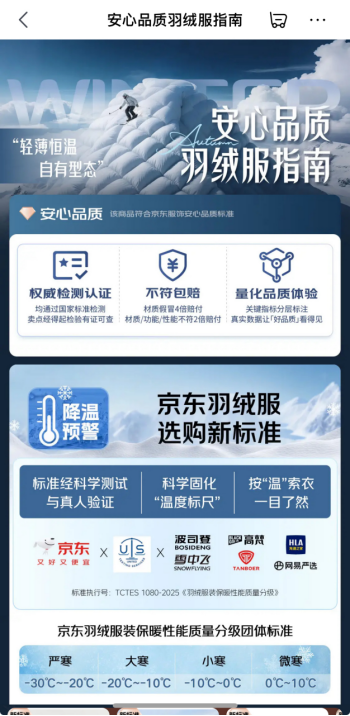
为帮助消费者更加直观地判断产品实际保暖效果,《标准》涵盖羽绒服装基础指标分级与保暖性能分级两大维度的质 量分级体系,按照绒子含量、蓬松度、羽绒浊度三项核心参数,设置AAAAA级、AAAA级、AAA级三个质量等级, 其中AAAAA级要求绒子含量≥90%、鹅绒蓬松度≥17.5cm、浊度≥1000mm,各项指标均高于现行国家标准。在保暖性 指标上,《标准》按产品极限适用温度划分为严寒(-30.0℃~-20.1℃)、大寒(-20.0℃~-10.1℃)、小寒(-10.0℃ ~-0.1℃)、微寒(0℃~10.0℃)四个等级,并分别设定男款、女款的平均功率与降温速率判定值,为消费者提供方 便、直观的羽绒服选购指南。 12月9日,京东服饰联合中联品检集团,携手波司登、海澜之家、雪中飞、网易严选、高梵、坦博尔等国内知名羽绒 服品牌,正式发布《羽绒服装保暖性能质量分级》团体标准(T/CTES 1080—2025)(以下简称《标准》)。该标准 是国内行业首个针对羽绒服装保暖性能进行科学、系统分级的团体标准,为消费者提供了可量化、可对照的羽绒服选 购依据。目前,该标准已应用于京东金榜JD FASHION品质榜羽绒品类的甄选评定,在京 ...
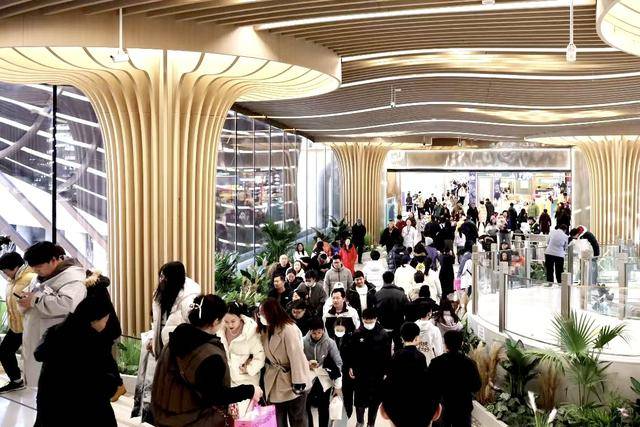
试营业3天,销售破3000万!湾里成北京新晋商业打卡地
Sou Hu Cai Jing· 2025-12-22 21:24
Core Insights - The newly opened Bayli in Beijing's urban sub-center has generated significant consumer interest, with over 400,000 visitors and sales exceeding 30 million yuan during its first three days of trial operation [1][3] Group 1: Consumer Engagement - The first day of trial operation saw a footfall of 110,000 visitors, with a total of 310,000 visitors over the weekend [3] - Various stores achieved remarkable sales, with brands like NIKE, GANT, and Timberland topping national sales charts [3] Group 2: Promotional Strategies - Following the official opening on December 26, additional discounts and promotional activities such as lotteries and group coupons will be introduced to attract more consumers [5] - The Bayli will feature new experiences, including an art exhibition and live music events, enhancing its appeal as a cultural and entertainment hub [5]
情绪消费的“增长点”绝不是升级焦虑
Xin Lang Cai Jing· 2025-12-22 17:13
Core Insights - The article discusses the emergence of "emotional economy" as a trend in consumer behavior, highlighting a shift from "cost-performance" to "emotional value" among younger consumers [1][2] - It emphasizes the dual nature of emotional consumption, where it can provide comfort and joy but can also lead to anxiety-driven marketing practices that exploit consumer emotions [2][3] Group 1: Emotional Consumption Trends - The term "谷子(经济)" represents the emotional economy, indicating a growing trend where consumers prioritize emotional satisfaction over mere cost [1] - Products like trendy toys and virtual goods serve as emotional outlets for young consumers, fulfilling their psychological needs and contributing to new economic growth [1][2] Group 2: Negative Marketing Practices - Some businesses exploit consumer anxiety by creating a sense of urgency around products, such as limited edition blind boxes and exaggerated claims in the beauty industry [2] - This leads to a misperception among young consumers that happiness is directly tied to spending, resulting in financial and emotional burdens [2] Group 3: Recommendations for Stakeholders - To realign emotional consumption with its original intent, consumers should develop rational spending habits and be cautious of marketing traps [3] - Businesses are encouraged to focus on genuine emotional support rather than exaggerated marketing tactics, while regulatory bodies should address misleading advertising and price inflation [3] - The core strength of emotional consumption lies in authentic human care, which can transform it into a sustainable and heartwarming force [3]
国潮鞋转售行业市场研究报告
硕远咨询· 2025-12-22 13:58
Investment Rating - The report does not explicitly state an investment rating for the sneaker resale industry Core Insights - The sneaker resale market in China has rapidly evolved, driven by the increasing popularity of sneaker culture among younger consumers, with a market size exceeding hundreds of billions of RMB and an annual growth rate of over 30% [16][19][36] - The market is characterized by a diverse range of products, including limited edition sneakers, collaborative designs, and classic reissues, catering to various consumer preferences [5][6][14] - The industry ecosystem includes manufacturers, retailers, resale platforms, authentication agencies, and logistics providers, creating a comprehensive and specialized market structure [7][13] Industry Overview - The sneaker resale industry is defined as the act of consumers reselling limited edition or collectible sneakers through various channels, reflecting a blend of cultural significance and investment potential [4] - The market has seen a shift from informal community transactions to professional resale platforms, particularly after 2015, with the introduction of blockchain technology enhancing transparency and trust [14][15] Market Demand Analysis - The primary consumer demographic for sneaker resale is young individuals aged 18 to 35, with a notable increase in female participation [24][25] - Motivations for purchasing sneakers include investment potential, personal expression, social needs, and practical use, with limited edition releases driving demand [26][28] - Online channels dominate the market, with specialized resale platforms providing a secure and efficient trading environment, while offline community interactions remain significant [32][34] Competitive Landscape - Major players in the sneaker resale market include platforms like Dewu, Poizon App, and Xianyu, each with unique strengths that contribute to market growth [46][47] - International brands maintain a competitive edge in design and influence, while local brands are rapidly gaining ground by aligning with consumer preferences and cultural trends [48][49] Future Development Trends - The sneaker resale market is expected to become more professional, digital, and regulated, with blockchain technology enhancing transaction security and transparency [75] - Market segmentation will become more refined, catering to diverse consumer needs across different demographics [75] - The globalization of sneaker culture will facilitate cross-border e-commerce and collaboration between international and local brands [75]