
瑞幸咖啡

Search documents
招银国际:对中国可选消费行业持“同步大市”评级 展望偏向谨慎
智通财经网· 2025-12-12 05:53
Core Viewpoint - The report from CMB International indicates a cautious outlook for China's discretionary consumption sector in 2026, with an expected overall retail sales growth of approximately 3.5%, a slight decrease from about 4% in 2025, influenced by factors such as the delayed Spring Festival, extended holidays, potential recovery in the real estate sector, and a thriving stock market [1] Group 1: Industry Overview - The industry valuation is likely to have bottomed out this year, currently at around 15 times the price-to-earnings ratio, which is still not expensive compared to the average of about 20 times over the past eight years [1] - The overall view remains conservative due to potential slowing growth in the next 12 months and high geopolitical risks, suggesting that valuations may not rise quickly without significant positive policies or a clear recovery in real estate [1] Group 2: Subsector Ratings - CMB International prioritizes the following subsectors for 2026: 1) Tea and coffee, 2) Trendy toys, 3) Apparel, 4) Textiles; maintaining a "market perform" rating for: 5) Dining, 6) Sports goods, 7) Travel and hotel, 8) Home appliances [2] - The ratings for the tea and coffee sector and trendy toys are maintained at "outperform," while the apparel and textile sectors have been upgraded to "outperform" [2] Group 3: Investment Themes - The investment themes are categorized into different types of consumption, with a focus on: 1) Essential consumption (frugality, low price, high cost-performance), related companies include: Guoquan (02157), Yum China (09987), Luckin Coffee (LKNCY.US), Dashihua (01405), Bosideng (03998) [2] - Other themes include compensatory consumption (small pleasures, affordable entertainment, emotional value, experiential) and defensive consumption (gold, silver, high dividends), with related companies such as Bosideng (03998), Jiangnan Buyi (03306), Li Lang (01234), and Taobo (06110), all rated as "buy" [2] Group 4: Large-ticket Consumption - CMB International is less optimistic about large-ticket consumption (durables, real estate-related, luxury goods, high-end tourism), but in a bullish scenario (if wealth effects are strong with a thriving stock market and stabilizing real estate), it could benefit large-ticket consumption, with related companies including Haier Smart Home (06690, 600690.SH), Midea Group (00300, 000300.SH), Haidilao (06862), and Anta Sports (02020), all rated as "buy" [3]
每日投资策略-20251212
Zhao Yin Guo Ji· 2025-12-12 04:48
Macro Economic Overview - The central economic work conference indicates that China will adopt a moderately stimulating policy in 2026, with a more proactive fiscal policy and a moderately loose monetary policy. Key focuses include expanding consumption, stabilizing investment, and preventing systemic risks [2] - The central bank is expected to lower the RRR by 50 basis points and the LPR by 20 basis points in 2026. The broad fiscal deficit may reach 8.5% of GDP, close to 8.4% in 2025 [2] Global Market Performance - The Hang Seng Index closed at 25,531, down 0.04% for the day but up 27.27% year-to-date. The Shanghai Composite Index closed at 3,873, down 0.70% for the day and up 15.56% year-to-date [3] - The U.S. markets showed slight increases, with the Dow Jones up 1.34% and the S&P 500 up 0.21%. However, the Nasdaq fell by 0.25% [3] Industry Outlook Consumer Sector in China - The report maintains a "market perform" rating for the Chinese consumer sector in 2026, expecting overall retail sales growth of about 3.5%, slightly down from approximately 4% in 2025. Negative factors outweigh positive ones, including the withdrawal of subsidies and slowing export momentum [7][8] - Investment focus is on three consumption types: survival consumption emphasizing frugality, compensatory consumption focusing on affordable entertainment, and defensive assets like gold and high-dividend stocks [8] Specific Sub-sectors - The report is optimistic about the tea and coffee, trendy toys, clothing, and textile industries for 2026. It suggests that tea and coffee have structural growth potential despite a slowdown in growth rates [8][9] - The restaurant sector faces challenges from subsidy withdrawals and increased competition, while the sports goods sector may see some brand reversals but is still impacted by consumer downgrading and inventory pressures [9] Company Reports - Adobe reported a 10% year-on-year revenue increase to $6.19 billion in Q4 FY25, with non-GAAP net profit rising 8% to $2.29 billion, meeting expectations. The integration of AI technology is driving business growth, with AI-enabled business ARR exceeding one-third of total business [10] - J&T Express achieved profitability in Thailand after years of price wars, holding a market share of 32.8% in the first half of FY25. The management is confident about growth potential in the Southeast Asian market [10]
11月茶饮上新30款,咖啡上新34款
3 6 Ke· 2025-12-12 03:49
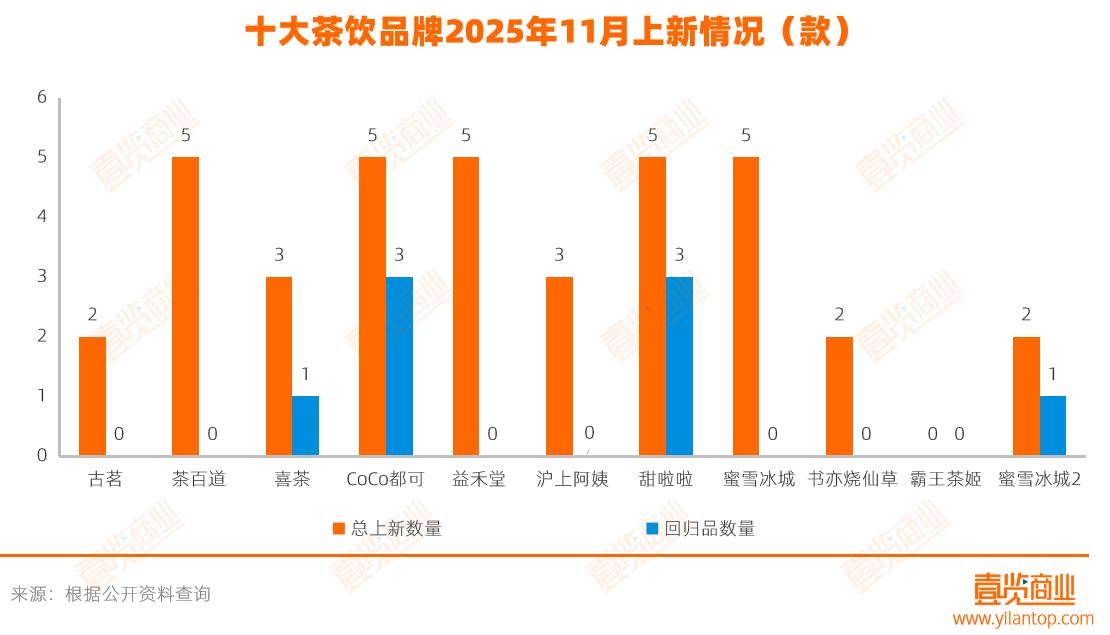
Core Insights - In November, the top ten tea and coffee brands in China launched a total of 76 new products, with tea brands introducing 37 new items and coffee brands 39 new items [1] Tea Brands - Major tea brands such as CoCo, Tea Baidao, and others each launched 5 new products, while Heytea introduced 3 new items [4] - The trend in the tea market is towards "nourishing" and "light fruit" flavors, with 20 new milk tea products accounting for 54.05% of all new tea products [4] - Traditional Chinese sweet soups are gaining popularity, with 8 new products launched, representing 21.62% of the new tea offerings [4] Coffee Brands - Leading coffee brands like Luckin, Starbucks, and others each released 7 new products, while Times and Kudi followed with 5 new items [4] - The coffee sector saw 18 new milk coffee products, making up 46.15% of all new coffee offerings, with fruit coffee products also increasing [7] Product Trends - In tea, flower tea is the most frequently used base, appearing in 10 products, while oolong and black tea are used in 9 products each [10] - Milk remains the dominant base for tea products, accounting for 86.11% of the offerings, with various types of milk being utilized [10] - Health-focused ingredients like peach gum and seasonal fruits are being incorporated into new products by brands such as CoCo and Heytea [10] Seasonal Strategies - Tea brands are focusing on health and wellness themes, with CoCo launching a series featuring peach gum, while Tea Baidao introduced a warming tea series [11] - Coffee brands are emphasizing warm flavors for winter, with Starbucks returning to its toffee hazelnut offerings and introducing cheese latte series [11]

2025CSR盛典暨第一财经善商业论坛正式举行
第一财经· 2025-12-12 02:07
2025 年 12 月 11 日, 2025CSR 盛典暨第一财经善商业论坛在上海世博会博物馆正式举行。本 届论坛以"韧性共生:重塑可持续竞争力新范式"为主题,邀请各机构代表、企业嘉宾、学者齐聚一 堂,共同回顾过往可持续发展的经验,搭建全球可持续对话合作平台, 探讨构建 "商业 - 环境 - 社会"三位一体的韧性体系,贡献可持续发展的 思想成果。 作为论坛主办方,第一财经长期致力于打造可持续发展平台,超越传统 CSR 逻辑,重新定义"可持 续竞争力"。 第一财经 常务 副总经理杜坚 在致辞中提到, 媒体的 责任 在于洞察趋势、凝聚共 识,更在于推动实实在在的产业变革。第一财经始终以推动可持续发展为己任 , 既是产业实践的记 录者,更是价值链接的赋能者 。 第一财经 通过专业报道与深度研究,挖掘企业创新案例,解读政 策市场趋势,搭建跨界沟通桥梁;通过 探寻 " 中国企业社会责任典范 " ,以客观标准发掘先锋样 本,让负责任的商业实践获得广泛认可 , 通过思想碰撞,为 更多 企业破解困境提供新思路。 联合国可持续发展管理学院首席代表、联合国可持续发展目标全球协作项目工作委员会主任柳云虎 带来主题演讲 《 面向未来 ...

外卖大战熄火,茶饮品牌谁裸泳,谁狂奔?
3 6 Ke· 2025-12-11 23:17
Core Insights - The takeaway from the article is the impact of the subsidy war on the tea beverage market, highlighting the contrasting fortunes of different brands as the market shifts from a subsidy-driven boom to a more challenging environment. Group 1: Market Dynamics - The subsidy war initiated a surge in orders for tea beverage shops, but as subsidies ceased, many small businesses faced a drastic drop in orders, leading to potential closures [1][2] - Major brands like Mixue Ice Cream and Nai Xue's Tea managed to achieve growth through delivery channels, while many smaller players struggled significantly [1][2] Group 2: Brand Performance - Gu Ming, recognized for its rapid expansion, saw its store count rise from approximately 9,914 in early 2025 to over 12,000 by August, but faced challenges in maintaining daily sales [6] - Mixue Ice Cream emerged as a significant winner, reporting a 39.3% year-on-year revenue increase to 14.87 billion yuan and a net profit growth of 44.1% to 2.72 billion yuan in the first half of 2025 [6] - Kudi Coffee also benefited, with sales on platforms like JD surpassing 80 million orders, becoming the first beverage brand to exceed 100 million orders on the platform [7] Group 3: Challenges Faced - Nai Xue's Tea exemplified the "increased revenue without increased profit" dilemma, with 48.1% of its revenue relying on delivery orders, leading to a 14.4% year-on-year revenue decline to 2.178 billion yuan [8] - The tea beverage industry is experiencing a rapid increase in store numbers, with 26,000 new stores opened in the third quarter alone, while approximately 150,000 stores closed in the past year [9][10] - The industry is undergoing intense competition, with brands forced to expand rapidly, leading to a situation where financial performance does not reflect the apparent growth in market presence [10]

后瑞幸时代,挪瓦咖啡凭什么冲击行业第二?
远川研究所· 2025-12-11 13:10
Core Viewpoint - After defeating Starbucks, Luckin Coffee's success raises the question of who will be the next leader in the affordable coffee chain industry, with Nova Coffee emerging as a strong contender due to its rapid growth and innovative business model [5]. Group 1: Nova Coffee's Growth and Market Position - Nova Coffee has achieved a compound annual growth rate of over 100% in its first five years, with a year-on-year growth rate exceeding 400% this year [5]. - The company opened 1,800 new stores in a single month, leading the industry in growth, and has surpassed 10,000 total stores while expanding into international markets [5]. - Nova Coffee's success is attributed to its unique approach of "not following trends, but creating" [5][13]. Group 2: Business Model Innovation - The scale is crucial for affordable coffee, allowing for cost reduction through economies of scale, but most players struggle to enter the market due to high operational costs [7]. - Nova Coffee has restructured its business model to focus on low-cost expansion through a combination of delivery and partnership with existing retail outlets, such as convenience stores and bakeries [8][9]. - The company has capitalized on the rapid growth of the Chinese delivery market, with a projected increase in order volume from 1 billion to approximately 2 billion by 2025 [8]. Group 3: Health-Conscious Product Development - In response to consumer health concerns, Nova Coffee has launched a "nutritional choice" labeling system and developed healthier products, including the world's first zero-fat latte [17]. - The company has introduced various health-focused beverages, which have quickly gained popularity, contributing significantly to sales [18]. - Nova Coffee's brand image as a health-conscious option has allowed it to collaborate with fitness brands and events, further expanding its market reach [19]. Group 4: Sustainable Business Practices - Unlike many competitors, Nova Coffee avoids price wars and focuses on sustainable business practices, with most products priced between 9.9 and 15 yuan [24]. - The company has invested heavily in its supply chain, establishing coffee plantations and roasting facilities to ensure quality and cost efficiency [26]. - Nova Coffee's approach emphasizes the importance of self-sustaining growth, which is essential for long-term success in the competitive coffee market [26]. Group 5: Future Outlook - Nova Coffee has completed six rounds of financing, attracting significant investment from notable firms, indicating strong confidence in its business model and operational capabilities [27]. - The company aims to continue its rapid expansion, with expectations to exceed 10,000 stores, marking the beginning of a new growth phase rather than an endpoint [27].

从高黎贡山到手中杯:瑞幸与云南共筑“中国咖啡名片”
第一财经· 2025-12-11 12:31
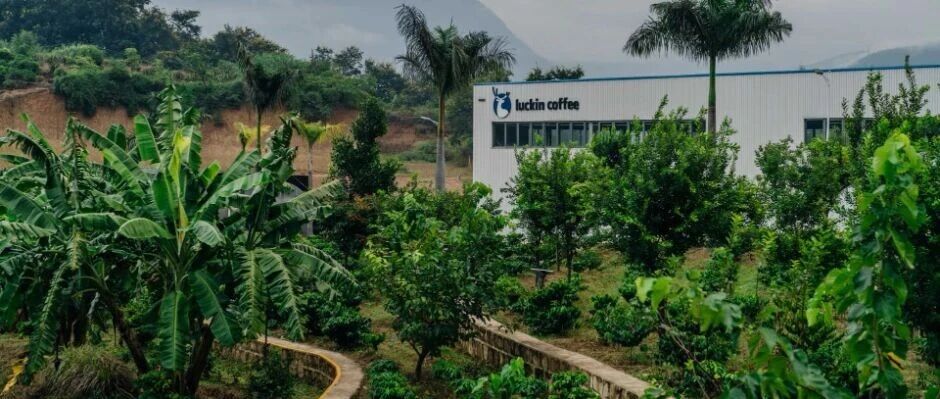
Core Viewpoint - The article highlights the transformation of Yunnan's coffee industry, emphasizing the integration of ecological protection, technological innovation, and collaborative efforts among various stakeholders to achieve sustainable development and high-quality growth in coffee production [1][11][14]. Industry Overview - By 2023, China surpassed the United States with 49,700 brand coffee stores, becoming the world's largest market for coffee shops, with a total of 254,370 coffee stores nationwide by October 15, 2025 [3]. - Luckin Coffee, a leading domestic brand, has nearly 30,000 stores, driving the growth of the coffee industry in Yunnan [3]. Ecological and Quality Foundations - Yunnan coffee's unique quality is attributed to its natural ecology, with processing facilities located in the Gaoligong Mountain National Nature Reserve, home to many endangered species [5][6]. - The region's specific terrain, climate, and volcanic ash soil create a microenvironment that produces the distinct flavor profile of Baoshan coffee [6]. Sustainable Practices and Innovations - Luckin Coffee collaborates with the World Wildlife Fund (WWF) to implement ecological responsibility, restoring habitats for endangered species and achieving significant increases in local bird populations [8]. - The company promotes intercropping techniques to help farmers generate income while cultivating coffee, enhancing both economic viability and coffee quality [10]. Collaborative Ecosystem - The transformation of Yunnan coffee requires a symbiotic network involving government, enterprises, research institutions, international organizations, and local communities [11]. - The Baoshan processing facility serves as a hub for sustainable practices and biodiversity training, directly benefiting local farmers and enhancing industry efficiency [13]. Growth Metrics - During the 14th Five-Year Plan period, the Baoshan coffee industry experienced a compound annual growth rate of over 110%, with the proportion of specialty coffee rising from 10% to 75% and deep processing rates increasing from 30% to 90% [13]. Cultural Significance - The integration of Yunnan's coffee production with Luckin Coffee's brand represents a new narrative for Chinese coffee, transforming it from a foreign commodity to a cultural symbol [14].

从《疯狂动物城2》看迪士尼IP联名的价值裂变
Xin Lang Cai Jing· 2025-12-11 10:18
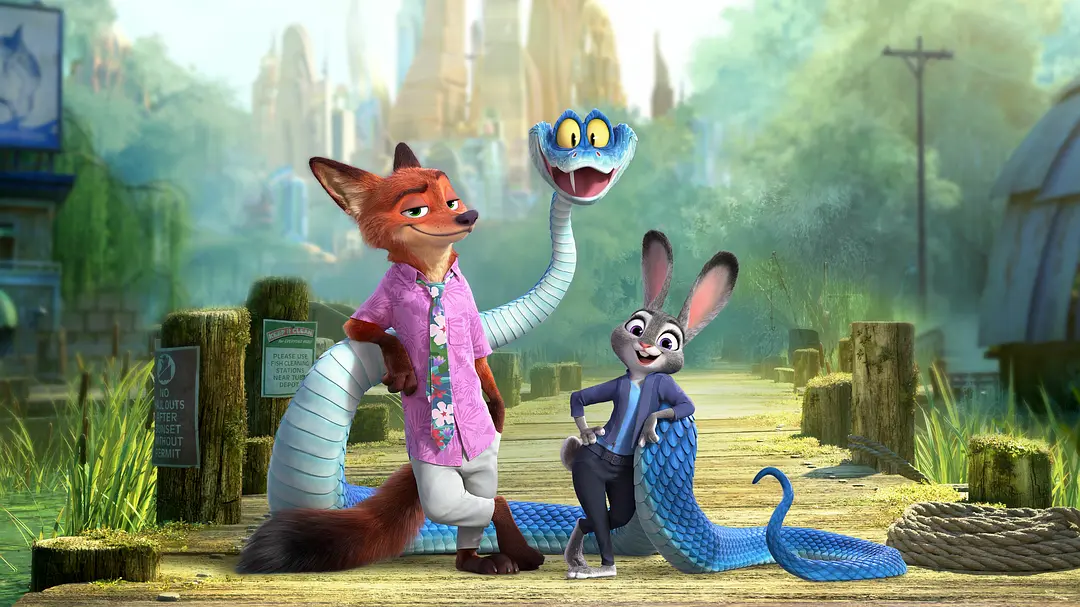
Core Insights - The article highlights the successful marketing strategy of "Zootopia 2," which has engaged over 70 brands, creating a new model for IP value and commercial benefits, showcasing Disney's century-long expertise in IP operations [2][42] - The film achieved a record-breaking box office of over 7.38 billion RMB in a single day in China and garnered a global box office of 5.56 billion USD in its opening week, setting a new record for animated films [2][42] - The commercial impact of the film is significant, with over 3 billion RMB in derivative income generated from brand collaborations in just six months leading up to the release [2][42] Group 1: IP Collaboration Strategy - The collaboration strategy of "Zootopia 2" provides a solution to the common pitfalls of IP partnerships, transforming IP from a mere traffic tool into a brand asset [5][44] - The film's marketing involved a comprehensive approach, covering various product categories and creating an IP lifestyle ecosystem, moving beyond simple image licensing to a more integrated strategy [6][45] - The collaboration included major brands like Luckin Coffee, Starbucks, and Volkswagen, demonstrating a wide-ranging impact across 18 sectors [6][45] Group 2: Marketing Execution - The marketing campaign created a resonance effect through both online and offline channels, including themed exhibitions and social media engagement, which helped build anticipation before the film's release [12][51] - The campaign utilized user-generated content (UGC) to enhance engagement, with over 50,000 related posts on social media platforms prior to the film's release [16][55] - The film's promotional activities included collaborations with local brands to penetrate lower-tier cities, resulting in a 14% increase in pre-sale ticket purchases from these areas compared to the previous installment [22][61] Group 3: Disney's Methodology - Disney's success is attributed to a four-dimensional strategic framework: IP value accumulation, precise matching, local adaptation, and technological empowerment [17][56] - The emotional connection established through long-term IP development is crucial, as seen in the character development and storytelling that resonates across different age groups [17][56] - The integration of technology in both content creation and consumer experience enhances the IP's appeal, making it more interactive and immersive [24][63] Group 4: Implications for Brand Marketing - The case of "Zootopia 2" illustrates that successful collaborations are not merely about short-term promotions but are extensions of brand strategy and long-term investments [26][65] - Companies should focus on building emotional connections with their IPs, ensuring they resonate with contemporary consumer values and preferences [27][66] - A dual-matching evaluation system for partnerships should be established, focusing on audience overlap, value alignment, and situational fit to maximize the effectiveness of collaborations [28][67]

跟风抢“联名”“贪杯”不可取
Bei Jing Wan Bao· 2025-12-11 07:13
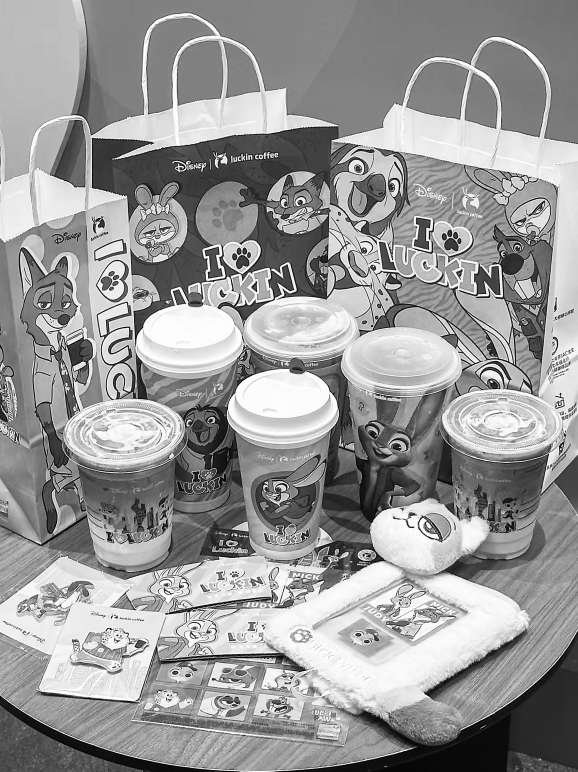
Core Insights - The release of the movie "Zootopia 2" has significantly boosted the sales of co-branded products, particularly among teenagers who are engaging in excessive consumption to collect merchandise [1][4][12] - The phenomenon of "social currency" is driving demand for these co-branded items, as children seek to showcase their collections on social media [12][13] Group 1: Market Trends - Co-branded products, especially in the food and beverage sector, are becoming increasingly common, with many brands collaborating with popular IPs to attract younger consumers [1][12] - The collaboration between Luckin Coffee and "Zootopia 2" has led to a rapid sell-out of products within days of their launch, indicating strong market demand [14] Group 2: Consumer Behavior - Many teenagers are purchasing excessive quantities of drinks and food items to obtain promotional items, often leading to waste, as they do not consume all the products bought [5][8][9] - The trend of collecting co-branded merchandise is driven by peer influence, with children feeling pressured to participate in order to fit in socially [12][13] Group 3: Marketing Strategies - Companies are using promotional strategies that require consumers to purchase multiple items to receive free gifts, which has been effective in driving sales but raises concerns about waste [14][15] - The scarcity of co-branded items has led to a secondary market where these products are being resold at high prices, indicating a strong demand for limited-edition merchandise [16]
30 亿票房、超70个品牌参与联名 《疯狂动物城2》激活全域消费
Cai Jing Wang· 2025-12-11 07:07
Core Insights - The sequel "Zootopia 2" has successfully leveraged the strong user base of the original film, achieving significant box office success and commercial value, with a total box office of 31.22 billion yuan in just 15 days after release [1] - The IP has generated a cross-industry consumption synergy through brand collaborations, with over 70 brands participating in co-branding efforts during the film's release, covering 18 categories [2] - Disney's systematic pre-release strategy has significantly boosted market interest, with the first trailer achieving nearly 200 million views within 24 hours and related topics generating over 2.6 billion views on Weibo [2] Box Office Performance - "Zootopia 2" became the first imported animated film to surpass 200 million yuan in pre-sales, indicating strong market demand [1] - The film's box office performance reflects the ongoing appeal of the IP to consumers, with a total box office of 31.22 billion yuan in China by December 10, 2025 [1] Brand Collaborations - The IP has facilitated significant brand collaborations, with over 70 brands engaging in co-branding, leading to a matrix-style commercial layout [2] - Notable collaborations include jewelry brands like Chow Tai Fook and Lao Feng Xiang, which have successfully reached younger consumers through co-branded products [3] - In the apparel sector, brands like Bosideng and Uniqlo have launched themed clothing lines that resonate with the film's audience, achieving substantial sales [4] Jewelry and Apparel Impact - The collaboration between the Z generation's emotional connection to the IP and the intrinsic value of gold jewelry has led to a notable increase in sales and customer demographics for brands like Lao Feng Xiang and Chow Tai Fook [3] - The apparel sector has seen effective conversion of traffic to sales through targeted IP collaborations, with brands launching products that appeal to family audiences [4] Footwear and Lifestyle Products - Footwear brands like Crocs and Li Ning have launched co-branded products that align with the film's themes, enhancing consumer engagement and sales [5][6] - Lifestyle brands such as Miniso and Luckin Coffee have also introduced co-branded products, contributing to large-scale sales [8] IP Operational Strategy - Disney's successful implementation of a "content-consumption-experience" operational model has driven the explosive growth of IP co-branding consumption [9] - The focus on emotional resonance and immersive experiences has strengthened the connection between IP characters and contemporary audiences, enhancing brand value [9] Long-term Commercial Value - The evolution of the Zootopia IP from 2016 to 2025 illustrates the transformation of emotional value into commercial value, with the IP becoming a core element of the industry chain [10] - The role of IP derivative companies is to expand the consumption scenarios and lifecycle of film IPs, integrating characters into daily life through various product categories [10]