蜜雪冰城

Search documents
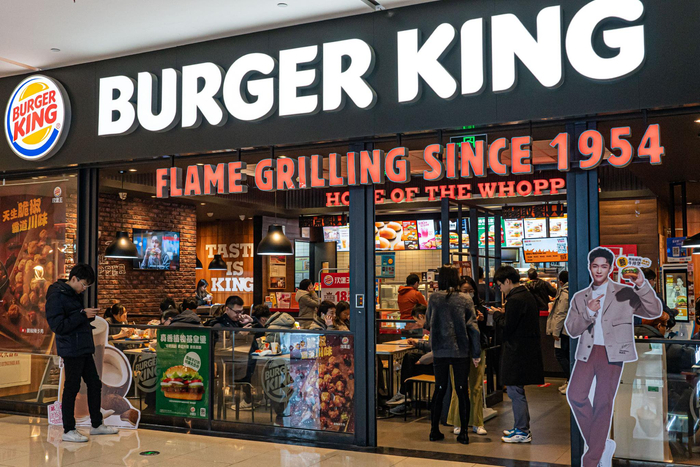
汉堡王中国在新股东入场后该怎么变?
Xin Lang Cai Jing· 2025-11-11 14:15
Core Insights - Burger King's development direction in China has become clearer with the partnership with CPE Yuanfeng Capital, which will inject $350 million to support expansion and operations [1][2] - The goal is to increase the number of Burger King stores in China from approximately 1,250 to over 4,000 within ten years, aiming for sustainable same-store growth [1][12] Company Strategy - The partnership with CPE Yuanfeng Capital will allow Burger King to leverage local market knowledge and resources for better operational efficiency [4][10] - CPE Yuanfeng Capital has a strong background in consumer investments, having invested over 10 billion yuan in various well-known companies, which may provide valuable insights and support for Burger King's operations in China [5][10] Market Positioning - Burger King currently faces significant competition from established players like McDonald's and KFC, particularly in terms of store count and market penetration [6][7] - Over 80% of Burger King's stores are located in tier-2 cities and above, while competitors have a more balanced presence in lower-tier cities, indicating a need for market expansion [7] Operational Challenges - The company has faced challenges with profitability, as evidenced by reports of franchisees struggling with promotional pricing leading to high food cost ratios [7] - There is a need for supply chain improvements, as Burger King lacks large-scale logistics and production facilities compared to competitors [8] Future Outlook - CPE Yuanfeng Capital plans to enhance Burger King's operations through product upgrades, brand marketing, store expansion, and digital transformation [12] - The company has seen a 10.5% increase in same-store sales in the third quarter, indicating positive momentum, although the target of 4,000 stores in ten years is considered conservative [12]

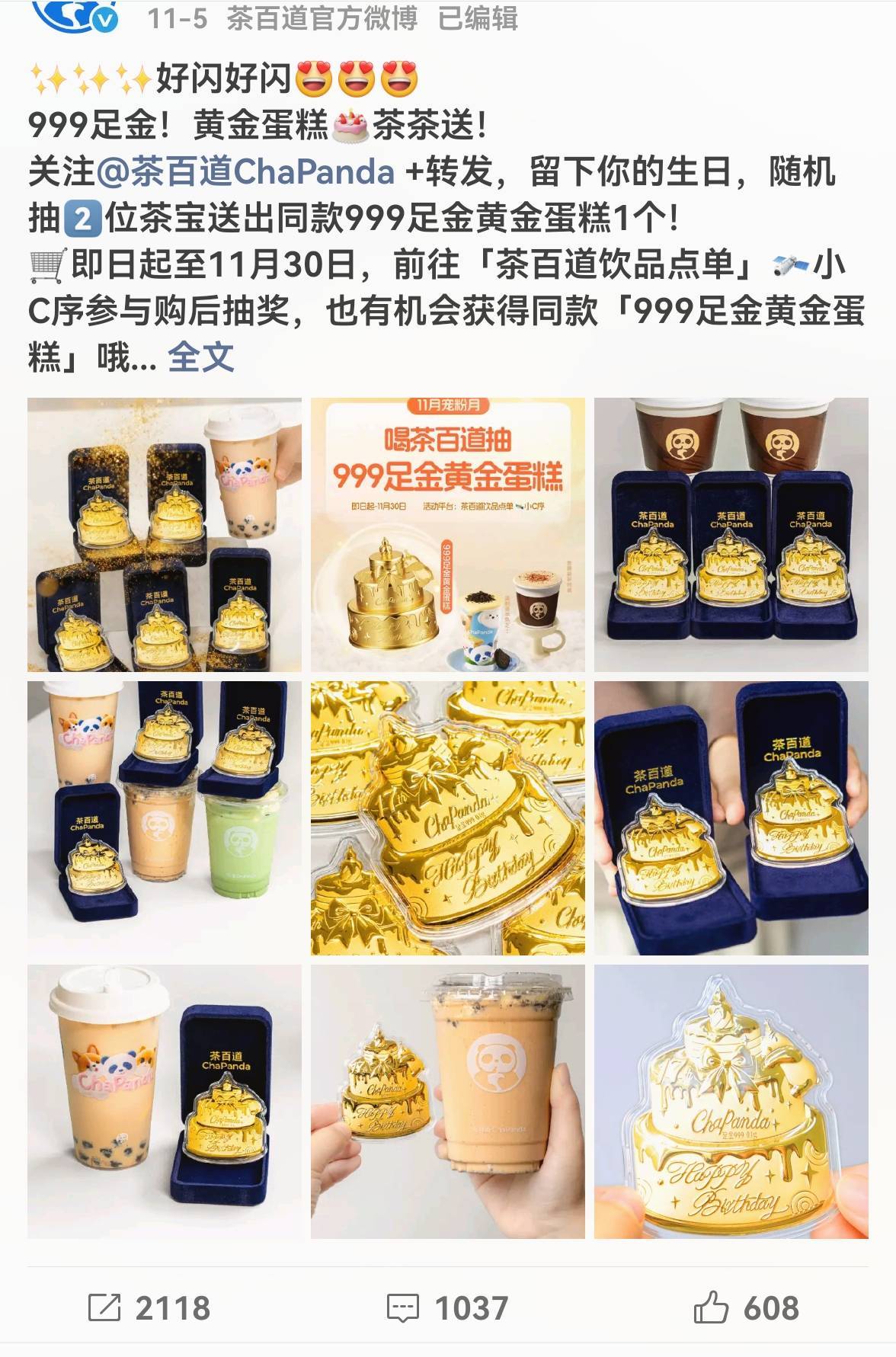
“冬天的第一杯黄金奶茶”,一场正盛的黄金消费“狂欢”
Sou Hu Cai Jing· 2025-11-11 12:50
Core Insights - The rise of "golden milk tea" has become a significant social trend among young consumers, with brands like Cha Baidao launching promotional activities that integrate gold-themed products [1][4][5] - Traditional gold brands are actively exploring collaborations with tea beverage companies to appeal to younger consumers, shifting the perception of gold from a mere asset to a symbol of emotional satisfaction and social recognition [4][9][18] Industry Trends - The collaboration between gold brands and tea drinks is seen as a strategy to attract a younger demographic, with products like the 0.1-gram golden cake piece becoming popular entry points for young consumers to engage with gold investment [5][9] - The trend is supported by social media, with platforms like Xiaohongshu witnessing a surge in discussions and engagement around gold-themed tea drinks, indicating a growing interest in gold consumption among the youth [15][17] Market Dynamics - Young consumers aged 18 to 34 contribute over one-third of gold jewelry sales, reflecting a shift in consumer behavior towards valuing personal expression and social sharing over traditional asset preservation [17][18] - The sales performance of gold brands during promotional events, such as the "Double 11" shopping festival, highlights the increasing market potential, with Old Puhuang's Tmall flagship store achieving over 300 million yuan in sales within ten minutes [17][18]

一天拆三家店,茶咖设备回收商快忙不过来了
3 6 Ke· 2025-11-11 12:17
Core Insights - The tea beverage industry is experiencing a significant downturn, with many franchise stores closing down due to a combination of high operational costs and declining consumer spending [1][2][4] - The number of tea beverage stores has increased dramatically, but this expansion is not sustainable as many new stores are failing shortly after opening [2][4][11] - The industry is witnessing a shift from individual franchisees to more professional "super franchisees" who can manage multiple brands and adapt quickly to market changes [15][17] Industry Trends - The tea beverage market saw a 32.5% increase in store numbers from 78,324 at the end of 2022 to 103,783 by the end of 2023, despite a decline in consumer spending [2][4] - Price wars have erupted, with brands like Heytea and Nayuki reducing prices significantly, leading to a departure from the previous pricing norms [4][6] - The closure of stores is becoming a common trend, with many brands experiencing high turnover rates among their franchisees [11][12] Market Dynamics - The supply chain and brand loyalty are critical factors, with brands like Gu Ming showing high equipment resale value due to better management and profitability [6][11] - Overexpansion has led to a decline in brand reputation for some companies, such as Heytea, which has had to halt franchise openings and focus on store quality [6][8] - Regional market differences are evident, with certain areas like Jiangxi being difficult for new brands to penetrate due to strong local competition [12][14] Equipment Recovery and Services - The second-hand equipment recovery market is booming, with companies like the Octopus team expanding their operations significantly to accommodate the influx of closed store equipment [4][18] - The industry is evolving from simple equipment recovery to providing comprehensive services, including store planning and operational consulting [22] - The emergence of collaborative networks among equipment recovery companies is fostering a more supportive industry environment [22] Future Outlook - The tea beverage industry is undergoing a transformation, with a focus on sustainability and efficiency as it moves away from rapid expansion to a more stable operational model [20][22] - The trend of offering second-hand equipment on a rental or installment basis is likely to grow, reflecting a shift in how businesses manage costs [18][20] - The ongoing consolidation and "survival of the fittest" mentality may ultimately benefit the industry by promoting healthier competition and innovation [22][23]
“虚胖”的沪上阿姨:没有富贵命,得了富贵病?
3 6 Ke· 2025-11-11 10:22
Core Insights - After six months of being listed, "沪上阿姨" has joined the "10,000 store club," but its stock price has faced significant declines, nearly halving from its peak, despite a recent rebound following news of an H-share incentive plan [1][2] - The company's revenue growth of 9.7% in the first half of the year is significantly lower than competitors like 古茗 and 蜜雪冰城, which reported growth rates of 41.2% and 39.3% respectively [1][2] - The rapid expansion strategy that once fueled growth is now showing signs of weakness, with a notable increase in store closures and a slowdown in new openings [6][7] Company Performance - "沪上阿姨" has reached a total of 10,739 stores across 31 provinces and 357 cities in China, marking a significant milestone in the new tea beverage industry [1][4] - Despite the large number of stores, the company has reported a net increase of only 260 stores in the first half of the year, a decrease from 653 in the same period last year [6][7] - The average GMV (Gross Merchandise Value) per franchise store has declined from 1.6 million yuan in 2023 to 1.4 million yuan in 2024, indicating pressure on franchise profitability [8][11] Industry Context - The new tea beverage market is transitioning from a phase of rapid expansion to one focused on single-store efficiency and franchisee returns, with investors increasingly concerned about the sustainability of store operations [6][15] - The competitive landscape is intensifying, with "沪上阿姨" facing challenges in the mid-tier market where it struggles to differentiate itself from both high-end brands and low-cost competitors [9][10] - The industry is moving towards a focus on quality and brand differentiation rather than sheer scale, as evidenced by the strategies of competitors like 蜜雪冰城 and 古茗 [15][22] Strategic Challenges - "沪上阿姨" is experiencing structural challenges related to its market positioning, supply chain efficiency, and brand identity, which are hindering its growth potential [8][14] - The company's broad expansion strategy has led to resource dilution, making it difficult to convert store numbers into effective market control [10][11] - The brand's attempt to establish a "health tea" image through initiatives like the "五色慢养" plan has not resonated strongly with consumers, leading to a lack of clear brand identity [12][14] Future Outlook - The company is exploring a second growth curve with its sub-brand "茶瀑布," aimed at the budget market, but faces skepticism regarding its ability to establish a distinct market presence [20][22] - The capital market is reassessing the valuation of the new tea beverage sector, favoring companies with strong supply chain control and clear brand identities, while those with ambiguous positioning may face valuation discounts [22][16] - To reverse market perceptions, "沪上阿姨" must balance expansion with improving single-store performance and develop a more compelling brand narrative [22][19]
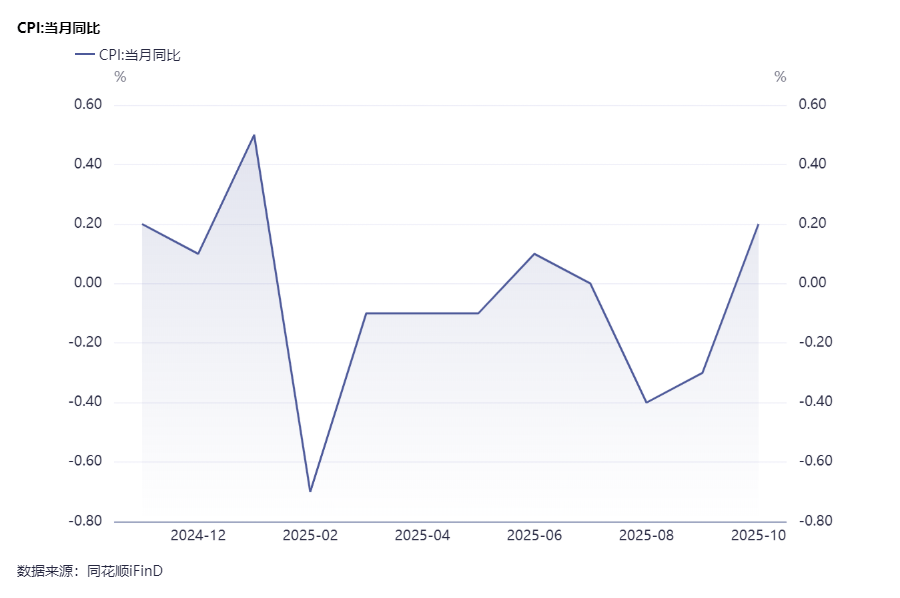
10月CPI同比转正,消费、化工相关ETF备受关注
Sou Hu Cai Jing· 2025-11-11 04:14
Group 1 - The core viewpoint of the article highlights the positive shift in China's Consumer Price Index (CPI) in October, with a year-on-year increase of 0.2% and a month-on-month rise of 0.2%, indicating a recovery in consumer demand driven by policy measures and holiday effects [1] Group 2 - The traditional consumption sector is experiencing growth due to policy support, including the expansion of duty-free shopping, which saw a 34.86% year-on-year increase in shopping amounts during the first week of November [3] - The food and beverage sector's public fund holdings have decreased to 4.9%, the lowest since 2010, suggesting a potential for increased investment in the consumer sector [3] Group 3 - The chemical sector has been in a long-term bottoming phase, with recent policy shifts aimed at reducing competition and improving the supply structure, which may enhance investment opportunities in this sector [5] - The Producer Price Index (PPI) showed a month-on-month increase of 0.1% in October, marking the first positive change of the year, which could lead to rising industrial prices and increased value in the chemical sector [5] Group 4 - Relevant ETFs for investors interested in these sectors include the E Fund Consumption ETF, which tracks the CSI Consumption 50 Index, and the E Fund Chemical Industry ETF, which follows the CSI Petrochemical Industry Index, providing exposure to leading companies in these sectors [6]
CPE源峰将持有汉堡王中国约83%的股权,计划门店拓展至2035年的4000家以上
Cai Jing Wang· 2025-11-11 01:32
Core Insights - CPE Yuanfeng has announced a strategic partnership with Burger King, which is fully owned by Restaurant Brands International (RBI), to establish a joint venture named "Burger King China" [1] - CPE Yuanfeng will inject an initial capital of $350 million into Burger King China to support restaurant expansion, marketing, menu innovation, and operational enhancements [1] - After the transaction, CPE Yuanfeng will hold approximately 83% of the equity in Burger King China, while RBI will retain about 17% [1] Investment and Growth Plans - The partnership aims to expand the number of Burger King outlets in China from approximately 1,250 to over 4,000 by 2035, with a focus on sustainable same-store growth [2] - The transaction is expected to be completed in the first quarter of 2026, subject to regulatory approval processes [2] CPE Yuanfeng's Investment Strategy - CPE Yuanfeng has been actively investing in the chain consumer service sector, with cumulative investments amounting to approximately 10 billion RMB, including investments in companies like Mixue Ice Cream, Aier Eye Hospital, and Pop Mart [1] - Post-investment, CPE Yuanfeng will empower Burger King China by focusing on product upgrades, brand marketing, offline store expansion, online channel restructuring, digital system development, and financial optimization [1]
消费反弹,商社继续看哪些?
2025-11-11 01:01
Summary of Key Points from Conference Call Records Industry Overview Consumer Sector - The consumer sector has shown a strong rebound after a previous correction, primarily due to a low base effect [2][20] - Companies like Jinjiang, Shou Tour, and others have been recommended as key investment targets [2] Duty-Free Industry - China Duty Free Group (CDFG) has reached a two-year high in stock price, benefiting from favorable policies and a low base effect, with customs data showing a year-on-year growth of 20%-30% in early November [1][4] - The expected valuation for CDFG in 2026 is around 4.8 billion, indicating potential for further growth despite high valuations [4] Hotel Sector - The hotel sector is experiencing a slowdown in supply expansion while demand is increasing, with expectations of a year-on-year positive change by 2026 [5] - Jinjiang and Shou Tour have shown improved performance, with Jinjiang's decline narrowing to just over 2% in Q3 [5] New Consumption in Hong Kong - Companies like Pop Mart and Lao Pu Gold are highlighted as having relatively low valuations, making them attractive investment opportunities [6] - Despite potential deviations in expected growth for 2026, the new consumption sector in Hong Kong remains under 20 times valuation, suggesting room for growth [6] Restaurant and Tea Beverage Sector - The restaurant sector is currently facing low expectations and stock prices, but October saw improvements in same-store sales [7] - The tea beverage sector has shown resilience, with leading companies achieving single to double-digit growth, making them worthy of attention [8] Key Company Insights Recommended Companies - **Gu Ming**: Achieved over 20% same-store GMV growth in Q3, plans to open over 3,000 new stores next year [3][8] - **Mi Xue Ice City**: Rapid growth in domestic and credit card stores, with plans to open around 4,000 new stores next year [3][8] - **Xiao Tai Yang**: Plans to open 2,000 new stores next year, focusing on cost optimization for profit growth [3][8] - **Guo Quan**: Exceeded same-store growth expectations in Q3, with plans to open at least 2,000 new stores next year [3][8] Healthcare and Hygiene Products - Recommended companies in the hygiene sector include Lu Shushi and Stable Medical, both of which have strong market positions and reasonable valuations [9] - Stable Medical is expected to achieve around 1.05 billion in revenue this year, with a projected 20% growth next year [12] Beauty and Personal Care - Recommended companies include La Fang Jia Hua and Juzi Biological, focusing on collagen-related products [13][14] - La Fang Jia Hua is expected to achieve over 1.2 billion in revenue this year, with a growth rate exceeding 30% [14] Additional Insights - The overall sentiment in the consumer sector is currently low, but many companies still have upward valuation potential [19][20] - The duty-free and hotel sectors are showing signs of recovery, with potential for further growth driven by favorable policies and improved consumer sentiment [1][5][4]
从基本面、估值、政策多维度,看商社板块投资机会
2025-11-11 01:01
Q&A 近期商社板块大涨的原因有哪些? 近期商社板块的上涨主要有三个支撑点。首先,基本面环比改善提供了支撑。 尽管三季报显示线下消费业绩仍有压力,但部分子方向的数据呈现出环比改善 的积极信号。此外,10 月 CPI 环比上涨 0.2%,同比上涨 0.2%,对市场信心 有较大提振作用。其次,政策面的加码,包括近期密集公布的一些免税政策和 "十五"规划,也对市场形成了支持。最后,与去年四季度零售行情类似,有 资金高低切换的风格加持,以及筹码结构相对轻、位置较低的资金面因素。 在当前行情下,哪些细分板块值得关注? 在当前行情下,建议关注以下几个方向:一是顺周期服务类消费,包括海南板 块、出行链(如酒店、景区、茶饮和餐饮)。二是商品类消费,尽管弹性不如 服务类消费,但一些产业逻辑已经落地的板块,如超市条线,也值得关注。从 2025 年第三季度海南离岛免税消费额同比下降 2.7%,但平均客单价同 比上升 27.1%,主要受低基数效应、新产品上市及消费券发放影响, 11 月海口免税购物额及客流分别增长 35%和 3%。 茶饮板块近期普遍大涨,沪上阿姨、蜜雪冰城、古茗等品牌开店提速, 沪上阿姨总门店数量突破万家,蜜雪冰城计 ...

从SKP到星巴克,为何博裕总能拿下好标的
3 6 Ke· 2025-11-11 00:32
Core Insights - The acquisition of Starbucks China by local private equity firm Boyu Capital, which acquired a 60% stake for $2.4 billion, highlights the growing interest in high-quality consumer assets in China [1][5][11] - The deal is part of a broader trend where major players are seeking to capitalize on cyclical downturns in the market to acquire valuable assets at lower valuations [7][12] Group 1: Acquisition Details - Boyu Capital will form a joint venture with Starbucks China, valuing the company at approximately $4 billion [1] - The acquisition process was highly competitive, with over 10 institutions initially invited to submit non-binding bids, including prominent firms like Carlyle and KKR [5] - Starbucks China has a strong brand positioning and a loyal customer base, with 25.5 million members, making it a highly sought-after asset [5][11] Group 2: Market Context - The Chinese coffee market is projected to grow significantly, with the number of coffee drinkers expected to increase from 40 million in 2018 to 260 million by 2028, representing a 20% annual growth rate [5] - The luxury retail sector, exemplified by SKP, has also faced challenges, with sales declining by 17% in 2024, indicating a broader trend of market volatility affecting high-end consumer brands [11][12] Group 3: Strategic Implications - The acquisition reflects a strategic move to enhance operational efficiency and find new growth avenues through localized management and innovative product offerings [10][13] - Boyu Capital's experience in the local market is expected to accelerate Starbucks' expansion into lower-tier cities, where the brand's presence remains limited [15][17] - The focus on enhancing supply chain efficiency and product localization will be critical for maximizing the investment's value [13][14]

AI广告,总是「降本增笑」?
3 6 Ke· 2025-11-10 23:41
Core Viewpoint - The rise of AI-generated advertisements, exemplified by Coca-Cola's recent holiday campaign, has sparked widespread criticism for lacking emotional depth and creativity, leading to a phenomenon described as "cost-cutting humor" rather than effective branding [1][3][12] Group 1: AI Advertising Trends - AI advertising has become a prevalent trend in the industry, with major brands like Coca-Cola, Nutella, Google, and H&M adopting AI to produce content more efficiently [8][16] - The initial promise of AI in advertising was to reduce costs and production time, allowing brands to generate materials in a fraction of the time previously required [10][16] - However, the actual outcome has often been a dilution of creativity and emotional resonance, with AI-generated content frequently criticized for its lack of authenticity and connection to audiences [3][12][15] Group 2: Audience Reception and Impact - The audience's reaction to AI advertisements often centers around their absurdities and technical flaws, rather than the intended brand message, leading to a focus on generating buzz rather than meaningful engagement [18][21] - Social media dynamics amplify this disconnect, where negative feedback can inadvertently increase visibility, leading brands to embrace this as a strategy for engagement [18][21] - The shift towards AI-generated content has resulted in a new advertising ecosystem where being ridiculed is sometimes preferable to being ignored, complicating the relationship between brands and consumers [21][23] Group 3: Future Implications - The trend of AI in advertising is likely to extend into other creative industries, such as film and television, potentially leading to a broader cultural shift where human creativity is undervalued [23][25] - As AI-generated content becomes more ubiquitous, there may be a future demand for human-created works to be marketed as unique and authentic, highlighting a potential backlash against AI reliance [25] - The long-term consequences of prioritizing efficiency over creativity could lead to a significant loss in the cultural and emotional depth of advertising and media [25]