长江存储

Search documents
美制裁13家中企,中方以1敌38国!商务部两记重拳,有三大底气!
Sou Hu Cai Jing· 2025-09-16 11:16
Group 1 - The U.S. added 13 Chinese semiconductor companies to an export control "entity list," prompting China to respond with two announcements regarding anti-dumping and anti-discrimination investigations against U.S. chips [1][3] - China's swift and strong reaction indicates its impatience with what it perceives as insincere negotiations from the U.S. [1][3] Group 2 - The anti-dumping investigation targets U.S. companies that have been selling chips below cost in China, aiming to protect local industries and market rights [4] - The anti-discrimination investigation challenges the U.S. for its double standards in restricting high-end chip exports while criticizing China for not following rules [5] Group 3 - China's confidence in confronting the U.S. stems from three pillars: being the largest chip consumer market, having a developing domestic supply chain, and adhering to WTO rules to counter U.S. unilateralism [6][7][9] Group 4 - The U.S. attempted to rally 37 countries to pressure China, but many countries, including those in the EU and ASEAN, have significant trade ties with China, undermining U.S. efforts [8][10] Group 5 - China's exports to the U.S. fell by 33.1% in August, but exports to the EU and ASEAN grew by 10.8% and 22.7%, respectively, indicating a shift towards market diversification [12] Group 6 - The future of U.S.-China negotiations hinges on whether the U.S. will abandon its strategy of pressure for concessions, with two potential outcomes: a temporary agreement or China accelerating its domestic alternatives [14] Group 7 - The ongoing chip conflict represents a broader competition for technological dominance, with China focusing on short-term countermeasures, medium-term industrial upgrades, and long-term market diversification [15]


国盛证券:重视企业级存储升级趋势 关注存储模组等相关厂商
智通财经网· 2025-09-16 09:13
Core Insights - The enterprise storage market is projected to reach approximately $87.8 billion by 2025, with a CAGR of about 18.7% from 2024 to 2028, driven by increasing AI demand and significant growth in capital expenditures [1][2] - The value of memory in AI servers is significantly higher than in traditional CPU servers, with examples showing DRAM costs of $7,860 for H100 AI servers compared to $3,930 for Intel Sapphire Rapids servers [1] - The transition to PCIe 5.0 for SSDs and advancements in data center SSDs towards QLC and SCM technologies highlight the ongoing upgrade trend in enterprise storage driven by AI [2] Market Dynamics - Major storage manufacturers are increasing product prices due to tightening supply in DRAM and NAND markets, with companies like SanDisk raising flash memory prices by 10% [3] - The demand for enterprise SSDs remains strong, while server memory prices continue to rise, further tightening supply amid the AI wave [3] Opportunities in Domestic Production - Domestic storage module manufacturers are poised to benefit from the ongoing supply-demand tightness, price increases, and the push for localization in the storage industry [4] - The quality of DRAM chips is crucial for the performance of enterprise memory modules, making stable and high-quality supply essential for manufacturers [4] Industry Growth and Expansion - Changxin Memory Technologies is expected to increase its market share in the DRAM sector to 10-12% by the end of 2025, while Yangtze Memory Technologies has already reached an 8% market share in NAND [5] - The establishment of Changxin's third phase is anticipated to accelerate domestic production and technological advancements in 3D NAND and 3D DRAM [5] Investment Recommendations - Recommended companies in the storage module sector include Shannon Chip Creation, Kape Cloud, and Demingli [6] - Notable storage chip companies include Zhaoyi Innovation and Lanke Technology, while semiconductor equipment firms include Zhongwei Company and Beifang Huachuang [6]
中方罕见对美主动重拳出击,这是在向世界释放四个明确信号!
Sou Hu Cai Jing· 2025-09-16 02:09
Group 1 - China has initiated two significant investigations against the US chip industry, focusing on anti-dumping and discrimination practices, marking a shift to a more proactive legal approach [1][3] - The anti-discrimination investigation is based on China's Foreign Trade Law, aiming to systematically review US practices that are deemed discriminatory, indicating a move towards legal accountability rather than emotional responses [3][10] - The anti-dumping investigation targets specific segments of the chip industry, particularly analog and interface chips, which are crucial for various sectors including automotive and consumer electronics, potentially disrupting US supply chains [3][6] Group 2 - China holds a dominant position in the rare earth market, supplying over 70% of US imports, and controls critical processing stages, which could significantly impact US military and technological capabilities [6][10] - The US is attempting to develop its own rare earth projects, but faces challenges in terms of technology, capital, and time, making immediate replacement unlikely [6][10] - China's advancements in its own chip supply chain, such as Yangtze Memory Technologies achieving mass production of 232-layer NAND flash memory, indicate a growing self-sufficiency in mature chip technology [6][10] Group 3 - The pressure from China's actions is expected to first impact US chip companies, leading to increased compliance costs and potential shifts in supply chain strategies [8][10] - US allies, including Japan and Europe, may also face dilemmas due to their reliance on the Chinese market, complicating their positions in the geopolitical landscape [8][10] - The current situation emphasizes the need for global companies to engage in geographical hedging and localize their operations to mitigate risks associated with US-China tensions [8][10]

国庆前后,市场演绎有何规律?
GOLDEN SUN SECURITIES· 2025-09-16 00:17
Group 1: Macro Economic Overview - In August, economic data continued to decline, following the weakening trend observed in July, with most indicators showing a downward trajectory [3] - Looking ahead, exports are expected to decline in the fourth quarter, with insufficient domestic demand in consumption, real estate, and prices remaining a constraint, leading to a short-term policy response that is likely to be supportive but not aggressive [3] - Specific areas of concern include a continued decline in consumption due to diminishing effects of trade-in policies, a rapid decline in investment across real estate, manufacturing, and infrastructure, and a slight decrease in industrial production [3] Group 2: Fixed Income Market Insights - Economic data indicates a comprehensive decline, suggesting increased downward pressure on the economy, with demand slowdown beginning to affect supply [5] - The fixed income market is expected to experience volatility in the short term, with a gradual recovery anticipated as various disruptive factors stabilize [6] - The high-frequency index for basic economic indicators stands at 127.6 points, with a year-on-year increase of 5.6 points, indicating stable yet cautious economic conditions [7] Group 3: AI and Storage Industry - The enterprise storage market is projected to reach approximately $87.8 billion by 2025, with a compound annual growth rate (CAGR) of about 18.7% from 2024 to 2028, driven by increasing AI demand [8] - AI server memory costs are significantly higher than traditional CPU servers, with DRAM costs for AI servers reaching $7,860 compared to $3,930 for CPU servers, highlighting the growing value of storage in AI applications [8] - Major storage manufacturers are raising prices due to supply constraints, with companies like SanDisk increasing flash memory prices by 10%, indicating a bullish trend in the storage market [10] Group 4: Company-Specific Insights - Dongyangguang (600673.SH) is strategically transforming to respond to the surging global demand for AI computing power, aiming to create a comprehensive ecosystem that integrates green energy, hardware technology, computing facilities, AI applications, and operational services [13] - The company is expected to achieve revenues of 15.7 billion, 24.8 billion, and 30 billion yuan from 2025 to 2027, with corresponding net profits of 1.4 billion, 2.2 billion, and 2.8 billion yuan, reflecting a strong growth trajectory [13] - Zhongsheng Pharmaceutical (002317.SZ) is experiencing steady growth, leveraging its advantages in new drug development technologies in the respiratory and metabolic disease sectors, with several products expected to yield positive results [18]


科技行业周报:推理应用驱动算力投资,中美博弈持续利好国产半导体-20250915
First Shanghai Securities· 2025-09-15 12:34
Investment Rating - The report maintains a strong positive outlook on the AI application-driven demand for computing power, indicating a sustained high growth trajectory in this sector [2]. Core Insights - The report emphasizes the critical growth in AI applications, suggesting that both domestic and international AI applications are reaching a tipping point for widespread adoption. Investors are advised to select high-quality targets and focus on companies with consistent performance [2]. - The ongoing U.S.-China competition is expected to benefit domestic semiconductor companies, as the demand for computing power continues to rise [2][6]. Summary by Sections Communication Capability Upgrade Opportunities - Oracle's recent performance showed a significant increase in remaining performance obligations (RPO), up 359% year-on-year to $455 billion, reflecting strong long-term demand from AI giants like OpenAI and Meta [3]. - Broadcom's earnings report has heightened interest in XPU, with increased demand from major clients like Google for TPU and the announcement of a $10 billion order from a new customer [3]. - The expected shipment of optical modules is projected to exceed 10 million units for 1.6T and 40 million units for 800G in 2026, suggesting robust growth in this segment [3]. Cabinet Communication Scale-up Opportunities - The trend towards GPU scale-up in next-generation training clusters is leading to the adoption of customized PCIe switches for improved chip interconnectivity [4]. - A specific U.S. company is expected to significantly increase its 5nm wafer production in 2026, indicating a positive outlook for domestic competitors as well [4]. Domestic Computing Power Supply Chain - The report notes that the domestic computing power supply chain is in a tight balance, with critical bottlenecks being gradually addressed, which is expected to catalyze investment opportunities in the latter half of the year and into next year [6]. - The U.S. Department of Commerce has added 32 entities to its control list, which may further accelerate the upgrade of domestic computing power [6]. NAND Storage Price Increase Opportunities - SanDisk announced a 10% price increase for NAND Flash modules, with domestic leader Yangtze Memory expected to follow suit in Q4 2025 [9]. - The report highlights a significant price increase for consumer SSD modules, driven by supply constraints and seasonal demand [9]. iPhone Supply Chain Expectation Adjustments - Following the release of the iPhone 17, market expectations for overall shipments have been revised from a 9% decline to flat year-on-year growth, indicating a more optimistic outlook [10]. Investment Recommendations - The report suggests a buy rating for several companies, including Cambricon (688256), SMIC (0981.HK), and Huahong Semiconductor (1347.HK), among others, indicating strong potential in the domestic computing power sector [13].
2025全球消费电子十大头部品牌权威榜单:AI与绿色技术重塑格局
Sou Hu Cai Jing· 2025-09-15 11:33
Group 1: Industry Transformation - The global consumer electronics industry is undergoing a profound transformation driven by artificial intelligence (AI) and green technology, with a new landscape dominated by brands from China, the US, and South Korea [1][11] - The IFA 2025 and CES 2025 exhibitions highlighted that AI technology and sustainable development are the core competitive focuses for global consumer electronics brands [1] Group 2: Rise of Chinese Brands - The most significant change in the global consumer electronics landscape by 2025 is the collective rise of Chinese brands, with Huawei and Midea ranking in the top ten of the Brand Finance's global electronics brand value list [3] - Huawei's brand value reached $31.921 billion, growing by 2.7% year-on-year, and it has a 25% market share in the high-end European market [3] Group 3: Display Technology Competition - High-end display technology is becoming the most competitive arena, with various technological routes driving the industry into a critical phase of experience upgrades [4] - Hisense has achieved large-scale production of RGB-Mini LED TVs, setting a benchmark in the high-end display market with its U7S Pro series [4] Group 4: AI Integration - AI has fully integrated into consumer electronics, evolving from an additional feature to the core driving force of products [5] - Xiaomi's strategy covers over 1 billion connected devices globally, with a 52.6% year-on-year increase in Bluetooth earphone shipments in the first half of 2025 [5] Group 5: Green Technology Innovation - Green low-carbon technology has become a new battlefield for consumer electronics brands, with unprecedented emphasis on sustainable development at IFA 2025 [6] - Midea's AI ECO smart energy-saving solution achieves a 30% energy-saving effect, while TCL's ECORA™ technology promotes low-carbonization throughout the product lifecycle [6] Group 6: Global Brand Value Rankings - According to Brand Finance's 2025 global electronics brand value rankings, Apple, Samsung, and Huawei lead the market, with Apple valued at $574.51 billion, growing by 11.2% [7] - Midea's brand value is $8.723 billion, maintaining its position in the global top ten despite a slight decline [7] Group 7: Emerging Product Categories - 2025 is marked as the year of AI smart glasses, with projected sales reaching 55 million units by 2029 [8] - The CES 2025 showcased various AI companion robots, indicating a growing trend in this emerging category [9] Group 8: Technological Innovation Trends - The global consumer electronics industry is forming a tri-polar structure dominated by the US (Apple/NVIDIA), South Korea (Samsung), and China (Huawei/Xiaomi/Lenovo), with seven out of the top ten brands from these regions [10] - Chinese brands are breaking monopolies in fields like chips and robotics, with DJI holding over 70% of the global drone market [10]





聊一聊Memory--被低估的万亿赛道
傅里叶的猫· 2025-09-14 13:42
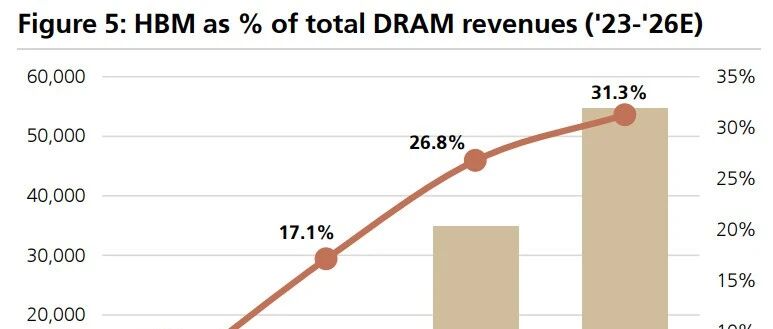
Core Viewpoint - The semiconductor storage market is expected to reach a historical high of $167 billion in 2024, driven by demand recovery in mobile phones, PCs, and servers, with NAND Flash and DRAM markets projected at $69.6 billion and $97.3 billion respectively [4][12]. Summary by Sections Overview of Storage Chips - Storage chips are essential components in modern electronic devices, categorized into volatile and non-volatile types. Volatile storage loses data when power is off, while non-volatile storage retains data [5]. Types of Volatile Storage - Static Random Access Memory (SRAM) is fast but costly, used in high-speed applications like CPU caches [6]. - Dynamic Random Access Memory (DRAM) is widely used in smartphones, PCs, and servers, requiring constant refreshing to maintain data [7]. - High Bandwidth Memory (HBM) offers high speed and bandwidth, suitable for AI accelerators, but is also expensive [7]. Non-Volatile Storage - NAND Flash is the mainstream large-capacity storage, known for its low cost and high capacity, but has slower write speeds and limited write cycles [8]. - NOR Flash is used for storing programmable code, offering fast random read speeds but with smaller capacity and higher costs [8]. AI Device Storage Requirements - AI devices require high-capacity, high-bandwidth, and low-power storage solutions, with LPDDR5 or LPDDR5X being the mainstream choices [9]. - The cost of storage in AI devices may account for 10-20% of overall hardware costs, reflecting its high priority in these applications [9]. Market Trends - The storage market experienced significant price increases in 2021, followed by a period of inventory digestion in 2023-2024, with prices expected to rebound starting late 2023 [12][14]. - HBM revenue is projected to double from $17 billion in 2024 to $34 billion in 2025, driven by strong demand [14]. 3D Stacking Technology - 3D stacking technology is crucial for meeting the high capacity, bandwidth, and low power requirements of AI storage chips, with ongoing developments in both packaging and wafer levels [19]. Industry Chain - The storage chip industry chain consists of upstream materials and equipment, midstream design and manufacturing, and downstream applications [20][23]. - The design segment has the highest profit margins due to high technical barriers, while packaging and testing have lower margins due to intense competition [23]. Recent Price Movements - Micron has paused pricing due to AI SSD demand shortages, with planned price increases of 20-30% for AI-related products [25].

【招商电子】半导体行业深度跟踪:海内外AI算力芯片高景气延续,存储等板块边际复苏趋势向上
招商电子· 2025-09-14 10:46
Group 1 - The core viewpoint of the article highlights the sustained high demand for computing power both domestically and internationally, driven by AI infrastructure investments and advancements in semiconductor technology [1][2][5] - The semiconductor industry indices showed strong performance, with the A-share semiconductor index outperforming both the Philadelphia semiconductor index and the Taiwan semiconductor index in August 2025 [1][25] - The global AI infrastructure spending is projected to reach $3-4 trillion by the end of the decade, with the Chinese AI chip market estimated at approximately $50 billion [6][1] Group 2 - Demand side: The consumer electronics sector is experiencing a recovery, with AI and automotive applications driving innovation in edge devices. Global smartphone shipments saw a year-on-year growth slowdown to 1% in Q2 2025, while PC shipments increased by 6.5% [2][3] - Supply side: Capacity utilization rates are recovering, with TSMC reporting strong demand for AI data centers. SMIC's capacity utilization reached 92.5% in Q2 2025, indicating a robust recovery in advanced manufacturing lines [4][12] - Price side: The storage market is witnessing a steady recovery in prices, particularly for DDR4, as major manufacturers shift capacity towards mainstream products like DDR5 [4][8] Group 3 - The global semiconductor sales in July 2025 reached $62.1 billion, marking a year-on-year increase of 20.6% [5][17] - The domestic storage module and niche storage sectors are expected to perform well in the second half of 2025, driven by improved supply-demand dynamics [8][12] - The advanced process demand remains strong, with major foundries like TSMC and UMC reporting increased capacity utilization rates, indicating a healthy outlook for the semiconductor manufacturing sector [12][14] Group 4 - The article suggests focusing on domestic semiconductor companies that are benefiting from the recovery in demand and advancements in AI applications, particularly in the computing power and equipment sectors [1][15] - The semiconductor equipment and materials sectors are expected to benefit from the expansion of advanced production lines in 2026, with domestic manufacturers showing positive revenue trends [14][15] - The MCU market is anticipated to see moderate recovery, with demand from consumer, home appliance, and automotive sectors expected to increase in the second half of 2025 [11][12]

机械设备行业跟踪周报:持续推荐PCB设备进口替代逻辑,建议关注固态电池设备和人形机器人持续产业催化-20250914
Soochow Securities· 2025-09-14 05:02
Investment Rating - The report maintains an "Overweight" rating for the mechanical equipment industry, specifically highlighting the potential in PCB equipment, solid-state battery equipment, and humanoid robots [1]. Core Insights - The demand for AI computing power is driving the high-end PCB market, with significant growth expected in the server market from 2024 onwards, leading to increased production capacity among domestic PCB manufacturers [2][29]. - Solid-state battery equipment is seeing steady industrialization, with key suppliers like Xian Dao Intelligent delivering critical production lines, indicating a growing market for solid-state batteries [4]. - The humanoid robot sector is poised for significant opportunities, particularly with upcoming product launches from Tesla and other companies, suggesting a favorable investment environment [5]. Summary by Sections PCB Equipment - Oracle's recent financial results indicate a substantial increase in remaining performance obligations (RPO), suggesting a strong demand for AI computing infrastructure [2]. - Leading PCB manufacturers in China are expanding their high-end HDI production capacity to capture quality orders in the server PCB market, which will significantly boost demand for drilling equipment [3]. - Key recommendations for PCB production include focusing on drilling, exposure, and electroplating processes, with specific companies highlighted for their roles in these areas [3][30]. Solid-State Battery Equipment - Leading equipment manufacturers are successfully delivering key solid-state battery production equipment, with significant energy savings and cost reductions reported [4]. - The solid-state battery sector is expected to enter a critical phase of pilot production by 2025-2026, with ongoing equipment optimization anticipated [4][22]. Humanoid Robots - The humanoid robot sector is experiencing a surge in interest, driven by new product releases and advancements in AI capabilities, with specific companies recommended for investment [5][44]. - The report emphasizes the importance of high-performance AI models for the development of humanoid robots, indicating a need for continued innovation in this area [44][45]. Industry Trends - The mechanical equipment industry is witnessing a strong upward trend, with significant sales growth in excavators and other machinery, driven by infrastructure projects and international demand [11][36]. - The report highlights the increasing importance of electric and unmanned machinery in high-altitude projects, suggesting a shift in industry dynamics towards more advanced technologies [37][38].


8120亿市值飙升!美国攻克芯片难题,中国芯片产业如何破局追赶?
Xin Lang Cai Jing· 2025-09-13 10:25
Group 1 - The recent breakthrough in American chip technology has led to a significant increase in the market value of related companies, with a single-day surge of $812 billion [1] - Chips, as the "brain" of modern technology, have become indispensable in various aspects of life, from smartphones to smart appliances and data centers [1][3] - The chip industry has high technical barriers and capital requirements, with the construction of an advanced 12-inch wafer plant costing over $20 billion [5] Group 2 - The latest breakthrough in the U.S. chip sector focuses on optimizing chip architecture and innovating material science, injecting new momentum into the global semiconductor industry [5][7] - A new transistor structure has been developed using two-dimensional materials, significantly reducing power consumption by approximately 45% and increasing computational speed by over 30% [7] - This technology is expected to enter mass production around 2025, potentially transforming key fields such as artificial intelligence, IoT, and autonomous driving [7] Group 3 - China's semiconductor industry has shown rapid growth, with sales reaching 1.3 trillion RMB in 2022, an 18% increase from the previous year [9] - Despite advancements, China still relies on foreign technology for the most advanced chip manufacturing processes, particularly in extreme ultraviolet lithography [11] - Major challenges for China's chip industry include a shortage of high-end talent, reliance on foreign core technologies, and an incomplete industrial chain [11] Group 4 - China's massive demand for chips, with annual imports exceeding $300 billion, highlights its significant role in the global semiconductor market [13] - The Chinese government has prioritized the chip industry as a national strategic focus, investing heavily through various funds [13] - China produces the highest number of engineering graduates globally, providing a strong talent base for the chip industry [13] Group 5 - The future of China's chip industry lies in finding its position within the global value chain rather than complete self-replacement [15] - Strengthening basic research, fostering an innovative ecosystem, and deepening international cooperation are crucial for enhancing technological capabilities [15] - The competition in chip technology is a long-term marathon rather than a short sprint, allowing for opportunities for all participants to innovate and collaborate [15]