Meta

Search documents
智能眼镜行业跟踪报告:智能眼镜产品力系列深度一:AR的崛起,不是偶然
GUOTAI HAITONG SECURITIES· 2026-01-21 05:20
Investment Rating - The report rates the smart glasses industry as "Buy" [1] Core Insights - The smart glasses industry is expected to enter a rapid growth phase, with related companies poised to benefit from an upturn in market conditions. Recommended companies include Mingyue Lens, which is actively collaborating with leading brands in the industry, and Inpai, which is accelerating its layout in the smart sports equipment sector [2][66] - The launch of the Ray-Ban Meta smart glasses marks a new cycle in smart glasses products, featuring improved audio and video quality, and integration with Meta's social platforms [2][66] - The supply chain for smart glasses has expanded significantly, incorporating more electronic components compared to traditional eyewear, with a diverse range of manufacturers involved [2] Summary by Sections New Product Developments - The domestic AI glasses market has seen a rapid increase in sales, with 210,000 units sold in Q3 2025, a 200% quarter-on-quarter growth. Major contributors include Xiaomi, Ray-Ban Meta, and others [5][8] - Xiaomi's AI glasses are projected to surpass 300,000 units sold by the end of 2025, while the Ray-Ban Meta has achieved global sales of 1.12 million units in Q3 2025, reflecting a nearly 50% increase [5][6] Key Players and Products - Major AR glasses manufacturers are actively launching new products, including: - Ray-Ban V3 by FFALCON, released in January 2025 - INMO Air 3, set to launch in November 2024 - Rokid Glass, expected to be available in June 2025 [6][15] - The report highlights the emergence of unicorn brands in the AI glasses sector, with valuations exceeding 1 billion RMB for companies like INMO and Rokid [11] Market Trends and Projections - The CES 2026 event is expected to showcase a significant increase in AI glasses exhibitors, with 55 companies participating, up from over 30 in 2025 [11][14] - The report anticipates continued innovation in 2026, with major tech companies like Google and Apple planning to release new AI glasses [14] Financial Projections - Financial forecasts for key companies in the smart glasses sector indicate a positive outlook, with Mingyue Lens and Inpai both rated as "Buy" based on their earnings per share (EPS) projections for 2025 to 2027 [68]

AI芯片、存储芯片等概念涨幅居前,人工智能ETF万家(159248)涨超2%,连续3天净流入
Xin Lang Cai Jing· 2026-01-21 02:28
2026年1月21日早盘,AI芯片、存储芯片等概念涨幅居前,截至10:04,中证人工智能主题指数(930713) 强势上涨2.07%,成分股澜起科技上涨10.26%,恒玄科技上涨5.29%,景嘉微上涨4.62%,芯原股份,中 科曙光等个股跟涨。人工智能ETF万家(159248)上涨2.22%。 人工智能ETF万家近3天获得连续资金净流入,最高单日获得649.16万元净流入,合计"吸金"1136.22万 元。 近期,AI基础设施建设加速推进,Meta正式成立"Meta Compute"新部门统筹全球数据中心群与供应商合 作,目标在本十年内建成数十吉瓦、最终达数百吉瓦级AI算力设施;与此同时,Cerebras斩获OpenAI超 100亿美元合作大单,承诺2028年前提供750兆瓦算力支持,凸显头部AI企业对异构算力供给的迫切需 求与长期投入决心。 政策面方面,工业互联网政策体系全面升级,"AI+制造"三大专项行动密集落地,涵盖《"人工智能+制 造"专项行动实施意见》《推动工业互联网平台高质量发展行动方案(2026—2028年)》《工业互联网 和人工智能融合赋能行动方案》,明确2027年推出1000个高水平工业智能 ...
未知机构:开源电子AI早餐会01211行情催化美欧贸易摩擦预-20260121
未知机构· 2026-01-21 02:00
1、行情催化 美欧贸易摩擦预期下,美股半导体普遍回调,不过存储与CPU相关股票逆势大涨,闪迪涨8.0%、美光涨1.3%、西 部数据涨2.7%,英特尔涨6.4%、AMD涨2.9%、ARM涨2.9%。 2、行业速递 开源电子|AI早餐会 0121 ① 据"数码闲聊站",华为将发布首款AI眼镜,支持拍照、音频、同传翻译等功能。 Meta全球事务主管JoelKaplan在世界经济论坛上表示可穿戴设备将是下一代计算技术,眼镜将会是AI终端的正确形 态。 ② DeepSeek新模型"MODEL1"曝光。 MODEL1可能采用架构,代码中的具体差异体现在KV缓存布局、稀疏性处理和FP8解码方面,在内存优化上有多 处不同。 此外,CPU缺货涨价继续发酵。 ③ 据朝鲜日报,三星与海力士将在今年削减NAND闪存产量,以转向DRAM生产从而实现利润最大化,NAND短 缺加剧。 ① 据"数码闲聊站",华为将发布首款AI眼镜,支持拍照、音频、同传翻译等功能。 Meta全球事务主管JoelKapl 开源电子|AI早餐会 0121 1、行情催化 美欧贸易摩擦预期下,美股半导体普遍回调,不过存储与CPU相关股票逆势大涨,闪迪涨8.0%、美光 ...
How Trump’s Greenland Threats Put U.S.-Europe Relations on Thin Ice
The Wall Street Journal· 2026-01-20 17:15
What we're seeing is one of the biggest challenges to US European diplomatic relations in a generation. >> We have to have it. They have to have this done.>> Trump has talked about getting his hands on Greenland for many years. But what's different now, he's threatening tariffs against Denmark and several other European allies if they stand in his way as he attempts to wrestle control of Greenland away from Denmark. So, European leaders are wary of engaging into an open slanging match with President Trump, ...


康耐特光学(02276.HK):预告2025年归母净利润同增超30% 千问接入阿里生态赋能夸克AI眼镜
Ge Long Hui· 2026-01-20 14:02
Core Viewpoint - The company forecasts a more than 30% year-on-year increase in net profit attributable to shareholders for 2025, driven by increased sales of 1.74 refractive index lenses and other multifunctional products, ongoing scale effects, improved automation, and optimized financing structure [1] Group 1: Performance Preview - The company expects net profit attributable to shareholders for 2025 to increase by no less than 30% due to several factors [1] - Sales of 1.74 refractive index lenses and other multifunctional products are anticipated to rise [1] - The company benefits from scale effects and enhanced mechanical automation levels [1] - Optimizing the financing structure is expected to improve fund returns and reduce financing costs [1] Group 2: Key Focus Areas - The integration of the Qianwen model into Alibaba's ecosystem is expected to enhance the functionality of Quark AI glasses, improving user experience and market share [1] - The global smart glasses market is experiencing rapid growth, with IDC reporting a 74.1% year-on-year increase in shipments in Q3 2025, and Meta planning to expand production of Ray-Ban AI glasses [1] - The company is positioned to maintain its leading advantage as a core optical supplier, benefiting from the sales growth driven by the Qianwen ecosystem [1] Group 3: Profit Forecast and Valuation - The company has adjusted its profit forecasts for 2025 and 2026 upwards by 3% to 566 million and 701 million respectively, and introduced a profit forecast for 2027 at 916 million [2] - The target price has been raised by 12% to 65 HKD, reflecting an 8% upside potential from the current stock price [2] - The current stock price corresponds to a price-to-earnings ratio of 37/28 times for 2026/2027 [2]
中金公司:中美AI投资的“差异”
Ge Long Hui· 2026-01-20 14:01
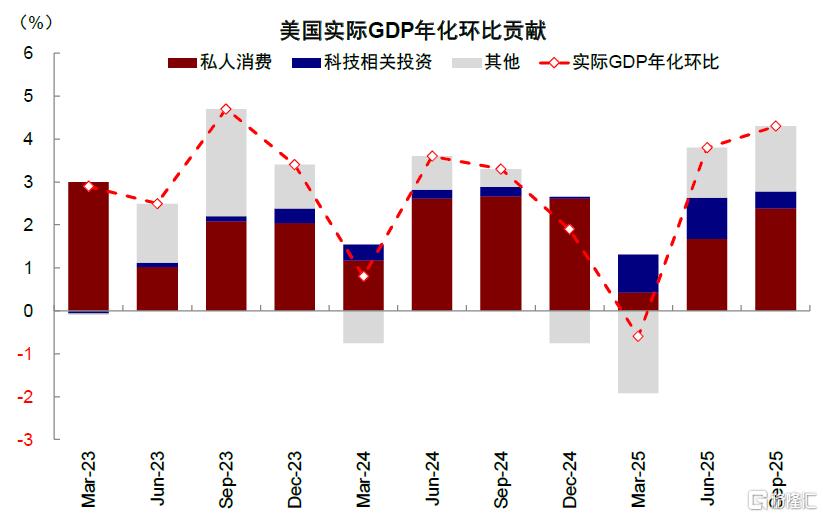
Core Insights - The article emphasizes the significant impact of AI on global economic growth and stock market performance, particularly in the U.S. and China, highlighting the importance of AI investments in driving GDP growth and stock returns [1][11]. Economic Contribution - U.S. technology hardware and software investments are projected to contribute 0.8 percentage points to the annualized GDP growth of 2.5% in the first three quarters of 2025 [2]. - Since 2023, U.S. non-farm business sector labor productivity has increased by 7.2% [4]. Stock Market Performance - Since the launch of ChatGPT at the end of 2022, the "Magnificent Seven" stocks in the U.S. contributed 45 percentage points to the S&P 500 index returns, accounting for over half of the total returns [1]. - In Hong Kong, seven leading tech stocks contributed 14 percentage points to the Hang Seng Index returns, representing 40% of the total returns since the launch of DeepSeek in early 2025 [7]. AI Industry Dynamics - The U.S. has a first-mover advantage in AI infrastructure, models, and talent, while China is rapidly catching up, particularly in open-source models [16][19]. - The global cloud computing market is expected to reach $692.9 billion in 2024, with North America holding a 54.3% market share and China at 16.8% [20]. Investment Landscape - U.S. nominal investment in AI technology hardware and software is approximately $1.05 trillion, accounting for 3.4% of nominal GDP, while China's investment is around $650 billion, also about 3.3% of nominal GDP [42]. - The AI investment landscape shows that the U.S. is primarily driven by private sector investments, while China's investments are significantly supported by government funding [52]. Funding Sources - U.S. AI investments are predominantly led by the private sector, with a total investment of $552 billion, compared to China's $900 billion, which includes substantial government support [52]. - The Chinese government has invested approximately $750 billion in AI, significantly higher than the U.S. government's $110 billion [57]. Investment Focus - U.S. investments are heavily focused on data centers and supporting infrastructure, while China is investing more in chip development and AI models [58]. - In 2025, U.S. leading companies are expected to invest $4 billion in the foundational layer, with 88% directed towards infrastructure [59]. Talent and Research - The number of AI researchers in China has grown significantly, with Chinese researchers holding three times as many AI patents as their U.S. counterparts [41]. - The rapid increase in AI talent in China is enhancing its research capabilities, narrowing the gap with the U.S. [41]. Future Outlook - The article suggests that the U.S. will continue to invest heavily in data centers and energy equipment, which will drive demand for related supply chains in China [88]. - China's ongoing need for chips and AI infrastructure indicates a sustained demand and policy support in the semiconductor sector [88].

“制造强国”实干系列周报-20260120
Shenwan Hongyuan Securities· 2026-01-20 03:27
Group 1: Commercial Aerospace Industry - The commercial aerospace industry is on an upward trend, with a positive outlook for future market performance[5] - Key focus areas include stable or potentially increasing value in manufacturing and launch sectors, as well as communication terminal components like baseband and RF chips[22] - Significant growth expected in satellite constellations, with G60 planning to launch 1,296 satellites by the end of 2027 and 15,000 by 2030, while GW plans to launch an average of 1,800 satellites annually post-2030[18] Group 2: Space Photovoltaic Equipment - New technologies such as heterojunction and perovskite are accelerating advancements in space photovoltaic applications, providing new demand scenarios[37] - The global supply landscape may change due to emerging applications, creating new incremental demand for equipment companies[37] - P-type HJT batteries are identified as the optimal choice for space photovoltaic technology due to their lightweight, high power density, and resistance to extreme environments[30] Group 3: Wind Power Sector - Goldwind Technology is a leading global wind power manufacturer, with a projected revenue of CNY 566.99 billion in 2024, reflecting a 12.37% year-on-year growth[49] - Taisheng Wind Power is expanding into commercial aerospace, with plans to start rocket storage tank production by mid-2026[54] Group 4: AI and AR Glasses - Meta's AI glasses are expected to double production capacity, driving market growth and enhancing consumer demand for high-end optical products[5]
Meta Castigated for Illegal Canadian Debt Relief Ads
Crowdfund Insider· 2026-01-19 14:26
Core Viewpoint - A Canadian licensed insolvency trustee is urging Meta to address the ongoing issue of illegal debt-relief advertising on its platforms, despite numerous warnings and evidence of harm [1][10]. Group 1: Illegal Debt-Relief Advertising - Unlicensed debt advisors are using Facebook and Instagram to target financially distressed Canadians, costing consumers and creditors millions while undermining the regulated insolvency system [2]. - Canadians paid nearly $20 million in 2023 to unregulated debt advisors for services that should have been free through licensed insolvency trustees, with the actual figure likely being higher [3]. - The Office of the Superintendent of Bankruptcy (OSB) has issued multiple warnings and alerts regarding misleading debt advisors who falsely present themselves as licensed professionals [4]. Group 2: Regulatory Challenges - The OSB and the Canadian Association of Insolvency and Restructuring Professionals have taken aggressive enforcement actions, but the regulator's powers are limited, preventing direct shutdown of illegal advertisers [5][6]. - Ongoing investigations into 32 licensed insolvency trustee licenses and 13 corporate trustee firms have been reported, alongside criminal referrals and successful convictions [6]. Group 3: Comparison with Other Platforms - Unlike Meta, Google has implemented safeguards requiring advertisers of insolvency-related services to verify their licensing status, which is seen as a more responsible approach [8]. Group 4: Impact on Stakeholders - The presence of these misleading ads not only harms vulnerable individuals but also damages creditors, distorts the insolvency process, and erodes public trust [9].

2025年中国光模块细分产品分析 800G光模块在2025年成为主流【组图】
Qian Zhan Wang· 2026-01-19 09:10
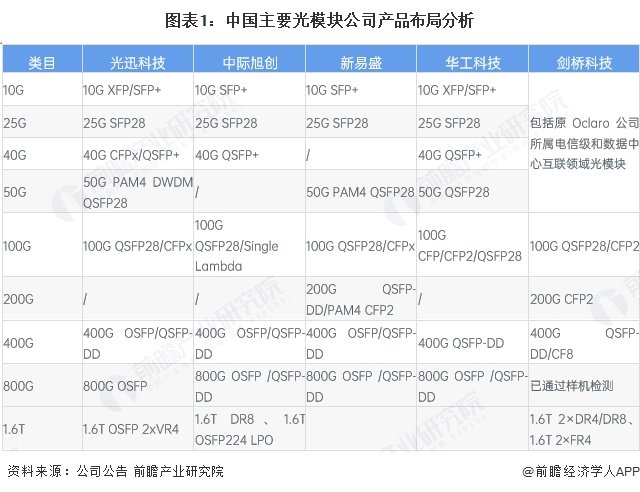
Core Insights - The report provides an analysis of the global and Chinese optical module industry, highlighting the product layout of representative companies and a comparative analysis of segmented products. Group 1: Product Layout of Representative Companies - Major Chinese optical module companies have product lines covering transmission rates up to 800G and below, including 10G, 25G, 40G, 50G, 100G, 200G, 400G, and 800G modules [1]. - The table outlines the specific products offered by companies such as Guangxun Technology, Zhongji Xuchuang, and others across various transmission rates, indicating a comprehensive coverage in the optical module market [1]. Group 2: 10G Optical Module Market - The 10G optical module market is mature, primarily featuring XFP and SFP+ modules, with SFP+ being favored for its lower cost, smaller size, and strong compatibility [3]. - 10G data center solutions typically involve 10G switches paired with SFP+ modules and LC fiber jumpers, emphasizing the importance of matching switch rates with corresponding optical modules [3]. Group 3: 40G Optical Module Demand - The 40G optical module, particularly the QSFP+ type, is widely used due to its compact design and ability to meet high-density, high-speed market demands [6]. - Transitioning from 10G to 40G is driven by the need for increased bandwidth and throughput in data centers, with 40G solutions often involving 40G switches and QSFP+ modules [6]. Group 4: 100G Optical Module Applications - The 100G optical module is primarily utilized in cloud data centers and high-speed networks, with QSFP28 emerging as the mainstream packaging method [7]. - Significant technological advancements in 100G modules include digital coherent receiver technology and advanced error correction coding, catering to evolving user demands [7]. Group 5: 400G Optical Module Commercialization - The 400G optical module is set to become commercially viable in 2023, driven by the increasing demand from AI model training and 5G network construction [10]. - Major Chinese telecom operators are expected to deploy 400G modules extensively, with significant market share anticipated by 2024-2025 [10]. Group 6: 800G Optical Module Projections - The 800G optical module is projected to become mainstream by 2025, primarily driven by the needs of AI data centers for large-scale GPU cluster interconnections [13]. - Different types of 800G modules are categorized based on transmission distance, catering to various applications from data center interconnections to long-distance transmission [15]. Group 7: 1.6T Optical Module Development - The 1.6T optical module is expected to see commercial rollout in 2025, with gradual scaling from initial small batch shipments to larger production volumes by year-end [16]. - Key players like Nvidia and Zhongji Xuchuang are leading the early adoption and certification processes for 1.6T modules [18].


Meta关闭三家VR工作室;智明星通总裁张磊辞任丨游戏周报
2 1 Shi Ji Jing Ji Bao Dao· 2026-01-19 02:51
Industry Dynamics - Hangzhou has released measures to promote the overseas expansion of online literature, web dramas, and online games, focusing on high-level development and quality export, with 25 specific initiatives across nine areas [2] - WeChat mini-games are projected to see nearly 20% growth in commercial scale by 2025, with over 300 products generating more than 10 million yuan in quarterly revenue and a stable monthly active user base exceeding 500 million [3] - Giant Network has launched a new AI-native gameplay in its game "Supernatural Action Group," integrating AI models into core gameplay, allowing NPCs to interact with players in real-time [5] - Perfect World has announced the criminal detention of three art-related personnel for corruption, focusing on issues in art outsourcing and procurement management [6][7] Company News - The CEO of Zhixing Star Tong, Zhang Lei, has resigned due to personal reasons, with the company stating that his departure will not negatively impact operations [4] - Games Workshop has prohibited employees from using AI in content creation and design processes, reflecting a cautious internal AI policy [8] - Cygames has established a dedicated AI studio to focus on the systematic research and application of AI technology in game creation [9] - Shift Up's CEO emphasized the necessity for widespread AI proficiency in South Korea to compete with large-scale investments in the gaming industry from China and the U.S. [10] - Meta plans to cut about 10% of its Reality Labs workforce, including the closure of several VR studios, as part of a shift in focus towards AI and mobile technologies [11] - Germany will increase its annual gaming industry support fund to 125 million euros (approximately 1.017 billion yuan) starting in 2026, aiming to strengthen its position in the global gaming industry [12]