
小红书

Search documents
短视频算法“破茧”报告:近八成用户认可推荐内容多样性
Zhong Guo Jin Rong Xin Xi Wang· 2025-11-11 05:17
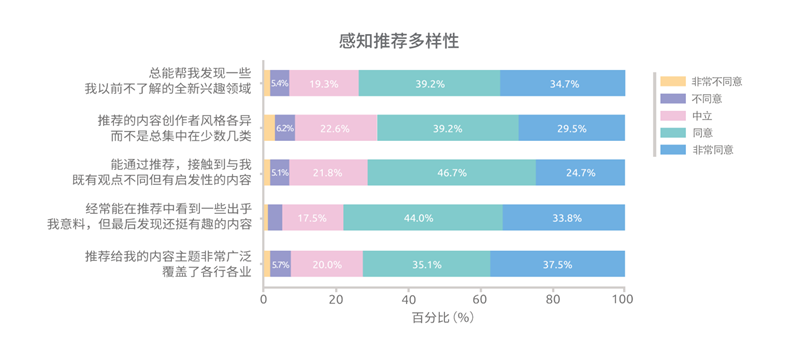
Core Insights - The report indicates that nearly 80% of short video users perceive algorithm recommendations as diverse, contrasting with common concerns about "information cocoons" [2][5] - Users exhibit strong agency, with over 75% believing their actions can "tame" algorithms, and more than 60% showing willingness to actively "break free" from information silos [5][8] User Perception of Algorithms - 77.8% of users find algorithm recommendations to include "unexpected but interesting content" [2] - 73.9% of users feel that algorithms help them discover "new areas of interest" [2] User Agency and Interaction - Over 75% of respondents believe they can influence algorithm recommendations through their actions [5] - More than 65% of users are adept at using features like "not interested" to adjust content [5] Experimental Findings - The report conducted experiments on platforms like Douyin, Bilibili, Xiaohongshu, revealing that Douyin maintains high diversity in recommendations while responding positively to user exploration [5][7] - Bilibili's recommendation diversity is highly driven by user behavior, while Xiaohongshu is characterized by efficient convergence and precision [5] Academic Discussions - Experts acknowledged the complexity of algorithms and their societal impacts, emphasizing the need for further academic exploration [7][8] - Discussions highlighted the importance of user autonomy in algorithm design and the potential for algorithms to inadvertently reinforce narrow interests [8][9] Recommendations for Algorithm Development - Scholars suggest enhancing algorithm transparency and user education to foster a healthier human-machine collaboration ecosystem [10][11] - The need for a balanced approach in algorithm design that respects user autonomy while promoting information diversity was emphasized [9][10]

饮料市场 销售下滑丨消费参考
2 1 Shi Ji Jing Ji Bao Dao· 2025-11-11 05:07
Group 1: Beverage Market Overview - The beverage market has entered a contraction phase, with overall sales down 9% year-on-year in September, and offline sales down 10.4% [1] - Uni-President China reported that its beverage business saw a low single-digit decline in revenue for Q3, while food business revenue grew in the mid to low single digits [1] - The decline in beverage revenue is attributed to price wars on delivery platforms and industry competition, with specific categories like juice facing significant pressure [1] Group 2: Dairy Industry Impact - The dairy market is also facing challenges, with Yili noting that ready-to-drink tea is substituting liquid milk products, particularly impacting packaged liquid milk sales [2] Group 3: Production Trends - National Bureau of Statistics data indicates a weakening trend in beverage production in Q3 compared to the first half of the year, with soft drink production declining by 0.17%, 6.79%, and 10.12% year-on-year in July, August, and September respectively [3] Group 4: External Factors - Adverse weather conditions, including typhoons and heavy rain, may have also impacted beverage sales during Q3 [4] Group 5: Market Recovery Signals - There are signs that the delivery platform price wars are becoming more manageable, which could be a positive development for the beverage market [5][6][7]
小红书,在商业化路上“狂飙”
3 6 Ke· 2025-11-11 03:33
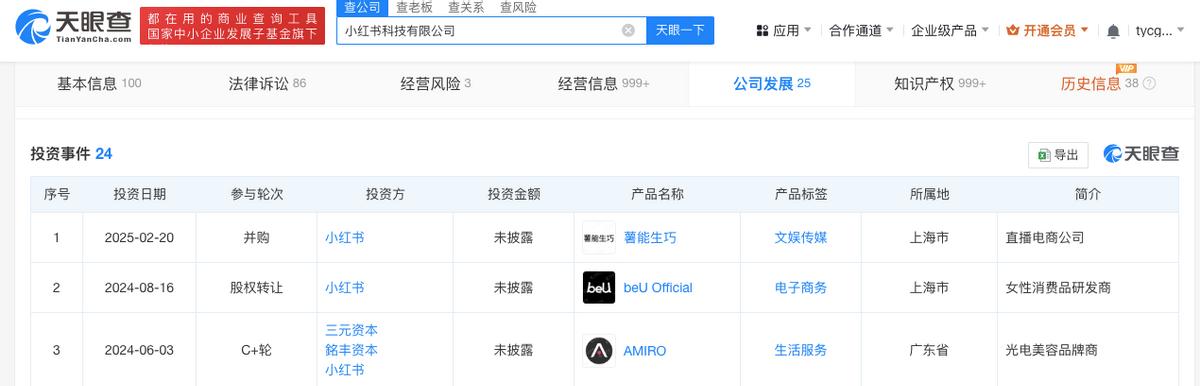
Group 1 - Elon Musk predicts that traditional phones and apps will gradually disappear, with AI generating most of the content consumed by humans in the future [1] - The boundaries between apps are becoming increasingly blurred, as companies expand their services beyond their original offerings [2][3] - Xiaohongshu (Little Red Book) is emerging as an unexpected player in the ecosystem expansion, aiming to enhance its value proposition [3] Group 2 - Xiaohongshu is focusing on its role as a "tool" for consumers while also seeking to enhance its external value through initiatives like the "Red Cat Plan" and "Red Dog Plan," which allow brands to insert external links in posts [4][6] - The opening of external links is expected to shorten conversion paths and improve overall ROI, indicating a deeper collaboration with e-commerce platforms [6][7] - Xiaohongshu's acquisition of Shuneng Shuangqiao, a live-streaming e-commerce company, highlights its commitment to expanding its ecosystem [9][10] Group 3 - In the second half of the year, Xiaohongshu introduced features like "Quick Sale" and is researching local life services, aiming to retain consumer demand internally [11][12] - Xiaohongshu's "Xiaohong Card" was launched to provide a comprehensive service offering, covering various industries [12] - The search trends for Xiaohongshu's life services have seen significant growth, with a 37% increase in search trends and a 39% increase in note publication volume since 2025 [13] Group 4 - Xiaohongshu's revenue forecast for 2025 is projected to reach $3 billion, a significant increase from the previous year's $1 billion forecast [16] - The company's valuation has surged from 17 billion yuan in July 2024 to 31 billion dollars by June 2025, indicating strong investor confidence [17] - Xiaohongshu is striving to balance content quality with monetization, as it faces challenges similar to other content platforms that have struggled with commercialization [18][22] Group 5 - The platform is attempting to cultivate super influencers to drive its e-commerce business, but faces challenges in finding effective personalities [20] - Xiaohongshu's push for celebrity endorsements has led to mixed reactions from users, highlighting the risks of over-commercialization [20][22] - The introduction of voice comments aims to enhance user engagement, but similar features on other platforms have faced challenges with content moderation [23][28]
小红书做二手、闲鱼做内容社区,互联网尽头是跨界“偷塔”?
3 6 Ke· 2025-11-10 23:47
Core Insights - Xiaohongshu is testing a new feature called "Quick Sale" that allows users to sell personal items directly within their notes, simplifying the selling process compared to previous methods [1][3][4] - The introduction of this feature indicates Xiaohongshu's strategic move to enter the second-hand market, competing with established platforms like Xianyu [3][24] - The second-hand market is experiencing significant growth, with projections indicating a transaction scale of 645 billion yuan in 2024, reflecting a 17.56% year-on-year increase [41][44] Group 1: Xiaohongshu's New Feature - The "Quick Sale" feature allows users to list items for sale directly in their notes without the need for a complicated store setup or deposit [1][4][7] - Users can set item details such as name, price, quantity, delivery method, and shipping costs, streamlining the selling process [7][12] - The platform charges a 0.6% service fee per transaction, similar to Xianyu's model [12] Group 2: Market Dynamics - Xiaohongshu's entry into the second-hand market is seen as a strategic move to target areas where Xianyu is less dominant, particularly in content-driven e-commerce [24][48] - The second-hand market is projected to grow significantly, with user numbers increasing from 252 million in 2020 to 660 million [41][44] - Xianyu is also evolving, introducing community features and charging transaction fees, indicating a shift in its operational model [25][39] Group 3: Competitive Landscape - Xiaohongshu's unique community-driven approach may allow it to thrive in niche markets, focusing on higher-value items like designer bags and limited-edition products [48][49] - Xianyu remains the dominant player in broader categories like electronics and household goods, maintaining its competitive edge [48][49] - The market may see a diversification where Xiaohongshu, Xianyu, and other platforms like Zhuanzhuan cater to different segments of the second-hand economy [49]

进博会“窗口”效应:电商全球化深度融合的新篇章
Sou Hu Cai Jing· 2025-11-10 10:15
Core Insights - The 8th China International Import Expo (CIIE) emphasizes the development of cross-border e-commerce, introducing new platforms and service areas to facilitate foreign products entering the Chinese market [1][2] Group 1: Cross-Border E-Commerce Opportunities - CIIE serves as an excellent platform for cross-border e-commerce, allowing overseas brands to showcase their products and connect with Chinese consumers [2] - The introduction of cross-border e-commerce retail import methods post-expo allows brands to bypass traditional trade complexities, offering tax exemptions and simplified registration processes [2][5] - Major platforms like Tmall International, Vipshop, and Douyin E-commerce provide tailored support for international brands, facilitating quick market entry and promotional activities [3][5] Group 2: Consumer Trends and Product Insights - The expo highlights four major consumer trends: health-oriented products, niche market growth, technological integration, and experiential consumption [6][7] - Specific product categories such as medical nutrition, smart devices, and sustainable goods are gaining traction, reflecting a shift in consumer preferences towards quality and innovation [6][7] Group 3: Future of CIIE and Cross-Border E-Commerce - The integration of CIIE with cross-border e-commerce is evolving towards a digital, ecological, and globalized model, enhancing trade efficiency and consumer access [9][10] - The model aims to streamline supply chains, reduce costs, and improve responsiveness to market demands, allowing for a more direct connection between overseas brands and Chinese consumers [12]

理解中国独角兽:如何超越估值泡沫 | 商学院观察
Jing Ji Guan Cha Wang· 2025-11-10 07:31
Group 1 - The core viewpoint emphasizes that unicorn companies must balance development speed and quality, ensuring their growth is based on solid technological foundations and sustainable business logic [2][3] - The global unicorn growth rate is slowing, with investors increasingly scrutinizing profitability models and long-term value, leading to a market correction of previous valuation bubbles [3][6] - "DownRounds" financing is becoming a focal point, indicating companies are facing challenges in meeting growth expectations, prompting a shift from a "burning cash for growth" model to a focus on profitability and sustainability [6][7] Group 2 - The terms "ZIRPicorns" and "Papercorns" have been introduced to describe unicorns that emerged during the zero-interest rate period and those with inflated valuations lacking market validation, respectively [7][8] - Approximately 60% of unicorns in the U.S. fall under the "ZIRPicorns" category, facing challenges in achieving profitability as funding runs out amid rising interest rates [7][8] - "Papercorns" represent 93% of U.S. unicorns, highlighting a significant shift from the original unicorn concept where valuations indicated mature business models with clear exit paths [7][8] Group 3 - Chinese unicorns are characterized as "ecological builders," focusing on rapid scaling and ecosystem collaboration, leveraging existing business models to create stable cash flows [8][9] - Companies like Ant Group and Yuanfudao exemplify this pragmatic innovation approach, enhancing efficiency through technological or model innovations rather than creating entirely new markets [8][9] - In contrast, U.S. unicorns exhibit a "dreamer" mentality, investing in seemingly impossible technologies with the aim of disrupting existing systems rather than optimizing current models [12][13] Group 4 - The innovation paths of Chinese and U.S. unicorns differ significantly, with Chinese firms favoring independent development and collaboration, while U.S. firms focus on market-driven innovation [14][16] - Historical and cultural factors contribute to these differences, with China's innovation historically leaning towards business model innovation due to practical needs [17][18] - Recent trends indicate a shift in China towards accelerated technological innovation, particularly in hard tech sectors like integrated circuits, reflecting a move towards self-sufficiency in key technologies [20][24] Group 5 - The investment landscape shows a stark contrast, with U.S. venture capital heavily focused on AI, while China's investments are more diversified across industry applications and infrastructure [28][29] - As of early 2025, 451 generative AI services have been registered in China, with over 80% being customized solutions for specific verticals, indicating a depth of application [29] - China's complete industrial chain and diverse application environments provide a unique systemic advantage, with the potential for AI integration across various sectors [29]

2025年度中国互联网企业创新发展十大典型案例在乌镇峰会上发布
Nan Fang Du Shi Bao· 2025-11-10 06:57
Core Insights - The "Top Ten Innovative Development Cases of Chinese Internet Enterprises in 2025" were officially released at the World Internet Conference in Wuzhen, showcasing significant contributions in core technology, empowering the real economy, promoting cultural prosperity, and serving social welfare [1] Group 1: Tencent - Tencent collaborated with China Southern Airlines to create the world's first fully dynamic flight simulation system based on gaming technology, enhancing airport modeling efficiency by ten times and providing over 10,000 hours of ultra-realistic flight training [1] Group 2: 360 - 360 developed a large model security guard based on the "modeling by modeling" concept, focusing on ensuring AI reliability and safety through standardized evaluation processes and dual protection mechanisms [1] Group 3: iFlytek - iFlytek launched the "Xunfei Spark" cognitive large model, which continuously evolves from vast data and knowledge, effectively addressing key challenges in complex scenarios across various industries [1] Group 4: Baidu - Baidu's "Huibo Star" is the first AI full-stack digital human solution in the industry, enabling low-threshold, round-the-clock live streaming for merchants, thereby enhancing their operational efficiency [2] Group 5: JD.com - JD.com introduced the "Intelligent Supply Chain System" for the automotive industry, aiming to reduce supplier management costs by over 50% and improve supply chain response speed by 30% [4] Group 6: Kuaishou - Kuaishou expanded its application of AI technologies in media projects, creating a comprehensive AI ecosystem that enhances content innovation across various sectors [5] Group 7: Meitu - Meitu initiated the "Digital Communication Project for Chinese Traditional Culture," transforming traditional patterns into creative digital materials, achieving over 2 billion spreads and creating over 100 sets of cultural materials [6] Group 8: Ant Group - Ant Group's digital healthcare services have reached over 800 million users, collaborating with over 3,600 medical institutions to enhance the accessibility and convenience of healthcare services [7] Group 9: Meituan - Meituan is advancing unmanned delivery technology and has established a research center to improve logistics efficiency and user experience while reducing costs [8] Group 10: Xiaohongshu - Xiaohongshu upgraded its internal large model technology to a humanistic intelligence laboratory, integrating humanities into AI training to enhance empathy and value judgment capabilities [9]



小红书做支付:节流又开源,但难成“支付宝”
3 6 Ke· 2025-11-10 03:37
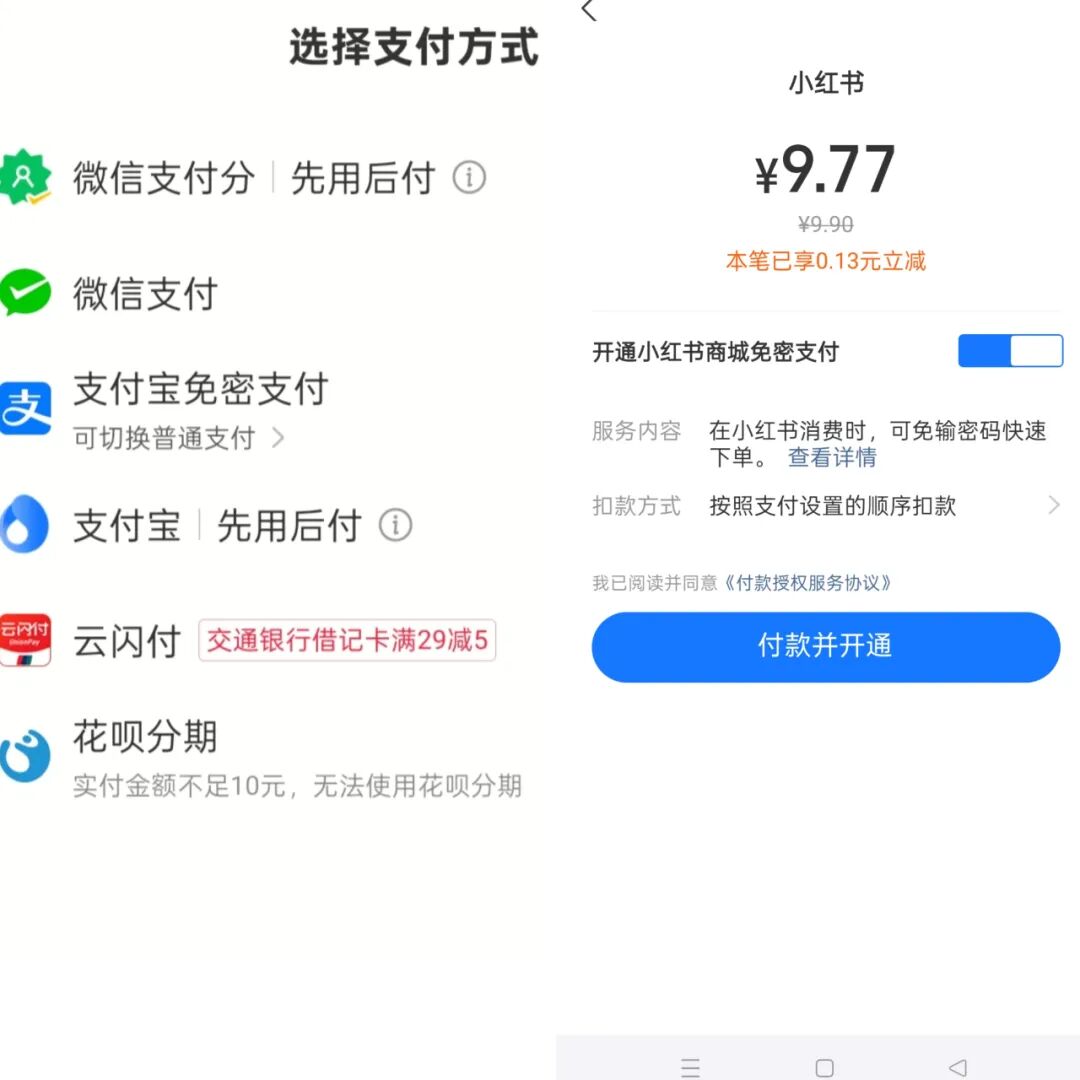
Core Viewpoint - The article discusses how Xiaohongshu is attempting to establish its own payment system by acquiring a payment license through the full acquisition of Dongfang Electronic Payment, aiming to create a payment platform similar to Alipay, but faces significant challenges due to established competitors like WeChat Pay and Alipay [3][4][5]. Group 1: Acquisition and Payment License - Xiaohongshu's subsidiary, Ningzhi Information Technology, has fully acquired Dongfang Electronic Payment, which holds a Class I payment license for operating stored value accounts [3][4]. - The acquisition cost is estimated to be around 1.48 billion yuan, which is relatively low compared to the potential returns from owning a payment license [9][6]. - The primary motivation behind this acquisition is to obtain the payment license rather than to integrate Dongfang's existing business operations, which have limited synergy with Xiaohongshu's core activities [8][7]. Group 2: Market Challenges - Xiaohongshu faces a significant challenge in changing user payment habits, as WeChat Pay and Alipay dominate the market with over 90% market share [4][5][20]. - The article highlights that while Xiaohongshu's entry into payments is strategic, replicating the success of Alipay is highly unlikely due to the entrenched ecosystem and user inertia [5][28]. - The payment landscape is saturated, making it difficult for new entrants like Xiaohongshu to capture market share, as the penetration rate of online payment users is already very high [20][18]. Group 3: Financial Implications - Owning a payment license could lead to significant cost savings on transaction fees, which currently range from 0.1% to 0.3% for e-commerce platforms [11][10]. - If Xiaohongshu can shift 30% of its GMV (estimated at 400 billion yuan for 2024) to its own payment system, it could save approximately 300 million yuan annually in transaction fees [11][10]. - The potential for additional revenue streams exists, such as offering credit services to users, which could further enhance the financial viability of Xiaohongshu's payment strategy [12][11]. Group 4: Strategic Focus - Xiaohongshu's strategic focus should remain on its e-commerce and local lifestyle services, rather than solely on building a payment platform [28][15]. - The company is already seeing significant growth in its e-commerce GMV, projected to exceed 400 billion yuan in 2024, indicating a strong market presence [15][16]. - The integration of payment services is viewed as a complementary move to enhance user experience and streamline transactions within its existing ecosystem [10][29].
8大平台企业签自律公约 六方面划定食安监管“硬红线”
Chang Jiang Shang Bao· 2025-11-10 03:20
Group 1 - The core viewpoint emphasizes the importance of food safety in online transactions and the responsibility of platform enterprises to ensure compliance with safety standards [1][2] - The National Market Supervision Administration has guided eight major online food trading platforms to sign a self-discipline convention aimed at enhancing food safety management [1][2] - The convention outlines six key areas for improvement, including the verification of food production and sales qualifications, monitoring of sales behaviors, and the establishment of a "blacklist" for non-compliant entities [2][3] Group 2 - The administration has reported significant enforcement actions, with 181,000 food safety violations handled and fines totaling 740 million yuan in the first half of 2025 [1][4] - A total of 263.9 million food safety inspections were conducted, resulting in the removal of 69,000 batches of non-compliant products [4] - The regulatory approach includes a combination of supervision, administrative guidance, and accountability measures to enhance the responsibility awareness of platform enterprises [3][4]



智启未来:在乌镇峰会看见数智未来新图景
Shang Hai Zheng Quan Bao· 2025-11-09 17:22
Group 1 - The World Internet Conference in Wuzhen focused on building a community with a shared future in cyberspace, celebrating the 10th anniversary of this concept [2] - The conference attracted over 1,600 guests from more than 130 countries and regions, with the "Internet Light" expo featuring 670 companies from 54 countries [2] - Over 100 key cooperation projects in the digital economy were signed, with a total signing amount exceeding 100 billion yuan for three consecutive years [2] Group 2 - The conference established specialized committees on e-commerce and cultural heritage digitization, with over 70 members in the e-commerce committee [3] - A new immersive technology exhibition showcased advancements in AI, including core models and diverse industry applications [3] - The conference featured a "Future Town" vision, highlighting innovative experiences such as AI-assisted reading and exoskeleton robots [4][5] Group 3 - Ten companies, including Tencent and Baidu, were recognized for their innovative development cases, emphasizing the importance of responsible technology [5] - AI is expected to enhance personalized services and emotional computing, transforming user interactions and daily experiences [5][6] - The integration of AI with industry is seen as crucial for maximizing its potential and driving efficiency [6]