鸣鸣很忙

Search documents
ESG解读|员工持股两度因业绩受阻,来伊份再度回购欲重启员工持股计划
Sou Hu Cai Jing· 2025-06-25 10:33
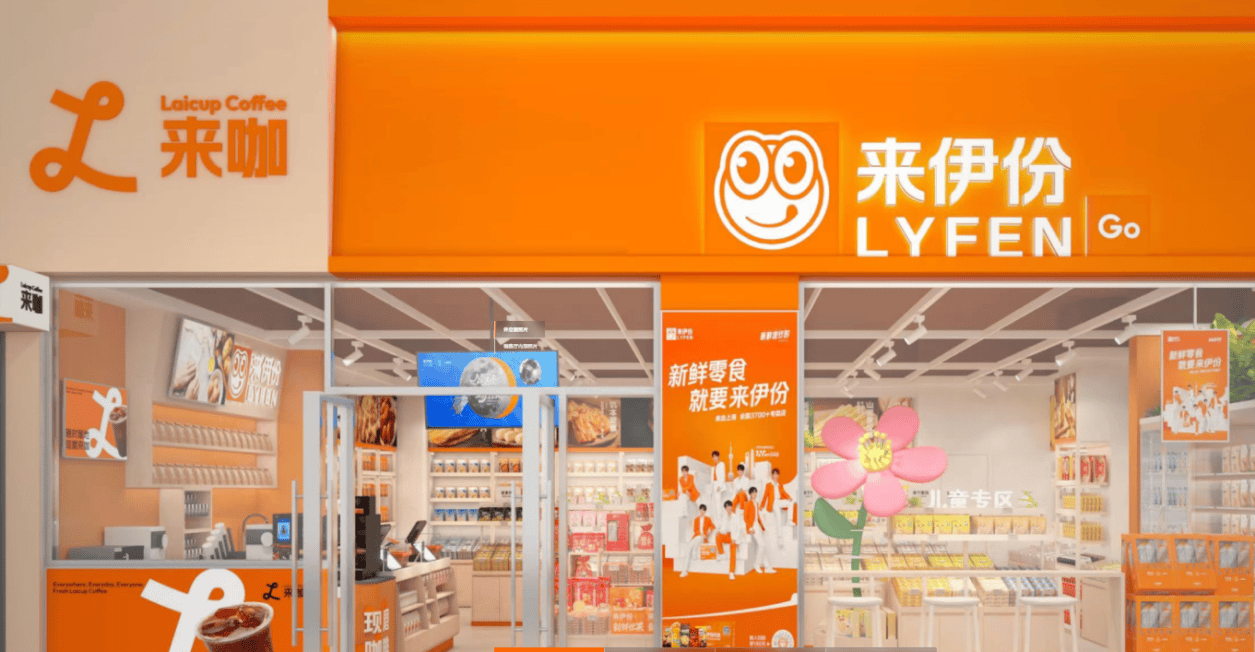
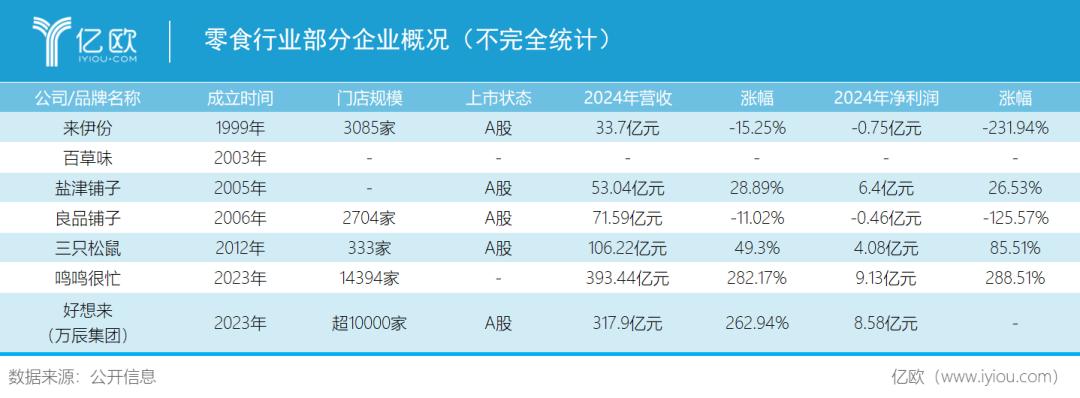
Core Viewpoint - The article discusses the challenges faced by Laiyifen, a leading snack company in China, particularly regarding its employee stock ownership plans and financial performance, while also highlighting the competitive landscape in the snack industry. Group 1: Employee Stock Ownership Plans - Laiyifen completed a share buyback plan, repurchasing 2.9054 million shares for a total of 30.2236 million yuan, intended for an employee stock ownership plan [1] - The company faced setbacks with its employee stock ownership plans, having previously failed to meet performance targets in 2022 and terminating its second plan in 2024 due to poor financial results [2][3] - The second plan's performance criteria were adjusted to a 3% revenue increase or a 20% net profit increase, but the company reported a 15.25% decline in revenue and a net loss of 75.27 million yuan for the year [2] Group 2: Financial Performance - In 2024, Laiyifen's revenue was 3.37 billion yuan, down 15.25% year-on-year, and it reported a net loss of 7.527 million yuan, marking a second consecutive year of declining revenue and profit [2] - The company's first quarter of 2024 saw revenue of 1.048 billion yuan, a decrease of 1.23%, and a net profit of 12.43 million yuan, down nearly 80% year-on-year [2] - Laiyifen's gross margin for 2024 was reported at 38.82%, the highest in the industry, exceeding the average by nearly 8 percentage points [6][7] Group 3: Competitive Landscape - The snack industry is witnessing a rise in volume snack brands, with companies like Mingming Hen Mang achieving significant growth, reporting 39.344 billion yuan in revenue and a net profit of 0.913 billion yuan in 2024 [5] - Laiyifen's management indicated that they would maintain strategic focus and not enter the volume snack market, despite the competitive pressure [6] - Other companies in the industry, such as Three Squirrels and Salted Fish, have successfully implemented employee stock ownership plans, while others like Good Idea and Qiaqia Foods have faced challenges [3][5] Group 4: Quality Control and Safety Issues - Laiyifen faced a food safety crisis when a consumer reported finding a foreign object in a product, prompting the company to initiate an internal investigation [10] - The company utilizes an outsourcing model for production, which poses challenges for quality control, necessitating a robust quality management system [11] - Laiyifen has implemented a comprehensive quality control system, including supplier selection and regular inspections, to mitigate risks associated with its outsourcing strategy [11]


2024年中国连锁Top100榜新增5家企业 沃尔玛(中国)持续居首
Mei Ri Jing Ji Xin Wen· 2025-06-18 08:44
Core Insights - The "2024 China Chain Top 100" report by the China Chain Store & Franchise Association (CCFA) indicates a sales scale of 2.13 trillion yuan and a total of 257,200 stores for the top 100 chain enterprises, representing a year-on-year growth of 4.9% and 13.5% respectively [1] Group 1: Industry Overview - The top 100 chain enterprises include 46 comprehensive retail companies, 23 supermarkets, 13 convenience stores, and 18 specialty stores, with comprehensive retail facing the greatest growth pressure [1] - Supermarkets are showing signs of recovery, with 12 companies achieving year-on-year sales growth and 6 companies experiencing both sales and store number growth [1] - Convenience stores continue to see dual growth in sales and store numbers, although the growth rate has slowed compared to the previous year [1] - Specialty stores have the best operational performance, achieving double-digit growth in both sales and store numbers [1] Group 2: New Entrants and Performance - The 2024 China Chain Top 100 includes five new companies: Wancheng Biological (SZ300972), Liangpinpuzi (SH603719), Xiyahomei, Juewei Food (SH603517), and Guizhou Helix [1] - The number of companies with sales exceeding 30 billion yuan increased from 21 in 2023 to 24 in 2024 [1] - Ten companies achieved double-digit growth in both sales and store numbers, including "Hema," "Mingming Hen Mang," "Wancheng Biological," "Qiyi Shiyi," "Kaisike," "Shizhu," "Biyoute," "Kudong," "Xinguo Technology," and "Laolinjia" [2] - Walmart (China) maintained its position as the top company in the China Chain Top 100 with sales of 158.845 billion yuan, while Hunan's "Mingming Hen Mang" entered the top 10 for the first time [2]


万辰集团20250617
2025-06-18 00:54
Summary of Wanchen Group Conference Call Company Overview - **Company**: Wanchen Group - **Industry**: Retail, specifically in the discount supermarket and new consumption sectors Key Points and Arguments 1. **Store Expansion**: Wanchen Group is rapidly expanding its store count, expected to approach 20,000 by the end of 2025, with new store sizes increasing to 200 square meters and introducing new product categories such as frozen goods, baked foods, toys, and daily chemical products to cater to young women and mothers [2][3][4] 2. **Profitability and Efficiency**: The company has improved profit margins and operational efficiency through collaborations with suppliers and private label customization, employing a tiered pricing strategy to enhance market competitiveness [2][4][6] 3. **Franchisee Feedback**: Franchisees generally recognize the new store model, although the payback period has extended from 1.5 years to 2-2.5 years. Despite this, the model remains competitive compared to other formats, and franchisees are willing to cooperate with headquarters for expansion [2][7] 4. **Financial Performance**: In Q1, the gross margin increased by 1% year-on-year, with a net profit margin of 3.8% after excluding share-based payment expenses, significantly higher than the previous year. The company expects to maintain a high level of performance in Q2 and the second half of the year [2][9] 5. **Market Positioning**: Wanchen Group and Mingming Hen Mang are likely to form a duopoly, with a challenge to reach 20,000 stores by year-end and potentially 50,000 stores next year, enhancing their bargaining power with consumers and suppliers [2][9] 6. **New Consumption Trends**: The company has successfully transitioned to a new consumption model, particularly in the snack wholesale business, with over 14,000 stores and annual revenue exceeding 30 billion yuan by the end of 2024 [3][11] 7. **Product Strategy**: The new store model focuses on selected categories and partnerships with leading brands to provide better value products, aligning with consumer trends for value [5][11] 8. **Future Outlook**: The company is expected to continue its steady expansion and optimize its product structure to enhance same-store sales growth, despite a slight decline in same-store sales growth due to rapid expansion [8] 9. **Competitive Landscape**: The discount supermarket sector is performing well, with stable selection strategies and standardized store formats. The competition with traditional supermarkets is expected to intensify, but the company is well-positioned to maintain profitability [9][10] Additional Important Insights - **Stock Performance**: Wanchen Group's stock has increased tenfold, and while market sentiment is high, it is advised not to chase prices. Current holders are encouraged to maintain their positions until year-end, with a projected profit of 900 million yuan and a valuation of approximately 30 times earnings [5][12] - **Supply Chain Management**: The company's advantages in supply chain management are expected to further solidify its market position and improve profitability [8]
再冲港股,三只松鼠能否重讲“宏大叙事”?
3 6 Ke· 2025-06-11 10:23
Core Viewpoint - The article highlights the resurgence of the snack industry, particularly focusing on companies like Three Squirrels, which has successfully navigated challenges and achieved significant revenue growth, while traditional consumer brands struggle with stagnation [1][2]. Company Performance - Three Squirrels reported a revenue of 10.622 billion yuan in 2024, marking a 49.3% year-on-year increase, and a net profit of 408 million yuan, up 85.51% [1][2]. - The company aims to achieve a dual listing (A+H) on the stock market, potentially becoming the first in the industry to do so [2]. - After a period of decline, Three Squirrels has rebounded, with a strategic focus on supply chain efficiency and new sales channels, particularly through social media platforms like WeChat [10][11]. Industry Trends - The snack industry is experiencing a bifurcation, with some companies like Three Squirrels and Mingming Hen Mang showing significant growth, while others like Liangpinpuzi and Laiyifen face substantial declines [14][17]. - The competitive landscape is shifting towards companies that prioritize supply chain efficiency, digital operations, and innovative marketing strategies [17][19]. - The global snack market is projected to reach $835.8 billion by the end of 2033, with a compound annual growth rate of 5.1% over the next decade, prompting companies to explore international markets [18]. Strategic Initiatives - Three Squirrels has implemented a "high-end cost-performance" strategy to enhance competitiveness and has successfully leveraged new traffic platforms for growth [10][11]. - The company has expanded its product offerings beyond nuts to include coffee, beverages, baked goods, and pet food, reflecting a broader market strategy [18]. - The industry is witnessing a trend towards digitalization, with companies like Mingming Hen Mang leading in digital management capabilities, enhancing their operational efficiency [16].
茶颜悦色降维攻击零食店
Hu Xiu· 2025-06-11 04:32
Group 1 - The rise of snack stores is a significant consumer trend in China, comparable to the popularity of milk tea shops [1][2] - Snack stores primarily cater to consumers outside of first-tier cities, tapping into a vast market [2][3] - The appeal of snack stores lies in their variety and affordability, allowing consumers to purchase multiple flavors at a low cost [3][5] Group 2 - Snack stores fulfill two consumer desires: the craving for variety and the need for affordable indulgence [5][6] - The low investment and operational requirements make snack stores attractive for franchisees, contributing to their rapid expansion [10][11] - The uniform demand for snacks across different regions facilitates quicker establishment of snack stores compared to restaurants [12][13] Group 3 - Despite their growth, snack stores face challenges, particularly low profit margins, with "Mingming Hen Mang" reporting a gross margin of 7.5% and a net profit margin of 2% [14][15] - The average gross margin for franchisees in the snack industry is around 20%, while the parent company retains a lower margin [16] Group 4 - The entry of new players, such as "Chayan Yuesheng," a well-known milk tea brand, into the snack market indicates the sector's attractiveness [21][22] - Chayan Yuesheng's strategy involves developing its own snack products, differentiating itself from typical snack stores that rely on existing brands [24][26] - The brand's expertise in flavor development from its milk tea business enhances its ability to create appealing snack products [27][28] Group 5 - Chayan Yuesheng's expansion into snacks is a response to local market saturation and aims to attract repeat customers [30][31] - The integration of snack offerings at milk tea locations allows for cross-selling opportunities, enhancing customer experience [34][36] - The ability to sell self-branded snacks through e-commerce platforms broadens market reach beyond local areas [37][38] Group 6 - Chayan Yuesheng's approach of combining high-margin milk tea with low-margin snacks can improve overall profitability [41]
【豫财经】“港股三姐妹”爆火,两位是河南老乡
Xin Hua Cai Jing· 2025-06-06 13:31
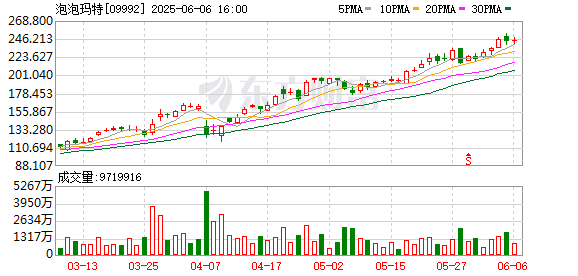
Core Viewpoint - The Hong Kong stock market is experiencing a strong performance in 2025, particularly in the consumer sector, with companies like Mixue Group, Pop Mart, and Laopuhuangjin being highlighted as the "new consumption trio" of Hong Kong, all achieving over 100% stock price growth and market capitalizations exceeding HKD 100 billion [2][3]. Group 1: Company Performance - Mixue Group and Pop Mart, both originating from Henan, have seen significant stock price increases, with Mixue Group reaching a peak of HKD 618 per share and a market cap exceeding HKD 230 billion [8]. - Pop Mart's market capitalization has surged over HKD 1 trillion in recent months, with a remarkable 20-fold increase in stock price since its low in Q4 2022, reflecting a 2300% increase [6]. - Laopuhuangjin, known as the "Hermès of gold," has also performed well, with its stock price reaching HKD 903 per share and a market cap of HKD 155.9 billion, marking a 240% increase within the year [8]. Group 2: Market Trends - The consumer sector in Hong Kong is witnessing a wave of IPO applications, with over 20 consumer companies seeking to list, indicating a vibrant market environment [26]. - As of June 5, 2025, there are 166 companies in the IPO queue for Hong Kong, with a significant portion being consumer-related [26]. - The influx of capital into the Hong Kong market, with net inflows reaching HKD 638.36 billion in 2025, has contributed to the strong performance of consumer stocks [26]. Group 3: Consumer Behavior and Marketing Strategies - New consumer companies are particularly favored by the "Z generation," focusing on emotional value and experiential marketing, which has led to their rapid rise in the market [10]. - Mixue Group's competitive edge lies in its strong supply chain and affordable pricing, with products typically priced between HKD 2 and HKD 8, appealing to cost-conscious consumers [12]. - Pop Mart has successfully tapped into the emotional consumption needs of younger consumers by creating a sense of surprise and rarity with its blind box toys, driving repeat purchases [14]. Group 4: Regional Influence - The emergence of Mixue Group and Pop Mart as significant players in the consumer market is rooted in their origins in Henan, showcasing the province's potential for nurturing innovative business models [16]. - The success of these companies reflects a broader trend in Henan, where a new consumer landscape is being established, characterized by strong market demand and innovative business practices [24].
经济周刊·焦点|差异化创新 新消费黑马异军突起
Guang Zhou Ri Bao· 2025-06-05 16:27
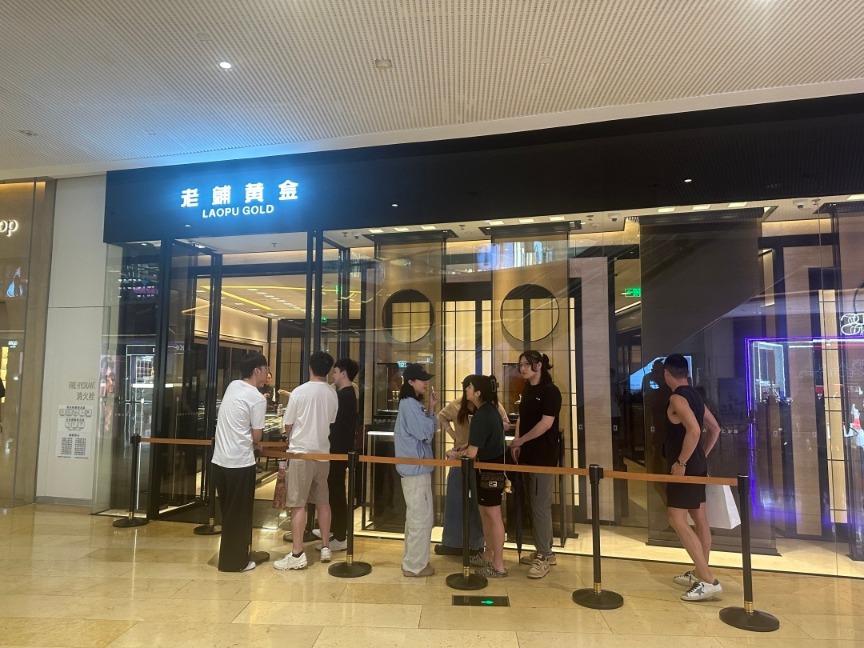
Core Viewpoint - A new wave of consumer brands is emerging, achieving significant growth and market presence, while traditional brands are struggling. Notable companies like Pop Mart, Mixue Group, and Laopu Gold have seen their market values exceed HKD 100 billion, with stock prices rising over 100% annually, leading trends in IP toys, affordable tea drinks, and traditional gold products [1][6]. Group 1: Market Performance - New consumer brands are experiencing unprecedented demand, with products often selling out quickly, exemplified by the popularity of Pop Mart's LABUBU toys and long queues at Laopu Gold stores [3][5]. - Mixue Ice City has rapidly expanded, boasting over 40,000 global stores and achieving retail sales of CNY 58.3 billion in a year, highlighting its success in the beverage market [5][11]. Group 2: Differentiation and Value Proposition - The success of these new brands is attributed to differentiation, emotional value, and high cost-performance ratios, allowing them to stand out in a competitive market [2][7]. - Laopu Gold has successfully positioned itself as a luxury brand through unique designs and craftsmanship, contrasting with traditional gold retailers that rely on real-time pricing [7][9]. Group 3: Consumer Behavior and Trends - Consumers are increasingly purchasing products for their emotional value and identity connection rather than just functionality, as seen with Pop Mart's LABUBU toys [9][11]. - The traditional liquor market is facing stagnation, with only a few brands like Kweichow Moutai and Gujing Gongjiu showing double-digit growth, indicating a shift in consumer preferences towards new brands [8][14]. Group 4: Future Outlook and Challenges - The traditional consumer market is losing its growth advantages, while new consumer brands are gaining value premiums through innovation and brand differentiation [14][15]. - New consumer brands must navigate challenges to avoid being short-lived, focusing on sustainable growth and deep consumer insights to maintain relevance in a rapidly changing market [15][16].
启承资本张鑫钊:理解消费,先从理解零售开始
3 6 Ke· 2025-06-05 01:47
国内消费品牌冲击IPO的进程,终于按下了加速键。 据不完全统计,进入2025年,已经有10余家中国消费企业相继递交赴港上市申请。在短短一个月时间内,量贩零食品牌鸣鸣很忙与国货护肤品牌林清轩先 后向港交所递交了招股书,为港股IPO回暖再添一把火。 站在鸣鸣很忙与林清轩背后的,是同一家投资机构——启承资本。 启承资本创立于2016年,是一家专注于消费领域的投资机构,投资了十月稻田、源氏木语、果子熟了、钱大妈、锅圈食汇、薛记炒货、M Stand咖啡等企 业。 2025年5月,在FBIF2025食品饮料创新论坛期间,启承资本创始合伙人张鑫钊接受了《中国企业家》的专访。 张鑫钊是中国消费投资领域的资深从业者,2006年,他从北大毕业后,先后在达晨创投、中国国际金融有限公司、京东集团战投部等多个公司任职,2016 年与常斌联合创办启承资本,迄今有15年投资经历。截至目前,启承资本所投资的零售品牌合计开出了超过35000家门店,他亦有国内投资社区零售连锁 业态最多的投资人称号。 回溯过去十年,消费投资经历了一轮 "过山车"般的行情——从炙手可热到回归理性。 身处其中,张鑫钊认为2021年前后行业所热议的"新消费"是由VC( ...
第一开批零食店的人,赚够离场
投资界· 2025-06-02 07:25
Core Viewpoint - The snack retail industry, particularly the bulk snack stores, continues to thrive despite a wave of store closures, with significant revenue growth reported by leading companies in the sector [3][5][24]. Group 1: Industry Trends - The bulk snack industry is experiencing a "violent rise," with major players like Mingming Hen Mang and Wancheng Group achieving nearly 200% compound annual growth rate in revenue from 2022 to 2024 [3][5]. - In the first quarter of this year, 1,094 snack stores closed, while 1,400 new stores opened, indicating a dynamic and competitive market [5][24]. - The average annual revenue for successful snack stores can reach 6 million, with some owners reportedly making their first million [3][10]. Group 2: Business Model and Consumer Behavior - The business model of bulk snack stores relies heavily on low pricing and high SKU variety, with many stores offering private label products that do not carry brand premiums [10][11]. - The strategy of offering low prices is supported by economies of scale, allowing larger brands to negotiate better prices with suppliers [10][11]. - High customer retention is evident, with Mingming Hen Mang reporting 16 billion transactions in 2024 and a repurchase rate of 75% [10][11]. Group 3: Challenges and Competition - The market is becoming increasingly saturated, with reports of aggressive competition leading to price wars among stores [18][20]. - Franchisees face pressure from brand headquarters to lower prices and increase product variety, which can lead to diminishing returns for individual store owners [20][22]. - The rapid expansion of stores in close proximity has resulted in a zero-sum game, where one store's gain is another's loss, leading to significant revenue declines for many [18][20]. Group 4: Location and Market Dynamics - The success of snack stores is often linked to their location, with rural areas showing stronger consumer demand compared to urban settings, where competition and costs are higher [16][24]. - Store owners have reported that poor location choices can lead to significant financial losses, emphasizing the importance of market research before opening a new store [16][24]. - The trend of opening stores in lower-income areas is seen as a strategy to capture a more engaged customer base, as these consumers are less likely to shop online [16][24].

新消费企业抢滩港股IPO,能否再造“泡泡玛特式神话”?
第一财经· 2025-05-28 13:36
Core Viewpoint - The article discusses the surge of new consumer companies going public in the Hong Kong stock market, highlighting the strong performance of these companies and the factors driving this trend [1][4]. Group 1: Market Trends - Since the beginning of 2025, there has been a wave of new consumer companies listing in Hong Kong, with notable examples including Mixue Group and Pop Mart, which have performed well in the market [1][3]. - The consumer sector has seen a significant increase in interest, with the China Securities Hong Kong Stock Connect Consumer Theme Index rising over 20% year-to-date [1][4]. - As of May 28, 2025, there are 159 companies queued for IPOs in Hong Kong, with 25 of them being consumer-related, accounting for approximately 16% of the total [4]. Group 2: Financial Performance - New consumer companies have shown remarkable stock performance, with Pop Mart's market value exceeding 310 billion HKD and Mixue Group surpassing 200 billion HKD [1][5]. - The price-to-earnings (P/E) ratios for new consumer stocks are significantly higher than the average P/E of 20 for the broader consumer index, with Pop Mart at 86 times and Mixue Group at 43 times [5][6]. Group 3: Competitive Landscape - Despite the enthusiasm for new consumer stocks, there are concerns about increasing competition and the potential for homogenization in business models [3][8]. - Companies like 52TOYS are being compared to Pop Mart, but their financial performance shows a gap, with 52TOYS reporting continuous losses despite revenue growth [9]. - The food and beverage sector faces challenges related to brand premium and standardization, with companies needing to innovate to stand out in a crowded market [10]. Group 4: Investment Environment - The influx of southbound capital has provided liquidity to the Hong Kong market, with net inflows reaching 636.91 billion HKD since the start of 2025 [4]. - Policy support and improved liquidity have been key drivers for the surge in new consumer IPOs, with measures like streamlined approval processes attracting more companies to list [4][6]. - The article emphasizes the need for new consumer companies to focus on product innovation and brand differentiation to succeed in a competitive landscape [10].