
小米

Search documents
罗永浩科技春晚迟到40多分钟,本人现场宣布门票全退;小米汽车明年拟推4款新车;消息称快手副总裁周国睿将离职;孟晚舟最新发声丨邦早报
创业邦· 2025-12-31 00:09
Group 1 - Luo Yonghao returned to the tech launch stage after seven years, hosting the "2025 Annual Technology Innovation Sharing Conference" in Shanghai, with over 2 million online viewers on Douyin and Weibo [3][4] - The event showcased over ten innovative Chinese tech products, including exoskeletons, drones, and 3D printers, emphasizing the importance of innovation in the industry [4] - Luo announced a plan to create an "accelerator + crowdfunding community" ecosystem to support local innovation [4] Group 2 - Kuaishou's Vice President Zhou Guorui is reportedly leaving the company, with no official response from Kuaishou as of the report [6] - SoftBank has fully completed its $40 billion investment commitment to OpenAI [6] - Xiaomi plans to launch four new car models in 2026, including two range-extended SUVs [6] Group 3 - Pang Donglai Group reported a sales revenue of approximately 23.41 billion yuan for 2025, with supermarket sales reaching 12.58 billion yuan [6] - Qingtian Rental launched an "instant rental" service for robots at a promotional price of 1 yuan in ten major cities [8] - Zhui Mi Technology announced a "Family Health Protection Plan" for employees and their immediate family members, effective January 1, 2026 [9] Group 4 - Applied Digital plans to spin off its cloud business and merge it with EKSO to form a new entity named "ChronoScale Corporation" [16] - Huawei's rotating chairman Meng Wanzhou outlined the company's strategic focus areas for 2026, including AI integration and enhancing the Hongmeng ecosystem [17] - Cao Cao Mobility announced the acquisition of 100% equity in Weixing Technology for a total cash consideration of 225 million yuan [17] Group 5 - KKR announced the acquisition of the Incheon Cheongro logistics center, marking the largest single-asset logistics transaction in South Korea to date [17] - Hong Kong University issued a statement denying any unauthorized recruitment through intermediaries [17] - Shanghai Tai Xi Micro completed a new round of financing of nearly 100 million yuan for the production and development of automotive-grade SoC chips [19]


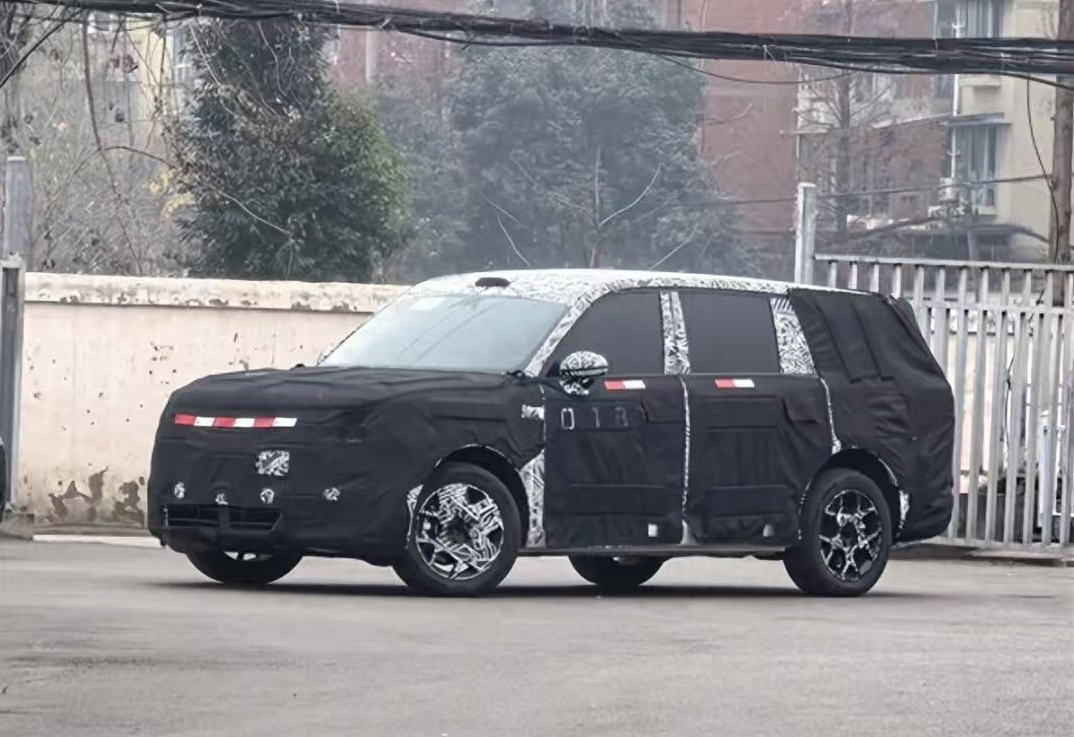
小米明年将推出4款新车,其中2款为增程SUV,挑战理想、问界
Jin Rong Jie· 2025-12-30 14:21
Group 1 - Xiaomi plans to launch four new vehicles in 2026, including two updated versions of the SU7 and two range-extended models, a five-seat SUV and a seven-seat SUV [1] - The range-extended seven-seat SUV, codenamed "Kunlun," aims to compete with models like Li Auto's L9 and Aito's M9, featuring a pure electric range of 400-500 km [1] - The sales of range-extended vehicles have shown a decline, with wholesale sales dropping by 1.9% year-on-year in October, and retail sales decreasing by 7.7% [3] Group 2 - Despite the competition in the range-extended vehicle market, it remains a viable solution for addressing consumer range anxiety, with advancements in technology focusing on longer electric ranges and faster charging [5] - Xiaomi's first model, the SU7, achieved over 200,000 deliveries within 348 days, making it the fastest-selling new energy vehicle to reach this milestone [5] - Xiaomi's automotive division has reached a significant milestone with the production of its 500,000th vehicle, becoming the fastest among new car manufacturers to achieve this [5] Group 3 - Xiaomi's current customer base is primarily composed of its loyal "Mi Fan" community, which may not be sustainable long-term, necessitating a broader audience reach [9] - The market for family-oriented range-extended SUVs is dominated by brands like Li Auto and Aito, indicating that Xiaomi will face intense competition in this segment [9] - Xiaomi's strengths in marketing and understanding consumer pain points may provide a competitive edge in the automotive market [9]
雷总又要搞事情了
表舅是养基大户· 2025-12-30 13:33
Group 1 - The Hang Seng Technology Index experienced its largest single-day gain in December, rising by 1.74% [1] - A surge in buying activity was noted in the Hong Kong stock market, particularly in major stocks like Tencent, Alibaba, and Xiaomi, with Xiaomi's stock rising due to a live-streaming event announcement by its CEO [2] - Xiaomi's upcoming live-streaming event is seen as part of public relations and market value management, especially following the announcement of a share reduction plan by its second-in-command, Lin Bin, who plans to reduce holdings by up to $5 billion annually starting December 2026 [5][6] Group 2 - Silver faced significant volatility, with a single-day drop of 16% and a further decline of 6.5% in the Silver LOF, totaling over a 24% drop from its peak [8][9] - The premium rate of Silver LOF decreased from over 60% to just above 10% [12] Group 3 - The robotics sector saw a sudden increase in stock prices, while the commercial aerospace sector experienced a decline [13][14] - The Ministry of Industry and Information Technology and other departments released a plan focusing on the digital transformation of the automotive industry, emphasizing key equipment like intelligent robots [15] Group 4 - The A500 ETF saw a net outflow exceeding 10 billion, marking the first net sell since December 10, while still experiencing a significant net inflow of over 100 billion for the month [19] - The A500 ETF has outperformed the CSI 300 by approximately 4.5% year-to-date, with a notable 1.2% excess return in December alone [21] - The South China A500 ETF's scale increased from 21 billion to over 46 billion in December, reflecting a surge of 25 billion [23] Group 5 - The onshore and offshore RMB broke the 7 mark for the first time since May 2023, indicating a potential strategy to avoid rapid appreciation [31] - The Shanghai Composite Index closed at a neutral point of "0.00%", marking a ten-day streak of positive closing prices [31][32] Group 6 - The number of companies listed on the STAR Market reached 600, indicating a significant expansion and potential impact on the Shanghai Composite Index [33]

千亿“锂王”搞内幕交易,断送“亲儿子”IPO
Xin Lang Cai Jing· 2025-12-30 13:07
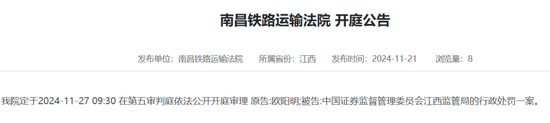
Core Viewpoint - A historical incident involving insider trading by the chairman of Ganfeng Lithium has led to regulatory, judicial, and capital operation challenges for the company, impacting its market value and operations significantly. Group 1: Insider Trading Incident - In 2020, Ganfeng Lithium's chairman and other executives engaged in insider trading related to a stock issuance by *ST Jiangte, resulting in a profit of 1.1 million yuan from a transaction of approximately 26.48 million yuan [1][2][30] - The regulatory authority imposed a fine of 3.32 million yuan on Ganfeng Lithium, with the chairman receiving a personal fine of 600,000 yuan and the former secretary receiving 200,000 yuan [2][30] - The case has escalated to criminal prosecution, with the company receiving a notice from the police regarding the transfer of the case to the prosecution for suspected insider trading [7][38] Group 2: Financial Performance and Challenges - Ganfeng Lithium, established in 2000, is the largest metal lithium producer globally and the largest lithium compound supplier in China, with a comprehensive business model covering lithium resource development to battery recycling [12][39] - The company reported a peak revenue of 41.82 billion yuan and a net profit of 20.50 billion yuan in 2022, but faced a significant decline in 2024, with revenue dropping to 18.91 billion yuan and a net loss of 2.07 billion yuan [12][44] - The lithium price volatility has severely impacted profitability, with a notable decline in lithium prices from nearly 600,000 yuan per ton in November 2022 to below 60,000 yuan per ton by June 2023 [16][46] Group 3: IPO and Capitalization Issues - Ganfeng Lithium's subsidiary, Ganfeng Lithium Battery, faced obstacles in its IPO plans due to the insider trading penalties, which disqualified it from listing [21][52] - The company initiated multiple rounds of capital increases to support Ganfeng Lithium Battery, but the inability to complete the IPO by the end of 2025 triggered buyback clauses for investors [20][55] - Ganfeng Lithium Battery reported a revenue of 6.07 billion yuan in 2024 but incurred a loss of 128 million yuan, indicating ongoing financial struggles [26][55] Group 4: Governance and Compliance Challenges - The insider trading incident has raised significant compliance risks for Ganfeng Lithium, affecting its governance and public perception [9][38] - The company is now facing long-term consequences from this historical misstep, which may overshadow potential recovery in the lithium market [27][56]

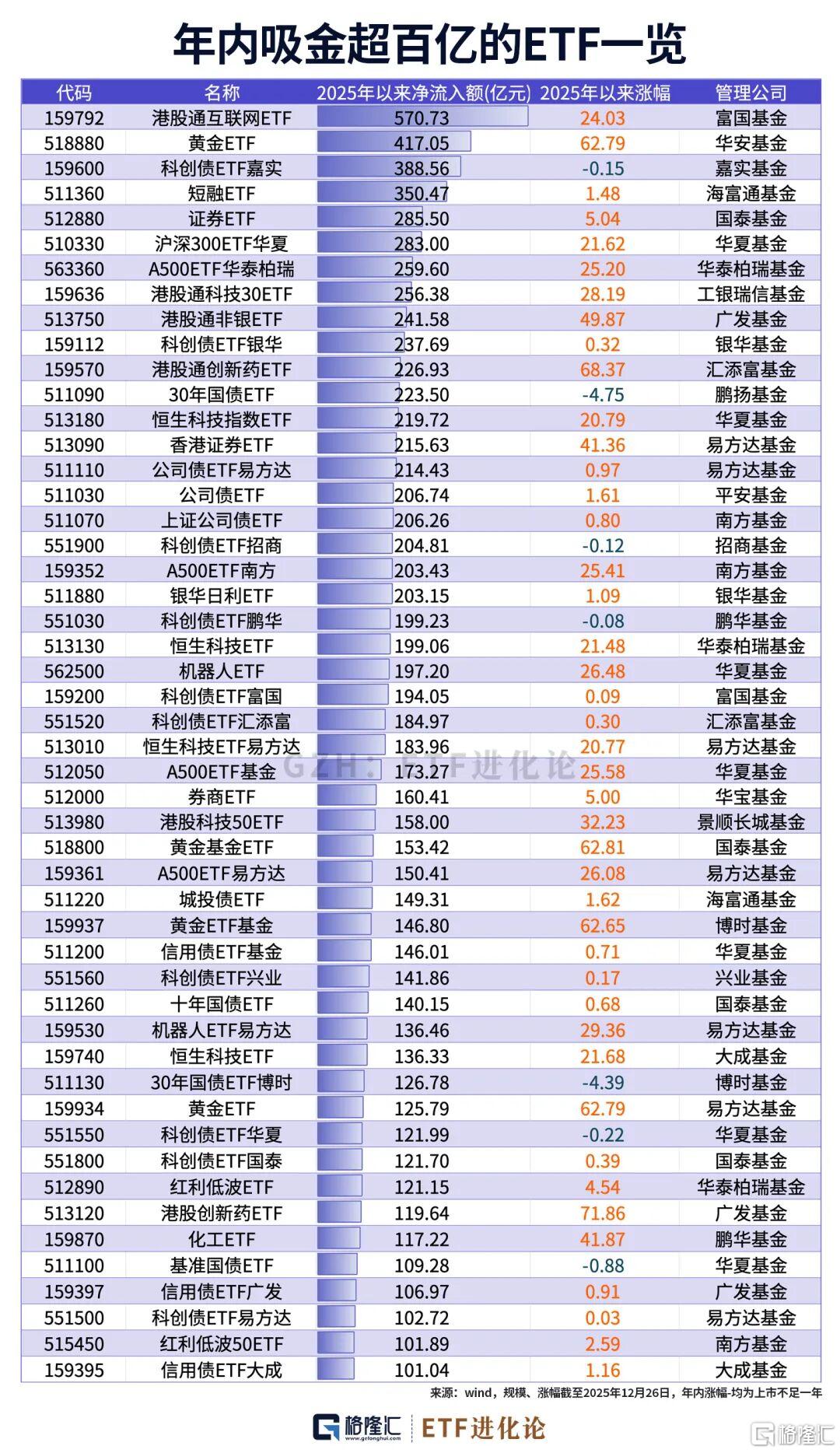
格隆汇2025年十大核心ETF年终盘点② | 科创芯片ETF(588200)涨超64%,港股通互联网ETF(159792)“吸金”569亿元,居ETF市场第一
Ge Long Hui· 2025-12-30 07:20
Core Insights - The 2025 "Global Vision, Betting on China" top ten core ETFs recorded a 28.86% increase, significantly outperforming the CSI 300 index by 10.96 percentage points [1] - The semiconductor sector and Hong Kong internet stocks were key contributors to market performance, with the Sci-Tech Chip ETF (588200) and Hong Kong Internet ETF (159792) rising 64.32% and 21.73% respectively in 2025 [1] Semiconductor Sector - The domestic semiconductor sector's growth is driven by strong policy support and capital investment in "self-controllable" technologies, leading to accelerated industry consolidation [1] - Mergers and acquisitions in the semiconductor industry are becoming more active, with leading companies expanding through horizontal integration and supply chain strengthening [2] - The Sci-Tech Chip ETF (588200) focuses on leading chip companies in the Sci-Tech board, with a semiconductor purity of 94.21%, covering the entire semiconductor industry chain [2] - The latest scale of the Sci-Tech Chip ETF (588200) is 39.086 billion yuan, making it the largest product in the semiconductor theme, with a daily average trading volume of 2.612 billion yuan in 2025 [2] Hong Kong Internet Sector - The Hong Kong internet sector has shown strong performance due to a clearer regulatory environment, AI transformation of enterprises, and significant net inflows of southbound funds [3] - Major internet companies are increasing investments in AI infrastructure, with Alibaba's cloud and AI product revenues growing rapidly, and a significant investment of 380 billion yuan in AI and cloud infrastructure [3] - The Hong Kong Internet ETF (159792) has seen a net inflow of 56.997 billion yuan in 2025, leading the entire ETF market in capital attraction [3][4] - The ETF tracks the CSI Hong Kong Internet Index, focusing on 30 pure internet companies, with over 70% of its top ten holdings in major firms like Alibaba and Tencent [7] Future Outlook - The outlook for the Hong Kong internet sector remains positive, with attractive valuations despite macroeconomic pressures, suggesting a profit valuation midpoint of 15-20 times for leading companies in 2026 [7]

马来西亚中华总商会人工智能组主任:中企出海促东南亚产业升级
2 1 Shi Ji Jing Ji Bao Dao· 2025-12-30 04:59
Group 1: AI's Impact on ASEAN and Malaysia - The AI industry is projected to contribute 10% to 18% growth in ASEAN's GDP by 2030, creating over $1 trillion in potential value [1] - Malaysia views AI as a core path to national modernization, enhancing quality of life and improving efficiency for businesses [4][5] - Traditional industries are expected to be reshaped and upgraded through AI integration rather than being simply eliminated [4][5] Group 2: Malaysia's AI Development Strategy - Malaysia plans to establish a National AI Office in December 2024 to promote the AI ecosystem and develop relevant policies [3] - The AI Office will collaborate with the Ministry of Investment, Trade and Industry to implement AI technologies across various sectors [3] - The government has allocated funds in the 2023 budget to support technology education, aiming to prepare the workforce for AI applications [5] Group 3: Collaboration with China - Malaysia and China have a strong trade relationship, with China being Malaysia's largest trading partner for 16 consecutive years [6] - The two countries are expected to deepen cooperation in emerging technologies, including AI, with Malaysia aiming to be among the top 20 AI economies by 2030 [5][6] - Chinese tech companies have successfully entered the Malaysian market, providing various services and products that enhance local development [9] Group 4: AI in Traditional Industries - AI is seen as essential for enhancing sectors like services, agriculture, and logistics, which will not be replaced but rather empowered by technology [5] - The integration of AI can lead to new business models and structural changes in traditional industries, especially in labor-intensive sectors [5] - A proposed "AI scoring system" could help evaluate foreign labor, showcasing AI's potential to create self-regulating mechanisms in the workforce [5] Group 5: China's AI Industry - China is recognized for having a complete AI industry chain, driving the sector towards high-end development [7] - The rapid advancements in AI in China are characterized by speed, strong implementation, and high cost-effectiveness [7] - China's AI ecosystem is extensive, covering data, chips, models, and applications, contributing to its robust growth [7]
2025汽车大事记:一致性失守威胁产业安全 多部门构建立体监管体系
Zhong Guo Jing Ji Wang· 2025-12-30 02:50
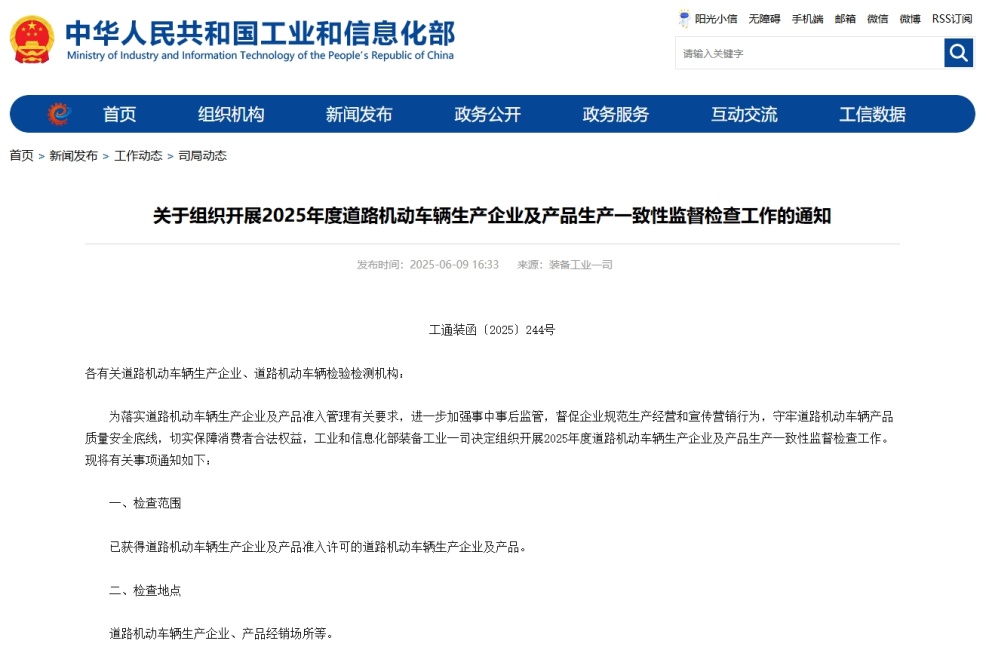
Core Viewpoint - The Chinese automotive market is experiencing intensified "involution" competition, characterized by price wars, chaotic advertising, and quality issues, prompting regulatory bodies to implement measures aimed at ensuring product consistency and promoting high-quality development [1][3][9]. Group 1: Price Wars and Profitability - The price war in the Chinese automotive market has escalated, with 227 models involved in price reductions in 2024, significantly higher than 148 in 2023 and 95 in 2022 [3]. - Over 90% of mainstream automotive brands participated in price cuts, with an average reduction of 15%, and some models seeing discounts exceeding 30% off the official price [3]. - The profit margin for the automotive manufacturing industry dropped to 4.3% in 2024 and further declined to 3.9% in Q1 2025, marking a ten-year low and significantly below the manufacturing average of 5.6% [3]. Group 2: Quality Issues and Consumer Complaints - Complaints regarding quality issues in new energy vehicles, such as "battery faults" and "inaccurate range," reached 13,904 from January to May 2025, marking a historical high and an increase of 7.4% from 2024 and 87.9% from 2023 [4]. - The ongoing price war and reckless technological competition are squeezing reasonable profit margins, adversely affecting product and service quality, which is detrimental to both companies and consumers in the long run [4]. Group 3: Regulatory Measures and Industry Response - The Ministry of Industry and Information Technology (MIIT) announced a consistency supervision check for vehicle production, aiming to regulate the automotive industry and curb the "involution" phenomenon [7][8]. - The regulatory framework includes a multi-dimensional governance system, with the MIIT and other departments implementing measures to ensure production consistency and compliance with safety standards [8]. - The automotive industry is showing signs of stabilizing, with a reduction in the number of models experiencing price cuts from 36 in 2024 to 23 in September 2025, and a slight recovery in profit margins [9][10]. Group 4: Future Outlook - The regulatory interventions are expected to reshape the competitive landscape, guiding resources towards technological innovation and quality improvement, ultimately leading to a transition from "scale first" to "quality leading" in the automotive industry [10].


信达国际控股港股晨报-20251230
Xin Da Guo Ji Kong Gu· 2025-12-30 01:53
Market Overview - The Hang Seng Index (HSI) has short-term support at the 25,000 point level, with expectations of two interest rate cuts in 2026 following the Federal Reserve's recent 0.25% rate cut, which aligns with market predictions [1] - The Chinese government is focusing on stabilizing investment and addressing supply-demand imbalances, with a slight increase in growth signals compared to previous meetings [1] - The HSI has seen significant gains this year, leading to profit-taking incentives as trading volume decreases [1] Company News - Semiconductor Manufacturing International Corporation (SMIC) is acquiring a 49% stake in Northern SMIC for a total consideration of 40.6 billion RMB, enhancing its asset quality and business synergy [3][10] - Meituan is distributing 45 million large consumption vouchers to consumers, aiming to boost sales during the promotional period [3][10] - Wall Street's recent performance shows a decline, with the Dow and Nasdaq both down by 0.5% [5] Industry Insights - The AI chip sector is gaining traction, with companies like Birran Technology seeing oversubscription of over 1,890 times in their public offering [3][10] - The electric vehicle export from China surged by 87% year-on-year in November, indicating strong demand in international markets [8] - The Chinese government plans to lower import tariffs on key components and battery materials starting January 1, 2026, to support technological advancement and economic growth [8] Economic Indicators - The U.S. Federal Reserve has adjusted its GDP growth forecast for 2026 to 2.3%, while lowering the inflation forecast to 2.4% [3] - Hong Kong's exports rose by 18.8% and imports by 18.1% in November, exceeding market expectations [8] - The profit of state-owned enterprises in China decreased by 3.1% year-on-year in the first eleven months of the year, with total revenue reaching 75.63 trillion RMB [8]



汽车之家开展规模最大冬测 理想汽车车型续航达成率垫底
Zheng Quan Shi Bao Wang· 2025-12-29 14:13
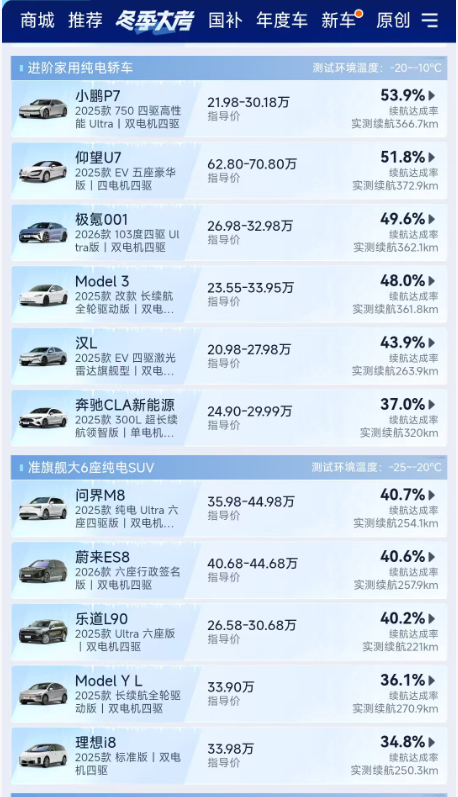
Core Insights - The winter performance of electric vehicles (EVs) is a major concern for consumers, particularly regarding issues like reduced range in low temperatures, slow charging, and stability on snow [1] - A recent winter test conducted by Autohome in Inner Mongolia evaluated various EVs under extreme cold conditions, focusing on seven key performance areas [1] Group 1: Test Results - The largest winter test conducted by Autohome included various vehicle categories, such as compact cars, sedans, and SUVs, making it a significant assessment for electric models [1] - In the category of advanced family electric sedans, the Xiaopeng P7 AWD achieved a range completion rate of 53.9%, followed by BYD's Yangwang U7 AWD at 51.8%, and Zeekr 001 AWD at 49.6% [1][2] - For advanced family 5-seat electric SUVs, the overall range completion rates were lower, with Tesla Model Y AWD at 35.2% [1][2] Group 2: Specific Model Insights - The Li Auto i8, a new electric SUV, has seen delivery numbers significantly below market expectations, impacting the overall sales trajectory of Li Auto [3] - The performance of electric vehicles in winter conditions is largely affected by lithium battery efficiency, which can drop by 30%-40% at -10°C and up to 50% at -20°C [3] - Xiaomi's Yu7 has been noted for its presence in extreme cold conditions, but the Xiaomi SU7 was not included in the winter test, making direct comparisons with competitors like Tesla Model 3 difficult [4][5]

小米史上最大减持,来自最信任的人
Xin Lang Cai Jing· 2025-12-29 13:45
小米史上最大规模减持 单从形式上看,林斌的减持安排并不算激进。 公告现实,自2026 年 12 月起,每 12 个月减持金额不超过 5 亿美元,累计不超过 20 亿美元。分期执行的"慢动作",显然是为了规避一次性抛售对二级市 场的剧烈冲击。即便减持完成,林斌仍持有小米约 17% 的股份,并不构成实质性的"清仓离场"。 如果这只是一份财富管理说明书,它理性且标准。但资本市场从不看你留下了多少,只看你拿走了多少。 这20亿美元(约合156亿港元)的套现,是小米上市以来前所未见的: 2019年,晨兴资本减持套现 22 亿港元; 2021年,高通减持套现 11 亿港元; 2024年6月,林斌曾小试牛刀套现 1.79 亿港元。 此次减持规模,是林斌半年前那次套现的87倍,也是小米上市以来首次由核心创始团队系统释放"长期套现"信号。 市场关注度和情绪剧烈波动,不难理解。如果说此前的财务投资人离场是"落袋为安",那作为二号人物的林斌套现离场,就很容易在社媒评论区里看到类 似直白的潜台词:"宁愿成立投资公司去外面看机会,也不想再赌小米的未来。" 减持的时机,也相当微妙。 仅公告前一交易日,小米完成连续第4 日股份回购,累计回 ...
