
宇通客车

Search documents
2025商用车产业合作发展大会在京举行
Zhong Guo Qi Che Bao Wang· 2025-12-01 02:00
Core Viewpoint - The "2025 Commercial Vehicle Industry Cooperation Development Conference" held in Beijing emphasizes the achievements and future strategies of China's commercial vehicle industry, highlighting the importance of green transformation, intelligent upgrades, and global expansion [3][4]. Group 1: Industry Achievements and Future Directions - The commercial vehicle industry is a crucial pillar of the national economy, showcasing unprecedented vitality and resilience in green transformation and intelligent upgrades [4]. - During the "14th Five-Year Plan" period, the industry achieved breakthroughs in production and sales scale, technology level, product structure, and international competitiveness, indicating a positive development trend [4]. - The next five years are seen as a critical period for consolidating and innovating the industry, aiming for higher quality, efficiency, and sustainability [4]. Group 2: Green Development and Technological Integration - The "15th Five-Year Plan" will see deep integration of new energy technologies, with continuous cost optimization and comprehensive infrastructure improvement [4]. - A multi-faceted zero-carbon transportation system will be established, with hydrogen, pure electric, and hybrid technologies playing significant roles [4]. - The green transformation of the commercial vehicle industry will closely align with energy, transportation, and urban development, becoming a core force in achieving China's "dual carbon" goals [4]. Group 3: Intelligent Development and Globalization - The industry will transition from "point breakthroughs" to "overall intelligent governance," integrating single vehicle intelligence with smart traffic systems [5]. - The commercialization of autonomous driving technology is expected to transform logistics and business models significantly [5]. - Chinese commercial vehicle enterprises will shift from merely exporting products to promoting technology standards and solutions globally, aiming for a leap from "global sales" to "global operations" [5]. Group 4: Market Trends and Competitive Landscape - Current annual sales of Chinese vehicles are approximately 33 million, with the domestic market expected to reach around 40 million [6]. - It is anticipated that Chinese brands will capture 50% of the global market share, reflecting the industry's competitive mission [6]. - The industry is expected to consolidate into about 15 globally competitive enterprise groups, with others potentially exiting the market through mergers or restructuring [6]. Group 5: Strategic Focus Areas - The future five years will focus on five strategic areas: domestic demand, manufacturing, technology, safety, and green initiatives, with an increased emphasis on domestic demand compared to the "14th Five-Year Plan" [7]. - The balance between supply and demand in transportation is expected to improve, with short to medium-distance transport demand showing better prospects than long-distance [7]. - The implementation of AI in transportation is projected to lead to a golden development period for smart logistics in the next 5 to 10 years [7]. Group 6: International Strategies and Market Position - New energy commercial vehicles are crucial for promoting energy conservation and carbon reduction in transportation, with significant opportunities for coordinated development in technology, market, and policy during the "15th Five-Year Plan" [8]. - Chinese electric buses have established a strong international competitive advantage, particularly in the European zero-emission bus market [8]. - The industry has reached an international leading level in new energy and related technologies, with a robust industrial chain supporting electric bus solutions [8]. Group 7: Industry Events and Networking - The "2026 Shenzhen International Commercial Vehicle Eco-Expo" aims to enhance the commercial vehicle industry's ecosystem and upgrade its development [9]. - The expo will serve as a professional platform covering the entire commercial vehicle industry chain, facilitating market transactions and brand promotion [9]. - A salon discussion on high-quality development paths for the commercial vehicle industry will be held, focusing on technological innovation and application [10].


宇通/中车居前二 金旅进三甲 中通翻4倍 10月新能源客车销量看点
第一商用车网· 2025-11-30 13:20
Core Viewpoint - The sales of new energy buses in China have shown significant growth in October 2025, with a total of 7,137 units sold, marking a month-on-month increase of 23.31% and a year-on-year increase of 23.56% [1][2]. Sales Performance - In October 2025, the top ten companies in the new energy bus market saw 9 out of 10 achieve year-on-year sales growth, with Yutong Bus leading the pack with 1,225 units sold, capturing a market share of 17.16% [2][3]. - CRRC Electric ranked second with 922 units sold, experiencing a month-on-month growth of 103.08% and a year-on-year decline of 38.00% [3][5]. - Xiamen Jinlv, ranked third, sold 658 units, with a month-on-month increase of 91.84% and a year-on-year increase of 32.39% [3][5]. - Zhongtong Bus and Foton Ouhui also showed remarkable growth, with Zhongtong selling 633 units (month-on-month growth of 97.20%, year-on-year growth of 414.63%) and Foton Ouhui selling 444 units (month-on-month growth of 114.49%, year-on-year growth of 174.07%) [5][6]. Cumulative Sales - From January to October 2025, a total of 39,179 new energy buses were sold, representing a year-on-year increase of 32.94% [1][2]. - Among the top ten companies, Zhongtong Bus was the only one to achieve a cumulative sales growth of over 100%, with an increase of 145.86% [8][15]. - Yutong Bus maintained its position as the leading cumulative seller with 5,485 units sold, while BYD and other companies also surpassed 2,000 units in cumulative sales [15][17]. Market Segmentation - The three major segments of the new energy bus market (public transport buses, seated buses, and other buses including school buses) all experienced positive year-on-year growth in October 2025 [10][12]. - The public transport bus segment saw cumulative sales growth of 38.48%, while the other bus segment achieved a remarkable year-on-year increase of 74.93% [10][12]. Notable Performances - Nanjing Jinlong Chuangwei exhibited outstanding performance with a month-on-month increase of 288.71% and a year-on-year increase of 487.80% [6][15]. - Dongfeng Special Automobile's Super Dragon model reported a staggering month-on-month growth of 1,514.29% [6][15]. - In the seated bus market, Yutong Bus led with 514 units sold, achieving a year-on-year growth of 103.97% [16][17].


高效与降本的“代名词”!零一电驱桥重卡或改变行业格局 | 头条
第一商用车网· 2025-11-30 13:20
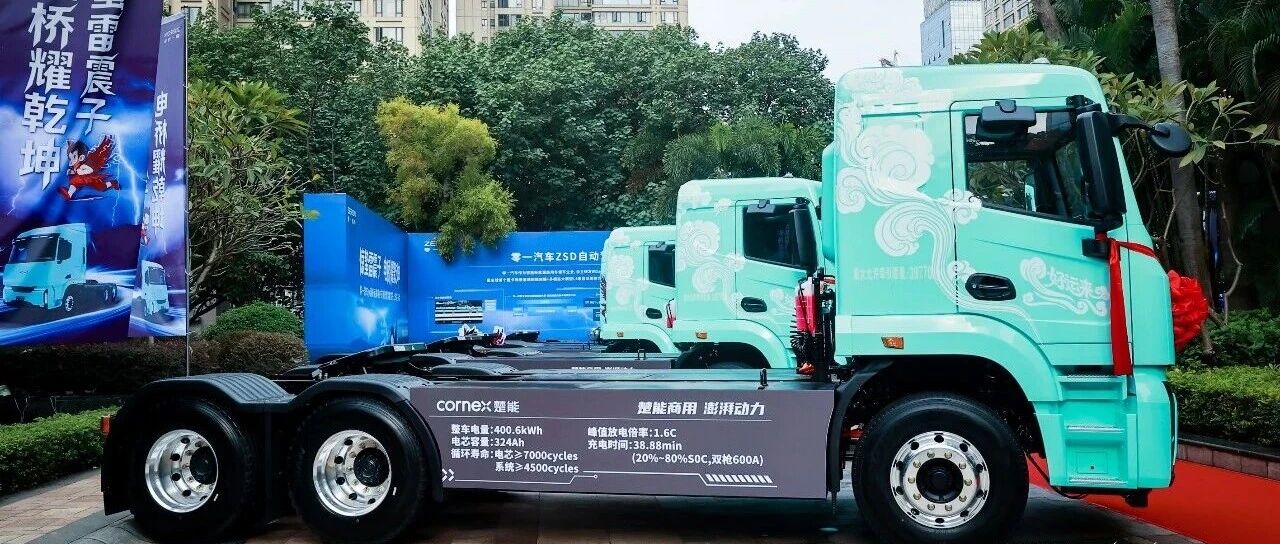
Core Viewpoint - The commercial vehicle industry is undergoing a transformation driven by the dual pressures of cost reduction and efficiency enhancement, with the introduction of the Zero One electric drive axle heavy truck potentially sparking a new wave of change in the market [1]. Group 1: Market Trends - In October 2025, domestic sales of new energy heavy trucks are projected to reach 20,100 units, a year-on-year increase of 144%. From January to October, cumulative sales reached 157,900 units, reflecting a growth of 178% [1]. - The sales of new energy heavy trucks are thriving due to the ongoing push towards carbon neutrality and industry transformation [1]. Group 2: Advantages and Challenges - Traditional energy heavy trucks possess advantages such as broader operational scenarios, no concerns about recharging, and higher transportation efficiency, which are challenges for the development of new energy heavy trucks [1]. - The Zero One electric drive axle heavy truck, equipped with the self-developed Matrix 2.0 electric drive axle, is positioned to disrupt the market by overcoming these challenges [1]. Group 3: Technological Advancements - The evolution of electric drive axle technology is expected to break down barriers to the promotion of new energy heavy trucks, enhancing transportation efficiency and reducing overall operating costs [3]. - Electric drive axle trucks integrate the motor, transmission, and reducer directly onto the axle, significantly reducing energy loss and improving system efficiency compared to traditional central drive models [5]. Group 4: Competitive Landscape - The electric drive axle is becoming a mainstream technology in the electric heavy truck sector, with many manufacturers accelerating the integration of this technology into their new energy heavy trucks [7]. - Zero One Automotive has taken a leading position in the industry by being the first to develop and mass-produce electric drive axle technology, achieving significant advancements in this area [8]. Group 5: Product Performance - The new generation of Zero One electric drive axle heavy trucks features a system efficiency of 94%, with the oil-cooled flat wire motor achieving a peak efficiency of 97.12%. The single axle power reaches 530 horsepower, while dual axle power can reach 1,061 horsepower [10]. - The intelligent driving modes and smart shifting technology reduce energy consumption by 5%-8% compared to similar models, while the vehicle's weight has been reduced by 430 kg compared to the previous generation [10]. - The Matrix 2.0 electric drive axle has undergone extensive market validation, demonstrating a core component lifespan of 1.6 million kilometers and a maintenance-free design that enhances reliability and reduces downtime [11]. Group 6: Future Outlook - As the penetration of new energy heavy trucks continues to rise and applications in various segments expand, the industry is shifting from policy-driven to market demand-oriented growth [15]. - The Matrix 2.0 electric drive axle heavy truck is expected to become a superior solution for cost reduction and efficiency enhancement in logistics, leading the industry towards a greener, smarter, and more efficient future [15].
汽车行业周报:长安拟成立机器人子公司,零跑官宣100万台销量目标-20251130
CMS· 2025-11-30 11:05
Investment Rating - The report maintains a "Recommended" rating for the automotive industry, indicating a positive outlook for the sector [5]. Core Insights - The automotive industry experienced an overall increase of 3.3% during the week from November 24 to November 30, with significant developments including Changan's plan to establish a robotics subsidiary and Leap Motor's announcement of a sales target of 1 million units for 2026, marking it as the first new force car company in China to set such a target [1][9][28]. Market Performance - The automotive sector's performance was strong, with the Shanghai Composite Index rising by 1.4%, the Shenzhen A Index by 3.5%, and the ChiNext Index by 4.5% during the same week [2][10]. - Within the automotive industry, all secondary segments saw gains, particularly the automotive services and parts sectors, which rose by 3.9% and 3.7% respectively [13][10]. Individual Stock Performance - Notable stock performances included Tianpu Co., which surged by 35.3%, and Chaojie Co., which increased by 28.4% [3][16]. - Among covered stocks, GAC Group saw a rise of 21.7%, while Kanglongda experienced a decline of 6.0% [19][3]. Industry Developments - Changan Automobile plans to invest 225 million yuan to establish a robotics company, aiming to enhance its capabilities in intelligent automotive technology [9][25]. - Great Wall Motors is set to establish its first complete vehicle factory in Europe, targeting an annual production capacity of 300,000 units by 2029 [26]. - Avita has submitted an application for listing on the Hong Kong Stock Exchange, aiming for a second-quarter 2026 IPO [27]. Investment Recommendations - The report recommends focusing on companies with strong sales performance or potential blockbuster vehicles, such as BYD, Seres, Great Wall Motors, and Jianghuai Automobile [9]. - For commercial vehicles, it highlights Yutong Bus, China National Heavy Duty Truck Group, and Weichai Power as key investment opportunities [9].


宇通1.2万辆霸榜 金龙系猛涨 欧辉/比亚迪发力 前10月客车出口破6万辆 | 头条
第一商用车网· 2025-11-30 10:43
Core Viewpoint - In October 2025, China's bus exports unexpectedly declined, ending a 21-month streak of year-on-year growth, with a total export of 5,105 vehicles, marking a month-on-month decrease of 29.37% and a year-on-year decrease of 22.37% [1][3][10]. Group 1: Export Performance - From January to October 2025, a total of 60,703 buses were exported, an increase of 11,933 vehicles or 24.47% year-on-year [1][12]. - In October 2025, the export volume of large, medium, and light buses all saw year-on-year declines, with large buses at 2,657 units (down 3.94%), medium buses at 1,203 units (down 20.33%), and light buses at 1,245 units (down 45.87%) [5][7][10]. - The export volume of large buses in October was only higher than January and February, indicating a significant drop compared to September's over 7,200 units [3][5]. Group 2: Market Dynamics - The decline in October's bus exports is attributed to three main factors: a high base from the previous year, a noticeable cooling in the bus market, particularly for large buses, and underperformance in light bus exports [10][11][33]. - The market share leaders from January to October 2025 were Yutong with 11,742 units (19.34%), followed by Xiamen King Long and BYD, both showing significant year-on-year growth [12][28]. Group 3: Company Rankings - In the bus export rankings for January to October 2025, Yutong, Xiamen King Long, and Xiamen Jinlv led the market, with notable increases in export volumes for companies like Foton Ouhui and Ankai, which saw growth rates of 76.55% and 182.06% respectively [12][15]. - The top ten companies in bus exports for October 2025 included Yutong (1,000 units), Xiamen King Long (729 units), and Xiamen Jinlv (713 units), with mixed year-on-year performance among these companies [15][28]. Group 4: Segment Analysis - The seat bus segment showed a cumulative export of 34,676 units from January to October 2025, with a year-on-year growth of 26.94%, while the bus segment as a whole saw a cumulative export of 23,562 units, reflecting a 34.49% increase [18][27]. - In the large bus segment, Yutong led with 4,936 units exported, while BYD and Foton Ouhui also performed strongly, indicating a competitive landscape in the large bus market [30][32].
汽车行业2026年年度策略报告:高端化+出口驱动总量,智驾+机器人带动产业升级-20251129
CAITONG SECURITIES· 2025-11-29 08:02
Group 1 - The overall demand for passenger vehicles is expected to remain stable, with incremental growth driven by high-end market expansion and exports [3][6][35] - The penetration rate of new energy vehicles (NEVs) is stabilizing, with domestic market competition gradually reaching a steady state [23][35] - The average price of passenger vehicles is anticipated to increase, particularly in the mid-to-high-end market, as domestic brands continue to replace foreign brands [6][35] Group 2 - The heavy truck market faces pressure domestically, but exports are expected to recover as the pressure on sales to Russia eases [46][50] - The export of medium and large buses is projected to maintain rapid growth, with profitability largely dependent on the European market [55] - The rapid growth of AI data centers is expected to create additional demand in the diesel engine sector [3][46] Group 3 - The smart driving sector is entering a new phase of resonance between China and the US, with advancements in L2 and L3 driving standards expected [58][63] - The Robotaxi market in the US is anticipated to experience explosive growth, driven by companies like Tesla and Waymo [72][75] - The integration of robotics into the automotive supply chain is becoming increasingly significant, with automotive suppliers likely to extend their capabilities into the robotics sector [87][90] Group 4 - Recommended stocks in the passenger vehicle sector include Jianghuai Automobile, BYD, and BAIC Blue Valley, with a focus on high-end vehicles and exports [4][94] - In the robotics sector, recommended stocks include Top Group, Yinlun, and BlueDye Technology, with a focus on companies capable of transitioning into robotics [4][94] - For smart driving, recommended stocks include Bertel, Horizon, and Pony.ai, focusing on the growth of L2 driving technology and Robotaxi commercialization [4][94]




涉中国电动巴士,布里斯班反驳质疑
Huan Qiu Shi Bao· 2025-11-28 22:27
Core Viewpoint - The Brisbane City Council has dismissed claims regarding safety risks associated with Chinese-made electric buses, labeling such assertions as xenophobic [1][2]. Group 1: Safety Concerns - Multiple Western media outlets have raised concerns about the safety of Chinese-manufactured buses, suggesting they could be remotely controlled by manufacturers [1]. - The Australian Capital Territory government is investigating safety issues within its bus fleet, following the emergence of these claims [1]. Group 2: Local Response - Andrew Wines, the chairman of the Brisbane City Council's transport committee, strongly refuted the allegations, arguing that it is unfair to criticize products solely based on their country of origin [1]. - Wines indicated that skepticism towards electric vehicles is evident among certain local politicians, suggesting a broader resistance to renewable energy technologies [1]. Group 3: Market Context - Brisbane operates a fleet of 1,200 buses, with only 4 manufactured by Yutong, which began service in 2021 [2]. - Many vehicles in the Australian market, including those from mainstream brands like Volkswagen and Tesla, have internet connectivity for software updates, similar to the Yutong buses [2]. Group 4: Manufacturer's Assurance - Yutong's Australian distributor stated that vehicles in the local market receive software updates at service centers rather than remotely, ensuring compliance with Australian data protection laws [2]. - The Land Transport Authority of Singapore confirmed that 20 Yutong electric buses in operation since 2020 cannot be remotely controlled, affirming the company's commitment to data privacy and operational integrity [2].
从单品竞技到生态博弈 解码商用车“十四五”的转型与跃迁
Zhong Guo Jing Ying Bao· 2025-11-28 20:47
Core Insights - The commercial vehicle industry in China has undergone a structural transformation during the "14th Five-Year Plan" period, shifting from policy-driven to market-driven dynamics [1][2][3] - The industry has seen a significant increase in the penetration of new energy vehicles (NEVs), with NEVs accounting for 24.6% of domestic commercial vehicle sales from January to October 2025 [2][3] - Companies are focusing on technological innovation, ecological collaboration, and global expansion to enhance competitiveness and adapt to market demands [4][5][6] Group 1: Market Trends - The commercial vehicle sector experienced a "W"-shaped recovery, with production and sales declining over 30% in 2022, followed by a strong rebound in 2023 and a slight adjustment in 2024 [1] - In the first three quarters of 2023, the light truck market saw sales of 448,400 units, a growth rate of 20.67%, with new energy light trucks achieving a penetration rate exceeding 26% [2] - The industry is moving towards a multi-technology approach, with electric, hybrid, and hydrogen fuel cell technologies competing in various market segments [3] Group 2: Technological Advancements - Companies like Yutong are advancing in core technologies, focusing on electric, hybrid, and hydrogen fuel platforms, achieving significant breakthroughs in battery, motor, and control technologies [5] - The introduction of the "Rui Control E Platform" by Yutong allows for high integration of hardware and software, improving vehicle range by over 10% and reducing operational costs by 20% [3][5] - The industry is witnessing a shift from merely selling vehicles to providing comprehensive service solutions, emphasizing the importance of ecosystem collaboration [4][6] Group 3: Future Outlook - By 2035, pure electric vehicles are expected to dominate new vehicle sales, with the overall penetration rate of new energy commercial vehicles projected to increase significantly [6] - The competition landscape is anticipated to evolve from product competition to ecosystem competition, where companies that can integrate the entire value chain will emerge as leaders [6][7] - Yutong aims to enhance its global competitiveness by focusing on both domestic and international markets, leveraging its strengths in new energy vehicles and core components [7]
徐工四连冠!重汽第二 解放超陕汽 10月新能源自卸车销量翻倍 | 头条
第一商用车网· 2025-11-28 04:01
Core Insights - The new energy heavy truck market saw a significant year-on-year increase of 144% in October 2025, maintaining sales above 20,000 units, with specific segments like new energy tractors and charging heavy trucks growing by 150% [1][4]. Market Performance - In October 2025, the domestic sales of new energy heavy trucks reached 20,100 units, a 144% increase year-on-year but a 17% decrease month-on-month. New energy dump trucks sold 2,223 units, marking a 99% year-on-year increase but a 14% month-on-month decline [4][10]. - The penetration rate of new energy dump trucks in the heavy truck market reached a record high of 11.07% in October 2025, up from 10.65% the previous month [6][10]. Sales Trends - The monthly sales data for new energy dump trucks shows that the first eight months of 2025 had the highest sales ever recorded, with October sales also being among the highest [8][27]. - The overall heavy truck sales in October 2025 were 70,100 units, a 57% year-on-year increase, with new energy dump trucks accounting for 48.16% of the total dump truck sales [10][19]. Competitive Landscape - The market for new energy dump trucks remains competitive, with major players like XCMG, SANY, and China National Heavy Duty Truck Group consistently leading in monthly sales rankings [16][17]. - In October 2025, XCMG sold 612 units, securing its sixth monthly sales championship, while China National Heavy Duty Truck Group sold 460 units [19]. Market Share Analysis - As of October 2025, XCMG held the largest market share in the new energy dump truck sector at 23.36%, followed by China National Heavy Duty Truck Group at 18.80% and SANY at 18.37% [25]. - The total number of companies participating in the new energy dump truck market increased to 26 by October 2025, indicating a growing interest in this segment [21]. Future Outlook - The new energy dump truck market is expected to remain vibrant, with intense competition among leading manufacturers. The outcome of the year-end sales championship remains uncertain, with close sales figures among top competitors [27].




国际观察丨共赢合作促进产业升级 中国品牌汽车加速驶入中东
Zhong Guo Jing Ji Wang· 2025-11-28 02:05
Core Insights - Chinese automotive brands are rapidly gaining recognition and market share in the Middle East, transitioning from "strangers" to "reliable partners" in the region [1] Group 1: Market Performance - In the UAE, Chinese automotive brands are increasingly trusted by dealers and consumers, with a notable rise in customer inquiries and purchases [2] - In Turkey, sales of Chinese brands have significantly increased, with Chery's sales expected to exceed 57,000 units in 2024, marking a growth of over 40% [3] - BYD's market performance in Turkey has been remarkable, with sales increasing nearly ninefold after establishing a local factory [3] Group 2: Competitive Advantages - Chinese automotive brands are favored for their superior product performance, advanced smart configurations, high cost-effectiveness, and comprehensive after-sales service [4] - Chinese vehicles have passed rigorous extreme environment tests, ensuring quality suitable for the Middle Eastern climate [4] - Features such as spacious interiors and luxury configurations are appealing to consumers, with many functionalities previously seen only in high-end European models [4] Group 3: Local Investment and Collaboration - Chinese companies are investing in local manufacturing and talent development, aligning with the green transformation goals of several Middle Eastern countries [7] - In Egypt, Chery's investment of $123 million in a welding plant has resulted in 40% of components being locally manufactured, promoting job creation and skills development [7] - BYD's $1 billion investment in Turkey is expected to create around 5,000 jobs and enhance the local supply chain [7][8]