
海天味业

Search documents
创盛亚洲投资集团董事长温文浩回顾2025年港股IPO市场
Sou Hu Cai Jing· 2026-02-20 09:39
Market Overview - The IPO market in Hong Kong has shown a strong recovery, leading the global IPO fundraising rankings with a total of HKD 286.71 billion in 2025, a year-on-year increase of 225.9% [4] - The number of new listings reached 119, including 114 IPOs, marking a 62.9% increase compared to the previous year [4] IPO Market Characteristics Issuance Structure - The distribution of IPOs includes 8 super-large (over HKD 10 billion), 4 large (HKD 5-10 billion), 21 medium (HKD 2-5 billion), and 81 small (under HKD 2 billion) offerings, indicating growth across both large and small enterprises [4] Key Data - The Hang Seng Index rose by 27.77% over the year, outperforming major global stock markets, with total trading volume and average daily trading volume reaching historical highs [4] Investment and Intermediary Landscape Investment Institutions - 78.07% of IPOs included cornerstone investors, with total investments reaching HKD 106.60 billion, a record high [4] Intermediary Institutions - Chinese securities firms dominated the underwriting market, with CICC leading with 41 IPOs, followed by CITIC Securities and Huatai International [4] Policy and Filing Dynamics - In 2025, 187 companies completed the filing process for overseas listings, a 19.1% increase year-on-year, with 139 companies listing in Hong Kong, doubling from the previous year [4][5] Market Trend Outlook - The trend of technology companies going public in Hong Kong is expected to continue into the first half of 2026, supported by the influx of capital from both domestic and international sources [4] - The AI boom is driving ongoing interest in IPOs within the technology and semiconductor sectors, while healthcare and consumer sectors remain focal points for the market [4]


私有化金科服务、投资星巴克中国、收购SKP 博裕资本在下一盘怎样的棋?
Xin Lang Cai Jing· 2026-02-20 04:44
Core Viewpoint - Kins Services, once valued at over 55 billion HKD, has officially delisted from the Hong Kong stock market after five years of listing, marking a significant shift in its operational strategy and ownership structure [1][4]. Group 1: Company Overview - Kins Services was initially part of Kins Holdings and was listed on the Hong Kong Stock Exchange in October 2020, with an initial share price of 44.8 HKD, reaching a market cap of over 280 billion HKD on its first trading day [2][3]. - The company experienced a peak market valuation exceeding 550 billion HKD during its early years, positioning itself alongside other major property management firms [2]. Group 2: Ownership Changes - The ownership of Kins Services transitioned significantly when its parent company, Kins Holdings, faced a liquidity crisis, leading to the sale of a 22% stake to Boyu Capital for 37.34 billion HKD in December 2021 [3]. - Boyu Capital gradually increased its stake, becoming the largest shareholder by acquiring additional shares through a series of strategic moves, including a partial tender offer in November 2022 and a court-ordered auction in March 2025 [3][4]. Group 3: Delisting and Privatization - The delisting was initiated by Boyu Capital as part of a voluntary privatization process, with a tender offer made at 8.69 HKD per share, resulting in a 95.56% acceptance rate from shareholders [4][5]. - Following the privatization, Kins Services' market cap was approximately 52 billion HKD, reflecting a decline of over 90% from its historical peak [4]. Group 4: Financial Performance - Kins Services reported a total revenue of 2.335 billion CNY for the first half of 2025, a slight decrease of 3.1% year-on-year, while maintaining cash and liquid assets of 2.65 billion CNY [5]. - The company has faced cumulative losses of around 3.4 billion CNY over the past three years, leading to a significant reduction in its market valuation and operational capabilities [5]. Group 5: Industry Context - The delisting of Kins Services reflects broader trends in the real estate and property management sectors, where companies are increasingly opting for privatization due to low public market valuations and financial pressures [9]. - Similar cases of privatization and mergers have been observed in the industry, indicating a shift towards a focus on asset consolidation and operational efficiency in a challenging market environment [9].
告别泡沫叙事:九大关键词看懂2025中国消费
Xin Lang Cai Jing· 2026-02-20 02:07
Group 1: Chinese Consumption Market Trends in 2025 - The Chinese consumption market in 2025 is characterized by both chaos and transformation, moving away from bubble narratives towards efficiency, value, and trust as core competitive elements [1] - The delivery service battle resulted in a loss of at least 30 billion yuan in Q2 2025, significantly impacting small businesses and delivery personnel [3][4] - The pre-prepared food crisis highlighted a significant trust gap between consumers and the food industry, leading to a call for national standards [6][8] Group 2: Delivery Service Battle - The delivery service war was ignited by JD's aggressive entry into the market, leading to a fierce subsidy competition among major players like Meituan and Alibaba [3][4] - The battle resulted in a dramatic increase in active users for JD and Meituan, but ultimately led to unsustainable financial losses [3][4] - The strategic rationale for giants like Alibaba and JD was to cultivate consumer habits of ordering food through their platforms, thereby enhancing their core e-commerce businesses [4] Group 3: Pre-prepared Food Crisis - The pre-prepared food crisis began with a public dispute involving a well-known restaurant, revealing deep-seated issues in the food industry's industrial transformation [6][7] - The crisis underscored the clash between consumer rights and the interests of food enterprises, with consumers demanding transparency [8][9] - The industry is expected to undergo significant regulatory changes, with new national standards being proposed to ensure consumer awareness and rights [9][10] Group 4: Discount Retail Trends - The discount retail sector in China is experiencing rapid expansion, with new players entering the market and established brands accelerating their store openings [11][12] - Hard discount models are thriving due to their focus on private label products and supply chain efficiency, while soft discount models are struggling [11][13] - The competition has shifted from price wars to a broader focus on supply chain efficiency and operational capabilities [13][14] Group 5: Health and Wellness Trends - The market for health and wellness products, particularly those related to traditional Chinese medicine, has surpassed 370 billion yuan, indicating a growing consumer interest in health [18][19] - The product offerings in this sector are diversifying, with new ingredients being added to the list of approved health foods [19][20] - Retail channels are increasingly focusing on health products, with major retailers launching specialized health product lines [22] Group 6: International Brands Selling Out - In 2025, several international brands, including Starbucks and Burger King, opted to sell their Chinese operations to local partners, indicating a shift in market strategy [23][24] - The decline in market share for these brands is attributed to their inability to adapt to the fast-paced and competitive Chinese market [24][25] - Successful local brands have demonstrated the potential for growth and profitability in the Chinese market, contrasting with the struggles of foreign brands [26] Group 7: Middle-Class Consumer Sentiment - The middle-class consumer segment in 2025 is experiencing significant discontent, driven by rising prices and perceived value discrepancies [28][30] - This demographic is increasingly critical of brands that do not meet their expectations for quality and value, leading to a reevaluation of brand loyalty [30][31] - The notion of the middle class is being challenged, with discussions around its existence and relevance in the current economic landscape [30] Group 8: Weight Management as a National Strategy - 2025 has been designated as the "Year of Weight Management," with government initiatives promoting healthy eating and lifestyle choices [33][34] - The market for weight management products is projected to reach 326 billion yuan, with a significant increase in demand for functional foods [35][36] - The trend reflects a broader societal shift towards health consciousness, influencing various sectors including food and fitness [36] Group 9: IPO Activity in Hong Kong - The Hong Kong stock market saw a surge in IPO activity in 2025, with 111 companies raising a total of 250.56 billion yuan, surpassing previous expectations [37][38] - The consumer sector was a major focus, with numerous retail and consumption-related companies going public [38][39] - The trend of dual listings (A+H shares) is gaining momentum, indicating a strategic move by companies to enhance their market presence [40]
2025港股IPO年度全景复盘
Sou Hu Cai Jing· 2026-02-16 10:09
Core Insights - The strong resurgence of Hong Kong IPOs in 2025 is a central theme for the global capital markets, with nearly HKD 300 billion raised, reclaiming the top position in global IPO fundraising [2][7] - The Hong Kong IPO market has experienced a significant increase in both quantity and quality, with new listings up nearly 70% year-on-year and fundraising doubling compared to the previous year [2][3] Market Dynamics - The traditional dominance of internet and financial real estate sectors has been disrupted, with hard technology, advanced manufacturing, and biomedicine emerging as the three main pillars supporting the market [3][4] - Key sectors such as new energy, semiconductors, smart vehicles, and high-end equipment are now prominently represented in the Hong Kong market, enhancing its manufacturing base [3][4] Notable IPOs - Significant companies that went public in 2025 include: - CATL (宁德时代), raising approximately HKD 41 billion with a market cap of about HKD 920 billion and a PE ratio of around 18x [3] - Hengrui Medicine (恒瑞医药), a leader in innovative drugs, with a market cap of approximately HKD 320 billion and a PE of about 32x [3] - Sanhua Intelligent Control (三花智控), with a market cap of around HKD 180 billion and a PE of about 24x [3] - Haitian Flavoring and Food (海天味业), with a market cap of approximately HKD 420 billion and a PE of about 30x [3] - Chery Automobile (奇瑞汽车), with a market cap of around HKD 190 billion and a PE of about 12x [4] A+H Listing Trend - 2025 marked a significant year for A+H dual listings, with leading companies opting for this model to enhance global liquidity and valuation recovery [5][6] - The A+H model has become a standard for industry giants, reinforcing Hong Kong's position as the preferred overseas listing location for Chinese enterprises [6] Future Outlook - The recovery of the Hong Kong IPO market is seen as a result of multiple cyclical factors, including improved global liquidity, long-term valuation recovery, and the increasing demand for high-quality assets from mainland China [6][7] - Moving forward, the focus of the Hong Kong IPO market is expected to shift from quantity expansion to quality prioritization, with a stronger emphasis on industry logic over speculative trading [6][7]

广东省和平县市场监督管理局关于2026年春节食品安全监督抽检情况的通告(2026年第2期)
Zhong Guo Zhi Liang Xin Wen Wang· 2026-02-14 09:07
Overall Situation - A total of 77 batches of food were sampled, including 23 batches of edible agricultural products, 9 batches of frozen foods, 9 batches of candy products, 9 batches of condiments, 6 batches of meat products, 4 batches of alcoholic beverages, 4 batches of drinks, 3 batches of fried foods and nuts, 3 batches of sugar, 3 batches of fruit products, 2 batches of potato and puffed foods, 1 batch of dairy products, and 1 batch of grain processing products [3]. Food Safety Supervision - All sampled food products were found to be qualified, indicating a successful food safety supervision effort by the Heping County Market Supervision Administration [2][3]. Consumer Safety Tips - Consumers are advised to purchase food from reliable channels and retain shopping receipts, check packaging for relevant labels (such as production date, shelf life, producer name and address, ingredient list, and food production license number), avoid products without factory name, address, production date, and shelf life, and refrain from purchasing expired products or those listed as unqualified [4].
西安市鄠邑区市场监督管理局关于第2期食品监督抽检产品信息的通告(2026年第2号)
Zhong Guo Zhi Liang Xin Wen Wang· 2026-02-14 09:04
Summary of Key Points Core Viewpoint The food safety inspection report from the Xi'an Huayin District Market Supervision Administration indicates that all 59 batches of food samples tested, including various categories such as biscuits and tea, passed the quality checks, ensuring consumer safety and product reliability [2][3]. Group 1: Inspection Results - A total of 16 categories of food were tested, comprising 59 batches, all of which were found to be compliant with safety standards [3]. - The categories included biscuits (1 batch), tea and related products (3 batches), nuts and fried foods (6 batches), condiments (6 batches), convenience foods (1 batch), pastries (1 batch), grain products (2 batches), meat products (10 batches), dairy products (3 batches), edible oils and fats (10 batches), potato and puffed foods (2 batches), fruit products (3 batches), frozen foods (1 batch), candy (5 batches), beverages (2 batches), and health foods (3 batches) [3]. Group 2: Specific Products and Companies - Notable products included "Kang Shifu Ice Red Tea" from Kang Shifu (Xi'an) Beverage Co., and "Vitasoy Lemon Tea" from Vitasoy (Wuhan) Co., both of which were part of the tested samples [3]. - Other companies involved in the inspection included Mengniu Dairy (Ningxia), Shuanghui Foods, and various local producers, all of which had their products tested and passed [3][4].





热餐可口 归途无忧!七鲜小厨开进北京南站,首次开辟大交通场景
Jin Rong Jie· 2026-02-14 03:24
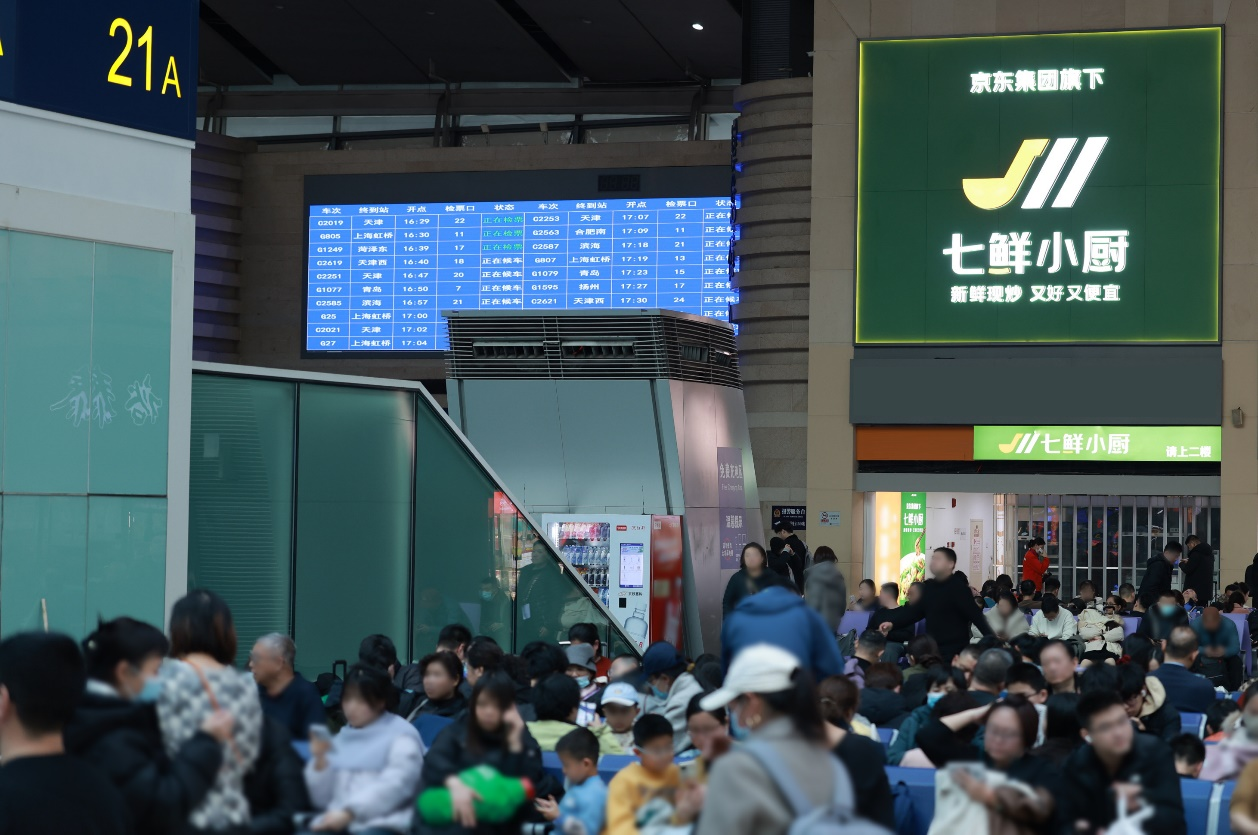
春节临近,春运客流持续攀升。为了让更多旅客在春运路上也能吃得好、行得好,2月14日,京东旗下品质餐饮品牌七鲜小厨北京南站店正式开业,将新鲜 现炒、锅气十足的安心美味带给更多高铁旅客。 据了解,在新店开业期间,七鲜小厨还有好礼相送:消费即送福米,满30元赠送鱼豆腐,情人节当天还有赠送鲜花等活动。 "在旅途中,旅客最核心的用餐诉求就是安心、便捷、热乎,我们希望通过北京南站店这个样本,提升旅途用餐的安心标准。" 七鲜小厨北京南站店店长闫 海山说。 新鲜现炒食材透明 守护旅途食品安全 为了让更多旅客从"将就吃"到"吃好点",在食材供应上,七鲜小厨均严选家喻户晓的福临门、十月稻田、海天等国民大品牌,给奔波在旅途中的人们提供健 康、安心的品质餐食。在北京南站店入口处,七鲜小厨还放置了食材供应商公示二维码,扫码即可清晰溯源;旅客还可以通过京东搜索七鲜小厨门店,观看 24小时后厨直播,从备菜、炒菜到出餐,每个环节都清晰可见。 | 湘 | | 中粮福临门非转基因一级大豆油 | | --- | --- | --- | | ਮੇਟ | | 十月稻田的东北一级香米 | | 老抽 | | 海天的草菇老抽(非转基因黄豆) | | 1筒 ...
2025,港股重回巅峰
3 6 Ke· 2026-02-14 02:36
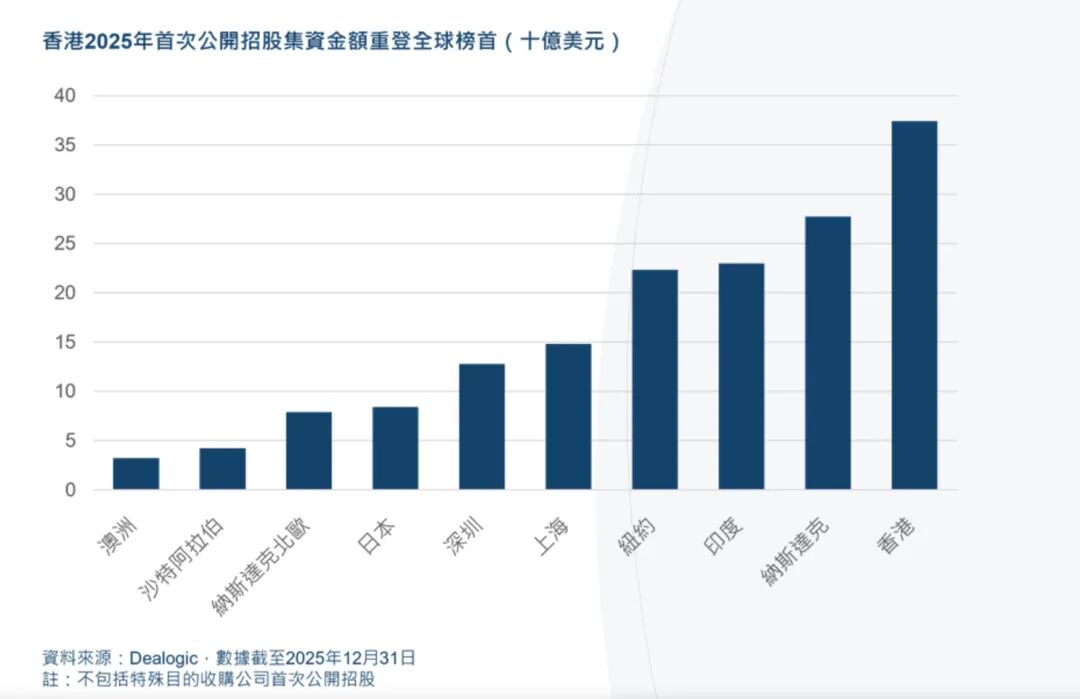
Core Insights - Hong Kong's IPO fundraising reached a record high of $37.4 billion in 2025, surpassing the total of the previous three years combined, marking a return to the top of the global IPO market after four years [1][3] - The surge in IPOs is attributed to explosive growth in listed companies, with 612 applications received and 119 successful listings, a 68% increase year-on-year [3][5] - Key sectors driving this growth include pharmaceuticals and technology, with significant participation from companies already listed on A-shares [3][5] IPO Performance - The top 10 IPOs in Hong Kong raised a total of approximately 142.5 billion HKD, accounting for about 50% of the total fundraising for the year [6][7] - Notable IPOs include CATL, which raised over 41 billion HKD, and Zijin Mining, which raised approximately 28.7 billion HKD [6][7] - The average first-day gain for new listings was significant, with the highest being 363.75% for Nobikang [10][12] Market Trends - The proportion of IPOs with a market capitalization exceeding 10 billion HKD reached 56%, significantly higher than the 30% average over the past five years [5] - The IPO market showed signs of confidence, with a record low first-day failure rate of 28.83% [5] - A total of 19 companies achieved dual listings (A+H), the highest in recent years, primarily in information technology and new consumption sectors [16][18] Industry Highlights - The emergence of "first stocks" in various sectors, such as high-end tea and AI, reflects the market's recognition of leading companies in niche areas [19][20] - The IPO market remains active into 2026, with 21 companies already listed by February, raising a total of 791.17 million HKD, indicating a 1220% increase [29][30] - Predictions for 2026 suggest the potential for 150 to 200 new listings, with fundraising expected to exceed 300 billion HKD, reinforcing Hong Kong's position as a leading global IPO market [29][30]
2026年中国食品电子商务行业发展历程、产业链、交易规模、重点企业及趋势研判:消费者需求多样化推动食品电子商务发展,交易规模已突破万亿元[图]
Chan Ye Xin Xi Wang· 2026-02-14 01:39
Core Insights - The rapid development of information technology and the internet has led to the significant growth of e-commerce in various industries, particularly in the food sector, which is crucial for national economy and people's livelihoods [1] - The food e-commerce market in China is projected to grow from 130 billion yuan in 2016 to 1,279.4 billion yuan by 2025, with a compound annual growth rate (CAGR) of 28.93% [1] Group 1: Industry Overview - Food e-commerce, defined as the sale of food products through online platforms, has emerged as a new business model driven by technological advancements and improved living standards [4] - The operational models of food e-commerce include B2C (business-to-consumer), C2C (consumer-to-consumer), and O2O (online-to-offline) [4][5] - The industry has evolved through distinct phases: exploration (2005-2009), initiation (2009-2012), development (2012-2017), and maturity (2017-present) [6] Group 2: Market Dynamics - The food e-commerce sector has seen a rise in various product categories, including fresh food, imported food, snacks, health food, and baby food [5] - The increasing consumer preference for online food purchases is driven by convenience, product variety, and promotional offers, leading to a steady rise in online food sales penetration [1] - The logistics system's improvement has accelerated food delivery speeds, further enhancing the growth of food e-commerce [1] Group 3: Industry Structure - The food e-commerce industry participants can be categorized into four types: self-operated food e-commerce, vertical food e-commerce, comprehensive e-commerce platforms, and platform-based food e-commerce [9] - Major players in the market include JD Group, Alibaba Group, and various specialized food e-commerce platforms [2][3] Group 4: Future Trends - The future of food e-commerce will be driven by technology, enhancing user experience and integrating online and offline channels [11] - There will be a focus on sustainable practices and supply chain resilience, including green supply chain initiatives and collaboration with eco-friendly suppliers [12] - The industry will increasingly cater to specific consumer segments, offering customized products and health-oriented solutions [13]


食品饮料行业双周报(2026、01、30-2026、02、12):预制菜国标公开征求意见,关注春节需求表现-20260213
Dongguan Securities· 2026-02-13 07:33
食品饮料行业 超配(维持) 食品饮料行业双周报(2026/01/30-2026/02/12) 预制菜国标公开征求意见,关注春节需求表现 2026 年 02 月 13 日 投资要点: ◼ 风险提示:原材料价格波动、产品提价不及预期、渠道开展不及预期、 行业竞争加剧、食品安全风险、宏观经济波动风险等。 本报告的风险等级为中风险。 本报告的信息均来自已公开信息,关于信息的准确性与完整性,建议投资者谨慎判断,据此入市,风险自担。 请务必阅读末页声明。 行 业 周 报 分析师:黄冬祎 SAC 执业证书编号: S0340523020001 电话:0769-22119410 邮箱: huangdongyi@dgzq.com.cn ◼ 行情回顾:1月30日-2月12日,SW食品饮料行业指数整体下跌0.95%,板 块涨幅位居申万一级行业第二十四位,跑输同期沪深300指数约0.23个 百分点。细分板块中,多数细分板块跑输沪深300指数。其中,调味品板 块上涨0.64%,板块涨幅最大;其他酒类板块跌幅最大,为6.40%。 ◼ 行业周观点:预制菜国标公开征求意见,关注春节需求表现。白酒板块: 受房地产政策、飞天动销、市场风格切换等因 ...
