鹏华

Search documents
2026年公募基金投资策略:均衡配置,顺势而为
Western Securities· 2025-12-10 08:52
Core Conclusions - The public fund market in 2025 saw an increase in both scale and share, with significant changes in structure, as fixed income and active equity funds experienced net redemptions, while fixed income+ and index equity funds were net subscribed [1][3] - Global equity markets strengthened, with domestic stocks outperforming bonds, leading to overall gains in funds, particularly in active funds outperforming passive products, with notable performance in technology and cyclical theme funds [1][2] - For 2026, it is expected that equities will continue to have upward potential, with a recommendation to maintain a balanced allocation between growth and reversal strategies, while flexibly seizing short-term opportunities [1][4] Market Development: Total Growth and Structural Changes - The total scale of public funds surpassed 35 trillion yuan, with stock funds growing by over 1 trillion yuan, indicating a robust market expansion [13] - The number of public funds increased to 13,300, with significant growth in stock and REITs funds, while money market and alternative investment funds saw a decline [13][25] - Active equity funds grew by 21%, with a notable recovery in new fund launches, particularly in technology theme funds, which saw a growth rate exceeding 50% [1][2][29] Performance Analysis: Strong Equity and Weak Bonds - The performance of various asset classes showed that equities outperformed bonds, with gold reaching new highs and equity assets experiencing a broad rally [2][9] - Active funds outperformed passive funds, with specific themes such as TMT, cyclical, and advanced manufacturing showing strong results [9][2] - Fixed income+ funds demonstrated superior performance, particularly those with high allocations to fixed income and convertible bonds [9][20] Investment Strategies: Balanced Allocation and Trend Following - The report suggests a balanced allocation strategy for equity funds, emphasizing the importance of flexibility in capturing phase-specific market opportunities [4][3] - For fixed income funds, the emergence of the fixed income+ era is highlighted, with a focus on asset and strategy characteristics based on risk preferences [5][39] - The report advocates for a global multi-asset allocation approach, emphasizing the value of overseas and commodity funds, with recommendations to follow QDII quotas and focus on mutual recognition funds and southbound ETFs [6][32]
基金早班车丨公募年末抢占指数市场,科技赛道成上报主力
Sou Hu Cai Jing· 2025-12-10 00:37
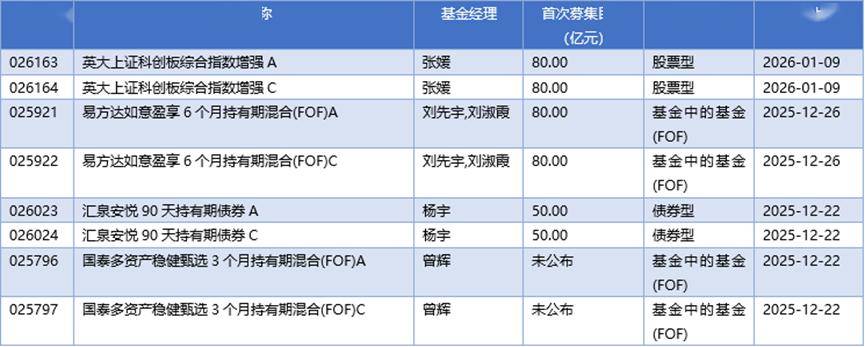
Group 1 - As of December 9, over 70 new funds have been reported, with nearly half being index funds, primarily targeting the technology sector [1] - The domestic index investment is in a rapid expansion phase, with significant room for penetration compared to mature markets, as public funds aim to position themselves for the next wave of capital inflow [1] - On December 9, the three major A-share indices experienced fluctuations, with the Shanghai Composite Index closing down 0.37% at 3909.52 points and the Shenzhen Component Index down 0.39% at 13277.36 points, while the ChiNext Index rose 0.61% to 3209.60 points [1] Group 2 - On December 9, a total of 8 new funds were launched, mainly consisting of Fund of Funds (FOF) and bond funds, with the Yingda Shanghai Stock Exchange Sci-Tech Innovation Board Composite Index Enhanced A fund targeting a fundraising goal of 8 billion yuan [2] - The private equity industry is expected to set multiple records by 2025, with total assets exceeding 22 trillion yuan and securities private equity surpassing 7 trillion yuan, indicating a significant trend towards early, small, and hard technology investments [2] - In December, new fund issuance has entered a sprint mode, with over 120 products either currently or soon to be launched, reflecting institutional optimism about the current market position [2] Group 3 - On December 9, major public funds such as E Fund, Huaxia, and Southern Asset Management issued warnings about the premium risk in the secondary market for their cross-border ETFs, with over 200 premium risk warning announcements made by 14 public funds since December [3] - High premiums indicate that the buying cost exceeds the actual net value, and if premiums converge, it could directly erode the principal, prompting companies to consider applying for trading halts to curb irrational speculation [3]

科技类ETF大战
Ren Min Ri Bao· 2025-12-08 10:38
Group 1 - The core viewpoint of the articles highlights a surge in the issuance of technology-focused ETFs, particularly those targeting the artificial intelligence (AI) sector, indicating a strong interest from public fund companies in this area [1][3][4] - Seven public fund companies have launched the first batch of "Double Innovation Artificial Intelligence ETFs," with one company ending its fundraising early due to reaching the 1 billion yuan limit [1][2][3] - The ETFs are designed to track the CSI Innovation and Entrepreneurship Artificial Intelligence Index, which includes 50 leading companies focused on AI technology development and its commercial applications across various sectors [3][4] Group 2 - A total of 19 new ETFs targeting the AI sector, including robotics and semiconductors, have been reported to the China Securities Regulatory Commission (CSRC) within a week, reflecting the growing trend in technology investments [2][3] - The influx of funds into these technology ETFs is expected to bring over 30 billion yuan in new capital to the AI and technology sectors if all funds reach their maximum fundraising targets [3] - Industry experts attribute the rapid growth in technology ETF offerings to supportive government policies, strong market performance, and a competitive landscape among fund companies [4][5] Group 3 - Investment managers express a strong belief in the long-term potential of AI, alongside other sectors such as semiconductors, biotechnology, and clean energy, viewing AI as a "golden track" for long-term investments [5][6] - Key investment opportunities within AI are identified as the computing power and algorithm sectors, with a particular focus on storage-related opportunities in the computing power segment [6] - Companies that can integrate AI into their business models to innovate products or services are also seen as valuable investment prospects [6]
长债暴跌!盘几只稳稳的“固收+”~
Sou Hu Cai Jing· 2025-12-06 09:22
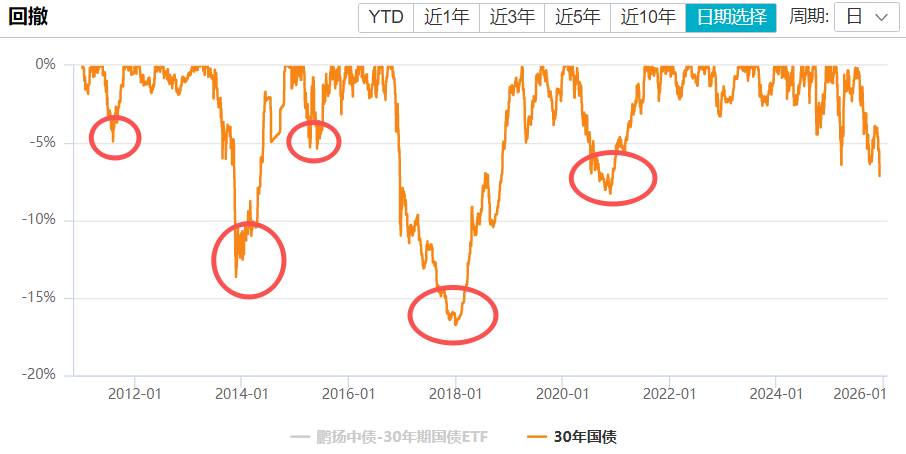
Group 1 - The 30-year Treasury ETF experienced a significant drop of 1.32% on Thursday, reaching a new low since the adjustment began, and has declined 5.86% year-to-date with a maximum drawdown of 8.2% [1][2] - Compared to previous market corrections, the current adjustment is less severe than the maximum drawdowns of 16.75% in 2017 and 13.64% in 2013, indicating a relatively milder market reaction [2] - The volatility of the 30-year Treasury ETF reflects the behavior of risk-seeking funds, which were actively buying during the downturn from July to September and continued to flow into the market during the October rebound [4] Group 2 - Starting from November 20, there has been a continuous outflow of funds, leading to a rapid decline in the bond market, which is perceived differently by large investors compared to previous downturns [5] - The decline in the bond market is attributed to several factors, including insufficient monetary policy easing as indicated by the central bank's net bond purchases of only 50 billion yuan in November, which fell short of market expectations [7] - Concerns over liquidity have increased due to the central bank's operations, including a net withdrawal of 1,756 billion yuan on the same day, alongside upcoming 1 trillion yuan reverse repos maturing in December [7] Group 3 - Market sentiment has been impacted by credit risk events, notably related to Vanke bonds, which have affected investor confidence [8] - The yield curve has been adjusting as expectations for economic recovery have shifted, leading to a gradual restoration of the yield spread between long-term and short-term bonds since July [8] - Institutional selling has been observed, with the 30-year Treasury ETF experiencing net redemptions, attributed to various factors such as fund redemptions and regulatory constraints on banks [10] Group 4 - For ordinary investors, traditional bond funds have shown a maximum drawdown of no more than 3% over the past decade, making them a more suitable option compared to the high volatility of the 30-year Treasury ETF [12] - The "fixed income plus" strategy, particularly low-volatility options, is gaining traction as both stock and bond markets face challenges, with many investors opting for professional fund managers to navigate these conditions [14] - The secondary bond fund index has increased by 13.19% since 2021, with a maximum drawdown of 6.93%, indicating a favorable performance for this investment category [14]
ETF午评 | 人形机器人板块全线爆发,机器人ETF易方达、机器人50ETF涨超3%
Sou Hu Cai Jing· 2025-12-04 06:49
Market Overview - The three major A-share indices collectively rose in the morning session, with the Shanghai Composite Index up 0.04%, the Shenzhen Component Index up 0.35%, and the ChiNext Index up 0.76% [1] - The total trading volume in the Shanghai, Shenzhen, and Beijing markets reached 10,402 billion yuan, a decrease of 354 billion yuan compared to the previous day [1] - Nearly 3,500 stocks in the market experienced declines [1] Sector Performance - The robotics industry chain was active, with embodied intelligence and Yushu Robotics leading the gains [1] - Commercial aerospace and low-altitude economy concept stocks also performed well [1] - Superhard materials, consumer goods, and AI wearable concept stocks weakened [1] ETF Performance - The humanoid robot sector saw a significant surge, with robot ETFs from E Fund, Invesco Great Wall, and Fuguo all rising by 3% [1] - The semiconductor equipment sector strengthened, with the Science and Technology Innovation Semiconductor ETF from Penghua, Huatai-PineBridge, and Huaxia rising by 2.82%, 2.71%, and 2.65% respectively [1] - The consumer goods sector experienced widespread declines, with food and beverage leading the drop, as the food and beverage ETFs fell by 1.58% and 1.33% respectively [1] - The tourism sector also saw declines, with the tourism ETF down by 1.15% [1] - Long-term government bond ETFs showed a downward trend, with the 30-year government bond ETFs from Bosera and others falling by 1.31% and 1.24% respectively [1]

“稳健型”基金名单来啦~(含发车解读)
Sou Hu Cai Jing· 2025-12-03 10:11
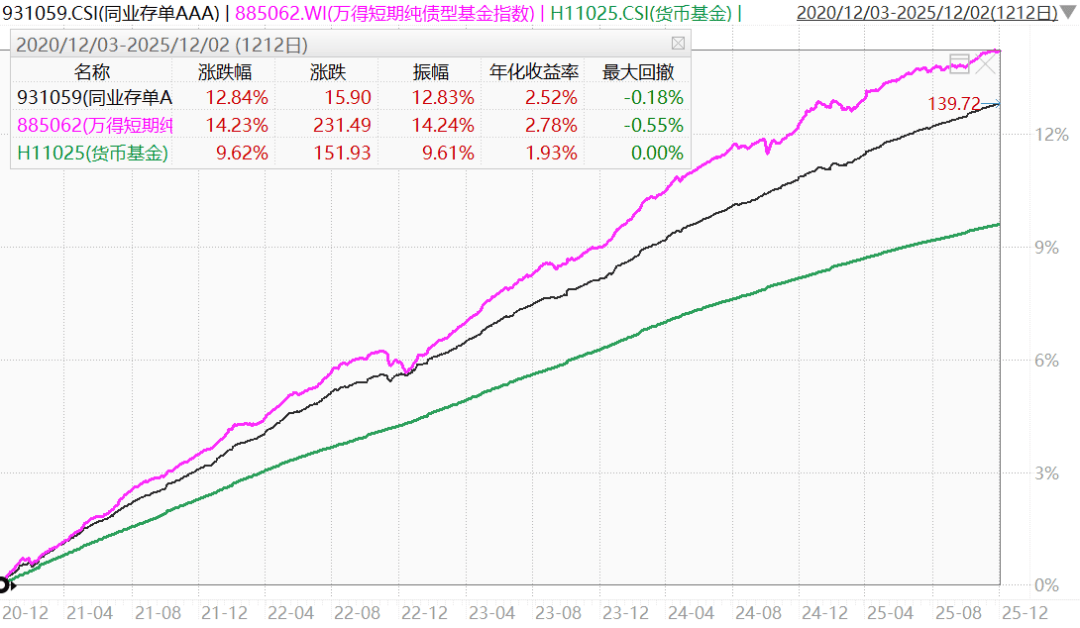
Group 1: Characteristics of Interbank Certificate of Deposit Index Funds - The average yield of interbank certificate of deposit index funds is between that of money market funds and short-term bond funds, with a maximum drawdown of 0.18% and an annualized yield of 2.52% [1][8] - The underlying assets are primarily large-denomination deposits from banks, with the largest fund, "Huatai-PineBridge Interbank Certificate of Deposit Index 7-Day Holding," having 92% of its assets in interbank certificates [3] - Some funds may deviate from the norm, such as "Yimi Interbank Certificate of Deposit Index 7-Day Holding," which invested 19% in government bonds, although this is within the contractual limit of 20% for other investments [5] Group 2: Fund Performance and Management - As of 2024, the interbank certificate of deposit index has increased by 4.01% with a maximum drawdown of 0.06%, and only a few funds have outperformed this index [8][9] - The funds that have outperformed the index include "Chuangjin Hexin" and "Huatai-PineBridge," with respective yields of 4.17% and 4.07% [9] - The management fees for these funds are 0.2% annually plus a 0.05% custody fee, meaning a total of approximately 0.5% over two years [8] Group 3: Bond Fund Characteristics - The criteria for selecting bond funds include being a medium to long-term pure bond fund, with a maximum drawdown not exceeding 2% since 2021, and a yield exceeding 18% [10] - The "Medium to Long-Term Pure Bond Fund Index" has risen by 16.15% since 2021, with a maximum drawdown of 1.08% [10] - Notable funds that meet the criteria include "Penghua Fenglu" and "Southern Jinli," with respective yields of 29.80% and 32.47% [11] Group 4: Market Trends and Economic Indicators - The Federal Reserve's expectation for a rate cut in December has risen to 89.2%, influencing the recent rebounds in U.S. stocks, gold, and silver [22] - The potential appointment of Hassett as the new Fed Chair is seen as a positive for market liquidity, contributing to the strength of U.S. stocks and gold [25] - Concerns about market bubbles are highlighted, with current valuations being compared to historical highs, indicating a need for caution [25]
基金早班车丨债基领衔红包潮,全年分红已破2150亿
Sou Hu Cai Jing· 2025-12-03 00:39
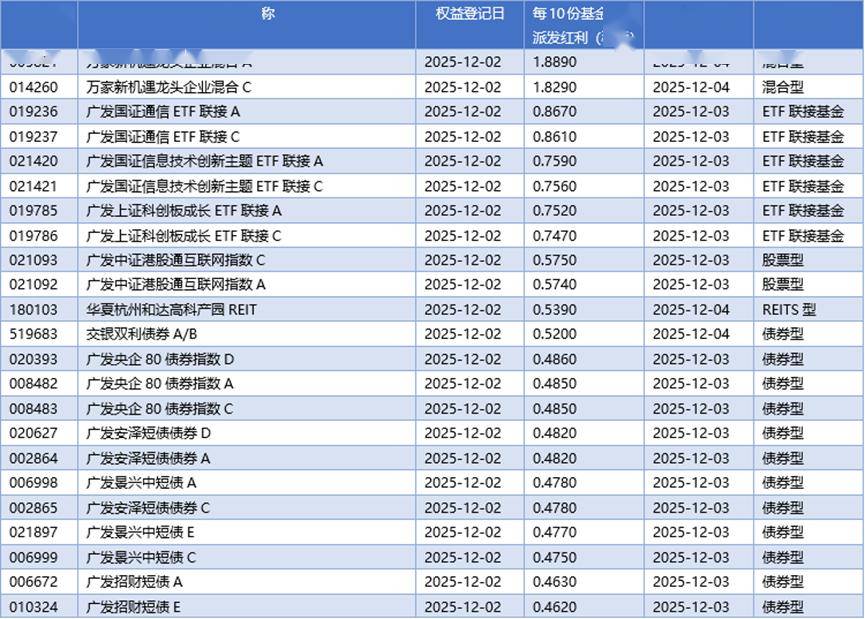
Core Insights - Public funds have distributed significant dividends this year, with over 3,300 funds distributing a total of approximately 215.52 billion yuan, surpassing last year's total in terms of quantity, frequency, and amount [1] - Bond funds have contributed over 150 billion yuan, maintaining their position as the main contributors, while equity products have also increased distributions due to favorable market conditions [1] - The A-share market experienced a decline on December 2, with major indices closing lower, and over 3,700 stocks falling [1] Fund News - On December 2, six new funds were launched, primarily bond and ETF-linked funds, while 40 funds distributed dividends, mostly from bond types [2] - The most significant dividend payout was from the Wanji New Opportunity Leading Enterprises Flexible Allocation Mixed Securities Investment Fund, distributing 1.8890 yuan per 10 shares [2] - A total of 27 public funds have lined up 34 new products for December issuance, with equity funds still dominating [2] - As the year-end approaches, expectations for a cross-year market rally are rising, with many institutions anticipating an influx of capital [2] Fund Performance - The best-performing fund on December 2 was the Guotou Ruijin Silver Futures (LOF) A, with a daily growth rate of 2.8362% [5] - In the stock fund category, the Tianhong Hang Seng Hong Kong Stock Connect High Dividend Low Volatility Index C led with a daily growth rate of 1.4659% [5] - The top bond fund was the Ping An Huijia Pure Bond Fund C, with a daily growth rate of 0.1078% [5] - The top mixed fund was the Hengsheng Qianhai Hong Kong Stock Connect Value Mixed C, achieving a daily growth rate of 1.1787% [5]
基金早班车丨11月新基发行945亿份,公募总规模再冲37万亿
Sou Hu Cai Jing· 2025-12-02 00:32
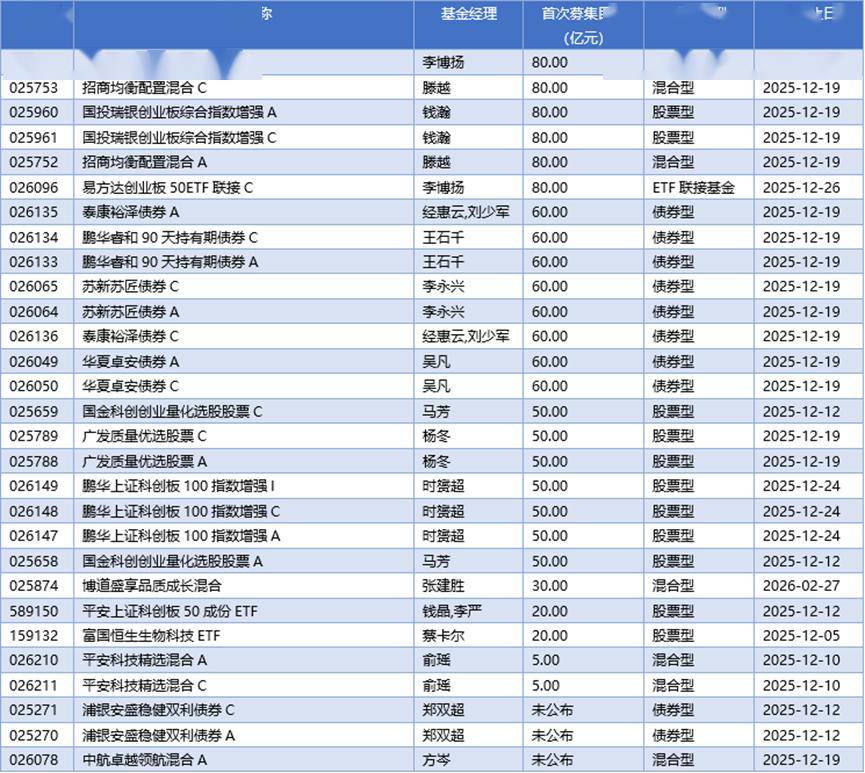
Core Insights - The demand for fund allocation has significantly increased at the end of the year, with a notable acceleration in public fund issuance, indicating a strong market liquidity and potential for next year's market performance [1][2] Fund News - In December, 52 new funds were launched, primarily focusing on equity and mixed funds, with notable fundraising targets such as the E Fund's ChiNext 50 ETF Connect aiming for 8 billion yuan [2] - A total of 441 stock recommendations were made by 42 research institutions, covering 308 unique stocks, with a clear concentration on a few key stocks, suggesting a bullish sentiment for the upcoming market [2] - The National Development and Reform Commission released a new REITs industry scope list, expanding the types of underlying assets to include consumer infrastructure, which could enhance investment opportunities and market depth [2] Fund Performance - The best-performing fund on December 1 was the Huatai-PB Hongrui Return Mixed A, with a daily growth rate of 4.7923%, indicating strong investor interest in mixed funds [7] - Among stock funds, the Tianhong CSI Industrial Nonferrous Metals Theme Index A led with a daily growth rate of 3.6590%, reflecting a positive trend in the industrial sector [8] - The top bond fund was the Huashang Convertible Bond C, achieving a daily growth rate of 1.0639%, showcasing resilience in fixed-income investments [8]
大消息,“逆周期调节”,来了
3 6 Ke· 2025-12-01 23:59
Core Viewpoint - The regulatory body is implementing a counter-cyclical adjustment mechanism for fund product approvals to better protect investor interests, emphasizing a cautious approach towards new equity fund approvals amid high valuation benchmarks [1][2][7]. Fund Approval and Market Conditions - Regulatory scrutiny on new equity funds has increased, requiring that the performance benchmark index's rolling valuation over the last five years be below the 90th percentile and the last three months below the 80th percentile [2][3]. - Despite a bullish A-share market, fund companies are exercising restraint in launching new equity funds, with many setting initial fundraising caps at 2 billion to 3 billion yuan [1][4]. Fund Product Trends - Recent approvals have favored funds in sectors with relatively low valuations, such as healthcare, food, and consumer electronics, indicating a strategic focus on value [3][4]. - The approval of 16 hard technology products in mid-November reflects the regulatory body's timely response to market fluctuations, showcasing the effectiveness of the counter-cyclical adjustment mechanism [3][7]. Scale Management and Investor Experience - Fund companies are actively controlling the scale of new products, with many setting fundraising limits between 2 billion and 3 billion yuan, contrasting with the past trend of large-scale fund launches [4][5]. - Over 100 equity funds have announced restrictions on large subscriptions, with a focus on protecting existing investors and maintaining stable fund operations [5][6]. Regulatory Changes and Industry Transformation - The regulatory framework is shifting from a focus on scale to quality, with new performance evaluation metrics emphasizing long-term investment returns and investor experience [6][7]. - The implementation of counter-cyclical adjustment mechanisms is expected to enhance the capital market's resource allocation and support long-term investment strategies [7].
5次抢筹信号,63%收益怎么来的?
Sou Hu Cai Jing· 2025-12-01 12:37
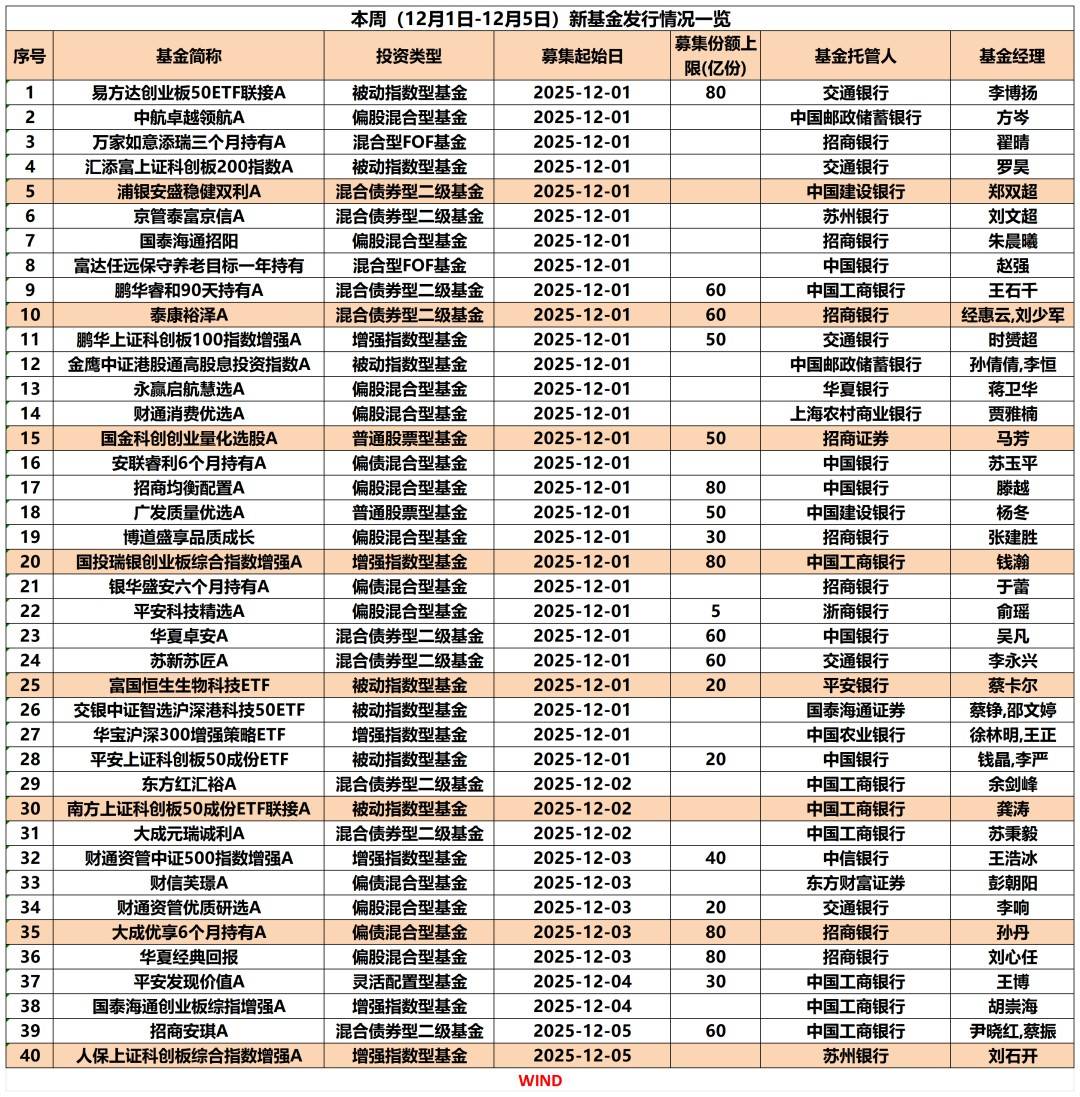
Core Viewpoint - The recent surge in new fund issuances, with 40 new funds launched in early December, indicates a strong interest from major fund companies and managers in sectors like technology, consumption, and artificial intelligence, which are currently market focal points [1][10]. Fund Issuance Overview - A total of 40 new funds were launched in December, with 28 available on the first day of issuance [1]. - Major fund companies such as Yongying and Caitong are actively promoting new products, with renowned fund managers from firms like China Merchants and GF also participating [1]. - The new funds include various types such as passive index funds, mixed equity funds, and bond funds, indicating a diverse investment strategy [2]. Market Insights - The article reflects on the harsh realities of bull markets, where many investors fail to capitalize on opportunities due to a lack of understanding of market dynamics [3]. - It emphasizes the importance of recognizing the underlying trading behaviors and strategies of institutional investors, which can lead to better investment decisions [10]. - The analysis of trading behaviors through quantitative data reveals patterns such as "speculative buying" and "institutional shakeouts," which can inform more strategic investment approaches [8][10]. Investment Strategy Recommendations - Investors are encouraged to focus on opportunities that arise between "shakeouts" and "speculative buying," which can yield significant returns without enduring prolonged market volatility [10]. - Understanding the flow of capital in the market is deemed more critical than merely identifying good stocks, suggesting a shift in focus for ordinary investors [11]. Conclusion - The insights gathered from market behaviors and fund issuance trends highlight the necessity for investors to adapt their strategies and enhance their understanding of market dynamics to break the cycle of missed opportunities in bull markets [12].