
ARM

Search documents
美国半导体技术霸权的底层支撑与中国突围
是说芯语· 2026-01-03 00:52
Core Viewpoint - The article discusses the absolute monopoly of the United States in the semiconductor industry, highlighting the dominance in core technologies such as design tools, high-end IP cores, advanced architectures, key manufacturing equipment, and testing instruments. This monopoly creates significant barriers to entry and establishes a comprehensive technological hegemony that is difficult to challenge globally, while also leaving room for diversification and breakthroughs in specific fields, particularly in China's domestic semiconductor industry [1]. Group 1: Chip Design Tools (EDA) - The monopoly is held by Synopsys, Cadence, and Siemens EDA, which together account for over 95% of the global market share, providing a comprehensive toolchain for chip design [3]. - These tools are essential for advanced process nodes of 7nm and below, featuring capabilities such as lithography simulation and yield optimization, making them critical infrastructure for chip development [3]. - The high density of patent barriers and deep collaboration with leading foundries like TSMC and Samsung create strong user ecosystem stickiness, making it difficult for latecomers to replace these tools [3]. Group 2: High-Performance IP Cores and Architectures - The monopoly is dominated by X86 architecture (Intel, AMD), GPU architecture (NVIDIA, AMD), and AI acceleration IP (NVIDIA, Xilinx), with ARM's technology also heavily influenced by U.S. regulations [6]. - The X86 architecture leads in high-performance computing, while NVIDIA's CUDA architecture defines global AI computing standards, creating dual barriers of performance and ecosystem [6]. - Global chip design companies are highly dependent on U.S. IP, and the U.S. can restrict access to these IPs through licensing, directly impacting the design capabilities of other nations [6]. Group 3: Key Manufacturing Equipment - The monopoly is held by U.S. companies like Applied Materials, Lam Research, and KLA, which lead in critical equipment for etching, film deposition, and process inspection [9]. - These companies provide essential technologies for advanced processes, with high barriers to entry due to long R&D cycles and significant capital investment [9]. - The dependency of global foundries like TSMC and Samsung on U.S. equipment means that U.S. export controls can directly affect the expansion and technological upgrades of advanced manufacturing capacities [9]. Group 4: High-End Chip Design and Architecture Innovation - U.S. companies like NVIDIA, Qualcomm, AMD, and Apple dominate the global technology direction in AI chips, mobile terminal chips, and high-performance computing chips [12]. - Continuous high R&D investment (approximately 17.7% of semiconductor industry revenue) and strong ecosystem integration capabilities allow these companies to maintain significant advantages [12]. - The U.S. leads in defining the demand and technological evolution of high-end chips, influencing the global semiconductor supply chain [12]. Group 5: Semiconductor Testing and Packaging Technologies - The monopoly is held by U.S. companies like Teradyne and Cohu, which dominate the high-end chip testing equipment market [15]. - These companies provide comprehensive testing solutions that meet the high precision requirements of advanced process nodes [15]. - The global chip production's yield control and quality assurance are highly reliant on U.S. testing equipment, and export restrictions can impact production efficiency and quality stability [15]. Group 6: Core Materials Technology - U.S. companies like Dow Chemical, DuPont, and GlobalFoundries dominate the market for critical semiconductor materials such as photoresists and electronic specialty gases [18]. - The high purity and stability requirements for semiconductor materials create significant barriers for new entrants [18]. - Advanced process chip manufacturing relies over 80% on U.S. core materials, and U.S. export controls can directly affect global production capacities [18]. Group 7: Semiconductor Software and Ecosystem - U.S. companies like Microsoft, Google, and NVIDIA dominate the software ecosystem that supports chip applications [21]. - The NVIDIA CUDA ecosystem monopolizes AI training and inference software, with over 90% of AI developers using the CUDA platform [21]. - The strong network effects of these ecosystems create significant barriers for new entrants, making it difficult for other countries to commercialize breakthroughs in high-performance chip development [21]. Group 8: Industry Standard Setting Authority - The U.S. leads international standard organizations like IEEE and JEDEC, controlling the core industry standards for chip interfaces and performance specifications [24]. - The binding of industry standards with technology patents creates dual barriers that are difficult for non-U.S. companies to overcome [24]. - The U.S. can guide global semiconductor technology development through standard-setting, impacting the innovation paths of non-U.S. enterprises [24]. Group 9: High-End Semiconductor Products and Solutions - U.S. companies like NVIDIA, Intel, Qualcomm, and Micron hold a dominant share in the global high-end semiconductor product market [27]. - These companies have established significant performance advantages through long-term technological accumulation and deep integration with downstream manufacturers [27]. - The global technology industry is highly dependent on U.S. semiconductor products, and U.S. export controls can directly influence the development of global technology sectors [27].


中国资产深夜爆发,百度狂飙12%,美股芯片巨头创历史新高,贵金属突变
Xin Lang Cai Jing· 2026-01-02 15:45
Market Overview - US stock indices opened higher, with the Nasdaq rising over 1.2% as of 23:00 Beijing time [1][10] - The Philadelphia Semiconductor Index surged over 4.5%, with ASML hitting a historical high, increasing by over 8% [2][12] Semiconductor Sector - Notable gains in semiconductor stocks include: - ASML: +8.75% - Micron Technology: +8.06% - Intel: +7.68% - AMD: +5.81% [3][12][13] Chinese Stocks - The Nasdaq Golden Dragon China Index rose nearly 3.9%, with Baidu surging over 12% after submitting a listing application for its subsidiary Kunlun Chip [4][12] - Other significant movers in Chinese stocks include: - Yatsen: +8.10% - NetEase: +7.41% - Alibaba: +4% [4][14] Precious Metals - Precious metals experienced a sudden pullback, with gold reaching a peak of $4,400 before settling around $4,336, reflecting a slight increase of 0.4% [4][15] - Silver also saw fluctuations, initially rising 4% but later adjusting to a 2% increase [4][16] Oil Market - Crude oil futures collectively declined, with WTI and ICE Brent both dropping over 1.2% [7][17] Cryptocurrency Market - Cryptocurrencies continued to rebound, with Bitcoin surpassing $89,000 and Ethereum, SOL, and XRP all increasing by over 2% [8][18] - Dogecoin saw a significant rise of over 10% [8][18]


44岁育有3娃,高盛出身,“投资教父”女儿将成软银接班人?
Sou Hu Cai Jing· 2025-12-31 06:10
Core Viewpoint - The emergence of Maya Kawana, the daughter of Masayoshi Son, as a potential successor in the SoftBank empire raises questions about the future leadership of the company as many second-generation heirs begin to take over in the global investment landscape [2][3]. Group 1: Maya Kawana's Background and Career - Maya Kawana, born in April 1981, has recently joined the biotech company Spiber, which has a valuation of $1.2 billion, marking her first public role in the business world [2][11]. - She graduated from Keio University in 2000 and worked at Goldman Sachs for four years, focusing on corporate financing and mergers and acquisitions, where she developed a strong work ethic [5][7]. - After a brief hiatus as a full-time mother, she returned to the business world, taking on leadership roles in various companies, including serving as CEO of BOLD Corporation and General Manager at Afiniti Japan [9][12]. Group 2: Spiber and Its Strategic Importance - Spiber utilizes microbial fermentation to produce synthetic spider silk protein, aligning with Masayoshi Son's vision for sustainable technology [11]. - The company is facing significant financial challenges, with a projected net loss of 29.517 billion yen (approximately 1.33 billion RMB) in 2024, highlighting the urgency of Kawana's role in stabilizing and promoting the company's growth [12]. - Kawana aims to leverage her resources to enhance Spiber's market position and communicate its core advantages effectively [12]. Group 3: SoftBank's Leadership Transition - Masayoshi Son, at 68 years old, has expressed intentions to continue leading SoftBank for another decade while searching for a suitable successor [16][18]. - The company is undergoing a critical transformation, focusing on artificial intelligence and technology investments, which necessitates a leader capable of navigating these opportunities [18]. - Son has previously attempted to groom potential successors, but many have left the company, indicating the challenges in establishing a clear leadership path [18].


瑞银:英伟达(NVDA.US)200亿美元联手Groq LPU技术,抢占AI高速推理新赛道
智通财经网· 2025-12-30 04:06
Group 1 - UBS Securities published a report analyzing the $20 billion non-exclusive licensing agreement between NVIDIA (NVDA.US) and Groq, focusing on its industry impact [1] - The core of the deal involves NVIDIA incorporating Groq's Language Processing Unit (LPU) technology, which is designed for high-speed inference, addressing latency issues associated with traditional GPUs [1] - Groq's management team, including founders and former Google TPU developers, will join NVIDIA to drive technology integration while Groq continues to operate independently and provide GroqCloud services [1] Group 2 - The collaboration allows NVIDIA to enter the high-speed inference application market, which is one of the fastest-growing segments in the inference market, despite not being a traditional strength of GPUs [1] - UBS expects the stock price momentum to come from upward revisions in earnings per share (EPS), forecasting a price-to-earnings (P/E) ratio of around 20 times for 2026, corresponding to an expected EPS of approximately $9 to $9.50 [2] - The report emphasizes the importance of considering various valuation methods, including P/E and enterprise free cash flow (EV/FCF), while also highlighting potential risks such as macroeconomic fluctuations and competition from AMD and Intel [2][3] Group 3 - Overall analysis indicates that UBS holds a positive outlook on NVIDIA, believing the transaction will enhance its competitiveness in the high-speed inference market and expand market share through a system-level product portfolio [3]
孙正义投资OpenAI遭遇资金压力:欲套现滴滴持股、抵押ARM股票
Feng Huang Wang· 2025-12-20 00:15
Core Insights - SoftBank Group is racing against time to finalize a $22.5 billion investment commitment to OpenAI by the end of the year [1] - The company is exploring various cash-raising strategies, including selling parts of its investments [1] - This investment represents one of the largest bets by Masayoshi Son, aiming to enhance SoftBank's position in the AI competition [1] Fundraising Strategies - SoftBank is considering utilizing unwithdrawn margin loans secured by its valuable stake in ARM [1] - The company has sold its entire $5.8 billion stake in Nvidia and $4.8 billion in T-Mobile US shares to raise funds [1] - SoftBank is also looking to cash out part of its holdings in Didi Chuxing, which is seeking to go public in Hong Kong [1] Investment Focus - SoftBank's Vision Fund has significantly slowed down its other investment activities, requiring Masayoshi Son's explicit approval for any transaction exceeding $50 million [1] - The urgency in raising funds highlights the immense pressure even top investment firms face when financing ambitious AI data center projects costing hundreds of billions [1]



重磅,全线大涨!特朗普签了!
天天基金网· 2025-12-19 01:06
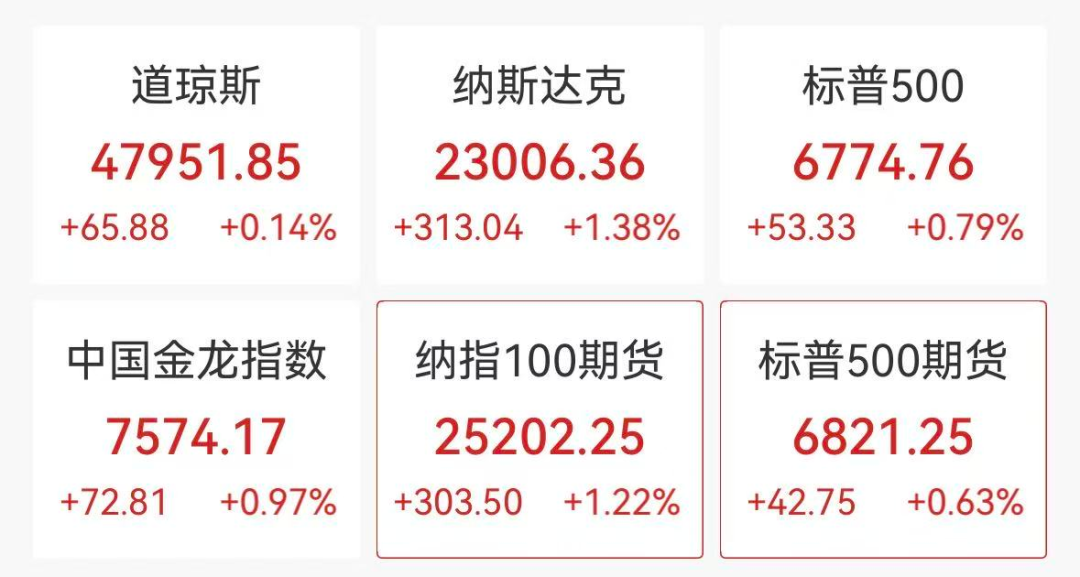
Market Overview - The US stock market saw a rebound with the Dow Jones and S&P 500 ending a four-day losing streak, closing higher on December 18 [2][4] - The Dow Jones increased by 65.88 points (0.14%), the Nasdaq rose by 313.04 points (1.38%), and the S&P 500 gained 53.33 points (0.79%) [4] Economic Indicators - The US Consumer Price Index (CPI) for November rose by 2.7% year-on-year, below the expected 3.1%, while the core CPI increased by 2.6%, marking the lowest level since 2021 [6] - Fundstrat noted that the moderate CPI data supports the Federal Reserve's focus on protecting the job market, indicating a "Fed put" that could boost the stock market if economic risks arise [7] Technology Sector Performance - Major tech stocks experienced significant gains, with Tesla rising over 3%, Amazon and Facebook increasing by over 2%, and Google and Nvidia nearly 2% [8] - A total of 24 leading AI companies, including OpenAI, Microsoft, and Nvidia, agreed to join the US government's "Genesis Mission" initiative aimed at enhancing AI applications in scientific discovery and energy projects [10] Micron Technology Insights - Micron Technology's stock surged by over 10% following strong demand for its memory chips, exceeding market expectations for the first fiscal quarter [13] - The company anticipates that the total market size for high-bandwidth memory chips could reach $100 billion by 2028, with a compound annual growth rate of 40% [15] - Micron also raised its capital expenditure guidance from $18 billion to $20 billion [15] Chip Sector Outlook - The semiconductor sector saw widespread gains, with TSMC rising nearly 3% and ASML increasing by over 2% [16] - Morgan Stanley predicts that semiconductor stocks will continue to be one of the best-performing sectors in the US market next year, listing Nvidia, Broadcom, and Astera Labs as top picks for 2026 [16]

凌晨重磅,全线大涨!特朗普,签了!
Zhong Guo Ji Jin Bao· 2025-12-19 00:23
【导读】美股三大股指收涨,大型科技股集体上涨;特朗普重申2028年登月目标 中国基金报记者 赵刚 综合整理 截至收盘,道指涨65.88点,涨幅为0.14%;纳指涨313.04点,涨幅为1.38%;标普500指数涨53.33点,涨 幅为0.79%。 市场十分关注首份涵盖美国政府停摆期间的CPI报告。美国11月未季调CPI同比升2.7%,预期升3.1%; 未季调核心CPI同比升2.6%,放缓至2021年以来最低水平,预期升3%。美国潜在通胀率在11月份同比上 涨,但增速为2021年初以来最低。 Fundstrat在周四数据发布前的一份报告中表示:"温和的CPI数据将进一步印证美联储正专注于保护就业 市场。这意味着美联储对经济的'看跌期权'(Fed put)现已到位。换句话说,如果美联储担忧经济面临 下行风险,'美联储看跌期权'就会推动股市上涨。" 大型科技股集体上涨 大型科技股集体上涨。特斯拉涨超3%,亚马逊、脸书涨超2%,谷歌、英伟达涨近2%,微软涨超1%, 苹果涨0.13%。 | 苹果(APPLE) | 272.190 | 0.13% | | --- | --- | --- | | US AAPL | 271 ...

美国科技股集体飘红,特朗普旗下公司大涨超40%,比特币盘中跌破85000美元
2 1 Shi Ji Jing Ji Bao Dao· 2025-12-18 23:29
Group 1: Technology Stocks Performance - Major tech stocks experienced a collective rise, with Tesla increasing over 3%, Amazon and Facebook rising over 2%, and Google and Nvidia gaining nearly 2% [2] - Chip stocks saw widespread gains, with Micron Technology up over 10%, TSMC rising nearly 3%, and ASML increasing over 2% [2] Group 2: Individual Stock Movements - Micron Technology's stock price reached $248.55, reflecting a 10.21% increase [3] - Tesla's stock price was $483.37, marking a 3.45% rise [3] - Amazon's stock price was $226.76, with a 2.48% increase [3] - Facebook's stock price was $664.45, showing a 2.30% rise [3] - Nvidia's stock price was $174.14, reflecting a 1.87% increase [3] - AMD's stock price was $201.06, with a 1.49% rise [3] Group 3: Chinese Stocks and Indices - The Nasdaq Golden Dragon China Index rose by 0.97%, indicating a positive trend for Chinese stocks [2] - Individual Chinese stocks such as BOSS Zhipin increased over 5%, while XPeng Motors and Hesai Technology rose nearly 3% [2] Group 4: Trump Media Technology Group - Trump Media Technology Group's stock surged over 40% following the announcement of a merger agreement with TAE Technologies, expected to complete by mid-2026 [4] Group 5: Commodity Prices - WTI crude oil futures closed up 0.38% at $56.15 per barrel, while Brent crude oil futures rose 0.23% to $59.82 per barrel [5] - COMEX gold futures fell 0.23% to $4363.9 per ounce, and COMEX silver futures dropped 2.17% to $65.45 per ounce [6] Group 6: Cryptocurrency Market - Major cryptocurrencies experienced declines, with Bitcoin dropping below $85,000, currently priced at $85,340 per coin [7][8] - Over the past 24 hours, more than 160,000 traders faced liquidation, totaling approximately $549 million [8] Group 7: Economic Indicators - The U.S. Consumer Price Index (CPI) for November rose 2.7% year-on-year, down from 3% in September, with food prices increasing by 2.6% and energy prices by 4.2% [9] - The core CPI, excluding food and energy, increased by 2.6% year-on-year [9] - The probability of a 25 basis point rate cut by the Federal Reserve in January is 26.6%, with a 73.4% chance of maintaining current rates [9]




纳指跌超400点,英伟达市值蒸发超万亿元,原油大涨3%,加密货币超15万人爆仓
21世纪经济报道· 2025-12-17 23:32
Market Overview - On December 17, U.S. stock indices closed lower, with the Dow Jones down 0.47%, S&P 500 down 1.16%, and Nasdaq down 1.81% [1] - Major technology stocks experienced significant declines, with Oracle dropping over 5%, Tesla down over 4%, and Nvidia down nearly 4%, resulting in a market value loss of $164.8 billion (approximately 1160.8 billion RMB) [2][3] Sector Performance - The Philadelphia Semiconductor Index fell by 3.78%, with notable declines in ASML, ARM, AMD, Broadcom, TSMC, and Intel, all dropping over 3% [2] - The Nasdaq Golden Dragon China Index decreased by 0.73%, with individual stocks like Huya down over 4% and several others, including NIO and Li Auto, down over 3% [3] Commodity Market - WTI crude oil prices surged, with an increase of over 3% during trading, closing up more than 2.9% due to geopolitical concerns following U.S. sanctions on Venezuelan oil tankers [4] - Silver reached a new historical high at $66 per ounce, while gold was reported at $4338 per ounce [5] Cryptocurrency Market - The cryptocurrency market saw a collective decline, with Bitcoin dropping to $86,104 per coin, reflecting a decrease of 1.87% [6] - Over the past 24 hours, more than 150,000 traders experienced liquidation in the crypto market [5][7] Economic Indicators - According to CME data, the probability of a 25 basis point rate cut by the Federal Reserve in January is 24.4%, while the probability of maintaining the current rate is 75.6% [7]

每日资讯晨报-20251216
Jinyuan Securities· 2025-12-16 04:59
International Market Overview - The European stock indices closed higher, with the German DAX up 0.07% at 24,203.43 points, the French CAC40 up 0.7% at 8,124.88 points, and the UK FTSE 100 up 1.06% at 9,751.31 points [11] - The US stock market saw slight declines, with the Dow Jones down 0.09% at 48,416.56 points, the S&P 500 down 0.16% at 6,816.51 points, and the Nasdaq down 0.59% at 23,057.41 points [11] - The Hong Kong Hang Seng Index closed down 1.34% at 25,628.88 points, with the Hang Seng Tech Index falling 2.48% [11] - The Nikkei 225 index in Japan fell 1.31% to 50,168.11 points, while the KOSPI index in South Korea dropped 1.84% to 4,090.59 points [11] Domestic News - The article by Xi Jinping in "Qiushi" magazine emphasizes that expanding domestic demand is a strategic move essential for long-term economic stability and security [12] - In November, China's industrial output increased by 4.8% year-on-year, while the service production index rose by 4.2% [13] - The Ministry of Commerce and other departments issued a plan to promote high-quality development in the service outsourcing sector, aiming to cultivate competitive enterprises by 2030 [14] - The National Bureau of Statistics reported a decline in housing prices across 70 cities, with a year-on-year decrease expanding [15] Company News - Meituan announced the suspension of its "Tuan Hao Huo" business to focus on exploring new retail formats [16] - Nvidia released the latest version of its AI model series, Nemotron 3, aimed at providing customizable AI development capabilities across industries [16] - Aerospace Electronic plans to increase its investment in its subsidiary by 728 million yuan [16] - Pengding Holdings intends to invest a total of 4.297 billion yuan in a Thai park by 2026 [16] - Jingjia Microelectronics reported that its subsidiary's AI SoC chip has completed key development stages [16] Research Recommendations - The report on low-altitude economy highlights various developments, including the establishment of a logistics route for drones and the successful test flights of new drone models [17] - The report on 3D NAND suggests that it may become a new growth curve in storage, driven by the expansion of AI applications [18] - The report on the computer industry notes Google's collaboration with a Chinese company to develop AR glasses, marking a significant advancement in the AR field [19]