Momenta

Search documents
广汽丰田铂智7将于3月上市
Zhong Guo Zhi Liang Xin Wen Wang· 2026-01-30 07:50
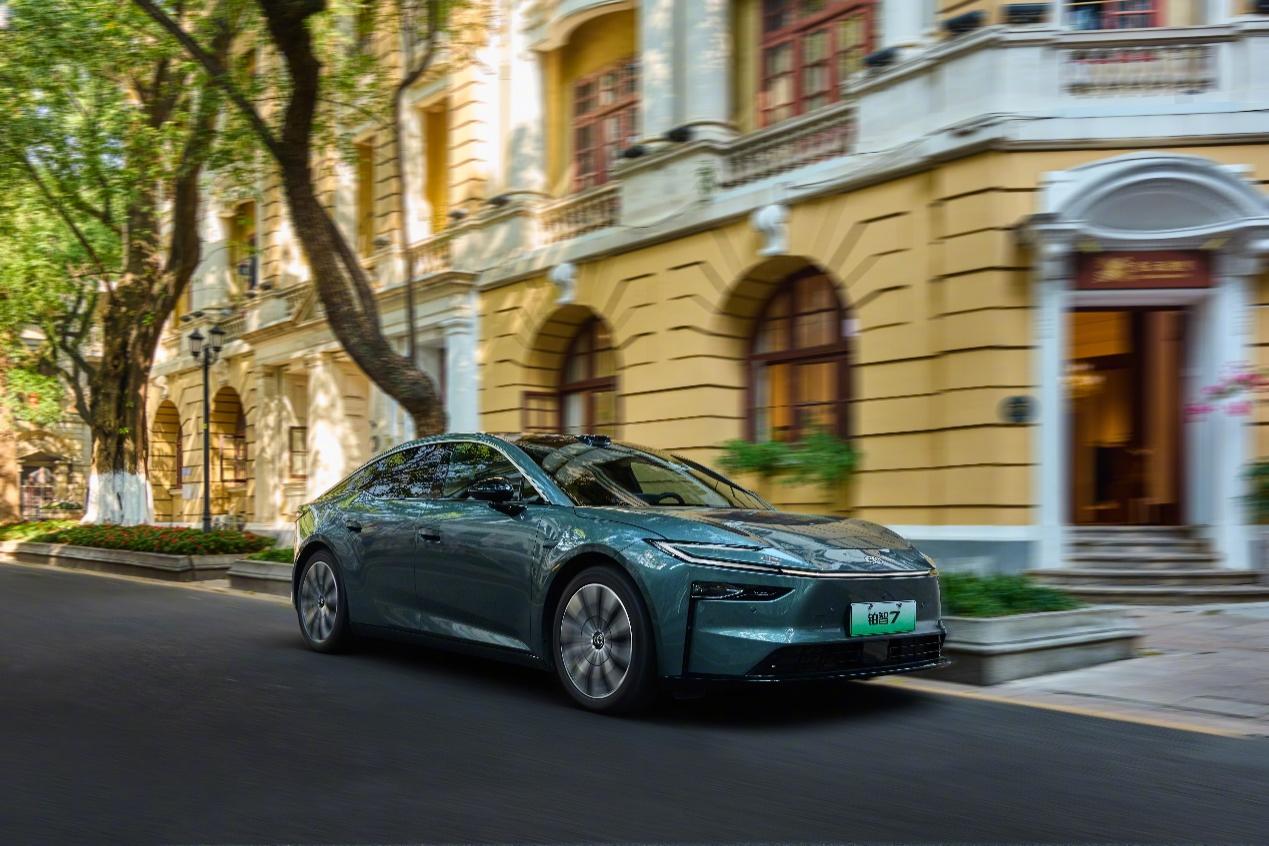
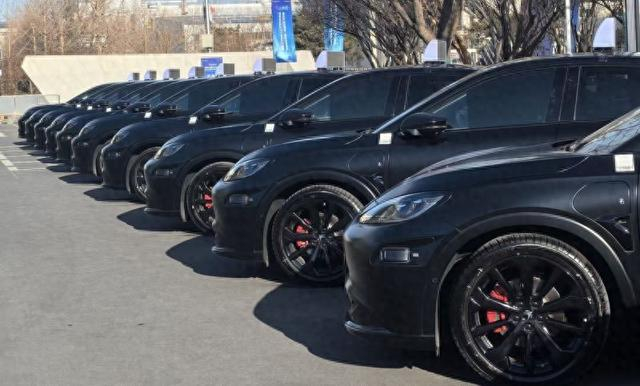
据介绍,铂智7由丰田中国工程师团队主导研发,其电驱系统、鸿蒙座舱应用由华为提供,高级辅助驾驶系统为Momenta提供的R6飞轮大模型。定位中 大型纯电轿车,长宽高分别为5130×1965×1506mm,轴距为3020mm。 1月20日,广汽丰田宣布铂智7将于3月上市,锚定20万元级产品。 新车采用丰田家族式的前脸设计,C型贯穿式日行灯,下部分体式大灯与导流槽相连,车顶配有激光雷达。整车采用溜背造型,车尾配备鸭翼扰流板, 并采用贯穿式尾灯样式。 动力系统方面,搭载华为Drive One电驱方案,双电机峰值功率207kW,极速为180km/h。动力电池为磷酸铁锂,拥有71.35kWh、88.13kWh两种规格, 根据配置不同,对应的CLTC续航里程分别为600公里、680公里、700公里以及710公里。 ...


AI巨头抢完了车规级内存,你的车可能因此减配
3 6 Ke· 2026-01-30 00:31
Core Viewpoint - The automotive industry is facing a severe crisis due to skyrocketing prices of automotive-grade memory chips, particularly DRAM and DDR5, which have surged over 300% since the second half of 2025, significantly impacting production costs without a corresponding increase in vehicle prices [1][3]. Group 1: Price Surge and Cost Impact - Automotive-grade memory prices have dramatically increased, with DRAM prices rising over 300% and automotive-grade DDR5 memory exceeding 300%, leading to an increase of approximately 1,000 yuan in the cost of each vehicle [1][3]. - Despite the rising costs, vehicle prices have remained stable, with industry leaders indicating that the pressure from memory price increases has not yet been passed on to end consumers [1][3]. Group 2: Supply Chain Challenges - The memory shortage has begun to affect production schedules for some automakers, with concerns about supply interruptions leading companies to deploy personnel to monitor supplies and develop alternative sourcing strategies [3][4]. - The automotive industry is facing a significant challenge in securing memory supplies, as the demand from the AI sector is siphoning off production capacity, with AI data centers expected to consume over 70% of high-end memory chips by 2026 [4][6]. Group 3: Market Dynamics and Competition - The automotive memory market is highly concentrated, with Samsung, SK Hynix, and Micron controlling over 90% of the market, leaving automakers with little bargaining power during the supply crisis [7][9]. - The shift in production focus towards AI-related memory products, which offer significantly higher profit margins, has led to a reduction in the availability of automotive-grade memory, exacerbating the supply issues faced by car manufacturers [4][6]. Group 4: Strategic Responses from Automakers - In response to the memory shortage, automakers are adopting strategies such as direct supply agreements with memory manufacturers and establishing strategic safety stock to mitigate the risks of supply disruptions [10][12]. - The competition in the automotive sector is increasingly centered around "smart driving" capabilities, with memory being a critical component that influences the performance and features of intelligent vehicles [10][12]. Group 5: Future Outlook and Industry Trends - The memory shortage is expected to persist until at least 2028, with new chip manufacturing facilities taking 3-5 years to establish, indicating a prolonged period of supply constraints for the automotive industry [9]. - The automotive sector is witnessing a shift towards self-developed technologies, with a significant portion of the market being dominated by domestic brands that are focusing on in-house development of smart driving features [17][18].





菜鸟入股九识智能 无人车市场“大变天”?
Xin Lang Cai Jing· 2026-01-29 09:08
Core Insights - The unmanned logistics vehicle industry is entering a critical phase where ecological integration is becoming the new core competitive point, replacing the previous focus on single technology competition [1] Company Developments - Jushi Intelligent and Cainiao have announced a deep strategic integration in the unmanned vehicle business, with Cainiao becoming a shareholder of Jushi through cash investment and business injection [1][2] - Jushi will receive the "Cainiao Unmanned Vehicle" brand authorization and will operate under a dual-brand model, while Cainiao will focus on enhancing the application of unmanned vehicles in logistics without producing or directly selling unmanned vehicles [1][2] - The management and technical leaders from Cainiao Unmanned Vehicles will join Jushi to participate in future strategic planning and operational management [1] Market Positioning - Jushi Intelligent will focus on developing fully self-researched autonomous driving technology and providing comprehensive smart transportation solutions, while Cainiao Unmanned Vehicles will concentrate on deep service in specific logistics scenarios [2] - The combined unmanned vehicle fleet of Jushi and Cainiao will exceed 20,000 units, making it the largest RoboVan fleet in the country [2] - Jushi has deployed unmanned vehicles in over 300 cities, while Cainiao operates in over 200 cities for safety operations and support [2] Industry Trends - The unmanned logistics vehicle industry is experiencing rapid development driven by policy, technology, and market resonance, with a clear differentiation in market competition emerging [3] - By 2025, the global unmanned logistics vehicle market is expected to exceed 35,000 units in delivery volume, with China contributing significantly to this growth [3] - Major players in the industry include Jushi Intelligent and New Stone, both delivering over 10,000 units, while Cainiao and White Rhino have delivered over 4,000 and 2,000 units, respectively [3] Financial Considerations - Despite the industry's high growth, profitability remains a common challenge, with RoboVan offering a cost-effective solution compared to traditional delivery models [4] - RoboVan's operational advantages, such as city-based operations and mature technology, allow for a significant reduction in costs, potentially helping to expand the user base and achieve profitability [4] - The market for RoboVan is expected to grow significantly, with micro vans in China being a core replacement market, and unmanned devices projected to account for 20% of urban logistics equipment shipments by 2030 [4]
均胜电子双赛道驱动预盈13.5亿 深耕汽车智能化斩获超200亿订单
Chang Jiang Shang Bao· 2026-01-29 01:24
Core Viewpoint - Company is expected to achieve a net profit of approximately 1.35 billion yuan in 2025, representing a year-on-year increase of about 40.56%, driven by strong growth in its core automotive electronics and robotics sectors [1][2]. Group 1: Financial Performance - The forecasted net profit for 2025 is approximately 1.35 billion yuan, with a year-on-year growth of about 40.56% [2]. - The expected net profit excluding non-recurring losses is around 1.5 billion yuan, reflecting a year-on-year increase of approximately 17.02% [2]. - The company’s core profitability remains strong even after excluding about 160 million yuan in non-recurring losses, which are primarily due to business transfers and overseas factory optimizations [2]. Group 2: Automotive Electronics Business - The company secured over 20 billion yuan in mass production orders in the core area of intelligent driving for 2025, indicating strong market recognition of its products and technologies [2]. - The company maintains a leading position in the automotive electronics and safety sector, with significant advancements in intelligent driving technologies and product offerings [2]. - Collaborations with companies like Hezhima Intelligent and Momenta have enhanced the company’s full industry chain layout from chips to overall solutions [2]. Group 3: Robotics Sector Development - The company has initiated a dual-track development model focusing on "automotive + robotics Tier 1," leveraging decades of experience in automotive R&D and manufacturing [3]. - A wholly-owned subsidiary, Ningbo Junsen Embodied Intelligent Robotics Co., has been established to focus on key components for robotics, achieving substantial breakthroughs in 2025 [3]. - The company has successfully entered the supply chain for Tesla's Optimus robot, providing critical components and establishing partnerships with other leading firms [3]. Group 4: Future Outlook - The company plans to continue focusing on the two core tracks of intelligent driving and robotics, leveraging its system-level delivery capabilities and global layout [4]. - The dual-track strategy is expected to release growth potential and enhance global market competitiveness as the penetration of automotive intelligence and the industrialization of robotics accelerate [4].

华为Momenta合计占第三方城市NOA市场八成,月搭载量均达 8-10 万量级
凤凰网财经· 2026-01-28 14:15
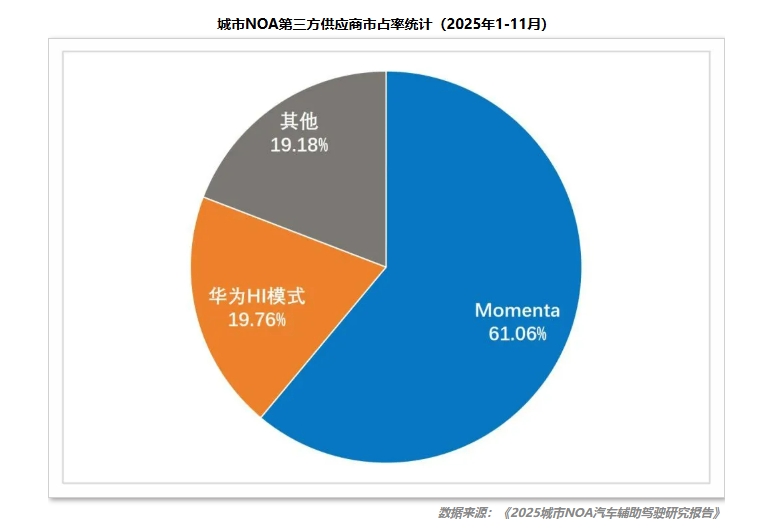
Core Insights - The report indicates that by November 2025, the cumulative sales of passenger cars equipped with urban NOA functionality in China reached 3.129 million units, highlighting rapid industry growth [1] - Momenta and Huawei's HI model dominate the market, collectively accounting for approximately 80% of the third-party supplier market share, with both companies achieving monthly installation volumes in the range of 80,000 to 100,000 units, establishing a strong "dual strong pattern" [1] Group 1 - The urban NOA market is characterized by a "dual-wheel drive" model, where car manufacturers either develop the technology in-house or collaborate with third-party suppliers to seize market opportunities [3] - In the period from January to November 2025, Momenta's urban NOA installation volume reached 414,400 units, representing about 61.06% of the third-party supplier market share, and it collaborates with 8 out of the top 10 global automotive manufacturers [3] - Huawei's HI model achieved an installation volume of approximately 134,100 units, accounting for about 19.76% of the third-party supplier market share, with a notable increase in installations by November 2025 [3] Group 2 - Domestic brands sold 2.5373 million units equipped with urban NOA functionality, making up 81.1% of the total, showcasing the innovation and competitiveness of domestic brands in the smart connected vehicle sector [3] - Global automotive brands such as Mercedes-Benz, BMW, Audi, Cadillac, Buick, and Toyota are actively collaborating with leading Chinese smart driving suppliers to implement urban NOA functionality and enhance technology [4] - The report emphasizes that third-party technology suppliers like Huawei and Momenta provide a "Chinese solution" for the global smart driving industry, attracting renowned automotive brands from Germany, the United States, Japan, and South Korea to collaborate deeply with Chinese tech companies [6]
“智驾双强”格局已定!华为、Momenta月搭载量进入8—10万量级
Zheng Quan Ri Bao Wang· 2026-01-28 13:44
Group 1 - The report indicates that from January to November 2025, the cumulative sales of passenger cars equipped with urban NOA functions in China reached 3.129 million units, highlighting rapid industry expansion [1] - Momenta and Huawei's HI model dominate the market, collectively accounting for approximately 80% of the third-party supplier market share, with both companies achieving monthly installation volumes in the range of 80,000 to 100,000 units, establishing a strong "dual strong pattern" [1][2] - The urban NOA market is characterized by a "dual-wheel drive" model, where most automakers opt to collaborate with third-party suppliers to implement urban NOA, aiming to seize market opportunities [2] Group 2 - Momenta's urban NOA installation volume reached 414,400 units, representing about 61.06% of the third-party supplier market share, and it collaborates with 8 out of the top 10 global automakers [2] - Huawei's HI model, through strong partnerships, achieved an installation volume of approximately 134,100 units, accounting for about 19.76% of the third-party supplier market share [2] - Domestic brands sold 2.5373 million units of passenger cars equipped with urban NOA, making up 81.1% of the total, showcasing their innovation and competitiveness in the smart connected vehicle sector [2] Group 3 - The report emphasizes that third-party technology suppliers like Huawei and Momenta provide a "Chinese solution" for the global smart driving industry, attracting renowned automotive brands from Germany, the US, Japan, and South Korea to collaborate with Chinese tech companies [3] - This collaboration not only promotes the global reach of China's smart driving technology but also enhances China's influence in the global automotive industry's value chain [3]
出走商汤的创业者赢麻了,商汤却亏惨了
Xin Lang Cai Jing· 2026-01-28 10:13
2026年的1月份,国内的AI界发生了几件大事: 1月2日,GPU公司壁仞科技登陆港交所,成为港股国产GPU第一股,并且成为港交所《上市规则》第18C章(特专科技)启用以来,募资规模最大的IPO 项目; 1月9日,MiniMax(上海稀宇科技)登陆港交所,不仅创下了全球AI公司从创立到上市的最短时间记录,而且打破了快手上市创下的科技公司超购记录, 而且还是全球第一家市值突破千亿的原生AI公司。MiniMax上市,被称为是中国大模型企业在全球舞台上的"定价"时刻; 1月14日,中国汽车工业协会发布的《2025城市NOA汽车辅助驾驶研究报告》。报告显示,Momenta城市NOA搭载量41.44万辆,占第三方供应商比例约 61.06%,处于断崖式领先,其产品不但覆盖国内主流乘用车企业,且与全球排名前10大车企中的8家开展合作。 壁仞科技,MiniMax,Momenta的共同点,是这三家AI翘楚公司的创始人,均出自商汤科技。 然而,商汤前员工风光无限的同时,被称为AI时代黄埔军校的商汤,自己却被边缘化了。 成立于2014年的商汤,曾经是以图像识别为特征的AI 1.0时代的"四小龙"之首,2021年上市前共完成12轮融 ...
全球化突破!2025年我国汽车出口832万辆,同比增长30%
Hua Xia Shi Bao· 2026-01-28 09:58
本报(chinatimes.net.cn)记者于建平 见习记者 田野 北京报道 1月25日,乘联分会发布2025年度汽车出口数据显示,中国汽车全年出口量达832万辆,同比增长30%, 创历史新高。这一数据与国内3440万辆的销量规模形成呼应,印证了中国汽车产业在全球市场的竞争力 跃升。这一数据说明,我国汽车产业不仅实现了产销规模的跨越,更在出口领域完成了从量的积累到质 的飞跃,为高质量发展注入了全球动能。 2025年中国汽车出口的结构性变化尤为显著,从品类来看,乘用车作为出口主力,全年出口量占比超八 成,商用车出口保持稳定增长,其中新能源商用车成为新亮点,12月单月数据显示,汽车出口量达99万 辆,同比增长73%,环比增长23%,年末冲刺态势明显。 而2025年中国新能源汽车出口量达343万辆,同比增长70%,较2024年的16%大幅提升。细分来看,纯 电动汽车出口占比28%(同比提升2个百分点),插混车型占比13%(同比提升8个百分点),混动车型 占比6%(同比提升2个百分点),而纯燃油车占比降至43%,同比下降11个百分点。 崔东树向《华夏时报》记者表示:"插混和混动车型替代纯电动成为出口新增长点,尤其是 ...

谁杀死了毫末智行?
雷峰网· 2026-01-28 04:34
Core Viewpoint - The article discusses the rise and fall of Haomo Zhixing, a subsidiary of Great Wall Motors, highlighting its initial promise and subsequent failures due to internal conflicts, management issues, and technological missteps [3][6][60]. Group 1: Company Background - Haomo Zhixing was established on November 29, 2019, as part of Great Wall Motors, with its actual control held by Chairman Wei Jianjun, who owns approximately 37% of the shares [8]. - The company aimed to become a global parts supplier, allowing Great Wall Motors to focus on vehicle manufacturing, inspired by the operational models of global automotive giants [8][12]. - Initially, Haomo Zhixing experienced rapid growth, with Great Wall Motors achieving a sales volume of 1.1116 million vehicles in 2020, marking a 4.8% year-on-year increase [9]. Group 2: Strategic Initiatives - In 2020, Great Wall Motors launched its "331" strategy for intelligent driving, aiming to become a leader in the autonomous driving sector within three years [9][12]. - The company planned to achieve L3 autonomous driving capabilities and the first deployment of laser radar in 2021, further enhancing its technological ambitions [12]. - By December 2021, Haomo Zhixing secured nearly 1 billion yuan in Series A funding from various investors, indicating strong initial market confidence [18]. Group 3: Challenges and Failures - Internal management issues became apparent when a whistleblower reported recruitment violations and a lack of collaboration between teams in Beijing, Shanghai, and Baoding, leading to a loss of trust from Great Wall Motors [4][6]. - Haomo Zhixing faced repeated failures to deliver on promises, including the inability to launch its city NOA (Navigation on Autopilot) system as scheduled, which was attributed to internal chaos and poor technical direction [32][46]. - The company's dual leadership structure, with both a chairman and CEO making decisions without a CTO, led to confusion and inefficiencies, ultimately hindering its technological progress [32][36]. Group 4: Market Position and Future Prospects - By the end of 2023, Great Wall Motors began collaborating with other companies like Yuanrong and Zhuoyu for advanced driving projects, effectively sidelining Haomo Zhixing [49][50]. - Despite having opportunities for an IPO in 2023, the process was halted due to external shareholders' concerns over market conditions and valuation expectations [51][52]. - As of late 2024, Haomo Zhixing's operations were severely impacted, leading to a freeze on its bank accounts and uncertainty for its employees, reflecting a significant decline from its initial promise [54][58].


前毫末智行CEO顾维灏再创业,进军酒店服务机器人
Sou Hu Cai Jing· 2026-01-28 02:52
四年间毫末智行获得7轮融资,估值一度达到百亿元。但由于种种原因,2025年毫末智行突然陷入经营困境,顾维灏也随之离开毫末。 公开资料显示,顾维灏是自动驾驶领域资深技术专家,2022年9月进入清华大学智能产业研究院(AIR)攻读工程博士学位,师从张亚勤教授。 他于2003年加入百度,历任百度MP3和视频搜索主架构师、百度语音识别技术负责人、百度地图副总经理、百度智能汽车事业部总经理等职,主导L3级自 动驾驶技术研发。 2019年他从百度离职,并在2021年2月出任长城汽车旗下毫末智行CEO,推动形成"车企+技术公司"双基因发展模式。其团队研发的城市辅助驾驶系统搭载于 多款长城车型,并与美团、阿里达摩院合作开发末端物流无人车。顾维灏提出"数据智能驱动自动驾驶"理念,构建包含数据治理、模型研发到安全验证的完 整技术闭环,并建立三项核心能力体系架构。 来源:猎云网;文/孙媛 据AI科技评论,前毫末智行首席执行官顾维灏已开启创业征程,将目光投向酒店服务机器人领域,并已组建起一支实力强劲的团队。该团队核心成员多来 自百度和自动驾驶公司Momenta,目前顾维灏正积极与众多投资方接触洽谈。 现如今,他再次创业,在另一条赛道 ...