中科曙光

Search documents
电子行业周报:多款重磅AI模型更新,存储板块延续高景气趋势-20251221
KAIYUAN SECURITIES· 2025-12-21 10:16
Investment Rating - The industry investment rating is "Overweight" (maintained) [1] Core Views - The electronic industry index decreased by 3.02% during the week of December 15-19, 2025, with semiconductor and consumer electronics sectors experiencing declines of 3.26% and 4.12%, respectively [3] - The storage sector showed resilience, with significant gains in major companies such as Micron and SanDisk, indicating a strong performance amidst overall market fluctuations [3][4] - The report highlights the ongoing updates in AI models and the sustained high demand in the storage sector, suggesting a positive outlook for companies involved in AI computing and storage solutions [4][6] Market Review - The U.S. tech sector rebounded after a significant drop, while the A-share electronic sector faced a general decline [3] - Notable performances included Nvidia rising by 3.41%, Tesla by 4.85%, and Micron by 10.28%, while Apple and Google saw slight declines [3] Industry Updates - Multiple significant AI model updates were released, with companies like Xiaomi and Google launching advanced models that enhance performance and efficiency [4] - Apple is collaborating with Broadcom to develop an AI inference chip, expected to enter mass production in 2026 [5] Storage Sector Insights - Storage prices are continuing to rise, impacting downstream terminal pricing, with Dell planning to increase commercial PC prices by 10% to 30% [6] - Micron's FY26Q1 revenue reached $13.64 billion, a year-over-year increase of 57%, with guidance for FY26Q2 revenue also exceeding market expectations [6] Investment Recommendations - The report suggests focusing on high-growth sectors such as storage and AI computing, as well as the end-side AI sector, which is expected to maintain strong demand [7] - Beneficiary companies include North Huachuang, Tuojing Technology, and others involved in the AI and storage sectors [7]


A股策略周报20251221:迎接2026:告别单一叙事-20251221
SINOLINK SECURITIES· 2025-12-21 09:39
Market Dynamics - Since November, the correlation between the A-share (CSI 300) and U.S. stock market (S&P 500) has increased, with a 20-day rolling correlation exceeding 90%[3] - The average daily fluctuation of the CSI 300 has narrowed to the 39.7th percentile, while the S&P 500 is at the 33.7th percentile, indicating reduced volatility in both markets[12] Economic Indicators - The U.S. core CPI has decreased to 2.6%, the lowest in three and a half years, while the unemployment rate has risen to 4.6%[3] - Despite the rise in unemployment, the increase is primarily due to higher labor participation and temporary unemployment, not triggering the "Sam's Rule" threshold[15] AI Industry Insights - Recent trends show a divergence in the AI investment chain, with "broad AI" assets (copper, lithium, aluminum) outperforming core AI assets (computing chips, optical modules)[4] - There is a negative correlation between the stock price performance of AI core stocks and their capital expenditure as a percentage of revenue, indicating investor concerns over capital spending not translating into revenue growth[4] Domestic Demand Expansion - The Chinese government emphasizes expanding domestic demand, with a focus on increasing consumer spending and investment driven by income growth[5] - By 2025, measures will be taken to enhance secondary distribution, including raising minimum pension standards and implementing childcare subsidies[5] Future Investment Strategies - Investment strategies should focus on sectors benefiting from physical demand and domestic policy incentives, including industrial resources (copper, aluminum, lithium) and consumer sectors (airlines, hotels, food and beverage)[6] - The report suggests a dual focus on both physical demand and consumption policies as a more reliable investment approach leading into 2026[6]
图解牛熊股零售板块涨幅居前,饮料制造概念股表现活跃
Xin Lang Cai Jing· 2025-12-21 09:21
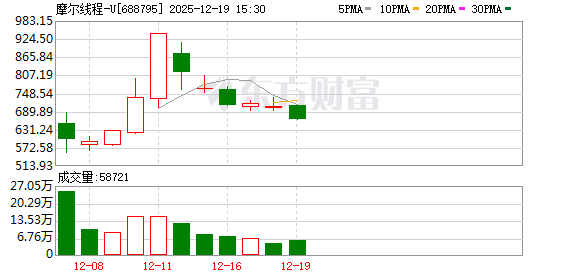
Group 1 - The A-share market showed mixed performance this week, with the Shanghai Composite Index up by 0.03%, while the Shenzhen Component Index and the ChiNext Index fell by 0.89% and 2.26% respectively [1] - The retail sector saw significant gains, with Baida Group rising by 51.60% and Liqun Co. increasing by 31.33%. This was supported by a notice from the Ministry of Commerce and the Ministry of Finance to pilot new consumption models in 50 cities, benefiting department stores and supermarkets [1] - The beverage manufacturing sector also performed well, with Huanlejia up by 44.42% and Zhuangyuan Pasture rising by 35.95%. The upcoming festive season is expected to boost sales in the food and beverage industry [1] Group 2 - Major capital inflows were observed in China Ping An and Yonghui Supermarket, each exceeding 1 billion yuan. Conversely, significant capital outflows were noted in Industrial Fulian, Sungrow Power Supply, Moer Thread-U, and Zhongke Shuguang, with outflows exceeding 2 billion yuan [1]
【数智周报】MiniMax和智谱通过港交所聆讯;OpenAI据悉计划以8300亿美元估值筹资至多1000亿美元;寒武纪:拟使用27.78亿元资本公积金弥补亏损
Tai Mei Ti A P P· 2025-12-21 04:23
Group 1 - Elon Musk publicly criticized nuclear fusion power, stating that building small fusion reactors on Earth is economically foolish, as the sun itself is a massive, free fusion reactor capable of meeting all energy needs in the solar system [2] - Musk plans to deploy 100GW of solar-powered AI satellites annually, which is equivalent to about a quarter of the total electricity consumption of the United States [2] Group 2 - Zhongke Shuguang unveiled the scaleX Wanka supercluster at the HAIC2025 conference, marking the first appearance of a domestic 10,000-card AI cluster system in physical form [3] - Unisoc announced the establishment of a Central Research Institute to focus on new architectures and models for edge AI chips, particularly for applications in autonomous driving and robotics [3] Group 3 - Cambricon announced plans to use 2.778 billion yuan of its capital reserve to cover cumulative losses, with the aim of bringing its negative retained earnings to zero by the end of 2024 [4] Group 4 - MiniMax has passed the Hong Kong Stock Exchange hearing and plans to go public in January 2026, potentially becoming the fastest AI company to IPO globally within four years of its establishment [6] - Zhiyuan Technology has officially passed the Hong Kong Stock Exchange IPO hearing, with CICC as the sole sponsor [6] Group 5 - Tencent has established an AI Infra department to enhance its large model research framework, with Vincesyao appointed as the chief AI scientist [6][7] - The AI Infra department will focus on building technical capabilities for large model training and inference platforms [7] Group 6 - ByteDance is advancing a collaboration with Lenovo to develop AI smartphones, aiming to pre-install AIGC plugins to gain user access [8] - Doubao released version 1.8 of its large model, enhancing its capabilities for multi-modal agent scenarios [9] Group 7 - Qianwen APP has integrated with Alibaba's ecosystem, enabling it to access underlying services like Gaode Map for enhanced geographical understanding [10] - Alibaba launched the new generation of the Wanxiang 2.6 model, which supports role-playing functions for video production [11] Group 8 - Baidu launched the Wenxin Health Manager, positioning it as a 24/7 "all-in-one family doctor" service [14] - The application offers a comprehensive AI health service system covering light symptom consultations and complex disease planning [14] Group 9 - Aishi Technology signed a comprehensive cooperation agreement with Alibaba Cloud to enhance global deployment and compliance capabilities for its video generation model [15] - Xiaomi open-sourced its MiMo-V2-Flash model, which boasts competitive capabilities at a significantly lower inference cost compared to closed-source models [16] Group 10 - Muxi Technology officially listed on the Shanghai Stock Exchange's Sci-Tech Innovation Board, aiming to raise 4.197 billion yuan to accelerate the development of "Chinese chips" [17] - The company focuses on high-performance general-purpose GPU products for AI training and inference [17] Group 11 - Meituan released and open-sourced the LongCat-Video-Avatar model, which supports multiple video generation tasks [18] - The model has achieved significant breakthroughs in action realism and video stability [18] Group 12 - Chinese scientists achieved a breakthrough in optical computing chips, enabling large-scale semantic media generation [19][20] - The LightGen chip demonstrates significant improvements in performance and energy efficiency compared to traditional digital chips [20] Group 13 - Baidu's Kunlun chip business is reportedly nearing completion of its restructuring, aiming for a potential listing in Hong Kong [20] - SenseTime's Seko series models have successfully adapted to the domestic AI chip Cambricon [20] Group 14 - Nvidia's CEO revealed that the company has not yet made any payments to OpenAI as part of a planned $100 billion investment [22] - Nvidia launched the Nemotron 3 open-source model series, significantly improving throughput compared to its predecessor [23] Group 15 - OpenAI plans to raise up to $100 billion, potentially valuing the company at $830 billion [24] - The new image model GPT-image-1.5 was launched, enhancing image generation capabilities significantly [25] Group 16 - Intel is in talks to acquire AI chip startup SambaNova for approximately $1.6 billion [30] - Multiple AI companies have recently completed significant funding rounds to support their growth and technology development [31][32][33][34][35][36][37]



海光终止合并中科曙光 国产算力产业协作未歇
Zhong Guo Jing Ying Bao· 2025-12-20 14:31
Core Viewpoint - The merger between Haiguang Information and Zhongke Shuguang has been officially terminated due to the large scale of the transaction, involvement of multiple parties, and significant changes in the market environment since the initial planning phase [1][3][4]. Group 1: Merger Details - The merger was initially announced in late May, with plans for Haiguang Information to acquire Zhongke Shuguang through a share swap, potentially exceeding a transaction scale of 100 billion yuan [3]. - The proposed share swap ratio was set at 0.5525:1, with Haiguang's share price at 143.46 yuan and Zhongke's at 79.26 yuan, leading to a total asset transaction value of 1159.67 billion yuan [3][4]. - Following the announcement, both companies experienced significant stock price increases, with Haiguang reaching a peak of 277.98 yuan and Zhongke hitting 128.12 yuan, resulting in a combined market value exceeding 650 billion yuan [4]. Group 2: Market Environment and Challenges - The termination of the merger is attributed to the complexities of integrating large-scale assets and the rapid technological evolution in the computing power industry, which may have led to missed opportunities [4][5]. - The market environment has changed dramatically, with intensified competition from companies like Huawei and Cambrian, and new policies promoting diverse and heterogeneous computing power integration [5][6]. - The independent growth potential for leading companies in the sector has increased, suggesting that the benefits of merging may not outweigh the need for agility in responding to market demands [6]. Group 3: Future Collaboration and Industry Trends - Despite the merger's termination, both companies are expected to maintain long-term collaborative relationships, focusing on their respective strengths in high-end CPU and DCU chip design [1][7]. - The domestic AI model training and inference market is projected to drive significant demand for accelerated servers, with the market expected to reach approximately 16 billion USD by mid-2025, reflecting over 100% year-on-year growth [2][7]. - The collaboration landscape in the domestic computing power industry is evolving, with companies exploring various cooperative models to build a self-sufficient ecosystem, driven by policy incentives and market demands [7][8].

光合组织:全力托举伙伴,共筑AI计算新生态
Feng Huang Wang· 2025-12-20 14:27
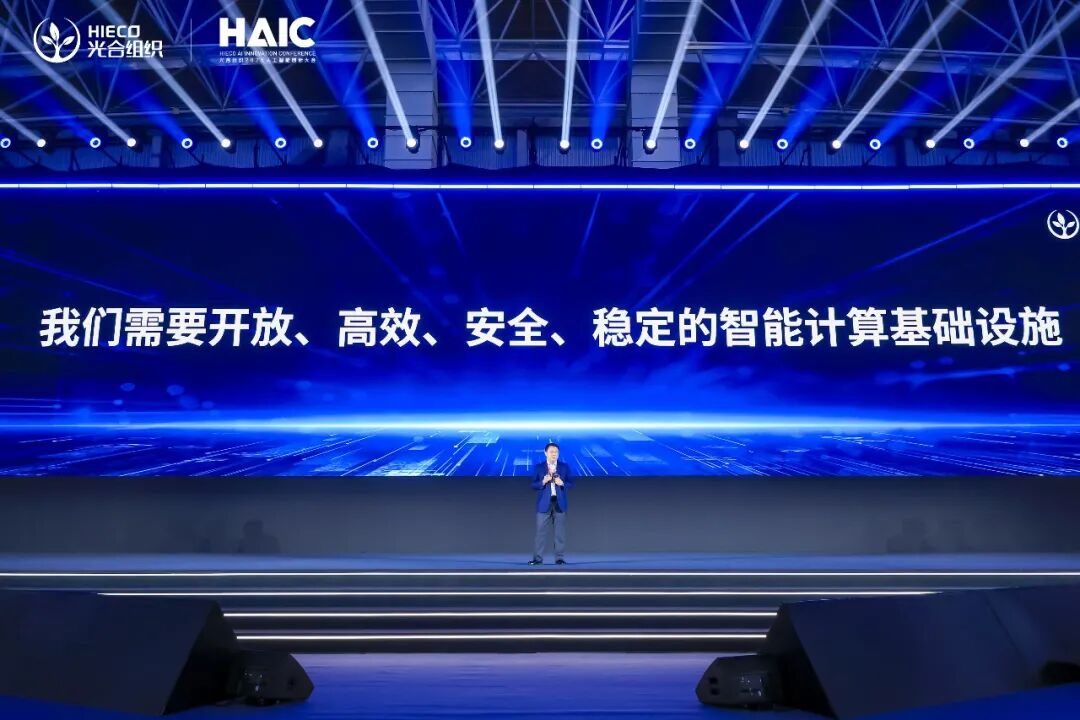
Core Insights - The article emphasizes the shift in the AI computing industry from chaotic competition to collaborative ecosystems, as highlighted by the "refusal of internal competition" advocated by the director of the National Advanced Computing Industry Innovation Center, Li Jun [2][3] - This transition is crucial as AI becomes a central battleground in global technological competition, addressing the urgent need for self-controlled computing power ecosystems [2][3] Industry Challenges - AI computing power demand is increasing at an annual rate of over 40%, yet the industry faces severe internal competition characterized by long supply chains and homogenized competition among companies [2][3] - Many companies pursue a "large and comprehensive" approach but struggle to achieve excellence, leading to a distorted bidding environment where "the more one loses, the more likely they are to win" [2][3] Structural Issues - The internal competition stems from structural contradictions in the global computing power landscape, where the urgent need for self-controlled computing power is hindered by incompatibility among different vendors' chips and systems [3] - Small and medium enterprises face barriers to entry in AI projects due to high costs and equipment incompatibility, necessitating a unified interface standard and collaboration mechanisms [3] Proposed Solutions - Li Jun proposed five measures to support partner growth, focusing on collaboration among core enterprises and manufacturers to develop high-end processors and a full-stack product matrix [3][4] - The measures include building joint laboratories, sharing resources, and enhancing market access through regional AI innovation centers, creating a closed-loop ecosystem from technology development to market implementation [3][4] Early Achievements - The HAIC2025 conference showcased over 50 innovative results from the cooperative ecosystem, demonstrating the collaborative innovation capabilities of the open ecosystem [4] - Companies like Yike and Haiguang have successfully explored new markets through deep collaboration, validating the commercial value of division of labor [4] Ecosystem Value - The organization has over 6,000 partners and 28 physical ecosystem adaptation centers, creating a closed-loop industry ecosystem centered on self-control [5] - This ecosystem allows each enterprise to find precise positioning, fostering a positive cycle of core technology breakthroughs and industry scale [5] Strategic Shift - The exploration by the organization represents a reconstruction of the AI computing industry's development model, advocating for resource sharing and collaborative mechanisms to enable domestic computing power to iterate and optimize in real scenarios [6] - The call for a shift from "zero-sum competition" to "positive-sum competition" is essential for building a robust foundation for computing power in the AI industry [6]
摩尔线程 突发大消息!
Zhong Guo Ji Jin Bao· 2025-12-20 13:32
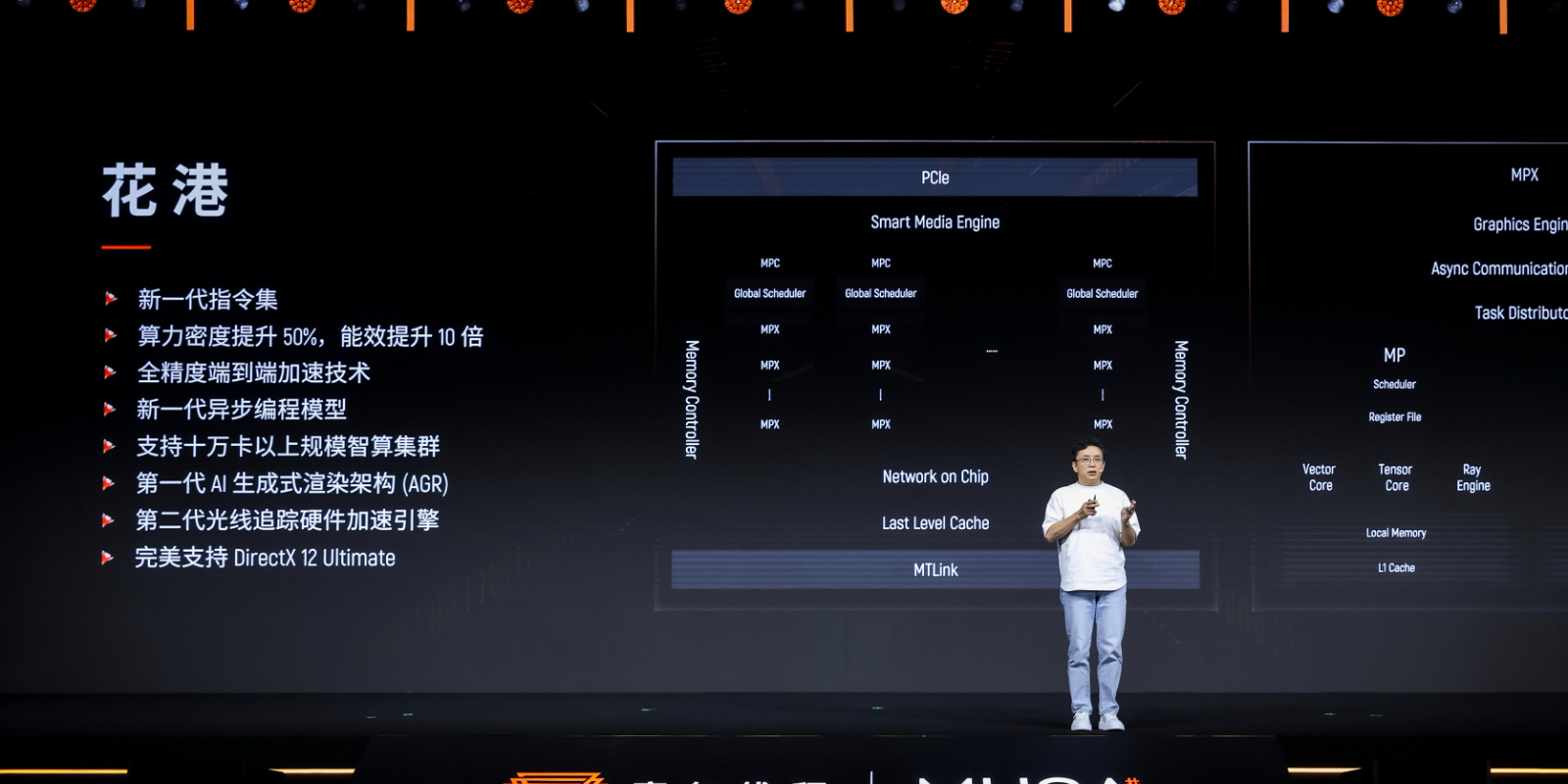
Core Insights - Moore Threads unveiled its next-generation GPU architecture "Huagang" at the first MUSA Developer Conference, showcasing a full-stack technology system centered around its self-developed MUSA unified architecture [2][3] Group 1: New GPU Architecture - The "Huagang" architecture achieves significant breakthroughs in computing density, energy efficiency, precision support, interconnect capabilities, and graphics technology [3] - Key features include a 50% increase in computing density, substantial energy efficiency optimization, and support for full precision calculations from FP4 to FP64, along with new MTFP6/MTFP4 and mixed low precision support [3] - It integrates a new asynchronous programming model and self-developed MTLink high-speed interconnect technology, supporting the expansion of intelligent computing clusters with over 100,000 cards [3] Group 2: Future Chip Releases - Moore Threads announced two upcoming chips based on the "Huagang" architecture: "Huashan" focuses on AI training and inference integration for large-scale intelligent computing, serving as a robust foundation for the next-generation "AI factory" [4] - The "Lushan" chip specializes in high-performance graphics rendering, boasting a 64-fold increase in AI computing performance, a 16-fold increase in geometric processing performance, and a 50-fold increase in ray tracing performance [4] Group 3: Launch of Intelligent Computing Cluster - The company officially launched the "Kua'a" intelligent computing cluster, which offers full precision and general computing capabilities, achieving efficient and stable AI training and inference at a scale of 10,000 cards [5] - Core breakthroughs include a floating-point computing capability of 10 Exa-Flops, with training utilization rates of 60% on Dense models and 40% on MOE models, and a linear training expansion efficiency of 95% [5] Group 4: Competitive Landscape - Moore Threads did not showcase the products at the event, while Inspur unveiled the "Shuguang scaleX" ultra-cluster system, marking the first public appearance of a domestic 10,000-card computing cluster [6] - The industry is witnessing significant innovations in super-node architecture, high-speed interconnect networks, and storage performance optimization, with some technologies surpassing NVIDIA's 2027 roadmap milestones [6]
摩尔线程,突发大消息!
中国基金报· 2025-12-20 08:54
Core Viewpoint - Moore Threads has unveiled its new GPU architecture "Huagang" at the first MUSA Developer Conference, showcasing a comprehensive stack of technological achievements centered around its self-developed MUSA unified architecture [2][4]. Group 1: New GPU Architecture "Huagang" - The "Huagang" architecture features significant improvements in computing performance, with a 50% increase in computing density and optimized energy efficiency, supporting full precision calculations from FP4 to FP64 [4]. - It integrates a new asynchronous programming model and supports large-scale interconnection, enabling the expansion of computing clusters with over 100,000 cards through the self-developed MTLink high-speed interconnect technology [4]. - The architecture also includes an AI generative rendering framework and enhanced hardware ray tracing acceleration, fully supporting DirectX 12 Ultimate, facilitating a high degree of synergy between graphics rendering and intelligent computing [4]. Group 2: Future Chip Releases - Based on the "Huagang" architecture, Moore Threads announced two upcoming chips: "Huashan," which focuses on AI training and inference integration for large-scale intelligent computing, and "Lushan," which specializes in high-performance graphics rendering [5]. - The "Lushan" chip is expected to enhance AI computing performance by 64 times, geometric processing performance by 16 times, and ray tracing performance by 50 times, while significantly improving texture filling, atomic memory access, and video memory capacity [5]. Group 3: Launch of Kuaguo Computing Cluster - Moore Threads officially launched the Kuaguo computing cluster, which boasts full precision and general computing capabilities, achieving efficient and stable AI training and inference at a scale of ten thousand cards [7]. - The cluster's core breakthroughs include a floating-point computing capability of 10 Exa-Flops, with training utilization rates of 60% for Dense models and 40% for MOE models, and a linear scaling efficiency of 95% [7].
摩尔线程,突发大消息!
Zhong Guo Ji Jin Bao· 2025-12-20 08:50
Core Insights - Moore Threads unveiled its next-generation GPU architecture "Huagang" at the MUSA Developer Conference, showcasing a full-stack technology system centered around its self-developed MUSA unified architecture [1][2]. Group 1: New GPU Architecture - The "Huagang" architecture features significant improvements in computing performance, with a 50% increase in computing density and enhanced energy efficiency, supporting full precision from FP4 to FP64 [2]. - It integrates a new asynchronous programming model and MTLink high-speed interconnect technology, enabling scalability for over 100,000 card intelligent computing clusters [2]. - The architecture includes an AI generative rendering framework and supports DirectX 12 Ultimate, facilitating a high degree of synergy between graphics rendering and intelligent computing [2]. Group 2: Upcoming Chip Technologies - Moore Threads announced two upcoming chips based on the "Huagang" architecture: "Huashan," which focuses on AI training and inference for large-scale intelligent computing, and "Lushan," which specializes in high-performance graphics rendering [3]. - The "Lushan" chip is expected to enhance AI computing performance by 64 times, geometric processing performance by 16 times, and ray tracing performance by 50 times, along with improvements in texture filling and memory capacity [3]. Group 3: Intelligent Computing Cluster - The company launched the "Kua'e" intelligent computing cluster, capable of full precision and general-purpose computing, achieving a floating-point operation capability of 10 Exa-Flops [4]. - The training efficiency metrics include a 60% utilization rate for Dense large models and a 40% rate for MOE large models, with effective training time exceeding 90% and linear scaling efficiency reaching 95% [4]. Group 4: Competitive Landscape - Moore Threads did not showcase the products at the event, while another company, Inspur, presented its "scaleX" super cluster system, marking the first public appearance of a domestic ten-thousand-level computing cluster [5]. - The competitive landscape indicates that Moore Threads is proactively positioning itself for future computing scenarios, including the launch of the MT Lambda intelligent simulation training platform [5].
国产算力迈入“万卡”时代:摩尔线程发布新一代GPU架构,中科曙光发布万卡超集群
Jing Ji Guan Cha Wang· 2025-12-20 06:47
Core Insights - The article discusses the advancements in the domestic GPU industry, highlighting the launch of the "Huagang" architecture by Moore Threads and the "scaleX" supercluster system by Inspur, indicating a shift in focus from individual GPU performance to building scalable systems capable of handling massive computational tasks [2][6]. Group 1: Moore Threads Developments - Moore Threads unveiled its latest "Huagang" architecture, which boasts a 50% increase in computing density and a 10-fold improvement in efficiency compared to the previous generation [3]. - The "Huagang" architecture supports full precision calculations from FP4 to FP64 and introduces new support for MTFP6, MTFP4, and mixed low precision [3]. - Future chip plans include "Huashan," aimed at AI training and inference, and "Lushan," focused on high-performance graphics rendering, with "Lushan" showing a 64-fold increase in AI computing performance and a 50% improvement in ray tracing performance [4]. Group 2: Inspur Developments - Inspur's "scaleX" supercluster system, which publicly debuted, consists of 16 scaleX640 supernodes interconnected via the scaleFabric high-speed network, capable of deploying 10,240 AI accelerator cards [10]. - The scaleX system employs immersion phase change liquid cooling technology to address heat dissipation challenges, achieving a 20-fold increase in computing density per rack and a PUE (Power Usage Effectiveness) of 1.04 [11][12]. - The system supports multi-brand accelerator cards and has optimized compatibility with over 400 mainstream large models, reflecting a strategy to provide a versatile platform for various domestic computing resources [14]. Group 3: Industry Challenges and Solutions - The industry faces challenges in scaling up computational power, particularly in managing heat, power supply, and physical space limitations when deploying thousands of high-power chips in data centers [8][9]. - Both companies are addressing communication delays in distributed computing, with Moore Threads integrating a new asynchronous programming model and self-developed MTLink technology to support clusters exceeding 100,000 cards, while Inspur's scaleFabric network achieves 400 Gb/s bandwidth and sub-microsecond communication latency [12][13]. Group 4: Software Ecosystem and Compatibility - As the hardware specifications approach international standards, the focus is shifting towards optimizing the software stack, with Moore Threads announcing an upgrade to its MUSA unified architecture and achieving over 98% efficiency in core computing libraries [13]. - Inspur emphasizes the compatibility of its systems with various brands of accelerator cards, promoting an open architecture strategy that allows for coexistence of multiple chips [14].