比亚迪股份

Search documents
启航“十五五”:30+储能领袖共话储能新时代
中关村储能产业技术联盟· 2026-02-15 06:03
文 | 中关村储能产业技术联盟 从"十二五"概念引入,到"十三五"示范培育,再到"十四五"的规模化发展, 新型储能仅 用十余年时间,便完成了从电力系统的"被动配置"到"核心支撑"的历史性跨越。 截 至 2025 年 底 , 全 国 累 计 新 型 储 能 装 机 规 模 达 到 144 . 7GW , 占 电 力 储 能 总 装 机 比 重 超 2 / 3 ,新增投运规模达66.4 3GW/ 189.48GWh,能量规模超历史累计总和。这一连串跃动 的数字,不仅标记了中国储能产业快速增长的黄金年代,更叩响了全面市场化时代的大 门。 站在 "十四五"收官与"十五五"启航 的历史交汇点,储能的价值已被重新定义——它不仅 是能源转型的"稳定器",更是构建新型电力系统的"胜负手"。 值此辞旧迎新之际,中关村储能产业技术联盟特邀 30位来自权威科研机构与头部储能企 业的领袖 ,回顾来时路上的技术突破与模式创新,研判未来变局中的机遇与挑战,汇聚 成这份沉甸甸的 "新春寄语" ,与产业同仁共勉,共同迎接属于储能的市场化春天。 史玉波 中国能源研究会理事长 展望"十五五",随着电力市场改革的深入,新型储能将进一步规模化发展, ...


美国犹太人资本巨头贝莱德,已经全方位渗透了中国市场?
Sou Hu Cai Jing· 2026-02-15 05:55
Core Viewpoint - BlackRock is aggressively increasing its holdings in Chinese stocks, such as Haier Smart Home and WuXi Biologics, indicating a strategic move to capitalize on undervalued assets in China's technology and industrial digitalization sectors [1][3][5]. Group 1: Investment Strategy - BlackRock's recent actions include reducing its stakes in companies like Midea and BYD while simultaneously increasing its holdings in firms like WuXi Biologics and Bank of China, reflecting a focus on "low valuation" opportunities [3][5]. - The performance of BlackRock's funds, such as the Advanced Manufacturing Mixed A fund, which achieved a 63.34% annual increase in 2025, suggests a successful investment strategy despite some fourth-quarter pullbacks [3][5]. Group 2: Market Influence - BlackRock manages assets exceeding $14 trillion, making it one of the largest financial entities globally, comparable to the economies of major countries [5][12]. - The firm has strategically invested in key sectors, including renewable energy and biotechnology, and has stakes in major Chinese companies like CATL, BYD, Tencent, and state-owned enterprises [19][21]. Group 3: Regulatory Environment - China is adopting a balanced approach to foreign investment, welcoming capital while ensuring regulatory oversight to prevent potential disruptions to its market [23][25]. - Recent regulatory changes, such as the reduction of the foreign investment negative list and the establishment of the National Financial Supervision Administration, aim to manage foreign capital while maintaining national security [25][27]. Group 4: Long-term Perspective - BlackRock's entry into the Chinese market is viewed as a strategic move for both parties, with China benefiting from foreign capital and technology while BlackRock seeks to leverage China's growth potential [27][29]. - The relationship between BlackRock and the Chinese market is characterized as a fair exchange of interests, emphasizing the importance of maintaining regulatory frameworks to ensure mutual benefits [27][29].


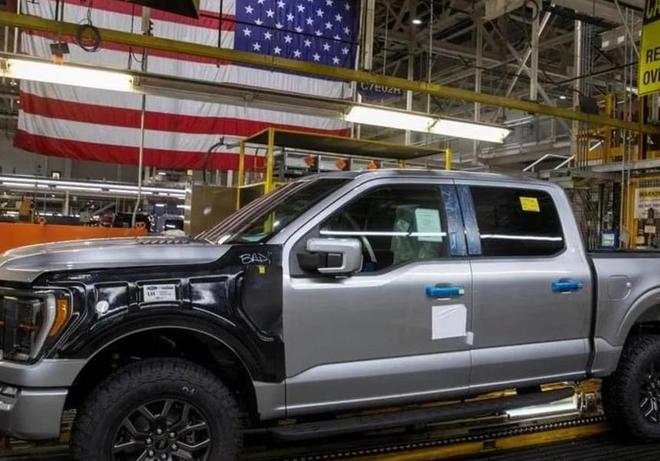
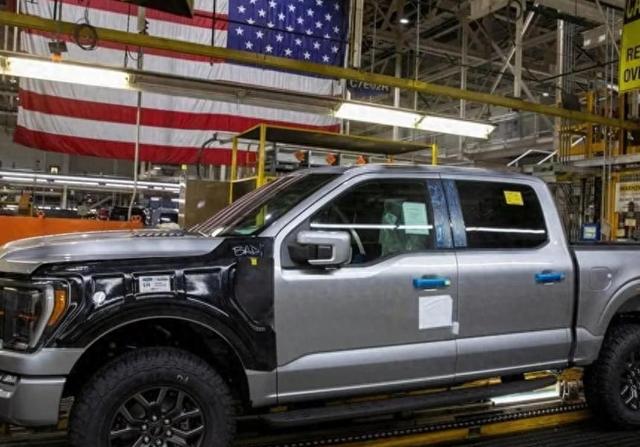
“福特找白宫:拉中企来美国合资造车吧”
Guan Cha Zhe Wang· 2026-02-15 04:39
Core Viewpoint - Discussions are ongoing between Ford's CEO Jim Farley and senior officials from the Trump administration regarding a potential framework that would allow Chinese automakers to establish manufacturing plants in the U.S. while providing protections for domestic companies [1][4]. Group 1: Discussions and Framework - The talks involve the possibility of Chinese automakers forming joint ventures with U.S. companies, where U.S. firms would hold majority stakes, allowing for shared profits and technology [1][3]. - These discussions are described as informal and preliminary, with no decisions made yet [1][4]. - Ford emphasized the need to protect the domestic market from the impact of Chinese-made vehicles during discussions with the Trump administration [1]. Group 2: Market Context and Implications - The potential acceptance of Chinese investment in U.S. manufacturing mirrors historical requirements where Western automakers had to partner with Chinese firms to enter the Chinese market [3]. - The discussions come at a time when Chinese automakers are increasingly entering markets in Europe, Mexico, and South America, posing competitive challenges to Western manufacturers [4]. - If Chinese automakers successfully establish a foothold in the U.S., it could significantly impact domestic manufacturers, their supply chains, and consumers [4]. Group 3: Industry Reactions and Competitive Landscape - There are divisions within the Trump administration regarding the potential for such investment agreements, with some officials expressing concerns about opposition in Washington [4]. - General Motors has reportedly opposed the entry of Chinese manufacturers into the U.S. market, fearing loss of market share and negative impacts on North American suppliers [6]. - Ford's CEO has warned that low-cost, high-tech vehicles from China could pose a "survival threat" to U.S. automakers, while also seeking collaboration with Chinese firms to enhance Ford's own electric vehicle offerings [6][7].

“福特CEO找白宫官员讨论:拉中企来美国合资造车吧”
Guan Cha Zhe Wang· 2026-02-15 04:38
Core Viewpoint - Discussions are ongoing between Ford's CEO Jim Farley and senior officials from the Trump administration regarding a potential framework that would allow Chinese automakers to establish manufacturing plants in the U.S. while providing protections for domestic companies [1][3]. Group 1: Discussions and Framework - The talks involve the possibility of Chinese automakers forming joint ventures with U.S. companies, where the U.S. partners would hold majority stakes, allowing for shared profits and technology [1][3]. - These discussions are described as informal and preliminary, with no decisions made yet [1][3]. - Ford emphasized the need to protect the domestic market from the impact of Chinese-manufactured vehicles, citing privacy and national security concerns [1]. Group 2: Market Context and Implications - The potential entry of Chinese automakers into the U.S. market is seen as a significant turning point that could impact American manufacturers, their supply chains, and consumers [4]. - Chinese automakers have been rapidly gaining market share in Europe, Mexico, and South America with low-cost models equipped with advanced electric vehicle batteries and infotainment systems [4]. - Trump's recent comments suggest a willingness to allow Chinese manufacturers into the U.S. if they create jobs for Americans, which surprised U.S. automakers who believed trade barriers would protect them [6]. Group 3: Competitive Landscape - General Motors has expressed opposition to the entry of Chinese companies into the U.S. market, fearing loss of market share and potential negative impacts on North American suppliers [6]. - Farley has warned that low-cost, high-tech vehicles from China pose a "survival threat" to U.S. automakers, while Ford remains open to collaboration with Chinese companies [6]. - Ford is actively seeking partnerships with Chinese automakers and battery manufacturers to enhance its own electric vehicle offerings, planning to launch a low-cost electric vehicle by 2027 to compete with BYD [6][4]. Group 4: Potential Collaborations - Recent reports indicate that Ford is considering a joint venture with Xiaomi for vehicle production in the U.S., although both companies have denied this [7]. - Ford has expanded its partnership with Chinese battery giant CATL to include manufacturing fixed power sources for utilities and data centers, in addition to electric vehicle battery units [6].
崔东树:1月汽车出口走强带动厂家销量相对较好 新能源车走势平稳
智通财经网· 2026-02-15 03:59
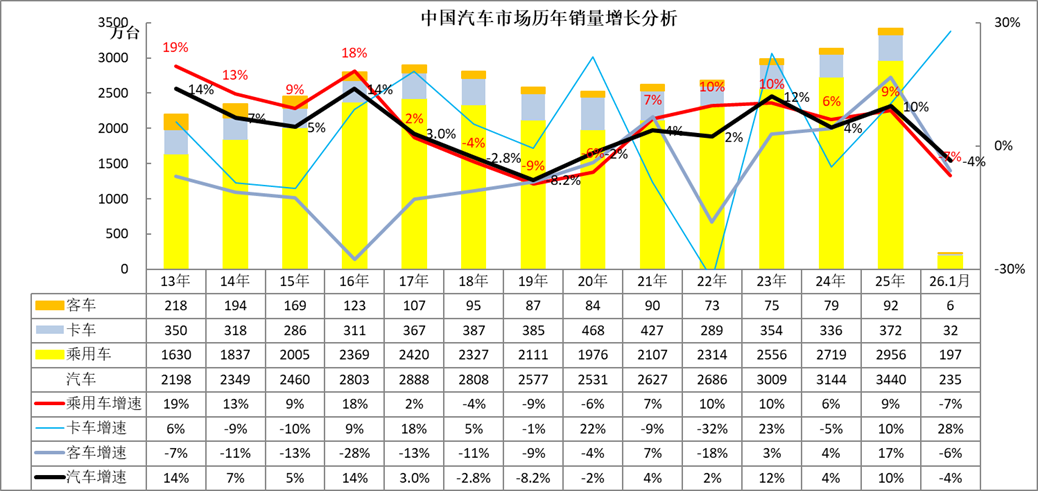
Group 1 - The automotive market in China is expected to maintain strong growth in 2025, driven by government policies promoting consumption, with significant recovery in both truck and bus markets [1] - In January 2026, the commercial vehicle market is anticipated to experience structural growth due to equipment upgrade subsidies, particularly in the electrification of logistics and transportation [1][4] - The overall automotive sales in 2025 are projected to reach 34.392 million units, with a cumulative growth rate of 9%, while January 2026 saw a decline of 4% year-on-year in total automotive sales [6][21] Group 2 - The differentiation between passenger and commercial vehicles has become more pronounced in recent years, with passenger vehicle consumption improving and commercial vehicle sales weakening [4][11] - In January 2026, the sales of new energy passenger vehicles totaled 870,000 units, reflecting a 2% year-on-year decline, influenced by policy adjustments and market pressures [21] - The competitive landscape among traditional fuel passenger vehicle manufacturers is shifting, with domestic brands gaining strength against joint ventures, particularly in the context of declining sales for traditional fuel vehicles [27] Group 3 - The truck market is showing robust growth, with January 2026 sales reaching 320,000 units, marking a 28% year-on-year increase, indicating a strong demand for logistics and transportation solutions [34][36] - The bus market is expected to remain stable, with head manufacturers performing well, primarily driven by demand for light and micro commercial vehicles [30][32] - The overall automotive industry is experiencing significant differentiation in growth rates among manufacturers, with private enterprises increasingly replacing state-owned enterprises as industry leaders [11][18]





启境入局:中国汽车智能化下半场的价值回归与高端突围
经济观察报· 2026-02-15 02:11
Core Viewpoint - The emergence of Qijing Automotive represents a significant exploration in the intelligent and high-end development path of the Chinese automotive industry during a critical period of transformation [1][26]. Group 1: Strategic Shift from Electrification to Intelligentization - By the end of 2025, the penetration rate of new energy vehicles in China is expected to approach 60%, indicating that the electrification phase is nearing completion, while the intelligentization phase is just beginning [2][6]. - The automotive industry is undergoing a structural transformation, with a shift in competition from mere electrification to intelligentization, as evidenced by the increasing demand for smart, personalized vehicles [6][8]. - Over 80% of automotive companies have initiated AI pilot projects, but only 15% have achieved large-scale application, highlighting the transition from "whether to do" to "how to do it right" in intelligentization [2][8]. Group 2: Challenges in Intelligent Transformation - The transition to intelligentization presents significant challenges, including the need for comprehensive capabilities in data collection, processing, and system integration [16][17]. - Companies must prepare for the responsibilities associated with Level 3 automation, requiring robust safety and quality management systems throughout the product lifecycle [16][20]. - The collaboration model in the intelligent era necessitates deep integration of hardware, software, algorithms, and data, moving beyond traditional supply chain relationships [17][20]. Group 3: Qijing's Unique Position and Strategy - Qijing is positioned as a strategic player in the intelligentization arena, focusing on redefining what constitutes a high-quality vehicle in the smart era [14][26]. - The collaboration between Qijing and Huawei is characterized by "embedded collaboration," allowing for joint product logic definition and system performance validation [16][20]. - Qijing aims to leverage its partnerships to create a new value benchmark in the high-end market, combining technology, luxury, and reliability [26][31]. Group 4: Value Transition of Chinese Brands - Chinese automotive brands are experiencing a value transition, with Qijing positioned to capitalize on this shift by enhancing product quality, user experience, and redefining value in the high-end market [24][26]. - The traditional dominance of luxury brands is declining, with Chinese brands making significant inroads into the high-end market through advancements in electric and intelligent technologies [24][26]. - Qijing's strategy emphasizes a comprehensive user experience and a differentiated dealer network, reflecting growing confidence in Chinese high-end intelligent automotive brands [26][31].

宽禁带半导体:功率电子产业升级的核心引擎与破局之道
半导体行业观察· 2026-02-15 01:37
Core Viewpoint - The article emphasizes the transformative role of wide bandgap semiconductors (SiC/GaN) in the power electronics industry, driven by the global energy transition and the dual carbon goals, highlighting the upcoming PCIM Asia Shenzhen exhibition as a pivotal event for this technological revolution [1][2]. Industry Landscape - The application of power electronics is expanding from traditional industrial control to high-end fields such as electric vehicles, energy storage systems, high-voltage fast charging, and AI data centers, necessitating extreme requirements for device characteristics [2]. - Traditional silicon-based semiconductors are unable to meet the demands of the new generation of applications, while wide bandgap semiconductors achieve significant performance improvements, including over 80% reduction in switching losses and over 50% size reduction [2][3]. Market Forecast - According to Yole Intelligence, the global wide bandgap semiconductor market is expected to exceed $15 billion by 2026 and reach $40 billion by 2030, with a compound annual growth rate of over 30% [3]. - Key demand drivers include electric vehicles, energy storage inverters, and industrial power supplies, which together account for over 70% of the market [3]. Core Challenges - The article identifies three core challenges in the wide bandgap semiconductor industry: technical bottlenecks, supply chain resilience, and application landing [5]. - Technical challenges include the transition from laboratory breakthroughs to stable mass production, with specific issues in material preparation, device design, and packaging testing [5]. - Supply chain challenges involve balancing local collaboration with global adaptation, as the industry is characterized by high technology and capital intensity [5]. - Application challenges focus on the precise matching of emerging scenarios with technology, addressing issues such as demand fragmentation and adaptation difficulties [5]. Forum Insights - The upcoming forum will feature discussions on the practical experiences of international leaders in technology mass production and application deepening, showcasing advancements from companies like Infineon and ROHM [7]. - Domestic leaders will present their breakthroughs in localization and technology innovation, highlighting the capabilities of companies like BYD and CRRC Times Semiconductor [8]. - The forum aims to build a collaborative ecosystem by discussing industry standards and resource integration, addressing the need for unified reliability testing standards and process interfaces [9]. Future Trends - The future development of wide bandgap semiconductors will focus on larger sizes, lower defects, and higher performance, with 8-inch SiC substrates becoming mainstream by 2030 [9]. - The penetration rate of wide bandgap semiconductors in electric vehicles is expected to exceed 40% by 2030, with significant growth in electrified transportation and long-duration energy storage [9]. - The competitive focus will shift from technological breakthroughs to customized solutions, with a trend towards integrated models combining devices, solutions, and services [10].
7.2GWh中广核储能系统集采中标候选人公示:远景能源/比亚迪/中车株洲所/南瑞继保/天诚同创/科陆电子分列第一,报价0.49-0.53元/Wh
中关村储能产业技术联盟· 2026-02-15 01:25
Core Viewpoint - The article discusses the public announcement of the candidates for the 2026 annual energy storage system framework procurement by China General Nuclear Power Group (CGN) [3]. Group 1: Procurement Details - The procurement involves six segments, each with a capacity of 1.2 GWh, totaling 7.2 GWh [4]. - The bidding price range for the six segments is between 0.491 yuan/Wh and 0.52995 yuan/Wh [5]. - The first candidates for each segment and their respective prices are as follows: - Segment 1: Envision Energy Co., Ltd. at 0.495 yuan/Wh - Segment 2: BYD Auto Industry Co., Ltd. at 0.507 yuan/Wh - Segment 3: CRRC Zhuzhou Electric Locomotive Research Institute Co., Ltd. at 0.491 yuan/Wh - Segment 4: Nanjing NARI Group at 0.52995 yuan/Wh - Segment 5: Beijing Tiancheng Tongchuang Electric Co., Ltd. at 0.52265 yuan/Wh - Segment 6: Shenzhen Kelu Electronics Technology Co., Ltd. at 0.515 yuan/Wh [5][6]. Group 2: Bidder Requirements - Bidders must participate in all six segments and cannot have different quotes for the same model and technical requirements across different segments; otherwise, their bids will be disqualified [7]. - Bidders must meet performance requirements for both grid-connected and off-grid energy storage equipment [8]. - Specific performance requirements include: - For off-grid equipment: at least 50 MWh operational performance over the last three years, with battery units having at least 500 MWh operational performance, and energy storage inverters with at least 20 MW operational performance. - For grid-connected equipment: at least 1 GWh operational performance over the last three years, with at least one project having 200 MWh operational performance, and similar battery and inverter requirements as above [9]. Group 3: Contract Validity - The framework contract is valid from January 2026 to January 2027 [10].


外媒观察:中国清洁能源与前沿技术领跑全球 生活场景尽显未来感
Huan Qiu Wang· 2026-02-15 01:06
Group 1 - The article highlights the rapid development of China's clean energy sector, contrasting it with the lagging status of the U.S. in low-carbon technologies such as solar energy and electric vehicles [2] - China has a vast solar power station scale and is continuously expanding its ultra-high voltage transmission lines, while exporting high-cost performance solar panels and electric vehicles to countries like South Africa and Brazil, significantly impacting local economic development [2] - In emerging fields like nuclear fusion, autonomous driving, and rare earths, China maintains a fast-paced development rhythm [2] Group 2 - The article compares the policy and development paths of China and the U.S., noting that China has long-term stable support for clean technology development, with its rare earth industry established over sixty years ago, laying the foundation for advanced manufacturing [3] - In contrast, U.S. energy policy is characterized by fluctuations, with current trends showing a tightening of support for renewable energy and increased backing for fossil fuels [3] - China's electric vehicle exports reached $70 billion last year, with products sold to over 150 countries and regions, indicating a strong global market presence [3]
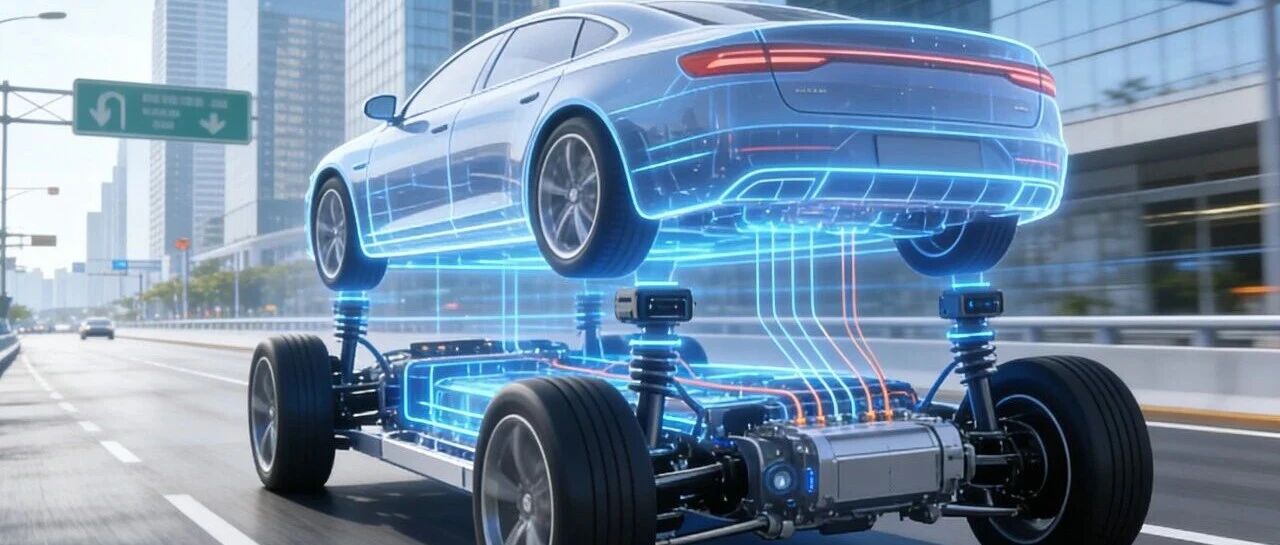
汽车业的下一场革命,中国准备好了
汽车商业评论· 2026-02-14 23:04
Core Viewpoint - The intelligent chassis market in China is projected to reach approximately 70 billion yuan by 2025 and exceed 100 billion yuan by 2030, driven by domestic substitution, AI empowerment, and user demand [4][5]. Market Overview - The intelligent chassis consists of three main subsystems: drive-by-wire braking, steer-by-wire, and active suspension, with the highest penetration rate in drive-by-wire braking at 80%. The penetration rate for active suspension is rapidly increasing, while steer-by-wire has a low penetration rate of only 5%, indicating significant growth potential [4]. - In the short term, the acceleration of drive-by-wire and integrated technologies is leading to rapid production and market penetration, particularly in mid-range vehicles, supported by local supply chain advantages [4][5]. - In the long term, advanced technologies such as fully active suspension, AI collaborative control, and skateboard chassis are reshaping the industry landscape, requiring continuous investment in core technological innovation and balancing cost, safety, and reliability [4][5]. Competitive Landscape - China has established the most complete intelligent chassis industry chain globally, with local suppliers achieving domestic substitution in areas like air suspension and drive-by-wire braking, particularly leading in air suspension [5]. - The collaboration between OEMs and technology companies is driving the evolution of chassis from "mechanical components" to "intelligent terminals" [5]. Industry Challenges - The industry faces the challenge of balancing short-term market demands with long-term technological innovation investments, as well as ensuring safety and reliability [5]. - The penetration of Electric Brake-by-Wire (EMB) technology is expected to be gradual due to technical difficulties, costs, and consumer perception, with significant challenges in achieving mass production [7][14][15]. Technological Trends - The integration of intelligent chassis technologies is expected to evolve through three levels: foundational structure, motion execution, and fusion control, which are essential for achieving a fully integrated intelligent chassis [7]. - The development of EMB is closely tied to high-level autonomous driving systems, indicating that EMB will likely be adopted in high-end models first due to cost considerations [14][32]. Ecosystem Collaboration - The future of the automotive ecosystem is expected to be characterized by parallel and compatible development between OEMs and component suppliers, with a focus on collaborative innovation and shared value creation [42][44]. - The industry is moving towards a model where OEMs define products while Tier 1 and Tier 0.5 suppliers implement and refine these products, emphasizing the importance of communication and collaboration in the development process [46]. Core Competitiveness - The core competitiveness of domestic chip companies lies in supply chain security and quality assurance, which are critical for the automotive industry [50]. - The challenges faced by domestic suppliers include the need for time to develop and validate new technologies, particularly in the context of rapidly evolving market demands [53].